
Where Do Doctors Live in Albuquerque?
Where physicians live in any city follows a predictable logic: the intersection of commute tolerance, school zone priority, income level, and lifestyle preference. In Albuquerque, that logic produces a specific residential geography that any physician relocating to the city — or any family member supporting that relocation decision — benefits from understanding before the house search begins.
This guide maps the physician residential geography of Albuquerque in 2026, organized by the variables that actually drive the decision: hospital employer and commute, career stage and income, and neighborhood character preference. It also covers the salary context that determines which neighborhoods are financially accessible at each career stage — because a first-year attending's real estate reality is categorically different from a 15-year neurosurgeon's, even in the same city.
The Salary Context — What Albuquerque Physicians Earn
"The average salary for a Physician is $322,316 per year in Albuquerque, NM, which is 4% higher than the national average. Top earners have reported making up to $537,330 (90th percentile). The typical pay range is between $247,839 (25th percentile) and $423,000 (75th percentile)," confirmed Glassdoor's 2026 Albuquerque physician compensation data.
Salary.com's February 2026 data confirms a similar range: "the average Doctor salary in Albuquerque, NM is $315,751, with most specialty physicians earning between $247,000 and $423,000 annually," confirmed the Salary.com Albuquerque physician compensation database. For UNM-employed physicians specifically, Glassdoor reports an average of $311,697 — comparable to the broader Albuquerque physician market.
The career stage breakdown:
- Medical residents (PGY1-PGY5, UNM or Lovelace/Presbyterian programs): $60,000 to $80,000 annually. Typically renting near UNM or in affordable central Albuquerque neighborhoods. Not yet in the home-buying market in most cases.
- Fellows: $70,000 to $100,000 annually. Some begin to buy in the most affordable neighborhoods while completing fellowship training.
- Early-career attendings (years 1-5): $180,000 to $280,000. Actively buying in the mid-tier Northeast Heights. Student loan debt from medical school significantly affects qualifying range and neighborhood tier at this stage.
- Mid-career attendings (years 5-15): $250,000 to $400,000. The primary Northeast Heights physician buyer profile — La Cueva or Eldorado zone, $400K to $700K price range.
- Senior and subspecialty attendings (surgeons, cardiologists, radiologists, subspecialists): $350,000 to $537,000+. North Albuquerque Acres, High Desert, and Tanoan — the premium tier. NAA's $919K median requires approximately $231K in annual income at the 28% comfortable guideline; senior subspecialists typically qualify comfortably.
Albuquerque's Medical Employment Centers — The Employer Map
Understanding where physicians work is the first step in understanding where they live — because commute tolerance is a significant neighborhood decision variable for professionals whose call schedules already require middle-of-the-night hospital arrivals.
- UNM Health Sciences Center: Located at the north edge of the UNM main campus, approximately at Camino de Salud NE and Lomas Blvd NE. The state's only academic medical center — includes UNM Hospital (Level 1 Trauma Center), UNM Comprehensive Cancer Center, and all UNM academic medical programs.
- Presbyterian Hospital (Central Campus): 1100 Central Ave SE — the original Presbyterian hospital in the heart of the city, near Nob Hill and University Heights.
- Presbyterian Kaseman Hospital: Tramway Blvd and Montgomery Blvd NE — the Northeast Heights Presbyterian campus, closest hospital to the Northeast Heights physician residential cluster.
- Presbyterian Rust Medical Center: 8700 Paseo del Norte NE, Rio Rancho — the newest Presbyterian facility, positioned at the Albuquerque-Rio Rancho boundary and closest to NAA and Corrales.
- Lovelace Women's Hospital: 4801 McMahon Blvd NW — Northwest Albuquerque, near Taylor Ranch and the Paseo del Norte corridor.
- Lovelace Medical Center (Gibson location): 5400 Gibson Blvd SE — Southeast Albuquerque, near the VA Medical Center.
- Raymond G. Murphy VA Medical Center: 1501 San Pedro Dr SE — Southeast/Central Albuquerque, off Eubank Blvd.
The Physician Neighborhoods — Where They Actually Live
Tier 1: North Albuquerque Acres, High Desert, and Tanoan — The Premium Cluster
Who lives here: Senior attendings, subspecialists, surgeons, senior academic physicians at UNM. The physician household that has been in practice for 10 or more years, has paid down a significant portion of medical school debt, and has a household income of $350,000+.
Price range: $700,000 to $2,000,000+
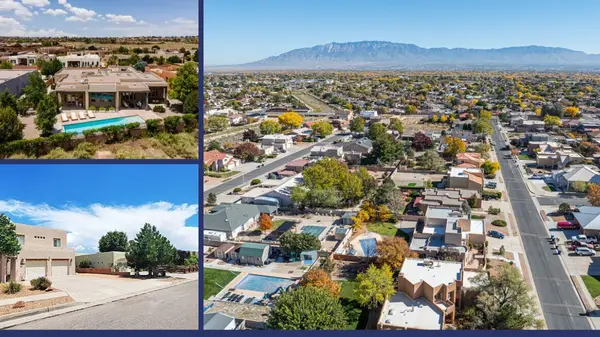
- North Albuquerque Acres: The acre-plus lots, La Cueva school zone, equestrian option, and no-HOA freedom produce the specific property that senior physicians specifically seek. The Sandia Mountain proximity — the Tramway 3 miles away, foothills trails accessible from residential streets — is the outdoor lifestyle component that a physician who chose Albuquerque for quality of life specifically values. Commute to Presbyterian Kaseman: 10-15 minutes. Commute to Presbyterian Rust: 15-20 minutes. Commute to UNM: 25-30 minutes.
- High Desert: A gated Northeast Heights community with premium custom homes, mountain views, and the La Cueva school zone. High Desert's gated character and community infrastructure appeal specifically to the physician household that wants security, privacy, and a maintained common environment alongside the outdoor access that the Sandia foothills provides. Price range: $700K to $1.5M+.
- Tanoan: Another gated Northeast Heights community, slightly less foothills-adjacent than High Desert and NAA but within the La Cueva zone and at premium prices. The Tanoan community has a significant golf and country club component that some physicians specifically value. Price range: $600K to $1.2M.
Tier 2: Northeast Heights La Cueva Zone — The Primary Physician Buyer Market
Who lives here: Mid-career attendings, early-career subspecialists, primary care physicians in strong practice, hospitalists with 5+ years of employment. The physician household earning $200,000 to $350,000 that has managed student loan debt to a manageable level and is ready to buy in the primary school zone market.
Price range: $380,000 to $700,000
The Northeast Heights La Cueva zone — the established residential neighborhoods northeast of Tramway Boulevard, roughly in the 87122 and 87111 ZIP codes — is where the largest concentration of Albuquerque's physician population lives. The combination of La Cueva school zone assignment, reasonable commute to both Presbyterian Kaseman and NAA (10-15 minutes), accessible commute to UNM (20-25 minutes), and proximity to the foothills trail system produces the specific quality-of-life combination that mid-career physicians target.
The specific appeal for physician families: La Cueva HS's academic quality means parents do not need to supplement public school with expensive private tutoring or private school tuition. The foothills trail that starts at the end of the street provides the outdoor exercise that physicians specifically need as a stress management tool for high-pressure careers. The proximity to Presbyterian Kaseman means the 2am call return home is 15 minutes rather than 35 minutes.
Tier 3: Corrales and the North Valley — The Rural Alternative
Who lives here: Senior physicians who specifically value rural character, horse property, and the specific pace of a river-valley agricultural village. Also: physicians employed at Presbyterian Rust in Rio Rancho, whose commute from Corrales is straightforward via Corrales Road and the Paseo del Norte connector.
Price range: $400,000 to $1,500,000+ (wide range)
Corrales, the agricultural village on the Rio Grande's west bank, attracts a specific physician profile: the doctor who chose Albuquerque specifically for the outdoor lifestyle and quality-of-life advantages, and who wants those advantages at their most intense — the bosque on the back fence, the horse in the pasture, the irrigation ditch and the cottonwood trees and the specific rural-near-urban combination that most American cities cannot provide at any price.
The Corrales physician typically has a longer commute to UNM (25-35 minutes) and has accepted that trade-off in exchange for the property and lifestyle that Corrales specifically provides. Physicians at Presbyterian Rust have a shorter Corrales commute — 20-25 minutes — that makes the trade-off even more favorable.
Tier 4: Nob Hill and University Heights — The UNM Academic Physician and Resident Buyer Market
Who lives here: UNM faculty physicians, residents transitioning to their first attending position, academic-focused physicians who value walkability and proximity to the campus, and physicians at the beginning of their career who are buying for the first time on a new attending salary.
Price range: $200,000 to $450,000
The Nob Hill and University Heights neighborhoods — directly adjacent to UNM's campus — provide the closest residential access to the UNM Health Sciences Center of any Albuquerque residential neighborhood. The physician who is on UNM Hospital call can reach their car in minutes from a Nob Hill home; the physician who walks or cycles to the medical campus on non-call days is living a life that the suburban Northeast Heights neighborhoods cannot provide.
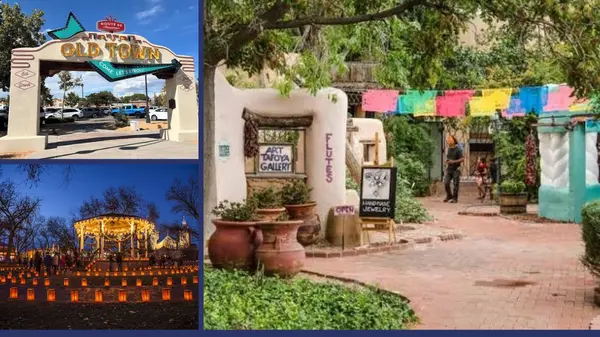
Nob Hill's specific appeal for academic physicians: the walkable cultural life — restaurants, galleries, the ARTScrawl, the independent bookstore — is specifically compatible with the lifestyle preferences of physicians who trained at academic medical centers in cities with active urban character. The UNM physician who moved from a New York or Boston or Chicago academic medicine career finds Nob Hill's Central Avenue corridor familiar in ways that the Northeast Heights suburbs are not.
The trade-off: the Nob Hill and University Heights physician is in the Eldorado or other school zones rather than the La Cueva zone. For physicians without school-age children, this is irrelevant. For physician families whose school zone is a priority, this is the specific reason the Nob Hill buy gets traded for a Northeast Heights buy once children reach school age.
Tier 5: Rio Rancho — The Presbyterian Rust Option
Who lives here: Physicians employed primarily or exclusively at Presbyterian Rust Medical Center, physicians who prioritize new construction and newer community infrastructure at lower price points, early-career physicians buying their first home with limited down payment capacity.
Price range: $250,000 to $450,000
Rio Rancho's growth as a medical employment center — anchored by Presbyterian Rust Medical Center at 8700 Paseo del Norte — has produced a physician residential community in the Rio Rancho neighborhoods adjacent to the hospital. Rio Rancho's housing prices are generally below comparable Albuquerque Northeast Heights properties, and its newer construction provides the low-maintenance efficiency that physicians managing demanding schedules specifically value.
The Rio Rancho trade-off for physician families: Rio Rancho Public Schools rather than Albuquerque Public Schools' La Cueva zone. RRPS has good schools and is a consistently viable option, but physicians who specifically want La Cueva typically make the longer Albuquerque commute rather than living in Rio Rancho.
The Hospital-to-Neighborhood Commute Matrix
The specific commute times that define the physician neighborhood decision:
- NAA to Presbyterian Kaseman: 10-15 minutes. The most common physician premium-tier commute in Albuquerque.
- NAA to Presbyterian Rust (Rio Rancho): 15-20 minutes via Paseo del Norte. The commute that makes NAA viable for Rust-employed physicians.
- NAA to UNM Health Sciences: 25-30 minutes. Acceptable for some UNM faculty; the longer distance contributes to UNM physicians being underrepresented in NAA relative to Presbyterian physicians.
- Northeast Heights (general) to Presbyterian Kaseman: 8-20 minutes depending on specific address. The best commute-to-school-zone combination in the city.
- Northeast Heights to UNM Health Sciences: 20-25 minutes. Standard commute for UNM physicians who specifically want the La Cueva zone.
- Nob Hill to UNM Health Sciences: 5-15 minutes. The most UNM-proximate residential neighborhood.
- Corrales to Presbyterian Rust: 20-25 minutes. The Corrales-to-Rust commute that makes Corrales viable for Rust-employed physicians.
- Corrales to UNM Health Sciences: 25-35 minutes. Acceptable for UNM physicians who specifically want the Corrales lifestyle.
The Student Loan Reality — How Medical Debt Shapes the First Buy
The physician's home purchase decision is complicated by a specific financial reality that does not apply to most other high-income professionals: medical school debt. The average medical school graduate in 2026 carries approximately $200,000 to $250,000 in student loans. At a standard 10-year repayment on $220,000 of debt, the monthly student loan payment is approximately $2,400.
At a first-year attending salary of $220,000 gross income, the DTI calculation including $2,400/month in student loans produces:
- Gross monthly income: $18,333
- Maximum total debt at 43% DTI: $7,883/month
- Student loan payment: $2,400/month
- Remaining for mortgage: $5,483/month
- Qualifying purchase price: Approximately $680,000 to $730,000 at 6.30% with standard down payment
The first-year attending at $220,000 with student loans can qualify for the mid-tier Northeast Heights market — which produces the specific first-purchase pattern of the La Cueva zone home in the $400,000 to $650,000 range. The physician who takes an income-based repayment plan (lowering the monthly student loan payment) improves the DTI calculation and potentially qualifies for a higher purchase price.
The physician-specific mortgage advantage: some lenders offer physician loan programs that exclude student loans from the DTI calculation or allow zero-down financing for newly licensed physicians with confirmed employment contracts. These programs are specifically available at some banks and credit unions and are worth specifically researching for first-year attendings who are entering the Albuquerque market.
What Physicians Specifically Need From a Neighborhood
Beyond the commute and school zone considerations that apply to most professional families, physicians have specific neighborhood needs that reflect their career realities:
- Night and weekend call access: The 2am call return trip is the neighborhood characteristic that physicians weight most heavily — and that most generic neighborhood guides do not address. A 10-minute call-return drive versus a 30-minute call-return drive over 20 years of a career is not a minor quality-of-life difference. It is the difference between functioning well the next morning and consistently impaired morning performance after overnight calls.
- Outdoor stress relief access: Physicians who work in high-stakes, high-pressure environments — the ER physician, the ICU attending, the oncologist — consistently cite outdoor physical activity as their primary stress management tool. Neighborhoods with direct trail access from residential streets rather than requiring a drive to a trailhead serve this need more effectively than comparable neighborhoods without that trail proximity.
- School quality without tutoring overlay: Physicians with high incomes and extremely demanding schedules have limited time to supplement their children's education. They specifically value neighborhoods where the public school quality produces academic outcomes without requiring supplementation — which is the specific case for the La Cueva and Eldorado zones.
- Low-maintenance outdoor spaces: Physicians with 60 to 80-hour work weeks specifically need homes whose outdoor spaces do not require the consistent time investment that traditional lawn-focused landscaping demands. Albuquerque's xeriscape-compatible desert climate is specifically physician-friendly: a well-designed desert landscape requires minimal ongoing time investment once established.
For physicians specifically interested in North Albuquerque Acres — the premium tier where Albuquerque's senior physicians tend to concentrate — our detailed neighborhood guide Living in North Albuquerque Acres: What Buyers Should Know covers the well/septic due diligence, large lot maintenance, and neighborhood specifics. And for the school zone considerations that drive the Northeast Heights physician buyer market, our guide to the best family-friendly neighborhoods near Albuquerque schools covers the complete La Cueva and Eldorado zone geography.
The Bottom Line — The Physician Geography Is Consistent and Logical
The physician residential geography in Albuquerque follows the logic that physician residential geographies follow in most cities: the highest earners with the most established careers in the premium-tier La Cueva zone neighborhoods (NAA, High Desert, Tanoan), the primary mid-career physician population in the broader Northeast Heights La Cueva corridor, the UNM academic community in the university-adjacent central neighborhoods, and the Corrales alternative for physicians who specifically choose rural character over suburban convenience.
The specific Albuquerque variables that the general pattern does not capture: the Presbyterian Kaseman-to-NAA commute that makes the premium tier remarkably accessible for Presbyterian physicians; the UNM-to-Nob Hill commute that makes the academic physician's residential choice uniquely walkable; and the Corrales-to-Presbyterian-Rust connection that makes a river valley semi-rural lifestyle viable for the newest major Albuquerque-area hospital employer.
For a physician relocating to Albuquerque from another market, the right starting point is the employer's hospital location, the family's school zone priority, and the career stage income that determines which tier is financially realistic. The rest of the decision follows logically from those three inputs.
Relocating to Albuquerque for a Medical Career?
Jenn & Vinay from The Rodgers Neighborhood Real Estate Group work extensively with physician relocations to Albuquerque — helping new attendings, medical school faculty, and senior subspecialists find homes in the neighborhoods that serve their specific hospital employment, school zone priority, and lifestyle preferences. We understand the call schedule commute calculation, the physician loan product landscape, and the specific neighborhood characteristics that physicians most consistently require. The conversation about which Albuquerque neighborhood fits your medical career and your family starts with a call.
Jenn & Vinay Rodgers are Albuquerque's trusted real estate professionals with The Rodgers Neighborhood Real Estate Group, brokered by Real Broker, LLC, serving buyers and sellers across Albuquerque, Rio Rancho, Corrales, Los Lunas, Tijeras, Cedar Crest, Sandia Park, the East Mountains, Bernalillo County, Sandoval County, and surrounding New Mexico communities.
The Rodgers Neighborhood Real Estate Group
Jenn & Vinay Rodgers
Real Broker, LLC
Albuquerque, NM
📞 505-417-2733
🏠 Browse Albuquerque homes for healthcare professionalsCategories
- All Blogs (348)
- 2026 & Beyond for Real Estate (242)
- Doctors and Nurses looking for homes in NM (4)
- Guide to buying a home in NM (155)
- Health Care Heros (7)
- Home Upgrades (40)
- Jenn & Vinay your Local Real Estate Experts! (119)
- Moving to Albuquerque (135)
- Neighborhoods in Albuquerque NM (92)
- Rent or Own (2)
- Sellers Questions for Selling homes (2)
Recent Posts






GET MORE INFORMATION