
Top Employment Hubs That Are Driving Albuquerque's Housing Market
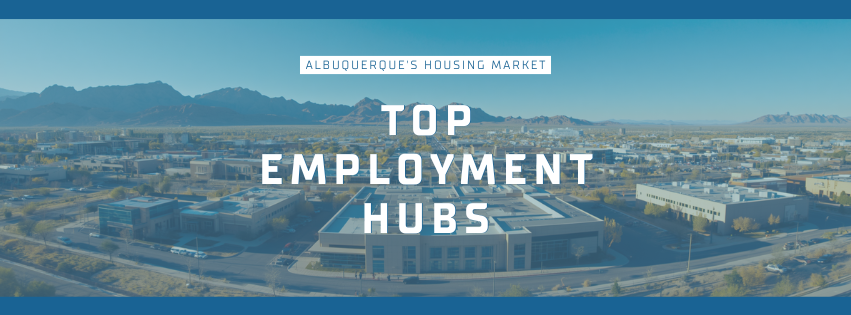
The housing demand in any metropolitan market is ultimately an employment story — where people work determines where they live, and what they earn determines what they can afford. In Albuquerque, the employment story is more concentrated and more anchored than in most comparable-sized cities: the six major employment hubs that drive the bulk of the market's high-wage demand are not only the largest employers in the city but the most geographically fixed. This guide covers each hub, its housing footprint, and its forward-looking impact on residential demand.
How Employment Drives the Albuquerque Housing Market — The Mechanism
Employment drives housing demand through three direct channels:
- Salary level determines price tier access: A Sandia Labs engineer earning $120,000 annually qualifies for a mortgage on approximately $400,000-$450,000 with 20% down at 6.30% — placing them in the Northeast Heights premium market. A Kirtland AFB staff sergeant with $50,000 salary plus BAH (Basic Allowance for Housing) qualifies for a $250,000-$280,000 home — placing them in the Southeast Heights market. The salary level of each employer's workforce directly determines which price tier that employer's housing demand occupies.
- Employment location determines residential geography: Workers systematically choose homes that minimize commute time within their budget. Intel employees in Rio Rancho concentrate in Rio Rancho master-planned communities and the northwest Westside. Kirtland AFB personnel concentrate in the Southeast Heights. UNM faculty concentrate in University Heights and Nob Hill. The employment center's location creates residential demand in the neighborhoods that offer the best commute-to-cost ratio from that campus.
- Employment stability determines buyer commitment: Buyers with stable employment — the federal government employee, the defense contractor with a long-term contract, the hospital system nurse — make more confident purchase decisions than buyers in cyclical or uncertain employment. Albuquerque's dominant employer mix (national labs, military, healthcare, higher education) is specifically characterized by employment stability that supports housing demand through economic cycles.
Employment Hub 1 — Sandia National Laboratories: The Salary Engine
"Sandia National Laboratories and Intel's Rio Rancho campus are the two major tech and defense anchors of the Albuquerque employment market. Albuquerque's tech ecosystem grew 6.2% against national declines. The city offers average wages around $92,336 at the Sandia Science and Technology Park, with senior AI and engineering roles paying over $187,000. Senior roles at GDIT can exceed $229,000. Security clearance holders are in especially high demand," confirmed Nucamp's February 2026 guide to tech careers in Albuquerque.
- Location: Kirtland Air Force Base, southeast Albuquerque (Eubank/Tramway/Gibson area)
- Workforce: Approximately 11,500-16,900 employees depending on the count source (including subcontractors and onsite contractors)
- Salary range: Entry-level $90,000-$120,000 with security clearance; senior positions $150,000-$229,000+; average at the Sandia Science & Technology Park approximately $92,000+
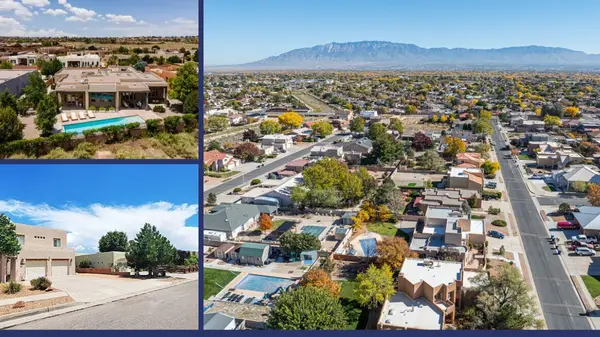
- Housing footprint: Sandia Labs' salary profile supports the Northeast Heights and North Albuquerque Acres price tier. The 74% bachelor's degree rate in the 87122 ZIP code is directly attributable to the concentration of Sandia Labs engineers and scientists who have been living in the North Albuquerque Acres/La Cueva zone for 40+ years. The Sandia Labs workforce is the most direct single driver of the $855,000 median home value in the 87122 ZIP code.
- Commute corridors: Tramway Boulevard, Eubank Boulevard, and I-25 north from the Southeast Heights serve the Sandia Labs commute from the Northeast Heights and North Albuquerque Acres. A home in the La Cueva zone is approximately 20-30 minutes from the Sandia Labs main gate.
- Housing market impact: The Sandia Labs workforce is the most significant single driver of the premium residential tier in Albuquerque. Its salary levels support price points that the general population of a mid-sized Southwest city would not independently sustain. Without Sandia Labs, the Northeast Heights premium market would not exist at its current scale.
- Forward-looking: Sandia Labs' involvement in AI for national security, quantum computing, and advanced manufacturing means its workforce is growing in both size and average salary. Each increment of salary growth expands the buyer population capable of accessing the premium tier.
Employment Hub 2 — Intel Corporation Rio Rancho: The CHIPS Act Growth Driver
"Albuquerque's diverse economy offers jobs in technology, healthcare, and defense. Government and federal contractors: Albuquerque sits near Kirtland Air Force Base and Sandia National Laboratories, making defense contracting and federal government employment one of the most stable career pipelines in the city. Technology: Intel's Rio Rancho campus just outside the city employs thousands, and a growing cluster of cybersecurity, aerospace tech, and defense tech firms have established roots in the metro area," confirmed Faith Moving Company's comprehensive 2026 Albuquerque employment and relocation guide.
- Location: Rio Rancho, NM (northwest of Albuquerque, Sandoval County)
- Workforce: Thousands of current employees; CHIPS Act expansion adding thousands more through 2028-2030
- Salary range: $129,000-$188,000 for semiconductor engineering roles (without clearance requirement); manufacturing and operations roles range from $55,000-$95,000
- The CHIPS Act investment: The $7.86 billion CHIPS Act commitment to the Intel Rio Rancho campus is the largest single private manufacturing investment in New Mexico's history. The hiring timeline extends through 2028-2030, producing a sustained multi-year wave of residential demand in the Rio Rancho and northwest Albuquerque market.
- Housing footprint: Intel's salary range ($55,000-$188,000) spans the Rio Rancho entry-level new construction market ($240,000-$280,000) to the premium Rio Rancho homes ($400,000-$600,000). The manufacturing and operations workforce specifically targets the affordable new construction tier; the engineering and management workforce targets the premium tier. The CHIPS Act expansion is creating demand across both tiers simultaneously.
- The Sandoval County tax advantage for Intel workers: Rio Rancho's Sandoval County effective property tax rate of 0.71% vs. Bernalillo County's 0.84% specifically benefits Intel employees who choose Rio Rancho over Albuquerque for their residential location. The annual tax savings on a $355,000 home ($461/year) compounds over a holding period into a meaningful financial advantage.
- Forward-looking: The CHIPS Act expansion hiring ramp through 2028-2030 will produce the most sustained single-employer residential demand increase in any Albuquerque area market in the next five years. Rio Rancho's master-planned residential communities are the most directly positioned to capture this demand.
Employment Hub 3 — Kirtland Air Force Base: The Military Tenant Market
- Location: Southeast Albuquerque, adjacent to Gibson Boulevard and the Southeast Heights
- Workforce: One of New Mexico's largest employers; thousands of active duty military, reserve, and civilian employees plus the adjacent Sandia Labs on its grounds
- Housing footprint: The Kirtland workforce spans the full income spectrum from junior enlisted (supported by BAH — Basic Allowance for Housing) to senior officers and civilians at $80,000-$130,000+. The primary residential market: Southeast Heights, Heritage East (specifically the Bear Canyon and Eubank corridor), and Ridgecrest. Military families who choose to live off-base specifically prioritize proximity to Kirtland gates.
- The BAH (Basic Allowance for Housing) dynamic: Military personnel receive a non-taxable housing allowance calibrated to the local rental market. In Albuquerque, BAH makes military personnel reliable tenants and, increasingly, competitive buyers in the $220,000-$320,000 price range where VA loans (zero down payment, no PMI) give them a specific financing advantage over conventional buyers.
- The rental demand component: Military families on 2-3 year Kirtland assignments who do not buy create sustained rental demand in the Southeast Heights and Heritage East corridor. The investor buyer who acquires rental properties near Kirtland AFB gates has a stable, government-backed tenant demographic.
- Forward-looking: Kirtland AFB's mission expansion into space defense, cyber operations, and nuclear weapons modernization programs is specifically adding high-clearance civilian and contractor positions. These additions expand the upper salary tier of the Kirtland employment base, supporting modestly higher home price ceilings in the adjacent residential market.
Employment Hub 4 — The Healthcare System: Distributed High-Volume Employment
- The major healthcare employers: Presbyterian Healthcare Services (largest private healthcare system in NM, main campus at 1100 Central Ave SE); UNM Hospital and UNM Health Sciences campus (Level I Trauma Center at 2211 Lomas Blvd NE); Lovelace Health System (multiple metro locations); Christus St. Vincent (Santa Fe).
- Combined healthcare workforce: The healthcare sector is collectively one of the largest employment sectors in Albuquerque. Nurses, physicians, technicians, administrators, and support staff across all three major systems represent thousands of employed professionals with stable income and strong home-buying credentials.
- Salary range: RN salaries in Albuquerque: $70,000-$100,000+. Physicians: $200,000-$400,000+. Healthcare administrators and technicians: $45,000-$85,000.
- Housing footprint: Presbyterian's main campus on Central Avenue serves the University Heights, Nob Hill, and adjacent neighborhood markets — the campus is within biking distance of University Heights addresses. UNM Health Sciences campus near Lomas and University drives the University Heights and surrounding market. The distributed nature of healthcare employment (multiple hospital locations plus outpatient centers across the metro) means healthcare workers are among the most geographically spread residential buyers.
- Forward-looking: Healthcare employment is structurally growing due to Albuquerque's aging population and expanding metro area. The healthcare sector's growth is driven by demographic inevitability — it will not relocate, it will not automate away, and it will grow as the population grows.
Employment Hub 5 — University of New Mexico: The Academic and Research Anchor
- Location: University Heights, central Albuquerque (University Boulevard and Central Avenue)
- Workforce: UNM is one of New Mexico's largest single-site employers — 18,000+ employees including faculty, staff, and researchers across the academic and medical campuses
- Salary range: Faculty: $65,000-$200,000+ depending on rank and department; administrative staff: $40,000-$80,000; research scientists and post-doctoral fellows: $55,000-$95,000
- Housing footprint: University Heights and the streets adjacent to the UNM campus are specifically the residential destination for UNM faculty, graduate students (rental market), and the university-adjacent professional community. The Nob Hill Walk Score 85 and ART bus connection make the UNM corridor specifically accessible for faculty who do not want to drive to campus. Nob Hill's restaurant and coffee shop density also correlates with the academic community's lifestyle preferences.
- The student rental market overlay: UNM's 27,000+ student enrollment creates a sustained rental demand in the streets within walking distance of campus. Investor buyers who acquire 2-4 bedroom rental properties near UNM have access to the most consistently occupied rental sub-market in Albuquerque.
- Forward-looking: UNM's research programs in quantum computing, AI, and aerospace technology are attracting increasing federal research funding that supports additional high-salary research positions.
Employment Hub 6 — Netflix / Albuquerque Studios and the Film Industry: The Creative Economy Anchor
- Location: Albuquerque Studios complex, southeast Albuquerque / Mesa del Sol adjacent
- Employment scope: Netflix has committed to a 300-acre campus expansion that will create 1,000+ direct employment positions. Combined with the existing NBCUniversal production facility and the independent production companies attracted by New Mexico's film tax incentives, the film industry represents one of Albuquerque's fastest-growing employment sectors.
- Salary range: Film industry salaries range dramatically — from $40,000-$65,000 for crew and production support to $90,000-$200,000+ for experienced producers, directors, and technical specialists.
- Housing footprint: The southeast Albuquerque and Mesa del Sol market is the primary beneficiary of film industry employment growth. Mesa del Sol's master-planned community is the most directly adjacent residential option to the studio complex — and the new fire station allocation and mixed-use retail development in Mesa del Sol are specifically signals of municipal expectation that the Netflix campus employment will drive residential demand in that area.
- The creative class spillover: The film industry employment also drives creative class demand in Nob Hill, Downtown, and EDo — the urban walkable neighborhoods that attract the lifestyle-oriented professional demographic that film industry workers specifically favor. The film industry's residential footprint is more geographically distributed than defense employment, with a significant component gravitating toward the urban core.
- Forward-looking: Netflix's campus expansion is the most significant new employment announcement in southeast Albuquerque since the Kirtland/Sandia complex was established. If the employment ramp timeline is maintained, Mesa del Sol and the adjacent southeast market are the most directly positioned for film-industry-driven appreciation over 2026-2030.
Employment Hub 7 — The Defense Technology Cluster: Growing Beyond the Anchors
- The emerging cluster: Beyond Sandia Labs and Kirtland AFB, a growing cluster of defense technology, aerospace, and cybersecurity companies has established roots in Albuquerque: Castelion aerospace (propulsion technology, high-growth startup), Raytheon (defense electronics), CACI International (defense IT services), General Dynamics Information Technology (GDIT — salaries up to $229,000+), RS21 (data science and AI for defense), Mantis Space (space infrastructure and quantum computing).
- Salary profile: Defense technology contractor salaries span $85,000-$229,000+ for technical roles, with the clearance premium (Top Secret/SCI clearance adds $15,000-$40,000 annual premium in the Albuquerque market) making cleared professionals some of the highest-earning residents in the city.
- Housing footprint: Defense technology cluster employment reinforces the Northeast Heights premium market — the same geographic zone where Sandia Labs engineers live. The cluster effect means the Northeast Heights is not dependent on any single employer but on the entire ecosystem of national security employment that concentrates in this part of the city.
- Forward-looking: Albuquerque's tech ecosystem grew 6.2% against national tech sector declines, according to StartupBlink data. The defense tech cluster is the specific driver of this growth — and the cluster is expected to expand as the national security AI, quantum computing, and advanced manufacturing programs that anchor the Sandia/Kirtland ecosystem attract additional contractor activity.
The Employment-to-Neighborhood Map — Where Each Hub Drives Demand
- Sandia Labs ($92K-$229K+ average) → Northeast Heights, North Albuquerque Acres, La Cueva zone: The premium residential tier sustained by the highest-salary employer cluster.
- Intel Rio Rancho ($55K-$188K) → Rio Rancho master-planned communities, Taylor Ranch, NW Westside: The new construction and workforce housing tier driven by the CHIPS Act expansion.
- Kirtland AFB (BAH + $45K-$130K civilian) → Southeast Heights, Heritage East, Ridgecrest: The military tenant and first-time buyer market anchored by BAH support.
- Healthcare system ($45K-$400K) → University Heights, Nob Hill, distributed metro: The geographically spread professional market anchored in the University/Central corridor.
- UNM ($40K-$200K) → University Heights, Nob Hill, student rental market: The academic community market plus the highest-density student rental sub-market.
- Netflix / film industry ($40K-$200K+) → Mesa del Sol, Southeast, Downtown/Nob Hill creative class: The emerging southeast market plus the urban core creative class demand.
- Defense tech cluster ($85K-$229K+) → Northeast Heights, premium tier alongside Sandia workforce: Reinforces the Sandia-driven premium market.
For the neighborhood-by-neighborhood guide to where to buy a home near each of Albuquerque's major employers — with the specific commute analysis and the neighborhood character for each employer corridor — our post on where to buy a home near Albuquerque's largest employers covers the employer-proximity residential guide. And for the Albuquerque neighborhood guide organized by career and professional community — which neighborhoods the Sandia Labs community, the healthcare community, and the film industry community specifically choose — our post on the best Albuquerque neighborhoods for professionals and careers covers the professional lifestyle neighborhood guide.
The Employment Stability Advantage — Why Albuquerque's Housing Demand Is Recession-Resistant
The specific composition of Albuquerque's dominant employer mix produces a housing demand profile that is more resistant to economic cycles than most comparable-sized cities:
- Federal government and national lab employment: Sandia Labs operates under long-term DOE contracts. Kirtland AFB is a permanent military installation. These employers do not conduct layoffs during recessions in the way that private sector employers do. Their workforce continues to buy and rent homes through economic downturns.
- Healthcare employment: Healthcare demand is driven by demographics and disease — neither of which responds to economic cycles. Presbyterian and UNM Health continue hiring through recessions.
- Manufacturing (Intel): The CHIPS Act investment is a congressionally mandated national security infrastructure program. The political and strategic commitment to domestic semiconductor manufacturing is not vulnerable to the ordinary cyclical forces that affect private sector employment.
The combination of federal/defense, healthcare, and manufacturing employment as the dominant tiers of the Albuquerque employer mix produces a housing demand base that is specifically more stable than cities whose dominant employers are in cyclical technology, finance, or consumer goods sectors. This stability is part of the reason Albuquerque's housing market maintained positive appreciation through the 2020-2022 pandemic disruption and has maintained a seller's market condition through the 2023-2026 rate elevation period.
The Bottom Line — Employment Anchors Are the Housing Market's Foundation
The Albuquerque housing market's 2026 strength — the $387,500 SWMLS June 2026 median, the 2.25 months of supply, the seller's market MAI of 43 — is not primarily a function of investor speculation or demographic migration trends. It is primarily a function of seven concentrated employment hubs that collectively employ tens of thousands of people at salaries that support home ownership at Albuquerque's price levels, and that are anchored to this specific geographic location by mission, by federal mandate, and by capital investment that cannot be moved.
The buyer who understands which employment hub is driving their target neighborhood's demand has a more accurate picture of that demand's durability than the buyer who is evaluating the neighborhood by its current appreciation rate alone. The Northeast Heights premium is durable because Sandia Labs is not leaving and its salary trajectory is upward. The Rio Rancho demand is accelerating because Intel's CHIPS Act timeline is producing real hiring. The Southeast Heights military tenant market is stable because Kirtland AFB is a permanent installation with an expanding mission.
Employment is the foundation. Everything else in the Albuquerque housing market is built on it.
Want Help Finding the Right Neighborhood Relative to Where You Work?
Jenn & Vinay from The Rodgers Neighborhood Real Estate Group help buyers identify the specific neighborhood that optimizes the commute-to-price-to-school-zone trade-off for their specific employer location. Whether you are a Sandia Labs engineer evaluating the Northeast Heights and North Albuquerque Acres price tier, an Intel employee evaluating Rio Rancho and the Westside, or a healthcare professional looking at University Heights and Nob Hill, we map the neighborhood options to the employment reality of your specific situation. The conversation starts with a call.
Jenn & Vinay Rodgers are Albuquerque's trusted real estate professionals with The Rodgers Neighborhood Real Estate Group, brokered by Real Broker, LLC, serving buyers and sellers across Albuquerque, Rio Rancho, Corrales, Los Lunas, Tijeras, Cedar Crest, Sandia Park, the East Mountains, Bernalillo County, Sandoval County, and surrounding New Mexico communities.
The Rodgers Neighborhood Real Estate Group
Jenn & Vinay Rodgers
Real Broker, LLC
Albuquerque, NM
📞 505-417-2733
🏠 Find a home near Albuquerque's top employment hubsCategories
- All Blogs (345)
- 2026 & Beyond for Real Estate (240)
- Doctors and Nurses looking for homes in NM (4)
- Guide to buying a home in NM (155)
- Health Care Heros (7)
- Home Upgrades (40)
- Jenn & Vinay your Local Real Estate Experts! (118)
- Moving to Albuquerque (133)
- Neighborhoods in Albuquerque NM (92)
- Rent or Own (2)
- Sellers Questions for Selling homes (2)
Recent Posts






GET MORE INFORMATION