
Why Albuquerque’s Culture Feels Different From Anywhere Else
The question visitors ask most consistently after their first few days in Albuquerque: "Why does this feel so different from everywhere else I've been?" The answer requires explanation — because the difference is not one thing. It is the specific accumulation of several distinct things that no other American city has in the same combination or at the same depth.
The 2026 Recognition — What the Outside World Has Started to Notice
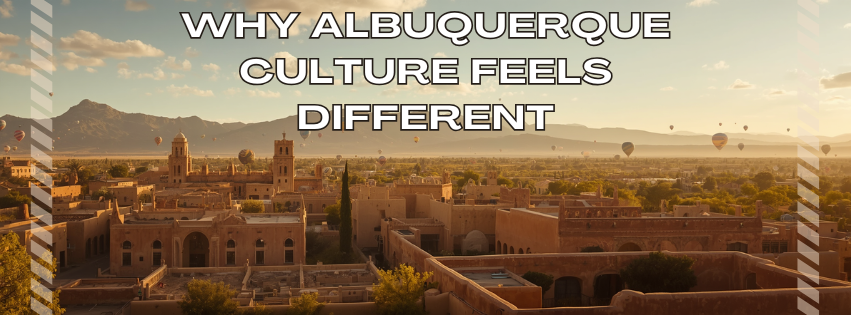
"Condé Nast Traveler recognized Albuquerque among its Best Places to Go in 2026 and its Best Places to Go in North America & the Caribbean, emphasizing the city's blend of ancient history, multicultural identity, and modern creativity. The publication called Albuquerque 'a destination where culture is alive, layered, and celebrated year-round.' AARP named Albuquerque one of 2026's Most Affordable Destinations," confirmed the City of Albuquerque's official recognition announcement (December 2025). Mayor Tim Keller added: 'Albuquerque stands apart because it offers authentic, meaningful experiences rooted in thousands of years of culture and history.'
The recognition from outside is useful as context — but the people who live here have always known what the travel editors are now discovering. Albuquerque's cultural distinctiveness is not a recent development cultivated for tourism. It is the specific outcome of 700 years of continuous habitation at a specific river crossing in the specific high-desert landscape of central New Mexico, producing a community unlike any other in the United States.
Dimension 1 — The Three Cultures That Are Still Three Cultures
"Albuquerque is a city like no other in the United States — a vibrant tapestry of Native American, Spanish, and Mexican heritage woven together over centuries. Our unique history is reflected in every corner of our community, from the flavorful dishes served at local tables to the adobe-style architecture that stands as a testament to enduring traditions. More than 70 different ethnicities call Albuquerque home," confirmed Visit Albuquerque's culture and heritage guide.
The cultural distinctiveness of Albuquerque is not primarily about diversity in the conventional American sense — many cities have diverse populations. It is specifically about the depth, longevity, and simultaneous coexistence of three distinct cultural traditions that have not been blended into each other:
The Pueblo Indigenous Tradition — The Deepest Layer
The Pueblo peoples have been present in the Rio Grande Valley for more than 1,000 years of continuous habitation. The 19 Pueblo nations of New Mexico — each with its own language, its own governance, its own ceremonial calendar, its own pottery tradition, its own weaving tradition, and its own relationship to the land — are not a historical artifact. They are living, contemporary communities that are specifically choosing to preserve, teach, and practice their traditions in 2026.
Sandia Pueblo is 15 minutes north of Albuquerque. Isleta Pueblo is 15 minutes south. The 19 Pueblos collectively operate the Indian Pueblo Cultural Center at 2401 12th Street NW — the only institution in North America where 19 sovereign Pueblo nations collectively tell their own story, in their own words, on their own terms. This is not a museum about a culture that ended. It is a living cultural institution maintained by communities that are still here.
- What this means in daily Albuquerque life: The blue corn meal in the grocery store. The Pueblo pottery on sale at the Saturday market from the potter who made it. The feast day ceremonies at Sandia and Isleta Pueblos that welcome visitors in August. The Gathering of Nations — which held its final edition in April 2026 after 43 years — that brought 3,000+ dancers from 500+ nations to the city. The Pueblo cultural presence is not background; it is daily texture.
The Spanish Colonial Tradition — The Architectural and Culinary Foundation
The Spanish colonial period of Albuquerque (1706-1821) produced the physical vocabulary of the city: the adobe construction, the kiva fireplace, the portal, the acequia irrigation system, the central plaza layout, the Catholic feast day calendar, and the New Mexican cuisine that blended Spanish colonial cooking techniques with Pueblo agricultural ingredients to produce the specific food culture that is not quite Mexican, not quite Spanish, and not quite anything else.
The National Hispanic Cultural Center at 4th Street and Bridge SW is the only national cultural institution in the United States dedicated to the study, advancement, and presentation of Hispanic culture, arts, and humanities. Its centerpiece is the Torreón Fresco — created by internationally renowned New Mexico native Frederico Vigil in 2010 in the ancient fresco technique — depicting 4,000 years of Hispanic history. It is the largest concave fresco in North America.
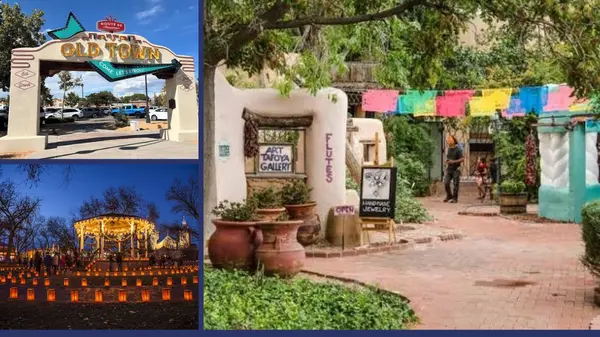
- The Spanish colonial tradition in 2026: The acequia water systems still irrigate the North Valley and Corrales. The Old Town plaza is still the gathering place of the community as it was designed to be in 1706. Festival Flamenco Alburquerque — held in June — is one of the largest and most prestigious flamenco festivals outside of Spain, rooted in Albuquerque's centuries of flamenco tradition. The New Mexican language (New Mexican Spanish) is still spoken in the older communities of the Rio Grande Valley.
The American Era — The Atomic Age and the Film Industry
The American period beginning in 1846 produced the third cultural layer — and specifically produced the most counterintuitive cultural identity element that Albuquerque possesses: the Atomic Age. The Manhattan Project's Trinity Test was conducted 200 miles south of Albuquerque in July 1945. Sandia National Laboratories and Kirtland Air Force Base, both established as part of the nuclear program, became the city's largest employers and the foundation of a scientific and engineering community that coexists with the Indigenous and Spanish colonial traditions in one of the most specific cultural juxtapositions in American life.
- The National Museum of Nuclear Science and History: The only federally chartered museum documenting the nuclear age — located in Albuquerque specifically because the nuclear age happened here. Its Spyglass Festival (January 2026) makes accessible and entertaining the specific history that defines modern Albuquerque's dual identity as ancient culture and Atomic Age science capital.
Dimension 2 — The Food That Is Not a Metaphor
Most American city food cultures are either imported or curated — food traditions brought by immigrants that are maintained in specific communities, or food scenes cultivated for urban consumer culture. Albuquerque's food culture is neither imported nor curated. It is the specific product of the three-culture layering applied to the specific agricultural bounty of the New Mexico high desert, and it is daily life rather than a dining event.
- Green chile is not a cultural event — it is Tuesday: The Hatch Valley green chile that is roasted in grocery store parking lots every August and September, that appears in the breakfast burrito at every local diner, that is the answer to "red or green?" at every New Mexican restaurant, and that is frozen in the back of every Albuquerque freezer for winter use is not a regional specialty maintained for tourism. It is what people eat.
- The "red or green?" question: The official state question of New Mexico. The question asked at every New Mexican restaurant. Red chile (dried, reconstituted, earthier) or green chile (roasted fresh, sharper) on your dish — with "Christmas" as the option for both. This is not menu copy. It is how food works here.
- The New Mexican cuisine is not Tex-Mex or Mexican food: People who arrive from Texas expecting Tex-Mex and from California expecting Mexican food encounter something specifically different — the blue corn tortilla, the posole, the sopapilla with honey, the red chile enchilada stacked rather than rolled, the green chile stew. The cuisine is the product of 400 years of Pueblo, Spanish colonial, and Mexican ingredients meeting in this specific landscape.
- The James Beard recognition: Mary and Tito's restaurant on Griegos Road NW is a James Beard America's Classic — the designation given to restaurants "with timeless appeal" that have been serving their community for generations. Mary and Tito's is not performing New Mexican cuisine for visitors. It has been serving the community that created the cuisine for more than 50 years.
Dimension 3 — The Art That Belongs to the Place
More than 100 art galleries and studios operate across Old Town, Nob Hill, and Downtown Albuquerque. The First Friday ArtWalk activates this gallery corridor on the first Friday of every month. The Albuquerque Museum holds 10,000 artworks and 35,000 historical objects. The Indian Pueblo Cultural Center's gallery shows Pueblo artists selling work made in the tradition their families have practiced for centuries.
What makes Albuquerque's art scene specifically different from the art scenes of cities like Santa Fe (internationally famous), Denver (commercially significant), or Austin (creatively energetic) is the relationship between the art and the place it is made. Albuquerque's art is not primarily imported from New York or cultivated for an external market. It is made by people who live in this landscape, for reasons that are connected to this landscape, using techniques and traditions rooted in the specific cultural history of this place.
- Pueblo pottery as living tradition: The Santa Clara Pueblo black-on-black pottery that was developed by potters in this specific tradition centuries ago is still being made by Santa Clara potters in 2026. When you buy a piece at the Indian Pueblo Cultural Center, you are not buying a reproduction of a cultural artifact. You are buying an original work in a living tradition from an artist who learned from their family.
- Flamenco as Albuquerque's specific art form: Albuquerque is the Flamenco Capital of North America — a designation earned not through marketing but through the specific 300-year presence of flamenco in the Spanish colonial tradition of New Mexico. The UNM flamenco program is the only academic flamenco program of its depth in North America. Festival Flamenco Alburquerque in June is one of the largest and most prestigious flamenco festivals outside of Spain.
- The film art that uses the landscape as set: Breaking Bad and Better Call Saul made Albuquerque's landscape a character in the story — the specific tan-and-blue quality of the light, the adobe exteriors, the Sandia Mountains as constant backdrop, the specific topography of the South Valley and the Northeast Heights as plot locations. The films could not have been made anywhere else because the city's visual character is not replicable by a set designer.
Dimension 4 — The Language and Naming That Persists
The most subtle but most pervasive dimension of Albuquerque's cultural distinctiveness: the names. The place names of Albuquerque and its surroundings are not colonial overlays on an erased indigenous landscape or immigrant community names attached to otherwise generic American geography. They are the active, daily-use names of a community that has been in continuous occupation of this specific place for centuries, and they carry the languages of the people who gave them.
- Spanish colonial names still in daily use: Bernalillo (the village that preceded Albuquerque's founding). Corrales (the corrals, the agricultural community along the Rio Grande). Los Ranchos de Albuquerque (the ranches of Albuquerque). Belen (Bethlehem, 35 miles south). Los Lunas (the moons, or the Luna family). Barelas (the neighborhood named for the Barela family, one of the original 1706 settlers). These names are not historical markers — they are the addresses people give when they say where they live.
- Pueblo language names still in place: Sandia (watermelon, for the mountain's color at sunset). Acoma (people of the white rock — the Pueblo founded around 1250, recognized as the oldest continuously inhabited community in North America). The naming of the landscape by the people who lived in it first is still present in the daily language of the city.
- The bilingual daily texture: Albuquerque's daily life is genuinely bilingual in a way that most American cities that claim bilingualism are not. The Spanish spoken in the South Valley is not the same Spanish spoken in Mexico City or Madrid — it is New Mexican Spanish, with its own vocabulary and its own cadence, preserving words and constructions from the 17th century that have not survived elsewhere.
Dimension 5 — The Specific Pace That Produces a Different Quality of Presence
The cultural attribute that newcomers notice last and residents value most: the pace. Albuquerque does not move at the pace of Austin, Denver, Seattle, or Phoenix. It does not move at the competitive velocity of a growth city or the aggressive optimism of a city that believes it is about to become the next thing. It moves at the pace of a place that knows what it already is.
The mañana quality — the cultural orientation toward present-moment engagement rather than agenda efficiency — is not laziness or dysfunction. It is the cultural product of a community that has been here for 700 years and has a different relationship with time than communities whose entire existence has occurred within the acceleration of the modern American era. The street that was here in 1706 is still here. The church that held Mass in 1793 is still holding Mass. The mountains have been called by the same name since before the Spanish colonial period.
- What this produces in daily life: The conversation that extends past its scheduled end. The restaurant that opens when it opens. The neighbor who stops to talk in the driveway without looking at a phone. The dinner party that begins later and ends later than invited. The specific quality of presence that comes from being in a community where being present is culturally valued above being productive.
Dimension 6 — The Space That Produces a Different Relationship to Scale
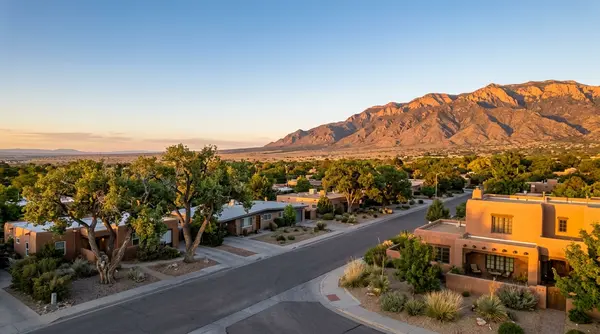
From most Albuquerque residential neighborhoods, you can see for 100 miles on a clear day. The Sandia Mountains to the east, the Jemez Mountains to the north, the Ladron Mountains to the south, and the West Mesa volcanoes to the west create a visible horizon that most American cities — built in dense forest, coastal flat, or urban canyon — do not provide. The sky is larger. The scale of the human settlement is visible against the scale of the landscape.
This spatial relationship produces something that is difficult to name but immediately felt by anyone who arrives from a denser environment: the specific sense of proportion that comes from being able to see where you are within the larger landscape. Albuquerque is a city of 560,000 people set in a desert basin surrounded by mountain ranges. The city's scale is always visible against the landscape's scale. That visibility produces a specific quality of presence that dense urban environments — where the city is all you can see — do not produce.
Dimension 7 — The Authentic Culture That National Recognition Is Now Discovering
The specific authenticity that has always been present in Albuquerque is what the major travel publications have most recently identified. "Culture is alive, layered, and celebrated year-round" (Condé Nast Traveler) is the external articulation of what residents have always known: the culture here is not performed for visitors. It is not produced by a tourism board. It is the genuine daily practice of the communities that live here.
The Balloon Fiesta is not a manufactured spectacle. It is the world's largest gathering of hot air balloons because the specific weather conditions of the Albuquerque basin in October — the Box effect, the consistent winds, the stable morning atmosphere — produce the ideal ballooning conditions that cannot be replicated by scheduling a festival somewhere else. The event grew from the conditions, not the other way around.
The green chile is not a regional specialty produced for the food tourism market. It is what the land grows in the Hatch Valley, what the people of this region have been eating for centuries, and what every Albuquerque resident freezes in August for use through the following spring. The authenticity is the product of the culture being genuinely the culture — not a performance of it.
For the complete guide to what Albuquerque is best known for — the specific events, achievements, and characteristics that define the city's identity — our post on what is Albuquerque best known for covers the full picture. And for the analysis of what specifically makes Albuquerque different from other Southwest cities — how it compares to Santa Fe, Phoenix, Tucson, and Denver — our post on what makes Albuquerque different from other Southwest cities covers the comparative analysis.
Why This Cultural Distinctiveness Makes Albuquerque a Specific Place to Live
The cultural distinctiveness described in this guide is not only a tourism argument — it is the specific reason that many people who move to Albuquerque choose to stay. The city is not offering a version of what other American cities offer at a lower price. It is offering something that other American cities specifically cannot offer because they do not have the 1,000-year Pueblo cultural presence, the 320-year Spanish colonial architectural vocabulary, the living flamenco tradition, the specific high-desert light quality, the Atomic Age scientific identity, or the specific community pace that produces genuine presence rather than scheduled interaction.
The person who moves to Albuquerque from a major metropolitan area and stays consistently describes the same experience: arriving with one set of expectations, encountering something significantly different, and discovering after 6-12 months that the difference is specifically what they needed. Not the affordable housing, though that is real. Not the sunshine, though that is also real. The specific quality of a place that knows what it is, has been practicing being that thing for seven centuries, and has no particular interest in becoming anything else.
Interested in Making Albuquerque Your Home?
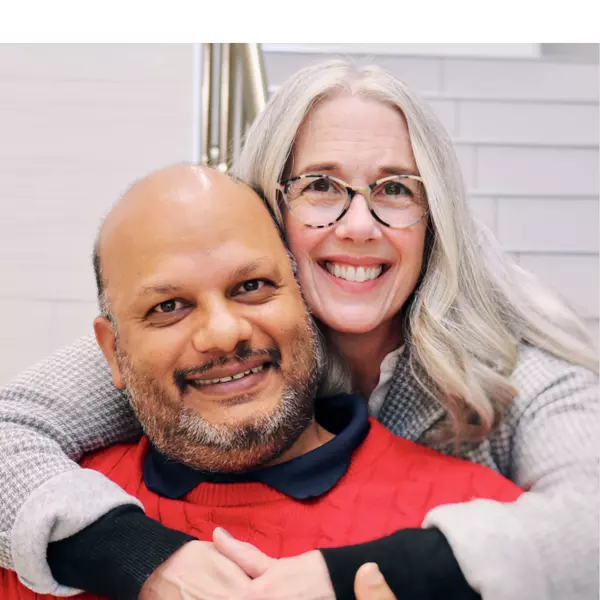
Jenn & Vinay from The Rodgers Neighborhood Real Estate Group are Albuquerque residents who specifically chose this city and know the neighborhoods where its cultural character is most immediately felt — where the Saturday morning porter walk takes you past a kiva and a gallery and a green chile stand and a bosque trail within the same mile. The conversation about finding your home in a city like nowhere else starts with a call.
Jenn & Vinay Rodgers are Albuquerque's trusted real estate professionals with The Rodgers Neighborhood Real Estate Group, brokered by Real Broker, LLC, serving buyers and sellers across Albuquerque, Rio Rancho, Corrales, Los Lunas, Tijeras, Cedar Crest, Sandia Park, the East Mountains, Bernalillo County, Sandoval County, and surrounding New Mexico communities.
The Rodgers Neighborhood Real Estate Group
Jenn & Vinay Rodgers
Real Broker, LLC
Albuquerque, NM
📞 505-417-2733
🏠 Find a home in the city that feels like nowhere elseCategories
- All Blogs (340)
- 2026 & Beyond for Real Estate (235)
- Doctors and Nurses looking for homes in NM (4)
- Guide to buying a home in NM (152)
- Health Care Heros (7)
- Home Upgrades (40)
- Jenn & Vinay your Local Real Estate Experts! (116)
- Moving to Albuquerque (132)
- Neighborhoods in Albuquerque NM (91)
- Rent or Own (2)
- Sellers Questions for Selling homes (2)
Recent Posts
GET MORE INFORMATION