
Interesting and Unusual Things to Do in Albuquerque, New Mexico
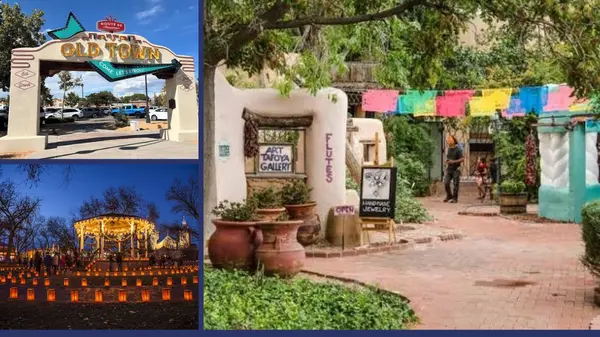
Albuquerque has the standard tourism infrastructure — the Old Town plaza, the BioPark Zoo, the Balloon Fiesta, the Sandia Mountain tramway. All of these are genuinely worth doing. But the city also has a set of experiences that are so specifically Albuquerque, so rooted in the particular history and culture and landscape of this place, that they simply do not exist in the same form anywhere else. This guide covers the unusual ones.
1. The American International Rattlesnake Museum — Old Town
"Don't miss it! I love snakes and this is the most impressive live snake museum I have ever seen, by far. They have dozens of kinds of live rattlesnakes as well as other interesting desert creatures — gila monsters, horned toads, etc. The man at the cash register was the owner and he talked freely and interestingly about the museum and various snake stories," confirmed TripAdvisor's top hidden gems in Albuquerque (2026).
The American International Rattlesnake Museum at 202 San Felipe Street NW in Old Town holds the world's largest collection of different species of live rattlesnakes — and it is housed in what appears from the outside to be an unremarkable storefront in the Old Town tourist corridor. Inside, the collection corrects "common reptilian misconceptions" while presenting dozens of live rattlesnake species alongside gila monsters, horned lizards, and other Southwestern reptiles in enclosures that bring you as close to these animals as most people are comfortable being.
The owner's involvement is specifically what makes the experience memorable — the person who sells you a ticket is the person who built the collection and who can tell you the story of how each animal was acquired. It is the most specifically Albuquerque form of a natural history museum: intimate, idiosyncratic, and running since 1990 because someone in this city specifically loves these animals and wants others to understand them.
- Hours and admission: Open daily; admission approximately $5-$8. 202 San Felipe Street NW, Old Town (adjacent to the Old Town plaza).
2. The Ghost Tour of Old Town — 320-Year-Old Paths After Dark
AbqTours, celebrating 25 years in 2026, operates the original and most highly rated ghost tour of Old Town Albuquerque — a nightly 105-minute guided walking tour through the 320-year-old streets of Old Town that explores the specific stories of the people, the buildings, and the events that accumulated during three centuries of continuous habitation. The tour departs at 8pm and reaches the sections of Old Town that are closed to daytime visitors after dark.
The ghost tour is unusual not primarily because of its supernatural content but because of what it reveals about the specific history of Old Town — the stories that are not in the day-tour script, the buildings that have specific and surprising histories, and the quality of attention that the 8pm hour and the 320-year-old setting produce. Standing in the Old Town plaza after dark, hearing the specific history of who lived and died there, is a different experience from the same plaza at 2pm in the summer crowd.
- Details: Nightly at 8pm, approximately 105 minutes. abqtours.com for reservations. Meeting point in Old Town. Family-friendly (no graphic content).
3. The Turquoise Museum — A Castle Mansion Dedicated to a Stone
The Turquoise Museum at 2107 Central Avenue NW occupies a building that looks from the outside like a small castle — and inside, it houses what it describes as some of the rarest and most collectible pieces of turquoise and turquoise jewelry in the world. The museum is the only institution of its kind anywhere: a space dedicated entirely to the mineralogy, geology, cultural history, and visual beauty of turquoise — the state gemstone of New Mexico, the material that has been traded across North America for centuries, and the most consistently misunderstood and misrepresented stone in the commercial jewelry market.
The Turquoise Museum has been the primary photographic and informational source for turquoise research for over 50 years. It teaches visitors how to identify genuine turquoise from simulated, stabilized, or dyed material — the knowledge that makes it possible to buy authentic pieces from the Native American artists at the Indian Pueblo Cultural Center and the Old Town market rather than the commercial imitations that fill the tourist corridors.
- Details: 2107 Central Avenue NW, just east of Old Town. turquoisemuseum.com for hours and admission. The museum recently reopened after renovation.
4. The National Museum of Nuclear Science and History — The Atom's Only Museum
Albuquerque is the only city in the United States that has a federally chartered museum dedicated to the nuclear age — because Albuquerque is the city where the nuclear age happened. The Manhattan Project's Trinity Test was conducted 200 miles south. Sandia National Laboratories — where the weapons design work continued after the war — is 15 minutes from Old Town. The National Museum of Nuclear Science and History at 601 Eubank Blvd SE holds the artifacts, the aircraft, the weapons hardware, and the human stories of the atomic century in one of the most unusual museum subjects available anywhere.
Outside the museum, the Heritage Park displays historic aircraft, missiles, and equipment including a B-52 Stratofortress, a B-29 Superfortress (the type that dropped the atomic bombs), and various nuclear weapons delivery systems. The outdoor collection is accessible even when the museum is closed and can be viewed from the parking lot. Inside, the exhibits cover the Manhattan Project, the Cold War deterrence programs, the contemporary nuclear energy landscape, and the scientists and military personnel whose work shaped the 20th century's defining technology.
- Details: 601 Eubank Blvd SE. nuclearmuseum.org for hours and admission. The Spyglass Festival (January 2026) brings special Cold War intrigue programming. Free for veterans.
5. The Chapel of Our Lady of Guadalupe — Built by Nuns Who Believed They Were at the World's Center
Hidden within Old Town Albuquerque's commercial streets is one of its most genuinely unusual spaces: the Chapel of Our Lady of Guadalupe (Capilla de Nuestra Señora de Guadalupe), a small chapel constructed in the 1970s by Sister Giotto Moots and fellow nuns from the Sagrada Art School who believed that the site was the planet's center of creativity. The chapel is a hands-on work of art — every surface, every tile, every piece of stained glass crafted by the nuns themselves as an act of devotion.
The chapel's origin story is one of the most specifically unusual in Albuquerque's dense historical inventory: a group of women who combined the conviction that they occupied the most creatively charged spot on Earth with the practical skill to build an entire chapel to mark that conviction. The resulting space is intimate, handmade, and unlike any other religious space in the city.
- Details: Located within Old Town; ask locally or check abqtodo.com for specific address and access hours.
6. Watch Traditional Pueblo Dances at the Indian Pueblo Cultural Center
The Indian Pueblo Cultural Center at 2401 12th Street NW presents traditional Pueblo dances on many weekend mornings — free cultural performances in the center's outdoor gathering plaza by dancers from the 19 New Mexico Pueblos. The dance performances are not staged for tourists. They are the actual practice of cultural traditions that have been continuous in the New Mexico Pueblo communities for centuries.
The experience of watching a traditional Pueblo dance at the IPCC is unusual not because it is theatrical but because it is genuinely what it says it is: the living cultural practice of a community that has chosen to share a specific aspect of its tradition with visitors. The IPCC's own community defines the terms of that sharing — some dances are open to visitors; others remain internal to the community. The ones presented at the IPCC are the specific invitation extended.
- Details: 2401 12th Street NW. indianpueblo.org for current weekend dance schedule. Free admission to the dance performances; museum admission separate.
7. Hike to the Top of a 150,000-Year-Old Volcano Rim at Sunset (Free)
The West Mesa Volcanoes — the five volcanic cinder cones that define Albuquerque's western skyline — are accessible via the Petroglyph National Monument's Volcanoes Day Use Area on the northwest edge of the city. The hike to any of the three main accessible cone rims (Vulcan, Black, and JA volcanoes) takes 20-45 minutes from the parking area. From the rim of Vulcan Volcano, you can see the entire Albuquerque metro, the Sandia Mountains, the Rio Grande, and the Jemez Mountains to the north.
The specific unusual quality: standing on the rim of a 150,000-year-old volcanic cinder cone looking down into the crater that created the ground the city is built on — the lava flows from these volcanoes produced the basalt cap that forms the West Mesa. The view at sunset, with the Albuquerque city lights starting to activate below and the Sandia Mountains turning pink to the east, is one of the most dramatic free visual experiences available in the metro area.
- Details: Volcanoes Day Use Area, Atrisco Vista Boulevard NW off Paseo del Norte. Free access. Best at sunset. Wear sturdy shoes for the volcanic basalt.
8. The Paseo del Bosque Trail by Moonlight (or Bicycle After Dark)
The Paseo del Bosque Trail — the 16-mile paved multi-use path through the cottonwood bosque along the Rio Grande — is one of the most used outdoor recreation assets in Albuquerque when visited during daylight hours. At night, it becomes something different: the dark within the cottonwood forest at midnight, the sound of the river, the city skyline visible through the canopy, the specific silence of being inside a forest that is also inside a city.
The Bosque Trail is accessible at night from multiple trailheads. The sections near Tingley Beach and the Albuquerque Museum of Natural History are lit; the sections farther north in the bosque are not. The full moonlight trail walk — timed to the lunar calendar, undertaken with appropriate safety awareness — is the most unusual urban outdoor experience available in Albuquerque and the one that most consistently surprises people who thought they knew the trail.
- Details: Multiple trailheads along Tingley Drive SW and Rio Grande Boulevard NW. Free. Best with a friend and a light source for the unlit sections.
9. The Telephone Museum of New Mexico — Every Phone From the Beginning
The Telephone Museum of New Mexico is the kind of museum that exists because someone specifically decided it needed to — a collection of vintage telephone equipment tracing the complete history of telecommunications from the era of operator-connected calls through rotary dials to the digital infrastructure. The collection is run by enthusiasts whose warmth about the subject is the defining visitor experience: hosts Susie and Sara have been described by multiple visitors as making every display feel like a personal story rather than an artifact.
The museum's unusual quality is not just the collection but the intimacy — a small-scale institution run with the specific care of people for whom these objects are genuinely fascinating and who want to share the fascination. In an era of large-scale digital museums with touchscreen interfaces, the Telephone Museum operates on the principle that someone who loves something and can explain why they love it is the best possible museum.
- Details: 110 4th Street SW, Downtown Albuquerque. nmphotography.com/telephonemuseum for hours.
10. Explora — The Science Museum That Is Better Than It Sounds
Explora at 1701 Mountain Road NW (Old Town adjacent) is described as a children's science museum — which immediately causes most adults to categorize it incorrectly. With over 250 hands-on exhibits across Science, Technology, Engineering, Art, and Math in a space designed for genuine engagement rather than supervised safety, Explora is the specific museum experience where adults consistently lose track of time experimenting with exhibits that are described for children and interesting to anyone.
The chain-reaction physics exhibits, the light and shadow demonstrations, the music technology installations, and the engineering challenges are the kind of interactive science that most adults never encounter after childhood science fairs. The specific pleasure of an adult engaging seriously with a museum nominally designed for children — the permission structure that the children's museum format provides — is one of the underrated pleasures of any science museum built well.
- Details: 1701 Mountain Road NW, in the Old Town museum cluster. explora.us for hours and admission. Best value on Tuesday evenings (discounted admission).
11. The Rio Grande Nature Center — 300 Bird Species in an Urban Forest
The Rio Grande Nature Center State Park at 2901 Candelaria Road NW is a 38-acre preserve on the Rio Grande flyway — one of the most significant migratory bird routes in North America — within the Albuquerque city limits. The preserve hosts over 300 bird species across the year, including roadrunners (actually common in Albuquerque's city limits), dozens of migratory waterfowl species, multiple hummingbird species, and the Sandhill Cranes that winter in the Rio Grande valley.
The unusual quality: an urban nature center that is genuinely wilderness from the moment you cross the bosque line. The cottonwood forest at the Rio Grande Nature Center operates as a fully functional riparian ecosystem — the bird density, the mammal activity (beavers are active in the Rio Grande adjacent areas), and the plant diversity are the specific qualities of wild habitat, accessible from the Albuquerque city limits without any travel time required.
- Details: 2901 Candelaria Road NW. emnrd.nm.gov for hours and access fees. Binocular loan available at the visitor center. Best at dawn and dusk during migration season (October and March-April).
12. The ABQ Trolley Tour — Old Albuquerque From Eye Level
"The ABQ Trolley is described as the 'best first thing to do in Albuquerque.' This unique trolley begins the trip a short walk from here and winds through neighborhoods along Central Avenue, formerly Route 66, Downtown Albuquerque, the University of New Mexico, and Nob Hill," confirmed Bottger Mansion B&B's 2026 comprehensive Albuquerque things to do guide (May 2026).
The ABQ Trolley operates a narrated open-air tour of Albuquerque's Central Avenue corridor — Route 66 — that covers Old Town, Downtown, University Heights, and Nob Hill in a single seated experience with local narration. The unusual quality is the narrator: the guides are specifically chosen for their local knowledge and the stories they tell about the specific buildings, neighborhoods, and residents along the route.
The Route 66 centennial in 2026 makes the ABQ Trolley specifically more relevant this year — the corridor the trolley travels is the same corridor where the Route 66 Remixed public art installations are visible, the same corridor where the Summerfest will take place, and the same corridor that the centennial has elevated as the most historically significant road in American travel culture. Seeing it from the open-air trolley rather than from a car window at 35 mph is the specific advantage the tour offers.
- Details:com for schedule and tickets. Trolley departs from the Old Town Visitors Center area. Approximately 90 minutes.
13. The KiMo Theater Interior — The Most Unusual Architectural Space in Albuquerque
The KiMo Theater at 423 Central Avenue NW is one of the most architecturally distinctive interior spaces in any American city — not just any New Mexico city. Built in 1927 in the Pueblo Deco style (the specific fusion of Southwestern Pueblo architecture and Art Deco decoration that exists in only a handful of American buildings), the KiMo's interior includes beehive kiva fireplaces in the lobby, buffalo skull light sconces along the walls, and the specific visual grammar of a building that is simultaneously a 1920s movie palace and a Pueblo ceremonial space.
Many visitors to Albuquerque attend a KiMo performance without fully registering that they are in one of the most unusual theater interiors in the United States. The lobby's skulls and kivas and Art Deco tile combinations are not decorative compromise — they are a specific architectural vision that succeeded completely and exists in only this one building.
- Details: 423 Central Avenue NW. kimotickets.com for current performance schedule. The lobby is accessible before and after performances without a ticket for viewing purposes. The interior can sometimes be viewed with advance arrangement even without a performance.
14. Tingley Beach Fishing in the Middle of the City (Free)
Tingley Beach at 1800 Tingley Drive SW is a set of urban fishing lagoons in the middle of the Albuquerque BioPark campus — ponds stocked with catfish, rainbow trout, and other species, ringed by cottonwood trees, and accessible free of charge to licensed New Mexico anglers. The unusual quality is the combination: fishing for stocked trout in a maintained urban park, within view of the Albuquerque Museum of Natural History, the ABQ BioPark Zoo, and the Sandia Mountains to the east.
Tingley Beach is specifically unusual because the urban fishing experience — which exists in many cities — has such a specific Albuquerque context. The cottonwood canopy, the proximity to the Rio Grande bosque, the mountains visible above the tree line, and the pedalboats and remote-controlled boats available at the adjacent ponds make Tingley the most distinctly Albuquerque version of an urban leisure experience that most cities provide in a generic form.
- Details: 1800 Tingley Drive SW. Free access; New Mexico fishing license required for fishing. Pedalboats available seasonally.
15. Night Hiking the Petroglyph National Monument by Flashlight
The 24,000+ petroglyphs at Petroglyph National Monument on Albuquerque's West Mesa are typically visited during the day, when the volcanic basalt rocks and the carved images are visible in direct sunlight. At night — specifically, at night with a flashlight — the experience changes. The raking light of a hand-held flashlight at oblique angles reveals the relief of the petroglyph carvings more dramatically than the flat overhead light of midday, and the absence of other visitors produces the specific quiet of standing on volcanic rock that is 700 years older than the city visible behind you, in front of images that someone carved there between 1300 and 1680 AD.
Note: official Petroglyph National Monument trails close at sunset per NPS regulations. The night hiking experience described here refers to the specific quality of early morning or late evening visits during the brief golden hour periods when the light is low-angled, rather than literal after-dark exploration. Check nps.gov/petr for current access hours.
- Details: Petroglyph National Monument, Unser Boulevard NW. Multiple trail access points. nps.gov/petr for hours and directions. Free access at most sites.
The Quick Reference — 15 Unusual Albuquerque Experiences
- American International Rattlesnake Museum: 202 San Felipe NW, Old Town — world's largest live rattlesnake collection
- AbqTours Ghost Tour: Nightly 8pm, Old Town — 105-minute walk through 320-year-old streets
- Turquoise Museum: 2107 Central Ave NW — only turquoise museum in the world, castle mansion setting
- National Museum of Nuclear Science and History: 601 Eubank Blvd SE — the atom's only museum
- Chapel of Our Lady of Guadalupe: Old Town — built by nuns who believed they were on the planet's center of creativity
- Indian Pueblo Cultural Center weekend dances: 2401 12th St NW — free traditional Pueblo performances on many weekends
- Volcano rim hike at sunset: Volcanoes Day Use Area, West Mesa — free, 150,000-year-old volcanic crater rim
- Bosque Trail by moonlight: Multiple trailheads — urban forest after dark, river sounds, city skyline through canopy
- Telephone Museum of New Mexico: 110 4th Street SW — complete telephone history told by enthusiasts
- Explora Science Museum: 1701 Mountain Road NW — 250 hands-on exhibits genuinely interesting to adults
- Rio Grande Nature Center: 2901 Candelaria Road NW — 300 bird species in urban bosque preserve
- ABQ Trolley: Route 66 narrated tour, Old Town to Nob Hill — centennial-year context
- KiMo Theater interior: 423 Central Ave NW — Pueblo Deco with buffalo skull sconces and kiva fireplaces
- Tingley Beach fishing: 1800 Tingley Drive SW — urban fishing lagoons, free, with mountain views
- Petroglyph National Monument early/late light: Unser Blvd NW — 24,000+ petroglyphs in low-angle light
For more Albuquerque activities beyond the unusual — the full calendar of events, outdoor adventures, and cultural experiences the city offers year-round — our post on unexpectedly cool things to do in Albuquerque covers the broader activity landscape. And for the unique experiences specifically unavailable anywhere else — the Balloon Fiesta, the Gathering of Nations, the Old Town luminarias — our post on unique experiences in Albuquerque you won't find anywhere else covers the once-in-a-city experiences.
The Bottom Line — Albuquerque's Unusual Is Specifically Its Own
The 15 unusual things in this guide are unusual in a specifically Albuquerque way. The rattlesnake museum is run by someone who specifically loves rattlesnakes and chose to share that love with the public in a storefront in Old Town. The ghost tour explores a plaza that is genuinely 320 years old and genuinely has stories to tell. The turquoise museum exists because turquoise has been culturally, mineralogically, and commercially significant to the people of this region for longer than most American cities have existed. The chapel was built by nuns who believed something very specific about this exact location.
The unusual things available in Albuquerque are not unusual because someone decided to manufacture unusual attractions for tourism. They are unusual because this specific place has a specific history, and the people who live here have been doing specific things with that history for a long time. The visitor who finds the rattlesnake museum or the ghost tour or the Telephone Museum is finding the trace of someone's genuine interest — the specific kind of unusual that only accumulates in cities that have been doing things their own way for a very long time.
Want to Live in the City Where the Weekend Can Look Like This?
Jenn & Vinay from The Rodgers Neighborhood Real Estate Group know which Albuquerque neighborhoods put the Old Town museum cluster — the rattlesnake museum, the ghost tour starting point, the turquoise museum, the chapel, Explora — within Saturday morning walking distance. Living in a city where the volcano rim hike is 20 minutes from your front door, where the bosque trail is the route home from the farmers market, and where the ghost tour is a regular Tuesday evening activity for people who want to hear about where they live — that is a specific version of good that the right Albuquerque address provides. The conversation about finding your home here starts with a call.
Jenn & Vinay Rodgers are Albuquerque's trusted real estate professionals with The Rodgers Neighborhood Real Estate Group, brokered by Real Broker, LLC, serving buyers and sellers across Albuquerque, Rio Rancho, Corrales, Los Lunas, Tijeras, Cedar Crest, Sandia Park, the East Mountains, Bernalillo County, Sandoval County, and surrounding New Mexico communities.
The Rodgers Neighborhood Real Estate Group
Jenn & Vinay Rodgers
Real Broker, LLC
Albuquerque, NM
📞 505-417-2733
🏠 Live in a city where this is your regular weekendCategories
- All Blogs (345)
- 2026 & Beyond for Real Estate (240)
- Doctors and Nurses looking for homes in NM (4)
- Guide to buying a home in NM (155)
- Health Care Heros (7)
- Home Upgrades (40)
- Jenn & Vinay your Local Real Estate Experts! (118)
- Moving to Albuquerque (133)
- Neighborhoods in Albuquerque NM (92)
- Rent or Own (2)
- Sellers Questions for Selling homes (2)
Recent Posts




GET MORE INFORMATION