
Hidden Gem Neighborhoods in Albuquerque — The 2026 Guide to the City's Overlooked Best
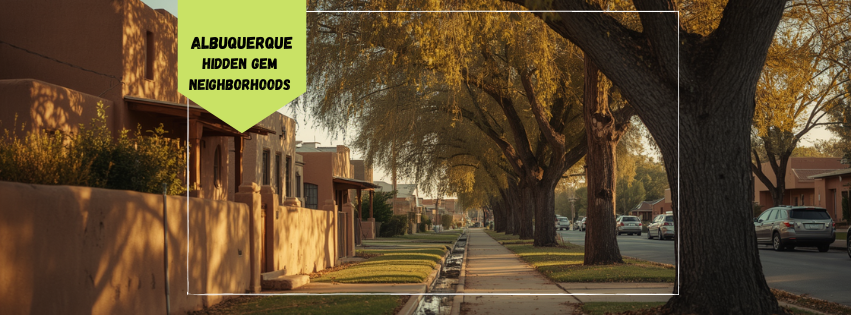
Every city has neighborhoods that most buyers skip over — either because the neighborhoods don't appear in the standard search categories, or because they lack the recognizable names that the real estate conversation returns to repeatedly, or because their quality of life is simply not yet reflected in their price. Albuquerque has more of these overlooked neighborhoods than most cities its size, partly because the conversation concentrates on Nob Hill, the Northeast Heights, and the North Valley, and partly because the city's specific cultural geography produces neighborhood character in unexpected places.
This guide covers eight Albuquerque neighborhoods that deserve more buyer attention than they typically receive — with the specific qualities that make each one interesting, the price range that reflects their current underappreciation, and the honest assessment of what each neighborhood is and is not at this particular moment.
What Makes a Neighborhood a Hidden Gem — The Criteria
A hidden gem neighborhood is not simply a cheap neighborhood. The definition used in this guide: a neighborhood where the current price does not yet reflect the authentic quality of life the neighborhood provides, where the character is genuine rather than constructed, and where the buyer who chooses it today is accessing something that is likely to be more widely recognized and more fairly priced in the future.
Some of these neighborhoods are historically significant with current prices that have not caught up to their heritage. Some are positioned adjacent to major amenities that buyers overlook because the neighborhood name doesn't appear in standard neighborhood comparisons. Some are transitioning in ways that are making previously overlooked areas increasingly livable. All of them are specifically worth knowing about if your Albuquerque search is defined by budget, authenticity, and patience.
Hidden Gem 1 — Barelas: History, Culture, and Bosque at the Most Honest Price
Location: South of Downtown, north of the South Valley, along the Rio Grande | Price range: $150,000 to $280,000
Barelas is one of Albuquerque's oldest continuously occupied neighborhoods — a predominantly Hispanic community with roots stretching back to the Spanish colonial period, positioned along the Rio Grande south of Downtown and immediately adjacent to some of Albuquerque's most significant cultural institutions.
The case for Barelas:
- The National Hispanic Cultural Center (NHCC): The 53-acre campus of the NHCC — one of the most significant Latino cultural institutions in the country — is in Barelas. The NHCC's world-class theater, the largest collection of Hispanic visual art in the American Southwest, and its fresco (the largest triptych fresco in North America by Frederico Vigil) are in Barelas. The neighborhood has a major cultural anchor that most buyers don't know is there.
- Bosque trail access: The Tingley Drive Southern Bosque Trailhead (819 Tingley Dr) — one of the major Paseo del Bosque Trail access points — is in Barelas. The neighborhood's western edge is steps from 16 miles of paved bosque trail.
- Authentic New Mexican residential character: Barelas has the specific residential texture of a neighborhood that was not designed for any market segment — small adobe homes, multi-generational households, the kind of community continuity that new construction cannot produce.
- Price: Homes in Barelas routinely available below $200,000 — the most affordable entry into a neighborhood adjacent to major cultural infrastructure and bosque trail access in the city.
The honest assessment: Barelas carries the same challenges that characterize South Albuquerque neighborhoods — higher crime statistics than the Northeast Heights, limited retail immediately in the neighborhood, and a physical infrastructure (streets, sidewalks) that reflects years of deferred investment. The buyer who chooses Barelas is accepting these realities in exchange for the cultural anchor, the bosque access, and the genuine neighborhood character at a price that nothing in Nob Hill or the Northeast Heights replicates. For buyers who are specifically drawn to authentic urban neighborhoods rather than suburban comfort, Barelas is Albuquerque's most underappreciated choice.
Hidden Gem 2 — Huning Castle / Huning Highland: The Most Architecturally Distinguished Affordable Neighborhood
Location: South of Old Town and the ABQ BioPark, west of Downtown | Price range: $200,000 to $380,000
Huning Castle and the adjacent Huning Highland neighborhood contain the most concentrated collection of architecturally significant late-Victorian and early-20th-century residential buildings in Albuquerque — homes that in any East Coast city would be on the National Register of Historic Places and priced accordingly. In Albuquerque, they remain underpriced relative to their architectural character because most Albuquerque buyers are not looking for historic character; they are looking for school zone access.
The neighborhood sits immediately south of the ABQ BioPark — one of Albuquerque's most visited natural attractions — and adjacent to Central Avenue's historic commercial corridor. "The ABQ BioPark Botanic Garden is one of the most peaceful attractions in Albuquerque," confirmed the Bottger Mansion of Old Town's Albuquerque neighborhood guide (May 2026). Huning Castle residents live adjacent to that resource year-round.
The case for Huning Castle:
- Architecture: Victorian-era homes, Territorial-style brick buildings, and early-20th-century craftsman bungalows on tree-lined streets — the specific residential architectural character that is generally unavailable in Albuquerque's newer suburban development and that buyers from East Coast and Midwest markets immediately recognize as genuinely interesting.
- ABQ BioPark adjacency: The Botanical Garden, the Aquarium, the Zoo, and the Tingley Beach fishing ponds are immediately north of the neighborhood. These are walkable amenities that Huning Castle residents have available year-round.
- Bosque access: The Paseo del Bosque Trail's Tingley Beach access point is walkable from the neighborhood's western edge.
- Dual-language school anchor: Dolores Gonzales Elementary — one of Albuquerque's most sought-after dual-language Spanish-English schools — is in the Huning Castle neighborhood zone, providing a specific educational option that draws families specifically.
- Price: $200,000 to $380,000 for homes with genuine architectural character adjacent to major natural amenities. The gap between price and character is the specific hidden gem condition this neighborhood holds.
The honest assessment: Huning Castle's location south of Old Town and west of Downtown places it in proximity to areas of Albuquerque that carry higher crime statistics. The neighborhood itself maintains a residential character that its existing community actively protects, and the BioPark creates a consistent visitor presence that adds to the neighborhood's security and vitality. Buyers considering Huning Castle should research specific street-level crime data rather than relying on city-wide statistics.
Hidden Gem 3 — Los Ranchos de Albuquerque: The North Valley Character at North Valley Adjacent Prices
Location: Immediately northwest of Albuquerque proper, between the North Valley and the Rio Grande | Price range: $350,000 to $650,000
Los Ranchos de Albuquerque is a small, separately incorporated village of approximately 6,000 residents that sits between the North Valley's established neighborhoods and the Corrales village to the north. It has the agricultural character, the acequia irrigation, the large lots, and the bosque proximity that drive buyers to Corrales and the North Valley — at prices that reflect its quieter public profile rather than its genuine quality.
The case for Los Ranchos:
- Agricultural village character: Los Ranchos maintains its own village government, its own police department, and a community identity that actively resists overdevelopment. The specific village planning philosophy — preserving the agricultural character through lot size minimums and zoning that limits density — produces the rural-near-urban environment that Corrales buyers are paying premium prices for, in a smaller and less-publicized village.
- Bosque and acequia infrastructure: The Rio Grande bosque is the western edge of the village. The acequia irrigation channels that crisscross the agricultural land reflect a water management tradition that predates American statehood. Properties with acequia frontage provide the specific New Mexico agricultural heritage experience that nowhere else in the city produces at this scale.
- Los Poblanos proximity: Los Poblanos Historic Inn and Organic Farm — with its 25-acre lavender fields, its award-winning restaurant, and its Meem-designed hacienda architecture — is in Los Ranchos. Residents of Los Ranchos can walk to the lavender fields in season.
- Los Ranchos Elementary: The village's own elementary school (part of APS) has a community school character that reflects the neighborhood's village identity.
The honest assessment: Los Ranchos does not have the commercial infrastructure that Corrales buyers sometimes find insufficient — it has even less. The village is intentionally quiet, intentionally residential, and intentionally agricultural in character. This is the specific appeal for buyers who want that character; it is the specific challenge for buyers who want neighborhood retail. Corrales buyers and North Valley buyers who are priced out or who specifically want smaller-village character should investigate Los Ranchos specifically.
Hidden Gem 4 — The Sawmill Arts District: Creative Investment in Motion
Location: Northwest of Downtown, south of the North Valley, centered on the Rail Yards | Price range: $200,000 to $380,000
The Sawmill District is the Albuquerque neighborhood that is most clearly in the middle of a transition from industrial past to creative future — and the buyers who enter during the transition capture the value that the transition creates. The anchor is the Sawmill Market: the food hall in the historic Albuquerque Rail Yards that has become the gathering place for the city's food community and that drives foot traffic, community investment, and residential desirability into the surrounding blocks.
The case for the Sawmill District:
- The Sawmill Market anchor: A successful food hall is one of the most reliable catalysts for neighborhood improvement that urban planning research documents. The Sawmill Market's Sunday market draws the Albuquerque community to the neighborhood weekly, creating foot traffic and community identity that flows outward into the surrounding residential blocks.
- Rail Yards National Historic Landmark: The Albuquerque Rail Yards — the manufacturing facility where steam locomotives were built and repaired — is a National Historic Landmark that is undergoing restoration and adaptive reuse. The historic industrial buildings will eventually host additional creative and commercial uses that support the neighborhood's transformation.
- Mountain Road Arts Corridor: The Mountain Road corridor west of Downtown has galleries, studios, and arts organizations that make it Albuquerque's most active arts corridor outside of Nob Hill. First Friday ARTScrawl includes Mountain Road venues.
- Price opportunity: $200,000 to $380,000 in a neighborhood where a food hall anchor, National Historic Landmark conversion, and arts corridor investment are creating the conditions for value appreciation. The buyers who are here now are ahead of the price curve.
The honest assessment: the Sawmill District is a transitioning neighborhood — which means the transition is not yet complete, and the blocks immediately adjacent to active industrial and commercial areas have the physical inconsistency that transitioning neighborhoods always display. A buyer who needs a finished neighborhood should look elsewhere. A buyer who is comfortable with the character of a neighborhood in active positive transition and who wants to capture the value that creates should look here first.
Hidden Gem 5 — Duranes: Old Town's Secret Neighbor
Location: Immediately north of Old Town, between the Rio Grande and the North Valley | Price range: $250,000 to $450,000
Duranes is the neighborhood that the buyers looking at Old Town itself cannot always afford, that the North Valley buyers don't know about, and that the Corrales buyers drive through without realizing it is a different and more affordable neighborhood character. It is a small, quiet, historically significant neighborhood with acequia history, large lots by Albuquerque standards, and the specific North Valley rural character at prices below the North Valley median.
The case for Duranes:
- Old Town adjacency: Duranes is immediately north of Old Town Albuquerque — the 1706 historic plaza, the San Felipe de Neri Church, the Old Town galleries and restaurants. Old Town is walkable or a 5-minute bike ride from Duranes residential streets. Buyers who want to live in the Old Town area without the Old Town pricing premium find Duranes the most logical alternative.
- Acequia and agricultural history: The Duranes acequia — one of the oldest irrigation systems in Bernalillo County — still runs through the neighborhood. The large-lot character of many Duranes properties reflects the agricultural history of land that was farmed through the 20th century before residential development came to the area.
- Bosque access: The Rio Grande bosque is the neighborhood's western border. The North Diversion Channel Trail and Paseo del Bosque access points are within the neighborhood.
- Large lots at non-large-lot prices: Properties in Duranes frequently offer lots of 0.25 to 0.75 acres — significantly larger than typical Albuquerque residential lots — at prices that reflect the neighborhood's overlooked status rather than its land area.
The honest assessment: Duranes is quiet to the point of limited commercial activity. The nearest commercial corridor is Old Town to the south and the 4th Street NW corridor to the east. Buyers who need neighborhood walkability to cafes and restaurants will find Duranes limited; buyers who want quiet, large-lot residential character within reach of Old Town will find it an undiscovered asset.
Hidden Gem 6 — Martineztown: Living History in the Shadow of Downtown
Location: Immediately east of Downtown, between Central Avenue and I-40 | Price range: $130,000 to $240,000
Martineztown is one of Albuquerque's oldest neighborhoods — a community established in the 19th century by a land grant from the Mexican period, with an unbroken Hispanic heritage that makes it one of the most culturally specific residential areas in the city. It sits immediately adjacent to Downtown, within walking distance of the city's primary employment and cultural center, at prices that reflect the neighborhood's physical challenges rather than its historic significance.
The case for Martineztown:
- The most affordable address adjacent to Downtown: Martineztown homes are routinely available under $200,000 — the most affordable residential neighborhood within walking distance of Downtown Albuquerque's employment, entertainment, and transit infrastructure.
- Hispanic heritage and cultural continuity: The neighborhood's community identity — its community garden, the Martineztown Park, the multi-generational households whose families have been in the neighborhood for generations — produces an authentic community character that no constructed neighborhood can replicate.
- Downtown walkability: The Central Avenue corridor, the Downtown arts scene, the Albuquerque Museum, and the Convention Center are walkable from Martineztown streets.
The honest assessment: Martineztown's location between Downtown and I-40 means noise from both and the physical character of a neighborhood that has experienced significant disinvestment over decades. The current prices reflect the challenges accurately. A buyer who is specifically interested in urban historic neighborhood investment and who is comfortable with the physical condition of a neighborhood in need of continued investment will find Martineztown the most affordable entry into Downtown adjacency. A buyer who needs move-in condition and established neighborhood infrastructure will not find it here.
Hidden Gem 7 — University Heights: The Nob Hill Neighbor Nobody Mentions
Location: Between UNM and Nob Hill, Central Avenue corridor | Price range: $190,000 to $380,000
University Heights sits in the geographic shadow of two more prominent Albuquerque neighborhoods — it is between UNM and Nob Hill, sharing the walkability of the Central Avenue corridor with both, but with its own quieter residential character and lower prices than either of its neighbors.
The case for University Heights:
- Central Avenue walkability without Nob Hill prices: The University Heights stretch of Central Avenue has the same walkable urban infrastructure as Nob Hill — coffee shops, restaurants, galleries, the First Friday ARTScrawl — at prices that typically run $50,000 to $100,000 below comparable Nob Hill properties.
- UNM proximity: The UNM campus — its athletic facilities, the performing arts venues, the duck pond, the outdoor art installation collection — is walking distance from University Heights residential streets.
- Eclectic housing stock: University Heights has a mix of 1940s and 1950s ranch-style homes, small craftsman bungalows, and some larger homes on the north side of the neighborhood. The housing variety produces opportunities across a price range that is consistently below adjacent Nob Hill.
- Niche A grade: Niche's 2026 ranking gives the neighborhood positive marks for walkability and urban lifestyle access, reflecting the university-adjacent character that the neighborhood name accurately communicates.
The honest assessment: University Heights' positioning between the student-dense UNM campus and the more established Nob Hill produces a residential character that is sometimes described as inconsistent — blocks of well-maintained homes adjacent to blocks where student rental density has affected upkeep. Buyers should walk the specific block of any property under consideration rather than relying on neighborhood-wide generalizations.
Hidden Gem 8 — Los Griegos / Alameda: The North Valley's Entry Point
Location: North of Alameda Boulevard in the North Valley area, west of the Rio Grande | Price range: $280,000 to $450,000
The neighborhoods north of Alameda Boulevard — Los Griegos, the lower-priced North Valley areas, and the residential streets between the bosque and the North Valley commercial corridor — provide the North Valley lifestyle at prices below the North Valley's established median, often overlooked by buyers who search for "North Valley" and find the higher-profile listings first.
The case for Los Griegos / Alameda area:
- North Valley character at entry-point prices: The bosque access, the agricultural remnants, and the community character that define the North Valley lifestyle are present in the Alameda area at prices that can be $50,000 to $100,000 below the more established North Valley addresses.
- Bosque trail access: The Alameda Bosque Trail access point on the west side provides direct trail entry from the neighborhood without a drive. The cottonwood corridor at peak color in October is accessible as a walk rather than an excursion.
- Quieter residential character: North of Alameda Boulevard, the neighborhood density decreases and the lot sizes increase — producing the quieter residential character that North Valley buyers seek at lower prices than the most sought-after North Valley addresses.
For the complete neighborhood landscape of Albuquerque — the full picture of where residents live and what each area offers — our complete guide to things to do in Albuquerque covers the city's full experiential range. And for buyers who want to understand how Albuquerque's pricing compares across neighborhood tiers, our Albuquerque cost of living guide for 2026 covers the full affordability picture.
The Common Thread — What Makes These Neighborhoods Work for the Right Buyer
Every neighborhood in this guide shares a specific characteristic: the authentic quality of the neighborhood is greater than the price currently reflects. In some cases — Barelas, Martineztown — the gap reflects physical challenges that buyers need to evaluate honestly. In others — Huning Castle, Los Ranchos, Duranes — the gap reflects primarily the absence of the neighborhood from the standard real estate conversation, not any fundamental shortcoming.
The buyer these neighborhoods serve best is specific: someone who values neighborhood character over neighborhood profile, who is patient with the gap between authentic quality and market recognition, who has done the due diligence to understand what each neighborhood is honestly, and who is buying for their own use of the neighborhood rather than for the neighborhood's perceived status.
The risk in hidden gem neighborhoods is romanticizing them — projecting ideal future development onto neighborhoods whose current conditions require honest assessment. The opportunity is equally real: the Albuquerque neighborhoods that are genuinely underpriced relative to their actual quality of life provide entry into city living that the more recognized neighborhoods have stopped providing at their current prices.
The buyer who identifies which hidden gem matches their own priorities — cultural heritage, architectural character, outdoor access, Downtown adjacency, or agricultural village character — and who acts on that match with honest due diligence is the buyer who gets the best of Albuquerque without the price tag that recognition commands.
Ready to Explore Albuquerque's Overlooked Best?
Jenn & Vinay from The Rodgers Neighborhood Real Estate Group know the specific blocks and specific streets that make each of these hidden gem neighborhoods work — and the specific blocks and streets that require careful due diligence before an offer. Finding the hidden gem that actually fits your lifestyle, your budget, and your tolerance for neighborhood transition requires the granular local knowledge that only an experienced Albuquerque agent can provide. The conversation about Albuquerque's overlooked neighborhoods starts with a call.
Jenn & Vinay Rodgers are Albuquerque's trusted real estate professionals with The Rodgers Neighborhood Real Estate Group, brokered by Real Broker, LLC, serving buyers and sellers across Albuquerque, Rio Rancho, Corrales, Los Lunas, Tijeras, Cedar Crest, Sandia Park, the East Mountains, Bernalillo County, Sandoval County, and surrounding New Mexico communities.
The Rodgers Neighborhood Real Estate Group
Jenn & Vinay Rodgers
Real Broker, LLC
Albuquerque, NM
📞 505-417-2733
🏠 Browse listings in Albuquerque's hidden gemsCategories
- All Blogs (352)
- 2026 & Beyond for Real Estate (246)
- Doctors and Nurses looking for homes in NM (4)
- Guide to buying a home in NM (158)
- Health Care Heros (7)
- Home Upgrades (40)
- Jenn & Vinay your Local Real Estate Experts! (120)
- Moving to Albuquerque (135)
- Neighborhoods in Albuquerque NM (93)
- Rent or Own (2)
- Sellers Questions for Selling homes (2)
Recent Posts




GET MORE INFORMATION