
The Ultimate Albuquerque Bucket List for First-Time Visitors
The Ultimate Albuquerque Bucket List for First-Time Visitors — A Local's Honest Guide
There is a version of Albuquerque that shows up in travel content and a version that shows up when you actually live here. The gap between them is significant.
The travel content version leads with the Balloon Fiesta, mentions Old Town in the second paragraph, and somewhere around item seven on the list drops in "try green chile" as if that is a single, discrete thing you do once and check off. It is not. Green chile is a food philosophy. It is a relationship. It takes time.
This bucket list is the version written by people who have the real version of Albuquerque in their daily lives — who drove to the Sandia Crest on a Tuesday afternoon because we could, who know which breakfast burrito spot is worth the line and which one is famous because it is famous, who have watched the Balloon Fiesta enough times to know which experience is the one that actually changes people.
2026 is a genuinely extraordinary year to visit Albuquerque for the first time. Route 66 turns 100 this year, and the city that has the longest continuous urban stretch of the Mother Road in the entire country is marking the centennial with new murals, new installations, special events, and a citywide energy that will not be replicated in our lifetimes. Come this year if you can.
Here are the fifteen experiences that belong on every first-time visitor's list — ranked not by how famous they are, but by how irreplaceable they actually are.
The Unmissable — Start Here
1. Watch a Mass Ascension at the International Balloon Fiesta
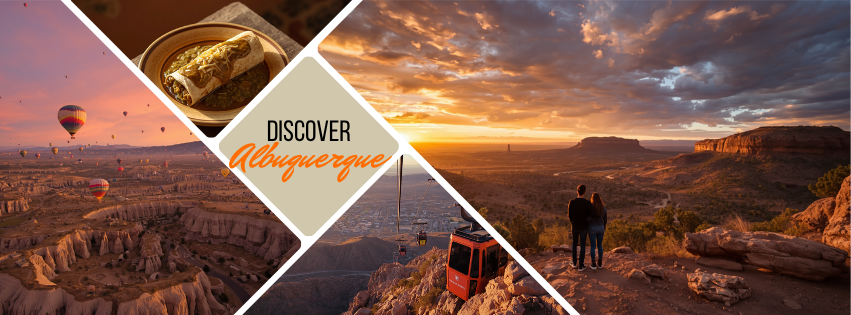
This is the experience that earns Albuquerque its designation as the Hot Air Ballooning Capital of the World — and it is genuinely one of the most spectacular recurring events on Earth. The ExxonMobil Albuquerque International Balloon Fiesta runs October 3 through 11 in 2026, and the 54th edition is themed "The Scenic Route" specifically in honor of Route 66's centennial.
Over 500 hot air balloons — including approximately 100 special shape balloons that include everything from giant animals to iconic brand characters — lift off in coordinated mass ascensions from Balloon Fiesta Park as the Sandia Mountains catch the first light of morning behind them. The Albuquerque Box, a unique layered wind pattern created by the Rio Grande Valley's geography, allows pilots to launch and land at the same location — a meteorological feat nearly impossible anywhere else in the world.
The Dawn Patrol launches before sunrise, sending a handful of balloons into the dark sky with their burners blazing like floating torches. Then the mass ascension begins in waves and suddenly the sky is full of color in every direction. Experienced Fiesta visitors describe the same thing every year: the first time the full field is in the air, the sound disappears. The crowd goes quiet. Everyone just looks up.
Practical notes: general admission tickets are $15 per session. Arrive by 5am on mass ascension days. Dress in layers — October mornings near the Rio Grande are cold. The evening Balloon Glows, where tethered balloons illuminate at dusk, are not second-best — they are a completely different and equally breathtaking experience.
If you visit outside of October, hot air balloon rides are available year-round through operators including Rainbow Ryders. A sunrise flight over the Rio Grande and the city — with the Sandia Mountains turning pink as the sun rises — is the most memorable way to experience what Albuquerque looks like from above.
2. Ride the Sandia Peak Tramway at Sunset
The Sandia Peak Aerial Tramway is the longest aerial tram in North America — a 2.7-mile cable car ride from the eastern edge of the city to the 10,378-foot summit of Sandia Crest, ascending through four distinct life zones from Chihuahuan desert scrub at the base to alpine meadow at the top. The ride takes approximately 15 minutes each way.
The timing matters: ride it up in late afternoon and time your descent for the hour after sunset. From the summit, you watch the city lights of Albuquerque come on in the valley below as the sky turns from gold to deep purple to black. On a clear evening — which in Albuquerque is most evenings — you can see up to 11,000 square miles of the Land of Enchantment from the top.
TEN3, the summit restaurant, offers a dining experience at 10,378 feet with panoramic views of the Rio Grande Valley. Reservations are strongly recommended, particularly for weekend evenings. If you are visiting in winter, the tram also provides access to Sandia Peak Ski Area on the mountain's east face — a genuinely unique way to ski a New Mexico mountain.
3. Eat the Green Chile Cheeseburger at the Right Place
New Mexico has a state question: "Red or Green?" It refers to which chile sauce you want. The state also has an unofficial state food competition — the New Mexico Green Chile Cheeseburger Trail — and Albuquerque is where many of the most legendary versions are found.
The green chile cheeseburger is not a novelty. It is the honest expression of a food culture built over 400 years from Spanish and Native American traditions. The chile is roasted, peeled, and stacked on a burger that has been grilled by someone who takes the combination seriously. When it is done correctly — and the best ones in Albuquerque are done very correctly — it is genuinely one of the best things you will eat anywhere.
The Owl Bar in San Antonio (an hour south) is the most famous New Mexico green chile cheeseburger in the state. In Albuquerque proper: Bob's Burgers on Isleta (not the cartoon, the actual local institution), the Frontier Restaurant adjacent to the University of New Mexico for the full student-and-professor experience, and any number of local diners along Central Avenue where the cook has been making them the same way for twenty years.
Order it Christmas — red and green chile both. Get extra napkins.
Cultural and Historical Experiences You Cannot Find Elsewhere
4. Spend a Morning at the Indian Pueblo Cultural Center
This is the most important cultural experience in Albuquerque for a first-time visitor — and the one most likely to reframe how you understand everything else you see in New Mexico.
The Indian Pueblo Cultural Center is owned and operated by the 19 Pueblos of New Mexico and tells the history of the Pueblo people through their own perspective, in their own voice. The permanent collection covers thousands of years of continuous Pueblo civilization. Traditional dance performances happen on weekends in the outdoor performance courtyard. The Indian Pueblo Kitchen serves traditional Pueblo food — fry bread, posole, pueblo bread — alongside contemporary dishes that reflect the living, evolving nature of Pueblo food culture.
Most visitors describe the experience as genuinely moving and unlike anything they expected. The center is not a history museum presenting indigenous culture as a past thing. It presents a living culture, a continuing civilization, and a perspective on this land that most visitors from other parts of the country have never encountered directly. Give it a full morning. It deserves it.
5. Walk Old Town at Golden Hour
Old Town Albuquerque has been continuously inhabited since Spanish settlers founded the city in 1706 around the Plaza de Armas. The San Felipe de Neri Church — still an active Catholic parish — anchors the plaza and has stood in some form since 1706. The surrounding streets are lined with adobe buildings housing galleries, jewelry shops, and restaurants that occupy spaces that have been commercial for three centuries.
The tourist version of Old Town is fine: browse the turquoise jewelry, eat at the restaurants, visit the Albuquerque Museum. The locals' version is: go at 5pm on a weekday in spring or fall when the light is long and golden, the crowds are lighter, the church bells ring on the hour, and the mountains turn pink behind the plaza. Sit on one of the courtyard benches and do nothing for twenty minutes. Let the place tell you what it is.
The Albuquerque Museum of Art and History, anchored on the Old Town plaza, is one of the most underrated regional museums in the Southwest. The permanent collection covers the city's 300-year history and includes significant New Mexican art. Give it two hours.
6. Drive the Route 66 Centennial in 2026 — You Will Not Get Another Chance
Route 66 was established in 1926. This year is its 100th anniversary, and no city in America is celebrating it more authentically than Albuquerque — home to 18 continuous miles of the original highway alignment, the longest stretch of Route 66 in any U.S. city.
New murals and art installations have been going up along Central Avenue throughout 2026 as part of the centennial celebration. The restored neon signs along the corridor — including the KiMo Theatre's elaborate Pueblo Deco marquee, the classic motel signs, and the 66 Diner's retro facade — glow along the avenue in a way that makes a night drive feel like time travel.
Drive the full corridor from the West Side through Downtown and into Nob Hill in the evening. Stop at the Dog House Drive-In, a hotdog stand that has been serving chili dogs on Central Avenue for over 60 years. Stop at the 66 Diner for a milkshake. Look at the KiMo Theatre's facade even if you do not go in. The centennial means this specific iteration of Route 66 Albuquerque — with the new art alongside the historic markers — will not exist again in exactly this form.
7. Visit the National Museum of Nuclear Science and History
This one surprises a lot of first-time visitors who come expecting a dry federal institution and leave having experienced one of the most thought-provoking museum visits available in any American city.
The National Museum of Nuclear Science and History is the only congressionally chartered museum of its kind in the United States, and its location in Albuquerque — adjacent to Kirtland Air Force Base and near Sandia National Laboratories — is not incidental. New Mexico is where the Manhattan Project was centered, where the first atomic bomb was assembled at Los Alamos, and where Trinity Site witnessed the world's first nuclear detonation in the White Sands desert to the south.
The museum covers the full arc of the nuclear age — from the physics of fission through the Manhattan Project to Cold War deterrence to the current state of nuclear medicine and energy. The outdoor Heritage Park contains restored aircraft and missiles including a B-52, a B-29, and an Atlas missile. It is heavy subject matter, handled with the gravity and balance it deserves. Allow at least three hours.
Outdoor Experiences That Define the Albuquerque Lifestyle
8. Hike Into the Petroglyph National Monument at Sunrise
Petroglyph National Monument protects approximately 24,000 petroglyphs — rock art images carved into the West Mesa's volcanic basalt escarpment by ancestral Puebloan people and early Spanish settlers over a period spanning several centuries. The park sits on the western edge of Albuquerque, where suburban neighborhoods end at the mesa's edge and the trail system begins.
Go at sunrise. The low angle of the morning light illuminates the petroglyphs in ways that midday sun flattens. The Boca Negra Canyon unit is the most accessible, with paved trails and good concentration of petroglyphs in a compact area. The Rinconada Canyon unit is longer, quieter, and rewards the willingness to walk further with a more immersive experience in the volcanic landscape.
Standing in front of a petroglyph that was carved 700 years ago by someone who stood in this exact spot and expressed something important enough to cut into stone — that is one of the more quietly profound experiences Albuquerque offers. The West Mesa itself, with its volcanic cones visible at the north end of the monument, adds a geological layer to the experience that reminds you this entire landscape is built on a volcanic field.
9. Walk the Rio Grande Bosque at Cottonwood Peak Season
The bosque — the riparian cottonwood forest that lines the Rio Grande through Albuquerque — is one of the city's defining features and one of the experiences most likely to shift a first-time visitor's understanding of what Albuquerque actually is.
Go in late October or early November, when the cottonwoods turn gold. The light through the golden leaves above the Rio Grande, with the Sandia Mountains visible between the trees to the east, is one of the most beautiful things New Mexico produces — and it happens every year, with minimal fanfare, accessible to anyone who drives to the Paseo del Bosque trailhead and starts walking.
The Paseo del Bosque Trail runs approximately 16 miles through the bosque as a paved multi-use path. The Rio Grande Nature Center State Park, a 38-acre preserve within the bosque, is home to more than 300 bird species along the Rio Grande flyway — one of the best urban birdwatching experiences in the American Southwest. Great blue herons fish the riverbanks. Sandhill cranes pass through in autumn migration. The bosque in cottonwood season is genuinely extraordinary.
10. Drive the Turquoise Trail to Madrid
Highway 14 south from Interstate 40 toward Santa Fe is designated the Turquoise Trail National Scenic Byway, and the drive from Albuquerque through the Sandia Mountains and into the Ortiz Mountains is one of the most beautiful in New Mexico — which is saying something.
Madrid is the destination. An old coal mining town that was essentially abandoned by mid-century, Madrid was repopulated starting in the 1970s by artists, craftspeople, and people who needed to be somewhere they could build their own thing. Today it is a single street of galleries, studios, restaurants, and shops owned by the people who make what they sell — the opposite of a curated tourist experience, and more interesting because of it.
The Mine Shaft Tavern in Madrid has been in continuous operation in various forms since the 1940s. The art galleries carry work that is made within a few miles of where it is sold. The whole town is approximately 200 people. Give it a Saturday afternoon and come back to Albuquerque in time for sunset.
11. Take the La Luz Trail Up the Sandia Mountains
For visitors who want to earn their elevation, the La Luz Trail is the most rewarding hike accessible from Albuquerque. The trail climbs the western face of the Sandia Mountains from the Elena Gallegos Picnic Area trailhead at approximately 6,800 feet to the Sandia Crest at 10,378 feet — a 9-mile roundtrip with 3,500 feet of elevation gain through three distinct life zones.
It is a serious hike. Not technical, but demanding in the way that a 3,500-foot climb at altitude in the New Mexico sun is always demanding. Carry significantly more water than you think you need. Start early — trail conditions in summer change significantly by mid-morning as the heat builds. The reward at the top is the full panoramic view of the Rio Grande Valley, the West Mesa, and on clear days, the mountains of southern Colorado to the north.
The one-way tram option — hike up La Luz, take the Tramway down, or reverse it — is the smart move for first-timers who want both experiences without doubling the elevation change.
Food, Drink, and the New Mexico Table
12. Order Everything Christmas at a Proper New Mexican Restaurant
New Mexican food is not Mexican food. It is not Tex-Mex. It is a distinct cuisine built over 400 years from the intersection of Spanish colonial, Native American, and Southwestern frontier traditions — and it is impossible to fully understand until you have sat down at a table in Albuquerque and worked through a plate of it properly.
The canon: carne adovada (pork braised in red chile until it falls apart), green chile chicken enchiladas, chile rellenos (roasted Hatch green chiles stuffed with cheese and either baked or fried), posole (hominy stew with red chile and pork), and sopaipillas (pillowy fried bread served with honey as a dessert or palate cleanser between bites of chile-laden food). The breakfast burrito — egg, potato, meat, and chile in a flour tortilla — is the daily fuel of Albuquerque's working population.
The restaurants worth knowing: Mary and Tito's on 4th Street for carne adovada that has been winning awards since 1963. El Pinto in the North Valley for the full experience in a hacienda setting. The Frontier Restaurant adjacent to UNM for the most democratic version — standing room, all hours, extraordinary green chile stew, and a painting of John Wayne watching over the dining room. Garcia's Kitchen for the unapologetic neighborhood diner version that most locals grew up with.
13. Eat the Breakfast Burrito Trail — Multiple Mornings Required
Albuquerque's Breakfast Burrito Byway is not a marketing invention — it is a genuine reflection of the breakfast burrito's centrality to this city's food culture. New Mexico lays claim to the original breakfast burrito, and the debate about who makes the best one is an ongoing civic conversation that generates genuine passion.
The format: a flour tortilla filled with scrambled eggs, hash browns or papas fritas, your choice of meat (bacon, sausage, carne adovada), and covered in red, green, or Christmas chile. The best ones have chile that is made fresh from Hatch green chile or New Mexico red chile pods — not from a can, not from a roux, from actual chile.
One morning is not enough to understand the breakfast burrito. It takes several mornings at different establishments before you develop the vocabulary to describe what you are tasting and the preference that every Albuquerque resident eventually arrives at.
14. Spend an Evening at Sawmill Market
Sawmill Market is New Mexico's first food hall, anchored in the historic Sawmill District near Old Town. It is the most concentrated expression of Albuquerque's current food scene in a single location — local vendors across multiple culinary styles sharing one beautifully designed space with an outdoor social area that animates on warm evenings.
The vendors represent the breadth of Albuquerque's food culture: traditional New Mexican, modern farm-to-table, Japanese, Filipino, Italian, coffee, craft cocktails, and dessert concepts. The quality level across vendors is consistently high in a way that distinguishes Sawmill Market from the average food hall. The outdoor courtyard on a summer evening — with the Sandia Mountains visible to the east as the sun sets behind the Petroglyph mesa to the west — is one of the better outdoor dining environments in the city.
The Experiences That Make People Start Thinking About Moving Here
15. Attend the Gathering of Nations in April
The Gathering of Nations Powwow — held annually at Tingley Coliseum in April — is the largest powwow in North America and one of the most significant Native American cultural events in the world. More than 3,000 dancers from over 700 tribes across the United States and Canada gather for three days of competitive dance, drumming, the Miss Indian World competition, and the Indian Traders Market.
First-time visitors to the Gathering of Nations describe a consistent experience: they expected a cultural display and discovered something much more alive than that. The competitive dancing — from the intricate footwork of the Fancy Shawl competition to the ceremonial gravity of the Traditional categories — is athletic, artistic, and deeply moving. The drumming, with multiple drum groups performing simultaneously, creates an immersive sonic environment unlike anything else in American cultural life.
The Indian Traders Market attached to the Gathering is one of the best places to purchase authentic Native American jewelry, textiles, and art in the country — directly from the artists who made them, at prices that reflect the work without the gallery markup.
A Note on Why People Come for a Visit and Start Looking for Homes
The pattern happens often enough that Jenn and Vinay have given it a name: the Albuquerque Reveal. Someone visits for the first time — for the Balloon Fiesta, or a work trip, or a friend's wedding. They do two or three things from this list. They eat their first properly made green chile dish. They watch the Sandia Mountains turn pink at sunset from a restaurant patio. They walk the bosque in the morning and realize they are five minutes from a major city and cannot hear anything except birds and wind.
And then something shifts. They start doing math on housing costs. They ask their friends in Albuquerque how long they have been there and whether they like it. They pull out their phone and search for real estate. Not because they planned to. Because the city showed them something they did not expect.
If that is happening to you — even a little — our guide to relocating to Albuquerque is the honest starting point for what the city actually looks and feels like to live in. And our guide to Albuquerque neighborhoods covers every major area in the city with the specificity that a moving decision deserves.
Practical First-Timer Notes Before You Go
Altitude adjustment is real. Albuquerque sits at 5,312 feet above sea level. Most visitors from lower elevations feel the altitude within the first 24 hours — some feel it significantly. The adjustment looks like mild headache, unusual fatigue, and faster intoxication from alcohol. Drink substantially more water than you normally would, for at least the first two days. It passes quickly but it is worth knowing in advance.
The UV exposure is genuinely extreme. Albuquerque averages 310+ days of sunshine per year at high altitude. Sunscreen is a daily necessity, not a beach item. Fair-skinned visitors who spend a full day outdoors without it will know it by evening.
The dry air is immediately apparent. Pack lip balm. Your skin will feel tighter within 24 hours of arrival. Your nose will feel it too. A small bottle of nasal saline spray is not an overreaction — it is a practical accommodation that most New Mexico first-timers learn the hard way.
The weather changes fast. Afternoon thunderstorms during monsoon season (July through September) can develop within 30 minutes from a clear blue sky. They are spectacular and they pass quickly, but if you are on a mountain trail when one develops you need to descend immediately. Check the forecast before any outdoor activity that takes you above the tree line.
Parking is almost never a problem. Albuquerque is built for cars. In most parts of the city, free or inexpensive parking is immediately adjacent to wherever you are going. The exception is Balloon Fiesta — arrive two hours early and use the official Balloon Fiesta parking system, because the field access roads become gridlocked otherwise.
For the complete picture of what Albuquerque is like as a place to live — not just to visit — see our post on things to do in Albuquerque New Mexico, which covers the full lifestyle picture from a resident's perspective. And if the city has gotten under your skin and you want to understand the neighborhoods, the market, and what a home here actually costs, Jenn & Vinay are the right conversation to have.
The Bottom Line — Come This Year If You Can
There has never been a better year to visit Albuquerque for the first time than 2026. Route 66 centennial energy is running through the entire city from January through December. The Balloon Fiesta's 54th edition is specifically themed around that centennial in October. The city's food scene has matured in ways that make it genuinely competitive with larger Southwest metros. The outdoor infrastructure — trails, parks, the bosque, the tramway — is exactly as extraordinary as it has always been.
The experiences on this list are not interchangeable with experiences in other cities. They are specific to this place, this landscape, this culture, and this particular moment in the city's history. Most of them are free or inexpensive. Most of them leave people significantly more impressed than they expected to be.
Albuquerque does not sell itself. It shows you what it is, at its own pace, on its own terms — and the people who encounter it honestly tend to find exactly what they did not know they were looking for.
Thinking About More Than a Visit?
Jenn & Vinay from The Rodgers Neighborhood Real Estate Group help people find homes in Albuquerque every day — many of them first-time visitors who came for a weekend and started doing the math on what life here could look like. If that is where you are, we are exactly the right conversation.
📞 (505) 417-2733 | rodgersvj@gmail.com
Categories
- All Blogs (322)
- 2026 & Beyond for Real Estate (218)
- Doctors and Nurses looking for homes in NM (4)
- Guide to buying a home in NM (146)
- Health Care Heros (7)
- Home Upgrades (38)
- Jenn & Vinay your Local Real Estate Experts! (107)
- Moving to Albuquerque (127)
- Neighborhoods in Albuquerque NM (87)
- Rent or Own (2)
- Sellers Questions for Selling homes (2)
Recent Posts

GET MORE INFORMATION