Albuquerque Best Public Art and Street Art
Albuquerque's public art landscape is not a curated tourist feature. It is an ecosystem — built over 41 years of institutional commitment, fueled by community artists working at neighborhood scale, expanded by commissioned muralists from across the country, and most recently transformed by the 2026 Route 66 centennial art installations that added 18 permanent large-scale works along the city's most historic corridor. This guide covers the complete landscape: the history, the neighborhoods, the must-see individual works, and how to navigate it all.
The Foundation — One of the Oldest Public Art Programs in the Nation
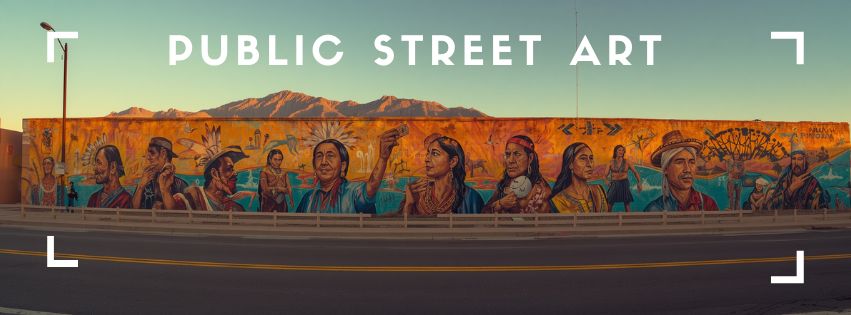
"The city has one of the oldest public art programs in the nation, having commissioned or purchased a staggering 1,000 pieces in the past 41 years. All across Albuquerque, the cityscape abounds with public art — murals, sculptures, and temporary and permanent installations, some commissioned by the city, others created without anyone's approval. In Albuquerque, old storefronts, empty Route 66 signs, and park walls become canvases for displaying public art," confirmed New Mexico Magazine's guide to Albuquerque murals and sculptures (updated July 2026).
The 1,000-piece public art collection spans every medium, every era, and every neighborhood. The program is housed within the City of Albuquerque's Office of Arts & Culture and operates under a percent-for-art requirement that directs a percentage of certain capital improvement project budgets into public art commissioning. The result, accumulated over four decades, is one of the most extensive permanent outdoor art collections in the American Southwest.
- Types of works in the collection: Bronze sculptures of historical figures. Ceramic tile mosaics (the Convention Center exterior is covered in them — a downloadable booklet from cabq.gov describes each section). Painted murals on building exteriors. Steel fabrications. Earthworks. Site-specific installations in parks, transit stations, libraries, and neighborhood centers.
- The Downtown concentration: Downtown Albuquerque is home to the city's greatest concentration of public artworks — ranging from traditional bronzes honoring figures in the city's history to contemporary murals and nonobjective installations that add visual energy to the pedestrian corridors. The Downtown Arts & Cultural District map is downloadable from cabq.gov/artsculture/public-art.
The 2026 Addition — Route 66 Remixed: 18 New Permanent Installations
The most significant single expansion of Albuquerque's public art landscape in recent years arrived in 2026 as part of the Route 66 centennial: the Route 66 Remixed project added 18 large-scale permanent art installations along the 18-mile Central Avenue corridor — one per mile of the city's Route 66 stretch, the longest continuous urban Route 66 in the country.
- The artists and studios: Created by the City of Albuquerque's Department of Arts & Culture in partnership with Meow Wolf (the Santa Fe-based immersive art collective), Refract Studio, and local Albuquerque artists. The combination of Meow Wolf's large-scale immersive production capability and local Albuquerque artists' cultural knowledge produced installations that are simultaneously spectacle and community expression.
- Augmented reality activations: Each of the 18 installations includes an AR activation accessible through the Route 66 Remixed app — a digital layer that adds historical context, artist interviews, and animated overlays to the physical artwork. Visitors can experience each installation in the physical present and, through the AR layer, in the historical context of Route 66's 100-year story on the same ground.
- Permanent additions: These installations are not temporary centennial decorations — they are permanent additions to the city's public art landscape. The Central Avenue of 2027 and beyond will include all 18 installations as the foundational contemporary art layer on the Route 66 corridor.
- How to experience them: Drive or walk Central Avenue from west of Old Town to the East Mountains direction, pausing at each installation. The Route 66 Remixed app provides the AR layer and a map of all 18 locations. Route66ABQ.com has the current events and programming schedule.
The Neighborhood-by-Neighborhood Public Art Guide
Central Avenue / Nob Hill — The Route 66 Art Corridor
Central Avenue is the densest single street for public art in Albuquerque — the combination of the historic Route 66 corridor's blank wall inventory with the Nob Hill creative community and the 2026 Route 66 Remixed additions makes this the natural starting point for any Albuquerque public art tour.
- The Nob Hill mural cluster: The stretch of Central Avenue through Nob Hill — from approximately Girard to Carlisle — has the highest density of intentional murals on the Route 66 corridor outside Downtown. The murals range from pop art and abstract works to cultural identity pieces reflecting Nob Hill's long history as a creative neighborhood.
- The Route 66 Remixed installations on this stretch: Several of the 18 permanent 2026 installations are located within the Nob Hill stretch of Central Avenue, connecting the centennial art program to the neighborhood's existing mural ecosystem.
- "Honey in the Heartland" by Mark Horst: At the power substation on Silver Avenue and Cornell Drive — painted in marigold and honey brown, featuring images of pedestrians and cyclists in Nob Hill with a smiling elderly woman in the central panel. One of the most specifically community-rooted murals on the Nob Hill stretch — the neighborhood is depicted in the art that the neighborhood hosts.
Downtown and EDo — The City's Art Institution Nucleus
The Downtown Arts & Cultural District concentrates the most formally commissioned public art in the city:
- The Convention Center mosaic exterior: The exterior of the Albuquerque Convention Center is covered in large-scale ceramic tile mosaics — one of the most consistently undernoticed public art commissions in the city, visible to the tens of thousands of visitors who pass the building but rarely mentioned in art guides. The cabq.gov public art office publishes a downloadable booklet with descriptions of each mosaic section.
- Bronze historical sculptures: Traditional bronze sculptures honoring figures in Albuquerque's history are distributed through the Downtown pedestrian corridors — accessible on foot and part of the Downtown Arts & Cultural District self-guided walking tour at cabq.gov.
- First Friday ArtWalk installations: On the first Friday of every month, the Downtown and EDo gallery district activates for the monthly ArtWalk — and some galleries and storefronts install outdoor/window work that expands the public art landscape into the public-facing storefront zone. The First Friday ArtWalk is Albuquerque's most accessible regular encounter with contemporary visual art on the street.
- The "Greetings from Burque" mural: One of the most photographed street art pieces in Albuquerque — a postcard-style mural that reviewers describe as feeling "like the city giving itself a hug." Located in the central city and consistently cited as one of the top mural experiences by visitors.
Old Town — Where Institutional and Indigenous Public Art Meet
- NUMBE WHAGEH ("Our Center Place"): One of the most significant public sculpture commissions in recent Albuquerque history sits discreetly in front of the Albuquerque Museum in Old Town — a spiral earthwork by Pueblo sculptor Nora Naranjo Morse that visitors can walk. NUMBE WHAGEH invites physical engagement with the work rather than passive observation. Walking the spiral is the experience; the sculpture is both the path and the destination. This is specifically the kind of public art that the city's indigenous cultural depth produces — a work that is simultaneously contemporary sculpture and living Pueblo concept.
- Jodie Herrera's mural of Dolores Huerta: Part of a larger mural collage near Old Town. Jodie Herrera is a Northern New Mexican painter with Latina, Apache, and Comanche ancestry whose work consistently draws on indigenous and Chicana identity. Her public murals in the Old Town and South Valley area are among the most culturally significant in the city.
- The Old Town area mural cluster: The neighborhoods adjacent to Old Town — the streets with mineral names (Lead, Gold, Coal, Copper, Silver) and the streets with tree names (Oak, Locust) — have accumulated one of Albuquerque's most walkable mural clusters. Visitors who have been in the city for three days consistently report seeing dozens of murals while walking or driving through this area.
Barelas — The South Valley Cultural Heart
Barelas is Albuquerque's oldest neighborhood — the settlement that preceded Old Town as a community on the Rio Grande — and its public art reflects a living cultural tradition rather than commissioned decoration:
- El Chante: A cultural hub in the heart of Barelas that showcases Hispanic and Indigenous art through murals celebrating local folklore and honoring historical figures who shaped the community's identity. El Chante hosts cultural events throughout the year that pair the visual art with performance, music, and community gathering — making the murals a living context for community life rather than a tourist installation.
- The Barelas cultural mural tradition: The murals in Barelas are specifically community-rooted in a way that distinguishes them from commissioned civic art. They celebrate specific local figures, specific historical events, and specific community values in ways that require local knowledge to fully appreciate — which is also what makes them the most powerful public art experience in the city for people willing to learn the stories behind them.
- National Hispanic Cultural Center: Immediately adjacent to Barelas, the NHCC's campus includes the Torreón building and Frederico Vigil's Mundos de Mestizaje fresco — the largest concave fresco in North America at 4,000 square feet, 10 years to complete. This is technically institutional art rather than public street art, but its scale and location make it the defining large-format art experience of the South Valley cultural corridor.
The Rail Yards District — Industrial-Scale Street Art
The Rail Yards on the south edge of Barelas bring the industrial character of Albuquerque's railroad history to the city's street art scene:
- Industrial-scale walls: Giant walls and gritty surfaces have been transformed into massive canvases — the physical scale of the Rail Yards' industrial infrastructure means that murals here operate at a size that is impossible elsewhere in the city. Works that would overwhelm a residential wall or a commercial storefront are proportionate to the Rail Yards' massive building faces.
- A living and changing gallery: Both commissioned murals from recognized artists and graffiti works that change regularly give the Rail Yards a fresh visual landscape on every visit. Unlike the permanent commissioned works of the city's official collection, the Rail Yards' street art layer is in continuous revision — pieces are painted over, new work appears, collaborations evolve. The instability is part of the character.
- Rail Yards Market: The Rail Yards Market operates on Sundays through the warmer months, activating the district with vendors, performers, and visitors who encounter the street art as the backdrop to the community gathering.
EDo and the Sawmill District — Contemporary Urban Art
- EDo (East Downtown) murals: The emerging EDo corridor east of Downtown has developed a contemporary mural culture alongside its boutique hotel and restaurant development. The murals here tend toward abstract and contemporary graphic work rather than the narrative cultural murals of Barelas and the South Valley — reflecting EDo's demographic as Albuquerque's most rapidly gentrifying creative neighborhood.
- Sawmill Market exterior: The Sawmill Market building at 1909 Bellamah Ave NW features exterior art that bridges the Sawmill neighborhood's industrial heritage and its contemporary food market identity. The "The Yard" sunken outdoor patio area is itself a design statement that functions as an outdoor gallery context.
The Digital Public Art Layer — MurosABQ and Self-Guided Navigation
The most practical tool for navigating Albuquerque's dispersed mural landscape is the digital infrastructure that local organizations have built:
- MurosABQ (murosabq.com): A website specifically dedicated to cataloging Albuquerque's public murals — map, artist information, and detailed descriptions. The most comprehensive single digital resource for planning a mural tour. MurosConnect is the companion tool for connecting property owners who want murals with artists seeking walls.
- City of Albuquerque public art maps: The City's Office of Arts & Culture maintains downloadable maps and self-guided tour materials at cabq.gov/artsculture/public-art. The Downtown Arts & Cultural District map is the most curated introduction to the official public art collection.
- Route 66 Remixed app: The official app for the 2026 centennial installations includes the map of all 18 works and the AR activation layer for each. Available through the Route66ABQ.com platform.
The Artists Who Define Albuquerque's Public Art Identity
- Jodie Herrera: A Northern New Mexican painter with Latina, Apache, and Comanche ancestry whose murals are among the most culturally significant in the city — depicting historical figures like Dolores Huerta with a visual vocabulary that connects indigenous and Chicana identity. Multiple works throughout Albuquerque and the South Valley.
- Nora Naranjo Morse: A Pueblo sculptor and poet whose NUMBE WHAGEH installation at the Albuquerque Museum is one of the most significant public sculpture commissions of the past decade in the Southwest. Her work connects contemporary art practice to Pueblo cultural concepts in ways that function differently from the traditional commissioned mural.
- Frederico Vigil: The artist behind both the Mundos de Mestizaje fresco at the NHCC and major mural work at the Indian Pueblo Cultural Center. His large-format narrative work at the NHCC — 4,000 square feet, 10 years to complete — is the single most ambitious art commission in the city's recent history.
- Mark Horst: Local Albuquerque muralist whose "Honey in the Heartland" at Silver and Cornell documents the Nob Hill community it lives in — pedestrians and cyclists, a smiling neighborhood elder at the center. Community-scale muralism at its best.
- Melinda Forward: A local artist and teacher whose murals carry what she describes as powerful community messages — specifically designed to inspire positive conversations and demonstrate the transformative power of kindness. Multiple works throughout the city.
The Self-Guided Albuquerque Public Art Tour — The One-Day Route
- Morning — Old Town and the Museum Cluster: Walk NUMBE WHAGEH at the Albuquerque Museum. Walk the Old Town streets and adjacent mineral-named streets to find the walkable mural cluster. Pick up the Downtown Arts & Cultural District map at the museum or download from cabq.gov.
- Late morning — Downtown: Walk the Downtown Arts & Cultural District. Find the Convention Center mosaic exterior. Photograph the bronze historical sculptures.
- Afternoon — Central Avenue West to Nob Hill: Drive or walk Central Avenue from Downtown eastward toward Nob Hill. Pause at each Route 66 Remixed installation (Route66ABQ.com or app). Stop at "Honey in the Heartland" at Silver and Cornell. Continue through Nob Hill's mural-dense blocks.
- Late afternoon — Barelas and the Rail Yards: Drive south to Barelas and the El Chante hub. Walk the Rail Yards walls if accessible. End at the National Hispanic Cultural Center to experience the Mundos de Mestizaje fresco.
- Evening (First Friday, monthly): If touring on the first Friday of the month, the Downtown and EDo ArtWalk activates at 6pm. Gallery openings, outdoor installations, and the specific social energy of Albuquerque's art community at its most accessible.
For the complete Albuquerque lifestyle and culture guide that places the public art landscape within the broader activities context — including seasonal events, outdoor adventures, and other free things to experience — our post on unique experiences in Albuquerque you won't find anywhere else covers the breadth of what makes the city singular. And for everything you can do in Albuquerque without spending money — including exploring the public art and mural landscape — our post on the free things to do in Albuquerque, New Mexico covers the complete free activities guide.
The Bottom Line — Art on Every Block, If You Know Where to Look
1,000 commissioned works accumulated over 41 years. 18 new permanent installations added in 2026. A living mural culture in Barelas and the South Valley that predates the city's formal art program. Industrial-scale street art at the Rail Yards that changes by the season. A downtown corridor with one of the densest concentrations of formal public art outside major coastal cities.
Albuquerque's public art is not in one place. It is the city itself. The power substation becomes a gallery. The parking structure becomes a canvas. The underpass becomes a corridor of cultural memory. The blank grocery store wall in Barelas becomes a celebration of the community that built it.
People who live here pass the NUMBE WHAGEH spiral every time they visit Old Town. They see the Route 66 Remixed installations every time they drive Central Avenue. They see Mark Horst's elderly woman smiling from the corner at Silver and Cornell when they walk the Nob Hill neighborhood. That's what living in a city with 1,000 pieces of public art in 41 years looks like — the art is not the destination. It's the background of the life.
Want to Live Where Public Art Is Part of Every Drive?
Jenn & Vinay from The Rodgers Neighborhood Real Estate Group know which Albuquerque neighborhoods put Central Avenue's Route 66 Remixed installations on your regular commute, which give you a Barelas address walkable to El Chante, and which Nob Hill homes are within walking distance of the art walk that happens on the first Friday of every month. The creative depth of Albuquerque is one of the most consistently cited reasons people who move here stay. The conversation about finding your home in this specific city starts with a call.
Jenn & Vinay Rodgers are Albuquerque's trusted real estate professionals with The Rodgers Neighborhood Real Estate Group, brokered by Real Broker, LLC, serving buyers and sellers across Albuquerque, Rio Rancho, Corrales, Los Lunas, Tijeras, Cedar Crest, Sandia Park, the East Mountains, Bernalillo County, Sandoval County, and surrounding New Mexico communities.
The Rodgers Neighborhood Real Estate Group
Jenn & Vinay Rodgers
Real Broker, LLC
Albuquerque, NM
📞 505-417-2733
🏠 Find a home where public art is part of the daily commuteCategories
- All Blogs (322)
- 2026 & Beyond for Real Estate (218)
- Doctors and Nurses looking for homes in NM (4)
- Guide to buying a home in NM (146)
- Health Care Heros (7)
- Home Upgrades (38)
- Jenn & Vinay your Local Real Estate Experts! (107)
- Moving to Albuquerque (127)
- Neighborhoods in Albuquerque NM (87)
- Rent or Own (2)
- Sellers Questions for Selling homes (2)
Recent Posts
GET MORE INFORMATION