
The Complete History of Albuquerque, New Mexico Explained — From 10,000 BCE to 2026
Albuquerque's history begins not in 1706 but at least 10,000 years before that, when the first Paleo-Indian hunter-gatherers arrived at this specific crossing of the Rio Grande. The 1706 founding date that appears on official markers is the date the Spanish colonial government formally chartered the Villa de Alburquerque — not the date human beings first chose this place to live. This guide covers all of it: the complete history from the first people to the present day, in the chronological order that makes sense of what the city is in 2026.
Era 1 — The First People (10,000+ BCE to 750 CE)
"The history of Albuquerque, New Mexico dates back up to 12,000 years, beginning with the presence of Paleo-Indian hunter-gatherers in the region. Gradually, these nomadic people adopted a more settled, agricultural lifestyle and began to build multi-story stone or adobe dwellings now known as pueblos by 750 CE. The Albuquerque area was settled by the Tiwa people beginning around 1250. By the 1500s, there were around 20 Tiwa pueblos along a 60-mile stretch of the middle Rio Grande valley," confirmed Wikipedia's History of Albuquerque, New Mexico (updated February 2026).
The geography that explains why human beings have continuously chosen this specific location: the Rio Grande valley at this point offers a relatively shallow, fordable crossing — the natural reason for a settlement, a trade route intersection, and an agricultural community. The Rio Grande's seasonal floods deposited rich alluvial soil on both banks; the Sandia and Manzano mountains to the east provided timber, game, and defense; and the valley's elevation (approximately 5,000 feet) moderated the desert heat.
By 750 CE, the predecessors of the modern Pueblo peoples had developed the sophisticated architectural and agricultural tradition — multi-story stone and adobe dwellings, irrigated agriculture, ceramic art, and complex ceremonial systems — that made this one of the most advanced indigenous civilizations in North America. The petroglyph carvings on the West Mesa's volcanic basalt (now Petroglyph National Monument) date primarily from this period and the centuries following — a continuous record of symbolic communication that spans at least 400-700 years of concentrated human presence.
The Tiwa-speaking peoples who arrived at this specific section of the Rio Grande around 1250 are the direct cultural ancestors of the modern Pueblo communities at Sandia Pueblo and Isleta Pueblo, both of which are present immediately north and south of Albuquerque today. The Tiwa have been on this specific landscape for 800 years — a continuous cultural and biological presence that no European American family in the region can come close to matching in duration.
Era 2 — Spanish Contact and the Oñate Colonization (1540-1680)
In 1540, Francisco Vázquez de Coronado led the first major Spanish entrada into the Rio Grande valley — a force of approximately 300 Spaniards and 1,000 allied Mexican Indians searching for the fabled Seven Cities of Cíbola, which were rumored to contain the gold that Coronado never found. Coronado and his men spent the winter of 1540-41 at Kuaua Pueblo, directly on the Rio Grande near present-day Bernalillo — eight miles from the future site of Albuquerque.
Subsequent Spanish expeditions (Chamuscado-Rodríguez 1581, Antonio de Espejo 1582-83) traversed the Rio Grande valley and documented the Pueblo settlements they encountered. The Spanish consistently noted the region's agricultural potential and the density of Pueblo civilization, and advocated for colonization.
In 1598, Don Juan de Oñate led the first permanent Spanish colonization of New Mexico, establishing the first colonial capital at San Juan de los Caballeros pueblo. The colonists brought cattle, horses, pigs, wheat, and the architectural traditions that would transform the material culture of the Rio Grande valley. They also brought an extractive colonial system that demanded labor and agricultural tribute from the Pueblo peoples — creating the conditions that produced the most consequential event in New Mexico's colonial history.
Era 3 — The Pueblo Revolt and Reconquest (1680-1706)
On August 10, 1680, the Pueblo peoples of New Mexico launched a coordinated uprising — the Pueblo Revolt — that remains one of the most successful Native American military campaigns against European colonialism in American history. Led by Popé, a Tewa spiritual leader from Ohkay Owingeh, the revolt succeeded in driving the Spanish out of New Mexico entirely. Spanish settlers fled south to El Paso del Norte; more than 400 Spanish colonists were killed. The Spanish presence in New Mexico was eliminated for twelve years.
During those twelve years, the Pueblo peoples exercised self-governance and attempted to restore pre-contact cultural practices that the Spanish colonial system had suppressed. The Spanish horses, tools, and agricultural crops that had been introduced were retained — the material culture of contact had produced practical advantages that the Pueblo peoples had incorporated.
In 1692, Diego de Vargas led the Spanish reconquest of New Mexico. Unlike the original colonization, the reconquest was achieved primarily without large-scale violence — a negotiated return that gave the Pueblo peoples specific land grants and legal rights within the colonial system. Returning settlers established communities at Bernalillo and Atrisco in the late 1690s. Governor Francisco Cuervo y Valdés, arriving in 1705, made the decision to formalize the communities growing in the Rio Abajo region.
Era 4 — The Founding of La Villa de Alburquerque (1706)
On April 23, 1706, Governor Francisco Cuervo y Valdés drafted the formal document establishing La Villa de Alburquerque as a royally chartered town — only the fourth New Mexican town to hold this prestigious designation. The name honored Francisco Fernández de la Cueva, the 10th Duke of Alburquerque and Viceroy of New Spain, following the common colonial practice of naming new settlements after prominent patrons. The original spelling, Alburquerque, was gradually simplified over the following centuries — the second "r" eventually dropped — producing the modern "Albuquerque."
The nickname "Duke City" that Albuquerque residents still use today references this founding name: the city named for a Duke, whose title remains embedded in the city's identity 320 years later.
The colonial plaza that Cuervo y Valdés established in 1706 — a church on the north side, residential and commercial structures surrounding a central open square — still exists as Old Town Albuquerque's physical center. The specific site was chosen for its position on the Camino Real (the royal road connecting Mexico City to Santa Fe), its proximity to the Rio Grande ford, and its productive agricultural land on both riverbanks. These were not incidental practical considerations — the geographic logic that placed the 1706 villa here is the same logic that made this crossing a human settlement site 10,000 years earlier.
- The 1783 church: The original 1706 church on the north side of the plaza collapsed in 1793 after heavy rainfall and was replaced that same year by San Felipe de Neri Church — the adobe structure that stands and holds Mass today, 233 years later.
Era 5 — Colonial Life and the Mexican Period (1706-1846)
The Villa de Alburquerque remained a modest agricultural community through the 18th century — a series of haciendas, ranches, and small plazas dispersed along the Rio Grande, with the main plaza at Old Town as the civic center. The economy was agricultural: corn, wheat, chile, cattle, and sheep. The Rio Grande's annual floods required careful management but also provided the alluvial soil fertility that sustained the settlement.
In 1821, Mexico achieved independence from Spain — and Albuquerque, along with all of New Mexico, passed from Spanish to Mexican governance. For most residents of the villa, this political transition changed relatively little of daily life. The land was the same. The farming was the same. The church services continued. The most significant practical change was the increased commercial traffic that Mexican independence enabled — American traders began arriving via the Santa Fe Trail, bringing manufactured goods and accelerating commerce.
The Mexican period produced a specific cultural contribution to the Albuquerque landscape that remains visible today: the acequia irrigation system. The network of community-managed irrigation channels that allowed agriculture in the high-desert valley was developed and expanded under Mexican governance, and the acequia system that still functions in Corrales and the North Valley is a direct descendant of these colonial-era water management structures.
Era 6 — American Territorial Period (1846-1880)
In 1846, during the Mexican-American War, U.S. General Stephen Kearny led American forces into New Mexico and claimed the territory for the United States without significant military resistance. Albuquerque became an outpost for the U.S. Army — a supply and garrison point on the critical southern route to California.
In 1862, the Civil War reached Albuquerque. Confederate forces from Texas, advancing up the Rio Grande under General Henry Sibley, briefly captured Albuquerque and declared it the western capital of the Confederate States of America. The Confederate occupation lasted weeks before the decisive Battle of Glorieta Pass (March 28, 1862), fought in the Sangre de Cristo Mountains southeast of Santa Fe, effectively ended Confederate ambitions in New Mexico. The Confederates retreated and never returned.
Through the 1860s and 1870s, Albuquerque remained a modest territorial town of approximately 2,000-2,500 people — a farming community with some commercial activity, governed as part of the New Mexico Territory under U.S. administration but otherwise not dramatically different in daily life from the colonial period. The event that changed everything was coming from the east.
Era 7 — The Railroad Transforms the City (1880-1926)
The Atchison, Topeka and Santa Fe Railway arrived at Albuquerque in 1880, establishing its depot some distance east of the existing Old Town plaza. "The arrival of the Atchison, Topeka and Santa Fe Railway in 1880 marked a pivotal transformation, shifting the economy from subsistence farming to commerce and railroading," confirmed Visit Albuquerque's complete history of Albuquerque. The railroad produced the most significant urban transformation in the city's colonial history.
The depot's location — a mile east of Old Town — produced the specific dynamic that defined Albuquerque for decades: the emergence of "New Town" as a distinct commercial district competing with and ultimately surpassing the historic Old Town. New Town had the railroad; Old Town had the history. Commerce followed the railroad.
The development of New Town was rapid. Within years of the railroad's arrival, New Town had hotels, banks, newspapers, commercial blocks, and a growing population of Anglo-American settlers who arrived by rail. Franz Huning — a German merchant who arrived in 1857 and became one of the city's most significant figures — specifically worked to ensure that Albuquerque was designated a railroad division point, securing the locomotive repair shops and offices that would make the city an important rail center.
The railroad era also introduced a specific cultural dimension to Albuquerque's growth: health seekers. The dry, high-altitude climate of the Rio Grande valley was widely prescribed by physicians as treatment for tuberculosis, and thousands of "lungers" — tuberculosis patients from the humid eastern and midwestern United States — came to Albuquerque by rail seeking the curative properties of the desert air. This population influx brought educated, often affluent patients and their families, contributing to the University of New Mexico's founding in 1889 and the development of medical infrastructure.
- The University of New Mexico (1889): Founded as a territorial institution to provide higher education for New Mexico's population. What began as a small territorial college now enrolls 27,000+ students and employs one of the largest academic workforces in the state.
- First balloon flight in New Mexico (July 4, 1882): Park Van Tassel made the first balloon flight in New Mexico Territory on July 4 at New Town — a specific historical antecedent to the International Balloon Fiesta that the city would later become famous for hosting.
Era 8 — Route 66 and the Automobile Age (1926-1940)
On October 11, 1926, the U.S. federal highway numbering system designated U.S. Route 66 — the highway that would transform Albuquerque from a regional city into a transcontinental waypoint on the most famous road in America. The "Mother Road" stretched from Chicago to Santa Monica, and Albuquerque sat near its midpoint.
Route 66 initially ran north-south through Albuquerque along what is now 4th Street. In 1937, the state highway department rerouted the highway to its more famous east-west alignment along Central Avenue — creating the 18-mile continuous Route 66 urban stretch that 2026's centennial celebrations are recognizing as the longest intact urban Route 66 corridor in the country.
The Route 66 era transformed Central Avenue into Albuquerque's economic spine: motor courts (precursors to modern motels), diners, gas stations, tourist shops, and entertainment venues clustered along the route to serve the steady stream of travelers moving between Chicago and the Pacific coast. At Route 66's peak, 98 motels lined Albuquerque's section of the highway. The specific architectural style that emerged — Pueblo Deco, Streamline Moderne, and the neon-sign aesthetic — gave Central Avenue the visual character that route 66 preservation efforts are protecting today.
- KiMo Theater (1927): Built by entrepreneur Oreste Bachechi and designed by the Boller Brothers, the KiMo is the defining building of the Route 66 era in Albuquerque — the only Pueblo Deco theater anywhere, combining Native American decorative motifs with Art Deco commercial architecture.
- Albuquerque International Sunport (1928): The airport opened in 1928, adding air travel to Albuquerque's transportation infrastructure. It was renamed with the distinctive "Sunport" designation after a naming contest in the 1960s.
- Nob Hill Business Center (1947): New Mexico's first modern drive-up business center, built in Streamline Moderne style on Central Avenue. Still fully operational today with boutiques, bookstores, and restaurants. The Nob Hill neighborhood that grew around this center is now Albuquerque's most walkable corridor.
Era 9 — The Atomic Age (1940-1960)
World War II brought the most consequential institutional change in Albuquerque's history: the establishment of Kirtland Air Force Base in 1940 and Sandia National Laboratories in 1949. These two institutions would define the city's professional demographic, employment base, and national significance for the remainder of the 20th century and into the 21st.
The Manhattan Project — the secret US program to develop the first atomic bomb — centered on Los Alamos, 90 miles north of Albuquerque in the Jemez Mountains. Albuquerque's Kirtland base served as a support installation for the project. The Trinity Test on July 16, 1945 — the first nuclear weapon detonation, at White Sands Missile Range 200 miles south of Albuquerque — ushered in the Atomic Age in which Albuquerque would play a central role.
Sandia National Laboratories, founded in 1949 by President Harry Truman's order on the Kirtland AFB property, was charged with the engineering and stewardship of the nation's nuclear weapons stockpile. Sandia's workforce requirement — highly educated scientists and engineers in nuclear, mechanical, and electrical disciplines — attracted a professional demographic to Albuquerque that had no historical precedent in the region. The Northeast Heights premium residential neighborhoods that began developing in the 1950s and 1960s are directly attributable to the Sandia Labs professional workforce that needed housing close to the Eubank Boulevard employment corridor.
The post-war population boom transformed Albuquerque from a city of approximately 35,000 in 1940 to over 200,000 by 1960. The city expanded rapidly — the freeway system (I-25 north-south, I-40 east-west, with the Big I interchange dedicated in 1966) made the suburbs accessible and accelerated the eastward growth of the Northeast Heights. The first shopping malls appeared: Winrock Center in 1961, Coronado Center in 1965. The downtown core, deprived of through-traffic by the freeway bypass of Route 66, entered a period of decline that would take decades to reverse.
Era 10 — Urban Expansion and the Westside (1960-2000)
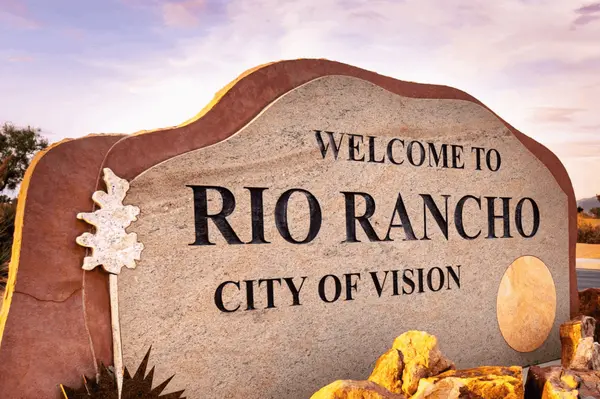
The decades from 1960 through 2000 were Albuquerque's suburban expansion phase — contiguous subdivisions growing eastward into the foothills and westward across the Rio Grande onto the West Mesa. Rio Rancho, which would eventually become New Mexico's second-largest city, began development in this period as a planned community marketed to Albuquerque's growing professional class.
The Northeast Heights development was the dominant residential story of this era: the Sandia Labs and Kirtland professional workforce moving into new subdivision homes in 87110, 87111, and 87112, establishing the school zone premium and the community character that define these ZIP codes today. The 87122 ZIP code — now the city's most expensive — was among the last to be developed, with North Albuquerque Acres' one-acre lot minimum and well-and-septic infrastructure extending the foothills residential character into the 1970s and 1980s.
Intel's arrival in Rio Rancho in 1980 with its first fabrication facility began the technology employment story that would shape the western metro for decades. Rio Rancho grew from a small planned community to a city of 100,000+ driven primarily by Intel employment — a pattern that the 2026 CHIPS Act expansion is now repeating at significantly larger scale.
The 1980s and 1990s also brought the film industry to Albuquerque — the New Mexico Film Production Credit, established to attract productions with a significant financial incentive, began drawing national productions to the city. The infrastructure built during this period positioned Albuquerque for the Breaking Bad years.
Era 11 — Breaking Bad, Film Industry, and the 21st Century (2000-Present)
The most globally significant cultural event in Albuquerque's modern history was the filming of Breaking Bad (2008-2013) and its companion series Better Call Saul (2015-2022). The productions embedded the specific visual vocabulary of Albuquerque — the Sandia Mountains, the adobe architecture, the volcanic landscape, the 310-day sunshine — into the consciousness of 65+ million viewers worldwide. The city's specific geographic and cultural character, which had been largely unknown outside the Southwest, became globally recognized.
The Breaking Bad effect was not merely cultural. Productions that came to Albuquerque for Breaking Bad and Better Call Saul never left. NBCUniversal, Netflix, and a continuous stream of productions have made Albuquerque a top-five US film production city, with the New Mexico Tax Credit (now 40% on qualified expenditures) as the economic driver. Netflix's confirmed 300-acre campus expansion at Mesa del Sol is the 2026 expression of what Breaking Bad's cultural success started.
The Intel CHIPS Act of 2022 committed $7.86 billion to Intel's Rio Rancho Fab 11X expansion — the largest single private manufacturing investment in New Mexico's history. The employment this investment will produce over the next decade is the second industrial transformation of the Albuquerque metro, comparable in scale to the post-WWII Sandia Labs effect that defined the city's first professional class.
Era 12 — 2026: The Centennial Year and the Contemporary City
In 2026, Albuquerque is simultaneously:
- Celebrating Route 66's centennial: The Mother Road, commissioned October 11, 1926, is 100 years old. The Route 66 Remixed project — 18 permanent large-scale art installations along the 18-mile Central Avenue corridor, created with Meow Wolf and local artists — is the centennial's lasting physical contribution to the city's landscape.
- Marking the final Gathering of Nations: After 43 years, the largest Native American Pow Wow in North America — held annually at Tingley Coliseum — is holding its final event in 2026. The 2026 Gathering is simultaneously the end of a 43-year tradition and the context for reflecting on the 1,000+ years of Pueblo presence in this valley that preceded European contact by centuries.
- Building toward its next industrial transformation: The Intel CHIPS Act expansion is employing thousands. The Netflix campus is expanding. Castelion's aerospace manufacturing facility in Rio Rancho is adding 300+ jobs. Sandia National Laboratories' quantum computing program is at the frontier of a technology that did not exist when the city was founded.
- Continuing a 1,000-year habitation story: The 19 Pueblo peoples whose ancestors built the first houses on the Rio Grande at this crossing are still here — operating the Indian Pueblo Cultural Center on 80 acres they own in central Albuquerque, performing traditional dances at IPCC every weekend, farming at Corrales and the North Valley in some of the same agricultural traditions that sustained the original settlements.
For the landmarks that make this history visible and accessible across the city today — from the Old Town plaza to the Petroglyph National Monument petroglyphs to the KiMo Theater — our post on the top Albuquerque landmarks that define the city covers the physical sites where history becomes tangible. And for the cultural traditions that are the living expression of this history — the New Mexican cuisine, the Balloon Fiesta, the annual events that connect the city's past to its present — our post on the biggest annual events in Albuquerque you should never miss covers the living calendar.
Key Dates in Albuquerque History — Quick Reference
- ~10,000 BCE: Paleo-Indian hunter-gatherers in the Rio Grande valley
- ~750 CE: Pueblo peoples begin building multi-story stone/adobe dwellings
- ~1250: Tiwa people settle the Albuquerque area
- ~1500s: 20 Tiwa pueblos along the middle Rio Grande
- 1540: Coronado arrives, winters at Kuaua Pueblo (8 miles north of future Albuquerque)
- 1598: Juan de Oñate leads first permanent Spanish colonization of New Mexico
- 1680: Pueblo Revolt drives Spanish from New Mexico for 12 years
- 1692: Spanish reconquest under Diego de Vargas
- April 23, 1706: Governor Francisco Cuervo y Valdés formally establishes La Villa de Alburquerque
- 1793: San Felipe de Neri Church built (replaces 1706 original)
- 1821: Mexico gains independence; New Mexico becomes Mexican territory
- 1846:S. takes New Mexico; Albuquerque becomes American outpost
- 1862: Confederate brief capture; Battle of Glorieta Pass ends Confederate New Mexico ambitions
- 1880: Atchison, Topeka and Santa Fe Railway arrives; New Town established
- 1882: First balloon flight in New Mexico, July 4, New Town
- 1889: University of New Mexico founded
- October 11, 1926: Route 66 designated; Albuquerque becomes transcontinental waypoint
- 1927: KiMo Theater built in Pueblo Deco style
- 1928: Albuquerque airport opens
- 1937: Route 66 rerouted to Central Avenue
- 1940: Kirtland Air Force Base established
- 1945: Trinity Test (NM) ends WWII, begins Atomic Age
- 1947: Nob Hill Business Center built (NM's first drive-up business center)
- 1949: Sandia National Laboratories founded
- 1961/1965: Winrock and Coronado shopping malls open; suburban shift accelerates
- 1966: Big I interchange dedicated; freeway system complete
- 1980: Intel arrives in Rio Rancho
- 2008-2013: Breaking Bad filmed in Albuquerque; city gains global recognition
- 2015-2022: Better Call Saul filmed; Albuquerque becomes top-5 US film production city
- 2022: Intel CHIPS Act — $7.86 billion Rio Rancho expansion committed
- 2026: Route 66 centennial; Netflix campus expansion; final Gathering of Nations
The Bottom Line — 1,000 Years Is Not a Background Feature
The history of Albuquerque is not a list of dates to memorize before visiting the museums. It is the explanation for why the city is what it is in 2026: why the food tastes the way it does, why the buildings look the way they do, why the professional demographic is what it is, why the Sandia Mountains are both the geographic anchor and the cultural orientation point, and why the city's specific character is impossible to replicate anywhere else.
When you live in Albuquerque, you are living in a place where a Pueblo elder's grandfather's grandfather's grandfather was farming the same Rio Grande flood plain that your backyard neighbors now maintain as xeriscaping. Where the adobe technique that was used to build the 1793 church is still the architectural reference point for a neighborhood design review board. Where the drive to a Sandia Labs quantum computing presentation passes the same petroglyphs carved by someone whose ancestors had been on this land for 500 years before the first European set foot in North America.
That depth is the specific thing that people who move to Albuquerque from Denver, Los Angeles, and Seattle consistently identify as unlike any other place they have lived. The history here is not past. It is present.
Want to Live Where This History Is Part of Your Daily Life?
Jenn & Vinay from The Rodgers Neighborhood Real Estate Group know which Albuquerque neighborhoods put Old Town's 300-year plaza within a Saturday morning drive, which give you a North Valley address on the same acequia system that fed the colonial farms, and which offer a foothills home with the Sandia Mountain views that have oriented every generation of this city's residents since before the first Europeans arrived. The city's history is one of the most consistent reasons people who move here stay. The conversation about finding your place in it starts with a call.
Jenn & Vinay Rodgers are Albuquerque's trusted real estate professionals with The Rodgers Neighborhood Real Estate Group, brokered by Real Broker, LLC, serving buyers and sellers across Albuquerque, Rio Rancho, Corrales, Los Lunas, Tijeras, Cedar Crest, Sandia Park, the East Mountains, Bernalillo County, Sandoval County, and surrounding New Mexico communities.
The Rodgers Neighborhood Real Estate Group
Jenn & Vinay Rodgers
Real Broker, LLC
Albuquerque, NM
📞 505-417-2733
🏠 Find a home in a city with 1,000 years of continuous historyCategories
- All Blogs (320)
- 2026 & Beyond for Real Estate (216)
- Doctors and Nurses looking for homes in NM (4)
- Guide to buying a home in NM (145)
- Health Care Heros (7)
- Home Upgrades (36)
- Jenn & Vinay your Local Real Estate Experts! (106)
- Moving to Albuquerque (127)
- Neighborhoods in Albuquerque NM (87)
- Rent or Own (2)
- Sellers Questions for Selling homes (2)
Recent Posts

GET MORE INFORMATION