
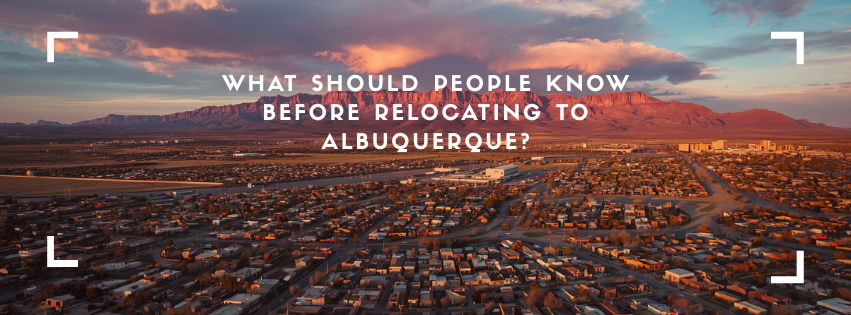
What should people know before relocating to Albuquerque?
Relocating to Albuquerque: What You Must Know Before You Move
Here is the honest answer most relocation guides will not give you: Albuquerque will surprise you.
The people who thrive here are almost always the ones who did their homework first — not just the tourism-brochure version, but the real picture. The tradeoffs, the quirks, the things that take some getting used to, and the things that will make you wonder why you did not move here years ago.
If you are seriously thinking about relocating to Albuquerque, New Mexico, this guide is for you. We cover costs, neighborhoods, climate, the housing market, and everything in between — so you can make a decision you will feel confident about.
Why So Many People Are Choosing Albuquerque Right Now
Albuquerque has become one of the most actively searched relocation destinations in the Southwest. In 2026, buyers and renters are arriving from California, Texas, Colorado, Arizona, and across the country — and the reasons are consistent: lower home prices, more space, 310+ days of sunshine, and a lifestyle that is hard to replicate in a larger metro.
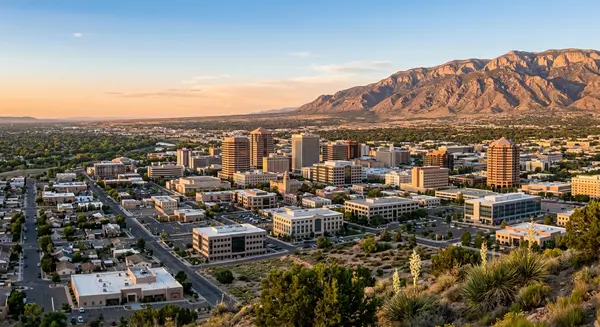
The city sits at 5,312 feet above sea level in the Rio Grande Valley, flanked by the 10,000-foot Sandia Mountains to the east. It is the largest city in New Mexico, home to roughly 565,000 people, and it carries a unique cultural identity built from Native American, Hispanic, and Anglo heritage that you genuinely feel in day-to-day life — not just in museums and tourist spots.
It is also still genuinely affordable. According to recent market data from Redfin, the median home sale price in Albuquerque is around $345,000 — more than 21% below the national median. The overall cost of living runs approximately 5% below the national average, with housing costs running about 17% lower than the U.S. average.
That combination is why so many people are making the move.
The Real Cost of Living in Albuquerque
Understanding what your dollar actually does in Albuquerque is one of the first things you need to get clear on before relocating.
Housing Costs
This is where Albuquerque's value proposition is strongest. A budget that buys a modest two-bedroom condo in Denver or Los Angeles will often buy you a spacious three- or four-bedroom home in Albuquerque — with a yard, a garage, and a mountain view.
The median home price as of mid-2025 was $375,000, reflecting a modest 2.9% year-over-year increase. The market is competitive but not frenzied. Homes are currently averaging around 44 days on market, and buyers with a clear strategy can still find excellent value — especially in neighborhoods like the Northeast Heights, Rio Rancho, and Ventana Ranch.
If you are just starting to explore what your budget looks like in the ABQ market, browse current Albuquerque listings here to get a real sense of what is available.
Everyday Expenses
Beyond housing, here is what the data shows for day-to-day costs:
- Groceries track close to the national average, and New Mexico exempts groceries from sales tax, which helps
- Transportation and fuel costs run below the national average
- Healthcare is mixed — doctor visits run about 5% below the national average, though prescriptions tend to run higher
- Utilities are reasonable, helped in part by the mild, dry climate reducing heating and cooling loads
- Dining out is very affordable compared to coastal cities, and the local green chile food culture means some of the best meals in the city are not expensive
The combined sales tax in Albuquerque is 7.63%, and New Mexico has a state income tax — factors worth building into your monthly budget planning.
What You Need to Know About Albuquerque's Neighborhoods
Where you land in Albuquerque matters enormously. The city covers a large geographic footprint, and the experience of living in the Northeast Heights is genuinely different from living Downtown, in the South Valley, or out in Rio Rancho.
The Safest, Most Family-Friendly Areas
For buyers prioritizing safety, top-rated schools, and suburban comfort, the most consistently recommended areas are:
- Northeast Heights — established, well-maintained, strong school options, good freeway access
- Ventana Ranch — master-planned community, family-oriented, near Rio Rancho
- North Albuquerque Acres — larger lots, quieter, close to the Sandia foothills
- Corrales — semi-rural, horses allowed, exceptional lifestyle for the right buyer
For a full breakdown by lifestyle and priorities, our guide to Albuquerque neighborhoods covers each area in depth.
Neighborhoods Worth Knowing for Commute and Lifestyle
- Nob Hill — walkable, vibrant, close to UNM and hospitals, strong restaurant scene
- Downtown / EDo — urban, central, best for professionals who want minimal commute
- Rio Rancho — best value for space, newer construction, growing independently
A Word on Crime
This is the thing people want to know and that most guides bury. Albuquerque has elevated property crime rates compared to the national average — particularly vehicle theft in certain areas. It is not uniformly dangerous, but it is also not uniformly safe.
The short version: neighborhood selection matters more in Albuquerque than in many comparable cities. The areas listed above — Northeast Heights, Ventana Ranch, and North Albuquerque Acres — have strong safety records. Central Avenue corridors, the South Valley, and parts of Downtown require more research and more realistic expectations.
Most long-term residents adapt their habits. But go in with clear eyes.
Albuquerque's Climate — The Good and the Adjustment
The weather is one of the best arguments for relocating to Albuquerque, and it is not just marketing spin.
Albuquerque averages more than 310 days of sunshine per year, making it one of the sunniest metropolitan areas in the entire country. According to U.S. Climate Data, average annual snowfall is less than 11 inches, and snow typically melts within a day or two. Winters are mild. Summer highs run warm — typically in the low-to-mid 90s — but the 5,300-foot elevation keeps it noticeably cooler than Phoenix or Tucson.
July and August bring the monsoon season. Dramatic afternoon thunderstorms roll in from the south almost daily. Most residents genuinely enjoy them — they cool things down, clear the air, and fill the arroyos. It is one of Albuquerque's most distinctive seasonal experiences.
What to prepare for:
- Altitude adjustment — 5,312 feet affects some people during the first few weeks. Drink more water than you think you need.
- Extreme UV exposure — the combination of altitude and abundant sunshine means sunscreen is a daily necessity, not just for beach days
- Low humidity — dry skin, dry sinuses, and static electricity are real adjustments. Most people adapt within a month, but it helps to know in advance
- Wildfire smoke — in some years, regional wildfires affect air quality during late spring and early summer
The Job Market and Economy
Albuquerque's economy is built on several stable pillars: federal government, healthcare, higher education, and military. The largest employers include Kirtland Air Force Base, Sandia National Laboratories, the University of New Mexico, Presbyterian Healthcare, and Lovelace Health System.
The city has also emerged as a significant film production hub — MovieMaker Magazine ranked Albuquerque the No. 2 city for filmmakers in North America in 2026, with Netflix and NBCUniversal both operating production facilities here.
The honest take: if you work in healthcare, government, research, education, or the creative industries, Albuquerque has real depth. If you work in specialized tech, finance, or corporate sectors, the local market is thinner than Denver, Dallas, or Phoenix. Remote workers and retirees typically find the transition seamless. People changing careers locally may need more runway.
Starting November 2025, New Mexico also became the first state in the U.S. to offer universal, no-cost childcare to all families regardless of income — a significant quality-of-life factor for families relocating with young children.
What the Albuquerque Housing Market Looks Like Right Now
For buyers relocating to Albuquerque, understanding current market conditions is critical. Here is the snapshot as of 2026:
- Median home sale price: approximately $345,000–$375,000 depending on area and product type
- Market pace: homes are selling in an average of 44 days
- Price per square foot: approximately $200–$209
- Market character: moderately competitive, favoring sellers in desirable neighborhoods but with more options than the peak years of 2021–2022
The market has stabilized considerably from the frenzy of a few years ago. That is good news for relocating buyers who need time to make thoughtful decisions — especially those coming from out of state and balancing a job transition or school year timing.
Working with a local agent who understands the relocation process specifically is one of the highest-leverage decisions you can make. The nuances of neighborhood selection, school zoning, and commute patterns are not things you can fully research online.
Honest Answers to the Questions Every Relocator Asks
Is Albuquerque safe? Parts of it are very safe. Neighborhood selection matters significantly. Northeast Heights, Ventana Ranch, and Corrales are among the city's most consistently safe residential areas.
Is the job market strong enough? For healthcare, government, research, and remote work — yes. For specialized corporate fields, the market is limited compared to larger metros.
Is it worth buying vs. renting first? For most relocators, renting for 6–12 months to get oriented makes sense. The city is large and geographically varied enough that most people refine their preferred area after actually living here a while.
How do locals feel about new arrivals? Broadly welcoming. Albuquerque has always been a place that absorbs transplants. Locals appreciate newcomers who approach the city's culture with curiosity rather than comparison. It is not Phoenix. It is not Denver. And most people here are glad it is not.
Ready to Explore Homes in Albuquerque?
If you are planning a relocation to Albuquerque and want to work with someone who knows this market the way a local should, Vinay Rodgers and The Rodgers Neighborhood Real Estate Group are here to help. We work with out-of-state buyers every day — helping them understand the neighborhoods, navigate the market, and find a home that genuinely fits the life they are building here.
📞 (505) 417-2733 | rodgersvj@gmail.com | Browse all listings →
Categories
- All Blogs (362)
- 2026 & Beyond for Real Estate (256)
- Doctors and Nurses looking for homes in NM (4)
- Guide to buying a home in NM (160)
- Health Care Heros (7)
- Home Upgrades (42)
- Jenn & Vinay your Local Real Estate Experts! (124)
- Moving to Albuquerque (139)
- Neighborhoods in Albuquerque NM (94)
- Rent or Own (2)
- Sellers Questions for Selling homes (2)
Recent Posts




GET MORE INFORMATION