

What Makes Albuquerque Food Different From Traditional Mexican Food
The visitor who comes to Albuquerque expecting Mexican food and the visitor who comes expecting something new have very different first meals. The first is confused by the stacked enchiladas, the absence of cilantro, and the small bowl of hominy stew where rice should be. The second tastes the green chile and understands immediately why people who live here talk about it the way they do. This guide gives you what you need to be the second visitor. Twelve specific differences, side by side, dish by dish.
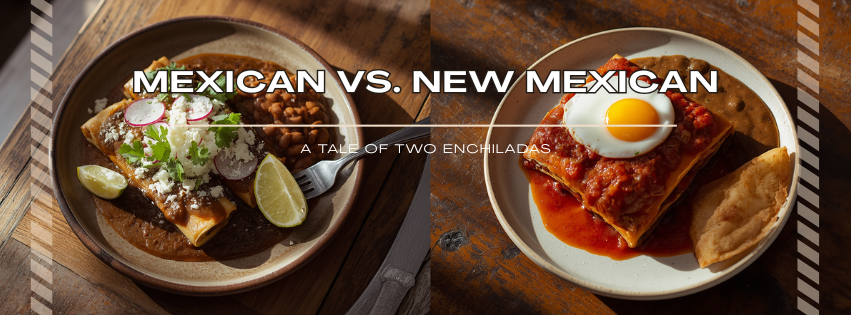
The Foundation — Same Ancestors, Different Paths
"While traditional Mexican food, often classified as California Mexican food, features ingredients like beef, wheat flour, and cumin, these are not typically used in New Mexican cooking. Instead, New Mexican cuisine strongly emphasizes local ingredients and chile peppers, creating a distinctive and regional taste," confirmed Tomasita's New Mexican restaurant's comparison of the two cuisines. Tomasita's has been operating since 1960, making it one of Albuquerque's most enduring traditional New Mexican kitchens.
Both cuisines share ingredients: corn, beans, chile, pork, cheese. Both have Spanish colonial roots. The divergence happened because of geography. Mexico's cuisine developed across a vast country with coastlines, tropical regions, highlands, and deserts — producing dozens of regional variations. New Mexico's cuisine developed in isolation, in a specific high-desert valley along the Rio Grande, using the specific ingredients that could be grown or raised there. The result is a cuisine that is narrower in its ingredient palette than the full diversity of Mexican regional cooking — but deeper in its mastery of the specific ingredients it uses.
Difference 1 — The Chile: One Specific Ingredient vs. a Wide Family
The single most significant ingredient difference between the two cuisines:
- Traditional Mexican cooking: Uses a wide family of chiles — ancho (dried poblano), guajillo, chipotle (smoked jalapeño), pasilla, mulato, serrano, habanero, árbol, morita, and others — each with specific applications in specific regional dishes. A mole negro from Oaxaca might use five or more different chiles simultaneously. The diversity of chiles is the diversity of Mexican cooking.
- New Mexican cooking: Centers almost entirely on two applications of the same ingredient — the New Mexico (Hatch Valley) chile in its fresh green form and its dried red form. The entire flavor architecture of the cuisine is built around one specific pepper, grown in one specific region, in conditions that produce one specific combination of heat and flavor that no other location replicates.
The practical implication when ordering in Albuquerque: when a New Mexican restaurant serves you green chile, it is the specific Hatch Valley cultivar — not jalapeño, not serrano, not California Anaheim. The fresh-roasted green chile and the dried red chile are both from the same plant at different stages; they taste profoundly different from each other, and both taste different from any Mexican regional chile preparation you may know.
Difference 2 — The Enchilada: Stacked vs. Rolled
"Mexican enchiladas are prepared by frying the tortilla after it's been dipped in a chile sauce, the filling is then added and the dish is served with a little cheese and sauce on top. In New Mexican cuisine, the enchilada is more foundational. Typically stacked, smothered in red or green chile (or both, if you ask for 'Christmas'), and often baked until tender, enchiladas reflect the traditional methods of the region," confirmed the Santa Fe School of Cooking's comparison of the two cuisines (January 2026).
The visual difference is the first thing a Mexican food-literate diner notices in an Albuquerque restaurant. The Mexican enchilada is a rolled cylinder — a tortilla wrapped around filling, placed in a baking dish, sauce on top. The New Mexican enchilada is flat stacked layers — three corn tortillas laid one on top of another with cheese and sometimes meat between each layer, completely submerged in red or green chile sauce so that the individual tortillas are no longer visible.
The practical difference beyond visual: the stacked format exposes every tortilla surface directly to the sauce during cooking, so the chile penetrates more thoroughly into the dish. The resulting flavor integration is different from the Mexican rolled version — in the New Mexican stacked enchilada, the chile is not a topping, it is the cooking medium.
- The montada: The New Mexican stacked enchilada topped with a fried egg — the egg yolk broken over the chile and cheese at the first bite. This preparation does not exist in Mexican cuisine. It is specifically New Mexican.
Difference 3 — The Cumin: Everywhere vs. Almost Nowhere
Cumin is one of the most reliable signals for whether a dish is authentically New Mexican or influenced by Mexican-American restaurant cooking:
- Traditional Mexican cooking: Cumin appears in marinades, adobos, mole preparations, and seasoned meats. It is a standard ingredient in the spice palette of many Mexican regional dishes.
- New Mexican cooking: Cumin is specifically absent from red and green chile sauces. Wikipedia's New Mexican cuisine article (updated April 2026) states explicitly: "Cumin, the quintessential 'Mexican food' spice, is used very differently in New Mexican food, usually reserved for spicing ground beef and sometimes other meats for burritos, tacos, and nachos. It is not used to flavor red and green chile sauces."
This is the single most surprising fact for people who think they know what New Mexican food will taste like because they have eaten Mexican food. The cumin-heavy flavor profile that most American diners associate with "Mexican food" is actually Tex-Mex, not Mexican and not New Mexican. Authentic Mexican food and authentic New Mexican food both diverge from the cumin-dominant Tex-Mex flavor profile — in different directions. If the red or green chile sauce you are eating has a prominent cumin taste, you are not eating a traditional version of either cuisine.
Difference 4 — The Cheese: White and Fresh vs. White and Fresh, or Melting
Cheese is where the distinction between authentic Mexican, New Mexican, and Tex-Mex is most visually immediate:
- Authentic Mexican cooking: Uses queso fresco (fresh white, crumbly), queso Oaxaca (white string cheese that melts beautifully), cotija (aged, salty, harder white cheese), and Mexican crema (thin, drizzled soured cream). White cheese and fresh cheese are the authentic Mexican approach. Yellow cheddar and American cheese are specifically a US adaptation.
- New Mexican cooking: Uses Monterey Jack, white cheddar, or asadero — melting cheeses that produce a full cheese pull and create the melted, blanketing cheese layer over the smothered enchilada. The cheese is fully melted into the dish rather than crumbled or fresh.
- Tex-Mex: Uses yellow cheddar, American cheese, and processed cheese dips (queso). The bright orange-yellow cheese that many diners associate with "Mexican food" is specifically a Tex-Mex invention — not used in authentic Mexican or New Mexican cooking.
The confusion: most Mexican-American restaurants in the United States serve some version of Tex-Mex, which means most diners' reference point for "Mexican food cheese" is the yellow cheddar/processed cheese version. Neither authentic Mexican nor New Mexican cooking matches this reference point, which produces the specific confusion when diners encounter New Mexican food for the first time.
Difference 5 — The Tortilla Priority: Flour as Table Bread vs. Corn as Foundation
- Traditional Mexican cooking: Corn tortillas are the foundation. Masa (nixtamalized corn dough) is the essential ingredient; corn tortillas are the primary vehicle for tacos, enchiladas, and most traditional dishes. Flour tortillas exist in northern Mexico (Sonora) but are not the national foundation.
- New Mexican cooking: Flour tortillas function as the table bread — the tortilla you receive in the basket before the meal, the tortilla your breakfast burrito is wrapped in, the tortilla used as a utensil to scoop chile stew. Corn tortillas are used specifically for enchiladas and chips. Both are present but the hierarchy is specific: flour for table use and wrapping, corn for enchiladas and traditional preparations.
The blue corn tortilla is the most specifically New Mexican tortilla variety — produced from Pueblo-cultivated blue corn that has a nuttier, earthier flavor than yellow corn and is made into chips, enchilada tortillas, and traditional preparations that do not exist in Mexican cuisine.
Difference 6 — The Posole: Side Dish vs. Main Course
- Mexican pozole: A main dish and the centerpiece of a meal. Served in large bowls with condiments brought to the table — shredded cabbage, sliced radishes, dried oregano, fresh lime, tostadas for dipping. A pozole restaurant in Mexico may serve pozole as its only dish.
- New Mexican posole: A side dish that comes with the combination plate, alongside the enchiladas and beans. Served in a small bowl. Not the meal's centerpiece. The posole's function in a New Mexican combination plate is the same as rice in a Mexican combination plate — a starchy side that completes the plate rather than anchoring it.
Both use the same basic preparation — nixtamalized hominy with pork and chile — but their function in the meal structure is completely different. New Mexico is sometimes described as the only place in the country where posole replaces rice as the standard combination plate side.
Difference 7 — Cilantro: Essential vs. Absent
- Traditional Mexican cooking: Cilantro is a foundational herb. Fresh cilantro appears in salsas, as a garnish on tacos, in guacamole, in soups, on ceviche. It is the green herb of Mexican cooking the way parsley is the green herb of French cooking.
- New Mexican cooking: Wikipedia's New Mexican cuisine article (updated April 2026) explicitly states: "Cilantro, a pungent green herb... not common in traditional New Mexican cuisine." If you hate cilantro, New Mexican food is specifically the version of Southwest American cooking that does not force it upon you.
The cilantro absence is one of the most practically significant differences for diners — it changes the flavor profile of every dish where cilantro would otherwise appear. New Mexican salsas are less herbal and more chile-forward than Mexican salsas. The absence is not an omission; it reflects the different herb tradition of the cuisine — oregano (used sparingly) and cumin (in specific applications only) are the supporting herbs, not cilantro.
Difference 8 — The Breakfast Burrito: New Mexican Invention, Not Mexican
- Mexican burritos: The burrito is northern Mexican (Sonoran/Chihuahuan) in origin and is primarily a lunch and dinner item in Mexico. A Mexican breakfast is more likely to involve huevos rancheros, chilaquiles, tamales, or atole — not a flour tortilla wrapped around scrambled eggs and potato.
- New Mexican breakfast burrito: Scrambled eggs, potato (papitas), usually seasoned meat, wrapped in a large flour tortilla, smothered in red or green chile sauce and melted cheese. This is the quintessential Albuquerque morning. It is a New Mexican invention — not found south of the border.
The breakfast burrito is the most practical daily-life difference for anyone moving to Albuquerque from a Mexican food background. It is also the dish that most immediately signals that you are somewhere with its own food tradition rather than a local adaptation of something from elsewhere.
Difference 9 — The Sopapilla: New Mexican Specific Form
- Mexican sopaipillas/buñuelos: Fried dough in Mexican cooking typically takes the form of buñuelos (flat crisp fried dough) or churros. The hollow, pillow-shaped sopapilla that New Mexicans eat does not have a direct Mexican equivalent.
- New Mexican sopapilla: A specific hollow fried pastry puffed by steam — related to Indigenous frybread traditions — that functions as both an entrée (stuffed with meat, beans, and chile) and a dessert (plain with honey). Both uses are specifically New Mexican. The automatic arrival of the dessert sopapilla basket at the end of every traditional New Mexican meal with no order required is a New Mexican social ritual with no Mexican equivalent.
Difference 10 — The Spice Architecture: Chile-Forward vs. Multi-Spice Complexity
- Mexican complexity: Mexican cuisine — particularly the central and southern traditions — builds flavor from multiple simultaneous spices. A mole negro may incorporate 30+ ingredients. Adobos layer dried chiles with vinegar, garlic, and spices into marinades. The complexity comes from the interaction of many ingredients at once.
- New Mexican concentration: New Mexican cooking builds its flavor from the New Mexico chile itself, with oregano, garlic, and sometimes onion as supporting players. The sophistication is in the depth of the single primary ingredient — the age of the red chile, the freshness of the green, the specific batch — rather than in the complexity of a wide ingredient palette.
Neither approach is superior; they are different philosophies. Mexican cooking produces greater variety; New Mexican cooking produces deeper mastery of a narrower range. The person who expects Mexican's diversity may find New Mexican monotonous on the first meal; the person who learns to taste the specific variations within the New Mexican green and red chile tradition finds more range than they initially perceived.
Difference 11 — The Plate Accompaniments: Rice vs. Posole, Crema vs. Sour Cream
- Standard Mexican plate: Arroz (seasoned rice, often with tomato), frijoles refritos (refried pinto beans), with crema drizzled and queso fresco crumbled, fresh pico de gallo, sliced lime
- Standard New Mexican combination plate: Posole (hominy stew) in a small bowl, pinto beans (sometimes whole, not always refried), sopapilla or flour tortilla on the side, sour cream dollop (thicker than crema), diced tomato and shredded lettuce as toppings
The most telling single visual difference: the bowl of posole where rice would be in a Mexican combination plate. Every traditional New Mexican restaurant produces this visual. It is the immediate identifier that you are eating a different cuisine even before the first bite.
Difference 12 — The Signature Dishes That Do Not Exist in Mexico
Several specifically New Mexican dishes are not found in Mexico:
- Green chile cheeseburger: Beef patty with roasted Hatch green chile and melting white cheese — specifically New Mexican, officially recognized as the state's signature dish, with a dedicated statewide competition. Does not exist in Mexican cuisine.
- Carne adovada: Pork slow-cooked in red New Mexico chile sauce — this specific preparation (different from carne asada or Mexican adobo) is distinctly New Mexican. The extended red chile braise in which the meat spends hours produces a flavor depth that no other preparation achieves.
- Biscochito: The official New Mexico state cookie — anise-flavored lard shortbread that appears at Christmas and every celebration. Related to Spanish biscocho but evolved specifically in New Mexico over centuries. The state legally protects the name.
- Blue corn atole: Hot gruel made from blue cornmeal — a Pueblo traditional food that appears in New Mexican home cooking and at feast days. Not a Mexican dish.
The Practical Guide — How to Order in Albuquerque If You Know Mexican Food
- Expect the "red or green?" question: Every dish gets this question. Say "Christmas" if you want both. Ask "which is hotter today?" if you have heat sensitivity. The server knows.
- Do not look for rice on the plate: Posole is the side dish, not rice. The small bowl of hominy stew is the equivalent of what rice is on a Mexican plate.
- Do not expect cilantro: It will not appear. This is authentic, not an error.
- Expect the sopapilla basket at the end: It arrives uninvited. Tear the corner. Add honey inside. Eat while hot.
- Look at the enchiladas: They will be flat layers, not rolls. This is correct.
- Taste the chile sauce specifically: The first bite of the actual red or green chile sauce is the specific moment of understanding. It does not taste like Mexican chile sauce. It tastes like what it is — a specific ingredient grown in a specific place, prepared with specific techniques, for a specific cuisine.
For the complete restaurant guide to Albuquerque's best green chile kitchens — which restaurants produce the hottest, freshest, and most traditional green chile experience — our post on the best Albuquerque restaurants for green chile lovers covers the heat map in detail. And for the complete Albuquerque food bucket list — all 25 dishes, restaurants, and experiences that make up the complete New Mexican food education — our ultimate Albuquerque food bucket list covers everything worth eating.
The Bottom Line — Related but Distinct
Albuquerque food and traditional Mexican food are related the way cousins are related: they share grandparents (indigenous agriculture, Spanish colonialism), they use some of the same vocabulary (enchiladas, tamales, posole), and they are unmistakably from the same extended family. But they are not the same. They have different cultural lineages, different primary ingredients, different flavor philosophies, and different plate architectures.
The visitor who arrives in Albuquerque expecting Mexican food and discovers something different is not discovering worse food or better food. They are discovering specific food — food that belongs to one place, made from one region's ingredients, by the descendants of the people who first made it there. The stacked enchilada covered in red New Mexico chile that does not contain cumin, served with posole instead of rice and a sopapilla basket that arrives without anyone ordering it, is not a variation on Mexican food. It is its own tradition, four centuries old, in the city where it has always been made.
Want to Live Where This Is on Every Corner?
Jenn & Vinay from The Rodgers Neighborhood Real Estate Group know which Albuquerque neighborhoods put the best traditional New Mexican kitchens on the regular lunch rotation, which give you a South Valley address within walking distance of the most authentic red chile in the city, and which give you proximity to the green chile roasting season in September that makes the whole city smell like everything good. The food culture is consistently cited as a top reason people who move to Albuquerque decide to stay. The conversation about finding the right home starts with a call.
Jenn & Vinay Rodgers are Albuquerque's trusted real estate professionals with The Rodgers Neighborhood Real Estate Group, brokered by Real Broker, LLC, serving buyers and sellers across Albuquerque, Rio Rancho, Corrales, Los Lunas, Tijeras, Cedar Crest, Sandia Park, the East Mountains, Bernalillo County, Sandoval County, and surrounding New Mexico communities.
The Rodgers Neighborhood Real Estate Group
Jenn & Vinay Rodgers
Real Broker, LLC
Albuquerque, NM
📞 505-417-2733
🏠 Find a home where this food becomes part of your daily lifeCategories
- All Blogs (362)
- 2026 & Beyond for Real Estate (256)
- Doctors and Nurses looking for homes in NM (4)
- Guide to buying a home in NM (160)
- Health Care Heros (7)
- Home Upgrades (42)
- Jenn & Vinay your Local Real Estate Experts! (124)
- Moving to Albuquerque (139)
- Neighborhoods in Albuquerque NM (94)
- Rent or Own (2)
- Sellers Questions for Selling homes (2)
Recent Posts









GET MORE INFORMATION