

10 Factors That Can Increase or Decrease Your Albuquerque Home's Sale Price
Some of these factors you can control. Some you cannot change but need to understand. All of them are real, all of them are specific to the 2026 Albuquerque market, and all of them have a measurable impact on what your home ultimately sells for and how long it takes to get there.
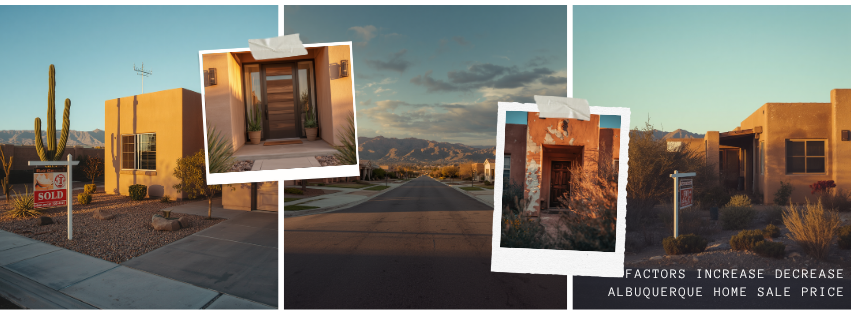
The 2026 Market Context — Why These Factors Matter More Now
"Buyers shouldn't expect massive price drops, but they can expect more negotiating room. The days of automatic appreciation every month are likely over for a while. The market is becoming more selective. Buyers are cautious, sellers are having to be more strategic, and pricing matters more than it did during the faster-moving years," confirmed Norada Real Estate's Albuquerque market analysis (November 2025). The 2026 market is not a crisis — it is a market that requires competence rather than automatically rewarding listing.
"The average homes sell for about 1% below list price and go pending in around 32-34 days. Hot homes can sell for around list price and go pending in around 12 days," confirmed Redfin's Albuquerque market data (June 2026). The 22-day gap between 12-day hot homes and 34-day average homes — produced by the same market, in the same neighborhoods, at the same time — is the gap these 10 factors explain.
FACTOR 1 — Pricing Accuracy: The Factor With the Most Seller Control
IMPACT DIRECTION: Correct pricing → higher net proceeds. Overpricing → lower net proceeds than correct pricing would have produced.
The mechanism is specific and documented: a correctly priced home enters the market, generates the first-two-weeks surge of buyer interest while the listing is fresh, receives offers quickly, and closes at or near list price. An overpriced home enters the market, generates fewer showings because buyers researching comparable homes do not include it in their consideration set, sits through the two-week window, and then begins accumulating the "Days on Market" count that signals something is wrong to every subsequent buyer.
The damage from the overprice path:
- Extended DOM stigma: Every buyer who tours a 60+ day listing asks the same question: "Why hasn't it sold?" Even if the answer is simply "it was overpriced originally," the question has been planted. Buyer confidence is lower going into the offer.
- Price reduction signals: A price reduction communicates that the seller accepted the market's verdict about their original price. This is true. But it also signals that the seller may be negotiable on other terms, producing offers below the reduced price.
- The final-price paradox: Studies of overpriced listings consistently show that they ultimately sell for less than they would have sold for if correctly priced from Day 1 — because the extended market time and price reduction history reduce buyer confidence and produce lower offers.
In 2026's Albuquerque market, with 38-40% of active listings having taken price reductions and active listings averaging 95 days on market, the seller who correctly prices from Day 1 is not competing with those 38-40% — they are competing only with the small percentage of correctly priced active inventory, and winning.
FACTOR 2 — The First Two Weeks: When Your Sale Price Is Determined
IMPACT DIRECTION: Strong first-two-weeks launch → best price. Weak launch → damaged market position regardless of subsequent price reductions.
The Albuquerque market's hot home metric — 12-day pending time versus 34-day average — represents the difference between a home that maximized its first-two-weeks buyer surge and one that missed it. The mechanism:
- New listings receive disproportionate attention: Buyer agents set up alerts for new listings in target areas. A new listing generates an immediate surge of interest from the pool of ready, pre-approved buyers who have been waiting. This pool is the most motivated and most competitive buyer group available.
- The surge lasts approximately 7-14 days: After the initial surge, buyer interest settles to the steady-state level — lower, slower, and less motivated. The listing has moved from "new and exciting" to "what everyone has already seen."
- Day 1 must be prepared Day 1: Listing photos, staging, pricing, repairs, and the online listing description must all be complete and optimized before the home hits the MLS. Listing before staging is complete wastes the surge on a suboptimal presentation.
The specific preparation sequence: repairs complete → staging done → professional photography → pricing confirmed → MLS live. This sequence protects the first-two-weeks surge. Any shortcut in the sequence — listing with phone camera photos, listing before the swamp-cooler-to-refrigerated-air conversion is complete, listing before the fresh exterior paint — wastes the most valuable days of the listing lifecycle.
FACTOR 3 — Condition: The "Buttoned Up" Standard
IMPACT DIRECTION: Buttoned-up condition → faster sale, fewer concessions, closer to list price. Visible deferred maintenance → extended DOM, buyer inspection leverage, lower net proceeds.
Albuquerque's 2026 buyer is specifically more condition-conscious than the 2021-2023 buyer who was waiving inspections and accepting homes as-is to win competitive bidding situations. Market analysis of the current buyer confirms: buyers are specifically requesting repairs and negotiating harder on condition issues than at any point in the past 3-4 years.
The specific condition factors with the highest Albuquerque price impact:
- HVAC — the single biggest condition signal: A serviced, functional, appropriately-aged HVAC system reads as evidence that the home has been maintained. A clearly aging system, a swamp cooler in the refrigerated-air market, or an HVAC that fails during inspection produces the most aggressive buyer negotiations. Service the HVAC before listing; have the service record available.
- Roof — the most common buyer concern: Roof age and condition is the most-flagged inspection item in Albuquerque real estate. A home with a documented recent roof replacement commands higher confidence and fewer inspection-based concession demands than a home with an aging roof of unknown condition.
- Visible cosmetic deferred maintenance: Cracked caulking, peeling paint, dripping faucets, sticking doors — each visible issue signals to buyers that there is more beneath the surface. The inspection will find what the walkthrough did not show. The cost of addressing visible cosmetics before listing is almost always lower than the cost of the concessions they produce.
- Exterior appeal: Market analysis consistently shows exterior improvements have the highest ROI in Albuquerque. Fresh front door paint ($50-$150 investment), new house numbers, clean xeriscaping, pressure-washed hardscape — these are disproportionately high-return cosmetic investments.
FACTOR 4 — Refrigerated Air vs. Swamp Cooler: The Albuquerque-Specific Price Factor
IMPACT DIRECTION: Refrigerated air → full market value. Swamp cooler → below market value OR a credit request that reduces net proceeds.
This factor is specific to Albuquerque and the broader New Mexico climate. Swamp coolers (evaporative cooling) are common in Albuquerque's pre-2000 housing stock and function adequately in the dry months — but fail during the July-August monsoon season when humidity spikes and evaporative cooling becomes ineffective.
Buyers in virtually every demographic specifically prefer refrigerated air. The consistent market behavior: a home listed with a swamp cooler receives offers that either include a request for a refrigerated-air-conversion credit ($5,000-$12,000 depending on the system) or are submitted at a lower price that implicitly incorporates the conversion cost. Either way, the seller's net proceeds are reduced by the cost of the conversion they did not make.
The calculation for sellers: if the refrigerated air conversion costs $8,000 and the absence of refrigerated air reduces net proceeds by $8,000-$15,000 (through lower offers and/or conversion credits), the pre-listing conversion is the better financial decision. Every swamp-cooler home should run this math before listing.
FACTOR 5 — Listing Photography and Online Presentation
IMPACT DIRECTION: Professional photography and presentation → more showings → more offers → higher price. Poor online presentation → fewer showings, extended DOM, lower final price.
96% of Albuquerque buyers begin their home search online. The listing photos are the first showing — and for most buyers, the first filter. A listing with dark, cluttered, or low-quality photos generates fewer showings than a comparable listing with professional photography, regardless of the actual quality of the homes.
- The specific impact: Professionally staged and photographed listings generate 90% more online click-through compared to unstaged or poorly photographed listings. Fewer clicks = fewer showings. Fewer showings = fewer offers. Fewer offers = lower final price.
- The Albuquerque mountain view premium: If your home has Sandia Mountain views, the listing photos must capture this. An east-facing window with a mountain view that is not shown in the listing photos is a premium feature invisible to buyers doing online research. Mountain view photos should be taken at the time of day when the mountains are most visible — typically morning for east-facing windows.
- Drone/aerial photography: For foothills properties, corner lots, or homes with significant outdoor living space, aerial photography that shows the geographic context is a meaningful differentiator. The buyer who sees the Sandia backdrop from above in listing photos brings different purchase confidence to the showing.
FACTOR 6 — School Zone Assignment: The Structural Premium You Cannot Change
IMPACT DIRECTION: La Cueva zone / Eldorado zone → premium over non-zone homes. Non-premium zone → value ceiling below what the same home would achieve in a premium zone.
This is the one factor on this list that sellers have zero ability to change. Your home's school zone is determined by its address, and the La Cueva zone premium versus the non-premium zone reality is structural and permanent. The practical implications for sellers:
- For La Cueva zone sellers: Lead with the school zone in every listing description and marketing piece. The 35% of buyers ages 35-44 who specifically filter by school district need to find this information immediately in the listing. "La Cueva High School zone" in the first sentence of the listing description is not marketing language — it is factual information that is material to a significant share of your buyer pool.
- For non-premium zone sellers: Your home's ceiling is set by its zone assignment, not by its condition or features. Renovations can close the gap between your home and your neighborhood's ceiling, but they cannot move you to a different neighborhood's ceiling. Understand your ceiling before investing in improvements.
- For Eldorado zone sellers: The La Cueva zone buyers priced out of 87122 are your specific spillover buyer pool. Your marketing should specifically reach buyers who want La Cueva quality at a more accessible price point — because that is exactly what the Eldorado zone provides.
FACTOR 7 — The Concession Strategy: How You Handle Negotiation Determines Net Proceeds
IMPACT DIRECTION: Strategic concessions → preserve sale price, maximize net. Reactive price reductions → signal motivation, invite further negotiation.
Approximately 37% of recent Albuquerque transactions included some form of seller concession — closing cost contributions, rate buydowns, repair credits, or home warranties. The way sellers structure and respond to concession requests has a measurable effect on the final net proceeds:
- Closing cost credits vs. price reductions: A $10,000 closing cost credit and a $10,000 price reduction have the same gross cost to the seller. But a closing cost credit preserves the stated sale price — which matters for the appraisal comparison and which matters to the seller's perception of outcome. A price reduction changes the permanent record of what the home sold for.
- Rate buydowns as the most attractive 2026 concession: In a 6.30% rate environment, a 2-1 rate buydown that temporarily reduces the buyer's rate in Years 1 and 2 has a higher perceived value to the buyer than the equivalent dollar amount as a price reduction. Offering a $10,000 rate buydown credit instead of a $10,000 price reduction gives the buyer a more compelling monthly payment improvement than the price reduction would produce.
- The reactive price reduction trap: A price reduction taken after 30+ days on market communicates motivation. The buyer who was already interested but waiting for a concession opportunity may now offer below the reduced price, having established that the seller will reduce. Strategic proactive concessions from Day 1 are better than reactive price reductions.
FACTOR 8 — Listing Timing: When You List Affects What You Achieve
IMPACT DIRECTION: Spring listing (Feb-May) → peak buyer activity, strongest offers. Off-season listing (Nov-Jan) → reduced buyer pool, longer DOM, greater concession pressure.
Albuquerque's buyer activity follows a predictable seasonal pattern that experienced local agents can confirm:
- Peak buyer activity (highest offer prices and lowest DOM): February through May — the combination of tax refund season, spring family planning decisions, and the year's most active buyer pool. Listings that hit the MLS in late February and March specifically benefit from the year's freshest and most motivated buyer pool.
- Strong but slightly lower activity: June through August — summer remains active but the highest-motivation spring buyers have typically completed their purchase by now. Back-to-school season drives urgency for family buyers in July-August.
- Reduced activity (more buyer leverage): September through January — fewer active buyers, longer average DOM, greater concession pressure on sellers. The buyer who is actively searching in November is motivated for specific reasons (relocation, life change) and still a serious buyer, but the competitive pressure among multiple offers is significantly lower.
The caveat for motivated sellers: a correctly priced, buttoned-up home in any season will attract its buyer. Timing optimizes the competitive environment; correct pricing and condition determine whether a sale occurs regardless of season.
FACTOR 9 — Competing Active Inventory: What Else Is On the Market When You List
IMPACT DIRECTION: Listing as the best value among active comparables → faster sale, stronger offers. Listing as the most expensive comparable → slower sale, eventual price reduction to become competitive.
In the 2026 Albuquerque market, buyers have more time and more options than during the 2021-2023 frenzy. They compare actively listed homes against each other before making offer decisions. Your home does not compete in the abstract — it competes specifically against every other active listing within the buyer's consideration set.
- The comparative analysis your buyer will run: Every buyer's agent pulls the 3-5 most comparable active listings to the home their buyer is interested in. They compare price per square foot, bedroom count, school zone, condition, and features. If your home is the most expensive comparable in that set without clearly superior condition or features, offers come in below asking or do not come at all.
- The strategic response: Before listing, your agent should conduct the same competitive analysis the buyer's agent will conduct. Identify the 3-5 homes most comparable to yours that are currently active. Price and position your listing to be the best value in that specific comparison set — not the absolute cheapest, but clearly the best combination of price, condition, and features.
FACTOR 10 — The NM Non-Disclosure State and Pricing Intelligence
IMPACT DIRECTION: MLS-based closed comparable pricing → accurate market positioning. Zestimate or asking-price-based pricing → potential over- or under-pricing relative to actual market.
New Mexico is a non-disclosure state: residential sales prices are not automatically public record. This creates a specific pricing intelligence challenge for sellers who do not have access to closed comparable sale data through a licensed agent's MLS access.
- The Zestimate limitation: Zillow's Zestimate algorithm is specifically less accurate in New Mexico than in disclosure states because Zillow cannot access closed transaction prices directly. The Zestimate is built from list prices, public records, and adjacent market signals — not actual transaction data. In Albuquerque, the Zestimate may be 5-15% off in either direction. Pricing to a Zestimate without closed comparable verification is the most common source of both overpricing (leaving money on the table when the Zestimate is high) and underpricing (selling below market when the Zestimate is low).
- The correct pricing tool: MLS-based Comparative Market Analysis (CMA) using actual closed sales in the same ZIP code, comparable bedroom count, comparable year built, and comparable square footage within the past 60-90 days. This requires a licensed agent with MLS access.
- The FSBO pricing risk: For-Sale-By-Owner sellers who price without MLS closed comp access are pricing without the most accurate tool available. In a non-disclosure state, this is a more significant blind spot than in disclosure states where public records provide pricing data.
The Quick Reference — 10 Factors Summary
- Pricing accuracy (Day 1): INCREASE = correct pricing from MLS comps | DECREASE = overpricing by 5%+
- First-two-weeks launch: INCREASE = fully prepared before MLS live | DECREASE = listing before staging/photos/repairs complete
- Condition ("buttoned up"): INCREASE = serviced HVAC, clean roof, zero visible deferred maintenance | DECREASE = visible deferred maintenance
- Refrigerated air (Albuquerque-specific): INCREASE = refrigerated air installed | DECREASE = swamp cooler without conversion credit
- Photography and online presentation: INCREASE = professional photos, staged, mountain view shots | DECREASE = phone camera, unstaged, missing key feature photos
- School zone: INCREASE = La Cueva / Eldorado zone (clearly communicated) | DECREASE = non-premium zone (ceiling constraint, not changeable)
- Concession strategy: INCREASE = proactive closing cost/buydown offers | DECREASE = reactive price reductions post-30-day DOM
- Listing timing: INCREASE = February-May listing | DECREASE = November-January listing (reduced buyer pool)
- Competing inventory: INCREASE = best value among active comparables | DECREASE = most expensive in comparison set without clear superiority
- Pricing intelligence (NM non-disclosure): INCREASE = MLS closed comp CMA | DECREASE = Zestimate-based pricing without closed comp verification
For the complete seller's preparation guide — the specific repairs, staging, and photography steps that implement Factors 2, 3, and 5 of this list — our post on how to prepare your Albuquerque home before listing covers the complete preparation checklist. And for the seller who is specifically evaluating whether the home-staging investment is worth it in 2026's market — implementing Factor 5 — our post on what you should know about staging your home covers the complete ROI analysis.
The Bottom Line — 2026 Rewards Competence, Not Optimism
The 2026 Albuquerque market is not a forgiving market for sellers who rely on the market to compensate for preparation and pricing mistakes. It is a market where correctly priced, well-presented, buttoned-up homes are selling in 12-34 days at 98.5% of list price — and where homes that miss on any of the key factors are joining the 38-40% of active listings that have taken price reductions and the pool of homes averaging 95 days on market.
The factors you can control — pricing accuracy, condition, refrigerated air conversion, photography quality, launch timing, and concession strategy — can be addressed before you list. The factors you cannot change — school zone, competing inventory, and the NM non-disclosure pricing environment — can be understood and strategized around.
The sellers who consistently achieve the best Albuquerque results in 2026 are the ones who do the work before they list, price from real data rather than optimistic estimates, and let a correctly prepared home do what a correctly prepared home does in this market: sell quickly, at or near list price, to a motivated buyer who saw it in the first two weeks and never needed a reason to wait.
Ready to Maximize Your Albuquerque Home's Sale Price?
Jenn & Vinay from The Rodgers Neighborhood Real Estate Group build a customized pre-listing strategy for every seller we represent — applying the 10 factors in this guide to your specific home, your specific neighborhood, and the specific competing inventory active in your market at listing time. We provide the MLS closed comparable analysis, the condition assessment, the school zone marketing strategy, and the photography and staging guidance that positions your home to achieve the best possible result in the current market. The conversation about what your home can achieve starts with a call.
Jenn & Vinay Rodgers are Albuquerque's trusted real estate professionals with The Rodgers Neighborhood Real Estate Group, brokered by Real Broker, LLC, serving buyers and sellers across Albuquerque, Rio Rancho, Corrales, Los Lunas, Tijeras, Cedar Crest, Sandia Park, the East Mountains, Bernalillo County, Sandoval County, and surrounding New Mexico communities.
The Rodgers Neighborhood Real Estate Group
Jenn & Vinay Rodgers
Real Broker, LLC
Albuquerque, NM
📞 505-417-2733
🏠 Get a free Albuquerque home evaluation — know your number before you listCategories
- All Blogs (362)
- 2026 & Beyond for Real Estate (256)
- Doctors and Nurses looking for homes in NM (4)
- Guide to buying a home in NM (160)
- Health Care Heros (7)
- Home Upgrades (42)
- Jenn & Vinay your Local Real Estate Experts! (124)
- Moving to Albuquerque (139)
- Neighborhoods in Albuquerque NM (94)
- Rent or Own (2)
- Sellers Questions for Selling homes (2)
Recent Posts





GET MORE INFORMATION