
What Really Determines Your Home's Value in Albuquerque?
Most discussions of home value list the same factors — location, condition, size, schools, amenities — and leave the reader knowing these factors exist without understanding how they actually interact in a specific market. This guide is not that discussion. This guide explains the specific factors that produce the $497,000 spread between Albuquerque's cheapest ZIP code ($241,332) and its most expensive ($738,030), and what those factors mean for your home's value specifically.
The Starting Point — The $497,000 Spread That Demands an Explanation
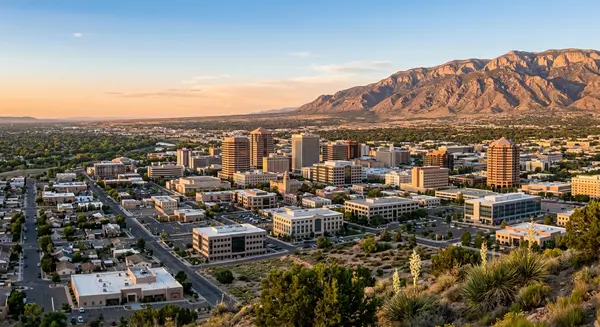
"ZIP 87122 is a clear outlier at $738,030 — more than double the city median. On the other end, 87102 comes in at $241,332. That's downtown and the surrounding neighborhoods. The gap between the cheapest and most expensive ZIP codes is nearly $497,000. That spread means your budget determines not just the size of your home but which part of the city you live in entirely," confirmed HousingData.report's 16-ZIP Albuquerque market analysis (March 2026). The average home across all 16 tracked ZIPs is $359,583. Ten of the 16 ZIPs cluster between $310K and $370K. The two extremes diverge dramatically.
The $497,000 gap is not produced by the obvious candidates. Homes in 87122 do not have twice the square footage of homes in 87102. The construction quality of 87122's 1980s-1990s production homes is not dramatically superior to the construction quality of comparable-era 87102 homes. The gap is produced by a set of location-specific factors that are permanent, unconditional, and specific to Albuquerque's geography and culture.
The Foundational Principle — The Land Appreciates, Not the Structure
Before covering the specific factors, the principle that makes location permanently dominant: the physical structure of a home does not appreciate. It ages, depreciates, and requires increasing maintenance investment over time. What appreciates is the land it sits on — the specific location within the city, the specific view it commands, the specific school zone it falls within, and the specific access to amenities, employment, and lifestyle it provides.
This principle explains every counterintuitive valuation observation in Albuquerque: why a smaller, older home in North Albuquerque Acres sells for more than a larger, newer home in a less desirable ZIP. The larger home's structure is worth more. The smaller home's land — its location, its zone assignment, its view, its access to the Sandia trail system — is worth more. Land wins.
The implication for sellers: no renovation improves your land. Renovations improve your structure, which is already depreciating. Renovations can close the gap between your home and the neighborhood's ceiling — but they cannot move your home to a higher-value neighborhood. Location is the determinant that no renovation can change.
Factor 1 — School Zone Assignment: The Most Measurable Premium
"School Quality: Areas with highly rated schools, such as La Cueva and Eldorado High School districts, rank among the most desirable. These locations often see a consistent demand for homes, reflecting in the relatively higher property values and shorter time on the market," confirmed Steadily's 2026 Albuquerque real estate market analysis (January 2026). The research on the quantitative relationship is equally precise: a one-point improvement in school rating correlates with a 2.5% increase in nearby home values (National Bureau of Economic Research).
In Albuquerque, the school zone premium is the most quantifiable single value determinant:
- La Cueva zone (87122) ceiling: $738,030 — up $6,665 from $731,365 a year ago, appreciating ABOVE the overall market while the market moved sideways. The ceiling is pulling away from the floor at an accelerating rate.
- Eldorado zone (87111): $280,000-$550,000 range — La Cueva-quality academics at a meaningful price discount. The spillover demand from La Cueva zone buyers priced out of 87122 is the specific growth driver in this tier.
- The boundary effect: A home two blocks inside the La Cueva zone boundary is worth measurably more than an identical home two blocks outside it — not because the physical homes differ, but because the zone assignment differs. Zone boundaries run down specific streets. Two addresses on opposite sides of the same street can have a $50,000-$100,000 value differential produced entirely by the school zone line.
- The buyer motivation data: 35% of buyers between the ages of 35-44 specifically cited school district quality as a factor in their neighborhood selection (National Association of Realtors). For the largest family-formation buyer demographic, the school zone is as important as the home itself.
- The lease renewal effect for investors: Family renters in the La Cueva zone renew leases to maintain school zone assignment — producing multi-year rental stability that no other factor in Albuquerque replicates with equal reliability.
Factor 2 — The Sandia Mountain View: A Geographic Premium That Is Permanent
The Sandia Mountains rise 5,000 feet from the valley floor within the Albuquerque city limits — an amenity that no comparable-size American city possesses in the same geography. The mountain view from an east-facing Albuquerque home is a feature of the land, not the structure, and it is permanent: the Sandia Mountain Wilderness boundary ensures that no future development can be built between the viewer and the mountain.
The value evidence: Q1 2026 data shows Sandia Heights at $750,000+ median with 14.5% appreciation, and North Albuquerque Acres at $855,000 median with 10.32% appreciation — both significantly outperforming the overall market's flat performance. These neighborhoods' primary shared characteristic is Sandia Mountain view and access.
The premium is specifically generated by:
- East-facing windows: The Sandia Mountains are east of the city. East-facing living rooms and primary bedrooms have the mountain view; west-facing rooms look at the opposite direction. The orientation premium within the same neighborhood is real and specific.
- Elevation: Higher foothills elevation = more mountain face visible = higher premium. The premium compounds with elevation — each level up the foothills adds to the view and to the value.
- Trail access from the residential street: The Elena Gallegos Picnic Area and Albert G. Simms Park, the La Luz Trail, the Embudito Trail, and the other Sandia foothills trails accessed from the residential street grid rather than from a trailhead parking lot are a premium that the out-of-state buyer specifically recognizes. Walking from your front door to a Sandia trail is a lifestyle feature that Los Angeles, Denver, and Seattle cannot offer at any price.
Factor 3 — Protected Land Adjacency: The Permanent Scarcity Premium
Albuquerque's geography imposes permanent development limits that produce scarcity — and scarcity produces premium. The three protected boundaries that constrain Albuquerque's most desirable neighborhoods are:
- Sandia Mountain Wilderness (east): The federally designated Wilderness boundary limits the eastern expansion of the Northeast Heights. The foothills neighborhoods cannot build further east. This means the supply of foothills-adjacent homes is fixed while demand continues to grow.
- Petroglyph National Monument (west): The 7,244-acre monument's eastern boundary limits western development in the Westside communities. Monument-adjacent homes in Volcano Cliffs and the Petroglyphs neighborhood have a permanent open-space neighbor that is unconditionally protected.
- Rio Grande bosque and riparian corridor (center): The bosque's protected status limits high-density development in the North Valley's most desirable corridor. North Valley agricultural zoning and the bosque protection together produce the supply constraint that sustains North Valley premium pricing.
The permanent scarcity premium means that the most desirable Albuquerque neighborhoods cannot simply be replicated by new construction. When Intel employees move to Rio Rancho, builders can construct new homes to meet demand. When La Cueva zone families want a foothills home with mountain views, there is no additional land to develop — the federally protected Sandia Wilderness is the eastern boundary. This supply constraint is the land premium's most durable foundation.
Factor 4 — Walkability: The Nob Hill and University Area Per-Square-Foot Premium
"Homes with Walk Scores above 70 have appreciated 5.6% faster than car-dependent locations since 2020. According to Redfin's data, 68% of millennials and Gen Z homebuyers prioritize walkability, willing to pay a 15-20% premium for neighborhoods where they can walk to restaurants, shops, and services," confirmed HonestCasa's neighborhood appreciation research (April 2026). In Albuquerque, the only significant Walk Score above 70 is concentrated in the Nob Hill and University corridor.
Nob Hill's Walk Score 85 — the highest in Albuquerque — produces a per-square-foot premium over comparable square footage in car-dependent areas of the city. The specific walkability premium is generated by:
- Restaurant density: Nob Hill's Central Avenue restaurant and coffee shop concentration (Scalo, Zinc, Frenchish, the Frontier, Char at the Andaluz adjacent) is the most walkable food and beverage environment in the city.
- Retail and services walking distance: Grocery, pharmacy, coffee, dining, and entertainment without requiring a car for daily errands.
- The demographic alignment: Millennials and Gen Z buyers — who now represent the largest buyer demographic — most specifically prioritize walkability. As this demographic ages into peak homebuying years, the Nob Hill walkability premium is likely to strengthen rather than moderate.
The Nob Hill investment implication: the walkability premium produces both a higher price-per-square-foot at purchase AND above-average appreciation — the 5.6% faster appreciation rate for Walk Score 70+ homes since 2020 means the walkability premium compounds annually rather than remaining static.
Factor 5 — Employment Proximity and the Institutional Employer Corridors
Albuquerque's institutional employment anchors create geographic value gradients that radiate outward from each facility:
- Kirtland Air Force Base and the Heritage East corridor: Heritage East (87123) holds the city's #1 Niche safety grade and a $161,108 average household income — driven by the proximity to Kirtland's military and civilian federal employment base. The proximity premium for military housing near Kirtland is documented and consistent.
- Sandia National Laboratories and the Northeast Heights: Sandia Labs' 12,000+ employees, concentrated in the Northeast Heights employment corridor, generate sustained residential demand in the adjacent neighborhoods. The Sandia Labs employee is the demographic that most specifically drives Northeast Heights premium tier demand — high income, highly educated, family-formation age.
- Intel in Rio Rancho — The Growth Driver: Intel's $3.5 billion Fab 11X expansion is generating the employment growth (8.1% population increase 2020-2024) that produces the Rio Rancho appreciation story. Employment proximity to growing employers produces 2-3 times the average appreciation rate in adjacent residential markets.
- UNM and the Nob Hill/UNM corridor: The 27,000-student, faculty, and staff demand base creates perpetual residential demand that sustains the UNM corridor's investment property market through every economic cycle.
Factor 6 — Lot Size and Zoning Character: The North Valley and Corrales Premium
In most American suburban markets, smaller lots are associated with less expensive homes — the quarter-acre suburban lot is the norm, the smaller condo lot is below the norm. In Albuquerque's North Valley and the village of Corrales, the inverse applies: larger lots command premium pricing because the agricultural zoning that produced them specifically cannot be replicated.
North Valley agricultural zoning allows horses, chickens, and large-animal keeping. It allows orchard planting, acequia irrigation access, and the bosque-adjacent lifestyle that Corrales and Los Ranchos de Albuquerque specifically attract. When this zoning produces a one-acre bosque-adjacent lot in Los Ranchos, the demand for that specific combination — acre lot, water rights, horse facilities, cottonwood canopy, 10 minutes from downtown — is specifically inelastic. There is not more of this supply than currently exists.
Factor 7 — Condition and the 1977 Median Build Year
Albuquerque's housing stock has a median build year of 1977 — nearly 50-year-old homes as the statistical typical home. This specific vintage of construction has predictable maintenance patterns:
- HVAC systems: Homes built in the 1970s and early 1980s frequently still have swamp coolers rather than refrigerated air. In a market where buyers specifically prefer refrigerated air (documented in buyer preference research), the swamp cooler home is competitively disadvantaged.
- Electrical systems: Some 1960s-1970s construction has aluminum wiring that requires inspection and potentially remediation.
- Roof systems: A 47-year-old home that has had one or two roof replacements is normal; a 47-year-old home on its original roof is a condition flag.
- The exterior upgrade ROI: Market research consistently shows that exterior improvements produce the highest ROI for Albuquerque home sellers — fresh paint, updated landscaping, and curb appeal improvements return more per dollar invested than interior renovations in the current market.
The condition premium in 2026 specifically: the "buttoned up" standard confirmed by market analysts means that buyers are specifically willing to pay more for a well-maintained older home than for a poorly maintained newer home — provided the maintenance is genuine rather than cosmetic. A 1980s Northeast Heights home with a new HVAC, a recent roof, and well-maintained systems commands a premium over a comparable home with visible deferred maintenance regardless of which was built more recently.
Factor 8 — The Comparable Sales Environment: NM Non-Disclosure and the Zestimate Problem
A less commonly discussed but genuinely important Albuquerque-specific home value determinant: New Mexico is a non-disclosure state, meaning sales prices are not automatically public record. This creates a specific information asymmetry between buyers who have MLS access through a licensed agent and buyers who rely solely on public data sources.
The Zestimate problem: Zillow's Zestimate in New Mexico is specifically less accurate than in disclosure states because Zillow cannot access closed sales price data directly. The Zestimate is an estimate built from public records that does not include actual transaction prices in non-disclosure states — it models from list prices, assessment data, and adjacent market signals. In Albuquerque, the Zestimate may be 5-15% off in either direction from actual market value.
The implication for value determination: the most accurate assessment of your Albuquerque home's value comes from MLS-based closed comparable sales in your specific ZIP code and sub-neighborhood, pulled by a licensed agent with current MLS access. This is not a generic recommendation — it is specifically more important in New Mexico than in most other states because the public data alternatives are specifically less reliable here.
Factor 9 — Crime Rates: The Neighborhood Desirability Modifier
Crime rates function as a modifier on all other value factors — amplifying the effect of good school zones and mountain views in safe neighborhoods, and depressing the effect of those factors in higher-crime areas. The research is precise:
- 10% reduction in crime = 2-3% increase in property values within 24 months: FBI crime statistics and real estate appreciation research consistently show a direct, time-lagged correlation between crime reduction and property value appreciation. When neighborhoods improve on crime metrics, the improvement in home values follows within 24 months.
- The Albuquerque crime gradient:org data shows a 1-in-35 victimization rate in the northwest vs. 1-in-12 in the central neighborhoods — a nearly 3x difference within the same city. The neighborhoods at 1-in-35 produce premium values; the neighborhoods at 1-in-12 face value suppression from the crime environment regardless of their other characteristics.
- The improvement opportunity: Neighborhoods currently on the positive trajectory of crime reduction — the Sawmill District, Wells Park, and the transitioning urban corridors where infrastructure investment is occurring — are positioned for the value appreciation that crime reduction historically produces.
Factor 10 — Temporal Market Position: Where the Market Is in Its Cycle
The final factor is the one most buyers and sellers focus on and most often misread: where the overall Albuquerque market is in its cycle and how that affects any specific home's value trajectory.
The current 2026 market position:
- Flat overall appreciation (+0.5-1.12% YoY): The overall market is moving sideways. This is a rate-constrained environment, not a fundamental correction. The historical 6.88% annual average is the baseline; the current flat period is the rate-suppressed deviation from that baseline.
- Diverging tiers: While the market overall is flat, the 87122 ceiling ($738,030, up $6,665) is pulling away from the overall market. The expensive neighborhoods are appreciating while the average is flat. This is the most important 2026 market structure for individual home value assessment: the average masks significant divergence.
- The rate-relief option value: When mortgage rates decline — the most likely future direction — the sidelined buyer pool (93,057 renter households) releases into the market. The homes that will benefit most from this release are the homes with the structural value drivers covered in this guide: school zone, mountain view, protected land adjacency, walkability.
- The entry-level floor holding:report confirms the cheapest ZIP held steady around $241K all year — the floor is not falling. Even in a flat-to-declining rate environment, the floor is supported by the same income-to-price ratios that produced it.
What This Means for Your Specific Home
The ten factors above interact to produce your home's specific value. Ranking their influence for the typical Albuquerque homeowner:
- Highest impact (often $100K-$500K range): School zone assignment, mountain view adjacency, protected land boundary proximity. These are the land-based factors that no renovation can change and that compound over time.
- High impact (often $30K-$100K range): Walkability score, employment proximity, lot size and zoning character. These are location-based factors specific to the address.
- Moderate impact (often $10K-$50K range): Condition and renovation quality, crime rate environment, the comparable sales environment at the time of listing.
- Market context ($5K-$20K range): Where the overall market cycle is at the time you list, seasonal timing (spring peaks), and the specific buyer pool active in your price tier.
For the neighborhood-by-neighborhood breakdown of which Albuquerque areas have the strongest structural value drivers — and which are positioned for above-average appreciation over the next 5-15 years — our post on the best Albuquerque neighborhoods for long-term real estate appreciation covers the structural analysis in geographic detail. And for the current market signals on which specific neighborhoods are appreciating fastest right now, our post on which Albuquerque neighborhoods are appreciating the fastest in 2026 covers the current absorption and price data.
The Bottom Line — Your Home's Value Is Mostly the Land
The $497,000 spread between Albuquerque's cheapest and most expensive ZIP codes is produced by the accumulated value of the land-based factors covered in this guide: the school zone line that runs down a specific street, the federally protected wilderness boundary that guarantees a mountain view forever, the walkability score produced by a neighborhood's accumulated 50 years of restaurant and retail density, the agricultural zoning that cannot be replicated by new subdivision.
Understanding these factors is what allows a buyer to evaluate two comparable-looking homes and recognize that one is positioned for above-average appreciation because it is on the high-value side of a school zone line, while the other is positioned for average appreciation because it sits two blocks outside that line. The square footage is the same. The lot size is similar. The physical structure may be identical. The value is not — and the difference is the land.
For sellers, the implication is equally specific: renovations improve the structure, which is already depreciating. Your renovation ROI is highest when it closes the gap between your home and your neighborhood's ceiling — not when it tries to push your home above what the neighborhood's land value supports.
Want to Know What Your Albuquerque Home Is Actually Worth?
Jenn & Vinay from The Rodgers Neighborhood Real Estate Group provide MLS-based comparative market analyses that quantify the specific factors covered in this guide — the school zone premium, the view premium, the walkability adjustment, and the condition premium or discount — applied to your specific address with current closed comparable data rather than public estimates. In New Mexico's non-disclosure state, a local MLS-based evaluation is more accurate than any online estimate. The conversation about what your home is really worth starts with a call.
Jenn & Vinay Rodgers are Albuquerque's trusted real estate professionals with The Rodgers Neighborhood Real Estate Group, brokered by Real Broker, LLC, serving buyers and sellers across Albuquerque, Rio Rancho, Corrales, Los Lunas, Tijeras, Cedar Crest, Sandia Park, the East Mountains, Bernalillo County, Sandoval County, and surrounding New Mexico communities.
The Rodgers Neighborhood Real Estate Group
Jenn & Vinay Rodgers
Real Broker, LLC
Albuquerque, NM
📞 505-417-2733
🏠 Get a free home evaluation from local experts who know what actually drives your valueCategories
- All Blogs (362)
- 2026 & Beyond for Real Estate (256)
- Doctors and Nurses looking for homes in NM (4)
- Guide to buying a home in NM (160)
- Health Care Heros (7)
- Home Upgrades (42)
- Jenn & Vinay your Local Real Estate Experts! (124)
- Moving to Albuquerque (139)
- Neighborhoods in Albuquerque NM (94)
- Rent or Own (2)
- Sellers Questions for Selling homes (2)
Recent Posts

GET MORE INFORMATION