
Top Albuquerque Landmarks You Should Experience at Least Once
Every city has landmarks. Most of them are famous for reasons that have less to do with the place itself and more to do with how effectively they were photographed and shared.
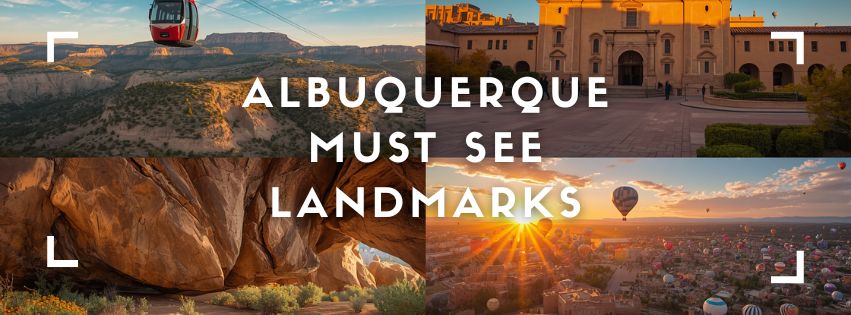
Albuquerque's landmarks are famous for different reasons. The Balloon Fiesta is the largest ballooning event in the world because Albuquerque's specific meteorological conditions — the Albuquerque Box, created by the Rio Grande Valley's geography — make precision ballooning possible here in ways it is not possible almost anywhere else. The petroglyphs at Boca Negra Canyon are not merely ancient rock art: they are the visual language of a continuous civilization that has inhabited this land for thousands of years and whose descendants live within an hour's drive. The San Felipe de Neri Church in Old Town has been holding services on the same plaza since 1706 — not as a preserved historical building but as an active parish.
These things are landmarks because of what they actually are, not because someone decided to market them as landmarks. That distinction is felt when you visit them.
This guide covers every significant landmark in Albuquerque worth experiencing at least once — with the honest local context that makes each one mean more than a listing in a travel app can communicate.
The Natural Landmarks — The Landscape That Made Albuquerque
1. The Sandia Peak Aerial Tramway — The World's Longest Single-Span Tram
The Sandia Peak Aerial Tramway is not merely an attraction — it is an engineering landmark and one of the most dramatic man-made experiences in the Southwest. The Sandia Peak Tramway carries passengers 2.7 miles from the city's eastern edge to the 10,378-foot summit of Sandia Crest in approximately 15 minutes — ascending through four distinct ecological life zones, from Chihuahuan desert scrub at the base through mixed conifer forest to alpine meadow at the top. It is the longest single-span aerial tramway in the United States.
What makes the tramway a landmark rather than simply a ride is the specific experience it produces: the city at your feet, the Rio Grande Valley visible to the west, the full New Mexico sky above, and — in the late afternoon when the light turns — the city lights beginning to emerge below as the mountains catch the last of the sunset behind you. The summit restaurant TEN3 serves dinner at 10,378 feet with views that no building-top restaurant in any American city can approach.
Insider timing: ride it in late afternoon and time your descent for after sunset. The city lights from the summit on a clear night are one of the more quietly extraordinary experiences available anywhere in New Mexico. Book TEN3 reservations well in advance, particularly for weekend evenings.
For residents of the Northeast Heights — particularly High Desert, Glenwood Hills, and Sandia Heights — the tramway is not a destination but a neighborhood amenity. The Tramway Boulevard access point is a 10-minute drive from most Northeast Heights addresses. That accessibility is part of what makes these neighborhoods specifically compelling for outdoor-lifestyle buyers.
2. Petroglyph National Monument — 700 Years of Visual History on Volcanic Stone
Petroglyph National Monument protects approximately 24,000 petroglyphs carved into the basalt escarpment of the West Mesa — images inscribed over seven centuries by ancestral Puebloan peoples and early Spanish settlers into the black volcanic rock that covers the mesa's eastern face. The monument sits on the western edge of Albuquerque, where suburban streets end and the volcanic lava field begins without transition.
The petroglyphs themselves range from simple geometric spirals to complex human figures to animals to cultural symbols whose specific meanings are maintained within Pueblo communities. They are not static historical artifacts — they are marks left by people whose descendants live nearby and maintain relationships with this landscape that predate the concept of a national monument. Viewing them with that understanding produces a different experience than viewing them as prehistoric art.
"I hiked the Volcanoes Loop trail right after sunrise, and that was definitely my favorite hike of the three," noted a TripAdvisor visitor review, capturing the specific magic of the monument's volcanic cone section at dawn. The Rinconada Canyon trail (3.5 kilometers), the Boca Negra Canyon unit (multiple short paved trails), and the Piedras Marcadas Canyon unit each offer different experiences of the monument's terrain and rock art concentration.
Insider note: Boca Negra Canyon has the highest petroglyph concentration and the most accessible trails — bring a small day-use fee. Rinconada Canyon is free, longer, and quieter. Go at sunrise when the low-angle light illuminates the petroglyphs in ways that midday light flattens. Dogs on leash are welcome.
3. Sandia Crest and the Sandia Mountain Wilderness — The Mountain That Defines the City
The Sandia Mountains are not a backdrop. They are a physical presence that every Albuquerque resident navigates their daily orientation around — the reliable landmark to the east that tells you which way is which, the gauge of time that turns pink and amber at sunset with enough consistency that long-term residents take it for granted until they visit somewhere else and realize the mountains are missing.
The Sandia Crest is accessible from the west via the tramway and from the east via the Sandia Crest Scenic Byway — Highway 536 from Highway 14, a 13-mile winding ascent through five climatic zones that is itself one of the best drives in the state. The summit, at 10,378 feet, carries a visitor center, a gift shop, the Kiwanis Cabin, and a network of trail access points that lead into the Sandia Mountain Wilderness.
The Sandia Mountain Wilderness encompasses 37,236 acres of designated wilderness within the Cibola National Forest — one of the largest wilderness areas immediately adjacent to a major American city. The La Luz Trail on the west face (9 miles roundtrip from Elena Gallegos), the Crest Trail along the summit ridge, and the dozens of connecting trails in the foothills constitute one of the most accessible urban-adjacent wilderness trail systems in the country.
Landmark significance: the Sandia Mountains are one of only a handful of geological features in the continental United States that are named specifically for a visual phenomenon. The name Sandia means watermelon in Spanish — and the late-afternoon light on the Crest's west face, when the granite turns deep pink and orange, earns the name completely.
4. Petroglyph Volcanic Field — Extinct Volcanoes in the City's Backyard
The volcanic field that produced the lava escarpment of Petroglyph National Monument also left five visible extinct volcanoes on the West Mesa — Bond, Black, JA, Butte, and Vulcan Volcanoes — accessible via the Volcanoes Day Use Area and Trail within the monument's northern section.
Walking among these cinder cones — the youngest of which erupted approximately 150,000 years ago — while looking east across the Rio Grande valley toward the Sandia Mountains produces the specific sense of geological scale that transforms the city's landscape from background into subject. The lava fields around the bases of the cones are the same material that the petroglyph-carvers worked into for seven centuries. The geological and cultural histories of this landscape are physically continuous in ways that few urban environments in America can claim.
Insider note: the Volcanoes Loop Trail is approximately 4 miles and nearly flat — accessible for most fitness levels. Sunrise is the recommended time, when the volcanic cones cast long shadows west across the mesa and the Sandia Mountains are catching the first light to the east. Bring enough water — the West Mesa is fully exposed.
The Historical and Cultural Landmarks
5. Old Town Albuquerque and the Plaza — 300 Years of Continuous Habitation
Old Town Albuquerque is not a reconstruction or a preservation project — it is the original settlement of the city, established by Spanish colonists in 1706 around the Plaza de Armas that still exists today. The San Felipe de Neri Church on the north side of the plaza has held services continuously since the year of the city's founding, making it one of the oldest continuously active Catholic parishes in the United States.
"The KiMo Theater has entertained residents for nearly a century, becoming one of Albuquerque's most celebrated historic landmarks. Built in the distinctive Southwestern Pueblo Deco style, which fuses Native American–inspired decorations with art deco influences — complete with colorful murals, chandeliers, and buffalo skulls with glowing red eyes — it's both an architectural gem and a popular destination for concerts, screenings, and other events," noted the Viator Albuquerque attractions guide for 2026.
Old Town is most compelling in the moments that tourist-focused content rarely captures: early morning before the galleries open, when the plaza is quiet and the light is long and golden on the church facade. Or Thursday evening in summer, when the plaza hosts outdoor concerts that attract residents rather than tour groups. Or on feast days, when the church bells ring on the hour and the plaza fills with the specific mix of locals, day-trippers, and people who have been coming here for generations.
The Albuquerque Museum of Art and History, anchored on the Old Town plaza, holds the city's most comprehensive permanent collection covering 300 years of New Mexican history. The museum's outdoor sculpture garden is free and accessible independently of the paid galleries — one of the best outdoor art experiences in the city.
6. Indian Pueblo Cultural Center — The Living History of New Mexico's First People
The Indian Pueblo Cultural Center is owned and operated by the 19 Pueblos of New Mexico and is one of the most important cultural institutions in the American Southwest. It tells the history of Pueblo civilization through Pueblo voices — through exhibitions, traditional dance performances, and craft demonstrations that present a continuous living culture rather than a preserved historical one.
The center's permanent collection covers the full arc of Pueblo history, from archaeological evidence of the first settlements through the Spanish colonial disruption, the Pueblo Revolt of 1680, and the continuing evolution of Pueblo artistic and cultural traditions into the present. The rotating exhibitions bring contemporary Pueblo artists and scholars into conversation with historical materials in ways that most museums of comparative scope do not.
The Indian Pueblo Kitchen serves traditional Pueblo food alongside contemporary dishes — fry bread, posole, pueblo bread, and seasonal preparations that reflect the agricultural heritage of the Rio Grande's Pueblo communities. Eating here is an appropriate extension of the museum visit rather than a separate tourist activity.
Landmark significance: the Indian Pueblo Cultural Center is not simply the most important cultural institution in Albuquerque — it is the most important reminder that the city exists within a landscape that was inhabited by sophisticated civilizations for thousands of years before the Spanish arrived. That context changes how everything else in Albuquerque looks.
7. KiMo Theatre — Pueblo Deco Architecture on Route 66
The KiMo Theatre on Central Avenue is one of the most architecturally extraordinary movie palaces in the United States — a 1927 Pueblo Deco building whose ornamentation combines Native American design elements with Art Deco motifs in a fusion style that exists nowhere else in the world. The elaborate interior includes colorful murals depicting New Mexican landscapes and legends, Navajo-style geometric patterns integrated into the decorative scheme, and the buffalo skulls with glowing orange eyes that have been a source of local legend and delight since the building opened.
The KiMo was built by an Italian immigrant entrepreneur who wanted to celebrate New Mexico's cultural heritage in the design of his theater — and the result is a building that is more genuinely New Mexican in spirit than buildings many times its age. It has been continuously used as a performing arts venue since 1927, hosting touring productions, community performances, film screenings, and events that have made it a center of Albuquerque's cultural life for nearly a century.
The 2026 Route 66 centennial has renewed attention on the KiMo specifically — it sits on Central Avenue, the former Route 66 alignment, and its restored neon marquee is one of the most photographed facades on the centennial corridor. Going to a show here is the experience that fully communicates what the building is — a live performance, in an auditorium covered with murals, watched from seats that generations of Albuquerque residents have also occupied.
8. National Museum of Nuclear Science and History — Where the Atomic Age Began
The National Museum of Nuclear Science and History is the only congressionally chartered nuclear museum in the United States, and its location in Albuquerque is not coincidental. New Mexico is where the Manhattan Project was centered, where the first atomic bomb was assembled at Los Alamos (an hour north), where Trinity Site witnessed the first nuclear detonation in the Jornada del Muerto desert to the south, and where Sandia National Laboratories — one of Albuquerque's major employers — has been conducting nuclear weapons research since 1945.
"The private museum is the only one of its kind on the subject, offering a highly personable, interactive, and well-curated experience," confirmed the Viator attractions guide for Albuquerque. The museum covers the full arc of the nuclear age — the physics of fission, the Manhattan Project, the Cold War deterrence era, and the contemporary applications of nuclear science in medicine, energy, and research — with materials that include declassified documents, restored equipment, and personal accounts from participants.
The Heritage Park outside the museum contains restored aircraft and missiles including a B-52 Stratofortress, a B-29 Superfortress similar to the aircraft that dropped the first atomic bombs, an Atlas ICBM, and several other Cold War weapons systems. The outdoor display communicates the scale of the delivery systems in a way that no indoor exhibit can.
Landmark significance: no American city outside of the Los Alamos/Albuquerque/White Sands corridor is more directly connected to the history and present reality of nuclear weapons than Albuquerque. Understanding that history is part of understanding what Kirtland Air Force Base and Sandia National Laboratories mean to the city's economy and identity.
The Living Landmarks — The Experiences That Happen Here Every Year
9. The International Balloon Fiesta — The World's Largest Ballooning Event
The ExxonMobil Albuquerque International Balloon Fiesta — running October 3 through 11 in 2026 — is the largest hot air balloon event in the world, drawing over 500 balloons and approximately 900,000 visitors to Balloon Fiesta Park over nine days. The event exists in Albuquerque specifically because of the Albuquerque Box — a unique layered wind pattern created by the Rio Grande Valley's geography that allows balloon pilots to take off and land at the same location, a meteorological phenomenon nearly impossible to replicate anywhere else on Earth.
The 2026 edition is the 54th annual Balloon Fiesta and is specifically themed "The Scenic Route" in honor of Route 66's centennial year. The mass ascension — when hundreds of balloons launch in coordinated waves as the Sandia Mountains catch the first light of morning — is the experience that most accurately represents why the Balloon Fiesta specifically belongs on a list of landmarks rather than simply events. You are watching something that happens here because of what this particular geography does with wind — and that relationship between place and phenomenon is what a landmark actually is.
Insider note: Dawn Patrol launches before sunrise, sending a handful of balloons into the dark sky with burners blazing. Mass ascensions follow as the sun rises. Evening Balloon Glows — where tethered balloons illuminate simultaneously at dusk — are often underestimated by first-time visitors and are worth staying for. Arrive by 5am on mass ascension days. General admission is $15 per session.
10. Hot Air Balloon Rides at Sunrise — The Landmark You Participate In
"No visit to Albuquerque is complete without taking part in the city's most iconic experience — a hot air balloon ride. As the ballooning capital of the world, Albuquerque offers year-round opportunities to glide quietly above the desert at sunrise, with panoramic views of the Rio Grande Valley and the Sandia Mountains glowing in the morning light," confirmed the Bottger Mansion B&B's Albuquerque experience guide.
Rainbow Ryders is Albuquerque's most established balloon ride operator, offering sunrise flights year-round over the Rio Grande Valley and the city. The experience of ascending in a balloon over the bosque cottonwoods at sunrise — watching the city wake below, the Sandias turning pink to the east, the Rio Grande silver in the early light — is the one Albuquerque landmark that you are inside rather than looking at. It is, for many visitors, the experience that converts a trip into the beginning of a longer relationship with this city.
Practical notes: flights typically last 60 to 90 minutes and cost approximately $200 to $250 per person. Pilots adjust launch locations based on wind conditions to make the most of the Albuquerque Box phenomenon. Book in advance, particularly in October when Balloon Fiesta activity peaks the demand for all Albuquerque aerial experiences.
11. The Rio Grande and the Bosque Trail — The Landmark You Walk Through
The Rio Grande is not a background feature of Albuquerque — it is one of the primary reasons the city exists. Spanish settlers chose this location in 1706 because the river made agricultural settlement viable in the high desert. The 16 miles of bosque cottonwood forest lining the river through the city — maintained as protected natural area through a combination of state, federal, and city open space designations — is the green heart of Albuquerque that aerial photographs consistently show first.
The Paseo del Bosque Trail runs 16 miles through the bosque as a paved, multi-use path accessible from multiple trailheads throughout the city. The Rio Grande Nature Center State Park, a 38-acre preserve within the bosque, is home to over 300 bird species along one of the major North American flyways. Great blue herons fish the riverbanks year-round. Sandhill cranes pass through in autumn and winter migration. In October, when the cottonwoods turn gold, the bosque is one of the most beautiful landscapes in the American Southwest.
What makes the Rio Grande and bosque a landmark rather than simply an open space is the continuity it represents. The river has been central to human habitation of this valley for thousands of years. The acequia irrigation systems that draw from it have been running water to the North Valley and Corrales since the Spanish colonial period. Walking the bosque trail today, you are in a landscape that has supported continuous human civilization without interruption for longer than most American cities have existed.
The Museum Cluster — Four World-Class Institutions Within Walking Distance
One of the most genuinely surprising things about Albuquerque for first-time visitors is the concentration of exceptional museum experiences within the Old Town and University corridors. Four institutions within reasonable walking distance of each other constitute a museum cluster that compares favorably with what cities several times Albuquerque's size offer.
12. New Mexico Museum of Natural History and Science — Dinosaurs, Planets, and Deep Time
The New Mexico Museum of Natural History and Science, anchored near Old Town Plaza, houses one of the most significant collections of dinosaur fossils in the American Southwest — including specimens collected from New Mexico's extraordinarily rich Cretaceous formations. The museum's planetarium and Giant Screen Theatre extend the natural history experience into cosmology and earth science.
"Dinosaur skeletons, a planetarium, and interactive exhibits draw visitors to the New Mexico Museum of Natural History and Science, near Albuquerque's Old Town Plaza," confirmed the Viator attractions guide. For families with children, this is typically the first museum visit and often the most time-consuming — the interactive exhibits are genuinely engaging across a wide age range.
13. The Albuquerque Museum — 300 Years of Art and History
The Albuquerque Museum holds the city's primary collection covering the full arc of New Mexican history from Spanish colonial settlement to the present, with a permanent art collection that includes significant works by New Mexican and Southwestern artists alongside rotating exhibitions that bring nationally significant shows to the city with surprising regularity.
The outdoor sculpture garden, accessible free of charge, is one of the best outdoor art installations in the Southwest — contemporary sculpture installed in a landscaped garden adjacent to Old Town, with the museum's architecture providing a visual connection to the historic character of the neighborhood.
14. ABQ BioPark — Zoo, Aquarium, Botanical Garden, and Tingley Beach
The ABQ BioPark is a combined zoo, aquarium, botanical garden, and Tingley Beach complex along the Rio Grande — one of the most comprehensive urban park systems in the Southwest and one that consistently draws comparisons to comparable institutions in cities twice Albuquerque's size.
"The Botanical Garden is especially lovely during seasonal events like the River of Lights, which transforms the grounds into a glowing holiday wonderland," confirmed the Bottger Mansion B&B guide. The River of Lights holiday installation transforms the Botanical Garden from November through January into one of the city's most beloved seasonal experiences — accessible on a combined BioPark ticket.
For residents of the neighborhoods closest to the BioPark — the North Valley, Barelas, and the Old Town corridor — the park is a genuine community asset that anchors the western edge of the city's most established residential areas. For visitors, it represents an unexpected depth of urban nature experience in a city that surprises people with how much natural infrastructure it maintains.
The Route 66 Landmarks — 2026's Centennial Makes These Essential
15. Central Avenue — The Longest Continuous Urban Route 66 in America
Central Avenue in Albuquerque carries 18 continuous miles of the original Route 66 alignment — the longest stretch of the Mother Road through any American city. In 2026, the 100th anniversary of Route 66's establishment transforms this corridor into the most historically significant road in the country for the year's duration.
The corridor runs from the West Mesa through Downtown and Nob Hill and into the East Side, passing through architectural layers that span from surviving 1950s motel signage through early-century commercial buildings through the contemporary art scene of the EDo neighborhood. New murals commissioned specifically for the centennial have been installed throughout the year, creating a gallery-scale public art experience that extends for miles.
16. The KiMo Theatre — Route 66's Most Extraordinary Building
The KiMo sits on Central Avenue — Route 66 — and is one of the road's most architecturally significant surviving structures anywhere in the United States. Its restored neon marquee, operating after decades of partial deactivation, glows along the Central Avenue corridor as one of the most photographically compelling nighttime views in the city. During the 2026 centennial year, the KiMo has been featured in Route 66 programming that brings additional cultural and historical attention to a building that deserves it independent of any anniversary.
A Note for People Who Are Thinking About More Than a Visit
The landmarks in this guide are not randomly distributed across the city. They cluster in specific places — Old Town and the North Valley along the Rio Grande corridor, the Northeast Heights foothills and Sandia Mountains to the east, the West Mesa and volcanic field to the west. Those clusters correspond directly to the neighborhoods where people who love Albuquerque most consistently choose to live.
The residents of the Northeast Heights — particularly High Desert, Glenwood Hills, and North Albuquerque Acres — have the Tramway, the Sandia foothills trail system, and the Sandia Crest essentially in their backyard. The residents of the North Valley and Corrales walk the bosque trail as part of their daily routine. The residents of the Old Town corridor are five minutes from the Museum of Natural History, the Albuquerque Museum, the Indian Pueblo Cultural Center, and Old Town itself.
When people visit Albuquerque and fall in love with the place — the specific phenomenon we call the Albuquerque Reveal — it is almost always because one of these landmarks showed them something they did not expect. The petroglyphs that made the landscape speak history instead of scenery. The tramway that turned an afternoon into an alpine experience. The bosque in October that produced a golden canopy over the Rio Grande that no photograph fully communicates.
If the landmarks in this guide are making you think about what it would feel like to live near them rather than just visit them, our guide to Albuquerque neighborhoods covers which areas of the city put which landmarks closest to your front door. And our post on things to do in Albuquerque New Mexico extends the picture of daily life here beyond the landmark sites and into the restaurants, neighborhoods, and seasonal experiences that make up the ordinary texture of living in this city.
The Bottom Line — These Landmarks Are Why the City Exists
Albuquerque's most significant landmarks are not things that were built to attract visitors. They are the physical record of what this place is — a high desert valley where humans have lived continuously for thousands of years, where geological forces created the most dramatic urban mountain backdrop in the country, where the specific meteorology of the Rio Grande Valley makes hot air ballooning work in ways it does not work almost anywhere else, and where 300 years of Spanish, Native American, and Anglo cultural history have produced an architectural and cultural identity that belongs specifically to this place.
Experiencing these landmarks is the most direct way to understand what Albuquerque actually is — not a smaller version of another Southwestern city, but a place with its own deep character, its own specific relationship with the land and the sky and the history written into both.
Come for the Balloon Fiesta. Stay for the petroglyphs. The tramway will make sure you never forget the mountains. And the bosque in October will make you start doing the math on what it would cost to live here permanently.
Thinking About Calling Albuquerque Home?
Jenn & Vinay from The Rodgers Neighborhood Real Estate Group help people find homes in Albuquerque every week — many of them visitors who came to experience the landmarks and stayed to make them part of their daily life. Whether you want to live within walking distance of Old Town, in the foothills above the petroglyph monument, or within five minutes of the Tramway trailhead, we know which neighborhoods deliver which landmarks as daily life rather than weekend destinations.
Jenn & Vinay Rodgers are Albuquerque's trusted real estate professionals with The Rodgers Neighborhood Real Estate Group, brokered by Real Broker, LLC, serving buyers and sellers across Albuquerque, Rio Rancho, Corrales, Los Lunas, Tijeras, Cedar Crest, Sandia Park, the East Mountains, Bernalillo County, Sandoval County, and surrounding New Mexico communities.
The Rodgers Neighborhood Real Estate Group
Jenn & Vinay Rodgers
Real Broker, LLC
Albuquerque, NM
📞 505-417-2733
🏠 Browse Albuquerque homes near your favorite landmarksCategories
- All Blogs (322)
- 2026 & Beyond for Real Estate (218)
- Doctors and Nurses looking for homes in NM (4)
- Guide to buying a home in NM (146)
- Health Care Heros (7)
- Home Upgrades (38)
- Jenn & Vinay your Local Real Estate Experts! (107)
- Moving to Albuquerque (127)
- Neighborhoods in Albuquerque NM (87)
- Rent or Own (2)
- Sellers Questions for Selling homes (2)
Recent Posts


GET MORE INFORMATION