

Best Places to Visit in Albuquerque for Stunning Desert and Mountain Views
There is a reason New Mexico is called the Land of Enchantment. And there is a reason that name feels most true in Albuquerque.
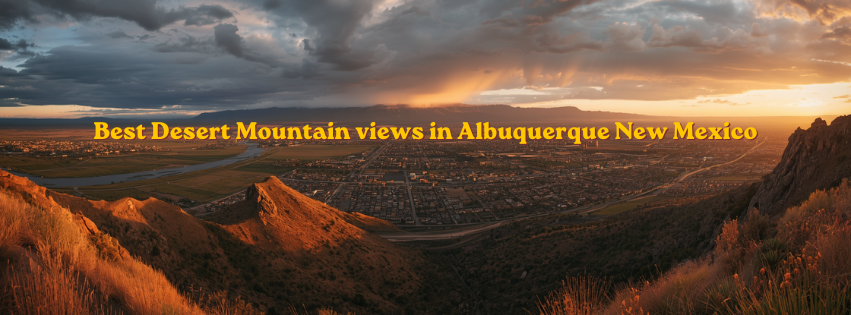
The city sits at 5,312 feet above sea level in the Rio Grande Valley — flanked to the east by the Sandia Mountains, which rise to 10,378 feet and catch the setting sun in shades of pink, orange, and amber so vivid that Spanish settlers named them after watermelons. To the west, a volcanic mesa stretches to the horizon, marked by extinct cones and protected by Petroglyph National Monument. The Rio Grande runs silver through the middle of it all, shaded by cottonwoods that turn gold in October.
For people who live here, the views are not a special occasion. They are a Tuesday. They are what the drive to work looks like. They are what the backyard faces and what the morning hike delivers and what the front window frames at sunset.
For first-time visitors — or for people who are seriously considering moving here and want to understand what the everyday quality of this landscape actually feels like — this guide covers the twelve best places to experience Albuquerque's desert and mountain views. Some are famous. Some are not. All of them are worth your time.
From the Summit — The Views That Stop You Cold
1. Sandia Peak — 10,378 Feet and 11,000 Square Miles
The summit of Sandia Crest is the definitive Albuquerque view — the one that puts everything else in context. At 10,378 feet, you are looking out over the full Rio Grande Valley, the city sprawling westward toward the Jemez Mountains, the volcanic West Mesa, the faint outline of Mount Taylor 80 miles away on the horizon, and on a clear day, mountains in Colorado. According to Visit Albuquerque's official scenic hiking guide, the view from the Crest takes in over 11,000 square miles of New Mexico landscape — one of the most expansive single-vantage panoramas accessible from any American city.
The name Sandia is Spanish for watermelon — and at sunset, when the granite peaks glow deep pink and orange against the darkening sky, you understand exactly why. The color change is not subtle. It is one of the most reliably spectacular daily events in the city and one that longtime residents never entirely stop noticing.
Getting there: take the Sandia Peak Aerial Tramway for the 2.7-mile, 15-minute ascent from the eastern edge of the city. Or drive the Sandia Crest Scenic Byway from the east — Highway 14 south to Highway 536, a winding mountain road through spruce and fir forest that offers its own sequence of dramatic views on the way up. Hikers can take the La Luz Trail from Elena Gallegos trailhead — 9 miles roundtrip with 3,500 feet of elevation gain, one of the most rewarding hikes in New Mexico.
Practical note: bring layers regardless of the season. The summit runs 25 to 30 degrees cooler than the city floor. In summer, afternoon thunderstorms develop quickly at altitude — check the forecast and plan to descend before they arrive.
2. Elena Gallegos Open Space — The Foothills at Their Best
Elena Gallegos Open Space sits at the base of the Sandia foothills on the eastern edge of the city — close enough to the mountain to feel genuinely close, high enough above the valley floor to give you a sweeping view west across Albuquerque to the Rio Grande and beyond.
"Elena Gallegos Open Space offers endless biking and hiking trails, wildlife, and a city view. If you plan on enjoying a picnic or want a great view of the Sandia Mountains, I recommend going at sunset — you won't be disappointed," noted Katherine Rose in the Redfin local guide for Albuquerque.
The trails here connect directly to the Pino Trail, which heads deeper into the Sandia foothills and provides the kind of gradual mountain immersion that builds from desert scrub at the base through piñon and juniper into the lower ponderosa zones. For residents of the Northeast Heights neighborhoods — High Desert, Glenwood Hills, North Albuquerque Acres — Elena Gallegos is an accessible daily hike, not a destination. For visitors, it is one of the best places in the city to experience the foothills view without the full commitment of a summit hike.
3. West Bluff Park — The City From the Other Side of the River
Most Albuquerque viewpoints face east toward the Sandia Mountains. West Bluff Park faces east too — but from the opposite bank of the Rio Grande, which means the view includes the full sweep of the city between you and the mountains.
"West Bluff Park, located on an elevated plateau at the banks of the iconic Rio Grande river, gives you a total overview over the area. This recreational space overlooks the Rio Grande, downtown Albuquerque, and the Manzano Mountains in the distance. At the end of a paved pathway, a gazebo overlooks the city with the mountains towering in the background. Every day is different, thanks to the way clouds shape and paint the sky with the colors of the sun," noted the Hotels.com Go Guides Albuquerque viewpoint review.
The Manzano Mountains to the southeast — often overlooked in favor of the more famous Sandias — are visible from West Bluff on clear days as a second mountain range layering the eastern horizon. Sunset from the gazebo here is one of the quieter, less crowded view experiences in the city — the kind of place locals go when they want the view without the Balloon Fiesta crowd.
Desert Views — Ancient Landscapes Accessible From the City
4. Petroglyph National Monument — Petroglyphs, Volcanic Cones, and the West Mesa Horizon
Petroglyph National Monument is known primarily for its 20,000+ ancient rock art images etched into the volcanic basalt escarpment of the West Mesa. But the views from within the monument are equally extraordinary — and largely overlooked in the standard visitor experience.
The Rinconada Canyon Trail, a 3.5-kilometer loop through the southern section of the monument, delivers what the Hotels.com viewpoint guide describes as "world-class views of the beautiful desert-like landscapes in this part of New Mexico. Along the way, you'll have a view of the volcanic cones in the valley, lava fields, and in the springtime vibrant flower fields that stretch until the horizon."
Standing in Rinconada Canyon with the volcanic cones visible to the north — the same geological formations that produced the lava field you are walking through approximately 150,000 years ago — and the full western horizon open in front of you is one of the more genuinely disorienting scale experiences available anywhere near Albuquerque. The desert here is not decorative. It is ancient and enormous, and the view communicates both things at once.
The Boca Negra Canyon unit, on the monument's northern end, offers a shorter, more accessible trail with high petroglyph concentration — and from its elevated trail sections, the view east back toward the Sandia Mountains frames the petroglyphs against the mountains in a composition that is genuinely difficult to believe is a free public park 20 minutes from downtown.
5. Albuquerque Foothills Trail System — The City Visible Below, the Wilderness Ahead
The Albuquerque Foothills trail system encompasses over 16,000 acres and 200 miles of trails spanning the base of the Sandia Mountains on the city's eastern edge. Within this system, there are specific trail sections that provide the view that most photographers who live in Albuquerque choose when they want the definitive local landscape shot: the city stretching westward from below your feet all the way to the Rio Grande, with the volcanic West Mesa forming the far horizon.
The Foothills Trail running north to south along the base of the mountains provides this panorama continuously — with the Sandia granite peaks immediately behind you and the full city panorama ahead. The specific section between the Embudo Trail access and the North Diversion Channel area is where the views are most expansive and the trail is most accessible.
For visitors who want the view without a serious hike, the Embudo Trail trailhead parking area itself sits high enough to provide a meaningful city panorama without requiring more than a short walk. For visitors who want to earn the perspective, continuing up the Embudo Trail into the lower Sandia foothills rewards the effort with increasingly dramatic mountain-and-city dual views that are genuinely unlike anything accessible within city limits in most American metros.
6. Rinconada Canyon Trail at Sunset — The Photography Choice
If there is one time-and-place combination that consistently produces the most extraordinary desert views in Albuquerque, it is Rinconada Canyon in the hour before sunset in spring or fall.
The low-angle light in those seasons illuminates the basalt lava field with a warmth that transforms the black volcanic rock into deep amber and bronze. The volcanic cones in the distance cast long shadows across the desert floor. The wildflowers that appear in spring along the canyon margins add color that the midsummer heat eliminates. And the full western horizon — open all the way to the Jemez Mountains more than 50 miles away — catches the late light in layers of color that shift by the minute.
Dogs are welcome on leash, which makes this one of the better sunset view experiences for visitors traveling with pets. The trail is flat and well-maintained. No technical skill required. Just arrive 90 minutes before sunset and bring a camera.
Elevated City Views — The Best Vantage Points Above the Urban Landscape
7. Balloon Fiesta Park at Dawn — The View That Changed Everything
From early October 3 through 11, 2026, the International Balloon Fiesta transforms Balloon Fiesta Park into one of the most visually extraordinary places on Earth at dawn. But the park itself — even on the 355 days when there are no balloons in the sky — sits on elevated ground north of the city center with an unobstructed view of the Sandia Mountains to the east and the full Rio Grande Valley to the west.
The Sandia Mountains from Balloon Fiesta Park at sunrise are the view that has appeared in more photographs of Albuquerque than any other. The elevation is enough to give genuine depth to the mountain view, the bosque cottonwoods are visible in the foreground during fall color season, and the city spreads between you and the mountains in a way that communicates its actual scale without distortion.
Outside of Fiesta season, the park is a quiet public space with trails and open lawn. Walking to the eastern edge of the park at sunrise — when the Sandias are catching the first light and the city is still quiet — is one of the views that Albuquerque residents describe when asked why they live here.
8. Sandia Crest Scenic Byway — Views That Build For 13 Miles
The drive up Highway 536 — the Sandia Crest Scenic Byway from the east side of the mountains — is not a single viewpoint. It is a 13-mile sequence of escalating views that moves through every life zone from high desert scrub to alpine fir and spruce, with overlooks at multiple points along the way that provide the eastward mountain views, the Estancia Valley below, and the distant Sacramento Mountains on the clearest days.
The Kiwanis Meadow overlook, approximately two-thirds of the way up, provides views of the east face's limestone and granite formations that are entirely different from the granite west face visible from the city. The drive itself — narrow, winding, ascending through dense mixed conifer forest — delivers the disorientation of genuine mountain driving within 45 minutes of downtown Albuquerque.
In winter and early spring, the Byway often carries snow at elevation while Albuquerque's valley is warm and sunny. The contrast — driving from 60-degree sunshine into a snow-dusted spruce forest in 30 minutes — is one of the more reliable reminders that the mountains are not just backdrop here. They are a completely different world, separated from the city by a single road.
9. Apothecary Lounge at Hotel Parq Central — Urban View, Mountain Backdrop
Not every great view in Albuquerque requires a hike. The Apothecary Lounge, perched on the rooftop of Hotel Parq Central in the EDo (East Downtown) neighborhood, offers panoramic views of the Sandia Mountains to the east and Downtown Albuquerque below — from the comfort of a rooftop bar with a craft cocktail in hand.
"For the adults, rooftop bars in Albuquerque are great places to unwind while enjoying a lovely vantage point. The Apothecary Lounge at Hotel Parq Central offers panoramic views of Downtown and the Sandia Mountains," confirmed the Visit Albuquerque viewpoint guide.
The hotel itself — a converted 1920s psychiatric hospital with preserved Art Deco details — is architecturally interesting enough to be worth visiting independently of the view. The rooftop adds the mountains as a backdrop for what is essentially an urban social experience. For visitors who want to experience the Sandia view through the lens of Albuquerque's current cultural energy, rather than in solitary trail silence, the Apothecary Lounge is the right choice.
The River and Valley — Views From the Middle of the Landscape
10. The Rio Grande Bosque — Views From Within the Cottonwood Canopy
The bosque view is different from every other view on this list — not because it is the most dramatic, but because it is the most immersive. Walking the Paseo del Bosque Trail through the cottonwood forest along the Rio Grande puts you inside the landscape rather than looking at it from above.
The specific view that makes the bosque exceptional happens in the gaps between the cottonwood trunks in late afternoon, when the Sandia Mountains are visible through the trees with the Rio Grande in the foreground. The light filters through the canopy in a way that is specific to this biome — the cottonwood leaves in motion, the sound of the river, the mountains framed between the trees. It photographs differently from every other Albuquerque view and feels different from every other perspective in the city.
In October and early November, when the cottonwoods turn gold, the bosque becomes genuinely world-class landscape photography territory. The combination of golden canopy light, the dark water of the Rio Grande, and the pink-orange Sandia Mountains through the trees has no equivalent in any other American city.
11. The Tramway Road Foothills Corridor — Mountain Views From the Neighborhood
Tramway Boulevard NE runs along the base of the Sandia Mountains through the northeastern edge of the city — and at the specific junctions where the road rises above the surrounding neighborhood streets, the mountain views are as dramatic as anything accessible from a trailhead.
For residents of the Northeast Heights who take Tramway regularly, this is simply the commute. For visitors, driving north on Tramway toward the Tramway Road and Paseo del Norte intersection in the late afternoon — when the Sandias are fully lit on their western face — provides the mountain-at-full-scale experience that makes first-time visitors stop their car and take pictures from the shoulder.
The Tramway corridor also provides the clearest views of the Sandia Mountains' geological layering — the tilted limestone on the west face, the granitic core of the range, and the mixed conifer forest that begins at approximately 7,500 feet. From the right spot on Tramway at sunset, the mountain reads like a geological textbook and a sunset painting at the same time.
12. Sandia Heights and the East Mountain Communities — Views That Make People Move Here
The communities of Sandia Heights, Cedar Crest, Sandia Park, and Tijeras sit on or adjacent to the eastern face of the Sandia Mountains — and their views are the inverse of everything else on this list. Where city-side views look east at the mountains, the East Mountain communities look west over the Estancia Valley, with the Sacramento Mountains and Manzano Mountains in the distance, and Albuquerque visible as a glowing spread of light on the western horizon at night.
The east face views are different in character from the city-side views: quieter, more remote-feeling, with pinyon and juniper forest immediately present and the desert valley spreading below rather than a city. From a residential property in Cedar Crest or Sandia Park at sunset, the Manzano Mountains to the south catch the last light in a way the west-facing city views do not experience — because the angle of the light on the eastern side produces colors and shadows that the classic Sandia-pink-at-sunset phenomenon does not.
These are the views that make people who come for a weekend stay for years. The East Mountain communities sit within 30 to 45 minutes of Albuquerque's employment centers, carry genuine mountain character without requiring a city-scale commute, and provide the kind of landscape immersion that most outdoor-oriented buyers from Denver, Los Angeles, and Seattle have been searching for without finding at an Albuquerque price point.
Practical Guide — When to Go and What to Bring
The Light That Makes Everything Better
New Mexico's famous light is not a tourism cliché. It is a photographic and experiential reality produced by the state's altitude, low humidity, and clear air. The hour after sunrise and the hour before sunset — the golden hour, as photographers call it — produce light in Albuquerque that is noticeably different from what visitors experience in more humid or lower-elevation environments. Colors are richer. Shadows are longer. The mountains catch and hold the warm light longer than the city floor below them.
If you are visiting specific viewpoints for the first time, schedule them around golden hour. The Sandia Mountains at noon are impressive. The Sandia Mountains 45 minutes before sunset are a different phenomenon. The difference is not subtle. Plan for it.
Seasonal Considerations — Each Season Has a Best Reason
- Spring (March–May): Wildflowers in the desert, especially at Petroglyph National Monument and Rinconada Canyon. Clear air before monsoon season. Snow still visible on the Crest, providing mountain-desert contrast in a single frame.
- Summer (June–August): Dramatic monsoon afternoon thunderstorms that build visibly over the mountains and create extraordinary cloud formations. The monsoon light — after the storm passes and the air clears — is some of the most dramatic in the year. Mornings are the best time for outdoor views before the heat and afternoon storm cycle.
- Fall (September–November): The bosque cottonwood color peak (late October to early November) is the single most photogenic seasonal event in Albuquerque. The Balloon Fiesta in early October adds hundreds of colorful balloons to the sunrise mountain view. Temperatures are ideal for all outdoor activities.
- Winter (December–February): Snow on the Sandia Crest against blue New Mexico sky and the warm-toned city below creates views that visitors from non-mountain states consistently describe as otherworldly. The bosque is stark and dramatic with bare cottonwood skeletons. Cold, but clear, and beautiful.
The Connection Between Views and Real Estate
For visitors who are evaluating Albuquerque as a potential home — not just a destination — these view locations tell you something directly useful about neighborhood selection. The Northeast Heights neighborhoods that back to the Foothills trail system give you daily access to the Elena Gallegos and Embudo trail views. High Desert properties with east-facing orientation catch the mountain pink at sunset from their own backyards. Corrales and the North Valley put the bosque cottonwood views within walking distance of residential streets. The East Mountain communities of Tijeras, Cedar Crest, and Sandia Park offer the valley views that the city cannot replicate.
If you are seriously considering buying in one of these areas and want to understand which neighborhoods deliver the best combination of views, lifestyle, schools, and value, our complete guide to Albuquerque neighborhoods covers every major area in depth. And for buyers interested in the East Mountain communities specifically, our post on East Mountains vs Albuquerque — which lifestyle is better gives the complete comparison.
The Bottom Line — The Views Are the Reason
There is a version of this post that lists twelve viewpoints, provides an address for each, and calls itself a travel guide. That is not this version.
The views in Albuquerque are not an amenity. They are a defining feature of what it means to live here. The Sandia Mountains are visible from virtually every outdoor space in the city. The Rio Grande is a five-minute drive from most residential neighborhoods. Petroglyph National Monument is adjacent to the city's western suburbs. The East Mountain communities are 30 minutes from downtown. And on any given Tuesday evening, a resident of the Northeast Heights can watch the mountains turn pink and orange and amber from their backyard while the rest of the city does the same from wherever they happen to be standing.
This is what daily life looks like in Albuquerque. For people who care about the quality of the landscape they inhabit — who want their morning drive to be beautiful, who want their weekend hike to be extraordinary, who want to live somewhere that rewards the simple act of looking out a window — there are few better arguments than this city.
It delivers on what it promises. Every day.
Thinking About Making This View Your Everyday?
If the views in this guide made you start thinking about what it would be like to wake up to this landscape every morning, that is the Albuquerque Reveal happening in real time. Jenn & Vinay from The Rodgers Neighborhood Real Estate Group help buyers find homes in the neighborhoods that deliver these views as daily life — not just as weekend destinations. Whether you are drawn to the foothills, the bosque, the East Mountains, or the mountain-view corridors of the Northeast Heights, the conversation starts with a call.
Jenn & Vinay Rodgers are Albuquerque's trusted real estate professionals with The Rodgers Neighborhood Real Estate Group, brokered by Real Broker, LLC, serving buyers and sellers across Albuquerque, Rio Rancho, Corrales, Los Lunas, Tijeras, Cedar Crest, Sandia Park, the East Mountains, Bernalillo County, Sandoval County, and surrounding New Mexico communities.
The Rodgers Neighborhood Real Estate Group
Jenn & Vinay Rodgers
Real Broker, LLC
Albuquerque, NM
📞 505-417-2733
🏠 Browse current Albuquerque listingsCategories
- All Blogs (322)
- 2026 & Beyond for Real Estate (218)
- Doctors and Nurses looking for homes in NM (4)
- Guide to buying a home in NM (146)
- Health Care Heros (7)
- Home Upgrades (38)
- Jenn & Vinay your Local Real Estate Experts! (107)
- Moving to Albuquerque (127)
- Neighborhoods in Albuquerque NM (87)
- Rent or Own (2)
- Sellers Questions for Selling homes (2)
Recent Posts


GET MORE INFORMATION