
Best Albuquerque Neighborhoods for Remote Workers and Home Office
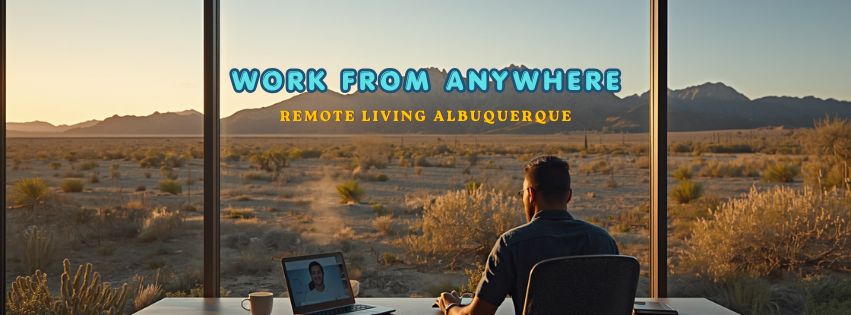
Remote work did not just change where people work. It changed what they need from their homes, their neighborhoods, and the cities where they choose to live. The traditional home purchase calculus — proximity to the office, highway access, commute time — became largely irrelevant for a significant cohort of knowledge workers. What took its place is a different set of criteria that the real estate industry has been catching up to ever since.
"Remote workers are particularly drawn to neighborhoods that offer both quiet work environments and proximity to amenities. North Albuquerque Acres, High Desert, and Ridgecrest are seeing significant interest from telecommuters who want larger homes with dedicated office spaces," confirmed the a leading Albuquerque market source Real Estate team's analysis of Albuquerque's remote work migration. "Newcomers are often shocked by the lower cost of living, which is nearly 40% lower than San Francisco and other major tech hubs."
That 40% cost of living differential is the reason Albuquerque has become a significant destination for remote workers from coastal markets — particularly the Los Angeles, San Francisco, and Seattle tech workers who discovered that their salary is fully portable and that what they had been paying Bay Area rent to be near an office they no longer need to attend is a resource they can redeploy toward a dramatically better quality of life somewhere else.
This guide maps Albuquerque's neighborhoods to the specific criteria that remote workers actually use to evaluate them — not the commute criteria that shaped neighborhood rankings for the previous generation of buyers, but the work-from-home criteria that determine whether a home purchase produces a genuinely excellent remote work life or a car-dependent suburban isolation experience that takes the worst aspects of office work and remote work simultaneously.
The Remote Worker's Criteria — What Actually Matters When Your Commute Is Zero
Before mapping neighborhoods, the criteria framework deserves clarity. The remote worker buying a home is evaluating six specific dimensions that traditional home buyers do not weight equally:
- Dedicated home office space: Not a corner desk in the bedroom. Not the dining table. An actual room with a door that closes, adequate square footage for professional-grade equipment, and acoustic separation from the domestic noise that the rest of the household generates. The room count and square footage of the home matter specifically to remote workers in a way that commuter-buyers weigh differently.
- Internet infrastructure reliability: Gigabit fiber internet access, available from multiple providers to avoid single-provider dependency, with the reliability that a professional video call schedule demands. Rural and semi-rural neighborhoods that offer large lots and natural setting sometimes sacrifice this reliability. The best remote work neighborhoods have both.
- Midday decompression access: The absence of a commute removes the mental context switch that separates work from home. The neighborhoods with the best remote work quality of life are the ones where a 30-minute midday trail run, a coffee shop walk, or a park loop provides the context switch that a commute used to deliver automatically. Access to trails, parks, and walkable amenities is not a luxury for remote workers — it is a functional necessity.
- Zoom background quality: This sounds trivial. It is not. The visual environment visible through a home office window or behind a desk is a professional presentation surface in 2026 in a way it was not in 2019. Remote workers who conduct frequent video calls care specifically about the visual environment their camera captures. The Sandia Mountains as a Zoom background is not vanity — it is a professional differentiation.
- Community and social infrastructure: Remote work isolation is a genuine professional and psychological risk. The neighborhoods with the best remote work culture — the ones where other remote workers are also living and where the social infrastructure of coffee shops, coworking spaces, and walkable gathering places exists — provide the informal social interaction that office environments used to deliver automatically.
- Cost efficiency of the salary advantage: The remote worker from San Francisco who is earning a Bay Area salary in Albuquerque has a financial advantage that is maximized in neighborhoods where the combination of home value, property taxes, and cost of living preserves the most of that advantage. Overpaying for a neighborhood that does not specifically serve the remote work priorities listed above erodes the financial case for the move.
Albuquerque's Internet Infrastructure — The Foundation Everything Else Builds On
Before evaluating specific neighborhoods, the city's internet infrastructure deserves direct assessment — because the foundational requirement of any remote work environment is a reliable, fast internet connection, and Albuquerque's provision of that infrastructure varies by neighborhood in ways that matter.
Albuquerque is served by multiple providers including Comcast Xfinity (cable), CenturyLink/Lumen (fiber and DSL), and a growing presence of fiber providers in specific corridors. The city's infrastructure investment in high-speed connectivity has been consistent, and most established residential neighborhoods in the city's developed footprint have access to cable or fiber internet at speeds sufficient for professional video call work.
The specific neighborhoods where internet reliability is most consistently reported as excellent: the established Northeast Heights and Westside suburban neighborhoods where the cable and fiber buildout is mature. The specific neighborhoods where reliability deserves extra due diligence: the East Mountain communities (Tijeras, Cedar Crest, Sandia Park), Placitas, and Corrales — where rural infrastructure variability produces greater range in internet quality across individual properties. Remote workers considering these semi-rural communities should verify the specific internet service available at any given address before committing to a purchase, rather than assuming that the neighborhood's general reputation for internet quality applies to every specific lot.
The practical recommendation: before making an offer on any Albuquerque property specifically for remote work purposes, confirm the available internet providers and speeds for that specific address using the providers' address-lookup tools. What is available three houses down may not be available at the property you are considering.
The Best Neighborhoods for Remote Workers in Albuquerque — Ranked by Remote Work Criteria
1. High Desert — The Gold Standard for Zoom-Worthy Home Offices
Price range: upper $400,000s to $3.5 million+
Internet: Fiber and cable available, reliable
Office space potential: Custom homes with dedicated office infrastructure standard
High Desert earns the top ranking for remote workers not primarily because of walkability or community infrastructure — it earns it because the specific combination of home size, office space potential, Sandia Mountain view quality, and outdoor decompression access is the most complete expression of what a remote work lifestyle can be in Albuquerque.
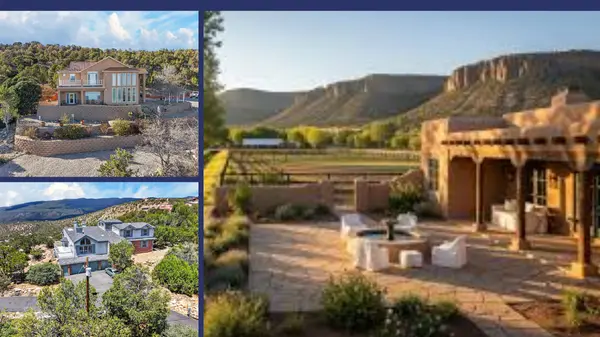
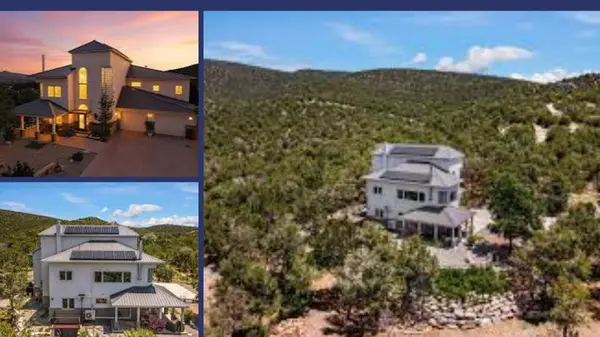
The custom homes in High Desert — built on lots ranging from half an acre to over two acres, with 40% of the community's total land permanently set aside as protected open space — typically include dedicated home office spaces as architectural features rather than afterthoughts. The homes were built or commissioned by buyers who had specific spatial requirements, and those requirements frequently included purpose-built office infrastructure: a room with a door, a directional window for camera-ready lighting, acoustic separation from the main living areas.
The Zoom background quality from a High Desert home office facing east is specifically extraordinary: the Sandia Mountains are at close range, rising 4,000 feet above the city floor, and visible through whatever window or camera angle is established. For remote workers who conduct frequent professional video calls and for whom the visual environment communicates something about who they are and how they work, this is the most distinctive professional backdrop available in any American metro area at any price point.
The midday decompression access is equally exceptional: High Desert's trail system connects directly to the Cibola National Forest wilderness within a five-minute walk from most residential streets. A 45-minute trail run or mountain bike ride from the front door returns the remote worker to their desk with the mental reset that makes afternoon productivity genuinely different from the blurred-boundary fatigue that remote work in car-dependent suburbs produces.
The trade-off for remote workers: High Desert does not provide the walkable coffee shop infrastructure that Nob Hill offers. The nearest coffee shops require a 10-to-15-minute drive. For remote workers who need a change of scenery for an afternoon work session, the coffee shop is not walkable from a High Desert address. For remote workers whose change-of-scenery preference is a trail rather than a table, this trade-off does not exist.
Best for: remote workers who primarily need home office space, Zoom-quality views, and outdoor decompression access, and whose social and coffee shop needs are met by the occasional drive rather than daily walkability.
2. North Albuquerque Acres — Maximum Home Office Freedom on Maximum Land
Price range: $400,000 to $4 million+
Internet: Fiber and cable available, reliable
Office space potential: No-HOA freedom to build exactly what the remote work setup requires
North Albuquerque Acres is where the remote worker who needs the most comprehensive home office infrastructure — separate office building, recording studio, workshop, or any combination of professional spaces that a standard bedroom-conversion office cannot accommodate — finds the most complete expression of that need.
The no-HOA reality of North Albuquerque Acres means that a remote worker can add a detached studio office on their large lot without architectural review, install professional-grade equipment visible from the street without aesthetic restrictions, and configure the property exactly as their professional life requires without negotiating with a governance structure. For remote workers who are content with a bedroom office or a dedicated room in the main house, this freedom is a nice-to-have. For remote workers whose professional infrastructure — podcast studio, video production setup, workshop, or consultation space — requires a purpose-built separate structure, North Albuquerque Acres is the only large-lot, within-city-limits neighborhood in Albuquerque that accommodates it without HOA interference.
The home sizes — frequently 4,000 to 6,000-plus square feet — provide the square footage that multiple-person remote-working households specifically need. When two professionals are both working from home simultaneously, the acoustic and spatial separation that a 5,500-square-foot home on a three-quarter-acre lot provides is genuinely different from what a 2,200-square-foot suburban home can offer. The ability for each person to have a dedicated, door-closing workspace — and to have those workspaces separated by enough home that simultaneous video calls in different rooms is not a constant acoustic negotiation — is a quality-of-life factor that the remote work era has made dramatically more relevant.
Best for: remote workers who need purpose-built professional infrastructure that an HOA-governed neighborhood would restrict; two-professional households where simultaneous remote work requires genuine acoustic and spatial separation; remote workers whose professional setup includes equipment or activities that require dedicated space beyond a standard home office room.
3. Nob Hill — Walkable Remote Work Culture at the Best Coffee Shops in the City
Price range: $250,000 to $550,000
Internet: Cable available, reliable on most streets
Office space potential: Smaller homes limit dedicated office infrastructure; some properties have den or bonus room
For remote workers whose specific need is walkable coffee shop culture — who work best with the environmental variety of an independent coffee shop, who value the casual social interaction of a shared workspace without the formal coworking structure, and who want to be able to walk to a restaurant for lunch as a meaningful midday break — Nob Hill is Albuquerque's answer.
The Walk Score of 85 and the Bike Score of 89 produce the actual daily experience that remote workers from walkable coastal markets specifically miss when they move to car-dependent cities: the ability to close the laptop, walk five minutes, and be in a coffee shop full of people doing their own focused work at 2pm on a Tuesday. Winning Coffee, Satellite Coffee, and the other independent shops on the Nob Hill corridor are genuinely excellent work-from-cafe environments — the staff understand the all-day-customer relationship, the WiFi is reliable, and the environment produces the ambient social energy that prevents the specific quiet isolation of home-office work.
The trade-off for remote workers: Nob Hill's homes are smaller than what the same budget buys in High Desert or North Albuquerque Acres. The dedicated home office is more likely to be a bedroom-conversion or a den than a purpose-built office room. For remote workers whose professional setup requires significant equipment, acoustic isolation, or client visit infrastructure, Nob Hill's housing stock is limiting. For remote workers whose setup is a laptop, a monitor, and good internet in a dedicated quiet room, Nob Hill provides that alongside the walkable culture that most Albuquerque neighborhoods cannot.
Best for: remote workers who specifically need the walkable coffee shop and restaurant culture for midday context switches and afternoon work sessions; solo remote workers or couples where office space requirements are met by a dedicated room rather than purpose-built infrastructure; buyers from walkable coastal markets who want to maintain the pedestrian lifestyle that their coastal city provided.
4. Bear Canyon and Northeast Heights Foothills — The Trail Break Remote Work Lifestyle
Price range: $280,000 to $650,000
Internet: Cable and fiber available, reliable
Office space potential: Northeast Heights homes typically include 3-4 bedrooms and a dedicated room suitable for office conversion
Bear Canyon and the adjacent Northeast Heights foothills corridor represents the remote work option that most directly addresses the midday decompression need — the 30-minute trail run or mountain bike ride that replaces the commute-based context switch with something actively better for mental health and afternoon productivity.
The Sandia foothills trail system begins within walking distance of most Bear Canyon and Northeast Heights foothills residential streets. A remote worker in this neighborhood can close the laptop at noon, be on a genuine mountain trail in 10 minutes on foot, and return to their desk 45 minutes later with the specific mental reset that outdoor physical activity provides — not a coffee shop change of scenery, but an actual mountain environment reset.
The home sizes in the Northeast Heights foothills corridor provide the room count that remote work households need: three to four bedrooms in most properties means that the office room does not require a bedroom sacrifice. The dedicated home office is a standard feature rather than a creative space-solution in this housing stock.
The internet infrastructure in the Northeast Heights is among the most reliable in Albuquerque — mature cable and fiber buildout, multiple provider options, and the network reliability that established suburban infrastructure produces. For remote workers whose primary internet reliability concern is provider redundancy, the Northeast Heights' multiple-provider environment reduces the single-provider-failure risk that affects some outlying neighborhoods.
Best for: outdoor-lifestyle remote workers for whom the midday trail access is the primary quality-of-life variable; remote-working families who need the La Cueva school zone alongside home office space; buyers who want the balanced combination of trail access, reliable internet, adequate home office space, and Northeast Heights appreciation trajectory.
5. Corrales — The Rural Remote Work Retreat With Genuine Privacy
Price range: $500,000 to $2 million+
Internet: Varies by property; verify specific address — some areas have cable, others more limited
Office space potential: Acreage lots accommodate detached office buildings; large main houses standard
Corrales is the remote work neighborhood for buyers who specifically want the most complete physical and psychological separation between professional and personal environments — the detached studio office on acequia-irrigated agricultural land, with horse pastures and mature cottonwoods providing both the visual environment for video calls and the acoustic isolation that no suburban or urban neighborhood can match.
The specific remote work quality that Corrales provides that no other close-in Albuquerque neighborhood can replicate: the acoustic environment of rural agricultural land. The background sound in a Corrales home office is acequia water, birds, and occasional horse sounds — not neighbor lawn mowers, not traffic, not the ambient urban sound that even the quietest city neighborhoods generate. For remote workers who are conducting audio-sensitive professional work — podcast production, audio engineering, therapy or counseling sessions, or simply video calls where the background audio quality matters — Corrales' natural sound environment is a professional infrastructure feature.
The internet due diligence requirement in Corrales is specific and important: the village's rural infrastructure means that internet service varies more by specific property location than in the city's established cable and fiber coverage areas. Some Corrales properties have excellent cable internet service. Others are more limited. Remote workers considering Corrales should verify the specific providers and speeds available at the specific address before making any purchasing decision that assumes connectivity quality.
Best for: remote workers who need the acoustic isolation of rural land for professional audio work; buyers who want to build a purpose-designed standalone office building on acreage land; remote workers whose professional identity is specifically enhanced by the Corrales horse-country visual and acoustic environment; two-professional households where one partner's remote work requires studio-quality acoustic isolation.
6. East Mountain Communities (Tijeras, Cedar Crest, Sandia Park) — Forest Remote Work for Maximum Nature Immersion
Price range: $350,000 to $1.5 million+
Internet: Most variable; verify specific address before committing
Office space potential: Large acreage lots standard; custom homes common
The East Mountain communities offer the most complete nature immersion available to any remote worker within a 30-to-45-minute drive of Albuquerque's city infrastructure — ponderosa pine forest, wildlife, mountain elevation, and the specific acoustic environment of deep forest replacing the urban ambient sound that even the quietest city neighborhoods produce.
For remote workers who specifically moved to enable this kind of environment — who left a coastal city specifically to live in a forest, not to live in a suburb that happens to be near mountains — the East Mountains are the answer. The large acreage lots, the custom home infrastructure, and the forest privacy combine to create the remote work environment that no other Albuquerque neighborhood can provide.
The internet due diligence requirement in the East Mountains is the most important of any neighborhood on this list. Internet service in rural mountain communities varies significantly by specific location, by provider, and sometimes by the time of day. Some East Mountain addresses have reliable fiber internet. Others are dependent on wireless internet or satellite services that carry higher latency and lower reliability for professional video call work. Every remote worker considering an East Mountain purchase for remote work purposes should verify the specific internet service available at the specific address — ideally by speaking to the current owners about their actual daily internet experience, not just checking provider coverage maps.
Best for: remote workers who have specifically chosen to live in a mountain forest environment as the primary purpose of their location flexibility; remote workers whose professional work is not time-sensitive enough to require the highest-reliability internet infrastructure; buyers who want the most acreage for their budget and are comfortable with the 30-to-45-minute Albuquerque access.
7. Ridgecrest — The Mid-City Remote Work Neighborhood
Price range: $250,000 to $500,000
Internet: Cable and fiber available, reliable
Office space potential: Moderate — Northeast Heights-era homes with room for dedicated office
Ridgecrest, in the central Northeast Heights area, was specifically named alongside High Desert and North Albuquerque Acres by local market analysis as a neighborhood seeing significant interest from telecommuters wanting larger homes with dedicated office spaces. The neighborhood sits in the mid-Northeast Heights corridor — not as far into the foothills as Bear Canyon, not as premium as High Desert, but sharing the Northeast Heights' internet infrastructure quality, safety profile, and school zone advantages at a price point between the two.
For remote workers who want the Northeast Heights location and the dedicated home office space at the most accessible price point in that corridor, Ridgecrest provides the balance. The homes are established 1970s-1990s construction with adequate room counts for home office conversion, the internet infrastructure is reliable and mature, and the position in the Northeast Heights provides the community quality that the corridor consistently delivers.
Best for: remote workers who want the Northeast Heights location and school zone at more accessible prices than Bear Canyon or High Desert; two-income households where one partner works remotely and the other commutes, and the Northeast Heights' central access serves both; buyers who want the Northeast Heights community character without the full premium of the foothills corridor.
The Home Office Setup — What to Look For in Any Albuquerque Property
Beyond neighborhood selection, the specific property features that remote workers should evaluate in any Albuquerque listing deserve direct attention — because the home office infrastructure that a property provides is often not clearly communicated in listing descriptions.
- Room count and size: A dedicated home office requires a room that is not a bedroom — a true den, study, or bonus room that can be exclusively allocated to professional use without compromising sleeping arrangements. In a two-professional household, two dedicated offices are the functional requirement. The difference between a three-bedroom home and a four-bedroom home with a den is the difference between sharing office space and having genuine professional separation.
- Natural light direction: For video call work, the direction of the primary window relative to the desk position determines whether the Zoom call shows a well-lit professional or a backlit silhouette. North-facing windows produce the most consistent, non-directional natural light for video calls. East-facing windows produce excellent morning light and harsh afternoon shadows. West-facing windows are challenging for afternoon calls. Understanding the light direction of the room you are evaluating as a home office is due diligence worth doing during a property tour.
- Acoustic separation: The ability to close a door and have the office acoustically separated from the domestic noise of a household — kitchen sounds, children, television, pets — is the fundamental quality of life requirement for professional remote work. In older Albuquerque construction, the wall insulation quality and door thickness vary significantly. A door that shuts firmly and walls that share no surfaces with high-noise rooms (kitchen, living room) are the minimum standard.
- Fiber or cable internet infrastructure at the specific address: As described above, verify the specific internet service at the specific address before closing. Ask the seller what their current provider and speed is, and verify independently.
- Power infrastructure for professional equipment: Remote workers with significant equipment loads — multiple monitors, professional audio interfaces, recording equipment, or other power-intensive professional setups — should verify that the home's electrical panel has adequate capacity and that the proposed office room has adequate outlet placement and circuit capacity for the intended setup. An electrician's assessment is inexpensive and worth requesting if the equipment load is significant.
Coworking Spaces in Albuquerque — For the Days When Home Doesn't Work
Every remote worker who works exclusively from home for an extended period eventually encounters the limitation: the home environment is not always the right work environment. Deadlines, distractions, social isolation, or simply the need for a change of physical context all produce the occasional need for a working environment outside the home office.
Albuquerque's coworking infrastructure includes multiple established options:
- Nob Hill Station and independent coworking spaces along Central Avenue: The Central Avenue corridor has developed a de facto coworking culture in its independent coffee shops — Winning Coffee and Satellite Coffee are specifically set up for all-day work customers with reliable WiFi, power outlets, and the ambient social environment that remote workers find productive.
- The Warehouse 508 and similar Downtown creative coworking spaces: Downtown Albuquerque's revitalization has produced several formal coworking and maker spaces that serve the creative professional and tech remote worker specifically.
- WeWork and similar chain coworking options: Albuquerque's Uptown and central business corridors have conventional coworking infrastructure for remote workers who need the formal office environment on occasional days.
For remote workers who anticipate needing regular coworking access — multiple days per week rather than occasional visits — the neighborhood's proximity to the preferred coworking environment should factor into the location decision. Nob Hill's walkable proximity to its coffee-shop coworking culture is the most convenient arrangement for this use case.
The Financial Case — Why Albuquerque's Remote Work Advantage Is Specifically Strong
The remote work financial calculation for Albuquerque-specific buyers deserves explicit treatment because it is the most compelling argument for the move — and it is the calculation that most buyers from coastal markets have already run before they arrive.
A software engineer earning $150,000 from a San Francisco employer who moves to Albuquerque:
- In San Francisco: $150,000 gross income. California state income tax approximately $14,000. Bay Area rent for a one-bedroom apartment with a home office setup: $3,000 to $4,000 per month. Home ownership at a price that includes a dedicated home office: essentially inaccessible below $1.5 million.
- In Albuquerque: $150,000 gross income. New Mexico state income tax approximately $11,000 (lower than California). Albuquerque rent for a two-bedroom with a dedicated home office room: $1,200 to $1,800 per month. Home ownership at a price that includes a dedicated home office room in a desirable neighborhood: $350,000 to $500,000 in Bear Canyon or Ridgecrest. Monthly mortgage payment on a $400,000 home at current rates with 10% down: approximately $2,800 to $3,200.
The net monthly financial advantage of the Albuquerque move — all else equal — is $800 to $1,500 per month in rental savings alone, or approximately $400 to $800 per month in the home ownership scenario relative to comparable San Francisco renting. Over a five-year ownership period, the equity built in an Albuquerque home at the current market's appreciation trajectory compounds that advantage further.
This is the calculation that Redfin's data confirms is being run by real buyers: Los Angeles is the number one origin market for Albuquerque home searches. The remote work financial case is the most frequent primary motivation for those searches. The neighborhood question — where specifically in Albuquerque does the remote work lifestyle work best — is the secondary question that this guide is designed to answer.
For remote workers who want to understand the full picture of what Albuquerque offers as a relocation destination beyond the home office criteria, our complete guide to relocating to Albuquerque provides the honest comprehensive overview. And our post on where young professionals are moving in Albuquerque right now covers the neighborhood momentum data that reflects where the remote professional community is currently concentrating.
The Bottom Line — Albuquerque Is Where the Remote Work Math and the Lifestyle Math Both Work
The specific combination that makes Albuquerque work for remote workers better than most comparable-cost cities is the pairing of the financial advantage with the lifestyle quality that the financial advantage is supposed to buy.
The remote work move to a cheaper city is not worth making if the cheaper city produces a life that is materially worse than the expensive city it replaced. Albuquerque does not produce that outcome for the buyers who choose the right neighborhood for their specific remote work criteria. The High Desert remote worker with the mountain view Zoom background, the foothills trail at noon, and the dedicated home office in a custom build is not living a compromised version of a Bay Area life. They are living a more complete version of the life the Bay Area salary was supposed to fund.
That specific outcome — more home, better environment, lower cost, and a quality of daily work-from-home life that the origin city could not provide at any price — is what the best Albuquerque remote work neighborhoods deliver. The neighborhoods in this guide are the ones where the delivery is most consistently complete.
Ready to Find Your Albuquerque Home Office?
Jenn & Vinay from The Rodgers Neighborhood Real Estate Group work with remote workers relocating to Albuquerque every week — helping them match their specific home office requirements, decompression preferences, and budget to the right neighborhood and the right property. We know which High Desert homes have the dedicated office infrastructure, which Bear Canyon properties have the fiber internet already confirmed, and which North Albuquerque Acres lots have the room for a detached studio build. The conversation starts with understanding what your remote work life needs — and then finding the Albuquerque address that delivers it.
Jenn & Vinay Rodgers are Albuquerque's trusted real estate professionals with The Rodgers Neighborhood Real Estate Group, brokered by Real Broker, LLC, serving buyers and sellers across Albuquerque, Rio Rancho, Corrales, Los Lunas, Tijeras, Cedar Crest, Sandia Park, the East Mountains, Bernalillo County, Sandoval County, and surrounding New Mexico communities.
The Rodgers Neighborhood Real Estate Group
Jenn & Vinay Rodgers
Real Broker, LLC
Albuquerque, NM
📞 505-417-2733
🏠 Browse Albuquerque homes with home office space
Categories
- All Blogs (322)
- 2026 & Beyond for Real Estate (218)
- Doctors and Nurses looking for homes in NM (4)
- Guide to buying a home in NM (146)
- Health Care Heros (7)
- Home Upgrades (38)
- Jenn & Vinay your Local Real Estate Experts! (107)
- Moving to Albuquerque (127)
- Neighborhoods in Albuquerque NM (87)
- Rent or Own (2)
- Sellers Questions for Selling homes (2)
Recent Posts

GET MORE INFORMATION