
Why Luxury Buyers Are Focusing on NE Heights and Sandia Heights
If you look at where Albuquerque's luxury buyers are actually concentrating their search activity in 2026 — not where they say they are looking, but where they are actually writing offers — the answer is increasingly consistent: the Northeast Heights foothills corridor and Sandia Heights.
This is not a coincidence, and it is not simply a function of where the most expensive homes are listed. The Northeast Heights and Sandia Heights are attracting luxury buyers from both within Albuquerque and from out of state for a specific set of reasons that have become more compelling in 2026 than at any previous point in the city's recent history. Understanding those reasons is useful for buyers who are evaluating this corridor as a potential home, for sellers who want to understand why their property commands the premium it does, and for anyone trying to understand the dynamics that will shape this market for the next decade.
"Demand remains strong in the Northeast Heights luxury market, driven by both upgrading local buyers and out-of-state buyers. These communities consistently outperform the broader Albuquerque market, and strict development regulations ensure a limited supply — supporting long-term value," confirmed the Sandi Pressley Real Estate luxury market analysis. That observation captures the structural reality. Now let's explain specifically why.
Reason 1 — School Zoning That Cannot Be Replicated
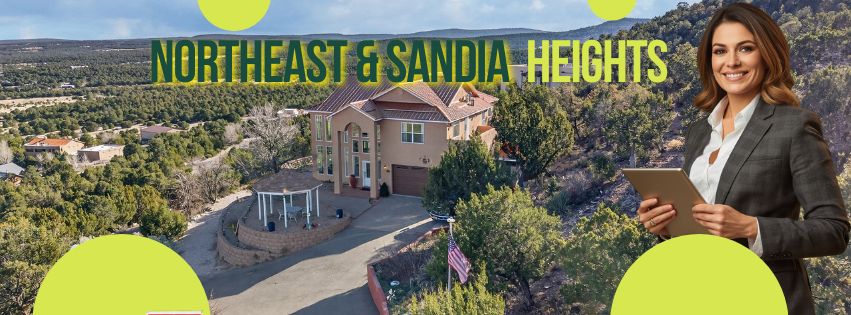
The first and most durable reason luxury buyers concentrate in the Northeast Heights is the school zone premium that attaches to properties within the La Cueva and Eldorado High School attendance boundaries — and that has sustained demand for these neighborhoods across multiple market cycles and interest rate environments.
La Cueva High School consistently ranks among New Mexico's highest-performing public high schools on academic outcome measures tracked by GreatSchools, Niche, and the New Mexico Public Education Department. Families who are committed to public school education and who have the financial capacity to choose their neighborhood are paying the premium to be within the La Cueva boundary specifically — not because it is convenient, but because they have done the research and the school outcome data supports the decision.
The mechanism by which school zoning produces lasting appreciation is specific and worth understanding. The families who target La Cueva zoning make a multi-year commitment — they are not purchasing for a single year, they are purchasing for the duration of their children's K-12 education. That commitment makes them a fundamentally less price-elastic buyer pool than discretionary luxury buyers. A rate increase that makes a luxury buyer reconsider a $900,000 purchase for another market does not make the family with a rising 9th-grader reconsider their La Cueva commitment.
That persistent demand floor — independent of rate cycles, market sentiment, or economic uncertainty — is the specific reason the Northeast Heights and Sandia Heights consistently maintain a premium over other Albuquerque luxury neighborhoods when macro conditions create pressure on prices elsewhere. The school zone is not a feature. It is demand infrastructure.
Sandia Heights is zoned for La Cueva High School, which means the mountain elevation and the school zone advantage exist simultaneously in the same properties — a combination available in very few residential environments anywhere in the Albuquerque metro.
Reason 2 — Protected Open Space and Trail Access That Cannot Be Developed
The Permanence Premium
The Northeast Heights foothills and Sandia Heights share the most significant and least-replicable value driver in the Albuquerque luxury market: adjacency to land that is permanently, legally protected from development.
The Cibola National Forest and Sandia Mountain Wilderness area encompasses 37,236 acres of federally designated wilderness immediately east of the city. Homes in the Northeast Heights foothills and in Sandia Heights that back to or directly abut the wilderness boundary have a view shed and open space buffer that no future development can ever compromise. No subdivision approval, no commercial development, no infrastructure project will ever alter what those properties look east toward. That permanence is the specific value characteristic that compounds over time as other cities continue to develop their natural edges away.
"High Desert and the Sandia Heights area showcase a different version of luxury: estate-size lots, big sky and mountain views, dark-sky-friendly lighting, native landscaping, and strict building envelopes that preserve open space and wildlife corridors," confirmed the WelcomeHomeABQ February 2026 luxury market analysis. The specific reference to 'strict building envelopes that preserve open space and wildlife corridors' is not marketing language — it is the description of the development controls that make these neighborhoods' open space character structurally permanent rather than dependent on the absence of future development pressure.
For luxury buyers who have watched other Sun Belt cities develop their open space buffers away over the past decade — who have seen the mountain view from a Scottsdale home blocked by a new development, or the desert trail system adjacent to a Phoenix subdivision built over for retail — the specifically permanent character of Albuquerque's wilderness boundary is the most compelling value proposition they encounter. And they typically encounter it only after they have been told about it. No other Albuquerque market distinguishes itself on this dimension more clearly than the Northeast Heights foothills and Sandia Heights.
Trail Access as Daily Life
The practical expression of the wilderness adjacency is immediate trail access — the ability to step out of a home and be on a connected trail system within a five-minute walk, without driving, without parking, without the logistical overhead that makes trail access a weekend activity rather than a daily habit in markets where the trails are not adjacent to where people live.
The Albuquerque Foothills trail system and the Elena Gallegos Open Space provide a connected network of hundreds of miles of trails that begins within residential streets in the Northeast Heights foothills. For buyers whose luxury priorities are defined by outdoor access — who run, hike, mountain bike, or simply walk with intention — this access is the feature they are buying, with the house as the infrastructure that makes the access daily rather than occasional.
"Residents enjoy quick access to hiking and outdoor recreation, top-rated schools nearby, and convenient routes to shopping, dining, and major employment centers," confirmed the Myers & Myers Real Estate neighborhood guide for Sandia Heights. That combination — wilderness access and urban convenience in the same neighborhood — is what buyers from larger markets consistently describe as the thing Albuquerque offers that they could not find anywhere else.
Reason 3 — The Mountain View Premium Is Real and Permanent
The Sandia Mountains are not a skyline feature visible from a distance. In the Northeast Heights foothills and Sandia Heights, they are the immediate eastern boundary of residential lots — at a scale that photographs consistently undersell and that visitors consistently describe as more dramatic in person than they expected.
At Sandia Heights' elevation — approximately 6,500 to 7,000 feet on the mountain's western face — the mountain is not behind you. You are in it. The granite formations are visible at close range. The ponderosa forest begins at the property line in some cases. The specific quality of mountain light — the way the western face catches the afternoon sun and holds it in ways that the valley floor below does not — is a sensory feature of daily life that residents describe with a consistency that makes it something other than marketing language.
The view premium in these neighborhoods is measurable. Research consistently shows that mountain view premiums in the Northeast Heights range from 10% to 25% above comparable homes without direct mountain views — a premium that has historically been stable across market cycles because the view is a feature that cannot be produced in any other location at any price.
The specific directional character of the Northeast Heights and Sandia Heights views — east-facing mountain views at close range, with the full Albuquerque cityscape and the Rio Grande valley visible to the west — produces the dual view orientation that is the most sought-after configuration in the corridor. A buyer standing in the living room of a well-positioned foothills home has the mountain filling the eastern windows and the city lights beginning to emerge in the western windows at the same moment at dusk. That simultaneity of mountain and city at the same scale is not available anywhere else in Albuquerque.
Reason 4 — The 10-to-20-Year Appreciation Thesis
The luxury buyers who are concentrating in the Northeast Heights and Sandia Heights in 2026 are not primarily buyers who are trying to time the market. They are buyers who have evaluated the 10-to-20-year ownership thesis and concluded that the structural factors supporting appreciation in these specific corridors are more durable than in comparable markets.
"Buyers here are looking 10-20 years ahead, not just at today's payment," confirmed the Sandi Pressley Top 5 Trending Neighborhoods for 2026 guide. That observation is consistent with what Jenn & Vinay see in the conversations with out-of-state luxury buyers specifically — they arrive having already done the long-term research, they know the High Desert 65% appreciation over 15 years figure, they understand what the structural supply constraint and the wilderness adjacency mean for future value, and they are making purchases that reflect a 10-to-20-year investment thesis rather than a 3-to-5-year flip calculus.
The structural factors that support that thesis are the same ones that produced the 15-year appreciation story:
- Supply is permanently constrained: The Northeast Heights foothills and Sandia Heights cannot expand east — the National Forest boundary is the limit. They cannot expand significantly upward — the mountain terrain limits accessible development. The buildable land in these neighborhoods is essentially fully developed, which means every buyer who wants to be here competes for the existing, finite resale inventory.
- Demand drivers are structural, not cyclical: School zoning, trail access, mountain views, and the specific lifestyle that wilderness adjacency enables do not change with interest rates. The families who want La Cueva zoning, the outdoor-lifestyle buyers who want daily trail access, and the view-driven buyers who specifically want the Sandias at close range are persistent buyers who will enter the market when they are ready to buy regardless of where rates are.
- Development regulation protects quality: The architectural standards and density controls in the Northeast Heights foothills and High Desert sub-communities protect the character that generates premium. A luxury neighborhood's value is partly a function of what cannot be built adjacent to it — and the development controls in these communities are specifically designed to prevent the quality erosion that compromises appreciation in neighborhoods without them.
- Out-of-state migration is sustained: Los Angeles remains the number one origin market for Albuquerque home searches on Redfin. The buyers from Los Angeles, Seattle, and Dallas who are discovering Albuquerque and specifically targeting the Northeast Heights foothills are doing so because the value gap between what they left and what they are getting is large and visible. As long as the origin markets remain expensive relative to Albuquerque, the migration pull sustains demand in the neighborhoods that those buyers specifically target.
Reason 5 — The Sandia Heights Specific Advantage: Elevation and Coolness
Sandia Heights deserves specific treatment within the broader Northeast Heights conversation because it offers an additional advantage that the valley-floor Northeast Heights neighborhoods do not: elevation-driven temperature differential.
Sandia Heights sits at approximately 6,500 to 7,000 feet of elevation on the Sandia Mountains' western face — 1,200 to 1,700 feet higher than the city floor below. That elevation difference produces a reliable 5 to 10 degree Fahrenheit temperature differential on summer days. When Albuquerque is 95 degrees at the valley floor in August, Sandia Heights is 85 to 88 degrees — a difference that is felt immediately and that makes outdoor living in summer dramatically more comfortable.
For buyers from coastal markets who found Albuquerque's summer heat challenging in initial visits — who discovered the city in October or April and loved it, but are uncertain about the July and August temperatures — Sandia Heights specifically addresses that concern. The elevation makes summer meaningfully more comfortable while maintaining the proximity to city infrastructure that the East Mountain communities (Tijeras, Cedar Crest) cannot provide.
"Sandia Heights consistently earns its reputation as one of the most upscale neighborhoods in the Northeast Heights, and for good reason. Nestled along the foothills of the Sandia Mountains, Sandia Heights offers dramatic views, larger lot sizes, and a level of privacy that's hard to match elsewhere in the city. The combination of scenic beauty, low density, and architectural quality makes Sandia Heights among the safest neighborhoods in Albuquerque for buyers who want space, tranquility, and long-term value," confirmed the Myers & Myers Real Estate January 2026 neighborhood analysis.
The practical consideration worth acknowledging: Sandia Heights' access roads are steep enough to require a capable vehicle in winter snow conditions. The same elevation that makes summer comfortable adds winter driving friction. Buyers who are making the Sandia Heights decision should drive the access during an early spring snowfall — not to be deterred, but to make the decision with accurate information about the trade-off they are accepting.
Reason 6 — The Out-of-State Buyer Discovery Effect
One of the most significant forces driving luxury demand in the Northeast Heights and Sandia Heights in 2026 is the geographic discovery effect — the accumulation of out-of-state buyers who arrived in Albuquerque looking for a specific lifestyle and found that the Northeast Heights foothills and Sandia Heights deliver it more completely than they expected.
The profile of the out-of-state luxury buyer targeting these neighborhoods is consistent across origin markets. They are typically executives, medical professionals, or remote workers in their late 30s to mid-50s who are selling properties in Los Angeles, Seattle, the Bay Area, or suburban Dallas at prices that make Albuquerque's luxury tier feel like a value transaction. A buyer selling a Los Angeles home at $1.5 million and purchasing in Sandia Heights at $900,000 is not stretching their budget — they are buying down in price while buying up in space, views, and the specific quality of mountain-adjacent daily life.
That buyer profile produces a buyer who is not rate-sensitive in the way a first-time Albuquerque buyer is. They have equity from their previous home. They are comparing Albuquerque's price-to-quality ratio against what they left behind. And they are almost always more satisfied with their purchase than they expected to be — because the combination of mountain views, trail access, school quality, and safety that the Northeast Heights foothills and Sandia Heights provide at their price points is genuinely unusual in the American luxury market.
"Fellow real estate professionals are 'blown away' by just how much home — and land — local buyers can secure for around a million dollars" in these neighborhoods, confirmed the WelcomeHomeABQ February 2026 analysis. That "blown away" reaction is the consistent experience that the out-of-state discovery effect produces — and it is what converts visitors into buyers and buyers into long-term residents who recommend the city to the colleagues and friends they left behind.
Reason 7 — Safety and Community Quality That Compounds Over Time
The final reason luxury buyers are concentrating in the Northeast Heights and Sandia Heights is the safety profile and community quality that these neighborhoods maintain and that compounds over time as a quality-of-life and value-protection factor.
The Northeast Heights consistently registers the lowest crime statistics of any section of the Albuquerque metro — approximately 1,539 annual crimes in the northeast, compared to 13,938 in the eastern sections of the city. Within the Northeast Heights, the foothills corridor and Sandia Heights show the most favorable safety metrics, driven by geographic isolation, low density, and the strong homeowner community that consistent pride of ownership produces.
The community quality dimension is harder to quantify but consistently cited by residents as one of the primary reasons they stay. The specific character of a neighborhood where the majority of residents are long-term owners who chose to be there specifically — where the school zone commitment creates multi-year household stability, where the outdoor lifestyle creates neighbor familiarity through trail encounters, where the HOA governance in the planned communities maintains the architectural and landscape standards that protect the visual environment — produces a social texture that residents describe as distinctly different from generic suburban environments.
"The neighborhood's pride of ownership, established community feel, and strong resale demand make it especially attractive to move-up buyers and luxury home shoppers," confirmed the Myers & Myers Real Estate January 2026 guide. Pride of ownership is not an abstract concept in the Northeast Heights foothills — it is visible in the maintained properties, the landscape quality, and the community engagement that produces the consistent experience of living in a neighborhood where people care about the shared environment.
The Market Reality — What This Concentration Means for Buyers and Sellers
For Buyers — Moving Decisively Without Panic
The concentration of luxury demand in the Northeast Heights and Sandia Heights produces specific market conditions that buyers targeting these neighborhoods need to understand. Well-priced, well-presented homes in the foothills corridor and Sandia Heights generate activity faster than the broader luxury market average. The buyer pool is motivated and specific — it includes relocation buyers who have specifically identified these neighborhoods as their targets, local buyers upgrading from elsewhere in the city who know exactly what they want, and out-of-state buyers who visited, experienced the corridor, and are returning to purchase.
The current market gives luxury buyers more time than the 2021 frenzy allowed — homes are averaging 35 to 60 days before going under contract rather than 10 days. But that additional time should be used for better due diligence rather than indefinite delay on a property that genuinely meets the buyer's criteria. The luxury buyers who use the current market's additional decision time to research comparable sales thoroughly, confirm school zone assignments, inspect specific properties carefully, and negotiate thoughtfully are the ones who achieve the best outcomes. The buyers who interpret more time as a signal to wait indefinitely for prices to drop risk waiting for a price movement that the structural fundamentals of these neighborhoods argue against.
For Sellers — The Premium Is Real but Requires Execution
Sellers in the Northeast Heights foothills and Sandia Heights have the most durable market position of any residential neighborhood in Albuquerque. The structural demand drivers described in this post are not going away. The school zone premium, the wilderness adjacency, the mountain view, and the long-term appreciation thesis all support the premium that these neighborhoods command.
But the premium exists at the correct price. The 38% of Albuquerque's active listings that have taken price reductions exist across all neighborhoods, including the Northeast Heights. The sellers who are generating those reductions are not selling inferior properties — they are selling correctly positioned properties at incorrectly determined prices. The market for Northeast Heights and Sandia Heights luxury is not so strong that it absorbs overpricing the way the 2021 market did. It is strong enough to reward correctly priced, well-prepared homes with fast, clean transactions. It is honest enough to tell sellers who price from peak-year memory that the data has moved on.
For buyers evaluating specific neighborhoods and sub-communities within the Northeast Heights corridor, our guide to the best neighborhoods in Albuquerque for luxury homes covers every major luxury community in detail. And for a full picture of how the Northeast Heights market is performing relative to other parts of the city, our post on why Albuquerque home prices are still rising in certain neighborhoods covers the appreciation story neighborhood by neighborhood with current data.
The Bottom Line — Seven Reasons That Add Up to One Conclusion
The Northeast Heights foothills and Sandia Heights are not where luxury buyers are concentrating because of marketing or reputation alone. They are concentrating there because the structural fundamentals of these specific neighborhoods — the permanently protected wilderness adjacency, the La Cueva school zone premium, the mountain view at close range, the elevation-driven temperature advantage at Sandia Heights, the safety profile, the community quality, and the long-term appreciation thesis built on supply constraint — produce a combination of lifestyle and investment value that no other Albuquerque neighborhood simultaneously delivers.
These are not good reasons to consider buying in the Northeast Heights foothills and Sandia Heights. They are the reasons that sophisticated buyers from the largest and most expensive real estate markets in the country are arriving in Albuquerque, spending an afternoon in these neighborhoods, and making decisions.
The combination works. The data supports it. And the buyers who discover it consistently describe the same experience: they expected to find a reasonably attractive Sun Belt neighborhood, and they found something that exceeded their expectations in most of the dimensions that matter most to them. That gap between expectation and reality is the best advertisement a neighborhood can have.
Ready to Explore the Northeast Heights and Sandia Heights?
Jenn & Vinay from The Rodgers Neighborhood Real Estate Group know the Northeast Heights foothills and Sandia Heights at the street and sub-community level — which lots have the most direct National Forest adjacency, which properties have the most complete mountain views, which sub-communities offer the specific HOA governance or no-HOA freedom that matches your priorities, and where the current comparable sales data actually places values. Whether you are relocating from out of state or upgrading from elsewhere in Albuquerque, the conversation starts with a call.
Jenn & Vinay Rodgers are Albuquerque's trusted real estate professionals with The Rodgers Neighborhood Real Estate Group, brokered by Real Broker, LLC, serving buyers and sellers across Albuquerque, Rio Rancho, Corrales, Los Lunas, Tijeras, Cedar Crest, Sandia Park, the East Mountains, Bernalillo County, Sandoval County, and surrounding New Mexico communities.
The Rodgers Neighborhood Real Estate Group
Jenn & Vinay Rodgers
Real Broker, LLC
Albuquerque, NM
📞 505-417-2733
🏠 Browse Northeast Heights and Sandia Heights luxury homesCategories
- All Blogs (324)
- 2026 & Beyond for Real Estate (220)
- Doctors and Nurses looking for homes in NM (4)
- Guide to buying a home in NM (146)
- Health Care Heros (7)
- Home Upgrades (38)
- Jenn & Vinay your Local Real Estate Experts! (108)
- Moving to Albuquerque (128)
- Neighborhoods in Albuquerque NM (87)
- Rent or Own (2)
- Sellers Questions for Selling homes (2)
Recent Posts


GET MORE INFORMATION