
Why Albuquerque Home Prices Are Still Rising in Certain Neighborhoods
Why Albuquerque Home Prices Are Still Rising in Certain Neighborhoods — And What That Means for Buyers and Sellers
Here is one of the most important things to understand about the Albuquerque housing market in 2026: the citywide average tells you almost nothing useful about your specific neighborhood.
The citywide median sale price is $365,000, up 7.4% year over year. That figure is real and meaningful as a directional signal. But it is an average of hundreds of micro-markets with wildly different dynamics — neighborhoods where prices are rising 10% to 15% annually sitting in the same city as neighborhoods where overpriced listings are sitting for 100 days and taking price reductions.
Understanding which neighborhoods are appreciating, why they are appreciating, and what structural forces are driving that appreciation is the most practically useful thing any Albuquerque buyer or seller can know before they make a decision. This post gives you that understanding — neighborhood by neighborhood, reason by reason, with the specific data that makes each pattern visible.
The Big Picture — Why Albuquerque Appreciates Unevenly
According to Redfin's current Albuquerque housing market data, the citywide median sale price was $365,000 last month, up 7.4% year over year. Northeast Albuquerque specifically — the foothills corridor and adjacent neighborhoods — showed a median sale price of $380,000, up 5.6% year over year, with hot homes going pending in approximately 14 to 24 days.
The divergence between neighborhoods that appreciate consistently and those that stagnate or require price reductions is not random. It follows a predictable set of structural factors — school zoning, lifestyle amenities, employment proximity, protected open space adjacency, and the fundamental supply constraint that exists differently across different parts of the city.
"Real estate is local, and the only way to understand what's really happening is to follow local data and talk with local experts," noted Tego Venturi in his January 2026 WelcomeHomeABQ forecast. "Some areas experienced big booms and meaningful pullbacks; others are still seeing strong appreciation."
The neighborhoods still seeing strong appreciation in 2026 are almost always the ones that were built on the right structural foundations in the first place — and those foundations do not change when the broader market cools. That is the key insight for buyers trying to decide where to purchase and for sellers trying to understand why their home's appreciation story looks different from their neighbor's.
The Neighborhoods Where Prices Are Rising Most Consistently
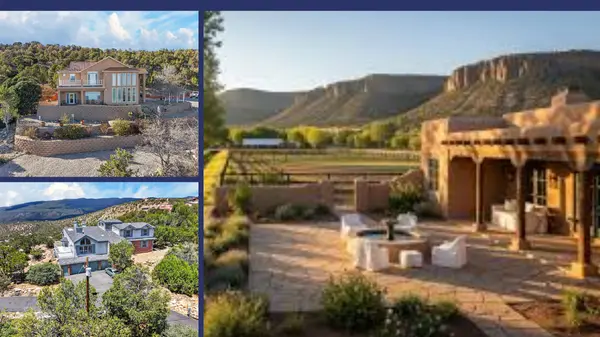
High Desert and the Northeast Foothills — The Long-Term Appreciation Champion
High Desert is the data story that gets told most consistently by every Albuquerque analyst who looks at long-term neighborhood appreciation: 65% appreciation over fifteen years, with recent growth accelerating rather than decelerating.
The structural reasons are not subtle. High Desert is a master-planned foothills community with approximately 40% of its total acreage set aside as protected open space — permanently. That protected land is not a zoning preference or a planning aspiration. It is deeded, permanent, and means that the views, the trail access, the wildlife corridors, and the low-density character of the neighborhood are structurally protected from the development pressure that erodes value in less carefully planned communities.
What drives High Desert's appreciation is the combination of scarcity and quality. The lots with the most dramatic mountain views and the most direct National Forest trail access are genuinely finite — there are a specific number of them and they cannot be replicated. Buyers who understand this bid for them at a premium over comparable square footage elsewhere in the city, and that premium has compounded over fifteen years into a 65% appreciation story.
The price range in High Desert — from the upper $400,000s to well over $3 million for the most premium custom builds — means this neighborhood accommodates buyers at different points in the market. But the common thread across all price points is the lifestyle: views from every window, direct trail access to Cibola National Forest, architectural integrity enforced by design standards, and a community that has maintained its character through multiple market cycles.
"The Northeast Heights — particularly High Desert and the foothills areas — represents Albuquerque's premium market, but not in a pretentious way. This is where geology, views, and thoughtful development create neighborhoods that consistently appreciate over time," observed the January 2026 neighborhood analysis from Sandi Pressley Real Estate. "The Northeast Heights has proven itself as Albuquerque's most resilient market through economic cycles."
Northeast Heights Corridor — School Zone Premium Holding Strong
The broader Northeast Heights corridor — stretching roughly from Eubank Boulevard east to Tramway, and from Menaul north to Paseo del Norte — demonstrates a specific and highly consistent appreciation driver: school zoning.
La Cueva High School and Eldorado High School are the two most consistently demanded school zone destinations in the Albuquerque Public Schools district. Both carry A-level ratings from Niche and GreatSchools. Both produce measurably better academic outcomes than most alternative high school assignments in the city. And the homes within their attendance boundaries carry a durable premium over otherwise comparable homes that fall outside those boundaries.
The school zone premium is not speculative. It is visible in the data: homes in La Cueva's zone that go to market at a competitive price generate multiple inquiries within the first week, regardless of broader market conditions. Families with school-age children who are committed to public school education will pay above what the square footage and condition alone would justify to secure the right school zone assignment. That demand is consistent, year over year, and it does not erode when mortgage rates rise because the families driving it are making a multi-year commitment that does not respond to short-term rate fluctuations the way discretionary buyers do.
Areas within the Northeast Heights that benefit from additional appreciation drivers on top of school zoning — foothills proximity, trail access, mountain views — compound the school zone premium into stronger overall appreciation than either factor alone would produce.
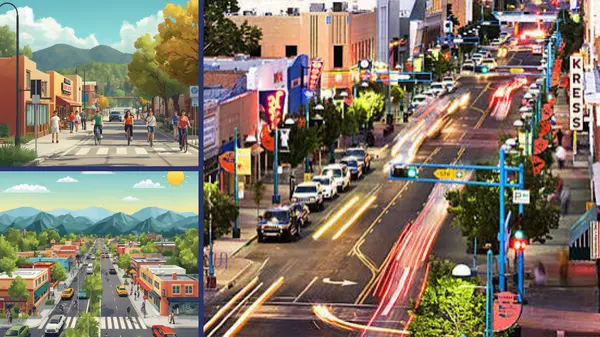
Nob Hill — Urban Walkability Driving a New Buyer Profile
Nob Hill along historic Route 66 tells a different appreciation story from the foothills neighborhoods — and it is one that reflects a national trend toward walkable urban living playing out in Albuquerque-specific form.
Nob Hill holds the number one ranking among Albuquerque neighborhoods on Niche across multiple categories: best neighborhoods to live in, best for young professionals, and best to raise a family — with an overall grade of A-plus. The neighborhood's walkable dining and retail corridor, its mid-century architectural character, its proximity to the University of New Mexico and the Nob Hill Medical Center, and its established identity as Albuquerque's most genuinely urban residential neighborhood are driving appreciation from a buyer profile that did not previously have a strong presence in the market.
Remote workers and young professionals who moved to Albuquerque from larger cities — Austin, Denver, Los Angeles, Seattle — are disproportionately drawn to Nob Hill because it offers something the suburban Westside and Northeast Heights do not: the ability to walk to coffee, restaurants, and retail without getting in a car. That walkability premium is still relatively undervalued in Albuquerque compared to comparable neighborhoods in peer markets, and the gap between current pricing and what walkable urban neighborhoods command in other Sun Belt cities creates an appreciation opportunity that buyers with a 5 to 10-year horizon are recognizing.
2026's Route 66 centennial has added a layer of energy to the Nob Hill corridor — new murals, new events, sustained media attention on Central Avenue — that is further reinforcing the neighborhood's identity and visibility to out-of-state buyers who are arriving with the walkable urban lifestyle as a primary criterion.
Volcano Cliffs and the Western Petroglyph Corridor — The Appreciation Story Most Buyers Are Missing
Volcano Cliffs is the appreciation story that sophisticated buyers are recognizing in 2026 while the broader market is still focused elsewhere. The neighborhood has demonstrated nearly 40% appreciation since 2020, driven by a structural advantage that is as permanent as any feature in the Albuquerque market: adjacency to Petroglyph National Monument's protected mesa land.
Petroglyph National Monument encompasses over 7,000 acres of volcanic basalt mesa that is federally protected and permanently undevelopable. Homes in Volcano Cliffs that back to the monument boundary have a view shed and open space buffer that will never be compromised by future development. That permanence is increasingly valued by buyers who have watched other Sun Belt cities develop their open space buffers away over the past decade — and who understand that paying a modest premium today for a permanently protected view is a structurally sound long-term decision.
The neighborhood's price points — generally in the $280,000 to $430,000 range — still offer genuine value relative to the appreciation trajectory and the protected-land adjacency. For buyers who understand the dynamic and are purchasing with a 5 to 10-year horizon, Volcano Cliffs represents one of the more compelling value propositions in the Albuquerque market.
Taylor Ranch — Mid-Market Stability With Consistent Demand
Taylor Ranch does not produce the dramatic appreciation headlines that High Desert or Nob Hill generate — and that consistency is precisely why it earns a place on the list of neighborhoods where values are holding and growing reliably.
The neighborhood's appreciation driver is its function. Taylor Ranch is where Albuquerque's middle-class professional families land when they are prioritizing space, school quality, community character, and daily convenience in a combination that the Northeast Heights provides at a higher price point and the Eastside provides with a different profile. The variety within Taylor Ranch — townhomes for first-time buyers, standard single-family homes for growing families, and larger properties for families trading up — creates sustained demand across multiple buyer segments simultaneously.
The neighborhood also benefits from the Coors Boulevard and Paseo del Norte retail corridor — grocery stores, restaurants, medical services, and everyday retail all within a 5-minute drive. For buyers who want suburban convenience without suburban isolation, Taylor Ranch delivers it consistently. That consistency produces stable appreciation rather than spike-and-correction cycles.
The Structural Reasons Behind the Appreciation — What Actually Drives Values
Understanding which neighborhoods are appreciating is useful. Understanding why they are appreciating is essential — because the structural drivers determine whether the appreciation is durable or cyclical, and that distinction matters enormously for long-term buyers.
Driver 1: School Zone Assignments That Cannot Be Changed
School zone assignments in Albuquerque Public Schools are among the most powerful and least-discussed drivers of neighborhood-level appreciation. The families who specifically target La Cueva, Eldorado, or Georgia O'Keeffe school zones are not interchangeable with buyers targeting other parts of the city — they are committed to a specific school and will pay whatever premium the market requires to access it.
Areas where top-rated schools and high-demand school zones overlap with other positive lifestyle factors — proximity to trails, low crime, strong community character — see the most durable appreciation because they are attracting multiple buyer profiles simultaneously rather than depending on a single type of buyer to sustain demand.
School zones also create a very specific resale dynamic: a home in a top-rated school zone is not just competing with other homes in the same neighborhood — it is competing with rental alternatives for families who would otherwise rent specifically to maintain school zone access. That rental-competing buyer pool adds a demand floor that does not exist in neighborhoods without strong school zone associations.
Driver 2: Protected Open Space Adjacency — The Permanent View Premium
The most consistent long-term appreciation driver in the Albuquerque market is not proximity to employment, not neighborhood character, and not even school zoning — it is adjacency to land that cannot be developed.
Homes that back to Cibola National Forest, Petroglyph National Monument, or the Sandia Mountain Wilderness boundary have a view shed that is legally and permanently protected. No future development will block those views. No future subdivision will reduce the open space buffer. The buyer who purchases today is purchasing a feature that will be exactly as valuable in 20 years as it is today — and, as other cities continue to develop their natural edges, likely more valuable by comparison.
High Desert's trail access to Cibola National Forest. Volcano Cliffs' permanent monument boundary. Sandia Heights' National Forest adjacency. Corrales' acequia-irrigated agricultural land protections. All of these neighborhood-specific permanent open space features produce a premium that compounds over time rather than eroding.
Driver 3: Supply Constraints Within Desirable Neighborhoods
The citywide supply deficit of 13,000 to 28,000 housing units applies unevenly across Albuquerque's neighborhoods. In established foothills communities like High Desert, North Albuquerque Acres, and Tanoan, there is essentially no undeveloped land left to build on. New supply cannot enter these neighborhoods. Every buyer who wants to be in one of these communities must purchase from the existing, finite resale inventory.
That supply constraint is the most direct mechanism of price appreciation. When demand for a specific location is sustained — driven by school zones, lifestyle amenities, employment proximity, and the other structural factors described here — and supply cannot expand to meet that demand, prices rise. The neighborhoods with the most durable appreciation are almost always those where supply is most permanently constrained.
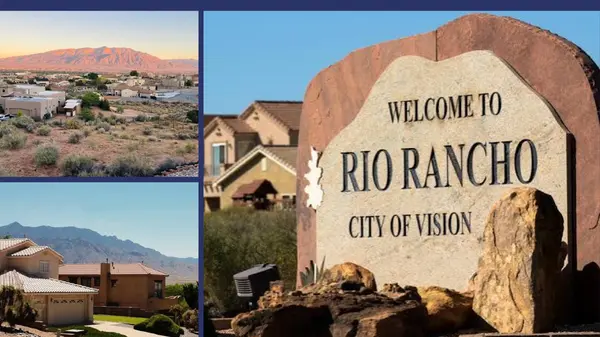
By contrast, neighborhoods with active new construction pipelines — Mesa del Sol, parts of the Westside, and Rio Rancho corridors — face consistent supply competition that moderates appreciation. More inventory at comparable price points means buyers have alternatives, and that optionality reduces the urgency that drives competitive bidding and above-list-price outcomes.
Driver 4: Out-of-State Migration Concentrated in Specific Neighborhoods
Redfin's migration data for Albuquerque shows that Los Angeles is the number one origin market for homebuyers searching in Albuquerque, followed by Dallas and Seattle. These buyers are not uniformly distributed across the city — they concentrate in the neighborhoods that most closely approximate the lifestyle features they valued in their previous markets.
Los Angeles buyers tend to prioritize walkability, architectural character, outdoor proximity, and neighborhood identity — which maps to Nob Hill, High Desert, and the North Valley. Dallas buyers tend to prioritize space, school quality, and suburban infrastructure — which maps to the Northeast Heights, Ventana Ranch, and Rio Rancho. Seattle buyers often prioritize walkability and proximity to nature — again, Nob Hill and the foothills corridor.
The concentration of out-of-state buyer demand in specific neighborhoods creates competitive pressure in those specific neighborhoods that is not felt equally across the city. A Los Angeles buyer who sold a $900,000 condo and is purchasing a $500,000 Albuquerque home has a fundamentally different price sensitivity than a first-time local buyer stretching their budget. That out-of-state buyer pool sustains demand in the neighborhoods they target regardless of whether mortgage rates feel high to a local buyer — because they are comparing Albuquerque prices to what they left behind.
Where Values Are Not Rising — And Why That Matters
Understanding the appreciation story requires equally understanding where values are not appreciating at the same pace — because the contrast illuminates the structural drivers more clearly than looking at strong markets in isolation.
Mesa del Sol — New Construction Supply Dampening Resale Appreciation
Mesa del Sol is the clearest example in the Albuquerque market of what happens when new construction supply consistently enters a neighborhood at prices competitive with resale. Active listings in Mesa del Sol average approximately 111 days on market — nearly three times the citywide average for successfully closed transactions. The multiple active builders in the community are producing new homes with modern floor plans, builder warranties, and rate buydown incentives that resale sellers cannot easily match.
This is not a condemnation of Mesa del Sol as a neighborhood — it has genuine long-term potential anchored by significant infrastructure investment and major employment adjacency. But for buyers trying to understand why their Mesa del Sol purchase may not appreciate at the same pace as a Northeast Heights purchase of similar value, the supply dynamics are the answer.
Price-Reduced Listings Across All Neighborhoods — The Overpricing Effect
The 38% of Albuquerque active listings that have taken price reductions in 2026 are not concentrated exclusively in slower sub-markets — they exist across the city, including in strong neighborhoods. The common thread is not location. It is overpricing relative to current comparable sales.
"In Albuquerque neighborhoods where buyers are watching multiple similar homes, overpriced listings often end up chasing the market — and selling for less than they would have if priced correctly from day one," observed the Sandi Pressley Real Estate February 2026 pricing analysis.
This creates a counterintuitive dynamic in strong appreciation neighborhoods like the Northeast Heights: the neighborhood's overall appreciation data is strong, but individual sellers in that neighborhood who price from peak-year memory rather than current comparables still generate price reductions. The neighborhood's strength does not protect an individual overpriced listing from the market's sorting mechanism. It just means that when the price is right, the home sells quickly.
What This Means for Buyers — Where to Concentrate Your Search
For buyers trying to build the most durable long-term value in their Albuquerque purchase, the structural appreciation drivers provide a clear framework.
The highest-confidence appreciation bets in 2026 Albuquerque are the neighborhoods where multiple structural drivers overlap: strong school zone AND open space adjacency AND supply constraint AND established lifestyle amenities. High Desert checks all four. The core Northeast Heights corridor checks three of the four. Nob Hill checks three in a different configuration. Volcano Cliffs checks two with strong momentum on the protected land adjacency driver.
The buyers who achieve the strongest long-term appreciation results are almost always the ones who bought into a neighborhood for reasons beyond the current price — who understood the structural factors that would sustain demand over time and trusted those factors more than short-term market noise.
For a complete overview of Albuquerque's neighborhoods and what distinguishes each one beyond appreciation data, our guide to Albuquerque neighborhoods covers every major area in depth. And for buyers evaluating specific neighborhoods within the under-$500,000 range, our post on the best Albuquerque neighborhoods under $500,000 maps the appreciation story to specific price points.
What This Means for Sellers — How to Use the Appreciation Context
Sellers in the appreciating neighborhoods described in this post have a genuine advantage in 2026 — but only if they use it correctly. The existence of strong neighborhood appreciation does not mean any price will work. It means the foundation for a strong sale outcome is present if the seller executes correctly on top of it.
The sellers who capture the full benefit of their neighborhood's appreciation trajectory are the ones who price from the most recent comparable sales — not from peak-year data, not from the Zestimate, not from what they need to net, but from what homes like theirs have actually closed for in the last 90 days. In a neighborhood with genuine demand, that discipline produces outcomes at or near the upper end of the comparable range. Sellers who push above it — even in strong neighborhoods — generate the price reduction cycle that costs them more than the ambition was worth.
The structural appreciation drivers described in this post are also useful for sellers positioning their listings. A home in the La Cueva school zone should highlight that feature prominently — because it is a material differentiator worth money to a specific buyer pool. A home with permanent National Forest adjacency should be marketed with photography and copy that communicates that permanence. A Nob Hill home should lead with walkability data and the Route 66 centennial energy. These are not generic selling points — they are the specific reasons the neighborhood commands a premium, and the listing should communicate them directly to the buyers for whom they matter most.
The Long View — Where Albuquerque's Value Is Concentrating
Zoom out from the 2026 data to the 10 and 15-year appreciation stories in Albuquerque and a consistent pattern emerges: value is concentrating in the neighborhoods that were built or developed around permanent, structural advantages that cannot be replicated or eroded by future development.
High Desert's 65% fifteen-year appreciation. Volcano Cliffs' 40% five-year appreciation. The consistent premium that La Cueva zoning commands through every market cycle. The Nob Hill walkability premium that is growing as the buyer profile shifts younger and more urban.
According to long-term projections from WalletInvestor, the predicted price of an average Albuquerque home reaches $395,503 by 2031 — a 16.9% five-year gain from current levels. The neighborhoods described in this post will not simply participate in that appreciation. They will likely exceed it, as their structural advantages become more visible and more valued relative to neighborhoods without the same permanence of quality.
For buyers making a 5 to 10-year purchase decision, the neighborhoods appreciating most consistently in 2026 are the same neighborhoods that will likely appreciate most consistently through 2030 and beyond. The structural drivers do not change. They compound.
Ready to Buy Into the Right Neighborhood?
Jenn & Vinay from The Rodgers Neighborhood Real Estate Group know the appreciation story of every Albuquerque neighborhood at the street level — not just from data, but from years of active transactions in these communities. Whether you are trying to identify the right neighborhood for a long-term purchase, understand where your current home fits in the appreciation picture, or build a selling strategy that captures the full value of your neighborhood's structural advantages, the conversation starts with a call.
📞 (505) 417-2733 | rodgersvj@gmail.com
Categories
- All Blogs (322)
- 2026 & Beyond for Real Estate (218)
- Doctors and Nurses looking for homes in NM (4)
- Guide to buying a home in NM (146)
- Health Care Heros (7)
- Home Upgrades (38)
- Jenn & Vinay your Local Real Estate Experts! (107)
- Moving to Albuquerque (127)
- Neighborhoods in Albuquerque NM (87)
- Rent or Own (2)
- Sellers Questions for Selling homes (2)
Recent Posts
GET MORE INFORMATION