
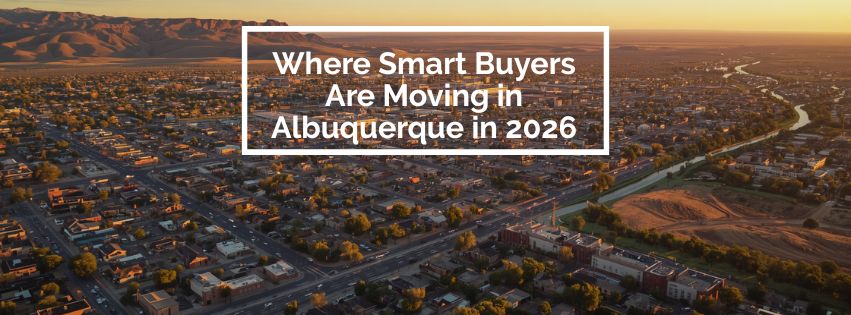
Where Smart Buyers Are Moving in Albuquerque in 2026
"Smart buyer" is a specific thing in real estate. It does not mean the buyer who pays the lowest price. It means the buyer who understands what they are purchasing — the structural forces supporting or undermining a neighborhood's value trajectory, the specific features that create durable demand versus cyclical demand, and the relationship between current pricing and long-term outcomes.
In Albuquerque's 2026 market, smart buyers are not uniformly distributed. They are concentrating in specific neighborhoods for specific reasons — and the pattern of that concentration is visible in the data if you know what to look for.
"The Albuquerque real estate market in 2026 is all about finding neighborhoods with strong bones and even stronger potential," confirmed the a leading Albuquerque market analysis. "While established areas like Sandia Heights and North Valley continue to command premium prices, savvy buyers are discovering opportunities in neighborhoods where infrastructure improvements, new development, and community investment are creating real value."
This guide maps where the smart buyers are moving — organized by buyer type and investment thesis, with the specific data supporting each concentration. Whether you are a first-time buyer running a value-per-dollar calculation, a family optimizing for school zone and appreciation, a remote worker evaluating lifestyle quality, or a long-horizon investor looking at 10-to-20-year trajectories, the specific neighborhoods where buyers with your priorities are concentrating are identifiable and worth understanding.
The Framework — What Makes a Buyer Move 'Smart' in 2026 Albuquerque
Before mapping the specific neighborhoods, the criteria that distinguish smart from uninformed purchasing in the current Albuquerque market deserve explicit statement — because the same neighborhood can be a smart buy or a poor buy depending on whether the buyer understands what they are actually purchasing.
- Permanent structural advantages: The most defensible long-term value in any Albuquerque neighborhood is anchored in features that cannot be changed by future development — federal wilderness boundaries, protected monument land, legally established open space. Buyers who choose neighborhoods for these permanent features are not dependent on favorable market conditions for their long-term outcome.
- Infrastructure investment signals: Municipal investments — fire stations, road improvements, retail development — are leading indicators of long-term neighborhood commitment that precede price appreciation by years. Buyers who can read these signals before the general market prices them in are purchasing at the inflection point rather than after it.
- Supply constraints: Neighborhoods where the buildable land is essentially exhausted cannot expand supply to meet demand. In supply-constrained neighborhoods, sustained demand directly produces price appreciation. In neighborhoods with active new construction pipelines, that mechanism is dampened by supply addition.
- Demographic alignment: The most durable demand comes from buyers who are making multi-year commitments — families targeting school zones, outdoor-lifestyle buyers choosing trail-adjacent neighborhoods. These buyers sustain demand through rate cycles and market fluctuations in ways that discretionary buyers do not.
- Value gap versus comparable markets: Neighborhoods that are under-priced relative to what similar amenities cost in peer cities represent purchase opportunities before that gap closes. The gap closing is not guaranteed quickly — but the neighborhoods where the structural quality is genuinely superior to the current price are the ones where long-term buyers consistently report satisfaction.
Where Smart Buyers Are Moving — By Buyer Type and Investment Thesis
Long-Horizon Investment Buyers — High Desert and the Northeast Foothills
Price range: upper $400,000s to $3.5 million+
Thesis: Permanent structural advantages compound over decades
The buyers who are making the most explicitly investment-conscious purchases in the Albuquerque market in 2026 are concentrating in High Desert and the Northeast foothills corridor — and the specific investment thesis driving that concentration is the combination of permanent structural advantages that have produced 65% appreciation over 15 years and that remain structurally intact going forward.
"Far Northeast Albuquerque stands out because it delivers what most buyers actually want: stability, strong property values, and a proven track record of long-term demand," confirmed the a leading Albuquerque real estate guide. "Consistently low turnover, pride of ownership, and solid appreciation make Far Northeast Albuquerque among the best neighborhoods in Albuquerque for buyers who value smart investments and livability over hype."
The investment thesis for High Desert specifically: the Cibola National Forest wilderness boundary is the permanent eastern edge of the community's buildable land. No future development can compromise the view corridors or the trail access that drive the community's premium. Every year that passes without that boundary moving is a year in which the scarcity of what High Desert offers has increased rather than decreased. The buyers who understood this fifteen years ago and purchased then have seen 65% appreciation. The buyers who understand it now are purchasing against the same permanent structural advantage that has not changed.
The La Cueva school zone that covers the Northeast Heights foothills adds the school-quality demand floor that sustains family purchases through rate cycles. The trail system that connects to the Cibola National Forest adds the outdoor lifestyle demand that remote-work migration has made more prominent. The combination of multiple, independently sustained demand sources is the specific characteristic of investment-grade neighborhoods.
Who is buying here: long-horizon buyers with 5-to-20-year ownership plans, out-of-state buyers with equity from coastal markets who have run the comparison to Scottsdale and Denver and found the value gap compelling, and local upgraders who have watched High Desert's trajectory and are making the move that their accumulated equity now enables.
Value Play Buyers — Volcano Cliffs and the Westside Petroglyph Corridor
Price range: $280,000 to $500,000
Thesis: Monument-protected land adjacency not yet fully priced in
The buyers who are making the most value-conscious moves in 2026 Albuquerque — who are specifically looking for neighborhoods where the current price does not fully reflect the structural advantages — are concentrating in Volcano Cliffs and the adjacent Westside Petroglyph corridor.
"Volcano Cliffs has shown nearly 40% appreciation since 2020, and the area's proximity to Petroglyph National Monument means you're living next to protected land that can never be developed," confirmed a leading Albuquerque market analysis. "The Westside — including Volcano Cliffs, Ventana Ranch, and surrounding communities — continues to be the sweet spot for buyers who want modern living without the premium price tag."
The value thesis is specific: Petroglyph National Monument is a 7,244-acre federally protected area that forms the western boundary of Volcano Cliffs. That protected land cannot be developed — not for housing, not for retail, not for any use that would block the views or reduce the open space character that makes the adjacent residential addresses desirable. The buyers who are choosing Volcano Cliffs in 2026 are making the same permanent-open-space-adjacency bet that High Desert buyers made, at a price point that is 30% to 40% lower than High Desert.
The 40% appreciation since 2020 is visible evidence that the market has started pricing in this advantage — but the analysis suggests that the full reflection of the monument adjacency's permanent value is still ahead. The buyers who are concentrating here now are doing so while the price still reflects the neighborhood's Westside location before the monument adjacency is fully incorporated into market pricing.
Who is buying here: first-time buyers and young families who want the permanent open space investment thesis at an accessible entry point; investors who are specifically looking for the monument-adjacency value driver at below-High-Desert pricing; remote workers who want the peaceful Westside setting and the monument trail access as a daily feature.
Family Buyers With School-Zone Priority — Northeast Heights Kaseman Corridor
Price range: $350,000 to $900,000
Thesis: La Cueva school zone demand is persistent and rate-insensitive
The family buyers who are making the most school-zone-optimized purchases in 2026 are concentrating in the Northeast Heights corridor within the La Cueva High School attendance boundary — and the specific logic driving that concentration is the same logic that has sustained demand in this corridor through every market cycle in recent memory.
La Cueva school zone demand is not rate-sensitive. The families who are purchasing specifically to be within the La Cueva boundary are making a multi-year commitment for their children's education — a decision that does not recalibrate based on where interest rates are in a given quarter. That demographic-commitment demand sustains the corridor's price premium through conditions that affect more discretionary buyer segments.
The smart family buy in this corridor in 2026 is not simply any La Cueva-zoned property — it is the correctly priced La Cueva-zoned property in a sub-neighborhood with additional structural advantages (trail adjacency, views, low density). Bear Canyon combines the school zone with direct foothills trail access. The Constitution Ave and Kaseman Hospital corridor combines school zone with short-commute access to the Northeast Heights employment cluster. The buyers who are assembling these combinations rather than accepting any La Cueva-zoned property regardless of its other characteristics are the ones whose purchases are investment-grade rather than simply school-zone-compliant.
Who is buying here: families with children approaching high school age who are making the explicit La Cueva commitment; out-of-state families whose relocation research identified La Cueva as the Albuquerque public school standard; upgrading local families who have been renting or owning elsewhere and are now making the move to the school zone their children's timeline requires.
Urban Lifestyle Buyers — Nob Hill and the Central Corridor
Price range: $250,000 to $550,000
Thesis: Walkability premium is still being priced into Albuquerque's urban neighborhoods
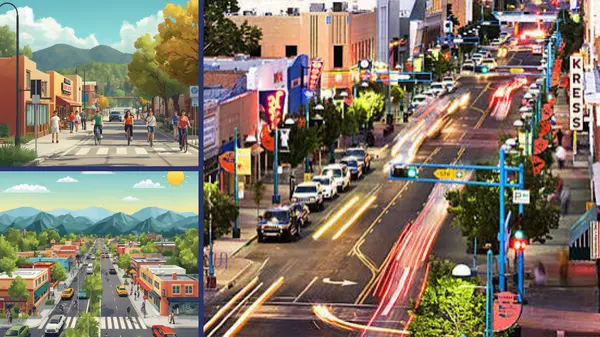
The buyers who are making the most explicitly lifestyle-driven purchases in 2026 are concentrating in Nob Hill and the Central Avenue corridor — and the specific thesis driving that concentration is the growing premium that walkability commands in car-dependent cities as the demographic shift toward urban lifestyle preferences continues.
"Nob Hill along historic Route 66 is where Albuquerque's creative energy lives. This walkable neighborhood attracts buyers who are tired of depending on their car for every little thing," confirmed the a leading Albuquerque market source 2026 trending neighborhoods guide. "Picture this: mid-century architecture with preserved neon signs, locally-owned coffee shops and — buyers are discovering that the walkability premium in Nob Hill has not yet been fully priced in relative to what comparable walkability costs in peer markets."
The 2026 Route 66 centennial has added a specific short-term catalyst to Nob Hill's long-term appreciation thesis — the new murals, the restored neon, and the sustained cultural moment of the highway's 100th anniversary are all specifically concentrated in Nob Hill's corridor, increasing the neighborhood's visibility to the exact buyer profile (young professionals, remote workers from walkable markets) that is driving walkability premium appreciation nationally.
The comparative value gap is the core thesis: Nob Hill properties at $300,000 to $450,000 provide a Walk Score of 85 and a neighborhood character that comparable properties in Portland, Denver, or Austin would price at $600,000 to $900,000. The buyers who are discovering this gap and acting on it are purchasing at a price that the demographic trend suggests will not persist indefinitely.
Who is buying here: remote workers from walkable coastal markets who have discovered the value gap; young professionals making their first home purchase who are optimizing for urban lifestyle at accessible prices; couples without school-age children who weight neighborhood character over school zone.
Mid-Range Family Buyers — Taylor Ranch and Ventana Ranch
Price range: $280,000 to $500,000
Thesis: Proven community stability and family infrastructure at the market's most competitive price point
The mid-range family buyers who are making the most value-per-dollar-optimized purchases in 2026 are concentrating in the Taylor Ranch and Ventana Ranch corridor — and the specific thesis is not about appreciation upside but about community quality per dollar of purchase price.
"What makes Taylor Ranch especially relevant for 2026 buyers? It represents the mid-range sweet spot in a market that's seeing strong demand at both the affordable and luxury ends. The neighborhood offers variety — townhomes for first-timers, single-family homes for growing families, and larger properties for those trading up," confirmed a leading Albuquerque market analysis.
The smart buy thesis for this corridor is not aspirational. It is pragmatic: these are the neighborhoods that provide the best combination of family infrastructure (parks, schools, safety), daily convenience (Coors Boulevard commercial corridor), and community character (established, owner-occupied, maintained) at price points that the median Albuquerque family income can actually support. The buyers concentrating here in 2026 are not compromising. They are making accurate value assessments at price points that the Northeast Heights and Nob Hill cannot touch.
Who is buying here: first-time buyers stretching to the entry-level of the family home market; military and government families with stable income and school-age children; two-income professional families who are optimizing for space and community over prestige address.
Up-and-Coming Opportunity Buyers — Mesa del Sol and the International District
Price range: $300,000 to $500,000 (Mesa del Sol); $150,000 to $350,000 (International District)
Thesis: Infrastructure investment signals and community momentum precede price appreciation
The buyers who are making the most explicitly trajectory-conscious purchases in 2026 — who are specifically trying to buy at the inflection point before the general market prices in neighborhood improvements — are concentrating in two areas that most buyers are still underweighting: Mesa del Sol and the International District.
"Mesa del Sol: Albuquerque's Planned Community Coming Into Its Own — The city just allocated funds to build a new fire station here, signaling long-term infrastructure commitment. New mixed-use developments are bringing retail, dining, and services closer to home," confirmed the a leading Albuquerque market source up-and-coming neighborhoods analysis for 2026. The fire station allocation is exactly the kind of municipal infrastructure signal that smart buyers read as a long-term commitment indicator — cities do not build fire stations in communities they expect to decline. The new mixed-use development pipeline adds the retail and service infrastructure that master-planned communities require to become fully functional communities rather than bedroom-suburb dormitories.
The International District on Central Avenue presents a different trajectory thesis — not master-planned development, but the organic revitalization momentum that has historically preceded gentrification-adjacent price appreciation in urban neighborhoods. The District's authentic food culture, its improving public safety trajectory, and its position along the Central Avenue corridor that the Route 66 centennial is making more prominent are all signals that buyers with longer horizons are reading as trajectory indicators.
The honest risk disclosure: trajectory-thesis purchases are inherently higher risk than established-neighborhood purchases. Mesa del Sol's 111-day average market time and the new construction competition from active builders both represent real headwinds. The International District's trajectory is genuine but slower and less certain than the faster-moving neighborhoods on this list. These are appropriate purchases for buyers with genuine risk tolerance, genuine long horizons, and the ability to be patient if the trajectory takes longer than expected to materialize in price terms.
Who is buying here: investors with explicit long-horizon return expectations; first-time buyers whose budget is best served by these entry price points; buyers who have researched the infrastructure investment signals and have the patience to wait for the neighborhood's potential to reflect in prices.
The Map Versus the Listing — How Smart Buyers Research Neighborhoods Before They Search the MLS
The single most consistent characteristic of the buyers who make the best Albuquerque purchases in 2026 is that they did neighborhood research before they did property research. They understood the neighborhood's structural advantages, school zone assignments, safety profiles, and appreciation trajectory before they started evaluating specific listings. Then they evaluated specific listings within the neighborhood framework rather than evaluating individual properties in isolation.
This sequence matters because a great home in a neighborhood without structural demand drivers is a more precarious purchase than an adequate home in a neighborhood with permanent structural advantages. The correct sequence: understand the neighborhood investment thesis, identify the neighborhoods where the thesis aligns with the buyer's priorities and timeline, then search for the best available property within those neighborhoods.
The reverse sequence — falling in love with a specific property and then researching the neighborhood to confirm the purchase — consistently produces buyers who have been influenced by their attachment to the specific property to over-rationalize the neighborhood's quality. The best Albuquerque purchases are made by buyers whose neighborhood framework was established before their property attachment was formed.
The Neighborhoods Smart Buyers Are Avoiding in 2026 — The Honest Counterpoint
A complete guide to where smart buyers are moving in 2026 requires an honest counterpoint: the neighborhoods and situations that analytically-informed buyers are avoiding, and why.
Overpriced Listings in Any Neighborhood
The 38% of Albuquerque active listings that have taken price reductions in 2026 are not randomly distributed. They are concentrated in listings where the original pricing exceeded current comparable sales by a margin that no buyer running a comparative market analysis would support. Smart buyers are specifically avoiding these listings in their original price positioning — not because the properties are bad, but because the seller's pricing behavior is a signal about their market understanding and their willingness to negotiate from reality rather than from aspiration.
The smart buyer approach to price-reduced listings is the opposite of avoidance: these are the listings that have already absorbed market feedback, where the seller has calibrated their expectations toward where the market actually is. A listing that has been on the market for 60 days, taken a $20,000 price reduction, and is now priced from current comparables represents a seller who is ready to transact. That is a better negotiating counterparty than a seller who has been on the market for five days and has not yet received the market's feedback.
Neighborhoods Dependent on a Single Builder for Supply
Neighborhoods where a single builder is the dominant supplier of comparable properties create a specific resale challenge: the resale market competes directly with new construction from a builder who has rate buydowns, warranties, and appliance packages as competitive tools. Mesa del Sol's 111-day average market time is the most visible current expression of this dynamic in Albuquerque. Buyers who specifically want to be in Mesa del Sol understand and accept this resale dynamic. Buyers who do not understand it — who assume that Mesa del Sol resale will perform like Northeast Heights resale — are setting expectations that the supply dynamics will not support.
Neighborhoods That Have Already Fully Priced in the Trajectory Thesis
The neighborhoods that were "up-and-coming" three to five years ago and have since fully priced in their potential — where the value gap that made them attractive has closed — require a different evaluation in 2026 than they did when the thesis was not yet reflected in prices. The smart buyer evaluates whether the price already reflects the thesis, not whether the thesis is valid.
The Buyer Matching Guide — Which Neighborhood for Which Buyer
The summary framework for buyers trying to identify which of these neighborhoods aligns with their specific priorities:
- Long-horizon investment buyer, 10-20 year plan, appreciating structural permanence: High Desert and the Northeast foothills. The permanent wilderness boundary and the La Cueva school zone demand floor are the most durable long-term value drivers in the metro.
- Value-conscious buyer, wants monument adjacency at below-premium pricing: Volcano Cliffs and the Westside Petroglyph corridor. Petroglyph National Monument permanence plus 40% appreciation since 2020 at prices below comparable Northeast Heights properties.
- Family buyer, La Cueva school zone non-negotiable, 5-10 year plan: Northeast Heights Kaseman corridor and Bear Canyon. The school zone demand is rate-insensitive and the structural demand drivers support the premium over the planning horizon.
- Urban lifestyle buyer, walkability premium, first home, 5-7 year plan: Nob Hill. The Route 66 centennial catalyst in 2026, the Walk Score of 85, and the still-open value gap versus peer-market walkable neighborhoods.
- Mid-range family buyer, value-per-dollar, proven community, longer timeline: Taylor Ranch and Ventana Ranch. Not the highest upside, but the most reliable combination of family quality and price point in the current market.
- Trajectory buyer, long horizon, risk tolerance, infrastructure signal reader: Mesa del Sol for the municipal infrastructure investment signals and the planned community infrastructure buildout. International District for the organic urban revitalization trajectory.
For buyers evaluating specific neighborhoods in depth, our guides to why Albuquerque home prices are still rising in certain neighborhoods and why luxury buyers are focusing on NE Heights and Sandia Heights give the detailed structural analysis behind two of the most consistently recommended neighborhoods in this guide.
The Current Market Context — Why 2026 Specifically Is a Moment Worth Acting In
The neighborhoods named in this guide have not changed their structural characteristics in the past year. What has changed is the market context that determines how well-timed a purchase in any of them is in 2026 specifically.
The current Albuquerque market gives buyers more time and more negotiating room than at any point since 2019. The 38% price reduction rate on active listings means that motivated sellers with correctly priced properties are genuinely available. The 37% concession rate means that rate buydowns and closing cost credits are normal deal structure rather than exceptional requests. The 2.2 months of supply means that the structural seller advantage is real but not absolute — buyers have options and the ability to be selective.
The trajectory for these conditions: as rates ease and the delayed first-time buyer cohort activates (which the Q1 and Q2 2026 pending sales data suggests is beginning to happen), the negotiating room currently available to buyers will tighten. The combination of more buyer activity against constrained supply — particularly in the entry-level and mid-range segments — will restore the competitive dynamics that characterized the 2021-2022 market in the strongest neighborhoods.
The smart buyers moving to Albuquerque in 2026 are doing so in the specific window when the structural advantages of the city's best neighborhoods are most clearly available, when the negotiating room is most genuine, and when the distance between current pricing and long-term trajectory is most visible. That window does not stay open indefinitely.
The Bottom Line — Smart Buying Is Not About the Cheapest Price, It's About the Right Thesis
The smart buyers moving to Albuquerque in 2026 are not the buyers who paid the least. They are the buyers who paid the right price for a neighborhood whose structural fundamentals support what they paid — and whose purchase thesis is anchored in features that will sustain value through the conditions they cannot predict: rate movements, economic cycles, and the market sentiment changes that produce periods of both over-optimism and over-pessimism.
The neighborhoods on this list share one characteristic regardless of their specific thesis: they have structural demand drivers that do not depend on favorable market conditions to sustain value. The wilderness boundary in High Desert does not change with interest rates. The Petroglyph Monument permanence in Volcano Cliffs does not depend on economic sentiment. The La Cueva school zone demand does not recalibrate when mortgage rates move 50 basis points. The walkability that Nob Hill offers does not decline when the Fed changes policy.
These are the neighborhoods where smart buyers are moving in 2026. The thesis is available in the data. The window is open in the market. The decision belongs to the buyer.
Ready to Make Your Move?
Jenn & Vinay from The Rodgers Neighborhood Real Estate Group know the investment thesis behind every neighborhood in this guide at the street and sub-community level — which specific blocks in High Desert have the most complete wilderness adjacency, which Volcano Cliffs addresses have the best monument view protection, and where in the Northeast Heights corridor the school zone premium is most efficiently priced relative to the structural advantages you receive. If you are ready to move smart in Albuquerque in 2026, the conversation starts with a call.
Jenn & Vinay Rodgers are Albuquerque's trusted real estate professionals with The Rodgers Neighborhood Real Estate Group, brokered by Real Broker, LLC, serving buyers and sellers across Albuquerque, Rio Rancho, Corrales, Los Lunas, Tijeras, Cedar Crest, Sandia Park, the East Mountains, Bernalillo County, Sandoval County, and surrounding New Mexico communities.
The Rodgers Neighborhood Real Estate Group
Jenn & Vinay Rodgers
Real Broker, LLC
Albuquerque, NM
📞 505-417-2733
🏠 Browse Albuquerque homes for sale
Categories
- All Blogs (322)
- 2026 & Beyond for Real Estate (218)
- Doctors and Nurses looking for homes in NM (4)
- Guide to buying a home in NM (146)
- Health Care Heros (7)
- Home Upgrades (38)
- Jenn & Vinay your Local Real Estate Experts! (107)
- Moving to Albuquerque (127)
- Neighborhoods in Albuquerque NM (87)
- Rent or Own (2)
- Sellers Questions for Selling homes (2)
Recent Posts
GET MORE INFORMATION