
What the Albuquerque Real Estate Market Looks Like for the Rest of 2026
We are past the midpoint of 2026. The spring buying season has done its work. The summer window is open. And the decisions that buyers and sellers make between now and the end of December will be shaped by a specific set of forces that are already visible in the data — if you know where to look.
This post is the forward-looking guide for the Albuquerque market that most national real estate content will not write, because national content does not track this city at the granular level it deserves. We are going to walk through the rest of 2026 season by season, variable by variable, neighborhood tier by tier — with the honest expectation for each window and the specific actions that produce the best outcomes on both sides of a transaction.
The headline answer, before we get into the detail: the rest of 2026 in Albuquerque looks steady, selective, and rewarding for buyers and sellers who execute correctly. It does not look dramatic in either direction. And in a market that spent three years recovering from the drama of 2021 and 2022, steady is genuinely good news.
Where the Market Stands Entering the Second Half of 2026
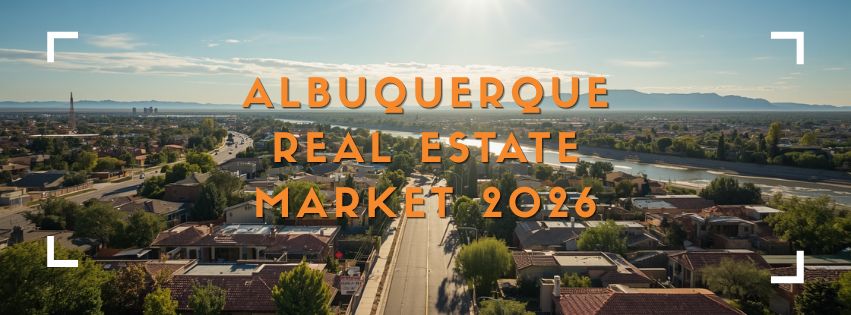
Before projecting forward, the current baseline needs to be clear.
According to Redfin's current Albuquerque housing market data, the median sale price in Albuquerque was $365,000 last month — up 7.4% year over year. The Market Action Index sits at 48.5, well above the 30-point threshold that defines seller's market conditions. Homes are selling in an average of 40 days, with hot listings going pending in approximately 14 days. Approximately 220 new contracts are being accepted per week, against 168 new listings — meaning the market is absorbing more homes than are coming on.
The metro is 13,000 to 28,000 housing units short of meeting demand according to Root Policy Research estimates reported in the Albuquerque Journal's March 2026 coverage. There are roughly 1,500 active listings for a metro area of over 900,000 people. In a true buyer's market, that number would be 5,000 or more.
"The 2021 lens is broken," observed local Albuquerque real estate commentary from RealestateinABQ.com in April 2026. "Back then, homes sold in 48 hours with 20 offers. Today, the average time on market is closer to 35 to 60 days. That isn't a bad market — that is a normal market. It gives you time to actually plan your move."
That normalization is the foundation from which the rest of 2026 plays out. Not frenzied. Not stalled. Functional — with clear advantages available to buyers and sellers who understand how the current environment actually works.
The Seasonal Map — What Each Remaining Window Looks Like
Summer 2026 (June Through August) — The Second-Best Window for Sellers
Summer is historically the second-strongest selling season in Albuquerque after spring. Families who missed the spring window are still actively shopping — driven by the desire to close and move before the new school year begins in August. Relocation buyers who made their visit decisions in spring are now executing purchase contracts. Out-of-state buyers who have been researching for months are arriving for their final property tours.
For sellers, June and July represent the last strong opportunity to capture peak seasonal demand before the market's natural late-summer slowdown. The practical implication: sellers who are prepared and have been waiting for the "right time" should not wait past early July. The buyers who will close in August need to be under contract by late June to have their financing and inspection timelines work.
For buyers, summer brings the largest active inventory of the year — the cumulative result of spring launches plus new summer listings — giving the widest selection window before fall's natural inventory contraction. Buyers who are still on the sidelines in June should take that seriously. Waiting until September or October to begin a serious search means entering a tighter, less varied inventory pool.
The specific risk in summer: Albuquerque's heat. Properties that do not have functional cooling — whether swamp cooler or refrigerated air — will face this objection in every July and August showing. Sellers with cooling system issues should address them before summer listings launch, not leave them for the inspection period to surface.
Early Fall 2026 (September Through October) — Balloon Fiesta Effect and Sustained Activity
September and October in Albuquerque carry a market dynamic unlike any other comparable city in the country — the Balloon Fiesta effect. The ExxonMobil Albuquerque International Balloon Fiesta runs October 3 through 11 in 2026, drawing over 900,000 visitors to the city and generating a sustained wave of "I want to live here" responses among the buyers who attend for the first time.
This is not anecdotal. Local Albuquerque agents who track buyer origin data consistently note a spike in out-of-state buyer inquiries in October and November — a direct result of Balloon Fiesta visitors returning home, researching the Albuquerque housing market, and making contact with local agents. The pipeline effect from the October event is real and measurable, and it sustains market activity through November in ways that most cities do not experience.
For sellers, an October listing timed to coincide with the Fiesta-driven inquiry surge can outperform a September listing that misses it. For buyers from out of state, visiting during Fiesta week gives you the dual benefit of experiencing the city's most compelling seasonal event while conducting your neighborhood research — an efficient use of a trip to Albuquerque that buyers from other markets cannot replicate.
September also brings back-to-school stabilization, where families who purchased in spring and summer have settled into their neighborhoods and the market transitions from the summer family-driven rush to a more professional, relocation-driven buyer pool. This shift in buyer composition changes offer dynamics — the professional or remote-work buyer who arrives in September tends to move more deliberately but also more decisively than the summer family buyer who was racing the school calendar.
Late Fall 2026 (November and December) — Serious Buyers, Motivated Sellers
The conventional wisdom about fall and winter real estate — that it is a slow market not worth engaging with seriously — is less true in Albuquerque than in colder markets, and less true in any market than the conventional wisdom suggests.
What is true: buyer volume drops in November and December. There are fewer showings per listing. The casual, open-house-browsing buyer largely disappears. What is also true: the buyers who remain active in late fall are serious. They have real motivation — a job transition, a lease ending, a family situation that requires a move before year-end. They are not browsing. They are buying.
For sellers who need to transact before year-end — for tax reasons, for estate purposes, for a job relocation with a January start date — a well-priced November listing competing against a reduced buyer pool but facing reduced competition from other listings can transact effectively. The sellers who struggle in late fall are the ones who are not genuinely motivated and are competing against better-positioned spring and summer inventory that is still on the market at reduced prices. Motivated sellers with correctly priced homes in good condition can close in November and December.
For buyers, late fall offers the best negotiating conditions of the year. Sellers who are still on the market in November have been through the peak seasons. They know their listing has not performed as expected. They are more open to concessions, price adjustments, and flexible closing timelines than at any other point in the listing cycle. The buyer who identified a target property in September and is patient enough to return in November often gets better terms than they would have at any earlier point.
The Two Rate Scenarios That Will Define the Rest of 2026
Every forecast for the Albuquerque market through the end of 2026 comes with the same qualifier: mortgage rates are the steering wheel. More than any other single variable, where rates go in the next six months will determine whether the second half of 2026 feels like a continuation of steady normalization or a renewed acceleration.
Scenario A — Rates Stay in the 6.5% to 7.5% Range
This is the base-case scenario — the one most local Albuquerque analysts have been forecasting since early 2026. Under this scenario, buyer affordability remains constrained for first-time buyers and for buyers stretching their budget. Demand stays present but measured. Days on market remain in the 40 to 60-day range for most listings. Price appreciation continues at 1% to 2% annually for the remainder of the year. Seller concessions — rate buydowns, closing cost credits, repair credits — remain standard features of most transactions.
The market under this scenario functions. Correctly priced homes sell. Buyers who are financially ready find homes. Investors who understand the rental math in Albuquerque continue to transact. It is not exciting. It is stable, sustainable, and productive for buyers and sellers who engage with realistic expectations.
Scenario B — Rates Drop to the 5% to 6% Range
If the Federal Reserve's policy trajectory continues and rates ease meaningfully in the second half of 2026 — which is within the range of current forecasts — the Albuquerque market response will be rapid and significant.
"Rates ease and confidence returns. More buyers show up, and sellers — since most buyers are also sellers — competition increases on the best listings. Sales (transactions) rise faster than prices," forecast local analyst Tego Venturi in his February 2026 Albuquerque market outlook for the year.
In a market that is already undersupplied by 13,000 to 28,000 units, a surge of newly active buyers entering simultaneously — as rate relief unlocks affordability for buyers who have been waiting — creates a fast-moving demand event. Inventory, already thin at roughly 1,500 active listings, faces that demand surge without the supply to absorb it cleanly. The result: faster absorption, multiple-offer situations returning on correctly priced listings in strong neighborhoods, and price appreciation accelerating toward the 4% to 5% annual range.
Buyers who are waiting for rates to drop before purchasing need to internalize this scenario carefully. Rate drops are a price-positive event in a supply-constrained market. The buyers who wait for the rate relief and then try to purchase in the resulting demand surge will face more competition and higher prices than they face today. The buyers who purchased at current rates and refinanced when rates fell will have gotten the home they wanted without the competition.
What Both Scenarios Have in Common
Both scenarios produce continued appreciation — modest in Scenario A, more pronounced in Scenario B. Neither scenario produces price declines. The structural supply deficit that is the dominant feature of the Albuquerque housing market provides downside protection that exists independently of rate movements.
In both scenarios, the performance differential between well-positioned and poorly-positioned listings will persist. "Either way, 2026 is likely to stay negotiable, and that matters more than people realize," noted Tego Venturi. Negotiable means both buyers and sellers have real leverage — and using it correctly is the skill that separates good outcomes from frustrating ones.
What to Expect by Property Type and Price Range
Entry-Level Homes Under $300,000 — Persistently Tight Through Year-End
The entry-level market is the least sensitive to rate changes and the most persistently undersupplied segment in the Albuquerque metro. Investors, first-time buyers, and out-of-state purchasers entering at the bottom of the market will continue to face competition for the most limited inventory pool in the city. No meaningful new supply is entering this segment — builders cannot produce homes at these price points at a profit in the current construction cost environment. Appreciation here will run at or above the citywide average through year-end.
Mid-Range $300,000 to $500,000 — Active, Selective, Rewarding the Prepared
This is the segment where the most transactions will happen in the second half of 2026 — and where both buyers and sellers will need the most strategic clarity. Buyer demand in this range is sustained by the family and professional buyer pool that drives Albuquerque's Northeast Heights, Ventana Ranch, and similar corridors. The market here is active but not automatic. Correctly priced, well-presented homes generate activity quickly. Homes that are overpriced by 5% or more are contributing to the 38% price reduction rate.
For sellers in this range, the second half of 2026 offers genuine opportunity — summer and early fall remain active — but the window is not indefinitely open. Sellers who have been preparing since spring should list by early July at the latest to capture the summer buyer pool before the seasonal slowdown arrives in September.
Upper Range $500,000 to $750,000 — More Balanced, More Time Required
This range will continue to require patience and strategic pricing through year-end. Buyers in this segment are comparing carefully and are not subject to the competitive pressure that drives faster decision-making at lower price points. Sellers who enter this range with realistic pricing and excellent presentation will transact — but should plan for 60 to 90 days from launch to contract rather than the 14 to 30 days that mid-range sellers might expect.
The rate scenario matters more at this price point than at entry-level. A meaningful rate decrease would expand the qualified buyer pool in the $500,000 to $750,000 range more significantly than at lower price points — where buyers are often already constrained by purchase price more than rate.
Luxury Over $750,000 — A Long Game With Specific Opportunities
The luxury market in Albuquerque will continue to function as a patient market through year-end. Days on market for luxury properties routinely run 90 to 180 days. Price reductions are common. The buyer pool is thin but genuinely present — particularly for the out-of-state buyer who is selling a coastal property and relocating with significant equity.
"For anyone thinking about listing a luxury home in 2026, the data is clear: expect longer days on market, be ready to adjust if the market is giving you feedback," noted Tracy Venturi in the WelcomeHomeABQ January 2026 forecast. The luxury sellers who transact successfully in the second half of 2026 will be the ones who entered with realistic price expectations, exceptional presentation, and the patience to find the right buyer rather than the first buyer.
New Construction — The Force Reshaping Resale Competition Through Year-End
No picture of the Albuquerque market for the rest of 2026 is complete without addressing new construction — because builders are actively competing with resale sellers at multiple price points and winning that competition on specific dimensions that resale cannot easily match.
Abrazo Homes is increasing production in 2026 after building 210 homes in 2025. Other builders are active across northwest Albuquerque and Rio Rancho. The pipeline is steady — not a flood, but consistent enough to provide buyers with a new-construction alternative at price points from the mid-$300,000s through the $500,000s.
What builders offer that resale sellers cannot: rate buydowns that reduce the buyer's monthly payment by $200 to $400 per month, new-home warranties that eliminate the inspection anxiety that accompanies resale purchases, modern floor plans and energy-efficient systems that are genuinely appealing to buyers who have toured older resale stock, and flexible move-in timelines that accommodate buyers who need to coordinate with a lease expiration or a school year.
"New construction will quietly shape the resale market. Steady, not overbuilt, new-home activity means builders can offer incentives like rate buydowns, so resale sellers must compete on realistic pricing, strong condition, and standout presentation from day one," forecasted Tego Venturi.
Resale sellers in the mid-range who want to compete effectively with new construction through the second half of 2026 need to understand this competitive landscape and respond to it — not with a kitchen renovation that costs $45,000 and returns less than that, but with accurate pricing, addressed deferred maintenance, and professional presentation that makes the case for why the resale home is worth choosing over the new build down the street.
The Affordability Theme That Will Define Q3 and Q4
"If I had to pick one theme for 2026, it's affordability," noted Tego Venturi in his February 2026 forecast. "Not just housing affordability — everything affordability. Housing, insurance, groceries, cars, interest rates, wages. It's the filter people will use for almost every big financial decision."
That observation is more relevant in the second half of 2026 than it was in the first half. As the year progresses and buyers recalibrate their purchasing timelines, the total monthly payment — not just the purchase price — becomes the dominant filter in the buyer's decision calculus. Insurance costs in New Mexico have been rising. Property taxes on reassessed post-sale values are a real budget consideration. HOA fees in newer communities add to the monthly obligation.
Sellers who understand this shift structure their offerings accordingly. A seller who contributes $10,000 toward a rate buydown at closing is reducing a buyer's monthly payment by $75 to $100 per month for the life of the loan — a total value that far exceeds the $10,000 face amount and is often more compelling to a buyer than a straight $10,000 price reduction. The sellers who grasp this financing dynamic and deploy it strategically in the second half of 2026 will outperform the sellers who negotiate purely on purchase price.
For buyers, the affordability lens means understanding the total cost of homeownership at any given purchase price — not just the payment, but insurance, taxes, HOA, and maintenance reserves — and making purchasing decisions from a complete financial picture rather than from a headline price comparison.
The Specific Playbook — What Buyers and Sellers Should Do Right Now
For Buyers: The Second Half of 2026 Action Plan
- Get fully pre-approved now — not pre-qualified. Before the summer buyer pool intensifies and before any rate movement creates a surge of newly active buyers, have your financing buttoned up so you can move quickly when the right property appears.
- Understand the concession landscape — 37% of 2025 Q4 Albuquerque transactions included seller concessions. Ask for them specifically — rate buydowns and closing cost credits are both in play, particularly on listings with more than three weeks of market time.
- Do not wait for rate drops — Rate drops are a price-positive event in this market. Buying before rates drop and refinancing afterward is almost always a better financial outcome than waiting for the rate relief and then competing in the resulting demand surge.
- Target the 38% — The active listings that have already taken a price reduction represent sellers who have absorbed market feedback and are now priced more realistically. These listings often offer the best combination of value and negotiating room in the current market.
- Move decisively on first-week listings in strong neighborhoods — Northeast Heights, Ventana Ranch, and similar high-demand corridors still produce competition for well-priced listings. Have your pre-approval, your agent, and your offer strategy ready before you need them.
For Sellers: The Second Half of 2026 Action Plan
- List before mid-July to capture the summer buyer pool — Buyers who need to close before the school year must be under contract by late June or early July. Miss that window and your listing enters August against reduced buyer motivation.
- Price from the last 90 days of comparables only — Not from what your neighbor sold for in Q2 2024. Not from the Zestimate. From what homes like yours actually closed for in your neighborhood in the last 90 days. That number is your anchor.
- Consider a rate buydown as part of your positioning — Offering a seller-funded rate buydown as part of your marketing strategy — advertised proactively rather than offered only in negotiation — differentiates your listing and speaks directly to the affordability filter every buyer is running.
- Get a pre-listing inspection done now — The sellers who navigate inspection negotiations most effectively are the ones who already know what is in the report before a buyer's inspector surfaces it. A pre-listing inspection gives you time to address, price around, or disclose findings on your timeline rather than the buyer's.
- Plan for the Balloon Fiesta inquiry surge in October — If your listing will be active in October, make sure your marketing is calibrated to reach out-of-state buyers who are researching Albuquerque in the wake of the Fiesta. This is a genuinely Albuquerque-specific demand event that attentive sellers can target.
For a deeper look at the preparation steps that separate a 14-day sale from a 104-day listing in the current Albuquerque environment, our guide to the biggest mistakes Albuquerque home sellers make covers every factor in detail. And if you are still weighing the timing decision, our post on whether to sell your home now or wait gives you the complete framework for that specific question.
The Bottom Line — A Market That Rewards Engagement Over Waiting
The rest of 2026 in Albuquerque looks like a market where the buyers and sellers who engage thoughtfully and execute correctly will be very glad they did — and the buyers and sellers who wait for perfect conditions will find that perfect conditions are not arriving.
The supply deficit is real and structural. The demand from out-of-state buyers, healthcare professionals, military personnel, and government employees is sustained and not rate-dependent in the way general consumer demand is. The seasonal windows are predictable. The neighborhoods that perform best are identifiable. The concession tools that make transactions work are available and being used.
"Mortgage rates are still the steering wheel. Rates don't have to be low for the market to work — they need to be predictable, accepted, and built into pricing and deal structures," forecasted Tego Venturi. That framing is the right one for the rest of 2026. The market works. It just requires a different approach than it did in 2021, and a more honest set of expectations than the national media headlines deliver.
Albuquerque is not a headline market. It is a real-life market. And for buyers and sellers who engage with the real-life version — with current data, neighborhood-level knowledge, and a clear strategy — the second half of 2026 has genuine opportunity in it.
Ready to Make Your Move in the Second Half of 2026?
Jenn & Vinay from The Rodgers Neighborhood Real Estate Group are tracking every micro-market in Albuquerque every week through the end of 2026. Whether you are a buyer building your search strategy, a seller deciding when to list, or a homeowner trying to understand what the rest of the year means for your equity position, the conversation starts with a call.
We give you the specific data for your situation — not a national forecast dressed in local language, but the actual numbers for your neighborhood, your price range, and your goals.
📞 (505) 417-2733 | rodgersvj@gmail.com
Categories
- All Blogs (322)
- 2026 & Beyond for Real Estate (218)
- Doctors and Nurses looking for homes in NM (4)
- Guide to buying a home in NM (146)
- Health Care Heros (7)
- Home Upgrades (38)
- Jenn & Vinay your Local Real Estate Experts! (107)
- Moving to Albuquerque (127)
- Neighborhoods in Albuquerque NM (87)
- Rent or Own (2)
- Sellers Questions for Selling homes (2)
Recent Posts
GET MORE INFORMATION