
What First-Time Buyers Get Wrong About Albuquerque Real Estate
Every real estate market has things that are true about it that are not true about markets in general. Albuquerque has more of them than most cities — a combination of its specific legal environment (non-disclosure state), its specific construction characteristics (flat roofs, evaporative cooling, adobe and stucco), its specific market dynamics (14-day hot homes coexisting with 57-day average), and its specific neighborhood variance ($220,000 medians in the southwest to $849,000 median asking prices in the northeast).
First-time buyers who approach Albuquerque with either general first-time-buyer knowledge or with knowledge of other specific markets frequently carry assumptions that do not apply here. Some of those assumptions are harmless — they just produce confusion when the market behaves differently than expected. Others are costly — they produce offers that are not taken seriously, inspections that miss critical items, and purchase prices that do not reflect what the market will actually support.
This guide covers 10 things first-time buyers consistently get wrong about Albuquerque real estate — not to shame anyone for not knowing, but to specifically address the misconceptions that are most consequential so that the buyers who read this make fewer of the preventable mistakes.

Misconception 1 — The Zestimate Is Accurate Here
The most consequential Albuquerque-specific misconception: automated valuation models — Zillow's Zestimate, Redfin Estimate, and similar tools — are working from incomplete data in New Mexico and are specifically less reliable here than in most American markets.
The reason: New Mexico is a non-disclosure state. When a home sells in New Mexico, the sale price is not recorded in publicly accessible property records. In most US states — disclosure states — the sale price becomes part of the public record when the deed transfers, and Zillow, Redfin, and others collect that data to populate their automated valuations.
In New Mexico, that data is not in the public record. Automated valuation models attempting to estimate values in Albuquerque are working from active listing prices, tax assessment data, and whatever transaction data they can access from other sources — not from the complete closed-sale transaction record that would make their estimates accurate.
The practical consequence: a Zestimate that suggests a home is worth $395,000 may be meaningfully wrong in either direction — overestimating or underestimating — because the model is missing a significant portion of the comparable sales data that would calibrate it accurately. The only pricing source that has access to complete, accurate Albuquerque sold price data is the Multiple Listing Service, which only licensed agents and brokers can access.
The correct behavior: treat the Zestimate as a rough orientation point — useful for understanding that you are looking at a $300K property vs. a $600K property — and rely on a licensed agent's Comparative Market Analysis (CMA) from MLS data as the authoritative pricing reference.
Misconception 2 — The Market Is Either Hot or Slow
First-time buyers often form a single summary judgment about the Albuquerque market from the data they read: either it's hot (sellers market, move fast) or it's slow (buyer's market, take your time). The 2026 Albuquerque market is both simultaneously — and missing this creates either unnecessary urgency or unnecessary delay depending on which half of the data the buyer absorbed.
The actual 2026 data: the Market Action Index is 44.5 — above the seller's market threshold of 30. Hot homes — correctly priced, well-prepared — are going under contract in approximately 14 days. The overall market average days on market is 57 days. These two numbers describe the same market because the market is selective, not uniform.
The implication for buyers: a well-priced, well-prepared home in a desirable Albuquerque neighborhood still receives multiple offers and goes under contract in the first weekend. The buyer who reads "57-day average" and concludes they can take their time on a correctly priced $385,000 Northeast Heights home with mountain views is the buyer who loses that home to a buyer who moved in the first week.
The correct behavior: understand which tier of the market the specific home you are pursuing is in. A new listing that is correctly priced and well-presented should be evaluated with first-weekend urgency. A listing that has been sitting for 45 days with a price reduction is a different situation that may allow more deliberation.
Misconception 3 — Pre-Qualification and Pre-Approval Are the Same Thing
This misconception costs buyers the specific homes they want most. In the current Albuquerque market, sellers — particularly in the competitive sub-markets — evaluate offers partly on the quality of the buyer's financing documentation. A pre-qualification and a pre-approval are not equivalent, and sellers know the difference.
Pre-qualification: a lender's estimate of what you can borrow based on information you provide — your stated income, your estimated debts, and a soft credit check. It is an educated guess. It does not involve the lender verifying your income with tax documents, confirming your assets with bank statements, or performing the full underwriting process. It can be obtained in 15 minutes and proves almost nothing about your actual ability to close.
Pre-approval: the lender has verified your income with W-2s, tax returns, or bank statements (for self-employed buyers), confirmed your assets with bank and investment account statements, run a full credit check, and issued a conditional commitment to lend up to a specified amount. A pre-approval shows a seller that an actual underwriter has evaluated the buyer's financial picture and found it creditworthy.
In the 2026 Albuquerque market, where sellers are evaluating competing offers, a pre-approval from a recognizable lender substantially strengthens an offer relative to a pre-qualification from any lender. For the most competitive listings, a fully underwritten pre-approval — where the lender has already completed the full underwriting process and the only remaining condition is the appraisal — is the strongest possible financing documentation.
The correct behavior: get a genuine pre-approval — verified income, verified assets, full credit check — before touring homes. Do not tour homes with only a pre-qualification and expect to be taken seriously by sellers in competitive situations.
Misconception 4 — All Albuquerque Neighborhoods Are Basically the Same
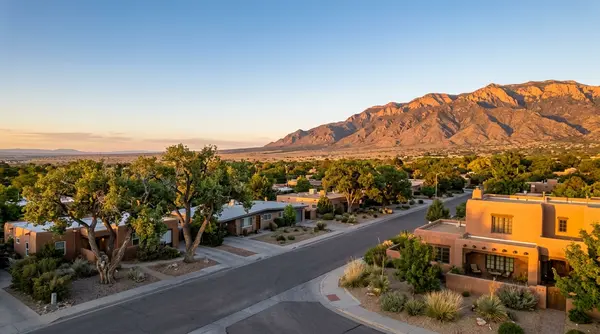
Albuquerque's neighborhood price variance is among the most dramatic of any similarly sized American city — and the first-time buyer who treats it as a generally affordable city without understanding that variance will make search decisions that do not serve their priorities.
The data: the 87121 ZIP code (Southwest Mesa) has a median sold price in the $220,000 to $260,000 range. The 87122 ZIP code (high-end Northeast Heights, foothills) has median listing prices approaching $849,000. These are not different cities — they are neighborhoods within the same municipality, separated by roughly 15 miles. The price-per-square-foot, school zone quality, outdoor access, crime data, and community character are dramatically different across these ZIP codes.
The specific Albuquerque neighborhood variables that first-time buyers need to research:
- School zone assignment: La Cueva High School zone commands a documented premium and is the specific school zone most consistently cited by family buyers as a purchase driver. Two homes with identical specs in adjacent neighborhoods — one in the La Cueva zone and one outside it — will show a significant price difference.
- Trail system adjacency: Proximity to the Sandia Mountain foothills trail system — accessible from the street without a drive — is a value premium that is specific to the Northeast Heights neighborhoods adjacent to the Cibola National Forest boundary.
- Crime data by neighborhood: The CrimeGrade score for a specific address in Albuquerque varies dramatically between neighborhoods. The citywide crime statistics that give Albuquerque a challenging national reputation are heavily concentrated in specific areas; many Albuquerque neighborhoods have crime rates well below the national average. Buyers should research specific neighborhood crime data, not citywide data.
- HOA presence and fees: The Northeast Heights established neighborhoods mostly have no HOA. Master-planned Westside communities (Ventana Ranch, Mariposa) have HOAs at $35 to $90/month. Some High Desert properties have HOAs at $80 to $200/month. The monthly housing cost calculation changes materially between HOA and non-HOA neighborhoods.
Misconception 5 — I Need 20% Down to Buy a Home in Albuquerque
This misconception keeps buyers renting for years they did not need to rent. The 20% down requirement applies to conventional loans that want to avoid private mortgage insurance — but it is one option among many, and for first-time buyers in New Mexico specifically, it is almost never the right starting point.
The actual down payment options in Albuquerque:
- VA loan: Zero down payment. No PMI. Best rates available. For veterans and military — the Kirtland Air Force Base community specifically.
- USDA loan: Zero down payment. Eligible in Corrales, Los Lunas, East Mountain communities, and some Rio Rancho outskirts.
- FHA loan:5% down with 580+ credit score ($12,285 at Albuquerque's $351K median).
- Conventional 97: 3% down with 620+ credit score.
- Housing NM FIRSThome $500 move-in: The specific NM combination program that reduces total buyer cash requirement to $500 for qualifying income-level buyers. This is the most underknown program in the state.
The 20% down path is appropriate for buyers who have the savings and want to eliminate PMI and access the best conventional rates. It is not a requirement for any loan program other than conventional without PMI. The buyer who has $12,000 saved and a 600 credit score is not waiting for $70,200 in savings — they are using FHA or working with Housing NM's programs.
Misconception 6 — The Inspection Is Just a Formality
First-time buyers often approach the home inspection as a procedural step that confirms what they already believe about the home rather than as a substantive investigation of conditions they cannot see on a showing. In Albuquerque specifically, this is a consequential error because Albuquerque's construction characteristics produce a specific inspection item list that buyers from other markets are unprepared for.
The Albuquerque inspection items that produce the most post-offer renegotiation and transaction disruption:
- Flat and foam roofing condition: New Mexico's flat and low-slope roofing systems are the most commonly flagged inspection finding in the Albuquerque market. A buyer who does not specifically direct their inspector's attention to the roof type, age, and condition — and who does not request a separate roof inspection on flat-roof properties — may discover a $10,000 to $25,000 roof issue after they are under contract.
- Evaporative cooler condition: Many Albuquerque homes have evaporative cooling systems that are unfamiliar to buyers from other markets. An unmaintained evaporative cooler with unknown service history may function poorly or fail during Albuquerque's hottest months. Buyers should ask specifically about evaporative cooler age, service history, and whether the home has refrigerated air.
- Stucco condition: Albuquerque's stucco exteriors require specific inspection for cracking and water penetration, particularly at window and door frames. Stucco damage can indicate water intrusion that affects interior walls and framing. A buyer who does not specifically look at the stucco condition on a pre-offer showing is missing the exterior condition signal that experienced buyers examine first.
- Unpermitted work: Albuquerque has significant housing stock where previous owners made additions, garage conversions, and room modifications without permits. An unpermitted addition discovered during inspection creates lender, insurer, and compliance complications that can disrupt or terminate a transaction. Ask directly: has any addition, conversion, or modification been made to the home, and was it permitted?
The correct behavior: the inspection is your most important due diligence step. Hire an inspector who knows Albuquerque's specific construction characteristics. Attend the inspection. Ask questions during the inspection. Read the full report before deciding whether to proceed.
Misconception 7 — You Can't Negotiate With Builders in New Mexico
Albuquerque has significant active new construction from national builders — D.R. Horton, Pulte, Lennar, and others — across the Westside, Rio Rancho, and Mesa del Sol corridors. The misconception that new construction list prices are non-negotiable prevents first-time buyers from capturing thousands of dollars in available builder incentives. "The idea that 'you can't negotiate with builders' is one of the most expensive misunderstandings in real estate. You absolutely can. The list price is usually firm because builders protect comparable sales in the community, but there is real flexibility elsewhere," confirmed the Faith Moving Company 2026 new construction first-time buyer guide for Albuquerque.
The builder incentives that are genuinely available:
- Closing cost credits: Often the most significant concession. Builders — especially at their preferred lenders — may offer $5,000 to $20,000 in closing cost credits to buyers who use the builder's financing. Compare the builder's lender rate against the market to ensure the rate concession is not eliminating the credit benefit.
- Rate buydowns: Builders have been offering 2-1 buydowns (first year rate 2% lower, second year 1% lower) that reduce the buyer's first two years of monthly payments. These can be worth $2,000 to $8,000 in reduced payments.
- Design center credits: Fixed dollar amounts toward flooring, cabinet, appliance, and fixture upgrades. These credits are most valuable for buyers who want upgrades above the standard spec.
- Lot premium reductions: Lots adjacent to retention ponds, busy streets, or power lines carry premiums that builders will often reduce for motivated buyers.
- Appliance packages: Refrigerators, washers, and dryers are commonly added at no cost late in a builder's fiscal quarter when they need to move inventory.
The timing advantage: negotiate at the end of a builder's fiscal quarter (March, June, September, December) when the builder has specific unit-closing targets to meet. The leverage is highest when the builder needs closings to hit quarterly numbers.
Misconception 8 — Leaving Room to Negotiate Is Always the Right Offer Strategy
The offer strategy of starting low to leave room for negotiation is rational in a buyer's market where every listing is sitting and sellers have no competing offers. In the 2026 Albuquerque market — where correctly priced, well-prepared homes are still going under contract in 14 days with multiple offers — this strategy applied to the wrong listing costs buyers the home they wanted.
The Albuquerque market is simultaneously: hot for correctly priced homes in desirable locations, and slow for overpriced or unprepared homes that have been sitting. The buyer who low-balls a new listing in the La Cueva zone that went active Thursday evening is the buyer whose offer gets passed over by the buyer who came in at list price with strong terms on Saturday morning.
The correct strategy: identify which tier of the market the specific listing is in. New listing, correctly priced, desirable location — come in strong, at or above list price, with minimal contingencies and a strong pre-approval. Listing with 45 days on market and a price reduction — there is room for negotiation and the seller is motivated; a below-list offer with reasonable contingencies is appropriate.
This distinction requires a CMA from the buyer's agent for each property — not a general market rule applied uniformly across all listings. Your agent should tell you specifically, for this listing: is it priced to sell immediately or is there room to negotiate?
Misconception 9 — Waiting for Rates to Drop Will Save Money
The rate-waiting strategy is based on a real insight — lower rates mean lower monthly payments — applied to a future that is uncertain. The assumption is that rates will drop meaningfully enough and soon enough to justify the cost of continued renting while waiting.
The Albuquerque-specific numbers that complicate this strategy: Albuquerque home prices have appreciated approximately 3.3% year-over-year through April 2026. The $351,000 median home today costs approximately $362,000 a year from now at this appreciation rate and $373,000 two years from now.
The calculation: if rates drop from 6.30% to 5.50% in two years while prices appreciate 3.3% per year, the monthly payment comparison looks like this:
- Today: $351,000 at 6.30%, 5% down → principal and interest approximately $2,060/month
- Two years from now: $373,000 at 5.50%, 5% down → principal and interest approximately $2,134/month
The monthly payment is higher two years from now despite the lower rate — because the price appreciation partially offset the rate benefit. The buyer who waited also paid rent for two additional years while building zero equity and missing the appreciation accumulation.
The refinance option preserves the rate flexibility for buyers who purchase now: the buyer who buys at 6.30% today can refinance to a lower rate when rates eventually decrease, capturing the rate benefit while also having captured two years of appreciation and equity. The renter cannot refinance.
Misconception 10 — The Mortgage Payment Is the Full Monthly Cost
Many first-time buyers calculate their affordability by running a mortgage calculator, seeing the principal and interest output, and concluding that this is what homeownership costs per month. The actual monthly cost of homeownership includes several additional items that the mortgage calculator does not produce.
The complete Albuquerque monthly housing cost for a median-priced home:
- Principal and interest (6.30%, 5% down, $351K): approximately $2,060/month
- Property taxes (Bernalillo County, ~0.79%): approximately $230/month
- Homeowners insurance: approximately $120/month
- Private mortgage insurance (5% down, conventional): approximately $140/month
- HOA fees (if applicable): $0 to $200/month depending on community
- Maintenance reserve (1-2% of home value annually): approximately $293 to $585/month
- Total honest monthly housing cost: approximately $2,843 to $3,335/month — versus the $2,060 that the mortgage calculator shows
The mortgage calculator number is not the housing cost. It is the mortgage payment. The housing cost — what homeownership actually requires per month — is $783 to $1,275 higher than the calculator suggests for the median Albuquerque home. Buyers who budget from the calculator number and not the full cost are setting up a first-year financial surprise.
The specific Albuquerque maintenance consideration: flat and foam roofing systems require periodic service, evaporative coolers require annual maintenance, and the freeze-thaw cycle produces stucco cracking that requires periodic repair. The 1% to 2% annual maintenance reserve is not excessive for Albuquerque homes — it is realistic for a climate and construction style that produces predictable maintenance requirements.
The Common Thread — Know Albuquerque's Specifics, Not Just Real Estate Generally
The 10 misconceptions in this guide share a common thread: they are all applications of general knowledge to a specific market that has specific characteristics that general knowledge does not capture. The non-disclosure state changes how pricing data works. The flat roof changes what the inspection should examine. The neighborhood price variance changes how market timing applies to specific listings. The builder incentive structure changes how new construction negotiations work.
The first-time buyer who reads general real estate advice and applies it uniformly to Albuquerque will get most of it approximately right — and specifically wrong in the areas where Albuquerque differs from the general case. The buyer who understands the Albuquerque-specific differences is the one who prices accurately, negotiates appropriately, inspects thoroughly, and chooses the loan program that actually fits their situation.
For buyers who want the complete pricing foundation — why the Zestimate fails in New Mexico and how to build an accurate CMA — our post on how to price your Albuquerque home correctly the first time covers the non-disclosure state context in detail. And for the complete loan options picture — which program actually fits your credit score, income, and down payment — our guide to the best loan options for first-time buyers in New Mexico covers every available path.
The Bottom Line — Albuquerque Rewards the Informed Buyer
Every misconception on this list is correctable. The non-disclosure state problem is solved by working with an agent who has MLS access and runs a proper CMA. The market timing misconception is solved by understanding which tier each specific listing is in. The pre-qualification mistake is solved by getting a genuine pre-approval before touring homes. The inspection shortcut is solved by hiring a thorough inspector and attending the inspection.
None of these corrections require exceptional preparation or unusual effort. They require specific knowledge about how this specific market works — knowledge that the buyer who reads this guide, who works with a knowledgeable Albuquerque buyer's agent, and who approaches the process with genuine curiosity rather than assumed familiarity will have before the first offer is written.
Albuquerque rewards the informed buyer. The same market that trips up buyers who arrive with incorrect assumptions provides genuinely excellent opportunities to buyers who understand what they are looking at — 14-day sales at good prices, house-hacking through multi-unit FHA financing, builder incentives that reduce effective purchase costs, and state assistance programs that make the down payment manageable for qualifying buyers.
The information is available. This guide is part of it. The next step is the conversation.
Ready to Buy Right in Albuquerque?
Jenn & Vinay from The Rodgers Neighborhood Real Estate Group help first-time buyers navigate Albuquerque's market with the specific local knowledge that prevents the misconceptions in this guide from becoming costly mistakes — from the MLS-based CMA that replaces the unreliable Zestimate, to the neighborhood-specific guidance that makes the price variance work for you rather than against you, to the loan program knowledge that opens doors buyers did not know were available. The conversation starts with a call.
Jenn & Vinay Rodgers are Albuquerque's trusted real estate professionals with The Rodgers Neighborhood Real Estate Group, brokered by Real Broker, LLC, serving buyers and sellers across Albuquerque, Rio Rancho, Corrales, Los Lunas, Tijeras, Cedar Crest, Sandia Park, the East Mountains, Bernalillo County, Sandoval County, and surrounding New Mexico communities.
The Rodgers Neighborhood Real Estate Group
Jenn & Vinay Rodgers
Real Broker, LLC
Albuquerque, NM
📞 505-417-2733
🏠 Browse Albuquerque homes for first-time buyersCategories
- All Blogs (340)
- 2026 & Beyond for Real Estate (235)
- Doctors and Nurses looking for homes in NM (4)
- Guide to buying a home in NM (152)
- Health Care Heros (7)
- Home Upgrades (40)
- Jenn & Vinay your Local Real Estate Experts! (116)
- Moving to Albuquerque (132)
- Neighborhoods in Albuquerque NM (91)
- Rent or Own (2)
- Sellers Questions for Selling homes (2)
Recent Posts



GET MORE INFORMATION