
Best Albuquerque Areas for Walkability, Transit, and Convenience — The Complete 2026 Guide
Albuquerque is fundamentally a car-dependent metropolitan area — a product of its post-WWII development pattern and the freeway infrastructure that defined its growth from the 1950s through the 1980s. That is the honest starting point. But within the overall car-dependent city, specific corridors and neighborhoods have produced genuine walkability, meaningful transit access, and bike infrastructure that specifically supports car-free or car-light living for residents who choose to live in the right locations. This guide identifies where those locations are and what they specifically offer.
The Citywide Numbers — Setting the Honest Context
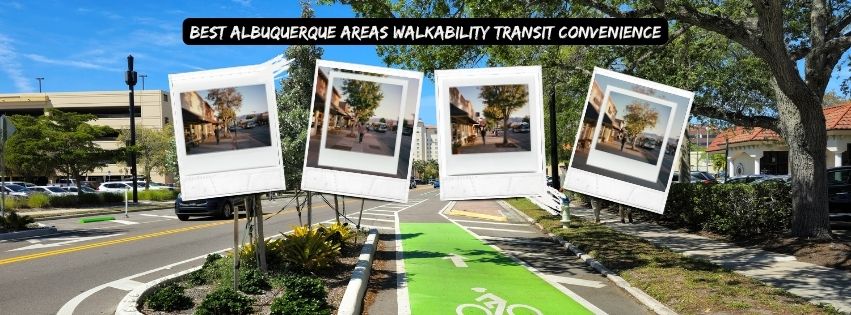
"According to data from WalkScore.com, Albuquerque, New Mexico, ranks as the 28th most walkable large city in the U.S., with a Walk Score of 43. This rating indicates that while certain areas of the city provide walkable amenities, most residents depend on a car for their daily errands. The city's Transit Score of 29 reflects limited public transportation options, while Albuquerque's Bike Score of 61 highlights moderate bike-friendly infrastructure. Neighborhoods like Nob Hill, Huning Highland Historic District, and University Heights stand out for their walkability, offering convenient access to shops, dining, and services," confirmed GAAR's Albuquerque walkability analysis for REALTORS® (January 2025).
The three scores in context:
- Walk Score 43 (citywide average): "Car-Dependent" on Walk Score's scale. Most daily errands require a car for the average Albuquerque resident. The neighborhoods in this guide significantly outperform this citywide average.
- Transit Score 29 (citywide average): "Minimal Transit" — a few nearby public transportation options but not comprehensive. The Central Avenue ART corridor significantly outperforms this average for residents who live along or near it.
- Bike Score 61 (citywide average): "Bikeable" — some infrastructure exists and many trips can be made by bike. Albuquerque's 400 miles of bike paths and the Paseo del Bosque Trail specifically elevate this score above what the street network alone would produce.
The practical interpretation: the buyer who specifically values walkability should look at the top 5-10% of Albuquerque neighborhoods by Walk Score — the ones in the 75-90 range that genuinely permit car-free or car-light living. The majority of Albuquerque neighborhoods will require a car for most errands regardless of how desirable they are in other respects.
Tier 1 — The Genuinely Walkable Neighborhoods (Walk Score 75+)
Nob Hill — Walk Score 85, #1 in Albuquerque
"Nob Hill is the most walkable neighborhood in Albuquerque with a Walk Score of 85. Most errands can be accomplished on foot. There are about 63 restaurants, bars and coffee shops in Nob Hill. People in Nob Hill can walk to an average of 5 restaurants, bars and coffee shops in 5 minutes. Nob Hill has some public transportation and is a biker's paradise," confirmed Walk Score's Nob Hill Albuquerque data.
Nob Hill is the definitive walkable Albuquerque neighborhood — the only neighborhood in the city where the combination of restaurant density, independent retail, coffee shops, grocery access, and the ART bus makes genuinely car-free daily living feasible for most residents. The Central Avenue corridor from approximately Girard Boulevard to Carlisle Boulevard is the walkable spine: independently-owned restaurants, coffee shops, a bookstore, vintage shops, galleries, and the ART bus stop every few blocks.
- What you can walk to in Nob Hill: Coffee shops (multiple independent roasters within 5-minute walk), grocery store access (Trader Joe's within the corridor), restaurants for every cuisine type and budget, the Flying Star Cafe, galleries and boutiques, the Nob Hill Business Center (NM's first drive-up business center, 1947, now walkable retail), the ART bus to Downtown and University.
- The ART bus connection: The Albuquerque Rapid Transit (ART) bus on Central Avenue connects Nob Hill to UNM (5 minutes), Downtown (10 minutes), and the Westside (25 minutes) on a frequency that makes it usable for regular commuting. For a Nob Hill resident who works at UNM or Downtown, the ART bus is a genuine car-free commute option.
- Bike Score in Nob Hill: "Biker's paradise" per Walk Score — meaning daily errands can be accomplished on a bike. The Nob Hill cycling infrastructure includes the Central Avenue protected bike lane (partial), street-level cycling on the numbered grid streets, and proximity to the Paseo del Bosque Trail access at Rio Grande Boulevard.
- The housing reality: Nob Hill's housing is primarily older rental apartments, converted homes, and small multifamily buildings. Owner-occupied single-family homes in Nob Hill proper are limited; many buyers who want the Nob Hill walkable lifestyle purchase in the adjacent neighborhoods (Parkland Hills, Summit Park, Highland Business area) and walk or bike to the Nob Hill corridor.
Huning Highland Historic District — Walk Score 85, #2 in Albuquerque
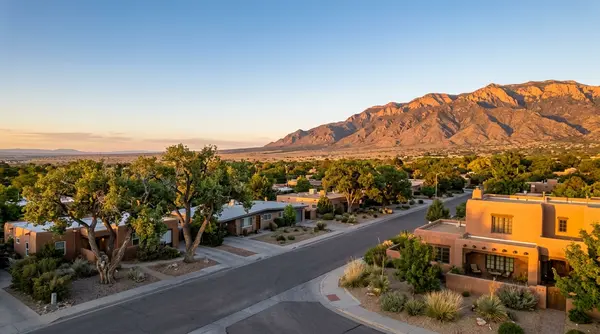
Huning Highland is tied with Nob Hill for the highest Walk Score in Albuquerque at 85 — and it is the neighborhood that visitors to Albuquerque who come for the architecture notice but that many buyers who are not specifically looking for Victorian and craftsman-era historic homes overlook. Huning Highland borders Downtown on the east and south, making it one of the most uniquely positioned neighborhoods in the city for walking to both Downtown services and the Central Avenue corridor.
- Walkability specifics: The combination of Downtown adjacency (the KiMo Theater, Civic Plaza, and Alvarado Transportation Center are walkable), Central Avenue's southern commercial edge within walking range, and the neighborhood's own walkable street grid produces the highest walkability score in Albuquerque shared with Nob Hill.
- The architecture: Victorian and craftsman-era homes — specifically the architectural character of the late 19th and early 20th century development pattern that Albuquerque's railroad era produced. Most of Albuquerque's historic Victorian residential architecture is in Huning Highland. For buyers who specifically want this era's character, Huning Highland is the most concentrated version of it in the city.
- The transit access: The Alvarado Transportation Center (Downtown Albuquerque's transit hub) is a short walk from the southern edge of Huning Highland — providing access to the ABQ Ride bus network with more routes than any other point in the city.
University Heights — Walk Score 84, #3 in Albuquerque
University Heights (the neighborhood immediately north of the University of New Mexico campus, centered around Yale Boulevard and the streets between Central and Lomas) has a Walk Score of 84 — and its walkability is specifically organized around the UNM academic environment and the Central Avenue corridor to its south. The ART bus is the primary transit link.
- Who lives in University Heights: UNM faculty, graduate students, and research staff who benefit from the ability to walk to campus, the medical school, the hospital, and the university's surrounding commercial district. The neighborhood is also increasingly attractive to young professionals who work at Presbyterian Hospital and want a walkable, affordable urban neighborhood.
- Walkability specifics: Multiple grocery options within walking range, UNM campus with its food services and facilities accessible on foot, proximity to the Central Avenue commercial corridor, and the ART bus service connecting northward to Uptown and south and east to Nob Hill and beyond.
- The practical advantage for UNM-affiliated residents: A UNM faculty member or graduate student who lives in University Heights can walk to work, walk to the campus library, walk to lunch, walk to the pharmacy, and take the ART bus to the grocery store. This is car-free living at a level most of the rest of Albuquerque does not approach.
Tier 2 — Moderately Walkable with Strong Transit Access (Walk Score 55-74)
Downtown Albuquerque — 10th Most Walkable, Strong Transit Hub
Downtown Albuquerque's walkability is specifically transit-hub walkability — the city's bus network converges at the Alvarado Transportation Center, making Downtown the most transit-accessible single point in Albuquerque. The Rail Runner Express to Santa Fe departs from the Downtown station. The ART bus runs through the heart of Downtown.
- The Alvarado Transportation Center: The historic Alvarado Transportation Center at 1st Street and Central Avenue is the intersection point of the ABQ Ride bus network — the hub from which nearly every bus route in Albuquerque is accessible. For residents who use transit as a primary mode, living within walking distance of Alvarado is living within reach of the entire city's bus network.
- The Rail Runner to Santa Fe: The New Mexico Rail Runner Express connects Downtown Albuquerque to Downtown Santa Fe with multiple daily trains. For the resident who lives or works in the Albuquerque-Santa Fe corridor, the Rail Runner is the only practical non-car commute option between the two cities.
- Walkable assets: The KiMo Theater, Sawmill Market (a short walk west), Civic Plaza, multiple lunch and dinner restaurants, the Albuquerque Museum and Old Town (slightly longer walk or ART bus), the emerging EDo corridor's restaurants and galleries.
- The loft and condo housing: Downtown's residential inventory is primarily loft condos and converted buildings rather than single-family homes. The Albuquerque buyer who specifically wants walkable urban living at the highest transit access point finds Downtown the clearest match.
EDo (East Downtown) — Emerging Walkable Urban
The EDo corridor east of Downtown — roughly the area bounded by Central Avenue, I-25, Lead, and Coal — has been developing walkable restaurant and retail amenities around the Sawmill Market and the emerging boutique hotel and bar scene. EDo's Walk Score is lower than Nob Hill and Huning Highland but its trajectory is upward as investment continues. For the buyer who wants early access to an emerging walkable neighborhood at below-Nob-Hill prices, EDo is the 2026 opportunity.
Uptown — Walk Score 65, Commercial Convenience Without True Walkability
Uptown's Walk Score of 65 places it at "Somewhat Walkable" — some errands can be accomplished on foot, though not most. The distinction between Uptown's walkability and Nob Hill's is significant: Uptown has commercial density (shopping centers, restaurants, medical facilities) but it is auto-oriented commercial density — the shopping centers are set back from the street behind parking lots, making the physical pedestrian experience between destinations uncomfortable despite the density of the amenities themselves.
- What Uptown offers: Two Park Square commercial offices, multiple medical facilities including Uptown Rehabilitation Center, a dense restaurant cluster, Coronado Center mall access, and the fastest car access to most Northeast Heights employment destinations. Uptown is highly convenient by car; it is auto-oriented commercial.
- Transit in Uptown: The ART bus runs through Uptown on the Central Avenue corridor, providing transit access to the rest of the city. For Uptown residents who work Downtown or at UNM, the ART bus commute is viable — typically 15-25 minutes.
The Transit Network — What ABQ Ride and ART Actually Cover
Albuquerque's public transit system is ABQ Ride — the city's bus network — anchored by the Albuquerque Rapid Transit (ART) Bus Rapid Transit line on Central Avenue. Understanding what the transit system covers is essential for buyers who want transit-oriented living.
ART — Albuquerque Rapid Transit (The Most Useful Route)
- Route: Central Avenue from the Westside through Downtown, University Heights, Nob Hill, and to the eastern end of the corridor. This is the longest and most frequent route in the ABQ Ride network.
- Frequency: More frequent than standard ABQ Ride bus service — arrivals every 10-15 minutes during peak hours (verify current schedule at ridetransit.org).
- Who benefits most: Residents of Nob Hill, University Heights, Huning Highland, Downtown, and Uptown who travel along the Central Avenue corridor. UNM students, hospital employees, and Downtown workers along this corridor can specifically commute by ART.
ABQ Ride — The Full Network
The ABQ Ride bus network covers approximately 24 bus routes across the city, connecting the major residential areas to employment centers and the Alvarado Transportation Center hub. The coverage is specifically better along the north-south (Central, Coors, University) and east-west (Menaul, Montgomery, Lomas) arterials than in the residential subdivision streets of the northeast and westside.
- The honest assessment: ABQ Ride is adequate for commutes along major corridors and for access to the transit-rich neighborhoods, but it does not provide the frequency and coverage that would make car-free living feasible for most Albuquerque residents outside the Central Avenue corridor neighborhoods. Most Albuquerque transit users use ABQ Ride as a supplement to, not a replacement for, car access.
The Rail Runner — Santa Fe Commuters
The New Mexico Rail Runner Express is the regional commuter rail connecting Albuquerque (Downtown station, with additional stations at Isleta, Bernalillo, and other stops) to Downtown Santa Fe with multiple daily trains. For the specific population of Albuquerque residents who work in Santa Fe or vice versa, the Rail Runner is the only practical non-car inter-city transit option. Downtown Albuquerque residences and businesses are within easy walking distance of the Downtown Rail Runner station.
The Bike Infrastructure — Where Cycling Is Actually Useful
The Paseo del Bosque Trail — 16 Miles of Car-Free Commuting
The Paseo del Bosque Trail is a 16-mile paved multi-use trail through the bosque (cottonwood forest) along the Rio Grande — one of the most significant pieces of urban cycling infrastructure in the American Southwest and the most consistently used bike route in Albuquerque. The trail runs north-south through the city without road crossings, making it the safest and most pleasant cycling route available.
- Who uses it daily: North Valley, Los Ranchos, and Corrales residents who bike south to work or school in the city. Nob Hill and University Heights residents who bike west to reach the trail for recreation. The trail is not primarily a recreation amenity — it is used for commuting by hundreds of Albuquerque cyclists who specifically chose their residential location to enable the commute.
- The trailhead access neighborhoods: North Valley (multiple access points), Nob Hill (Rio Grande Boulevard access via biking west on grid streets), University Heights (via campus to the river), Old Town (direct access at Central Avenue bridge).
The Central Avenue Bike Lane
The Central Avenue corridor includes a dedicated bike lane on portions of the route — making the ART corridor specifically the strongest combination of transit and bike infrastructure in the city. The Nob Hill and University Heights resident who cycles the Central Avenue bike lane to UNM or Downtown has the most multi-modal transportation option in Albuquerque.
The 400-Mile Bike Path Network
Albuquerque's 400 miles of bike paths and trails (Visit Albuquerque confirmed) include the paved multi-use trails, the dedicated bike lanes, and the signed bike routes on residential streets. The network is extensive enough to support recreational cycling from most neighborhoods but uneven enough that practical cycling for daily errands is specifically best in the Central Avenue corridor neighborhoods and the North Valley.
Convenience Beyond Walk Score — What Matters for Daily Living
Walk Score measures walkable access to amenities in a standardized way — but the lived experience of neighborhood convenience includes factors that the score does not fully capture:
- Grocery access specifically: Nob Hill has Trader Joe's within the walkable corridor and several other grocery options nearby. University Heights has proximity to grocery stores along the Lomas corridor. Downtown's grocery access is more limited within walking distance. For buyers who prioritize grocery walkability, Nob Hill is the strongest option.
- Medical services access: University Heights and the Presbyterian/UNM Health Sciences campus corridor has the densest walkable medical access in the city — a specific advantage for UNM faculty, medical staff, and the healthcare-adjacent community.
- Pharmacy access: Multiple pharmacy options within the Nob Hill and University Heights walking corridors. Uptown has CVS/pharmacy options accessible with a short drive or an ART bus ride.
- Financial services: Downtown has the densest concentration of bank branches and ATMs — the transit hub location also serves as the financial services hub.
The Convenience Premium — Does Walkability Add Home Value in Albuquerque?
Research consistently shows that walkability adds a premium to home values nationally. In Albuquerque specifically, the effect is visible but complicated by two factors: the city's overall car-dependent character means that the walkability premium is concentrated in the small number of genuinely walkable neighborhoods, and those neighborhoods (Nob Hill, Huning Highland, University Heights) have other characteristics (proximity to UNM, cultural amenities, older housing stock with character) that make it difficult to isolate the pure walkability premium.
The practical buyer's observation: homes in Nob Hill and University Heights consistently command higher prices relative to comparable square footage in car-dependent Northeast Heights neighborhoods of similar age. Some of this premium is walkability; some is the cultural amenity density; some is the architecture. The buyer who specifically values walkability pays a premium for it in Albuquerque — but they are paying for walkability that genuinely works, not for a Walk Score on paper.
The Neighborhood Quick Reference — By Priority
- Best walkability overall: Nob Hill (Walk Score 85, 63 restaurants/bars/shops walkable, ART bus, biker's paradise)
- Best historic character + walkability: Huning Highland Historic District (Walk Score 85, Victorian architecture, Downtown adjacency)
- Best for UNM and healthcare employment proximity: University Heights (Walk Score 84, campus walkable, hospital walkable)
- Best transit hub access: Downtown / Alvarado Transportation Center adjacent (Rail Runner, 24 bus routes, ART)
- Best emerging walkable urban: EDo / Wells Park (below Nob Hill prices, Sawmill Market access, trajectory improving)
- Best commercial convenience (car-oriented): Uptown (Walk Score 65, dense commercial but auto-oriented, ART bus access)
- Best cycling infrastructure access: North Valley, North Valley-adjacent (Paseo del Bosque Trail), Nob Hill (Central Ave bike lane)
For the broader neighborhood guide organized by lifestyle — where outdoor enthusiasts, arts community members, retirees, and families best fit in the city — our post on relocating to Albuquerque: best neighborhoods based on your lifestyle covers the complete lifestyle framework. And for the guide to Albuquerque neighborhoods with the best commute infrastructure — including the employer-proximity matrix that pairs residential location with employment destination — our post on moving to Albuquerque for work: where to live by employer covers the commute-optimized neighborhood guide.
The Bottom Line — Walkable Albuquerque Is Real, But Concentrated
Albuquerque is a car-dependent city by most measures. The citywide Walk Score of 43, the Transit Score of 29, and the development pattern of the post-WWII suburban expansion all confirm that the majority of the city requires a car for daily errands. That is the honest baseline.
Within that baseline, a specific set of neighborhoods — Nob Hill, Huning Highland, University Heights, and the Downtown corridor — offer walkability that is not merely adequate but genuinely good: Walk Scores in the 84-85 range that place them in the top tier of walkable neighborhoods in cities twice Albuquerque's size. The ART bus that runs through this corridor with 10-15 minute frequency is the transit infrastructure that makes the car-free lifestyle viable in ways the rest of the city's bus network does not.
The buyer who specifically wants to walk to work, to dinner, and to the grocery store in Albuquerque has two options: live in one of the three genuinely walkable neighborhoods identified in this guide, or adjust the expectation and use a bike or short car trip as the supplement to a walkable lifestyle in a slightly less walkable neighborhood adjacent to the Central Avenue corridor. Either approach produces a genuinely different quality of daily life than the car-dependent Northeast Heights or Rio Rancho — and either approach is available in a city where home prices are still significantly below comparable walkable corridors in Denver, Phoenix, and Seattle.
Want Help Finding a Walkable Home in Albuquerque?
Jenn & Vinay from The Rodgers Neighborhood Real Estate Group know which specific streets in Nob Hill and University Heights offer the walkable amenity access their Walk Scores describe, which homes in Huning Highland are within the specific walking range of both Downtown and the Central Avenue corridor, and which properties adjacent to the Paseo del Bosque Trail give you the car-free cycling commute that makes Albuquerque's bike infrastructure genuinely useful. The conversation about finding your walkable Albuquerque home starts with a call.
Jenn & Vinay Rodgers are Albuquerque's trusted real estate professionals with The Rodgers Neighborhood Real Estate Group, brokered by Real Broker, LLC, serving buyers and sellers across Albuquerque, Rio Rancho, Corrales, Los Lunas, Tijeras, Cedar Crest, Sandia Park, the East Mountains, Bernalillo County, Sandoval County, and surrounding New Mexico communities.
The Rodgers Neighborhood Real Estate Group
Jenn & Vinay Rodgers
Real Broker, LLC
Albuquerque, NM
📞 505-417-2733
🏠 Browse walkable Albuquerque neighborhoods nowCategories
- All Blogs (332)
- 2026 & Beyond for Real Estate (228)
- Doctors and Nurses looking for homes in NM (4)
- Guide to buying a home in NM (146)
- Health Care Heros (7)
- Home Upgrades (40)
- Jenn & Vinay your Local Real Estate Experts! (113)
- Moving to Albuquerque (131)
- Neighborhoods in Albuquerque NM (89)
- Rent or Own (2)
- Sellers Questions for Selling homes (2)
Recent Posts




GET MORE INFORMATION