
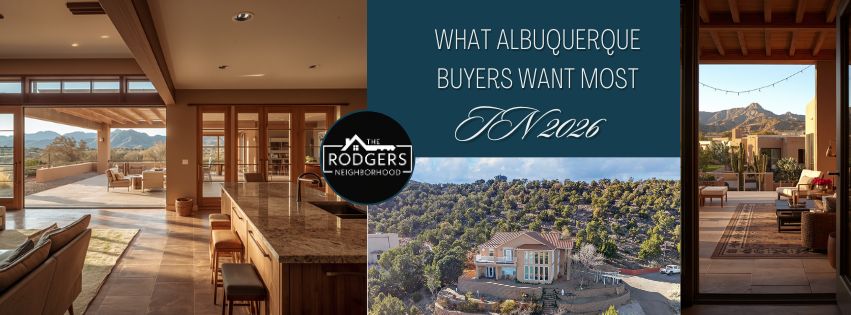
What Albuquerque Buyers Want Most in 2026
The buyer sitting across the table — or on the other end of a video call — in 2026 Albuquerque has a different set of priorities than the buyer of 2021. The frenzied market of 2021 and 2022 compressed buyer decision-making to the point where preferences were largely irrelevant: you made an offer on whatever was available before someone else did. The current market — more balanced, more deliberate, with buyers taking more time and having more choices — has restored the importance of understanding what buyers actually want.
This matters for sellers because understanding buyer preferences determines which preparations, features, and presentation choices move a listing from overlooked to under contract. It matters for buyers because understanding what their peers in the same market are prioritizing helps calibrate what trade-offs to expect and where the competition for specific features is most intense.
"Buyers are active, motivated, and paying close attention to value. What they're responding to most? Homes that are priced correctly, marketed thoughtfully, and presented with care," confirmed the February 2026 mid-winter market check-in. That observation — paying close attention to value — is the through-line connecting everything else in this guide. The 2026 buyer is a careful, value-conscious decision-maker who has the luxury of time and comparison that the 2021 buyer did not.
Here is what the data and the daily experience of working with buyers in this specific market says about what they want most in 2026.
Priority 1 — Monthly Payment Management, Not Just List Price
The most significant shift in what Albuquerque buyers want in 2026 relative to previous years is not a feature preference. It is a financial priority: buyers are focused on their monthly payment with a specificity and intensity that previous-rate-environment buyers were not.
When interest rates are low, the monthly payment calculation is straightforward — the list price largely determines the payment. When interest rates are at current levels, the calculation becomes more complex, and buyers are making decisions based on the total monthly cost of ownership rather than on the list price as the primary metric.
"Buyers are focused on their monthly payment, and contributions toward a rate buydown can be more valuable than a simple price cut," confirmed the WelcomeHomeABQ 2026 housing resolutions and market forecast. "Builders have been doing this for years by offering interest rate buydowns, and resale sellers are now playing in the same arena."
The practical implication for sellers: a 2-1 rate buydown — which reduces the buyer's effective interest rate by 2% in year one and 1% in year two — can be more persuasive than an equivalent dollar amount reduction in list price, because the monthly payment impact is more tangible and more immediately felt than a price reduction.
The implication for buyers: understanding that sellers are thinking in terms of monthly payment means that the negotiation is not exclusively about purchase price. Asking for a rate buydown or a closing cost credit as part of an offer is not an unusual request in the current market — it is the standard concession structure that approximately 37% of recent Albuquerque transactions have included.
Priority 2 — A Dedicated Home Office With a Door
The shift from remote work accommodation to remote work expectation has transformed the home office from a nice-to-have to a near-essential for a significant share of the Albuquerque buyer pool.
"After years of everyone working and learning from home, open-concept layouts are taking a back seat as Albuquerque buyers are craving defined, purposeful spaces. Think of cozy home offices that actually have doors to close," confirmed the home design trends analysis. That observation — home offices that actually have doors to close — captures the specific evolution from the open-concept home office nook that was the remote work accommodation of 2020 to the dedicated, acoustically separated professional workspace that the sustained remote work culture has made a functional requirement.
The door is not a cosmetic preference. It is a functional requirement for buyers who conduct video calls from home, who need acoustic separation from household noise during work hours, and who specifically need the psychological boundary between professional and residential space that a door provides. The open-plan home with a desk visible from the living room does not deliver this.
For sellers: a bedroom staged as a dedicated home office communicates a higher value proposition than the same room staged as a generic spare bedroom. For buyers: the question to ask during showings is not "is there room for a desk" but "can I close a door and have genuine acoustic separation from household activity during a video call." Those are very different questions with very different answers.
The End of Pure Open-Concept as the Dominant Preference
The Sandi Pressley analysis extends beyond the home office to a broader design preference shift: buyers in 2025-2026 are moving away from pure open-concept floor plans toward what the analysis describes as "defined, purposeful spaces" — rooms that have identifiable functions and, in many cases, the physical boundaries that communicate those functions.
This does not mean buyers want dark, compartmentalized floor plans. It means that the open-plan kitchen-dining-living great room that was the universal 2010s-2020s remodel aspiration is no longer automatically the highest-value configuration. Buyers with families have discovered that a completely open floor plan produces a completely acoustically shared environment — which means the child doing homework, the parent on a call, and the television all compete for the same acoustic space with no way to separate them. A thoughtfully placed wall with a door solves a problem that the open-plan created.
For sellers who are in open-concept homes: this shift does not necessarily require architectural changes before selling. It does suggest that staging the home to communicate purposeful spatial use — a defined dining area with a table set for dinner, a distinct seating area that reads as a living room, a clearly designated home office — is more valuable than the generic "great room" staging that treats the whole space as undifferentiated.
Priority 3 — Move-In Ready Condition, Not Perfect But Prepared
The 2026 Albuquerque buyer does not expect perfection. They expect preparation. The distinction matters because sellers who interpret "move-in ready" as "recently renovated" are spending more than necessary, while sellers who interpret it as "whatever condition it's in" are underselling their preparation opportunity.
"Buyers today want homes that feel well maintained and 'buttoned up.' They're more likely to ask for repairs and extensions," confirmed the Venturi Realty Group 2026 market forecast. "Buttoned up" is the most useful single descriptor of what Albuquerque buyers currently expect in terms of home condition.
Buttoned up means: no obvious deferred maintenance. No visible evidence of wear that suggests the home has been neglected. No inspection-threatening conditions that will trigger renegotiation after the offer is accepted. Not perfectly updated, not recently renovated — but clearly cared for.
The specific conditions that Albuquerque buyers flag most consistently during the 2026 buying process:
- Roof condition: New Mexico's flat and low-slope roofing systems are the most commonly cited inspection concern. A roof that has been maintained and has documented service history communicates care. A roof that shows visible wear, pooling, or cracking communicates deferred maintenance regardless of the home's other qualities.
- HVAC and evaporative cooler service: Buyers in the current market are specifically asking about the age and service history of both cooling and heating systems. A recently serviced evaporative cooler with documentation is significantly more reassuring than an unmarked system of unknown age and service status.
- Cosmetic condition of kitchens and bathrooms: Grout condition, caulk condition, fixture finish — the specific surfaces that communicate whether a home has been regularly maintained are the kitchen and bathroom details. Clean grout, fresh caulk, and functioning fixtures read as care. The inverse reads as neglect even when the underlying systems are fine.
- Paint condition: Scuffed, stained, or faded paint is a surprisingly powerful signal of overall maintenance quality. A freshly painted home communicates care. A home with visibly worn paint communicates that maintenance has been deferred — even when the deferred item is as easily corrected as paint.
Priority 4 — Energy Efficiency and Operating Cost Awareness
The 2026 buyer is more aware of operating costs — utility bills, HVAC efficiency, solar production — than any previous Albuquerque buyer cohort. This awareness is driven by several converging factors: the sustained period of elevated energy costs, the growing normalization of solar as a standard feature rather than an optional upgrade, and the specific high-desert climate characteristics that make Albuquerque's sunshine a genuine asset for energy generation.
New construction buyers are specifically attracted by the energy efficiency of new builds: modern insulation packages, high-SEER HVAC systems, and solar-ready or solar-equipped roofs that produce measurably lower utility bills than 1980s and 1990s construction. The Faith Moving Company 2026 new construction guide confirms that "energy bills in a new build, especially in the high-desert climate, can run noticeably lower than in a 1970s or 1980s home" — and buyers who have compared the utility bills of comparable properties are noticing this difference in their monthly cost calculations.
For resale sellers: energy efficiency features that are already in place — owned solar panels, a recent HVAC upgrade, a high-efficiency water heater — are more valuable in 2026 than in previous years and should be prominently communicated in listing materials. Solar panel documentation, including the production history and the current SRECs or net metering credits, should be prepared and available for buyer review before showings.
Solar — The Nuance Buyers Need to Understand
Albuquerque's 310 days of sunshine make solar a genuinely productive investment relative to almost any other American market. But the 2026 buyer's solar preference has a specific distinction: owned solar is a feature buyers want. Leased solar is a complexity buyers often navigate with caution.
An owned solar system transfers to the buyer as part of the property and typically contributes positively to the appraisal. A leased solar system requires the buyer to assume the lease — a financial obligation with its own terms and conditions — or for the seller to buy out the lease before closing. Sellers with leased solar should understand and disclose the lease terms early in the transaction process, not after the contract is executed.
Priority 5 — Outdoor Living Space That Actually Works
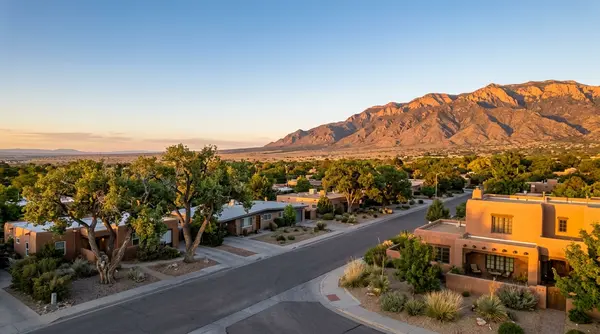
Albuquerque's climate — 310 days of sunshine, low humidity, the specific quality of outdoor air at 5,300 feet elevation — produces a buyer expectation about outdoor living space that is more functional and more specific than in most American markets. Buyers in Albuquerque are not primarily asking about outdoor space as a resale feature. They are asking about it as a daily lifestyle feature that they intend to use.
The specific outdoor feature that produces the most positive buyer response in the current Albuquerque market is the covered portal or covered patio — a shaded outdoor room that extends the usable living space into the New Mexico climate for eight to nine months of the year. The covered portal is not a seasonal amenity in Albuquerque. It is a year-round room that is specifically usable every month except the coldest weeks of January and February.
The hierarchy of outdoor features that buyers respond to in 2026:
- Covered portal/patio: The most impactful outdoor feature. A quality covered outdoor space with adequate shade and weather protection directly extends the home's usable square footage in the New Mexico climate.
- Mountain views from outdoor spaces: For Northeast Heights and foothills properties, the outdoor space's view orientation is a primary feature. A covered portal facing the Sandia Mountains is a qualitatively different feature from the same portal facing a neighbor's wall.
- Low-water desert landscaping: Clean, drought-tolerant landscaping with decomposed granite, specimen plants, and functional irrigation communicates property care and practical sustainability. Buyers who are coming from markets with water-intensive landscaping requirements specifically appreciate the low-maintenance character of well-done xeriscaping.
- Privacy and usability: A smaller outdoor space that is private, shaded, and genuinely comfortable outperforms a larger outdoor space that is exposed, unshaded, and clearly unusable in the Albuquerque summer afternoon. Size is less important than usability.
Priority 6 — Neighborhood Safety and Community Quality
The RE/MAX December 2025 national survey found that 88% of prospective buyers plan to purchase in 2026, and among their top non-financial priorities: neighborhood safety, social connection, and access to lifestyle-enhancing amenities. That national finding aligns precisely with what Albuquerque buyers consistently communicate in conversations about neighborhood selection.
In Albuquerque's specific context, neighborhood safety is the most frequently named secondary priority after price for buyers who are new to the city — particularly buyers relocating from coastal markets who have conducted research and encountered Albuquerque's citywide crime statistics. The Albuquerque buyer who has done their homework specifically asks about neighborhood-level safety data rather than citywide data, and they are correct to do so: the difference between the safest and least-safe areas of the city is nearly 10-to-1 in annual crime incidents.
For sellers: neighborhood safety is a feature that listing presentations can communicate. The specific safety data for the neighborhood — the CAP Index score, the CrimeGrade rating, the specific incident count for the surrounding streets — is information that proactively addressing can be as valuable as any physical feature of the home. A seller in Tanoan who mentions the 2/10 CAP Index Crime Score is providing the specific safety data that a safety-motivated buyer from out of state specifically needs.
Priority 7 — School Zone Quality for Families
For buyers with school-age children or planning to have them, the school zone assignment is among the top three purchase criteria — alongside price and physical condition — and it is the criterion that most consistently overrides other preferences when a buyer is choosing between otherwise comparable properties.
The La Cueva and Eldorado High School attendance zones in the Northeast Heights remain the most actively sought school zone designations in the Albuquerque market — and the premium those zones command relative to comparable properties in other school zones is measurable and sustained. The buyer who specifically wants the La Cueva zone is not interchangeable with the buyer who accepts it — they are the buyer who will pay the zone premium and wait for the right property rather than settling for a non-zone property at a lower price.
For sellers in premium school zones: the school zone is a feature that should be communicated prominently and specifically in listing materials. Not just "near good schools" — the specific school name, the specific grade range, and the specific outcome data (Niche grade, GreatSchools score) that quantifies what the zone premium is worth.
Priority 8 — Correct Pricing and Transparent Condition
The final priority is the one that is least about the physical features of the home and most about the seller's positioning decisions — and it is, paradoxically, the priority that buyers most consistently cite as the differentiating factor in their offer decisions.
"What do home buyers want in 2026? Most sellers should start with the basics buyers can actually feel: fair pricing, strong listing photos, good condition... Buyers often respond more strongly to practical improvements that make a home feel clean, functional, move-in ready, and easy to understand online," confirmed the AI Home Design 2026 buyer preference analysis. The phrase "easy to understand" is particularly relevant: buyers in the current market are comparing multiple properties with more deliberation than 2021 buyers, and properties that communicate clearly — here is what you are getting, here is the condition it is in, here is the evidence of its value — move more quickly than properties that require interpretation.
The transparent condition disclosure — the pre-inspection report with known conditions repaired or credited — is the seller behavior that most directly communicates the respect for the buyer's time and decision-making that the 2026 buyer is specifically responsive to. The buyer who discovers a deferred maintenance condition during their own inspection, without prior disclosure, loses trust in the seller and the transaction simultaneously. The buyer who received the pre-inspection report and made their offer knowing what they were buying is in a qualitatively different relationship with the transaction.
What the 2026 Albuquerque Buyer Is NOT Looking For
Understanding what buyers do not prioritize is as useful for sellers as understanding what they do.
- Luxury upgrades in below-luxury price ranges: A $280,000 buyer in the Taylor Ranch or Ventana Ranch price range is not responding to high-end finishes the same way a $900,000 High Desert buyer is. Over-improving a home for its price range typically does not return the investment — the buyer pool for that price range has a specific value expectation, and improvements above that expectation do not translate to equivalent price premiums.
- Swimming pools in isolation: Albuquerque's climate makes a pool appealing in theory, but the maintenance costs and the insurance implications make a pool a neutral-to-slightly-negative feature for a significant share of buyers. Sellers with pools should price them as appealing to a specific buyer rather than universally valuable.
- The "perfect" home that isn't real: Tego and Tracy Venturi of Venturi Realty Group specifically call out the "perfect home" myth in their 2026 market analysis: "even their own custom-built home isn't truly perfect decades later." Buyers who enter the market expecting to find every feature on their priority list in a single property at their budget will consistently be disappointed and paralyzed. The most successful 2026 buyers are the ones who have ranked their priorities, identified the non-negotiables, and are willing to accept trade-offs on the secondary items.
The Summary — What to Prioritize as a Seller and How to Calibrate as a Buyer
For Sellers: The 2026 Buyer's Checklist
- Price from current comparables. The monthly payment the price produces is the buyer's primary lens.
- Offer a rate buydown as part of your marketing positioning. It is more persuasive than an equivalent price reduction.
- Stage a dedicated home office with a door. The most in-demand spatial feature of 2026 buyers in the remote work cohort.
- Complete a pre-listing inspection and repair or disclose. "Buttoned up" condition is the baseline expectation.
- Document energy features: Solar production history, HVAC age and service, insulation specifications.
- Invest in the outdoor space: Cover the portal if uncovered. Make the outdoor room usable and shaded.
- Name the school zone specifically in the listing. For family buyers, this is the first filter — not an afterthought.
For Buyers: How to Calibrate Your Priorities
- Know your monthly payment ceiling, not just your purchase price ceiling. Calculate the full payment including taxes, insurance, and HOA.
- Rank your priorities explicitly: School zone, home office, outdoor space, energy efficiency, neighborhood safety. Then know which two are non-negotiable and which three you will trade.
- Accept that the perfect home does not exist at any budget. The best-positioned 2026 buyers are the ones who made peace with trade-offs before starting the search.
- Look for "buttoned up" over "renovated." A well-maintained home that has been cared for over time is a better foundation than a recently renovated home that masked underlying deferred maintenance.
- Ask for a rate buydown in the offer, not just a price reduction. In a market where sellers are expecting to offer concessions, this is the more effective ask for most buyers.
For buyers who want to understand the full landscape of what is available in the Albuquerque market right now, our guide to what buyers need to know before making an offer covers the offer process in depth. And for sellers who want to understand how buyer priorities should shape their preparation decisions, our guide to how to sell your Albuquerque home fast in today's market provides the full preparation and pricing guide.
The Bottom Line — The 2026 Albuquerque Buyer Is Deliberate, Value-Conscious, and Ready
The RE/MAX data showing that 88% of prospective buyers plan to purchase in 2026 is the clearest available evidence that the buyer pool is not a timid or hesitant cohort waiting for perfect conditions. It is an active, motivated group that has been waiting for conditions that feel reasonable rather than frenzied — and in 2026's more balanced Albuquerque market, those conditions exist.
The buyer who is looking for a home in Albuquerque right now wants the specific things this guide describes. They are paying attention to monthly payments. They want a room with a door for work. They expect the home to be maintained and honest about its condition. They want outdoor space that actually works in New Mexico's climate. They want their children's school clearly identified. And they want a seller who is not pricing from 2022 memory.
That buyer is not unreasonable. They are not asking for a perfect home. They are asking for an honest one, priced correctly, that fits their life. The sellers who understand this and prepare accordingly are the ones whose homes go under contract in 14 days. The rest are still waiting.
Ready to Talk About Your Albuquerque Home?
Jenn & Vinay from The Rodgers Neighborhood Real Estate Group help buyers find the homes that match their specific 2026 priorities — and help sellers prepare and position their homes to deliver what the current buyer pool is actively seeking. Whether you are buying, selling, or trying to understand where you stand in this market, the conversation starts with a call.
Jenn & Vinay Rodgers are Albuquerque's trusted real estate professionals with The Rodgers Neighborhood Real Estate Group, brokered by Real Broker, LLC, serving buyers and sellers across Albuquerque, Rio Rancho, Corrales, Los Lunas, Tijeras, Cedar Crest, Sandia Park, the East Mountains, Bernalillo County, Sandoval County, and surrounding New Mexico communities.
The Rodgers Neighborhood Real Estate Group
Jenn & Vinay Rodgers
Real Broker, LLC
Albuquerque, NM
📞 505-417-2733
🏠 Browse Albuquerque homes for sale
Categories
- All Blogs (340)
- 2026 & Beyond for Real Estate (235)
- Doctors and Nurses looking for homes in NM (4)
- Guide to buying a home in NM (152)
- Health Care Heros (7)
- Home Upgrades (40)
- Jenn & Vinay your Local Real Estate Experts! (116)
- Moving to Albuquerque (132)
- Neighborhoods in Albuquerque NM (91)
- Rent or Own (2)
- Sellers Questions for Selling homes (2)
Recent Posts



GET MORE INFORMATION