
7 things Albuquerque buyers wish they knew before making an offer
7 Things Albuquerque Home Buyers Wish They Knew Before Making an Offer
There is a version of the home buying conversation that goes smoothly from start to finish. The buyer gets pre-approved, finds a home they love, makes a strong offer, navigates inspection cleanly, and closes on time. It happens. We have been part of it many times.
Then there is the version where something surprises the buyer — not because they were careless, but because nobody told them what to expect before they were already inside a transaction. The surprise lands when the leverage is gone, the timeline is compressed, and the cost of a poor decision is real.
The seven things in this post come directly from those conversations — the honest debrief that happens after closing, when buyers finally say what caught them off guard. Most of them are not dramatic. None of them are uncommon. And every single one of them is avoidable if you know about it in advance.

Why 2026 Is a Specific Kind of Market for Albuquerque Buyers
Before getting into the specific lessons, the context matters.
The Albuquerque housing market in 2026 is not the frenzied seller's market of 2021. The average time on market has normalized to 35–60 days. Buyers finally have breathing room. But homes priced correctly and presented well are still moving in 15 days — and in competitive neighborhoods, multiple offers still happen on the right property at the right price.
About one in ten homes listed in the Albuquerque area comes off the market without ever selling. At the same time, 37% of recent sales involved seller concessions — builders and resale sellers alike using credits and incentives to help buyers manage higher monthly payments.
That combination tells you something important: this is a market with real negotiating opportunity and real risk living side by side. Buyers who understand it move through it confidently. Buyers who are operating on assumptions formed in other markets, or on advice from friends who bought in 2019, are the ones who tend to get surprised.
Here is what they wish someone had told them first.
The 7 Things Albuquerque Buyers Wish They Had Known
Pre-Qualification and Pre-Approval Are Not the Same Thing — and Sellers Know the Difference
This is the one that stings the most when it comes up, because it is so preventable.
Pre-qualification is a lender's educated guess based on what you tell them. Pre-approval means the lender has verified your income, assets, and credit and you are ready to close. If your offer comes in without a pre-approval letter, it goes to the bottom of the pile in any competitive situation.
The distinction matters because sellers in Albuquerque's current market — even in a more balanced environment — are still evaluating competing offers partly on financing confidence. A pre-approval letter signals that a real underwriter has looked at real documents and determined this buyer can actually close. A pre-qualification letter signals that a buyer told a lender their income and the lender took their word for it.
When a seller has two offers at similar price points and one has a verified pre-approval and one has a pre-qualification, the pre-approval wins the tie almost every time. The buyer who submitted the pre-qualification often never knew why they lost.
The fix is simple and costs nothing: before you tour a single home, get fully pre-approved — not pre-qualified. Have the lender pull your credit, verify your employment and income documents, and issue a letter that says exactly what it is.
The Asking Price Is Not the Comparable Sales Data — and Knowing the Difference Is Your Leverage
A lot of buyers make their offer decisions based on the listing price. That is the wrong data point.
The listing price is what the seller hopes to get. Comparable sales — the actual closed prices of similar homes in the same neighborhood within the last 90 days — are what the market says the home is worth. Those two numbers are often different. Sometimes they are close. Sometimes they are far apart. And the gap between them is either your leverage or your warning signal.
Buyers who make emotional offers without understanding the neighborhood, researching comparable sales, or checking what needs fixing often find that the appraisal comes in low — at which point they are renegotiating from a weaker position, or walking away and losing earnest money, or making up the difference in cash.
In Albuquerque's current market, the average home sells for about 2% below list price — meaning sellers are regularly accepting less than asking. Hot homes in highly demanded neighborhoods sell at or near list price and go pending in around 15 days. Homes that have been sitting for 45 days or more often have built-in negotiating room that buyers who know the data can use confidently.
Your agent should be pulling comparable sales data before you make any offer — not to undermine your excitement about a home, but to make sure your offer is built on reality, not hope. A buyer who knows the comps negotiates differently. And better.
Albuquerque Has Specific Inspection Items That Buyers From Other States Never Think to Ask About
This one is uniquely New Mexico, and it catches out-of-state buyers more consistently than almost anything else.
Albuquerque homes — especially older ones — can have hidden issues specific to the high desert environment: foundation settling from the expansive soils common in the region, outdated electrical panels that are original to 1960s and 1970s construction, flat or low-slope roof sections that behave differently from pitched roofs in other climates, and stucco exterior conditions that require specific inspection methods.
Beyond the standard inspection items, Albuquerque buyers should specifically ask about and evaluate: swamp cooler condition and the transition mechanism to forced air heat, since many Albuquerque homes use both; flat roof sections, which are common in Southwestern architecture and have finite lifespans that are entirely separate from the pitched roof if one exists; monsoon season drainage patterns around the foundation and in the yard; and on any property built before 1978, lead paint and asbestos presence as standard due diligence items.
Buyers who waive inspections to strengthen an offer in a competitive situation are taking on a risk that is specific and measurable in Albuquerque. Instead of waiving contingencies, compete on factors that actually matter to sellers: strong pre-approval, flexible closing timeline, clean terms, or a brief personal note explaining why you love the home. These things make offers attractive without putting your financial future at risk. No offer is worth inheriting an unknown roofing system, an aging electrical panel, or a drainage problem that only shows itself during the July monsoon.
Concessions Are More Available Than Buyers Think — and Most Never Ask
37% of home sales in Albuquerque in the fourth quarter of 2025 involved some form of seller concession — credits, rate buydowns, or closing cost contributions. That is not a small number. It means more than one in three successful transactions included a seller helping the buyer with their costs in some way.
Most buyers do not know this. They assume that asking for a concession signals weakness, or that sellers will be offended by the request, or that it reduces their chances of winning a competitive offer. In some specific situations — a hot property in the first week with multiple offers — that concern has merit. But for the majority of Albuquerque listings, particularly anything that has been on the market more than three weeks, concession requests are normal, expected, and often welcomed.
A seller credit toward a rate buydown can be more valuable to a buyer's monthly payment than a straight price reduction. Builders have been using this tool for years. Resale sellers are now playing in the same space. A $10,000 seller credit that funds a rate buydown can lower a buyer's monthly payment by $75–$100 per month for the life of the loan — a total value that far exceeds the $10,000 face amount. Buyers who understand this can structure offers that work better for both sides.
Your agent should be having this conversation with you before the offer is written — not as an afterthought during negotiation.
The Neighborhood Matters More Than the Home — and Most Buyers Get This Backwards
Buyers fall in love with homes. They should be falling in love with neighborhoods first.
The home can be remodeled, updated, repainted, and reconfigured over time. The neighborhood cannot. The commute from your address to your workplace is fixed. The school zone attached to your property is fixed. The long-term trajectory of the street you live on is largely fixed. The things that make a neighborhood feel right — or wrong — for your life do not change with a kitchen renovation.
Buyers who start with a home before understanding the neighborhood frequently discover that the inspection reveals one set of problems while the location reveals another — and that the location problem is harder to solve.
In Albuquerque specifically, the variance between neighborhoods in school quality, safety profiles, commute patterns, and long-term value trajectories is significant enough that the neighborhood decision deserves as much attention as the home decision. A buyer who spends three hours touring a home and twenty minutes researching the neighborhood has their priorities inverted — and often realizes it about six months after moving in.
Before you fall in love with a listing, spend time in the neighborhood at different times of day. Drive the commute route during actual commute hours. Research the school zone with the same rigor you apply to the home's square footage. Ask your agent specifically about the neighborhood's absorption rate and price trajectory over the last 24 months. The home you buy is inside a neighborhood you are buying into — and the neighborhood decision is the one you cannot undo.
Closing Costs Are Not Negotiated Away — They Are Just Paid by Someone
First-time buyers in Albuquerque consistently underestimate closing costs, and the surprise is expensive because it comes at the worst possible moment — right before closing, when backing out would cost them their earnest money.
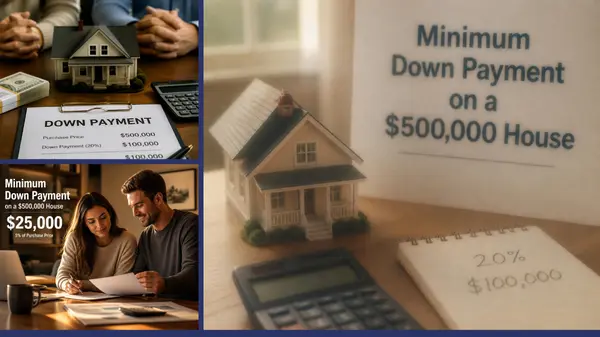
New Mexico offers programs that provide down payment and closing cost assistance for eligible buyers. Sellers can also contribute to closing costs through concessions. While 20% down on a conventional loan can help avoid mortgage insurance, many successful Albuquerque buyers in 2026 purchase with significantly less cash upfront by choosing the right loan program and structure.
In practical terms, Albuquerque buyers should budget for closing costs of approximately 2–5% of the purchase price on top of their down payment. On a $360,000 home, that is $7,200 to $18,000 in costs beyond the down payment — for title insurance, lender fees, prepaid taxes and insurance, and the various transaction costs that accompany any real estate closing in New Mexico.
The buyers who handle this smoothly are the ones who asked their lender for a Loan Estimate early in the process, reviewed it with their agent, and either built the cash into their planning or structured their offer to include a seller concession that offsets part of those costs. The buyers who get surprised are the ones who assumed the down payment was the only money they needed to bring to closing.
The "Perfect Home" Does Not Exist — and Chasing It Costs Real Buyers Real Homes
Even experienced Albuquerque real estate professionals acknowledge that every buyer faces tradeoffs among price, location, features, and timing. A good agent in 2026 will not promise you the perfect home — they will help you prioritize what matters most, understand where compromise is necessary, and ultimately find a home that works very well for your life, even if it is not perfect in every way.
The buyers who lose the most time and the most good homes are the ones who are waiting for a property that checks every box on a list that was assembled before they had real market exposure. The home that has the perfect kitchen but the slightly longer commute. The home in the ideal neighborhood but without the fourth bedroom they were hoping for. The home in the right school zone but with a bathroom that needs updating.
In Albuquerque's current market, inventory remains tight relative to historical averages — active listings fell nearly 6% year over year in April 2026 even as the national market saw inventory grow. Buyers who are waiting for the listing that requires zero compromise may be waiting while the homes that would have served them very well are going under contract. The question to ask yourself before dismissing a property is not "is this perfect?" The question is "does this home work for my actual life, and are the things I would change changeable?" If the answer is yes — the imperfections are cosmetic, manageable, or actually irrelevant to how you live day to day — the calculus shifts.
The buyers who find homes they love are almost always the ones who got clear on their genuine priorities early, distinguished those from their preferences, and made decisions based on the former rather than the latter.
The Common Thread in All Seven
Read back through these seven things and you will notice the same underlying pattern: the buyers who got surprised were the ones who entered a transaction with assumptions they had not tested against the specific realities of the Albuquerque market in 2026.
Not bad assumptions. Not unreasonable ones. Just untested ones — formed from other markets, other eras of the market, conversations with friends who bought under different conditions, or the general optimism that comes with starting a home search.
The antidote is not more research on Zillow. It is a real conversation with a local agent who knows this market's specific quirks, current conditions, and neighborhood-level dynamics before you write your first offer.
For a full look at what the Albuquerque buying process looks like from the beginning, our guide to buying a home in New Mexico walks through every stage in depth. And to understand what separates agents who help buyers navigate this well from those who don't, our post on what makes a top Albuquerque Realtor different in 2026 is worth reading before you choose who to work with.
Ready to Buy Smart in Albuquerque?
Jenn & Vinay from The Rodgers Neighborhood Real Estate Group work with buyers at every stage — first-timers who need everything explained once, experienced buyers who need a local expert, and out-of-state relocators who need someone who can compress months of market education into a focused, productive conversation before they fly out to tour.
The goal is always the same: you close on the right home, at the right price, without the surprises.
📞 (505) 417-2733 | rodgersvj@gmail.com 🏠 Browse current Albuquerque homes for sale
Categories
- All Blogs (362)
- 2026 & Beyond for Real Estate (256)
- Doctors and Nurses looking for homes in NM (4)
- Guide to buying a home in NM (160)
- Health Care Heros (7)
- Home Upgrades (42)
- Jenn & Vinay your Local Real Estate Experts! (124)
- Moving to Albuquerque (139)
- Neighborhoods in Albuquerque NM (94)
- Rent or Own (2)
- Sellers Questions for Selling homes (2)
Recent Posts

GET MORE INFORMATION