
Top Albuquerque Landmarks That Define the City
The landmarks that define a city are not simply the most visited attractions. They are the features that make the city identifiable — the things that could only be here, that explain why this specific geography was chosen for settlement, and that have been shaped by the specific cultures that have called this place home. Albuquerque has twelve of them. They span 1,000+ years of human presence and define the city in ways that no other western American city can replicate.
Landmark 1 — The Sandia Mountains: The City's Defining Feature
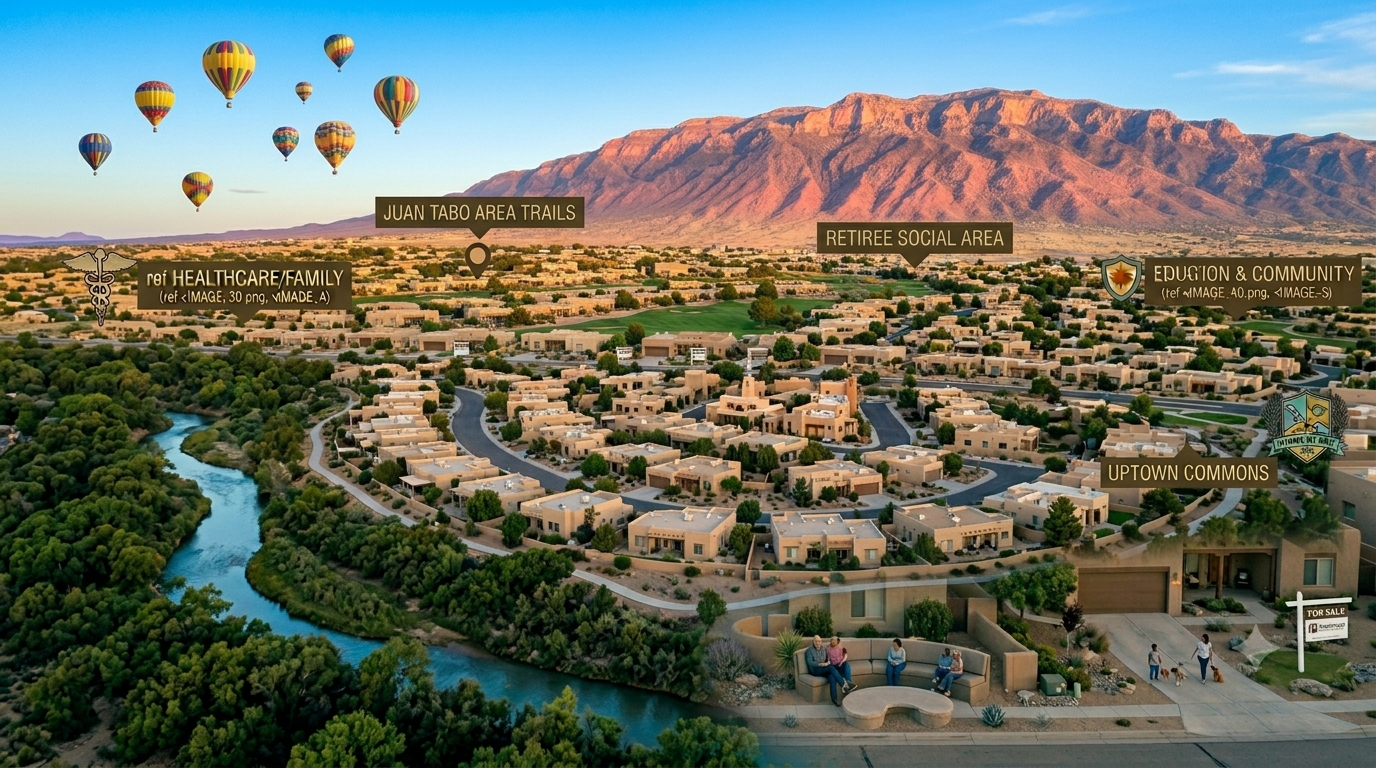
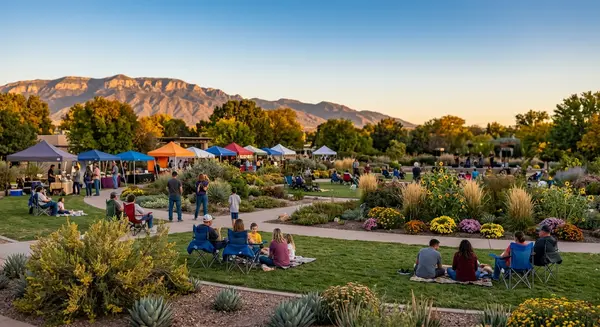
Every Albuquerque resident, from the third-generation native to the person who moved here last month, uses the Sandia Mountains as their primary geographic orientation point. Ask anyone where something is in Albuquerque and the answer will reference the mountains as east — head toward the mountains, turn away from the mountains, it's on the mountain side of the freeway. The Sandias are not a backdrop. They are the city's axis.
The specific quality that makes the Sandia Mountains extraordinary within the North American urban landscape: they rise 5,000 feet from the valley floor to Sandia Crest (10,378 feet elevation) within the city limits. The base of the mountains is accessible from residential streets in the Northeast Heights without a drive to a trailhead parking lot. No other major American city has a mountain range of this scale and this accessibility within its urban boundary.
The name: "Sandia" is Spanish for watermelon. The name was given by Spanish explorers who observed the specific alpine glow phenomenon that occurs every evening when the setting sun's final light strikes the Sandia Crest — the limestone cliffs turn a deep, saturated pink that sits between fuchsia and coral, identical in color to the interior of a ripe watermelon. Residents who have lived here for decades still stop what they are doing in the early evening to watch it happen. Visitors who see it for the first time frequently describe it as one of the most beautiful things they have ever seen in an American city.
- The practical access: Foothills Open Space trails accessible from residential streets in the Northeast Heights. Elena Gallegos Picnic Area and Albert G. Simms Park trail system. La Luz Trail to the summit (strenuous, 9 miles round trip). Embudito Trail (moderate). Pino Trail. All accessible from the city's residential grid.
Landmark 2 — Sandia Peak Aerial Tramway: The Longest in North America
The Sandia Peak Aerial Tramway is the longest aerial tramway in North America — 2.7 miles from the base station at 6,559 feet to the summit at 10,378 feet. Built in 1966, the tramway was an engineering achievement of the era and remains one of the most dramatically spectacular urban-accessible mountain experiences in the United States.
The ride itself is the landmark: 15 minutes of continuous ascent through four distinct ecological zones — desert scrub at the base, piñon-juniper woodland, mixed conifer forest, and alpine tundra at the summit — passing over cliffs, canyons, and the dramatic limestone face of the Sandia Crest. The temperature drop from base to summit is typically 25-30°F, which means a 90°F desert afternoon at the base corresponds to a 60-65°F alpine experience at the summit.
- Summit amenities: Sandia Peak Ski Area (winter, December-March). Ten 3 restaurant at the summit (year-round, lunch and dinner). Panoramic viewing decks. Multiple hiking trails on the crest.
- Practical: Online reservations recommended in peak season. Sunrise and sunset departures are the most popular and the most likely to sell out. Winter crossings during snowfall are particularly atmospheric.
Landmark 3 — Old Town Albuquerque: The Geographic Origin of the City
On April 23, 1706, Francisco Cuervo y Valdés formally established the Villa de Albuquerque at this crossing of the Rio Grande — the decision that placed the city here rather than anywhere else on the Rio Grande corridor. The colonial plaza that was established in 1706 still exists as the physical center of Old Town, surrounded by 300+ years of accretion: the 1793 church, the 19th-century commercial buildings, and the contemporary shops and galleries that now occupy buildings on the same footprint as the original settlement.
What makes Old Town specifically valuable as a landmark rather than merely a tourist district: the actual physical bones of the 1706 settlement are still present. The plaza is in the same location. The church on the north side of the plaza — San Felipe de Neri Church, built 1793 — occupies the same position as the original 1706 church that collapsed and was replaced. The scale of the colonial square, the orientation of the buildings, and the relationship between the sacred space (the church) and the civic space (the plaza) are all expressions of the Spanish colonial urban planning that arrived via Mexico City from the design principles of Renaissance Spain.
- The museum cluster: Albuquerque Museum, NM Museum of Natural History and Science (reopened Spring 2026 after major renovation, now featuring Mars Perseverance mission connections and the largest full-dome planetarium in New Mexico), American International Rattlesnake Museum, and Turquoise Museum all within walking distance.
Landmark 4 — Petroglyph National Monument: The West Mesa's Ancient Record
Petroglyph National Monument spans 7,236 acres on Albuquerque's West Mesa — a federally protected landmark encompassing one of North America's largest petroglyph sites. More than 24,000 images carved into the volcanic basalt by Native Americans and early Spanish settlers between 400 and 700 years ago are distributed across the monument's volcanic escarpment.
The West Mesa's volcanic landscape was produced by eruptions approximately 150,000 years ago. The basalt boulders that tumbled from the escarpment — darker on the outside from a patina of iron and manganese oxides — were the canvas that Native American cultures chose for their most concentrated local expression of symbolic communication. The petroglyphs are not casual marks — they are intentional, specifically chosen symbols, animals, spirit figures, and geometric forms whose full meaning was carried in the oral tradition of the cultures that made them.
- Visitor access: Three primary visitor areas: Rinconada Canyon (free, longest trail, best petroglyph density), Boca Negra Canyon (small parking fee on weekends), Piedras Marcadas Canyon (free, largest volume of petroglyphs). The NPS visitor center at 6001 Unser Blvd NW provides maps and interpretive resources.
- The living connection: The Pueblo peoples whose ancestors created the petroglyphs consider many of them to be sacred sites with ongoing cultural significance. The monument's management specifically incorporates consultation with affiliated Pueblo communities. The petroglyphs are not historical relics — they are part of a living cultural tradition.
Landmark 5 — Route 66 / Central Avenue: The Most Consequential 18 Miles
"2026 is a particularly exciting year for Route 66, as it's the centennial. Albuquerque has the longest continuous urban stretch of Route 66 in the country at 18 miles, and the city is going all-out with celebrations, including new murals and art installations along Central Avenue, special events, and a Route 66 Summerfest in the Nob Hill neighbourhood. In 2026, there's even more to see thanks to the Route 66 centennial celebrations. New murals and art installations have been going up along Central Avenue," confirmed Finding the Universe's Albuquerque guide (May 30, 2026). The Albuquerque stretch of Route 66 is the most intact urban section of the Mother Road in the country.
Route 66 was commissioned on October 11, 1926 — making 2026 its 100th anniversary. The highway runs on Central Avenue through Albuquerque for 18 miles, and this stretch preserves the most intact collection of Route 66 architecture — vintage motor courts, neon signage, diners, and the Nob Hill commercial district — anywhere on the 2,400-mile route from Chicago to Santa Monica.
The geographic fact that makes Albuquerque specifically unique on Route 66: Albuquerque is the only place in the world where you can stand on the intersection of Route 66 and Route 66. The highway changed its official alignment through Albuquerque three times over its history; the original alignment and a later alignment both pass through the city, and they intersect. No other American city has this specific double-Route 66 characteristic.
"Route 66 Remixed has transformed Albuquerque's Central Avenue into an art-fueled road trip across the city. Along the 18-mile stretch, travelers will discover 18 large-scale installations and augmented reality activations that reflect the stories, traditions and people that have helped shape Albuquerque. Spearheaded by the City of Albuquerque's Department of Arts & Culture, Route 66 Remixed was created in partnership with New Mexico-based Meow Wolf and Refract Studio as well as local artists. These installations will become lasting landmarks, available year-round," confirmed Visit Albuquerque's 10 Reasons to Visit in 2026 guide. The Route 66 Remixed centennial art installations are a permanent addition to the city's landmark landscape.
- The centennial events calendar:com tracks all 2026 centennial programming. Weekly lowriders and classic vintage cars cruise Central Avenue on weekends through the centennial year.
- The 66 Diner: 1405 Central Ave — the 1950s-format diner that has anchored the Central Avenue Route 66 experience for decades. Malts, shakes, and green chile burgers.
Landmark 6 — The Albuquerque Box: Why the Balloon Fiesta Is Here
The most important invisible landmark in Albuquerque is the Albuquerque Box — the specific meteorological phenomenon that makes Albuquerque the world's premier hot air balloon city and the reason the International Balloon Fiesta exists here rather than anywhere else on Earth.
The Albuquerque Box is produced by the specific interaction of the Sandia Mountains, the Rio Grande valley, and the prevailing wind patterns at different elevations. At low altitude (below 1,000 feet above ground), the winds near the Sandia Mountains consistently blow south to southwest. At higher altitude (above 1,000 feet AGL), the winds blow from the south to north and eventually to the east. This creates a "box" pattern where balloons launched from the Balloon Fiesta Park can fly north at altitude, then descend to lower altitude and be pushed back south by the lower-level wind, returning to near their launch point.
The box allows balloonists to fly and return to the same field — the operational requirement that makes a mass balloon ascension (the mass ascension at Balloon Fiesta involves 500+ balloons simultaneously) logistically possible. No other city in the world has the specific meteorological box that Albuquerque produces at Balloon Fiesta time. The event is here because the physics are here. The physics are here because of the mountains and the river.
Landmark 7 — The Albuquerque International Balloon Fiesta
The International Balloon Fiesta — held annually in early October at Balloon Fiesta Park — is the largest hot air balloon event in the world and the most photographed event in New Mexico. The 2026 Fiesta runs October 3-13.
The scale: approximately 500-600 hot air balloons. The mass ascension — when all balloons launch simultaneously at dawn — produces a sky filled with color that has no equivalent spectacle in American annual events. The Special Shape Rodeo, where balloons in novelty shapes (Darth Vader, cows, penguins, the Wells Fargo stagecoach) fly alongside the traditional shapes, is the most specifically Instagram-populated event of the Albuquerque cultural calendar.
- The pre-dawn access: The most spectacular Balloon Fiesta experience is arriving before dawn at Balloon Fiesta Park and watching the inflation process — hundreds of envelopes laid flat across the field in the dark, then gradually rising as the burners fill them with heated air, the glowing colors emerging from the predawn dark like a rising tide of light. This specific experience occurs nowhere else.
- The Balloon Museum (year-round): The Anderson-Abruzzo Albuquerque International Balloon Museum at Balloon Fiesta Park preserves the history of the event and of ballooning generally. The museum's full-size balloon displays and interactive exhibits are the year-round complement to the October event.
Landmark 8 — The Rio Grande and the Bosque
The Rio Grande is the reason Albuquerque exists at this specific location on Earth. The 1706 Spanish colonial settlement was placed here because this was a reliable crossing point on the Rio Grande — shallow enough to ford, positioned between the Sandia Mountains and the Jemez Mountains with a productive agricultural valley on both banks.
The bosque — the riparian cottonwood forest that grows along the Rio Grande's banks through the city — is one of the most specifically beautiful and most specifically Albuquerque natural environments. The bosque is a distinct ecological zone: a ribbon of cottonwood, willow, and salt cedar 1-3 miles wide running the full length of the city along the river, producing the green canopy that is visible from aerial approaches to Albuquerque as a vivid line through the desert city.
- October in the bosque: The cottonwood trees turn gold in October — the same weeks as the Balloon Fiesta. The combination of the golden bosque, the balloon-filled sky above, and the chile roasting season creates the specific sensory experience of autumn in Albuquerque that residents specifically describe as the best time of year.
- The Paseo del Bosque Trail: A 16-mile multi-use trail running the full length of the bosque through the city — one of the most urban natural recreation trails in the American Southwest.
Landmark 9 — The KiMo Theater (1927): The Only Building of Its Kind
The KiMo Theater on Central Avenue was built in 1927 and represents the specific architectural invention of Pueblo Deco — a style that fuses Native American decorative motifs (thunderbirds, pottery patterns, geometric Pueblo designs) with the Art Deco aesthetic of the 1920s. The result is a building that exists nowhere else in quite this form.
The buffalo skull sconces with glowing red eyes along the theater's interior walls are the most photographed architectural detail in any Albuquerque building other than the San Felipe de Neri Church. The hand-painted murals depicting Pueblo ceremonial figures cover the theater's upper reaches. The exterior — a stepped facade with Pueblo architectural references rendered in the Art Deco commercial building format — is the most distinctive building on Central Avenue's 18-mile stretch.
The theater is still an active performance venue, which means the landmark is experienced as it was designed to be experienced — not as a preserved artifact but as a living building that fills on performance nights and empties after the show just as it has since 1927.
Landmark 10 — The Indian Pueblo Cultural Center: Living Culture on Pueblo-Owned Land
The Indian Pueblo Cultural Center — owned and operated by the 19 Pueblo Indian Tribes of New Mexico on 80 acres of land they own in central Albuquerque — is the city's most culturally significant landmark because of what it represents: the continuous, active, uninterrupted presence of the Pueblo peoples in the Rio Grande valley from before European contact to the present day, expressed through an institution they built and control on land they own.
2026 is a specifically significant year at the IPCC: special exhibitions mark the institution's ongoing development, and authentic Native dances occur every weekend throughout the year. The "Grounded in Clay: The Spirit of Pueblo" pottery exhibition — organized by the School for Advanced Research and the Vilcek Foundation — brings the most significant presentation of Pueblo ceramic art to Albuquerque audiences that the institution has hosted.
The IPCC campus includes the Indian Pueblo Kitchen restaurant, the Avanyu Plaza outdoor gathering space, the Indigenous-owned 12th Street Tavern adjacent to the campus, and the library and archives. It is not a museum about a culture — it is an institution by a culture, still fully in operation.
Landmark 11 — The Breaking Bad and Better Call Saul Filming Legacy
Albuquerque is the backdrop, the character, and the setting of two of the most globally influential television productions in American history — Breaking Bad (2008-2013) and Better Call Saul (2015-2022). More than 65 million viewers globally watched these productions, and virtually all of them know the specific visual vocabulary of Albuquerque: the blue skies, the volcanic landscape, the adobe architecture, the Sandia Mountains, the specific southwestern light quality that no studio can replicate.
The filming locations have become landmarks in their own right:
- The Walter White house: A private residence in the Northeast Heights whose owners have made peace with the tourism it generates. Visiting is fine; throwing pizza on the roof is not. The family's request to keep pizza off the roof has become as famous as the house itself.
- Los Pollos Hermanos / Twisters: The Twisters restaurant (4257 Isleta Blvd SW) served as the filming location for the Breaking Bad universe's fictional fast food chain. Still a functioning restaurant where fans make pilgrimages.
- The ABQ Breaking Bad and Better Call Saul Tour: Guided tours of the filming locations are consistently rated among TripAdvisor's top Albuquerque experiences. The tour connects the fictional geography of the productions to the actual Albuquerque locations — a two-hour education in how one city's specific visual character became globally iconic.
- The legacy for Albuquerque's film industry: The productions that came to Albuquerque for these shows never left. Albuquerque is now a top-five US film production city, with Netflix's 300-acre campus expansion, Albuquerque Studios, and a continuous stream of productions that use the New Mexico Tax Credit. The Breaking Bad landmarks are the origin story of a contemporary film industry worth hundreds of millions annually to the city.
Landmark 12 — Route 66 Remixed (2026): 18 New Permanent Landmarks
The Route 66 Remixed centennial art project has created 18 new permanent landmarks along the 18-mile Central Avenue stretch — one large-scale installation per mile, created by Meow Wolf (the immersive art collective based in Santa Fe), Refract Studio, and local Albuquerque artists. Each installation reflects a specific story, tradition, or community whose identity is connected to Central Avenue.
These 18 installations are specifically 2026 landmarks — they did not exist before this year and will remain as permanent features of the city's landscape long after the centennial year concludes. For the first time buyer evaluating Albuquerque in 2026, this is the year the city's most historically significant corridor received a major permanent public art transformation that will be the Central Avenue of the next 100 years.
The augmented reality component — activations accessible by phone along the 18-mile route — adds a digital layer to the physical landmarks, producing an experience that moves between the 1926 origin of the highway and the 2026 centennial present in a single walk or drive.
For the complete Albuquerque events guide that covers the annual celebrations — the Balloon Fiesta, the Gathering of Nations' historic final event (2026), the Green Chile Festival, and the full cultural calendar — our post on the biggest annual events in Albuquerque you should never miss covers the complete calendar. And for the outdoor access that the Sandia Mountains and the bosque landmarks produce year-round, our post on the best outdoor adventures in Albuquerque New Mexico covers the trail and recreation guide.
The Landmark That Is 2026 Specifically — The Final Gathering of Nations
The Gathering of Nations Pow Wow — held at Tingley Coliseum — is the largest Native American gathering in North America: 3,000+ dancers, singers, and artists from nations across the United States and Canada competing in singing and dance competitions before 80,000+ attendees over four days in April.
2026 is the final Gathering of Nations after 43 continuous years. The organizers announced that this year marks the last event — a deliberate ending after four decades of extraordinary cultural celebration. The 2026 Gathering of Nations is simultaneously the city's largest annual cultural event and its farewell performance after 43 years. Anyone who has not experienced the Gathering of Nations and is in Albuquerque in April 2026 is experiencing something that will not exist after this year. That is a landmark moment in the specific sense — an event that marks the end of a specific era.
The Bottom Line — These Landmarks Are Irreplaceable
The Sandia Mountains cannot be moved to Phoenix. The Albuquerque Box cannot be reproduced in Dallas. The 24,000 petroglyphs carved into the West Mesa volcanic rocks by their specific creators in their specific period cannot be reconstructed in Denver. The intersection of Route 66 and Route 66 exists only here because of a specific accident of highway alignment history that happens to have occurred in Albuquerque.
These are not tourism brochure superlatives. They are geographic and cultural facts. The city is where it is because the Rio Grande crossing was here. The balloon festival is here because the Box is here. The petroglyphs are here because the people who made them were here. The culture is here because 300 years of accumulated human habitation at this specific location produced it.
Living in Albuquerque means living among these landmarks as daily context rather than tourist destinations. The person who drives past the Sandia Mountains every morning on the way to work is experiencing one of the continent's most extraordinary geographic features as the commute background. That specific dailiness — the casual familiarity with the extraordinary — is what longtime Albuquerque residents consistently identify as the thing they cannot explain to people who have not experienced it.
Want to Live Where These Landmarks Are Part of Your Daily Background?
Jenn & Vinay from The Rodgers Neighborhood Real Estate Group know which Albuquerque neighborhoods bring the Sandia Mountain alpenglow into the east-facing living room window, which put the bosque trail within walking distance, and which give you a Central Avenue address for the Route 66 centennial year and every year after. The character of this specific place is one of the most consistently cited reasons people who move to Albuquerque decide to stay. The conversation about finding the right home in this specific city starts with a call.
Jenn & Vinay Rodgers are Albuquerque's trusted real estate professionals with The Rodgers Neighborhood Real Estate Group, brokered by Real Broker, LLC, serving buyers and sellers across Albuquerque, Rio Rancho, Corrales, Los Lunas, Tijeras, Cedar Crest, Sandia Park, the East Mountains, Bernalillo County, Sandoval County, and surrounding New Mexico communities.
The Rodgers Neighborhood Real Estate Group
Jenn & Vinay Rodgers
Real Broker, LLC
Albuquerque, NM
📞 505-417-2733
🏠 Find a home where these landmarks are part of everyday lifeCategories
- All Blogs (362)
- 2026 & Beyond for Real Estate (256)
- Doctors and Nurses looking for homes in NM (4)
- Guide to buying a home in NM (160)
- Health Care Heros (7)
- Home Upgrades (42)
- Jenn & Vinay your Local Real Estate Experts! (124)
- Moving to Albuquerque (139)
- Neighborhoods in Albuquerque NM (94)
- Rent or Own (2)
- Sellers Questions for Selling homes (2)
Recent Posts




GET MORE INFORMATION