

Why More Out-of-State Buyers Are Choosing Albuquerque in 2026 — The Complete Guide
Albuquerque has always attracted out-of-state buyers. What changed in 2026 is the scale, the specificity of the buyer profiles, and the emergence of a new dynamic: buyers who evaluated the Texas alternative — the dominant California exit destination for the past decade — and found that Albuquerque specifically addresses the things Texas does not. This guide covers why.
The Data — What the Migration Numbers Show
The current inbound migration picture for Albuquerque is the clearest it has been in recent memory:
- Redfin Q1 2026: Phoenix, Seattle, and Los Angeles are the three cities from which the most Redfin searches are directed toward Albuquerque listings. These three metros represent the largest sources of inbound buyer interest in the city.
- moveBuddha 2026: New Mexico recorded a +27 percentage point surge in inbound relocation interest — ranking among the top five most-accelerating relocation destinations in the Mountain West region.
- Local buyer retention increasing: Q1 2026 Redfin data shows 67% of Albuquerque home searches are from local buyers planning to stay — up from 45% in Q4 2025. The flip from 55% leaving to 67% staying represents a significant shift in market composition within a single quarter, suggesting both local confidence increasing and out-of-state buyers absorbing a larger share of total demand.
The Financial Case — What Out-of-State Buyers Are Running
"The reasons are straightforward: housing costs roughly half as much, the state income tax drops significantly, and you can actually buy a home with a yard without needing a million-dollar budget. New Mexico's income tax tops out at 5.9% and starts at 1.7%. For most households, the annual savings on state income tax alone is significant. Many California transplants find they can maintain the same lifestyle they had before for considerably less money, or upgrade their housing situation dramatically for the same budget they were already spending," confirmed Faith Moving Company's 2026 guide to moving from California to Albuquerque.
The specific financial calculations that out-of-state buyers are running:
The California Comparison
- Home price delta: Los Angeles median ~$900,000. San Francisco median ~$1,100,000+. Albuquerque median ~$355,000-$375,000. The California buyer selling a median LA home and purchasing a median Albuquerque home arrives with $500,000-$700,000+ in net equity after transaction costs — potentially purchasing Albuquerque with cash and having money remaining.
- State income tax savings: California's top rate of 13.3% applies to income above $1 million, but the effective rate for households earning $100,000-$300,000 is typically 8-11%. New Mexico's top rate is 5.9%. On a $200,000 household income, the annual income tax savings from California to New Mexico is approximately $4,000-$10,000 per year.
- Property tax savings: California's Proposition 13 can produce very low effective rates for long-term owners, but new buyers in California pay approximately 1.1% on purchase price. New Mexico's effective rate is 0.84%. The savings are modest on this dimension for new buyers — the home price reduction is the dominant factor.
- Total lifestyle cost comparison: The California buyer who converts LA equity into an Albuquerque purchase with minimal or no mortgage saves the full cost of a California mortgage payment every month — while living in a city with 310 days of sunshine, a mountain range within the city limits, and a cultural depth that most California residents do not anticipate before visiting.
The Texas Comparison — The 2026 Revelation
The Texas alternative has been the dominant California exit path for a decade — roughly 102,000 Californians moved to Texas in 2022 alone. In 2026, some California-to-Texas buyers are discovering that the Texas proposition has a specific set of problems that Albuquerque does not. This is driving a secondary wave of buyers who evaluated Texas, found it wanting on specific dimensions, and turned to Albuquerque.
- Property tax shock: Texas has no state income tax — the famous headline advantage. The fine print: Texas funds schools and local government almost entirely through property taxes, and effective rates in major Texas metros run 2.0-2.5% of assessed value. On a $375,000 home: Texas property taxes = $7,500-$9,375/year. New Mexico property taxes = approximately $3,150/year. The annual difference: $4,350-$6,225 more in Texas than New Mexico for the same-priced home — every year, permanently, compounding over the holding period.
- Homeowner's insurance — the climate risk factor: Texas homeowner's insurance costs have risen dramatically in recent years due to hurricane exposure on the Gulf Coast, extreme freeze events (2021, 2024), and hail damage across the interior. New Mexico has lower insurance costs because its specific climate risks — wind, some hail — are significantly less severe than the Texas coast or tornado corridor. Out-of-state buyers who compared total monthly housing costs (mortgage + taxes + insurance) found that Texas's apparent affordability narrowed considerably once the full cost picture was assembled.
- Summer heat and humidity: Dallas regularly exceeds 100°F for 20-40 days per year. Houston combines heat with high humidity that produces feels-like temperatures above 110°F in July-August. Albuquerque's high-desert climate produces hot summer days (with lower humidity than Texas), but the evenings cool dramatically — a 30-40°F daily temperature swing is normal in summer, making outdoor evening activity feasible year-round in ways that Texas humidity prevents.
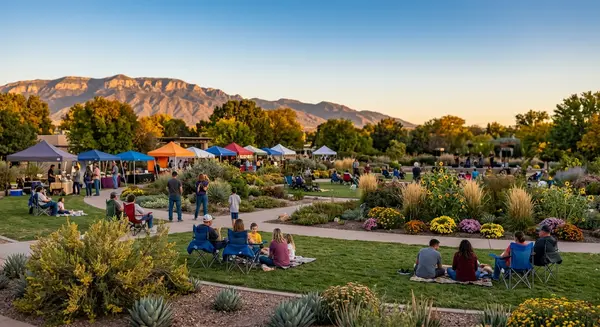
- The mountain access Texas doesn't have: Albuquerque has the Sandia Mountains — rising 5,000 feet from the valley floor within city limits, with hiking trails accessible from residential streets. No comparable Texas city has a mountain range within the urban boundary. For the California buyer who is specifically leaving for the mountain-and-sunshine lifestyle rather than the lowest-possible-cost lifestyle, Texas cannot offer what Albuquerque provides.
- Cultural character: Albuquerque's 300-year history — Pueblo heritage, Spanish colonial, Route 66, atomic age — produces a cultural depth that the master-planned suburban communities of the Texas metros do not provide. California buyers who specifically moved to Texas for affordability and discovered they missed the cultural character of the West Coast found Albuquerque's specific cultural identity a more compatible alternative.
The Phoenix Comparison
- Home price delta: Phoenix median ~$420,000 vs. Albuquerque ~$355,000-$375,000 — a $45,000-$65,000 price gap for comparable homes. Phoenix buyers arriving with Phoenix equity find Albuquerque meaningfully less expensive.
- The mountain access gap: Phoenix has mountains accessible from residential areas (South Mountain, McDowell Sonoran), but the specific combination of the Sandia Mountain Wilderness rising 5,000 feet from the valley floor in Albuquerque is not replicated anywhere in the Phoenix area.
- Summer heat comparison: Phoenix and Albuquerque both experience summer heat. The critical difference: Phoenix sits at 1,086 feet elevation, producing intense desert heat without the high-altitude moderation. Albuquerque sits at 5,312 feet, which reduces daytime temperatures by approximately 15°F relative to Phoenix and produces the cool evenings that make outdoor activity feasible year-round.
The Seattle (and Pacific Northwest) Comparison
- Home price delta: Seattle median ~$750,000 vs. Albuquerque ~$355,000-$375,000 — a $375,000-$395,000 gap. The Seattle buyer sells, deploys equity, and arrives in Albuquerque with transformative purchasing power.
- The remote work equation: Seattle tech salaries ($120,000-$200,000 for software engineers and data scientists) applied to Albuquerque's cost structure produce dramatically higher savings rates and earlier homeownership timelines than the same salary produces in Seattle. The remote worker from Microsoft, Amazon, or Expedia who can work from anywhere and specifically chooses Albuquerque is making a calculated lifestyle and financial upgrade.
- Sunshine: Seattle averages approximately 152 sunny days per year and is famously cloudy. Albuquerque averages 310 sunny days per year. For the Pacific Northwest buyer who has spent years missing the sun, this is not a secondary lifestyle consideration — it is the primary driver of the relocation.
The Four Out-of-State Buyer Profiles — Who Is Actually Moving Here
Profile 1 — The California Equity Buyer
AGE: 45-65 | ORIGIN: Los Angeles, Bay Area, San Diego, Sacramento | MOTIVATION: Equity arbitrage + retirement-adjacent lifestyle upgrade
The California Equity Buyer has owned a California home for 10-25 years and is sitting on $400,000-$1,000,000 in equity. They are not leaving because they are financially distressed — they are leaving because the math of California homeownership at their life stage produces better outcomes for them in Albuquerque.
The specific transaction: sell the LA or Bay Area home for $750,000-$1,500,000. Purchase the Albuquerque Northeast Heights foothills home for $450,000-$700,000 with cash or a small mortgage. Bank $300,000-$800,000 in post-transaction liquid equity. Move to a city with 310 days of sunshine, the Sandia Mountains, and a monthly housing cost that has been eliminated or dramatically reduced.
What they tell us after moving: the food is better than they expected (the New Mexican food culture is a consistent positive surprise). The silence is profound relative to the LA or Bay Area ambient noise they normalized. The drive to the mountain trails from their front door is a daily recalibration of what "access to nature" means.
Profile 2 — The Texas Reconsideration Buyer
AGE: 35-55 | ORIGIN: Houston, Dallas, Austin, or California-to-Texas-then-reconsidering | MOTIVATION: Getting what Texas promised but with mountains, lower property taxes, and cooler evenings
The Texas Reconsideration Buyer is the most specifically 2026 phenomenon in the Albuquerque market. This is the buyer who evaluated Texas seriously — or moved to Texas and found the property tax bill and the summer conditions were more significant than they projected — and is now comparing the full total-cost-of-ownership against the Albuquerque alternative.
The specific calculation: on a $375,000 home, Albuquerque's $3,150/year property tax bill vs. Texas's $7,500-$9,375/year bill is a $4,350-$6,225 annual difference. Over a 10-year holding period at current rates, that difference compounds to $43,500-$62,250 in additional tax payments in Texas vs. New Mexico for the same-priced home. Add the insurance cost differential and the summer heat/humidity quality-of-life factor, and the Albuquerque proposition looks specifically more attractive than the Texas alternative to a growing share of this buyer demographic.
Profile 3 — The Remote Worker
AGE: 28-45 | ORIGIN: Seattle, San Francisco, New York, Austin | MOTIVATION: Salary arbitrage + quality-of-life optimization
The Remote Worker's Albuquerque calculation is the most straightforward: I earn a coastal salary. I can work from anywhere. Where should I live?
The answer that an increasing number are arriving at: Albuquerque, specifically. Not Phoenix (hotter, still expensive). Not Denver (more expensive, winter). Not Austin (property tax shock, price run-up). Albuquerque specifically, because of the combination of: sub-$375,000 median home price, 310 days of sunshine, the Sandia Mountain hiking from the front door, the New Mexican food culture, and the specific community character that remote workers who have visited consistently describe as the quality-of-life factor that was not visible in any comparative analysis.
The monthly financial picture for the remote worker: on a $130,000 Seattle tech salary, renting a one-bedroom in Seattle costs $2,500-$3,500/month. Buying a $350,000 Albuquerque home at 6.30% with 5% down costs approximately $2,260/month PITI — plus equity build rather than rent paid to a landlord. The net financial improvement is immediate and compounding.
Profile 4 — The Military or Federal Employee Transfer
AGE: 25-50 | ORIGIN: Various | MOTIVATION: Kirtland AFB assignment or Sandia Labs posting
Kirtland Air Force Base receives incoming personnel from across the country, and Sandia National Laboratories hires nationally for technical positions. Both produce a consistent stream of out-of-state buyers who arrive in Albuquerque for employment rather than lifestyle discovery — and who then make the lifestyle discovery and frequently choose to stay beyond their initial assignment.
The specific pattern: the military family arrives on BAH, rents for 6-12 months to learn the city, identifies their preferred neighborhood (typically Heritage East for base proximity or Northeast Heights for school quality), and purchases. The federal research professional arrives for a Sandia position, discovers the income-to-cost ratio is dramatically better than their coastal alternative, and buys within 12-18 months. This demographic is the most consistent and most predictable out-of-state buyer segment in the Albuquerque market.
What Out-of-State Buyers Say After They Arrive — The Things the Numbers Don't Show
"What they don't miss: the rent, the traffic, the cost of groceries, the state tax bill, the housing market anxiety, and the general sense of financial pressure that comes with living in one of the most expensive states in the country. Most say the tradeoff lands clearly in Albuquerque's favor once they've settled in. The city has a way of growing on people, especially those who get outside and explore it properly," confirmed Faith Moving Company's 2026 guide to California-to-Albuquerque relocation.
The specific surprises that out-of-state buyers consistently report:
- The food is not what they expected: California and Texas transplants who expect generic Mexican-American food consistently discover that New Mexican cuisine is a specific, centuries-old regional tradition that does not resemble what they expected. The breakfast burrito, the carne adovada, the stacked red chile enchiladas, and the September roasting season are consistently among the top post-arrival positive surprises.
- The silence: The ambient noise level of Albuquerque's residential neighborhoods relative to Los Angeles, Seattle, or Houston is a physical adjustment that most transplants describe only after they have experienced it. The lack of freeway noise, the absence of the baseline drone of a dense metropolitan environment, and the specific quality of the high-desert night quiet are qualities that are not visible in any pre-move research.
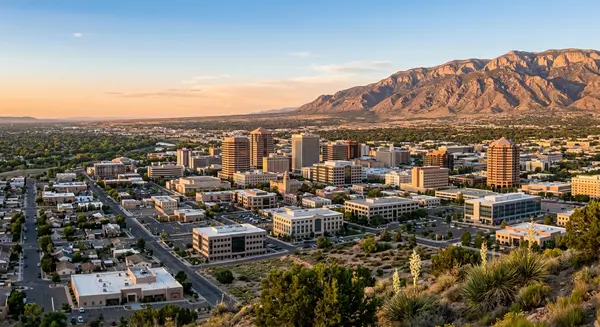
- The mountain relationship: The Sandia Mountains' relationship to Albuquerque's residential neighborhoods — rising immediately to the east, catching the alpenglow pink every evening, accessible by trail from residential streets — is an asset that visitors note intellectually but that residents describe as fundamentally changing their relationship to daily life. The mountains are visible from most residential addresses in the city; they are the orientation point that makes Albuquerque a specifically placed city rather than a generic urban grid.
- The cultural depth they didn't research: The museums, the Pueblo cultural presence, the film industry (Albuquerque is a top-five US film city), the restaurant scene, and the specific character of Nob Hill's walkable corridor are consistently described as more than expected. Buyers who moved for price discover they stayed for culture.
What Out-of-State Buyers Should Know Before Moving
- Crime is neighborhood-dependent: Albuquerque's crime statistics are higher than the national average in specific categories and in specific neighborhoods. The buyer who does neighborhood-level research — rather than reacting to citywide headline statistics — finds genuinely safe areas to purchase. The Northeast Heights, Heritage East, and Corrales are among the safest residential areas in New Mexico. Blanket avoidance of Albuquerque based on citywide crime averages misses a significant share of the city's safe, livable residential options.
- The altitude requires adjustment: At 5,312 feet, Albuquerque sits at mile-high elevation. The first 2-4 weeks produce the specific adjustment symptoms — dehydration, elevated heart rate during physical activity, dry skin — that any sea-level or low-altitude arrival should anticipate. Most residents describe full adjustment within 4-8 weeks.
- New Mexico is a non-disclosure state: Home sale prices are not automatically public record. Out-of-state buyers who rely solely on Zillow Zestimate pricing are working with less accurate data than they are accustomed to from their origin states. Working with a licensed local agent with MLS access is more important in New Mexico than in many other states.
- Car dependence outside specific corridors: Albuquerque is primarily car-dependent outside the Nob Hill/Central Avenue walkable corridor. The California buyer who lives car-free in San Francisco or the Seattle buyer who relies on light rail for daily commutes should understand that Albuquerque requires a car for most practical daily activities outside specific neighborhoods.
- The summer monsoon season: July-August brings Albuquerque's monsoon season — afternoon thunderstorms that arrive quickly and depart quickly, producing intense but brief rainfall and dramatic sky displays. For the transplant from perpetually-dry California, this is typically a positive surprise rather than a negative one, but it is worth understanding before interpreting the "310 days of sunshine" figure.
For the complete guide specifically written for buyers arriving from California or Texas — what to know about Albuquerque's market, neighborhoods, and the things that are genuinely different from what you are accustomed to — our post on what buyers from Texas and California need to know about Albuquerque covers the adjustment guide. And for the complete analysis of whether Albuquerque is a good place to buy in 2026 for any buyer profile — including out-of-state buyers — our post on whether Albuquerque is a good place to buy a house in 2026 covers the complete buyer case.
The Bottom Line — Albuquerque Is the Answer to a Specific Question
Out-of-state buyers are choosing Albuquerque in increasing numbers because the city is the specific answer to a specific question: where can I find a western American city with genuine mountain access, 300 days of sunshine, an authentic cultural identity, a meaningful price advantage over the coastal alternative, and a property tax rate that doesn't negate the income tax savings I thought I was getting from Texas?
Texas is the answer when the primary driver is the income tax elimination. Albuquerque is the answer when the full picture — mountains, culture, property tax rate, dry heat with cool evenings, the specific character of a city that has been here for 300 years — matters as much as the bottom line.
The buyers who are choosing Albuquerque in 2026 are the buyers who have done the full analysis — not just the top-line headline. And the full analysis increasingly points here.
Moving to Albuquerque? Let Us Help You Find the Right Home.
Jenn & Vinay from The Rodgers Neighborhood Real Estate Group work regularly with out-of-state buyers arriving from California, Texas, Seattle, and Phoenix — helping them understand which neighborhoods match their specific lifestyle priorities, which schools serve which areas, how the Albuquerque market's specific dynamics (the non-disclosure state, the NM MFA programs, the two-speed market) affect their purchase strategy, and how to convert their out-of-state equity into the best possible Albuquerque home. The conversation about making Albuquerque your next home starts with a call.
Jenn & Vinay Rodgers are Albuquerque's trusted real estate professionals with The Rodgers Neighborhood Real Estate Group, brokered by Real Broker, LLC, serving buyers and sellers across Albuquerque, Rio Rancho, Corrales, Los Lunas, Tijeras, Cedar Crest, Sandia Park, the East Mountains, Bernalillo County, Sandoval County, and surrounding New Mexico communities.
The Rodgers Neighborhood Real Estate Group
Jenn & Vinay Rodgers
Real Broker, LLC
Albuquerque, NM
📞 505-417-2733
🏠 Browse Albuquerque homes — see what your out-of-state budget buys hereCategories
- All Blogs (362)
- 2026 & Beyond for Real Estate (256)
- Doctors and Nurses looking for homes in NM (4)
- Guide to buying a home in NM (160)
- Health Care Heros (7)
- Home Upgrades (42)
- Jenn & Vinay your Local Real Estate Experts! (124)
- Moving to Albuquerque (139)
- Neighborhoods in Albuquerque NM (94)
- Rent or Own (2)
- Sellers Questions for Selling homes (2)
Recent Posts





GET MORE INFORMATION