
Moving to Albuquerque: Homebuyer's Complete Guide 2026
This guide is for the buyer who has decided to come to Albuquerque — or who is seriously considering it — and wants the complete picture before they start searching, offering, and committing. We cover the market, the neighborhoods, the rent-first question, the climate, the cost of living, the NM-specific programs, the inspection considerations specific to desert construction, and the first 90 days. All of it.
Part 1 — The City Quick Brief
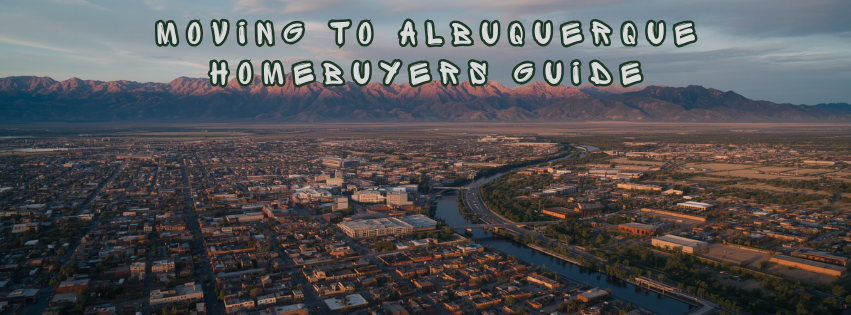
"Albuquerque is the 32nd most populous city in the U.S. and the largest city in New Mexico with a population of 564,559. It sits in the Rio Grande Valley, it's the county seat of Bernalillo County, and its historic Old Town was founded in 1706 by Spanish settlers," confirmed moveBuddha's 2026 Albuquerque relocation guide (March 2026).
The essential Albuquerque geography every buyer should understand before searching:
- Elevation: 5,312 feet (over a mile above sea level). The "highest major metropolitan city in the United States" designation is real and has specific implications for physical adjustment, cooking, baking, weather patterns, and real estate construction considerations.
- The orientation: The Sandia Mountains rise directly to the east. The Rio Grande flows north to south through the center. Interstate 25 runs north to south; Interstate 40 runs east to west. The Sandias are always east. Most residents navigate primarily by the mountains — "head toward the mountains" = east; "head away from the mountains" = west.
- The five geographic zones: Northeast Heights (established suburbs, premium schools, foothills access); North Valley and Los Ranchos (bosque-adjacent, agricultural character, Rio Grande Boulevard); Westside/Rio Rancho (newer construction, growth corridor, Intel proximity); South Valley (most affordable, South of Central Avenue traditional neighborhood); East Mountains (Tijeras, Cedar Crest, Sandia Park — commutable but distinctly rural).
- The metro area: Greater Albuquerque includes Rio Rancho (Sandoval County, 15 minutes northwest), Corrales (independent village, 20 minutes northwest), Bernalillo (small city, 25 minutes north), Placitas (unincorporated community, 30 minutes north), and Los Lunas/Belen (Valencia County, 20-30 minutes south).
- Car dependency: Albuquerque is primarily car-dependent. The exception is the Nob Hill/Central Avenue walkable corridor. For all other daily life activities, a car is required. Factor this into neighborhood decisions — the Northeast Heights home that looks ideal on paper requires a car for every errand.
Part 2 — The 2026 Market — What You Are Walking Into
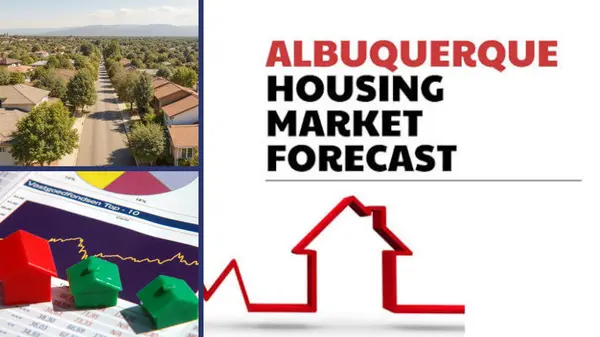
The Albuquerque real estate market as of mid-2026:
- Median sale price: $355,000 (Redfin 3-month ending May 2026). SWMLS/Domus May 2026 data shows $375,000 for the broader metro. GAAR Q1 2026: $369,000. The range reflects different geographic coverage and methodology.
- Price per square foot: $212-$216/sq ft — meaningfully below Denver ($300+), Phoenix ($230+), and well below Seattle and California metros.
- Days on market: 34 days for sold homes. Hot homes go pending in 12-19 days. Stale listings average 95 days.
- Seller concessions: Approximately 36-37% of recent closings included seller concessions — closing cost credits, rate buydowns, or repair credits. Real negotiating room exists, particularly for mid-tier and above-median listings.
- The two-speed reality: Correctly priced homes in desirable neighborhoods still move quickly. Overpriced homes sit. Approximately 38-40% of active listings have taken price reductions. The buyer who knows how to read the market can find genuine value; the buyer who assumes everything is negotiable will miss correctly priced homes.
- NM non-disclosure state: Sale prices are not automatically public record. Zillow Zestimates are specifically less accurate here than in disclosure states. Working with a local agent with MLS access to closed comparables is more important in New Mexico than in most other states.
Part 3 — The Rent-First vs. Buy-First Question
The most common strategic question for relocating homebuyers: should I rent for 6-12 months to learn the city before committing to a purchase, or buy immediately?
- The case for renting first: Albuquerque has significant neighborhood variation — the dynamics of the Northeast Heights, the South Valley, the North Valley, and the Westside are genuinely different in ways that are hard to appreciate from online research. A rental period that allows you to commute to your workplace from different neighborhoods, visit grocery stores and coffee shops in different areas, and attend events in different districts produces a specific neighborhood knowledge that improves the purchase decision.
- The case for buying immediately: At 6.30% current rates, every month of renting is a month of no equity build and $1,387-$1,500/month in average Albuquerque rent paid to a landlord. At $355,000 median, the first-year appreciation of 2-3% produces $7,100-$10,650 in home value increase. Over 12 months of renting at $1,500/month, you spend $18,000 in rent and build no equity. Over 12 months of owning at $355,000 (5% down), you build approximately $5,640 in principal paydown plus any appreciation. The math favors buying for buyers with high certainty about their relocation.
"Renting is often a good first step when relocating to a new city. It allows you to explore different neighborhoods and understand commuting patterns before making a long-term investment," confirmed Faith Moving Company's 2026 Albuquerque relocation guide. The 12-18 month rental period is the most commonly recommended intermediate step for out-of-state buyers who are uncertain about which specific neighborhood fits their daily life.
The practical middle path: arrive with pre-approval in place. If you see a home in your first 60-90 days that fits your criteria, you have the financing ready to act. If you are not ready to commit to a neighborhood within 90 days, the rental period serves a valuable function. Many successful Albuquerque homeowners describe renting in a specific neighborhood for 6-9 months before identifying a home to purchase as the best decision they made about the move.
Part 4 — How to Choose Your Neighborhood
The neighborhood decision in Albuquerque determines more of the daily quality of life experience than in most comparably-sized cities because of the geographic variation — each zone of the city has a distinct character, climate microclimate, school district, commute pattern, and lifestyle orientation.
- Start with employment proximity: Where will you be working most of the time? Kirtland Air Force Base: Heritage East, Southeast Heights. Sandia Labs: Northeast Heights foothills. UNM/Presbyterian: University Heights, Nob Hill. Intel Rio Rancho: Taylor Ranch, Rio Rancho. Downtown: Nob Hill, Wells Park. Remote: anywhere, but consider Nob Hill for walkable coffee shop culture.
- Layer the school zone decision: If children's school quality matters, verify the APS school zone assignment at aps.edu for every address you seriously consider. La Cueva zone (87122) is the premium assignment; Eldorado zone (87111) is the accessible premium. Zone boundaries run down specific streets — two blocks can mean two different schools.
- Understand the safety variation: Albuquerque's citywide crime statistics are above the national average. The variation by neighborhood is significant. North Albuquerque Acres, High Desert, Sandia Heights, Heritage East, and Corrales are among the safest residential areas. The Northeast Heights premium tier is generally the safest and most desirable residential band. Research neighborhood-level safety rather than reacting to citywide averages.
- Use the demographic tool:com's demographic explorer allows you to enter any Albuquerque ZIP code and receive the three leading demographic groups for that area — useful for identifying neighborhoods where your peer community is concentrated.
The Neighborhood Quick Reference
- Northeast Heights (87122/87111/87110/87112): The premium residential tier. La Cueva and Eldorado school zones. Sandia Mountain foothills access. Most desirable and most expensive. 20-35 minute commute to most employment.
- Nob Hill (87106): Arts and restaurant culture. 5 minutes to Downtown, 5 minutes to UNM/Presbyterian. The most urban neighborhood character in the city. Older housing stock, higher per-square-foot.
- North Valley and Los Ranchos: Bosque-adjacent. Large lots. Agricultural zoning. 15 minutes to Downtown. For buyers who want the rural-within-city feel. More expensive than mid-Heights.
- Westside and Rio Rancho: Newer construction. Lower per-square-foot. Rio Rancho Public Schools (B+ Niche). Intel employment proximity. Longer drive to central Albuquerque.
- South Valley (87105): Most affordable. Strong traditional cultural character. Higher crime statistics in some sections. 10-15 minutes to Downtown.
- East Mountains (Tijeras, Cedar Crest, Sandia Park): Small-town character. 30-45 minute commute to Albuquerque. USDA rural financing may be eligible. Lower prices. True rural environment with high-altitude character.
Part 5 — New Construction vs. Resale
Both options are viable in 2026 Albuquerque, with specific tradeoffs:
- Active builders (2026):R. Horton, Lennar, and Pulte (national, multiple communities); Twilight Homes, Abrazo Homes, Pueblo Bonito Homes, Stillbrooke Homes (local/regional, often more differentiated). Active communities: Mesa del Sol (South), Mariposa (Rio Rancho), Bernalillo development, scattered Northeast Heights infill.
- New construction advantages: Builder warranty on systems and structure. Everything new — HVAC sized for the high-desert climate, energy efficiency, no deferred maintenance. Builder may offer rate buydown concessions. No seller competing emotional interest.
- New construction disadvantages: Often further from employment centers. Established neighborhood character not yet developed. Landscaping immature. May face limited NM MFA program availability depending on price point.
- Resale advantages: Established neighborhoods, mature landscaping, known school zone. Often more central location. Negotiating room for resale seller motivated by life circumstances.
- Resale considerations specific to ABQ: The 1977 median build year means many resale homes need inspection attention to HVAC, roof, electrical, and swamp cooler vs. refrigerated air status. Budget for inspection and any required repairs.
Part 6 — The Climate Reality
Albuquerque's climate is one of the most positive relocation surprises for buyers from cloudy or rainy origin markets, and one of the most important adjustments for buyers from sea-level coastal environments.
- The sunshine: 310 days of clear or mostly-clear days per year. Cloud cover is the exception, not the norm. The psychological effect of consistent sunshine is significant — most transplants describe it as one of the most meaningful quality-of-life improvements over cloudy Pacific Northwest, Great Lakes, or Northeast origins.
- Summer (May-September): Daytime highs typically 85-95°F. The critical difference from Phoenix or Texas: the high desert produces 30-40°F evening temperature drops — a 95°F afternoon becomes a 60-65°F evening, making outdoor activity feasible year-round. The heat is real but the evenings redeem it.
- The monsoon season (July-August): Albuquerque's summer monsoon produces afternoon thunderstorms that arrive quickly and typically depart within 1-3 hours. The lightning displays are spectacular. The resulting humidity briefly eliminates the swamp cooler advantage (swamp coolers require low humidity to function). For buyers arriving from perpetually-dry California, the monsoon is usually a welcome seasonal variation.
- Winter (November-February): Mild compared to most Americans' winter frame of reference. Winter lows drop to approximately 27°F; daytime highs in December-January typically reach 45-55°F. Snow events occur 1-3 times per year and typically melt within 24-72 hours. Skiers specifically find the proximity to Ski Santa Fe (25 miles) and Taos Ski Valley (130 miles) a bonus.
- Altitude adjustment (the most important practical note): At 5,312 feet, newcomers commonly experience: fatigue for the first 2-4 weeks, elevated heart rate during physical activity, increased dehydration, dry skin and nosebleeds, and in cooking, shorter boiling times and adjusted baking ratios. Most people report full adjustment within 4-8 weeks. Drink significantly more water than you think you need, starting from day one.
Part 7 — The Cost of Living Picture
The comprehensive cost of living comparison for Albuquerque vs. national average:
- Overall cost of living: 7% below the national average — meaning equivalent lifestyle costs meaningfully less in Albuquerque than the national norm.
- Housing: 12% below national average (before the recent years' appreciation). The $355,000 median home in Albuquerque compares to $416,000 national median and $700,000-$1,200,000+ in the California and Seattle metros.
- Utilities: 10% below the national average. PNM (electricity) and New Mexico Gas Company are the primary utility providers. High-desert climate reduces heating and cooling costs relative to humid climates and cold-weather markets.
- Groceries: 2% below national average. Not a dramatic savings but consistent with the overall lower cost structure.
- Transportation: 7% below national average. Albuquerque's 21-minute average commute (vs. 27-minute national average) and the lower cost of car ownership in New Mexico contribute.
- State income tax: New Mexico's rate ranges from 1.7% to a top rate of 5.9% — significantly below California's 13.3% and competitive with most other states. Social Security income is not taxed in New Mexico, specifically benefiting retirees.
- Sales tax: Albuquerque's combined state and local sales tax rate is approximately 7.875% — roughly in line with national averages.
- Property taxes: Bernalillo County effective rate approximately 0.84% of market value — below the national average and dramatically below Texas (2.0-2.5%). On the $355,000 median home: approximately $2,982/year or $249/month. A Head of Family exemption reduces this slightly once filed.
Part 8 — The Employment Landscape
The major Albuquerque employers that drive the professional economy:
- Sandia National Laboratories: Approximately 16,900 employees in nuclear security, quantum computing, AI, energy research, and space systems. Research scientists earn $109,990-$185,160. The largest single employer of technical professionals in the metro.
- Kirtland Air Force Base: Military personnel, DoD civilians, and defense contractors. Heritage East and the Southeast Heights specifically serve this employment community.
- Intel Rio Rancho (Fab 11X expansion): $7.86 billion CHIPS Act-funded expansion. Process engineers, materials scientists, operations professionals. Rio Rancho's primary economic driver.
- UNM and UNM Health Sciences: 27,000+ students, faculty, and staff. The medical complex includes Presbyterian Hospital. One of the largest healthcare employment concentrations in New Mexico.
- Netflix / Albuquerque Studios: Confirmed 300-acre expansion adding 1,000 professional jobs. Creative and production professionals.
- Film industry broadly: Albuquerque is a top-five US film production city. NBCUniversal, Netflix, and independent productions employ consistently.
- State and local government: New Mexico state government agencies, City of Albuquerque departments, Bernalillo County.
- Remote workers: A growing share of Albuquerque's professional population brings employment from outside the city — Seattle tech, Austin tech, coastal financial services. The income-to-cost-of-living advantage is the primary draw.
Part 9 — The Albuquerque-Specific Inspection Considerations
The desert Southwest construction environment produces specific inspection considerations that buyers from other climates may not anticipate:
- Swamp cooler vs. refrigerated air: Many pre-2000 Albuquerque homes use evaporative (swamp) cooling rather than refrigerated air conditioning. Swamp coolers work well in dry months but fail during the monsoon when humidity rises. Buyers typically prefer refrigerated air. If the home has a swamp cooler, budget $5,000-$12,000 for conversion or negotiate a corresponding credit.
- Flat roofs: Many Albuquerque homes feature flat or low-slope roofs in the Pueblo/Southwest architectural tradition. Flat roofs require specific maintenance (recoating) and inspection expertise that differs from the pitched roof inspections common in other climates.
- Adobe and stucco construction: Traditional adobe and modern stucco-over-frame construction are both common. Adobe's thermal mass properties (stays cool in summer, retains warmth in winter) are real advantages. Look for cracks in the stucco exterior that may indicate water intrusion — especially critical before monsoon season.
- Well and septic infrastructure: North Albuquerque Acres (87122) and parts of the East Mountains rely on private wells and septic systems rather than city water and sewer. Well testing and septic inspection are non-negotiable steps for any property with this infrastructure.
- Foundation in expansive soils: Parts of Albuquerque sit on clay-heavy soils that expand when wet and contract when dry, producing foundation movement. An experienced local inspector will specifically check for foundation issues related to soil expansion.
Part 10 — The NM-Specific Homebuyer Programs
New Mexico offers state-specific homebuyer assistance that is not available in most other states:
- FIRSTHome (Housing New Mexico/NM MFA): Below-market rate first mortgage for first-time buyers (or buyers who have not owned in 3 years). $500 minimum down payment. 620 minimum credit score.
- FirstDown (down payment assistance): Up to 4% of purchase price in DPA as a second mortgage, combined with FIRSTHome. Covers down payment and closing costs.
- HomeForward: DPA without the first-time buyer requirement. Up to 3% DPA, simplified qualification.
- Stacking potential: Maximum stacked assistance can reach approximately $50,000 for qualifying buyers. For a $280,000 home, this can produce near-zero out-of-pocket purchase.
- VA loans: Albuquerque's significant military population means VA zero-down loans are common. Eligible veterans should specifically start with VA rather than conventional or FHA.
- Bernalillo County FHA loan limit (2026): $541,287 — covers most of the Albuquerque residential market at all but the premium foothills tier.
Part 11 — The First 90 Days After You Move In
- New Mexico driver's license: Required within 90 days of establishing NM residency. Real ID compliant. Required documents: proof of identity, Social Security card, two proofs of NM residency (utility bill, bank statement). MVD office locations at mvd.newmexico.gov.
- Vehicle registration: New Mexico requires vehicle registration within 90 days of residency. VIN inspection required for vehicles registered out-of-state. Registration is through the NM MVD.
- File the Head of Family property tax exemption: The $2,000 assessed value reduction requires a single application at the Bernalillo County Assessor's Office. File within 30-60 days of closing. It does not happen automatically.
- Voter registration: Register to vote in New Mexico at sos.nm.gov. New Mexico has same-day voter registration at polls.
- Utility set-up: PNM (electricity): pnm.com. New Mexico Gas Company: nmgc.com. Water/sewer varies by municipality — Albuquerque Bernalillo County Water Utility Authority (ABCWUA) for city addresses: abcwua.org.
- Altitude and dehydration: Drink significantly more water from day one. Reduce alcohol for the first two weeks. Rest more than you think you need to. Most people feel meaningfully better by week 4-6.
- Green chile season (September): Your first September in Albuquerque, the grocery store parking lots will have roasting drums. The smell is unprecedented. Buy 10-20 pounds of freshly roasted green chile and freeze in 1-cup portions. This is not optional. You will understand in October when you want green chile on everything and it is no longer roasting season.
For the complete overview of what Albuquerque life is like — the honest pros and cons that the relocation guide format misses — our post on the pros and cons of living in Albuquerque before you relocate covers the complete candid picture. And for the neighborhood guide organized specifically for families evaluating school quality — the school zone decision that will likely be among the most important in your purchase — our post on the best family-friendly neighborhoods in Albuquerque with school information covers the school zone landscape.
The Bottom Line — Albuquerque Rewards the Buyer Who Does the Work
The buyers who have the best experience relocating to Albuquerque are the ones who approach the move with genuine curiosity rather than assumptions — who discover the New Mexican food culture rather than expecting Mexican food, who find the Sandia Mountain trail accessible from their street rather than requiring a 90-minute drive, who are surprised by the museum density, the film industry's presence, and the specific cultural depth of a city that has been continuously inhabited for 1,000+ years.
The buyers who have the hardest adjustment are the ones who expected a generic Sun Belt city and encountered a highly specific place with its own character, its own cuisine, its own architectural tradition, and its own pace. Albuquerque is not for everyone. It is very specifically for the people it is right for.
If the mountains, the sunshine, the food, the cultural depth, and the financial equation make sense for your life — and for an increasing number of people arriving from Los Angeles, Seattle, Phoenix, and recalibrating Texas — Albuquerque delivers. Consistently. The relocation guides and the transplant communities are unanimous on one thing: the people who come here with open eyes and stay for a year tend to stay for decades.
Ready to Start Your Albuquerque Home Search?
Jenn & Vinay from The Rodgers Neighborhood Real Estate Group specialize in working with relocating buyers — from the first remote consultation through the virtual tour shortlist to the in-person search visit and the closing. We know which neighborhoods match each buyer profile, how to verify school zone assignments, how to read the two-speed market to find genuine value, and how to navigate the NM non-disclosure state's specific requirements. The conversation about making Albuquerque your home starts with a call.
Jenn & Vinay Rodgers are Albuquerque's trusted real estate professionals with The Rodgers Neighborhood Real Estate Group, brokered by Real Broker, LLC, serving buyers and sellers across Albuquerque, Rio Rancho, Corrales, Los Lunas, Tijeras, Cedar Crest, Sandia Park, the East Mountains, Bernalillo County, Sandoval County, and surrounding New Mexico communities.
The Rodgers Neighborhood Real Estate Group
Jenn & Vinay Rodgers
Real Broker, LLC
Albuquerque, NM
📞 505-417-2733
🏠 Start your Albuquerque home search now
Categories
- All Blogs (312)
- 2026 & Beyond for Real Estate (208)
- Doctors and Nurses looking for homes in NM (4)
- Guide to buying a home in NM (145)
- Health Care Heros (7)
- Home Upgrades (35)
- Jenn & Vinay your Local Real Estate Experts! (104)
- Moving to Albuquerque (123)
- Neighborhoods in Albuquerque NM (82)
- Rent or Own (2)
- Sellers Questions for Selling homes (2)
Recent Posts

GET MORE INFORMATION