
Future Housing Trends That Could Shape Albuquerque's Real Estate Market — The 2026 Forward Analysis
DISCLAIMER: Real estate market forecasts involve genuine uncertainty. The trends and projections in this guide are based on current data, confirmed employer commitments, historical patterns, and analyst forecasts — not guarantees. All forecasts should be understood as a range of possible outcomes rather than predictions of specific price points.
The 2026 Albuquerque housing market is best understood not as a static snapshot but as a moment in a longer trajectory — a rate-constrained plateau in a market with structural demand drivers that will outlast the current rate environment. This guide covers the 10 structural trends that will shape the market over the next 3-10 years and what they mean for buyers, sellers, and investors making decisions now.
The Baseline — Where the Market Stands Before the Trends Act
"Based on our Albuquerque real estate market research, home values will increase in the next 12 months. The predicted price of an average home in the Albuquerque area is $395,503 by 2031-05-11. For a 5-year investment the profit is expected to be around +16.90%. Based on our forecasts, a long-term increase is expected — the predicted sales prices will increase by 62.118% in the next 10 years. The predicted home sales price of an Albuquerque home in 2030 is $386,871. The predicted home sales price in 2035 is $445,875," confirmed WalletInvestor's Albuquerque real estate market forecast (May 2026). These algorithmic forecasts assume continuation of current trend rates and do not incorporate the structural acceleration catalysts covered below.
The starting position:
- Current median (Redfin, 3-month ending May 2026): $355,000, +2.8% YoY
- Current median (SWMLS/Domus, May 2026): $375,000, +2.3% YoY
- Zillow ZHVI (May 31, 2026): $349,190, +1.0% YoY
- NeighborhoodScout 10-year cumulative appreciation: +94.59%; annual average 6.88%; current 12-month +4.34%
- 30-year fixed rate (Freddie Mac, April 30, 2026):30%
- Active inventory (SWMLS May 2026): 1,771 active listings; 2.0 months supply
The current 1-3% appreciation rate is meaningfully below the historical 6.88% annual average. The gap represents the rate suppression effect — demand is real but rate-constrained. The structural trends below are the forces that will release and accelerate that demand as the rate constraint eases.
Trend 1 — The Rate Relief Catalyst: The Single Biggest Variable
"Mortgage rates are the biggest variable controlling affordability and demand. If Rates Stay High (6.5-7.5%): we will continue to see stabilization and slow price growth (maybe 1% to 2% annually). If Rates Decline to 5.5-6%: expect a rush of pent-up demand to unlock. Many buyers who have been waiting on the sidelines will be activated, demand will surge, and we could see appreciation bounce back to 4-6% annually. If Rates Drop Below 5%: this scenario would be transformative for the Albuquerque market, with significant price appreciation and a competitive market returning in full force," confirmed Norada Real Estate's Albuquerque market analysis (November 2025).
The rate relief impact on Albuquerque is specifically significant because of the city's large renter household base. At 93,057 renter households (RentCafe June 2026 data), Albuquerque has a massive latent buyer pool that is sitting on the ownership threshold, waiting for the monthly payment math to work. At 6.30%, the $355,000 median home requires approximately $97,000-$107,000 annual income at standard qualifying ratios — above Albuquerque's $68,866 median household income. At 5.50%, the same home requires approximately $85,000-$95,000 — meaningfully more of the Albuquerque population qualifies.
- Rate scenario 1 — High rates persist (6.5-7.5%): 1-2% annual appreciation. Market remains rate-constrained. The supply constraint (2.0 months) prevents price decline; demand suppression prevents acceleration. Best for cash buyers and high-income buyers unaffected by rate sensitivity.
- Rate scenario 2 — Moderate decline (5.5-6.5%): 3-5% annual appreciation. Pent-up demand begins releasing. Entry-level and mid-tier see the most immediate acceleration. The buyer pool expands meaningfully. Most analyst base case for 2027-2028.
- Rate scenario 3 — Significant decline (<5.5%): 6-8%+ annual appreciation. Demand surge, multiple offer conditions return in the most competitive tiers, the historical 6.88% annual average resumes. Premium neighborhoods specifically outperform — the La Cueva zone school premium accelerates as more buyers can afford it.
Trend 2 — The Intel CHIPS Act Employment Wave (Rio Rancho)
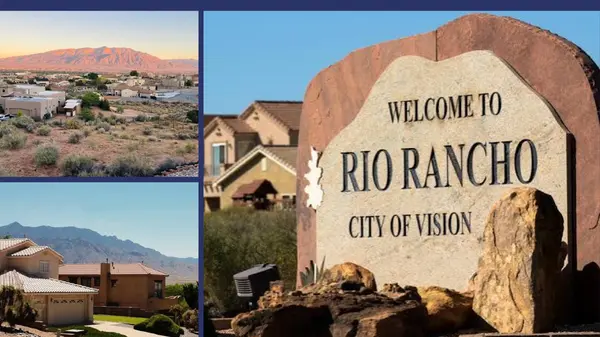
Intel's $7.86 billion CHIPS Act-funded expansion of its Rio Rancho Fab 11X facility is the most consequential single employment announcement in New Mexico's modern economic history. The buildout is already underway and will produce a sustained employment growth wave over 3-7 years as the facility expands capacity.
The housing market implications:
- Rio Rancho is Intel's backyard: The professional engineers, materials scientists, and operations staff that Intel adds will predominantly choose Rio Rancho residential options first, then Taylor Ranch and Paradise Hills (ABQ Westside), then the broader metro. The demand is geographically concentrated in the western metro.
- History rhymes: Intel's original 1980s-1990s buildout in Rio Rancho triggered the city's first growth wave — Rio Rancho grew from a small community to New Mexico's second-largest city primarily driven by Intel employment. The CHIPS Act buildout is the second wave. Rio Rancho's 8.1% population growth from 2020-2024 is already reflecting the early phase of this employment expansion.
- Rate-independent demand: Intel employment-driven demand is specifically less rate-sensitive than speculative demand. An Intel process engineer hired at $130,000 will buy a home in Rio Rancho because that is where they work — regardless of whether rates are 5.5% or 7.0%. Employment-anchored demand is the most durable form of residential market support.
Trend 3 — The Netflix Campus Expansion (Mesa del Sol)
Netflix's confirmed 300-acre campus expansion at Mesa del Sol adds 1,000 professional jobs to the southeastern Albuquerque employment landscape. The creative class that Netflix brings — production directors, studio technology professionals, content operations executives — is a high-income demographic that will disproportionately favor Nob Hill, the University corridor, and the Downtown/EDo neighborhood cluster.
- The before-it's-priced-in window: The Mesa del Sol residential market has not yet absorbed the Netflix employment demand because the jobs have not yet arrived. The buyer who enters Mesa del Sol at the $300,000-$410,000 current range before the Netflix employment ramp-up is capturing the pre-catalyst price.
- The broader film industry effect: Netflix's campus will anchor a cluster of ancillary productions, post-production services, talent agencies, and creative businesses that follow major studios. The film industry footprint in Albuquerque grew significantly with Breaking Bad's production footprint — Netflix's 300-acre campus will produce a multiplied version of that same dynamic.
- Albuquerque already a top-5 film city: The New Mexico Production Credit has attracted NBCUniversal, Netflix, and a continuous stream of productions that collectively generate hundreds of millions in annual economic impact. The Netflix campus expansion is the most visible manifestation of a structural trend that has been building for a decade.
Trend 4 — The Pent-Up Renter Demand Release
Albuquerque has 93,057 renter households (RentCafe June 2026, 38% renter-occupied). This renter population represents a buyer pool that is specifically watching the ownership door — a significant share of these households earn incomes that could support homeownership and are waiting for the rate environment to make the monthly payment math work.
- The trigger: Every 0.5% decline in mortgage rates increases the share of Albuquerque renter households who qualify for the median home. The pent-up demand release is not an all-or-nothing event — it is a gradual, accelerating activation of latent buyers as rates decline in increments.
- The demographic timing: The millennial cohort that delayed homeownership due to student debt, the pandemic, and the rate environment is now 30-44 years old — precisely the age band with the highest lifetime probability of home purchase. This cohort will not delay indefinitely; they will purchase when the math becomes tolerable.
- The effect on the market: Each wave of pent-up demand activation produces outsize impact on the market because the buyers arrive simultaneously — they were not buying last month but they are buying this month. This dynamic creates the appreciation surges that characterize markets immediately following rate relief events.
Trend 5 — The Geographic Supply Constraint: The Floor That Will Not Move
The most durable structural force in Albuquerque's long-term market is the geographic constraint on supply — the permanent boundaries that prevent the residential market from building its way out of demand pressure:
- Sandia Mountain Wilderness (east): The federally designated Wilderness boundary is permanent federal protection. The Northeast Heights foothills cannot be developed further east. The supply of La Cueva zone foothills homes is functionally fixed.
- Petroglyph National Monument (west): The 7,244-acre monument permanently constrains westward Westside expansion.
- Rio Grande riparian corridor (center): Protected bosque and floodplain prevent dense development along the river. The North Valley and Los Ranchos agricultural zoning resists subdivision.
- Not overbuilding like other markets: Unlike some Sun Belt markets that have built aggressively, Albuquerque builders are operating at a steady, not overbuilt, pace. New housing starts are down from their peak. This controlled supply is the market's most important price floor mechanism.
The practical implication: Albuquerque cannot build its way to affordability in the way that Las Vegas or Phoenix can build new subdivisions on their edges indefinitely. The supply constraint is structural and permanent — which means demand growth always pushes against a constrained supply ceiling, producing appreciation regardless of the rate environment over long holding periods.
Trend 6 — Gen Z Entering Homebuying Age
The generation born between 1997 and 2012 — Gen Z — began turning 25 in 2022 and will be entering peak household-formation and homebuying years through the late 2020s and 2030s. This is the most important generational demand wave coming to the Albuquerque market:
- The size of the wave: Gen Z is the largest generation in US history by count. Their entry into the homebuying market over the next 5-10 years will sustain demand for housing at a scale that will interact powerfully with the supply-constrained Albuquerque market.
- Gen Z's specific preferences: Market research consistently shows Gen Z specifically prioritizes: walkability (the reason for Nob Hill's Walk Score 85 premium), cultural identity and authenticity (the reason for Albuquerque's specific cultural depth advantage), affordability relative to coastal alternatives, and climate with outdoor access. Albuquerque scores specifically well on all four of these criteria relative to comparable western cities.
- The education-to-jobs pipeline: UNM's 27,000+ enrollment produces a recurring population of young professionals who are initially renters and eventually buyers within the Albuquerque market. The Intel and Netflix employment expansions provide the career-level income that converts the UNM graduate renter into the first-time homebuyer.
Trend 7 — The Remote Work Structural Permanence
The shift to remote and hybrid work has stabilized at levels significantly above pre-pandemic — approximately 28% of US professional work is now done remotely some or all of the time. This structural shift has specific implications for Albuquerque because the city's income-to-cost advantage specifically benefits buyers who bring external salaries:
- The salary arbitrage advantage: The Seattle tech worker earning $140,000 who can work from anywhere has access to a $355,000 Albuquerque home with a manageable mortgage — a financial position that the same worker cannot achieve in Seattle at their income level. This demographic is specifically among the most financially qualified buyers in the Albuquerque market and will continue arriving as remote work options remain available.
- The broadband infrastructure requirement: As remote work becomes permanent for more households, broadband quality becomes a real estate amenity. Properties with confirmed fiber internet access will carry an increasing premium over the coming decade, particularly in the East Mountains and other areas where infrastructure quality is variable.
- The co-working expansion: Albuquerque's co-working infrastructure — Innovate ABQ downtown, independent co-working spaces in Nob Hill — is growing to support the remote professional population. This infrastructure makes the urban core neighborhoods more attractive to remote workers who want coffee shop culture and professional community without needing office proximity.
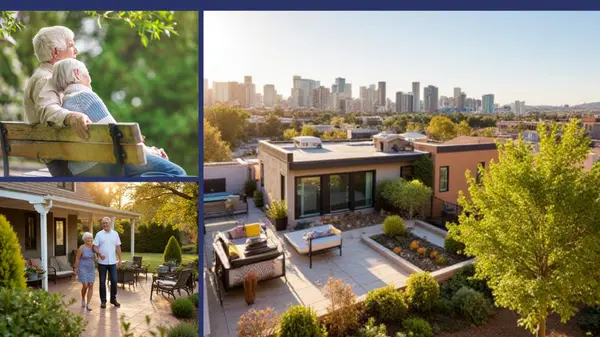
Trend 8 — The Multigenerational Housing and ADU Wave
The national trend toward multigenerational housing — adult children living with parents, aging parents moving in with adult children, and the broader definition of household that includes multiple generations — is producing specific housing market consequences:
- ADU construction growing: Accessory Dwelling Units (casitas, guest houses, garage apartments) are being permitted and built at increasing rates across Albuquerque. New Mexico's existing casita tradition — the detached guesthouse that has been part of the Pueblo and Spanish colonial residential vocabulary for centuries — makes Albuquerque specifically well-suited to the ADU trend.
- Large-lot properties gaining value: The acre-plus lots of North Albuquerque Acres and the agricultural parcels of Corrales and the North Valley are specifically valuable for multigenerational housing because they can accommodate an additional dwelling unit without the density conflicts of urban lots.
- Zoning evolution: The City of Albuquerque is gradually modernizing its zoning code (IDO — Integrated Development Ordinance) to permit ADUs in more residential zones. As ADU permitting becomes more straightforward, the effective housing supply in existing neighborhoods increases without requiring new land development.
Trend 9 — The Aging Housing Stock Renovation Wave
Albuquerque's 1977 median build year is approaching 50 years — the threshold at which major system replacements (roof, HVAC, electrical, plumbing) converge and homes require significant investment or renovation. This aging stock trend is producing specific market consequences:
- The renovation premium expanding: Homes that have been updated — refrigerated air, new roofs, updated kitchens and bathrooms — command an increasing premium over comparable unimproved homes as the gap between updated and outdated widens. Buyers who renovate immediately after purchase at 2026 prices will likely capture the renovation premium as the market matures.
- FHA 203(k) adoption increasing: The renovation loan product that allows buyers to finance both the purchase and the renovation in a single closing is finding growing use in Albuquerque's entry-level market. The ability to purchase a 1977-era home with renovation financing built in allows buyers to compete on price while building in their improvement costs.
- Swamp cooler conversion wave: The generational shift from evaporative to refrigerated air is accelerating. As buyers increasingly expect refrigerated air as a minimum standard and as the cost differential between swamp coolers and mini-split refrigerated systems narrows, the remaining swamp cooler homes will face growing market discount pressure.
Trend 10 — The Short-Term Rental Market and Its Regulatory Future
Albuquerque's growing tourism infrastructure — the Route 66 centennial, the Balloon Fiesta's 500+ balloon capacity, the Breaking Bad film tourism, the New Mexican cuisine destination dining scene — is attracting short-term rental investment that will intersect with increasing regulatory pressure:
- Current STR performance: Albuquerque short-term rental average revenue is approximately $2,844/month (Mashvisor data), making STR cash flow meaningfully better than long-term rental in the right locations. Old Town, Nob Hill, and Downtown/EDo are the specific STR demand zones.
- The regulatory trajectory: Cities nationally are increasing STR regulation — occupancy taxes, registration requirements, owner-occupancy mandates, and density limits. Albuquerque has begun the registration process; more regulation is the national trajectory, not less. Investors buying specifically for STR should model the cash flow under a more regulated scenario rather than assuming current permissiveness continues indefinitely.
- The Hotel Competition Constraint: Albuquerque's hotel expansion (the Clyde Hotel, Hotel Zazz, and the boutique hotel boom in EDo) is increasing the supply of professionally managed lodging that competes with STRs on amenity and consistency. The STR investor who offers a distinctly local experience (an adobe casita in Old Town, a bosque-adjacent cottage in the North Valley) has a more defensible competitive position than generic STR properties.
The Long-Range Forecast — What the Data Projects for 2030 and 2035
Combining the structural trends above with the available quantitative forecasts:
- WalletInvestor 2030 forecast: $386,871 median (from current ~$338K-$355K) — approximately 9-15% cumulative appreciation over 4 years at the baseline trend rate.
- WalletInvestor 2031 forecast: $395,503 — +16.9% from current, representing 3.4% annual appreciation on average.
- WalletInvestor 2035 forecast: $445,875 — approximately 25-32% cumulative appreciation from current, representing 3.0-3.5% annual appreciation on average.
- NeighborhoodScout historical context: The 10-year historical average of 6.88% annually implies $670,000-$700,000 by 2035 at the historical trend rate — dramatically above the WalletInvestor projection, which assumes current rate suppression persists indefinitely.
- The range: The honest 2035 median price forecast is $440,000-$700,000 depending on whether rates moderate (higher end), remain elevated (middle), or decline significantly (highest end). The spread reflects genuine uncertainty rather than false precision.
The most defensible single statement about Albuquerque's long-range direction: the structural demand drivers (Intel, Netflix, Gen Z, remote work, geographic scarcity) and the historical appreciation record (94.59% over 10 years) both argue for appreciation above the WalletInvestor conservative baseline once rate suppression eases. The question is not whether Albuquerque appreciates — the historical record is clear. The question is the timing of the acceleration.
What the Trends Mean for Buyers, Sellers, and Investors
- For buyers in 2026: The rate-constrained current market offers the most negotiating room available in the Albuquerque market since 2019. Buying before the Intel and Netflix employment waves are priced in, before Gen Z's homebuying peak hits, and before rate relief releases the pent-up demand is buying at the entry point of a structural appreciation cycle. The buyer who waits for conditions to be perfect may be waiting for prices that have already incorporated the trends.
- For sellers in 2026: The current market is not the optimal selling moment — the peak appreciation of the next cycle has not arrived. Sellers who can hold until the rate cycle turns may be selling into a stronger buyer pool. Sellers who must transact now should price accurately (not optimistically) and present the home well — the correctly priced, buttoned-up home is still achieving 98.9% of list price at 34 days.
- For investors in 2026: The Rio Rancho entry market (Intel employment demand, $240K-$290K new construction, Sandoval County 0.71% effective tax rate) and the Mesa del Sol emerging market (Netflix before-it's-priced-in, $300K-$410K entry) are the two most specifically forward-looking positions available at current pricing. Both are employment-anchored, which means the demand is structural rather than speculative.
For the complete analysis of which specific Albuquerque neighborhoods are positioned for the strongest future growth — with the employment corridor map, the school zone premium trajectory, and the neighborhood-by-neighborhood growth catalyst assessment — our post on the best Albuquerque areas for future real estate growth covers the geographic forecast. And for the complete investment case with current ROI analysis — appreciation leaders, cash flow leaders, and the five ROI categories — our post on whether Albuquerque real estate is a good investment in 2026 covers the current investment picture.
The Bottom Line — The Structural Trends Are More Durable Than the Rate Cycle
Mortgage rates are the variable that most buyers and sellers track most closely, and they are genuinely important. But they are a temporary constraint on a demand that is structurally present and growing. The Intel employment wave will not pause because rates are 6.30%. The Gen Z homebuying wave will not choose a different city because rates are above their parents' 2021 experience. The geographic supply constraint will not dissolve because rates decline.
The Albuquerque housing market's long-range direction is defined by the structural trends covered in this guide — confirmed employment growth, generational demand, geographic scarcity, and the specific quality-of-life proposition that is attracting buyers from the most expensive markets in the country. The rate cycle adds volatility and timing uncertainty to that direction, but it does not change the direction itself.
The buyer who understands the structural trends is making a decision with a 10-year horizon rather than a 10-month horizon — and the 10-year horizon is where Albuquerque's historical record of 94.59% cumulative appreciation and 6.88% annual average becomes the most relevant data in the analysis.
Want to Position Early for Albuquerque's Growth Trends?
Jenn & Vinay from The Rodgers Neighborhood Real Estate Group track the structural forces — the Intel employment ramp-up in Rio Rancho, the Netflix employment timeline at Mesa del Sol, the rate environment, and the neighborhood-level absorption data — and can identify where the 2026 entry price represents the best positioning for the trends ahead. The conversation about how to act on the future now starts with a call.
Jenn & Vinay Rodgers are Albuquerque's trusted real estate professionals with The Rodgers Neighborhood Real Estate Group, brokered by Real Broker, LLC, serving buyers and sellers across Albuquerque, Rio Rancho, Corrales, Los Lunas, Tijeras, Cedar Crest, Sandia Park, the East Mountains, Bernalillo County, Sandoval County, and surrounding New Mexico communities.
The Rodgers Neighborhood Real Estate Group
Jenn & Vinay Rodgers
Real Broker, LLC
Albuquerque, NM
📞 505-417-2733
🏠 Browse current Albuquerque listings — position early for the trends aheadCategories
- All Blogs (314)
- 2026 & Beyond for Real Estate (210)
- Doctors and Nurses looking for homes in NM (4)
- Guide to buying a home in NM (145)
- Health Care Heros (7)
- Home Upgrades (36)
- Jenn & Vinay your Local Real Estate Experts! (105)
- Moving to Albuquerque (124)
- Neighborhoods in Albuquerque NM (83)
- Rent or Own (2)
- Sellers Questions for Selling homes (2)
Recent Posts

GET MORE INFORMATION