
Most Walkable Neighborhoods in Albuquerque for Buyers Who Hate Long Drives
Here is the honest answer to a question that comes up in almost every conversation with buyers relocating from coastal cities and dense urban markets: Is Albuquerque walkable?
Mostly, no. Albuquerque is a Sun Belt city built for cars, and the majority of its residential neighborhoods require a vehicle for most daily errands. The citywide Walk Score is 43 out of 100 — Walk Score's definition of "car-dependent, most errands require a car." That number is honest and worth knowing before you make a decision.
But the citywide number obscures something important. According to Walk Score's neighborhood-level data for Albuquerque, the most walkable neighborhoods in the city score as high as 85 — in Walk Score's "very walkable" range, meaning most errands can be accomplished on foot. And inside those walkable pockets are specific neighborhoods where buyers from Seattle, Portland, Austin, and Los Angeles who move to Albuquerque for affordability and lifestyle find that the city can genuinely deliver a pedestrian-friendly daily experience — just not citywide, and not in the neighborhoods that most real estate searches surface first.
This guide gives walkability-prioritizing buyers the complete picture: the specific neighborhoods where the Walk Score matters in practice, what walkable life actually looks like in each one, the honest trade-offs that come with Albuquerque's most walkable areas, and the price ranges that make these neighborhoods accessible or premium depending on the buyer's budget.
The Honest Context — What Walkability Means in Albuquerque
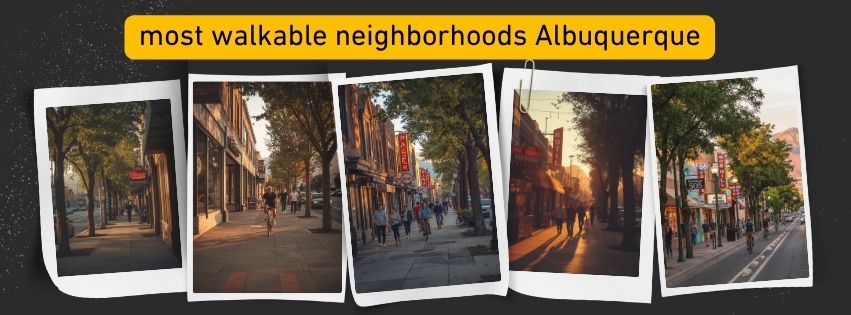
Walkability in Albuquerque is not the walkability of Manhattan, Chicago's Lincoln Park, or Portland's Pearl District. It is the walkability of a mid-sized western city that has genuine pedestrian pockets within a car-oriented framework — neighborhoods where the specific concentration of coffee shops, restaurants, groceries, and services within a few blocks creates a daily experience that does not require a car, even if the city around those neighborhoods does.
The practical meaning of the top Walk Scores in Albuquerque: a resident of Nob Hill with a Walk Score of 85 can walk to coffee, breakfast, lunch, dinner, an independent bookstore, a pharmacy, a yoga studio, and an art gallery — all within 10 minutes on foot. They still need a car to get to a major grocery store, to most employment centers, and to the outdoor recreation that makes Albuquerque's landscape compelling. The walkability is real, but it is neighborhood-scale rather than city-scale.
"While Albuquerque scores just 43 on Walk Score's walkability index, indicating most errands require a car, several neighborhoods have emerged as true pedestrian havens that command premium prices and demonstrate stronger resale performance," confirmed the Sandi Pressley Real Estate walkability analysis of Albuquerque's market. That last point — stronger resale performance — is worth flagging specifically for buyers who are evaluating walkability as a quality-of-life criterion: it is also an investment criterion. Walkable neighborhoods in Albuquerque are appreciating faster than the city average because the buyer pool for walkable urban lifestyle is growing and the supply of genuinely walkable properties is limited.
The Most Walkable Neighborhoods in Albuquerque — 2026 Data and Local Context
1. Nob Hill — Walk Score 85, The Gold Standard
Price range: $250,000 to $650,000
Walk Score: 85 — Very Walkable
Bike Score: 89 — Biker's Paradise
Niche rating: A+ Overall
Nob Hill is the most walkable neighborhood in Albuquerque by Walk Score data and by local reputation — and the two assessments agree because what makes Nob Hill walkable is genuine and specific, not just a function of the Walk Score algorithm.
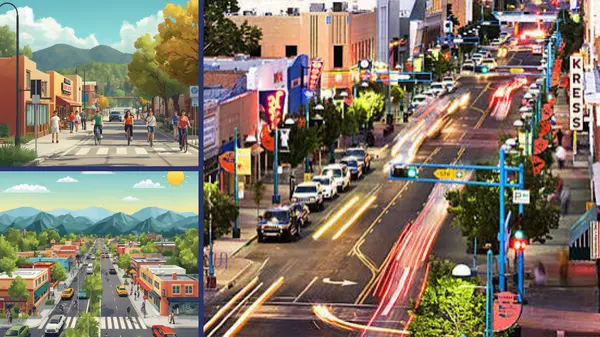
The Nob Hill commercial corridor runs along Central Avenue — the historic Route 66 alignment — between Carlisle and Washington, NE. Within those roughly 20 blocks, residents can walk to independent coffee shops (Winning Coffee, Rebel Donut, Satellite Coffee), restaurants ranging from fast-casual to white-tablecloth, the Guild Cinema (an independent movie house), independent bookstores, wine bars, art galleries, clothing boutiques, yoga and fitness studios, and the specific concentration of locally-owned businesses that gives Nob Hill its character. Most residents describe the walk to coffee or dinner as a 3-to-8-minute experience depending on which direction they go.
"Nob Hill leads the charge and sets the Gold Standard for the rest of Albuquerque. The Nob Hill neighborhood boasts a Walk Score of 85, making it not just the most walkable neighborhood in Albuquerque, but also one where you can accomplish most errands on foot. This historic Route 66 corridor has evolved into a genuine mixed-use district where residents can walk to restaurants, shops, entertainment venues, and services while maintaining the authentic character that makes it distinctly Albuquerque," confirmed the Sandi Pressley Real Estate walkability guide.
The ART (Albuquerque Rapid Transit) bus system runs along Central Avenue through Nob Hill, connecting the neighborhood to Downtown, the University, and other Central Avenue destinations without a car. The transit connection is not the urban rail that buyers from Seattle or Denver are accustomed to — it is a high-frequency bus service — but it is the most functional public transit available in Albuquerque, and it makes Nob Hill the most transit-accessible neighborhood in the city alongside the Downtown and University corridor.
In 2026, the Route 66 centennial has added new energy to the Nob Hill corridor — new murals, new installations, and a sustained cultural moment that the neighborhood has embraced with genuine enthusiasm. The combination of the historic walkable character and the centennial's new additions makes Nob Hill specifically compelling for visitors and buyers in 2026.
Trade-offs: Nob Hill's walkable corridor sits adjacent to Central Avenue, which carries higher vehicle volumes and some noise. The residential streets behind and parallel to Central are significantly quieter — most buyers in Nob Hill live one to two blocks off Central and walk to it rather than living on it. The neighborhood's popularity means the most desirable properties move quickly when correctly priced.
Best for: buyers from walkable coastal and mountain markets (Los Angeles, Seattle, Denver, Austin) who specifically want the ability to leave their car in the garage for daily errands; young professionals and couples for whom the restaurant and coffee culture of Nob Hill is a primary lifestyle criterion; buyers who value historic neighborhood character and a Route 66 cultural identity as part of their residential environment.
2. Huning Highland Historic District — Walk Score 85, Victorian Architecture Downtown Adjacent
Price range: $200,000 to $500,000
Walk Score: 85 — Very Walkable
Character: Historic, architecturally distinctive, Downtown adjacent
Huning Highland Historic District ties Nob Hill for Albuquerque's highest Walk Score and offers a completely different architectural and lifestyle character — Victorian and Craftsman homes on tree-lined streets, a close-knit residential community, and proximity to Downtown Albuquerque that makes it genuinely walkable to the cultural and civic infrastructure of the city center.
The neighborhood was developed in the late 19th and early 20th centuries as one of Albuquerque's first planned residential areas outside of Old Town, and it retains the specific character of that era — houses with front porches, mature shade trees, relatively narrow streets, and the pedestrian-scale design that preceded car-oriented urban planning. Walking in Huning Highland feels different from walking in newer Albuquerque neighborhoods specifically because it was designed for pedestrians rather than retrofitted for them.
"Huning Highland Historic District has a Walk Score of 85, making it the second most walkable neighborhood in Albuquerque. There's a lot to love about the area, from its Victorian architecture to its close proximity to downtown. While you're walking around the neighborhood, check out The Grove Cafe & Market, a local favorite," confirmed the ApartmentGuide walkability ranking for Albuquerque. The Grove on Central is indeed a landmark destination for Huning Highland residents — a breakfast and lunch spot that captures the neighborhood's specific character: locally sourced, carefully executed, and genuinely worth walking to.
The historic designation that protects Huning Highland's architectural character is both a feature and a practical consideration. The houses are authentic to their era — not modern reproductions — which means they carry the maintenance requirements of 100-year-old construction alongside their character. Buyers should conduct thorough inspections and have realistic expectations for renovation costs when purchasing in Huning Highland.
The Downtown proximity is the walkability feature that distinguishes Huning Highland from Nob Hill: government employees, lawyers, healthcare workers, and anyone else whose employment center is in or near Downtown can genuinely commute on foot or by bicycle from Huning Highland. That commute walkability — not just lifestyle walkability but actual employment access on foot — is what makes the neighborhood uniquely useful for the specific buyer whose job is downtown.
Best for: buyers who want historic architectural character alongside walkability; government and Downtown employment center workers who want a genuine pedestrian commute; buyers from cities with strong historic residential neighborhood traditions (Boston, Portland, older Seattle neighborhoods) who want a New Mexico equivalent.
3. University Heights — Walk Score High 70s to Low 80s, The Academic Walkable Neighborhood
Price range: $200,000 to $450,000
Walk Score: High 70s to low 80s
Character: Academic, eclectic, young and mixed-age, coffee-and-bookstore culture
University Heights sits immediately north and east of the University of New Mexico campus and carries the specific walkable character that university-adjacent neighborhoods produce: a high concentration of coffee shops, used bookstores, restaurants, bars, and services specifically calibrated to support a population that does not use cars as its primary transportation mode.
"The most walkable Albuquerque neighborhoods are Nob Hill, Huning Highland Historic District and University Heights," confirmed Walk Score's Albuquerque neighborhood analysis. The University Heights designation reflects the neighborhood's position at the northern edge of the UNM campus, where the commercial corridor along Central Avenue serves both the campus population and the residential community that has grown up around it.
What makes University Heights specifically compelling for non-student buyers is the amenity density that the university presence has created over decades. The coffee shops (Satellite Coffee has two locations in the corridor), the independent restaurants, the specialty grocery options, the bookstores, and the cultural venues (the Guild Cinema is shared with adjacent Nob Hill) exist in their current form because the university sustains the customer density that makes them viable. The residential streets behind the commercial corridor are genuinely residential — families and long-term residents alongside the expected student population — and the neighborhood has the specific mix of ages and backgrounds that university-adjacent communities produce.
Best for: academics, healthcare workers at UNM Health, and creative professionals who want the university neighborhood culture; buyers from college-town backgrounds (Boulder, Madison, Burlington, Burlington VT) who want the specific commercial character that university-adjacent neighborhoods sustain; buyers who want strong walkability at price points below Nob Hill's premium.
4. Downtown and Old Town Corridor — Walk Score 70s, Historical Walkability
Price range: $180,000 to $500,000
Walk Score: Low to mid-70s
Character: Historic, cultural, government employment adjacent
The Downtown and Old Town adjacent neighborhoods — including EDo (East Downtown), Barelas, and the streets immediately surrounding Old Town Plaza — offer the walkable access to Albuquerque's most significant cultural and historical infrastructure: the museums, the plaza, the performing arts venues, and the government employment center that makes Downtown a functional working district.
EDo specifically has seen significant revitalization over the past decade — the Rail Yards Market, the Hotel Parq Central rooftop bar, and the growing arts and food scene along Broadway and adjacent streets have created a walkable cultural destination that was not fully present ten years ago. The ART system connection to the rest of the Central Avenue corridor makes EDo genuinely car-optional for residents who work in the Downtown district or along the Central corridor.
Barelas, immediately south of Downtown, is one of Albuquerque's oldest Hispanic neighborhoods and is undergoing slow but genuine revitalization that is adding walkable amenities to a neighborhood whose street network and commercial building stock were designed for pedestrian use generations before car-oriented development became the default. The Barelas Coffee House — a breakfast institution — and the National Hispanic Cultural Center are both walkable anchors.
Old Town proper has limited residential inventory but significant walkability to cultural amenities — the Albuquerque Museum, the Museum of Natural History, the Indian Pueblo Cultural Center, and the Old Town plaza itself. The specific buyer for Old Town adjacent properties is usually someone who wants to be embedded in the city's cultural and historical center, for whom the specific walkable access to those institutions is a primary criterion.
Best for: government and Downtown employment center workers; buyers who prioritize cultural walkability (museums, performing arts, historical sites) over restaurant and café walkability; buyers attracted to the revitalization energy of EDo specifically; buyers who want Albuquerque's most historically rooted residential neighborhoods.
5. Bel-Air and Jeanne Bellamah East — Walk Score Mid-70s, Underappreciated Walkable Neighborhoods
Price range: $200,000 to $380,000
Walk Score: Mid-70s
Character: Established residential, park-adjacent, mid-city
Bel-Air and Jeanne Bellamah East are the walkable Albuquerque neighborhoods that receive the least attention despite their genuinely competitive Walk Scores — in part because they lack the cultural cachet of Nob Hill and Huning Highland and in part because they do not map onto a familiar urban archetype that buyers from coastal markets recognize.
"Neighborhoods like Nob Hill, Huning Highland Historic District, and University Heights stand out for their walkability. Additionally, areas such as Jeanne Bellamah East and Bel-Air, though less widely known, also offer unique living opportunities and are appealing to those seeking a vibrant, pedestrian-oriented lifestyle," confirmed the Greater Albuquerque Association of Realtors walkability guide.
What Jeanne Bellamah East specifically offers is North Domingo Baca Park and the Arroyo del Oso Park adjacency — large open green spaces accessible on foot from residential streets — alongside the commercial amenities of the North Domingo Baca corridor. For buyers who define walkability partly as access to green space rather than purely as commercial amenity access, Jeanne Bellamah East is consistently underrated.
Best for: buyers who want walkable access to parks and green space alongside everyday commercial amenities; buyers who want competitive walk scores at price points below Nob Hill's premium; families who prioritize park proximity for children.
The Walkability-Value Connection — Why Walkable Neighborhoods Outperform in Resale
The walkability premium in Albuquerque real estate is real, measurable, and growing — for the same reasons it has become measurable in other American cities.
The demographic shift toward urban lifestyle preferences among younger buyers — who specifically want to reduce car dependence and who have been priced out of the most walkable urban markets — has produced sustained, growing demand for the limited supply of walkable neighborhoods in car-oriented cities. Albuquerque's walkable neighborhoods are, by definition, limited in their supply: there are a finite number of blocks in Nob Hill, Huning Highland, and University Heights, and no new supply is entering those neighborhoods. The combination of growing demand and fixed supply produces the appreciation premium.
"The data tells a compelling story about the growing value of walkability in our market," confirmed the Sandi Pressley walkability guide. "Properties in these walkable corridors tend to hold their value exceptionally well, with the historic designation providing both character protection and investment stability."
For buyers who are evaluating Albuquerque's walkable neighborhoods as both lifestyle and investment choices, the combination of current value below comparable walkable neighborhoods in peer markets and the growing demand premium suggests that the walkability premium has room to grow before Albuquerque's walkable neighborhoods are fully priced relative to their lifestyle offering.
The Honest Walkability Trade-Offs — What You Give Up When You Buy Walkable in Albuquerque
A genuinely useful guide to walkable Albuquerque neighborhoods needs to name the trade-offs honestly — because buyers who arrive expecting fully car-free urban living in any of these neighborhoods will be disappointed, and buyers who understand the specific trade-offs can make an informed decision about whether the walkability premium is worth it for their specific priorities.
- Grocery access is the weakest link: None of Albuquerque's most walkable neighborhoods has a major full-service grocery store within easy walking distance. Nob Hill has specialty food shops and small markets, but a full weekly grocery run requires a car or a significant transit trip. This is the single most common disappointment that buyers from walkable coastal markets describe after moving to Albuquerque's walkable neighborhoods.
- Most employment centers still require driving: With the exception of Downtown workers in Huning Highland and EDo, most Albuquerque employment — healthcare, government, military, university, tech — is not within walking distance of the walkable residential neighborhoods. The ART bus provides Central Avenue transit access, but the broader employment geography of Albuquerque is car-dependent for most workers.
- Smaller homes and lots in most cases: The walkable neighborhoods in Albuquerque are generally the older, more urban-density neighborhoods — Huning Highland's Victorian-era lots, Nob Hill's early-20th-century residential scale. These are not the 0.75-acre lots of North Albuquerque Acres or the sprawling floor plans of Ventana Ranch. Buyers who want both walkability and generous residential scale will find them in tension in Albuquerque's market.
- Noise and activity on and near commercial corridors: The walkability comes from the density of commercial activity on Central Avenue and adjacent streets. That density produces noise, foot traffic, and the ambient activity of an active commercial street. The quietest residential experience in Albuquerque is in the car-dependent suburban neighborhoods — not in the walkable urban ones.
The Bike Score — For Buyers Who Will Supplement Walking With Cycling
Albuquerque's Bike Score of 61 — significantly higher than its Walk Score of 43 — reflects a genuine cycling infrastructure that makes biking a viable transportation supplement for buyers in the most walkable neighborhoods and an alternative to car travel for the grocery trips and employment commutes that walking alone does not reach.
The Paseo del Bosque Trail (16 miles along the Rio Grande), the developing protected bike lane network along Central Avenue, and the specific urban form of the Nob Hill and University Heights corridor — relatively flat, relatively compact, with destinations close enough together that a 5-to-10-minute bike ride replaces a 2-to-3-mile car trip — combine to make cycling genuinely practical for buyers who are willing to use it.
Nob Hill specifically earns an 89 Bike Score — "Biker's Paradise" in Walk Score's rating system. For buyers who cycle as part of their daily transportation rather than purely for recreation, the Nob Hill bike infrastructure puts groceries, errands, and employment centers within biking range that remain outside walking range. The e-bike ownership trend among Albuquerque residents has specifically expanded the practical range of non-car transportation for residents in the walkable corridors.
For buyers evaluating Albuquerque's neighborhoods beyond walkability — including the safety profiles, school zones, and lifestyle character of each area — our guide to Albuquerque neighborhoods covers every major area in depth. And for buyers specifically interested in Nob Hill's urban character, our post on why Albuquerque home prices are still rising in certain neighborhoods covers the specific appreciation story of Nob Hill alongside other high-demand Albuquerque neighborhoods.
The 15-Minute City Framework — How Albuquerque's Walkable Neighborhoods Measure Up
The global urban planning movement toward "15-minute cities" — where residents can access most daily necessities within a 15-minute walk, bike ride, or transit trip — provides a useful additional frame for evaluating Albuquerque's most walkable neighborhoods beyond the Walk Score alone.
Nob Hill comes closest to the 15-minute city ideal of any Albuquerque neighborhood. Within a 15-minute walk from most Nob Hill residential streets: coffee, breakfast, lunch, dinner, an independent bookstore, a pharmacy, a yoga studio, a cinema, art galleries, wine bars, specialty food shops, and dry cleaning. Outside that radius: major grocery, most medical care, most employment. The ratio is not perfect, but it is genuinely better than any other Albuquerque neighborhood.
Huning Highland and University Heights reach the 15-minute threshold for cultural and lifestyle amenities while remaining within a 15-minute bike ride or ART transit trip to employment centers Downtown and along the University corridor. For buyers whose employment is in those specific areas, the 15-minute standard is genuinely achievable without a car for the daily commute.
The honest assessment: Albuquerque is not a 15-minute city. It is a car-dependent city with several neighborhoods that approach the 15-minute standard for lifestyle amenities. Buyers who understand this distinction and specifically target those neighborhoods will find that the walkable experience in Albuquerque's best pedestrian corridors is genuinely satisfying — not as complete as what a buyer from Portland or Washington DC would consider walkable, but genuinely different from the car-dependent experience that the rest of the city provides.
Price Points and Market Reality — What Walkability Costs in Albuquerque
The walkability premium in Albuquerque's market reflects the limited supply of genuinely walkable residential inventory relative to the growing buyer demand for it. Nob Hill and Huning Highland properties consistently command prices above comparable properties in less walkable parts of the city — a premium that Sandi Pressley's analysis confirms is growing as the demographic shift toward walkability preference strengthens.
Current market reality for walkable Albuquerque neighborhoods in 2026:
- Nob Hill: $250,000 to $650,000 for residential properties within walking distance of the commercial corridor. The premium over comparable-size homes in less walkable neighborhoods is approximately 15% to 25%, reflecting both the walkability advantage and the neighborhood's Niche A+ rating and Route 66 cultural identity.
- Huning Highland Historic District: $200,000 to $500,000 for the Victorian and Craftsman homes within the historic district boundary. The historic designation adds both character protection and investment stability — and the renovation premium that buyers who want turnkey properties should factor into their budget.
- University Heights: $200,000 to $450,000 for properties in the university-adjacent residential zone. Slightly more accessible than Nob Hill pricing for equivalent walkability scores, reflecting the student-housing character that affects some sections of the neighborhood.
- Downtown adjacent (EDo, Barelas): $180,000 to $500,000 depending on property type and condition. The widest price range of any walkable area, reflecting the diversity of property quality and the revitalization stage of different blocks within the corridor.
For buyers who want walkability as a primary criterion and are comparing Albuquerque's options against walkable neighborhoods in their origin markets: the price advantage relative to comparable neighborhoods in Los Angeles, Seattle, or Denver is dramatic. Nob Hill properties at $300,000 to $400,000 provide a walk score and lifestyle that comparable properties in Seattle's Capitol Hill or Denver's Highland neighborhood would cost $700,000 to $1.2 million to access. The value proposition for walkability-prioritizing buyers who are willing to make the Southwest move is significant.
The Bottom Line — Walkable Albuquerque Exists, But It Requires Knowing Where to Look
The buyers who move to Albuquerque from walkable markets and land in the walkable neighborhoods — who specifically chose Nob Hill or Huning Highland because they researched the Walk Scores before they searched the MLS — are almost always happy with the trade they made. They understood the specific walkability they were getting, they understood the specific car dependency that remains outside that walkability bubble, and they made a conscious decision that the combination of Albuquerque's outdoor lifestyle, affordability, and the walkable neighborhood pocket they chose was what they wanted.
The buyers who move to Albuquerque from walkable markets and land in standard suburban neighborhoods — who chose by price and square footage without understanding the walkability variance — are the ones who describe Albuquerque as car-dependent and difficult after six months. They are not wrong about the city in general. They chose the wrong neighborhood for their priorities.
Walkable Albuquerque exists. It is Nob Hill, Huning Highland, University Heights, EDo, and the other genuine pedestrian pockets that the Walk Score data confirms. It is not the city as a whole. And it is available at price points that comparable walkability in the cities most of these buyers are coming from stopped offering years ago.
Know where to look. The car-optional life in Albuquerque is available. It just requires buying in the right neighborhood — which is exactly the work that the best local real estate guidance makes possible.
Ready to Find Your Walkable Home in Albuquerque?
Jenn & Vinay from The Rodgers Neighborhood Real Estate Group know every walkable block in Albuquerque's pedestrian-friendly corridors — which streets in Nob Hill put the best restaurant selection within a five-minute walk, which Huning Highland blocks are quietest despite their Downtown proximity, and how to evaluate the real walkability of any specific property rather than relying on neighborhood averages. If walkability is a primary criterion in your Albuquerque search, the conversation starts with a call.
Jenn & Vinay Rodgers are Albuquerque's trusted real estate professionals with The Rodgers Neighborhood Real Estate Group, brokered by Real Broker, LLC, serving buyers and sellers across Albuquerque, Rio Rancho, Corrales, Los Lunas, Tijeras, Cedar Crest, Sandia Park, the East Mountains, Bernalillo County, Sandoval County, and surrounding New Mexico communities.
The Rodgers Neighborhood Real Estate Group
Jenn & Vinay Rodgers
Real Broker, LLC
Albuquerque, NM
📞 505-417-2733
🏠 Browse walkable Albuquerque neighborhood homesCategories
- All Blogs (322)
- 2026 & Beyond for Real Estate (218)
- Doctors and Nurses looking for homes in NM (4)
- Guide to buying a home in NM (146)
- Health Care Heros (7)
- Home Upgrades (38)
- Jenn & Vinay your Local Real Estate Experts! (107)
- Moving to Albuquerque (127)
- Neighborhoods in Albuquerque NM (87)
- Rent or Own (2)
- Sellers Questions for Selling homes (2)
Recent Posts

GET MORE INFORMATION