

Luxury Homes With Casitas in Albuquerque: Best Areas and Price Ranges
The casita is not a uniquely Albuquerque concept, but it is a uniquely New Mexican one — and the distinction matters.
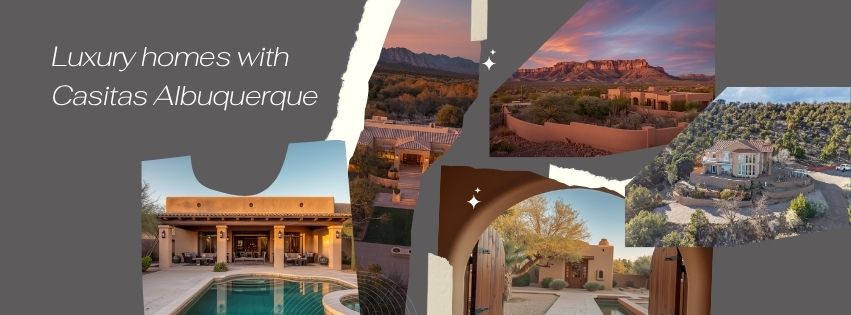
Casita is Spanish for little house, and in New Mexico's architectural tradition, the casita has been a fixture of residential compounds since the Spanish colonial period. The main house, the enclosed courtyard, the separate guest or servant quarters alongside — this arrangement has been repeated across the Rio Grande valley for 400 years, in adobe compounds from Old Town Albuquerque to the haciendas of the North Valley to the ranch properties of Corrales. The casita is not a contemporary real estate feature invented to satisfy the ADU trend. It is a centuries-old spatial logic adapted to how people actually live in extended families in this culture and this climate.
For luxury buyers in 2026, the casita has become one of the most searched features in the Albuquerque market — and the reasons go well beyond architectural tradition. Multigenerational living needs, remote work infrastructure, short-term rental income, aging-in-place planning, and the flexibility of a self-contained unit that can evolve with the owner's changing life circumstances have combined to make "main house plus casita" one of the most resilient value propositions in the city.
This guide covers what you need to know: which neighborhoods in Albuquerque have the best casita inventory, what the price ranges look like in 2026, and the specific considerations — legal, practical, and financial — that separate a well-informed casita purchase from one that surprises you after closing.
What a Casita Is — and What It Is Not
Precision matters here because the real estate market uses the term loosely enough that buyers need to understand the range of what they are actually evaluating.
At one end of the spectrum: a true detached casita is a fully self-contained separate dwelling on the same property as the main house, with its own entrance, its own kitchen or kitchenette, its own bathroom, and its own HVAC system. It functions as a complete secondary residence. A family member can live there indefinitely without entering the main house. A short-term rental guest has a private, complete accommodation. This is the casita that commands the highest premium and delivers the most flexibility.
In the middle of the spectrum: an attached casita shares a wall with the main house but maintains a separate private entrance and some degree of functional self-sufficiency. It may have a kitchenette rather than a full kitchen, or it may be accessible through both an exterior door and an interior connecting door. This configuration is more common in suburban neighborhoods where lot sizes are smaller and building setback requirements limit full detachment.
At the other end: an "in-law suite" or "bonus room with bathroom" is often marketed with casita language but does not deliver casita functionality. No separate entrance. No independent HVAC. No kitchen facility. Accessible only through the main house. This configuration provides guest accommodation but not the privacy, flexibility, or income potential of a true casita.
The difference between these three configurations is significant enough to determine whether the casita can function as a short-term rental, whether a family member can live there with genuine independence, and how the local municipality classifies the unit for zoning and permitting purposes. Before making any offer on a property marketed as having a casita, understanding which category the specific unit falls into is essential due diligence.
Why Casitas Are in Higher Demand Than Ever in 2026
Multigenerational Living Has Become the Dominant Driver
According to the WelcomeHomeABQ April 2026 luxury real estate analysis, casitas and flexible multigenerational floor plans are "especially valuable in New Mexico because many buyers want space for visiting family, aging parents, long-term guests, or private work-from-home arrangements without sacrificing privacy in the main house." That observation reflects a demographic reality that is reshaping what luxury buyers consider non-negotiable in 2026.
The aging of the Baby Boomer generation has produced a large and financially capable cohort of buyers who are simultaneously evaluating their own next housing chapter and the housing needs of their adult children and grandchildren. For these buyers, a casita is not a nice-to-have — it is the solution to a specific family logistics problem that a standard four-bedroom house cannot solve. The parent who wants to be near but not inside the daily family routine. The adult child who needs their own kitchen and their own entrance but who is not ready to be across town. The aging parent who needs proximity to care but whose dignity requires their own front door.
New Mexico's extended family culture — which has historically been stronger than in most states — amplifies this dynamic. Family compounds with multiple generations on a single property are not unusual in Albuquerque's established neighborhoods, and the casita is the architectural infrastructure that makes that arrangement work without the friction that shared-space living inevitably produces.
Remote Work Created a New Category of Casita Use
The remote work revolution that began in 2020 permanently changed what luxury buyers need from their homes — and the casita emerged as the most effective solution for buyers who need genuine professional separation from their residential space.
A detached casita with its own entrance, its own climate control, and its own ambient noise environment is, for many remote workers, a better home office than anything that can be created within the main house. The physical transition from home to office — walking across a courtyard, opening a separate door, sitting in a space that exists for one purpose — produces the psychological separation that productivity research consistently identifies as valuable for sustained focused work.
Luxury buyers who are evaluating properties for remote work functionality often ask specifically whether the casita has sufficient square footage for a real office setup, dedicated high-speed internet infrastructure, appropriate acoustic separation from the main house's activity, and, for buyers who conduct video calls professionally, whether the casita's background and lighting are controllable for professional presentation.
Short-Term Rental Income Has Changed the Financial Calculus
Albuquerque's position as a growing tourism destination — anchored by the Balloon Fiesta, growing film industry activity, and sustained in-migration from larger markets — has produced genuine short-term rental demand that luxury homeowners with casitas can access.
A well-appointed casita in the North Valley, Corrales, or Old Town Albuquerque produces short-term rental income in the $100 to $250 per night range, depending on season, size, and amenity level. During Balloon Fiesta week in October — when Albuquerque hotel rates spike dramatically — a quality casita in a desirable neighborhood can command $300 to $500 per night. Annual gross rental income on a quality Albuquerque casita ranges from approximately $18,000 to $45,000 depending on occupancy and nightly rate.
For luxury buyers evaluating a $900,000 to $1.5 million property, that rental income is not a primary financial driver — but it is a meaningful offset to carrying costs that changes the purchase decision for buyers who were on the fence. The casita that pays $2,000 per month in rental income during the months the owner is not using it for family has effectively funded its own purchase over time.
Buyers considering short-term rental use of a casita should verify local zoning regulations before purchasing specifically for this purpose. The City of Albuquerque regulates short-term rentals and requires registration. Specific HOA covenants may prohibit short-term rentals in gated communities like Tanoan. These are straightforward due diligence items that should be confirmed before closing.
The Best Areas in Albuquerque for Luxury Homes With Casitas
1. North Valley and Los Ranchos — The Historic Casita Heartland
The North Valley and Los Ranchos de Albuquerque are where the casita tradition is most deeply embedded in the actual housing stock — and where buyers looking for authentic, architecturally integrated casita configurations find the most compelling inventory.
Properties along Rio Grande Boulevard and throughout the North Valley and Los Ranchos frequently include detached adobe casitas that are genuinely old — built in the same era as the main house, sharing the same construction materials and architectural vocabulary, connected to the main house by an enclosed courtyard that is its own architectural feature. These are not bolt-on additions. They are original components of compound-style properties that have been managing the multigenerational and guest accommodation question since before most American neighborhoods existed.
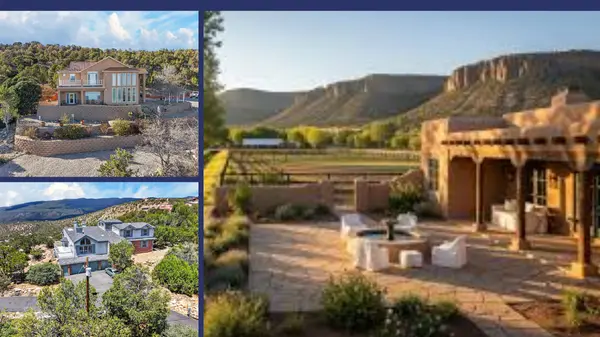
Redfin's current luxury listing data for Albuquerque's North Valley shows properties like a 1.6-acre gated Far North Valley horse property with casita — described as "perfect for multigenerational living, rental income, or a serene retreat, featuring two thoughtfully designed homes on one spacious lot." This is the category that defines North Valley casita living: large lots, mature landscaping, acequia adjacency, and secondary dwellings that are genuinely habitable rather than symbolic.
Price range for luxury North Valley and Los Ranchos properties with casitas: $850,000 to $5 million+, depending on lot size, main house square footage, casita quality, and river proximity. The most valuable configurations — river-adjacent or bosque-adjacent, with historic adobe architecture and mature cottonwood landscaping — command premiums at the upper end of this range.
Best for: buyers who want authentic New Mexican compound architecture, multigenerational living with genuine privacy separation, equestrian property potential, and the specific aesthetic of acequia-irrigated mature landscaping that no new development can replicate.
2. Corrales — The Equestrian Casita Option
Corrales offers the casita with the largest average lot size in the metro — which means the most physical separation between main house and casita, the most privacy for both households, and the most flexibility for how the secondary structure is configured and used.
The standard Corrales property with casita typically sits on one to five acres, with the casita positioned at a sufficient distance from the main house that the two households can operate with genuine independence. The acequia-irrigated agricultural landscape means that both structures are typically surrounded by mature vegetation — fruit trees, shade trees, pasture grass — that provides natural visual screening between the dwellings.
"Casitas, guest quarters, and flexible multigenerational floor plans are especially valuable in New Mexico because many buyers want space for visiting family, aging parents, long-term guests, or private work-from-home arrangements without sacrificing privacy in the main house," the WelcomeHomeABQ April 2026 analysis confirmed. Corrales delivers this configuration more completely than any other Albuquerque-area community for buyers who specifically need the physical scale that generous acreage provides.
Price range for Corrales luxury properties with casitas: $700,000 to $2.5 million+. Entry points are more accessible than the North Valley because the North Valley's river-adjacency premium is not present in the same way, though Corrales carries its own Rio Grande proximity premium for the western-facing properties that overlook the bosque.
Best for: equestrian buyers who want horses and casita on the same property, buyers who need maximum physical separation between households, remote workers who want the casita as a genuine professional workspace in a rural-feeling setting, and buyers drawn to the village character and agricultural heritage that Corrales specifically offers.
3. North Albuquerque Acres — The Custom Compound Without HOA Restrictions
North Albuquerque Acres is the luxury neighborhood in Albuquerque that offers the most freedom to configure a casita exactly as the buyer needs — because there is no HOA to restrict what can be built, how it can be used, or what it can look like.
Properties in North Albuquerque Acres typically sit on three-quarter to one-acre lots within city limits — large enough to accommodate a genuine detached casita with proper setbacks and privacy, but inside the city's utility infrastructure so buyers avoid the well and septic complications of more rural properties. The no-HOA status means a buyer can build a new casita if the existing property does not have one, convert a garage to a casita, or add a standalone studio structure without navigating an architectural review board.
"North Albuquerque Acres is highly sought after for its rare mix of substantial land, privacy, and high-end real estate within the Albuquerque city limits. Many lots measure approximately 0.75 to 0.89 acres, giving homeowners space that is nearly impossible to find in newer developments," confirmed the Myers & Myers Real Estate neighborhood analysis. That lot size is the minimum needed for a genuinely detached casita with meaningful separation from the main structure.
Price range for North Albuquerque Acres luxury properties with casitas: $600,000 to $3 million+. Properties that already have an existing casita command a premium over comparable properties that do not, reflecting both the construction cost and the demand premium that casita functionality now generates in the market.
Best for: buyers who want large-lot luxury with the flexibility to configure the casita exactly as needed, buyers who want to be within the city's utility infrastructure rather than dealing with rural utilities, and buyers for whom no-HOA freedom is a primary criterion.
4. Tanoan — Gated Community Casitas With Country Club Access
Tanoan is the only Albuquerque luxury neighborhood that combines the casita option with 24-hour guard-gated security and a private country club — and for the specific buyer who wants all three simultaneously, it has no competition in the city.
Larger custom-built properties within Tanoan East occasionally include detached or semi-detached casita structures, and the gated environment means that casita users — whether family members, guests, or short-term renters — arrive in a setting with the security infrastructure and common area quality that the Tanoan country club provides. The country club access applies to casita occupants who are authorized guests, which means a parent staying in the casita can use the pool and tennis courts independently.
The specific consideration for short-term rental use in Tanoan: HOA covenants typically restrict or prohibit short-term rentals of any kind, including casita rentals. Buyers who want casita rental income should verify the specific HOA documents before assuming Tanoan's casita option is compatible with that use case. For buyers whose casita use is multigenerational or long-term guest accommodation, Tanoan's restrictions are not relevant.
Price range for Tanoan properties with casitas: $700,000 to $2 million+. Casita-equipped properties within Tanoan are not numerous — the community's lot sizes do not always accommodate full detachment — and when they become available, they generate active buyer interest.
Best for: buyers who want gated security as a structural feature of the compound, country club lifestyle as part of the daily environment for both main house and casita occupants, and the La Cueva school zone for families with children.
5. Sandia Heights — Mountain Casita Living Above the City
Sandia Heights properties with casitas offer the most distinctive view configuration of any category in this guide: both the main house and the casita overlook the city from the Sandia Mountains' western face, with the Rio Grande valley and the volcanic West Mesa visible from both structures.
"Home prices in Sandia Heights start just below $400,000 and top out at about $3 million," confirmed the realestateinabq.com luxury property analysis. Properties at the upper end of this range frequently include detached guest structures, and the elevated position of the neighborhood means that even a modest casita in Sandia Heights delivers the panoramic city view that most luxury neighborhoods charge a significant premium for.
The practical consideration specific to Sandia Heights casitas: elevation means winter driving requires four-wheel drive, and the steeper access roads that characterize some Sandia Heights properties require that casita occupants be comfortable with mountain driving conditions. For buyers whose casita is primarily for personal use by family members who will be driving there regularly, this is worth acknowledging in advance.
Price range for Sandia Heights luxury properties with casitas: $550,000 to $2.5 million+. The most spectacular configurations — main house and casita both positioned with unobstructed city views, at the highest elevations with direct trail access — command prices at the upper end of this range.
Best for: buyers who want mountain elevation living for both the main house and casita occupants, outdoor recreation-focused buyers who want trail access immediately available to both households, and buyers whose aesthetics lean toward the dramatic rock and forest character of the Sandia foothills rather than the lush vegetation of the river valley.
6. East Mountains — Acreage Casitas in Forest Settings
East Mountain communities — particularly Tijeras, Cedar Crest, Sandia Park, and the Paa-Ko corridor — offer the largest-acreage casita configurations in the greater Albuquerque area, and at price points that often surprise buyers from other markets.
Properties in the East Mountains frequently include multiple structures on multi-acre lots in piñon pine and ponderosa forest — the main house, a casita, sometimes a third structure used as a studio or workshop. The forest setting provides natural acoustic and visual separation between structures that urban and suburban lots cannot produce regardless of physical distance. Two households on a five-acre East Mountain property experience genuine privacy without the formal architecture of a courtyard or gate.
The Redfin guest house search for Albuquerque specifically highlighted an East Mountain Tijeras property as exemplifying the multi-structure luxury category: "Tucked into over four wooded and meadowed acres, it offers a rare blend of space, privacy, and versatility with three distinct residences" including a dome house, a casita, and a separate cottage — all at a price point that comparable acreage in any coastal market would price at three to five times the cost.
The infrastructure consideration for East Mountain casita properties: well and septic service is the norm rather than municipal utilities. Both the main house and the casita share the same well and septic system, or in some configurations, the casita has its own separate infrastructure. Well yield, septic capacity, and the shared versus separate infrastructure configuration are specific items that require professional inspection and clear disclosure before closing.
Price range for East Mountain luxury properties with casitas: $500,000 to $2 million+. The price range reflects the wide variation in lot size, structure quality, and infrastructure — from modest acreage properties with attached casitas at the lower end to true compound estates on ten-plus acres at the upper end.
Best for: buyers who want the largest acreage for their budget, buyers whose casita use involves genuine wilderness immersion for both households, remote workers who want the deepest professional separation possible, and buyers attracted to the forest aesthetic of the East Mountains rather than the desert or river valley character of other neighborhoods.
The Legal and Practical Framework — What Buyers Must Know
Zoning and Permitting — The Critical First Question
Not all casitas are created equal from a legal standpoint, and the difference between a permitted and an unpermitted casita is significant enough to affect financing, insurance, and resale value.
A permitted detached casita in the City of Albuquerque or in unincorporated Bernalillo County has been through the building permit process, received inspections at each phase of construction, and appears in the county assessor's records as a legitimate secondary structure. This casita can be legally rented, can be valued in an appraisal, and does not create liability for the owner from unpermitted construction.
An unpermitted casita — built without permits, often by a previous owner who did not want to pay permit fees or deal with the inspection process — creates multiple problems: it typically cannot be included in the appraised value of the property, it may not be insurable as a separate structure, it cannot legally be rented in most jurisdictions, and in some cases the municipality can require the structure to be removed or brought into compliance at the current owner's expense.
Before making any offer on a property with a casita, verify the permit status with the relevant municipality. Ask your agent to request copies of the building permits for the casita structure specifically. If the permits do not exist or cannot be produced, that is a specific item requiring negotiation — either a price adjustment that reflects the unpermitted status or a seller disclosure and credit that covers the cost of bringing the structure into compliance.
HOA Restrictions — The Variable That Varies Most
HOA communities have wide variation in how they regulate secondary dwellings — and the most important question for any casita buyer in a gated or HOA-governed neighborhood is not whether casitas exist, but what the HOA covenants specifically say about their use.
Tanoan, as noted above, typically restricts short-term rentals. Some HOAs in the Northeast Heights restrict detached structures above a certain square footage or require architectural review of any secondary structure. Others have no relevant restrictions at all. The only way to know is to read the CC&Rs — the covenants, conditions, and restrictions that govern the community — before making an offer.
This is not a step that should be delegated entirely to an attorney after the contract is signed. The casita's permitted use under the HOA documents is a purchasing criterion that should be understood before an offer is made, because if the planned use — short-term rental, in-law suite for aging parent, professional workspace — is prohibited by the HOA, the property does not meet the buyer's actual need regardless of how perfect everything else is.
Financing Implications — How Appraisers Treat Casitas
The way a casita is valued in an appraisal depends significantly on how it is configured and permitted. A fully permitted, self-contained detached casita with a separate entrance, full kitchen, and its own utility connections is typically valued by an appraiser as additional square footage and living area that contributes directly to the property's appraised value — often at $100 to $200 per square foot depending on the neighborhood.
A semi-attached casita that shares mechanical systems with the main house, or an attached in-law suite that is accessible only through the main house interior, may be treated differently — as accessory living space rather than a separate dwelling, with a smaller per-square-foot value contribution.
For buyers financing their purchase with a conventional mortgage, the appraisal value of the casita directly affects the loan-to-value calculation. A property where the casita is a permitted, fully functional detached dwelling can be financed more favorably than a property where the casita is unpermitted or functionally limited. This is a conversation worth having with your lender before your offer is accepted — not after the appraisal comes in lower than expected.
The Short-Term Rental Question — What Albuquerque Currently Allows
The City of Albuquerque requires registration for short-term rentals (STRs) of any dwelling unit, including casitas. The registration process requires that the property owner live on-site or appoint a local property manager, that the unit meets minimum habitability standards, and that the owner maintain liability insurance. Registration fees are modest and the process is straightforward.
Short-term rental income from a casita in Albuquerque is taxable and subject to New Mexico gross receipts tax on rental income, which is a standard operating cost that experienced hosts build into their pricing. Buyers who plan to operate a casita as a short-term rental should factor registration, tax obligations, and property management costs into their income projections before committing to a purchase price that depends on STR income to make financial sense.
What a Casita Adds to Property Value in 2026 Albuquerque
The value premium that a casita adds to a luxury Albuquerque property in 2026 is real, measurable, and growing — driven by the increased demand for multigenerational living options, remote work infrastructure, and income-producing secondary structures.
A fully permitted, detached, self-contained casita of 400 to 800 square feet in a luxury Albuquerque neighborhood typically adds $80,000 to $200,000 to the property's appraised and market value relative to a comparable property without the casita, depending on the neighborhood, the quality of the casita's finishes, and the income-generating potential of the specific location.
In the North Valley and Corrales, where the casita tradition is deepest and the demand from multigenerational and lifestyle-driven buyers is strongest, the premium approaches the upper end of this range. In suburban neighborhoods where casitas are newer additions and the buyer pool is slightly less focused on this specific feature, the premium is more moderate but still meaningful.
For sellers with existing casitas: the value of the casita is maximized when it is accurately described, properly permitted, and presented in a condition that communicates readiness for immediate use. A casita that is being used as storage and has not had its own HVAC serviced in years is not communicating its value proposition to buyers. A casita that is clean, functional, clearly permitted, and presented with its own photographs in the listing is telling the story that adds value.
For buyers evaluating specific neighborhoods for luxury casita properties, our guide to Albuquerque luxury neighborhoods covers the full range of luxury communities in depth. And for buyers considering properties in Corrales, the East Mountains, or Los Lunas, our service area spans Bernalillo and Sandoval County homes across every community where casita properties are concentrated.
The Bottom Line — The Casita Is Not an Amenity, It Is a Life Strategy
The buyers who value casitas most in 2026 Albuquerque are not buying an amenity. They are buying a life strategy — the flexibility to accommodate an aging parent without merging households, to generate income that offsets carrying costs, to work from a genuinely separated professional environment, to host extended family without giving up the private rhythm of the main house.
New Mexico's architectural tradition understood this centuries before it became a real estate feature. The casita has been solving these problems in the Rio Grande valley since the Spanish colonial period. The buyers who discover it through a 2026 property search are arriving at a solution that has been refined for 400 years.
The specific communities that offer the best casita inventory in Albuquerque — North Valley, Corrales, North Albuquerque Acres, Sandia Heights, and the East Mountains — are not accidentally the communities with the most generous lot sizes, the deepest architectural traditions, and the most established culture of compound-style living. The casita flourishes where the land and the culture support it. In Albuquerque, both have always been present.
Ready to Find the Right Casita Property in Albuquerque?
Jenn & Vinay from The Rodgers Neighborhood Real Estate Group know the casita inventory in Albuquerque's luxury neighborhoods at the property level — which ones are fully permitted, which have rental history, which configurations work best for multigenerational living versus short-term rental use. We serve buyers across the full range of casita-rich communities: Corrales, the North Valley, Los Ranchos, North Albuquerque Acres, Tijeras, Cedar Crest, Sandia Park, and the East Mountains. The conversation starts with understanding exactly what you need the casita to do — and then finding the property that does it.
Jenn & Vinay Rodgers are Albuquerque's trusted real estate professionals with The Rodgers Neighborhood Real Estate Group, brokered by Real Broker, LLC, serving buyers and sellers across Albuquerque, Rio Rancho, Corrales, Los Lunas, Tijeras, Cedar Crest, Sandia Park, the East Mountains, Bernalillo County, Sandoval County, and surrounding New Mexico communities.
The Rodgers Neighborhood Real Estate Group
Jenn & Vinay Rodgers
Real Broker, LLC
Albuquerque, NM
📞 505-417-2733
🏠 Browse Albuquerque homes with casitasCategories
- All Blogs (324)
- 2026 & Beyond for Real Estate (220)
- Doctors and Nurses looking for homes in NM (4)
- Guide to buying a home in NM (146)
- Health Care Heros (7)
- Home Upgrades (38)
- Jenn & Vinay your Local Real Estate Experts! (108)
- Moving to Albuquerque (128)
- Neighborhoods in Albuquerque NM (87)
- Rent or Own (2)
- Sellers Questions for Selling homes (2)
Recent Posts




GET MORE INFORMATION