
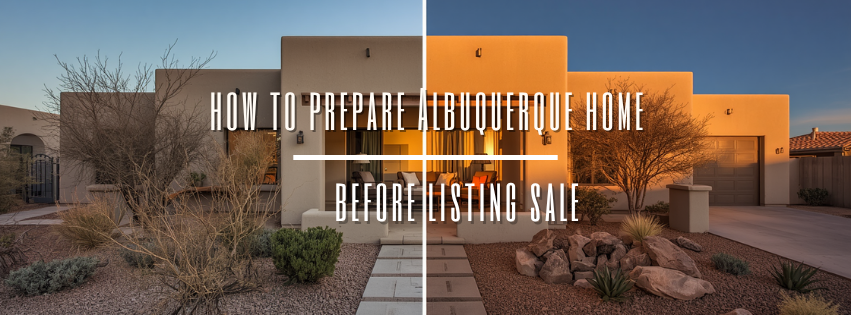
How to Prepare Your Albuquerque Home Before Listing It for Sale
There is a sequence to preparing an Albuquerque home for sale that produces the best possible outcome. Do it in the wrong order and you create new problems while solving old ones. Do it without the Albuquerque-specific items and you miss the specific issues that the city's construction characteristics and buyer expectations require. Do it too fast and you produce a rushed presentation that shows in the photographs. Do it right and you give your home the best possible shot at the momentum-window offer — the one that arrives in the first two weeks at or above list price.
This guide is organized as a timeline. Not because every seller has exactly six weeks before listing, but because the sequence matters as much as the specific tasks. The pre-listing inspection comes before the repairs. The repairs come before the painting. The painting comes before the staging. The staging comes before the photography. Each step sets up the next, and shortcuts in the sequence produce predictable problems.
"A typical pre-sale checklist moves from big projects to small details: schedule a pre-listing inspection, complete any safety or deferred-maintenance items, declutter every room, pack away personal photos, deep-clean floors and fixtures, refresh paint where needed, address curb appeal, gather your document package, stage main living areas, and schedule professional photos before showings begin. 4 to 6 weeks is the sweet spot for most homes. That window gives you time to run a pre-listing inspection, fix what it finds, declutter and deep-clean, refresh paint if needed, gather your document package, and book a stager and photographer," confirmed the Opendoor pre-sale home preparation guide. Homes needing more substantial repairs may need 8 to 12 weeks.
This guide covers the full six-week timeline for most Albuquerque homes, with Albuquerque-specific guidance layered throughout.
Before You Start — The Decision That Shapes Everything
Before the first preparation task, the decision that determines whether the preparation produces the right outcome: hire an Albuquerque agent who knows your specific neighborhood before you spend a dollar on preparation.
The reason this matters: preparation spending without market-specific guidance frequently produces the wrong priorities. A seller who paints the kitchen cabinets because they read it adds value may be spending $8,000 on a project that the buyers in their specific price range and neighborhood do not value, while neglecting the $600 HVAC service that their buyer's inspector will specifically flag. The agent who knows your neighborhood's buyer expectations, the current active competition in your price range, and the specific inspection items that most commonly trigger renegotiation in Albuquerque is the guide who ensures your preparation spending is matched to what your specific situation requires.
With that framing established, the timeline:
Weeks 1-2: Foundation Work — The Pre-Listing Inspection and Repairs
The Pre-Listing Inspection — The Most Important Investment of the Preparation Period
Before any cosmetic work, before any staging, before any decision about what to repair and what to leave — schedule a pre-listing inspection. A licensed home inspector will conduct the same examination that your buyer's inspector will conduct approximately 30 days from now, and they will find the same things. The difference is what happens with that information.
When your buyer's inspector finds an issue, you are negotiating from a position of surprise — a condition you did not know about, surfaced under contract, with a buyer who is now questioning what else might be undisclosed. When your own inspector finds the same issue, you have time to repair it, disclose it, or price it — and you are negotiating from a position of control.
Pre-listing inspections in Albuquerque cost approximately $400 to $600. They consistently produce one of the strongest returns on investment of any pre-sale expense, measured not in price premium but in avoided post-inspection renegotiation, which typically runs $2,000 to $15,000 in credits or price reductions for the items a pre-inspection would have surfaced in advance.
The Albuquerque-Specific Inspection Items
Albuquerque homes have specific construction characteristics that inspectors specifically examine and buyers specifically ask about. The pre-listing inspection in Albuquerque should specifically cover:
- Flat and foam roofing condition: New Mexico's flat and low-slope roofing systems are the single most commonly cited inspection finding that triggers post-offer renegotiation in the Albuquerque market. Flat roofs have a service life of 20 to 25 years; foam roofs require periodic recoating. A current inspection report showing roof condition — and documentation of any repairs or recoating — is the specific pre-sale investment that eliminates the most common Albuquerque deal disruption.
- HVAC age and service history: Prepare service records for both heating and cooling systems. If the system is more than 15 years old, schedule a professional service and tune-up before listing. The service receipt is documentation that communicates maintenance. An HVAC system of unknown age and unknown service history communicates the opposite.
- Evaporative cooler condition and documentation: If the home has evaporative cooling, have it serviced and obtain a service receipt. Buyers from other markets specifically ask about evaporative cooling function, maintenance requirements, and the system's performance on humid days. Documentation of recent service communicates care. An undocumented, unmaintained system communicates a question.
- Stucco condition: Albuquerque's stucco exteriors require periodic inspection for cracking, especially at window and door frames where water penetration can occur. The inspector should evaluate the stucco condition and identify any areas where cracking or delamination requires repair before listing.
- Electrical: GFCI outlet compliance in bathrooms, kitchen, and outdoor areas. Non-functional outlets or switches. Any Federal Pacific or Zinsco electrical panels (specific legacy brands that buyers' agents and inspectors flag). Aluminum wiring in homes built between 1965 and 1973.
- Plumbing: Active leaks at fixtures, supply lines, and drain connections. Water heater age and condition. Pressure relief valve function.
- Solar panel ownership or lease status: If the home has solar panels, confirm and document whether they are owned or leased. Prepare the ownership documentation or the lease terms for buyer review.
- Unpermitted additions or modifications: If any additions, garage conversions, or room modifications were completed without permits, identify them before listing. An agent-guided disclosure strategy is significantly better than a buyer-discovery-under-contract strategy.
Completing the Repairs: What to Fix, What to Disclose, What to Price In
After the inspection report, the repair decision for each finding falls into one of three categories:
- Fix before listing: Items that are inexpensive relative to their likely renegotiation impact (leaky faucets, non-functional outlets, GFCI compliance, deteriorated caulk and grout, damaged stucco at visible surfaces). Fix these. The cost is low; the buyer confidence benefit is high.
- Disclose and credit if appropriate: Items that are expensive to repair but that buyers will factor into their offer regardless (aging HVAC systems near end of service life, roof sections requiring replacement rather than maintenance). For these, seller-funded pre-sale repair is sometimes appropriate; in other cases, pricing the condition into the list price and disclosing it fully produces a cleaner transaction.
- Price in and sell as-is: Items that reflect the home's condition tier rather than a specific deficiency to be addressed (original 1970s kitchen, dated bathrooms, single-pane windows). These are not inspection items to repair — they are condition factors that determine where in the comparable range the home should be priced.
Weeks 2-3: Deep Clean and Declutter — The Work That Changes Everything for Free
Professional Deep Cleaning — The Highest ROI Preparation Dollar
A professional deep clean of the home — kitchen appliances inside and out, bathrooms to hotel standard, all flooring, windows, baseboards, light fixtures, and ceiling fans — transforms the showing experience in a way that is entirely disproportionate to its cost of $300 to $600.
The specific areas that produce the most impactful showing improvement when professionally cleaned:
- Oven interior: Buyers open the oven. An oven with accumulated residue communicates a lack of household care that transfers psychologically to the buyer's assessment of everything else in the home.
- Shower grout and caulk lines: Fresh, clean grout reads as maintained. Stained or deteriorated grout reads as neglected — and raises the water-intrusion question that deteriorated bathroom caulk always suggests.
- Window glass — interior and exterior: Clean windows change the quality of light in every room and change the clarity of mountain view photographs. This is one of the most commonly skipped cleaning items and one of the most immediately visible.
- Baseboards and door frames: Buyers who are carefully evaluating a home notice the baseboards. Dust and soil accumulation at baseboards communicates that the home has not been carefully maintained.
- Garage floors: Oil stains on the garage floor are immediately visible and communicate deferred maintenance. Degreaser and a pressure wash before listing removes a negative impression point at minimal cost.
Decluttering — Removing the Evidence of Your Life
Decluttering is not tidying. It is a fundamental transformation of the home from a lived-in space to a showing-ready space — from a place that communicates the seller's life to a space that the buyer can imagine as their own.
The goal: every room should contain only the furniture and objects that help a buyer imagine living there. Every object that communicates the seller's specific preferences, accumulations, and life choices is an obstacle to that imagination.
- Personal photographs: Pack them all. A buyer who is trying to imagine themselves in a home filled with photographs of a different family cannot fully make that imaginative leap.
- Collections and hobby items: Sports memorabilia, book collections that overflow shelving, collections of any kind — pack and store. These items define the seller's identity in ways that make the space feel less available to a new identity.
- Excess furniture: If a room has more furniture than it needs to communicate its function, remove pieces until the room breathes. A living room with two couches and three chairs reads as cramped. The same room with one couch and two chairs reads as adequately sized. Nothing about the room changed except the furniture count.
- Countertops: Every countertop — kitchen, bathroom, laundry — should be cleared to at most two or three objects. The counter that is clear communicates space. The counter covered in appliances, toiletries, and mail communicates a home where there is not enough space for all of the owner's things.
- Closets: Buyers open closets. A closet packed to the doors communicates insufficient storage. A closet that is organized and 60% full communicates adequate storage. Rent a storage unit for the overflow rather than stuffing the closets that buyers will evaluate.
Week 3-4: Cosmetic Refresh — The Investments That Change Buyer Perception
Interior Paint — The Single Most Impactful Cosmetic Investment
Fresh interior paint in a warm neutral palette is the preparation investment with the most consistent return in the Albuquerque market — not primarily in price premium, but in reduced showing friction, reduced buyer objection, and reduced days on market.
The specific palette that performs best in Albuquerque's 2026 market: warm whites and greiges — off-whites with warm undertones that complement the adobe and Southwestern architectural character of most Albuquerque homes. Cool gray, which dominated national staging trends from 2015 to 2020, has been replaced by warmer neutrals in 2025 and 2026 buyer expectations.
Paint color specifics that work in Albuquerque's specific light: Sherwin-Williams Accessible Beige, Agreeable Gray, and Alabaster are the three most consistently recommended neutrals for Albuquerque interiors. The high-UV sunlight that comes through Albuquerque windows changes how paint reads compared to how it looks under store lighting — always evaluate paint samples in your specific rooms at different times of day before committing.
- Professional cost for a 2,000 sq ft home: $3,000 to $6,000
- DIY cost for the same home: $500 to $1,000 in materials
- Target areas if full paint is not in the budget: Entry, living room, and kitchen — the rooms buyers see first and spend the most time evaluating. A freshly painted main living area alongside original paint in less-visited spaces is better than original paint throughout.
Hardware and Fixture Updates — High Impact at Low Cost
- Cabinet hardware (kitchen and bathrooms): Replacing dated cabinet knobs and pulls with contemporary matte black, brushed nickel, or warm brass hardware is the $200 to $400 update with the most visible modernization impact relative to its cost. The change is immediately visible in listing photographs and creates the impression of a kitchen that has been updated without the cost of cabinet replacement.
- Light fixtures: Dated brass and gold fixtures are consistently noted in showing feedback as evidence of an unmaintained home. Replacing 8 to 12 fixtures throughout the home with contemporary alternatives ($40 to $120 each) modernizes the interior presentation at a total cost of $500 to $1,500.
- Faucets and shower heads: Matching the finish of faucets and shower heads to the new cabinet hardware ($100 to $200 per fixture) creates the visual coherence that communicates intentional updating rather than accumulated replacement.
Curb Appeal — The Showing Begins at the Street
The buyer's showing experience begins before they reach the front door. Everything visible from the street — the landscaping, the entry, the exterior surfaces, the condition of the driveway — sets the emotional register that carries into the interior experience.
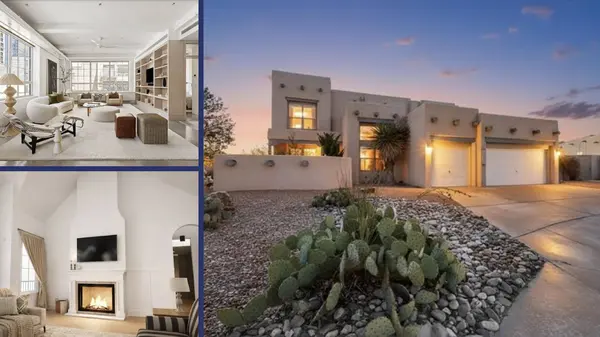
- Desert landscaping refresh: Fresh decomposed granite, trimmed ornamental grasses, removal of dead plants, and two to three specimen plants at the entry produce the Albuquerque curb appeal standard at a cost of $500 to $2,500. This is the most Albuquerque-specific single curb appeal investment — the low-water desert landscape that out-of-state buyers from water-stressed California markets specifically value rather than merely accept.
- Front door paint or replacement: The entry transition from exterior to interior is the moment that most influences the buyer's first interior impression. A freshly painted or replaced front door ($50 to $600) changes that transition from neutral to positive.
- Driveway cleaning: Pressure-washing the driveway removes the oil stains, tire marks, and weathering discoloration that accumulated over years of use. Clean concrete communicates maintenance. Stained and weathered concrete communicates neglect.
- Exterior stucco repair and paint touch-up: Repaired stucco cracks and fresh paint at visibly deteriorated exterior surfaces are the Albuquerque-specific exterior maintenance items that buyers look for before they enter the home. Leaving them unaddressed is leaving a negative visual impression for every buyer who pulls up for a showing.
Week 4-5: Staging and Presentation
What Staging Is and Is Not
"Competitive markets — when every listing in your area is polished, staging keeps you in the running... Most stagers offer a free or low-cost initial consultation," confirmed the HomeLight 2026 home staging and preparation guide. Staging is not the same as decorating. Decorating expresses the homeowner's personal taste. Staging removes the homeowner's personal taste and replaces it with a neutral, aspirational presentation that the widest possible range of buyers can project themselves into.
Staging does not require professional staging services for every home. What it requires in every home:
- Furniture arrangement that creates flow: Furniture should be arranged to guide the buyer's eye through the room to its best features — the mountain view window, the fireplace, the covered portal. Remove furniture that blocks sightlines or creates the sensation of a room being smaller than it is.
- Neutral, quality bedding in all bedrooms: Beds should be made with clean, solid-color or simple-patterned bedding. The specific bedding in the listing photographs communicates the bedroom's quality as a sleeping room. Dated, worn, or loudly patterned bedding communicates the opposite.
- Bathroom staging to hotel standard: Fresh white towels, a small plant or simple decorative item, and completely cleared countertops. The bathroom should feel available — as if no one has been living in it — rather than occupied.
- Kitchen staging — counter restraint: One or two quality objects on the kitchen counter (a bowl of fruit, a plant, a coffee station) alongside an otherwise clear surface communicates spaciousness and possibility.
- Outdoor living space staging: Albuquerque's covered portals and patios are year-round living rooms. Stage the outdoor space with comfortable seating, clean cushions, and — if the space has a mountain view — furniture oriented to face that view. A buyer who sits on the staged portal and looks at the Sandia Mountains during their showing is experiencing one of the most compelling sales arguments Albuquerque's real estate can make.
Week 5-6: Photography, Documents, and Marketing Readiness
Professional Photography — Non-Negotiable
Over 95% of buyers begin their home search online. The listing photographs are the first impression, the primary impression, and in many cases the entire basis of the decision to schedule a showing or skip to the next listing. The photography is not a support service for the listing — it is the listing's primary marketing deliverable.
Professional real estate photography in Albuquerque costs $300 to $600 and produces images that communicate the home's space, light, and condition in ways that a smartphone camera fundamentally cannot. The specific investment that produces the most dramatic photography improvement for Albuquerque homes:
- Timing the exterior shot for the Sandia Mountain view: The exterior photograph of a Northeast Heights home should be taken when the Sandia Mountains are most fully illuminated — typically mid-morning for front-facing mountain shots. A listing photograph of the Sandias in flat midday light or in shadow communicates none of the mountain's visual power. The same mountains in the correct light communicate the specific quality-of-life feature that drives the Northeast Heights premium.
- HDR imaging for balanced indoor-outdoor exposure: New Mexico's intense sunlight creates extreme exposure challenges for interiors with windows. HDR photography that balances the interior and exterior exposure simultaneously communicates both the room's space and the view through the windows — without the blown-out overexposed windows that standard photography produces.
- Twilight exterior photograph: A twilight shot of the exterior — taken in the 20-minute window after sunset when the sky is still blue and the home's interior lights are glowing warm — is the single listing photograph most consistently cited by buyer agents as the most compelling first impression.
The Document Package — Prepare Before the Listing Goes Live
Buyers who are serious enough to make an offer frequently request documentation that sellers are not prepared to provide quickly. Assembling the document package before listing prevents the delay of hunting for paperwork under contract pressure:
- Pre-listing inspection report: The report from your own inspector, available to all buyers before they make an offer. This transparency communicates seller confidence and eliminates the inspection-discovery dynamic that produces mid-contract surprise renegotiations.
- Roof inspection report and service documentation: Any roof inspection reports, repair invoices, or recoating documentation from the last five years. In Albuquerque's flat-roof market, this is the most-requested seller documentation.
- HVAC and evaporative cooler service records: Service invoices, filter replacement records, and any repair documentation.
- Solar system documentation: Ownership deed or lease agreement, production history, and current net metering or SREC information.
- HOA documents: For master-planned communities, the CC&Rs, current HOA financials, any pending special assessments, and the most recent meeting minutes.
- Utility bills: Twelve months of utility bills provide buyers with the actual operating cost data that listings frequently imply but rarely document. In a market where energy efficiency is increasingly valued, documented utility bills are a marketing asset for homes with good performance.
- Appliance manuals and warranties: Compile in a single binder or digital folder. Simple, professional, and appreciated by buyers as evidence of a well-organized household.
The Day Before the Listing Goes Live — The Final Walkthrough
The day before the listing photographs are taken and the listing goes active, walk through the home as if you are a buyer seeing it for the first time. Use this specific evaluation lens:
- Smell: Stand at the entry and take a full breath. Does the home smell neutral — or does it smell like pet, cooking, or the particular odor of a lived-in space? If you cannot detect any odor, ask someone who has not been in the home recently.
- Light: Open every window treatment. Turn on every light in every room. Is the home at its maximum brightness? In Albuquerque's intense natural light environment, a well-lit home should be dramatically bright on a clear day.
- Counters and surfaces: Walk through every room checking that every surface is at the staging standard you set — clear counters, arranged furniture, hotel-standard bedding, cleared bathrooms.
- The front entry sequence: Walk from the street to the front door at the pace of a buyer arriving for a showing. What do you see? Is the landscaping clean? Is the entry welcoming? Is the door unlocked and smoothly functional? Does the transition from exterior to interior feel like entering a prepared home?
- The outdoor space: Walk to the covered portal or patio. Sit down if the furniture is staged. Look at the view. Does the outdoor space feel like the year-round living room it should be in the Albuquerque climate? Is the furniture clean, the surfaces clear, the view unobstructed by dead plants or stored items?
For the pricing side of the listing readiness equation — the decision that determines whether the preparation produces the outcome it deserves — our guide to how to price your Albuquerque home correctly the first time covers the complete CMA process and the Albuquerque-specific pricing adjustments. And for sellers who want to understand what buyers are specifically evaluating during their showings, our post on what scares Albuquerque buyers away instantly covers the buyer psychology behind each preparation decision.
The Albuquerque Pre-Listing Master Checklist
Foundation (Weeks 1-2)
- Pre-listing inspection completed
- Roof inspection report obtained
- HVAC serviced and documented
- Evaporative cooler serviced and documented
- All active leaks and drips repaired
- GFCI outlets installed in all required locations
- Stucco cracks repaired
- Solar system status confirmed and documented
- Unpermitted work identified and disclosed with agent
Cleaning and Decluttering (Weeks 2-3)
- Professional deep clean completed (all surfaces, appliances, windows, baseboards)
- All personal photographs removed
- All collections and hobby items packed or stored
- Excess furniture removed from all rooms
- All countertops cleared to staging standard
- All closets organized and 60% full or less
- Storage unit rented for overflow items
Cosmetic Refresh (Weeks 3-4)
- Interior paint completed in warm neutral palette
- Cabinet hardware replaced throughout
- Dated light fixtures replaced
- Desert landscaping refreshed (decomposed granite, specimen plants, dead plants removed)
- Front door painted or replaced
- Driveway pressure-washed
- Exterior stucco repairs completed and touched up
Staging and Presentation (Weeks 4-5)
- Furniture arranged for optimal flow and sightlines
- All bedrooms staged with quality neutral bedding
- Bathrooms staged to hotel standard (fresh towels, cleared counters)
- Kitchen counter staging (2-3 objects maximum)
- Outdoor living space staged with furniture oriented to view
Photography and Marketing Readiness (Weeks 5-6)
- Professional photography scheduled (HDR, twilight exterior, mountain view timing)
- Document package assembled (inspection, roof, HVAC, solar, HOA, utilities)
- Zillow Showcase (if applicable) confirmed with listing agent
- Thursday listing-day strategy confirmed with agent
- Showing window available for first weekend confirmed
The Bottom Line — Preparation Produces the Outcome Pricing Expects
The correctly priced listing that is not prepared produces the same buyer hesitation as the overpriced listing. The preparation investment without the correct pricing produces a beautiful home sitting at an unjustifiable number. The combination — correct preparation followed by correct pricing, launched at the right moment — is what produces the 14-day under-contract outcome at 98.5% of list price.
Preparation is not insurance against a difficult market. It is the specific and controllable set of actions that gives your home the best possible shot at the momentum-window outcome in whatever market conditions are present when your listing goes live.
The sequence is the preparation guide. Follow it in order. The result is a home that earns its offers rather than waiting for them.
Ready to Start Preparing? Let's Walk Through It Together.
Jenn & Vinay from The Rodgers Neighborhood Real Estate Group walk Albuquerque sellers through a specific, room-by-room, system-by-system pre-listing assessment before every listing — identifying the preparation priorities that match your specific home, your specific price range, and the specific expectations of your neighborhood's buyer pool. The walkthrough is free. The preparation sequence it produces is the specific one your home needs, not the generic checklist. The conversation starts with a call.
Jenn & Vinay Rodgers are Albuquerque's trusted real estate professionals with The Rodgers Neighborhood Real Estate Group, brokered by Real Broker, LLC, serving buyers and sellers across Albuquerque, Rio Rancho, Corrales, Los Lunas, Tijeras, Cedar Crest, Sandia Park, the East Mountains, Bernalillo County, Sandoval County, and surrounding New Mexico communities.
The Rodgers Neighborhood Real Estate Group
Jenn & Vinay Rodgers
Real Broker, LLC
Albuquerque, NM
📞 505-417-2733
🏠 Get your free Albuquerque home valuationCategories
- All Blogs (331)
- 2026 & Beyond for Real Estate (227)
- Doctors and Nurses looking for homes in NM (4)
- Guide to buying a home in NM (146)
- Health Care Heros (7)
- Home Upgrades (40)
- Jenn & Vinay your Local Real Estate Experts! (112)
- Moving to Albuquerque (130)
- Neighborhoods in Albuquerque NM (89)
- Rent or Own (2)
- Sellers Questions for Selling homes (2)
Recent Posts



GET MORE INFORMATION