
Southwestern Home Design Ideas That Appeal to Albuquerque Buyers
Albuquerque's residential architecture speaks a specific design language — one that evolved from the intersection of Pueblo building techniques, Spanish colonial construction, and the specific demands of a high-desert climate at 5,312 feet elevation. The home design ideas that appeal most powerfully to Albuquerque buyers are the ones that speak this language authentically: the structural features, the materials, the palette, and the outdoor integration that only make sense in this specific environment. This guide covers all of it.
The Foundation — Authentic vs. Kitsch: The Most Important Distinction
Before any specific design element: the distinction that determines whether a Southwestern design works or fails. Authentic Southwestern design is an architectural vocabulary — an integrated system of forms, materials, and spatial relationships that evolved in response to the New Mexican desert climate and the Pueblo and Spanish colonial building traditions. Southwestern kitsch is the application of Southwestern symbols to surfaces that do not express the underlying logic.
- Authentic: A kiva fireplace whose shape serves the thermal function of the fireplace while expressing the Pueblo architectural form. Saltillo tile whose mass absorbs and releases heat in the same way adobe walls do. Viga beams that are the actual structural support for the roof, visible because they are the structure, not because they have been applied as decoration.
- Kitsch: A mass-produced resin howling coyote on the mantel. A turquoise accent wall in a home with no other connection to the Southwestern design vocabulary. Dream catchers hung from every available surface. Wagon wheel light fixtures. The symbols without the logic.
Albuquerque buyers arriving from Los Angeles, Seattle, and Phoenix — who have done enough research to know what authentic New Mexican architecture looks like — consistently respond to the authentic and consistently dismiss the kitsch. The design guide below is organized around the authentic vocabulary.
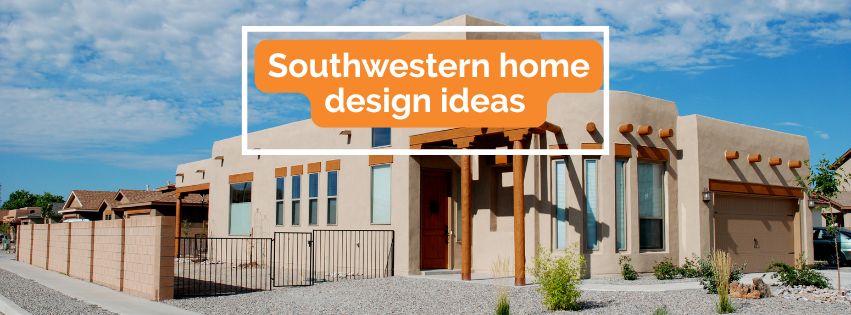
The Exterior Design Language — What Southwestern Looks Like From the Street
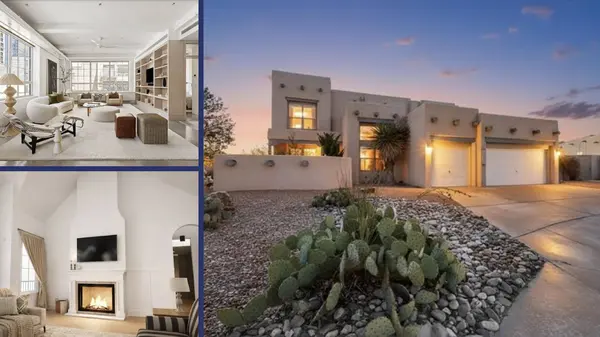
"From the outside, a Southwestern house is easy to identify — a flat roof, adobe or stucco siding, earth tones, arched doors, wrought iron and desert landscape. The Southwestern style has evolved over time to incorporate elements of Mexican, Native American, Hacienda-style and Western decor," confirmed Houzz's 2026 Southwestern home design guide (June 2026).
The Flat or Low-Slope Roof
The flat roof is the defining Albuquerque exterior element — not because it is easier to build, but because it is the specific structural response to the New Mexican climate. A flat roof is feasible here because Albuquerque's low annual rainfall (approximately 9 inches) does not require the steep drainage slopes that wet climates demand. The flat roof is the architectural expression of a climate where rain is rare and rarely heavy. It is also the form from which the portal and the vigas project — the flat roof edge with its projecting beam ends is the most specifically New Mexican exterior detail.
- The canale: The canale is the traditional New Mexican flat roof drainage spout — a square or rectangular tube projecting through the parapet wall, directing rain off the flat roof to the ground. Canales are visible on historic and modern Albuquerque homes alike. They are the functional drainage solution and one of the most characteristically New Mexican exterior details.
- The parapet wall: Flat-roofed Southwestern homes have parapet walls — the wall that extends above the roofline, creating the characteristic stepped silhouette that defines the Pueblo architectural skyline. The stepped parapet with projecting viga beam ends is the most immediately recognizable Southwestern exterior form.
Adobe and Stucco Exteriors — Earth Tones That Belong
Adobe (sun-dried mud brick) is the original Pueblo and Spanish colonial construction material of New Mexico — buildings literally made of the earth they stand on. Most modern Albuquerque homes use stucco over frame construction rather than true adobe, but the form vocabulary (rounded corners, soft contours, thick-feeling walls) persists in the stucco tradition.
- The color that works: The authentic Albuquerque exterior palette is warm earth tones — desert sand, warm beige, terracotta, warm white. These colors are not arbitrary; they are the colors of adobe and earth at this specific latitude and altitude. The warm tone is the response to the warm quality of the desert light. Cool gray exteriors fight the light; warm earth tones harmonize with it.
- The front door as color accent: Against a warm earth-tone stucco exterior, the front door is the single color accent that Southwestern design allows — and it should be bold. Deep red, turquoise, sage green, or charcoal. The door color is the specific way the home's owner expresses cultural identity through color.
- Wrought iron accents: Window grilles (rejas), light fixtures, railings, and hardware in forged wrought iron are the metal accent that Southwestern architecture specifically uses. The hand-forged quality of traditional wrought iron accents is specifically visible — the slight irregularities of hand work that distinguish it from machine-made metal decoration.
The Portal — The Covered Porch That Is Not Optional
The portal is the covered outdoor entry porch that defines the Albuquerque home's relationship to the exterior. The portal's function is specifically climatic: the overhead cover provides shade during the high-angle summer sun while allowing the lower-angle winter sun to penetrate and warm the entry. Every day the portal is doing what air conditioning tries to do with electricity — managing the solar heat gain through passive geometry.
The portal's structural expression — wood viga beams projecting from the exterior wall and supporting the overhead cover — is the most immediately recognizable Southwestern architectural detail. The bancos (adobe benches built into the back wall of the portal) are the specific invitation to sit in the shade and observe the world. The portal is where life happens in Albuquerque's 310-day sunshine climate.
- Portal design for buyers: A well-maintained, cleanly staged portal is the single most impactful outdoor staging element for Albuquerque sellers. Two chairs, a small table, healthy plants in terracotta pots, and clean wood vigas is the specific outdoor presentation that converts a showing into an offer from a California buyer who has never had a portal and has always wanted one.
The Interior Design Language — What Southwestern Looks Like From the Inside
"On the inside, Southwest decor is all about color; subdued beige, tan and brown are often paired with pops of turquoise, bright red and yellow. Unique, handcrafted objects are common in this style, including painted pottery, colorful tiles, tribal patterns, Navajo rugs and Longhorn skulls. With so many neutral tones, the texture found in leather, suede and rough hewn wood adds much-needed dimension and variety," confirmed Houzz's 2026 Southwestern home design guide.
The Kiva Fireplace — The Defining Interior Feature
The kiva fireplace — the beehive-shaped corner fireplace that is uniquely New Mexican — is the interior feature that Albuquerque buyers from other climates respond to most powerfully. Nothing like it exists in California, Texas, or the Pacific Northwest. The kiva's round, organic form contrasted against the rectilinear room it inhabits creates the specific visual focal point that the room organizes around.
- Design considerations: The kiva fireplace is specifically a firebox and flue — not a decorative feature applied to a wall. Its functional status as the room's heating element is what produces its form. Stage and design around the kiva as the room's primary focal point: furniture oriented toward it, lighting that highlights its curved form, simple candle grouping or wood stack inside the firebox when not in use.
- The banco: The banco — a built-in adobe bench that wraps around the base of the kiva fireplace or runs along a wall — is the specific seating element unique to New Mexican design. Bancas are formed from adobe plaster and finished to match the surrounding wall and fireplace surfaces. The banco at the kiva's base is the most intimate seating position in the room — close to the fire, integral to the architecture rather than separate from it.
Viga and Latilla Ceilings — The Structural Expression Overhead
Viga and latilla ceilings are the structural expression of traditional New Mexico construction — the exposed wood beams (vigas, typically sugar pine or ponderosa pine) that support the roof, with smaller sticks or branches (latillas) laid across them in herringbone or parallel patterns before the final roof layer. The exposed viga ceiling is visible because the structure is the finish — there is no dropped ceiling hiding the building.
"New Mexico's 2026 direction honors heritage and embraces comfort. Use vigas, latillas, and colorful tile to blend Navajo, Pueblo, and Spanish influences. Reclaimed beams and floors reduce waste while adding unique grain. Terracotta, adobe red, desert sand, and muted turquoise set a soothing tone," confirmed Tanda Construction Services' 2026 New Mexico custom home design trends (November 2025).
- Lighting design for viga ceilings: The most common design error with viga ceilings is competing with them visually. A large chandelier centered in the room competes with the ceiling's horizontal rhythm. Instead: wall sconces, floor lamps, and warm-tone recessed lighting (if on a separate plane below the vigas) that illuminate the space without creating a visual centerpiece that fights the ceiling's natural authority.
- Uplight the vigas: Warm uplighting aimed at the viga ceiling — achieved with LED strip lights or small directional spots — produces the specific amber glow on the wood grain that makes a viga ceiling one of the most atmospheric interior elements in Albuquerque design. Evening photographs of uplighted viga ceilings consistently outperform every other listing photo.
- Do not remove or cover vigas: Removing exposed viga beams to install a standard drywall ceiling is the single most consequential architectural mistake available to an Albuquerque homeowner. The vigas, once removed, cannot be cost-effectively restored. Albuquerque buyers specifically search for homes with viga ceilings and specifically discount homes where they have been removed or covered.
Saltillo Tile Floors — The Warm Foundation
Saltillo tile — the warm terracotta ceramic tile made in Saltillo, Mexico — is the most common floor material in Albuquerque's traditional and Pueblo Revival homes. Its warm terracotta color, its slight variation from tile to tile (handmade, so each is unique), and its thermal mass properties (absorbs heat during the day and releases it slowly) make it a specifically functional and specifically beautiful choice for the New Mexico environment.
- Saltillo tile maintenance and staging: Saltillo tile that is properly sealed and polished reflects the warm interior light and reads as rich and intentional in listing photos. Dull, unsealed, or grout-heavy Saltillo reads as dated and neglected. Professional Saltillo polishing and resealing ($200-$600 for a typical home) is one of the most effective pre-listing investments for a home with original Saltillo floors.
- Area rugs on Saltillo: A properly sized area rug — natural fiber (jute, sisal, wool) in a neutral warm tone or a Navajo-inspired geometric pattern — anchors the seating arrangement and adds the textile texture that the hard Saltillo floor alone does not provide. The rug should be large enough that all front legs of the furniture grouping rest on it.
Adobe Plaster Walls — The Earth That Surrounds You
Adobe plaster walls — whether true adobe (mud and straw applied directly to adobe brick) or smooth stucco plaster applied to frame walls — are the defining interior wall finish of New Mexican architecture. The specific quality of adobe plaster: slightly rounded corners, surfaces that receive light differently at different angles, and the tactile warmth that paint on drywall cannot produce.
- Color for adobe plaster walls: The authentic palette for adobe plaster is warm — warm white (not blue-white), warm sand, warm cream, warm beige. The material itself already carries warmth from the natural pigments traditionally mixed into the plaster; the color should extend rather than neutralize that warmth. Cool gray paint on adobe plaster specifically produces a visual dissonance that experienced Albuquerque buyers notice and respond negatively to.
- The nicho: The nicho is an arched recess in an adobe plaster wall — a display shelf carved into the wall itself rather than attached to it. Nichos are a characteristic New Mexican interior detail, historically used for religious figures or candles and now used for art objects, pottery, and plants. A well-placed nicho with a piece of New Mexico pottery or a small succulent is the most specifically New Mexican design accent available at zero material cost (the nicho is carved into the plaster).
The 2026 Albuquerque Color Palette — What Works and What Doesn't
The color palette that Albuquerque buyers respond to in 2026 is specifically different from the generic national staging default (cool grays and white) and from the mass-produced Southwestern kitsch (oversaturated turquoise and red). The 2026 direction: minimalism with Southwestern warmth — cleaner, less cluttered applications of the traditional palette.
The Foundation Colors — What the Walls, Floors, and Structures Should Be
- Desert sand: The primary wall color that harmonizes with Albuquerque's specific quality of light. A warm, slightly yellow-tinged sand tone that does not feel yellow in the room but reads as neutral and earth-connected. Sherwin-Williams Accessible Beige, Benjamin Moore Revere Pewter in its warmest application, or custom warm sand tones mixed for the specific light quality of each room.
- Warm white: For ceilings and trim: warm white (Benjamin Moore White Dove, Sherwin-Williams Antique White) rather than cool white or blue-white. The distinction is subtle in a paint chip and dramatic in a room.
- Terracotta and adobe red: For accent walls, kitchen islands, or as the primary color in smaller rooms. Terracotta and adobe red are specifically the colors of the material the architecture is made from — using them on a wall is the design equivalent of honest material expression.
- Sage green: The color of the native sage and juniper that define the high desert landscape. Sage green is specifically appropriate for exterior portal ceiling paint (the traditional "porch blue" of New Mexico is actually often sage green) and as an accent in kitchen cabinetry or bathroom tile.
The Accent Colors — Used Deliberately, Not Universally
- Muted turquoise (not saturated): Turquoise is the state gem and a cultural color of deep significance in New Mexican and Pueblo traditions. In design, it works as a specific, deliberate accent — the front door color, a single ceramic pot, the tile accent in the shower. It fails as a dominant color applied broadly. The 2026 distinction: muted, dusty turquoise (the color of old turquoise stones, not the saturated blue-green of a hotel swimming pool) used with restraint.
- Ochre and gold: The color of the sunset on the Sandia Mountains, of Hatch green chile after roasting, of the chamisa sage flowers in fall. Ochre accents in throw pillows, pottery, and textile accents are specifically warm and specifically New Mexican without being decoratively forced.
- Deep burgundy and warm red: The color of the ristras (dried red chile strings) that hang from portals across Albuquerque. Used as the carved wood door color, as an accent tile band in the kitchen, or as the color of a leather chair. Warm red is the most culturally rooted single color accent in the Southwestern palette.
The Materials Vocabulary — What Authentic Southwest Is Made Of
- Reclaimed wood: Reclaimed pine, cedar, or cottonwood for beams, shelving, and cabinetry. The weathered grain and specific aging of reclaimed wood is specifically what new wood cannot produce. "Reclaimed beams and floors reduce waste while adding unique grain" — the sustainability and the aesthetic are simultaneous benefits.
- Natural stone: Flagstone paths (sandstone or granite native to New Mexico), stone countertops (quartzite, granite, or sandstone), and stacked stone accent walls are the interior and exterior applications of the New Mexico geological landscape as design material.
- Talavera tile: The hand-painted ceramic tile from Talavera de la Reina (Spain, via Mexico) tradition — blue and white or multicolored patterns on a white ground — as kitchen backsplash accent bands, bathroom borders, and exterior decorative elements. Talavera tile is the most immediately recognizable Spanish colonial decorative tradition visible in Albuquerque's architecture.
- Leather and suede: Upholstery in warm caramel or cognac leather and suede textiles provide the texture that the hard surfaces of adobe, tile, and wood require as counterpoint. A leather sofa in a Saltillo tile room with a viga ceiling is specifically harmonious — the softness of the leather against the hardness of the tile and the warmth of the wood. A microfiber sectional in gray is specifically dissonant.
- Handwoven textiles: Navajo-inspired geometric rugs (not mass-produced copies but quality woven pieces), hand-dyed linen and cotton throws, and natural fiber (jute, sisal, wool) area rugs are the textile expressions of the weaving traditions that have been part of New Mexico's cultural heritage for centuries. These textiles should feel tactile and handmade rather than slick and uniform.
- Pottery and ceramics: New Mexico's Pueblo pottery tradition — black-on-black pottery from Santa Clara Pueblo, polychrome pottery from Zia Pueblo, red pottery from Cochiti — is the most culturally significant decorative object available to the Albuquerque homeowner. One authentic piece from a named Pueblo potter, bought from the Indian Pueblo Cultural Center or directly from the artist, is worth more in design terms than an entire shelf of decorative imports.
The Outdoor Integration — Design That Extends Through the Wall
Southwestern design's most fundamental principle is the integration of interior and exterior space — the design does not stop at the wall but extends through the portal, across the patio, and into the desert landscape beyond. Albuquerque's 310 days of sunshine make this integration not a design aspiration but a practical daily reality.
- The portal as outdoor room: Stage and design the portal as the outdoor room it is — furniture, rugs (indoor-outdoor), lighting, and plants that create a complete living environment under the portal's protection. The specific design elements: terracotta pots with drought-tolerant plants (lavender, agave, rosemary), a fire pit or chiminea visible from the portal, and warm string lights along the vigas for evening use.
- The courtyard (placita): The traditional New Mexican walled courtyard — the placita — is an enclosed outdoor room surrounded by the home's walls. If the home has a courtyard, it is the most coveted outdoor design feature available in Albuquerque real estate. Design the courtyard as a room: fountain (the traditional Spanish colonial courtyard centerpiece), seating, a shade canopy or trees, and the specific quality of privacy that a walled outdoor space provides.
- Desert landscaping as design: Xeriscape landscaping that is intentionally designed — with plant material selection, gravel color, stone placement, and pathway design — is a design statement that specifically belongs in Albuquerque. The native plant garden of chamisa, Apache plume, desert willow, and blue grama grass is not a compromise for water savings; it is the correct planting for the specific place.
The 2026 Trend — Minimalist Southwestern
The dominant direction in Albuquerque home design in 2026 is the combination that the Santa Fe and New Mexico design world is increasingly calling "minimalist Southwestern" — the traditional architectural vocabulary (kiva fireplace, vigas, Saltillo tile, adobe plaster) applied with restraint, cleanliness, and a contemporary eye that removes the clutter of the decorative layer.
The 2026 minimalist Southwestern interior: warm earth-tone adobe plaster walls with no decorative objects except one intentional piece per surface. Saltillo tile floor with a single properly-sized natural fiber rug. Kiva fireplace with simple candles or a small plant. Viga ceiling with warm uplighting and no competing pendant. One leather sofa, one chair, no additional seating until the room can accommodate it without crowding. The window clear of heavy treatment, allowing the Sandia Mountains or the desert garden to serve as the room's primary artwork.
This direction appeals to the Albuquerque buyer arriving from Los Angeles or Seattle because it combines the authentic architectural character they cannot get at home with the clean, uncluttered spaciousness that their modern aesthetic requires. The architectural features provide the warmth and specificity; the restraint provides the livability.
For the specific home staging advice that applies the Southwestern design principles to pre-sale listing preparation — including the portal staging strategy and the authentic art placement — our post on home staging and decorating tips that help Albuquerque homes sell faster covers the staging application. And for the budget-friendly upgrade guide that identifies the highest-impact affordable Southwestern improvements — the front door repaint, the kiva refresh, and the xeriscape landscaping — our post on budget-friendly home upgrades Albuquerque buyers love covers the affordable improvements.
The Quick Reference — Authentic Southwestern Design Checklist
- Exterior: Flat/low-slope roof + parapet + canales. Warm earth-tone stucco. Bold front door color. Wrought iron accents. Portal with vigas and bancos. Xeriscape landscaping.
- Interior — structural: Kiva fireplace. Viga and latilla ceiling. Saltillo tile or warm LVP floors. Adobe plaster walls. Nichos. Banco seating.
- Color palette: Foundation: desert sand, warm white, terracotta. Accents: muted turquoise, ochre, deep burgundy/red. Avoid: cool grays, clinical whites, saturated neon Southwestern.
- Materials: Reclaimed wood. Natural stone. Talavera tile accents. Leather and suede. Handwoven textiles. New Mexico pottery.
- Outdoor integration: Portal as outdoor room. Placita/courtyard if available. Intentional desert landscaping.
- 2026 direction: Minimalist Southwestern — authentic architectural vocabulary, restrained decorative layer, contemporary eye.
The Bottom Line — Albuquerque Design That Speaks the Place
The Southwestern home design that Albuquerque buyers respond to most powerfully is the design that makes them feel like the home is specifically here — not generically decorated, not aggressively themed, but authentically of this place and its specific intersection of climate, culture, and construction tradition. The kiva fireplace that is a fireplace first and a design element second. The viga ceiling that is the roof structure first and the architectural feature second. The Saltillo tile that is the floor first and the visual warmth second.
When buyers arrive from Los Angeles or Seattle and walk into a home that speaks this language authentically, they respond with a specific recognition: this is the thing I could not get at home, and this is what I was looking for when I decided to move to Albuquerque. That recognition — the design equivalent of the city giving someone a reason to stay — is what authentic Southwestern home design produces. And what the mass-produced version cannot.
Looking for an Authentically Designed Albuquerque Home?
Jenn & Vinay from The Rodgers Neighborhood Real Estate Group know which Albuquerque homes have the authentic viga ceilings, the intact kiva fireplaces, the original Saltillo tile, and the portal that looks as designed as it was when it was built — and which have been updated in ways that preserve the architectural character rather than erase it. The conversation about finding the specific Albuquerque home that speaks this specific place starts with a call.
Jenn & Vinay Rodgers are Albuquerque's trusted real estate professionals with The Rodgers Neighborhood Real Estate Group, brokered by Real Broker, LLC, serving buyers and sellers across Albuquerque, Rio Rancho, Corrales, Los Lunas, Tijeras, Cedar Crest, Sandia Park, the East Mountains, Bernalillo County, Sandoval County, and surrounding New Mexico communities.
The Rodgers Neighborhood Real Estate Group
Jenn & Vinay Rodgers
Real Broker, LLC
Albuquerque, NM
📞 505-417-2733
🏠 Browse authentic Southwestern homes in Albuquerque nowCategories
- All Blogs (331)
- 2026 & Beyond for Real Estate (227)
- Doctors and Nurses looking for homes in NM (4)
- Guide to buying a home in NM (146)
- Health Care Heros (7)
- Home Upgrades (40)
- Jenn & Vinay your Local Real Estate Experts! (112)
- Moving to Albuquerque (130)
- Neighborhoods in Albuquerque NM (89)
- Rent or Own (2)
- Sellers Questions for Selling homes (2)
Recent Posts



GET MORE INFORMATION