

Mesa del Sol Growth Explained: Is It the Future of Albuquerque Living?
The phrase "overnight success" is almost always the story of something that took much longer than it looked from the outside.
Mesa del Sol is a perfect example. The master plan was approved by the City of Albuquerque in 2005. The development concepts go back to the 1980s. For most of that period, the community's progress was slow enough that its eventual arrival as a genuine employment and residential hub seemed perpetually ten years away.
Then Netflix came — first in 2018, then again in 2020. The campus grew from 28 to 108 acres. Fidelity Investments arrived. The City of Albuquerque invested $8 million in the entrance bridge over the Tijeras Arroyo. New residential construction began shipping homes at a meaningful pace. The fire station was allocated. And in 2026, Mesa del Sol CEO David Campbell stood at an Albuquerque Economic Forum presentation and said what finally felt true: after 40 years, the community is becoming an overnight success.
"Netflix has now chosen Albuquerque not once but twice and that should make everyone sit up and take notice. Working together, we are building New Mexico's future economy and workforce right here in Albuquerque and at Mesa del Sol," said City Councilor Pat Davis when the Netflix expansion was announced. That language — 'New Mexico's future economy' — is not a press release exaggeration. It reflects the specific conviction of the city's economic leadership that Mesa del Sol's employment anchor concentration is a genuine structural shift in where Albuquerque's economy is going.
This guide explains what that growth means in practical terms — for the buyers considering a home in Mesa del Sol, for the workers whose employment centers are there, and for the broader Albuquerque market that Mesa del Sol's trajectory affects.
What Mesa del Sol Actually Is — The Scale of the Vision
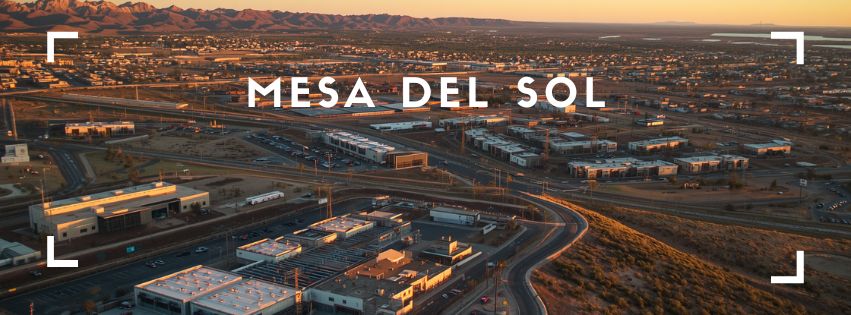
Mesa del Sol is not a subdivision. It is a master-planned community of extraordinary ambition — one of the largest master-planned development projects in the American Southwest, situated on state trust land in the southeastern quadrant of Albuquerque adjacent to Kirtland Air Force Base.
The master plan, approved in 2005 and in development since the 1980s, envisions a complete community: 37,500 residences, a population of 100,000, mixed-use commercial development, educational institutions, parks, employment centers, and an eventual light rail connection to the rest of Albuquerque. The long-term development plan calls for up to nine distinct towns within the Mesa del Sol footprint — each with its own character and commercial infrastructure — all connected to each other and to Albuquerque's existing grid.
In 2026, Mesa del Sol is approximately at the beginning of that vision. The current residential count is a fraction of the 37,500-unit target. The commercial infrastructure is developing rather than mature. The employment anchors are real and growing. The community is, as Campbell said, 40 years in and just becoming an overnight success.
That is both the most compelling argument for buying here and the most important context for any buyer considering the purchase. Mesa del Sol's trajectory is genuinely extraordinary. Its current state is genuinely incomplete. Both of those things are true simultaneously.
The Employment Anchors — Why Mesa del Sol's Economic Thesis Is Credible
Netflix Studios Albuquerque — The Anchor That Changed Everything
Netflix's decision to locate its production studio in Albuquerque — specifically in Mesa del Sol — was the single event that transformed the community's trajectory from aspirational to real. The specifics of what Netflix built and what it committed are important context for understanding why the anchor matters.
According to the City of Albuquerque's official Netflix expansion announcement, the campus grew from its initial 28 acres to 108 acres in its second phase, with the development of four purpose-built soundstages, three mills, one production office, and two stage support buildings. Netflix was awarded $5.5 million in Local Economic Development Act funding, $6 million in city in-kind infrastructure, and $27 million in State LEDA funding. Between 2021 and 2023 alone, Netflix employed over 4,000 cast and crew members in New Mexico.
The proposed third expansion — adding 300 acres to the existing 108-acre campus — would make the ABQ Studios one of the largest high-tech and sustainable film production facilities in North America, with an estimated 1,000 production jobs created over the next ten years and an additional 1,467 construction jobs to complete the expansion.
For Mesa del Sol's residential market, the Netflix anchor means something specific: a sustained, recession-resistant employment base that draws workers who need housing within reasonable commute distance. Film industry workers — the production staff, the crew professionals, the post-production specialists — need to live somewhere. The community that provides the best combination of quality, convenience, and affordability for those workers will capture a sustained housing demand that does not depend on broader economic cycles in the way that most employment-dependent housing markets do.
Fidelity Investments — The Second Employment Anchor
Fidelity Investments' presence in the Mesa del Sol employment corridor provides the financial services employment anchor that balances the entertainment industry workforce concentration that Netflix represents.
Fidelity's Mesa del Sol campus employs a professional financial services workforce — customer service, operations, and financial advisory roles — that is explicitly different in demographic profile from the film industry workforce. The combination of the two anchors creates the employment diversity that sustains residential communities through sector-specific fluctuations. When film production is in a down cycle, financial services employment is typically more stable. When financial services are challenged, entertainment production tends to continue regardless.
The two-anchor employment model is specifically what makes Mesa del Sol's residential market more durable than a single-employer community — which is the most precarious residential market form in any city.
Kirtland Air Force Base — The Adjacent Defense Anchor
Mesa del Sol's adjacency to Kirtland Air Force Base — Albuquerque's largest single employer with approximately 25,000 military, civilian, and contractor personnel — is a geographic advantage that the community's marketing rarely emphasizes but that meaningfully affects the housing demand for properties within a short commute of the base.
Kirtland's workforce — which includes Sandia National Laboratories personnel who operate under the base's umbrella — represents a stable, government-employment-based demand for housing that is specifically geographically oriented toward Mesa del Sol's southeast Albuquerque position. For Kirtland and Sandia workers who are currently living in the Northeast Heights and commuting south, Mesa del Sol offers a reversal of that commute: living south, near the employment center, rather than making the cross-city drive twice daily.
UNM South Campus — Research and Academic Employment
The University of New Mexico's South Campus, within the Mesa del Sol vicinity, provides the academic and research employment anchor that creates the university-adjacent residential demand that typically produces a stable and growing buyer pool over time. Research institutions and university campuses attract the specific demographic — researchers, postdoctoral fellows, academic professionals — that values housing quality and commute proximity over suburban amenity density.
The Infrastructure Investment — What the City Has Committed
The most significant municipal infrastructure signal in Mesa del Sol's 2026 trajectory is the $8 million investment in the Tijeras Arroyo bridge at the community's primary entrance. According to the City of Albuquerque's official announcement of the bridge upgrade, the investment covers storm drainage improvements, installation of compacted piles under the bridge approaches, and additional lane capacity for both vehicles and a bike-pedestrian path. Mayor Tim Keller was explicit about what the investment signals: 'We're putting the amenities and infrastructure in place as this area emerges as a community hub for film and sports with anchors like Netflix.'
The bridge investment is specifically important as a signal because infrastructure at this scale is funded from transportation tax revenue — money that must be justified to taxpayers and allocated through a competitive process against other infrastructure needs across the city. An $8 million bridge commitment is the city's financial statement that Mesa del Sol's long-term growth is real enough to justify major infrastructure ahead of the full residential buildout.
The fire station allocation cited in the up-and-coming neighborhoods analysis — a separate municipal commitment that will require its own funding, planning, and construction timeline — reinforces the infrastructure signal. Both investments reflect the city's multi-year planning horizon for Mesa del Sol as a genuine population center, not merely a developer's aspiration.
The long-term infrastructure vision includes a light rail connection to the rest of Albuquerque — a transit investment that would transform Mesa del Sol from a car-dependent employment suburb into a transit-connected urban node. That vision is far from realized in 2026, but its presence in the master plan reflects the ambition of what Mesa del Sol is intended to become.
The Housing Market — What Buyers Find Today
The Current Residential Inventory — New Construction Dominates
Mesa del Sol's current residential inventory is primarily new construction from active builders — homes that are being built and sold on a production timeline rather than resale properties from established owners. The production builders active in Mesa del Sol include D.R. Horton and several others producing homes at price points ranging from the upper $200,000s through the $500,000s.
The homes being built in Mesa del Sol in 2026 are specifically designed around the sustainability and energy efficiency principles that the community's master plan prioritized from the beginning. Solar-ready roofs, high-efficiency HVAC systems, and construction standards that reflect contemporary energy performance expectations are more consistently available in Mesa del Sol's new construction than in the resale stock of older Albuquerque neighborhoods.
For buyers who specifically want new construction — the builder warranty infrastructure, the modern systems, the contemporary floor plans — Mesa del Sol provides the most consistent new construction supply in the southeast Albuquerque market at price points that the comparable new construction in the Northeast Heights cannot approach.
The Resale Challenge — Builder Competition Is the Primary Market Dynamic
The most important practical consideration for buyers evaluating Mesa del Sol as a purchase is the resale competition from active builders — a dynamic that affects every master-planned community in active buildout and that is more pronounced in Mesa del Sol than in more fully built-out communities.
When a buyer purchases a resale home in Mesa del Sol and eventually needs to sell, they compete with builders who can offer brand-new construction with warranties, customization options, rate buydowns, and appliance packages. That competition suppresses resale pricing relative to what a comparable resale in a non-building neighborhood would achieve.
The 111-day average market time that Mesa del Sol resale properties have been averaging reflects this dynamic directly. It is not that Mesa del Sol homes are undesirable — the employment anchors and the infrastructure investment make the community genuinely attractive. It is that the buyer who wants a Mesa del Sol home can often buy new construction instead, which reduces the competitive pool for resale listings.
This dynamic is normal in the development phase of every master-planned community and will resolve as the buildout completes and the active builder presence diminishes. For buyers with 7-to-10-year horizons who can wait for the buildout to mature, this is a manageable consideration. For buyers with shorter horizons or firm resale timelines, it deserves honest evaluation.
Who Is Buying in Mesa del Sol — The Buyer Profile
- Netflix and film industry workers: The employment anchor's most direct residential demand. Workers who can eliminate or minimize their studio commute are the most motivated Mesa del Sol buyers.
- Fidelity and financial services professionals: Campus proximity residents who want short commutes to the financial services employment corridor.
- Kirtland and Sandia Labs personnel: The adjacency to Kirtland makes Mesa del Sol the logical southeastern residential option for base and laboratory employees currently commuting from the north.
- First-time buyers attracted by new construction pricing: The upper $200,000s new construction entry point is the most accessible in the Albuquerque market for buyers who specifically want new construction quality.
- Trajectory investors: Buyers who have specifically evaluated Mesa del Sol's 5-to-10-year trajectory and are purchasing ahead of the commercial maturation that the employment anchors will sustain.
Mesa del Sol's Unique Features — What You Get That No Other Albuquerque Neighborhood Provides
Isleta Amphitheater Adjacency — Concert Access From Your Neighborhood
The Isleta Amphitheater — Albuquerque's primary outdoor concert venue, seating 12,500 and hosting national touring acts throughout the spring, summer, and fall season — is within the Mesa del Sol development footprint. For residents who attend concerts regularly, the ability to walk or take a short drive to a major outdoor venue rather than navigating cross-city traffic is a quality-of-life amenity that no other Albuquerque residential community provides.
The specific experience of walking to a major outdoor concert from your own neighborhood — arriving without parking hassle, departing without the traffic exodus — is one of those quality-of-life features that is difficult to quantify in a real estate listing but that becomes enormously valued after the first few times the experience plays out.
The International School — World-Class Education in the Community
The International School at Mesa del Sol provides an International Baccalaureate curriculum for K-12 students — one of the most academically rigorous and internationally recognized educational frameworks available anywhere in New Mexico — within walking distance of Mesa del Sol's residential streets. For families who prioritize international curriculum, language immersion, and the specific educational outcomes that IB programming produces, Mesa del Sol offers the only neighborhood-adjacent IB school in the Albuquerque metro.
This educational anchor is specifically relevant to the Netflix and entertainment industry workforce, which is demographically more internationally mobile and more internationally oriented than the broader Albuquerque professional population. The IB curriculum serves a specific employment community's educational needs in a way that standard APS schools do not.
New Mexico United Soccer Stadium — Potential Future Anchor
The possibility of a New Mexico United soccer stadium in the Mesa del Sol development footprint has been discussed as part of the community's long-term planning — an anchor institution that would bring consistent event traffic and the social energy of a professional sports team's home matches to the community's commercial corridors.
The stadium discussion reflects the broader ambition of Mesa del Sol's development vision: not just a residential suburb with an employment cluster, but a genuine mixed-use community hub that combines residential, employment, education, entertainment, and civic functions in a single planned environment. Whether the stadium materializes on any specific timeline is uncertain. That it is being discussed at all reflects the scale of what the master plan envisions.
Sustainability and Smart Community Recognition — What Mesa del Sol Pioneered
Mesa del Sol was specifically recognized in NEDO Focus, a global publication specializing in energy, environmental, and industrial innovations, as one of the world's "Smart Communities" — recognition for the smart grid powering the Aperture Center commercial development and the community's broader commitment to sustainable infrastructure.
For buyers who specifically value sustainable construction and energy efficiency, Mesa del Sol's community-wide commitment to these standards — embedded in the master plan rather than added as optional features — provides the most consistent new construction sustainability profile in the Albuquerque market. Solar-ready infrastructure, high-performance building envelopes, and the community-scale smart grid distinguish Mesa del Sol's construction quality in a way that buyers from California and Pacific Northwest markets specifically recognize and value.
The Honest Answer to the Question — Is Mesa del Sol the Future?
The question in this post's title — Is Mesa del Sol the future of Albuquerque living? — deserves a direct answer rather than an indefinitely hedged one.
Yes, partially and specifically. Mesa del Sol is demonstrably becoming a significant employment and residential hub in the Albuquerque metro. The Netflix employment anchor is real and growing. The city's infrastructure investment is real and committed. The fire station is allocated. The entrance bridge is upgraded. The International School is operating. The Isleta Amphitheater is there. These are not plans — they are facts.
The future of Albuquerque living that Mesa del Sol represents is specifically the future of the employment-adjacent, sustainability-oriented, master-planned community as a residential format. It is a specific version of urban development — the smart growth, mixed-use, pedestrian-oriented, transit-connected community — that the master plan has been pursuing since its 1980s origins. That vision is more aligned with how city planners and progressive urban developers think about residential development than almost any other Albuquerque community. Whether Albuquerque's actual development trajectory aligns with that vision over the 20-to-30-year timeline that completing Mesa del Sol requires is a question that 2026 cannot fully answer.
The honest qualifier: Mesa del Sol in its current state is a community at approximately year 10 of a 40-year development arc that has a genuinely extraordinary vision but an equally genuine amount of work remaining. The 37,500 residences in the master plan will take decades to build. The light rail connection is a vision. The commercial density that makes a community feel complete is years away from maturation.
The buyers who are best served by Mesa del Sol in 2026 are not the buyers who need the city's most complete and mature residential environment right now. They are the buyers who can see the trajectory, who have the time horizon to benefit from it, and who want the specific combination of employment proximity, new construction quality, sustainability infrastructure, and cultural anchors that this specific community provides at this specific moment in its development arc.
For buyers evaluating Mesa del Sol alongside the other up-and-coming neighborhoods in the Albuquerque metro, our guide to the best up-and-coming neighborhoods in Albuquerque right now covers the full trajectory landscape. And our post on where smart buyers are moving in Albuquerque in 2026 situates Mesa del Sol within the broader investment-thesis framework that helps buyers evaluate which neighborhood matches their specific horizon and risk tolerance.
The Bottom Line — 40 Years to Become an Overnight Success, and the Success Is Real
David Campbell's characterization of Mesa del Sol as 40 years of work becoming an overnight success is the most accurate summary available of what the community represents in 2026.
The success is real. The employment anchors are real. The infrastructure investment is real. The housing is being built. People are living there, working there, and building the daily life infrastructure — the coffee shops, the services, the community routines — that transforms a master-planned community from a developer's document into a neighborhood.
What is also real is the timeline. Mesa del Sol at its full vision is a multi-decade project. The 100,000 residents that the master plan envisions will not be there in 2030 or 2035. The community is succeeding at the pace of a large-scale urban development project — which is slower than social media cycles and real estate trend cycles, but faster than most people who dismissed it for its first 30 years of gradual progress are currently acknowledging.
The buyers who enter Mesa del Sol in 2026 are purchasing at the specific inflection point where the community has achieved enough momentum that the trajectory is credible without the price having fully caught up to that credibility. That inflection point does not last indefinitely. The price will eventually reflect the Netflix anchor, the infrastructure commitment, the sustainability recognition, and the completion of the commercial and educational infrastructure that is currently in progress.
Whether that represents the future of all Albuquerque living is too grand a claim. Whether it represents a specific, genuine, and credible residential future for a specific type of Albuquerque buyer — the employment-proximity buyer, the sustainability-oriented buyer, the long-horizon trajectory buyer — is a claim the evidence supports.
Forty years in the making. The overnight success is arriving. The question for buyers is whether to arrive before or after it does.
Ready to Evaluate Mesa del Sol for Your Situation?
Jenn & Vinay from The Rodgers Neighborhood Real Estate Group know Mesa del Sol's specific market dynamics — which new construction builders are offering the strongest warranty and rate buydown packages, how to evaluate the resale competition from builder inventory for any given property, and how to compare the Mesa del Sol purchase against the established neighborhood alternatives that serve the same employment centers. If Mesa del Sol is on your list, the conversation starts with a call.
Jenn & Vinay Rodgers are Albuquerque's trusted real estate professionals with The Rodgers Neighborhood Real Estate Group, brokered by Real Broker, LLC, serving buyers and sellers across Albuquerque, Rio Rancho, Corrales, Los Lunas, Tijeras, Cedar Crest, Sandia Park, the East Mountains, Bernalillo County, Sandoval County, and surrounding New Mexico communities.
The Rodgers Neighborhood Real Estate Group
Jenn & Vinay Rodgers
Real Broker, LLC
Albuquerque, NM
📞 505-417-2733
🏠 Browse Mesa del Sol and Southeast Albuquerque homesCategories
- All Blogs (340)
- 2026 & Beyond for Real Estate (235)
- Doctors and Nurses looking for homes in NM (4)
- Guide to buying a home in NM (152)
- Health Care Heros (7)
- Home Upgrades (40)
- Jenn & Vinay your Local Real Estate Experts! (116)
- Moving to Albuquerque (132)
- Neighborhoods in Albuquerque NM (91)
- Rent or Own (2)
- Sellers Questions for Selling homes (2)
Recent Posts





GET MORE INFORMATION