

Why some Albuquerque homes sell in days while others don’t
Why Some Albuquerque Homes Sell in Days While Others Sit for Months
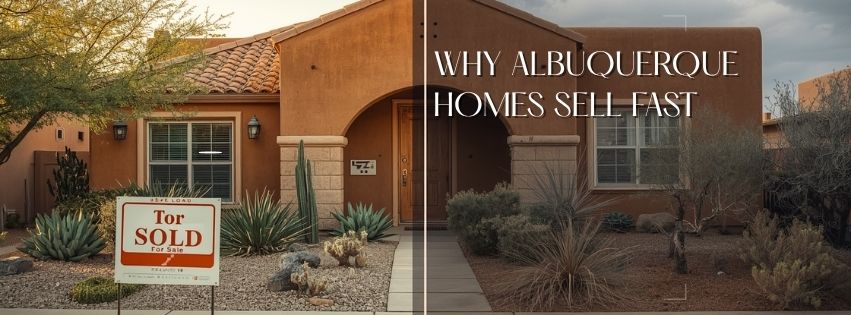
The 2026 Albuquerque Market Punishes Certain Mistakes More Than Others
Before getting into the specific reasons, it is worth establishing the market context — because the current environment amplifies the consequences of seller missteps in ways that did not exist three or four years ago.
Back in 2021, homes sold in 48 hours with 20 offers. Today, the average time on market is closer to 35–60 days. That is not a bad market — that is a normal market. But normal means buyers have time to compare. They can tour five homes in a weekend, sleep on it, and come back with a measured offer rather than a panicked one. They are not waiving inspections or skipping appraisals to compete. They are making deliberate decisions.
The Market Action Index for Albuquerque currently sits at 41.8 — a reading above 30 generally indicates a seller's market — but approximately 38% of active listings have experienced a price cut. That number is telling. It means that roughly four in ten active sellers listed too high, waited, and then chased the market down — a sequence that almost always ends with a lower net price than a correct first listing would have achieved.
Homes that were overpriced simply sat. Sellers who tested the ceiling on price paid for it in time and reductions. For sellers active right now, accurate pricing from day one is not optional — it is the strategy that worked.
That is the market. Now here is why some homes move through it in two weeks and others stall for months.
The Six Real Reasons Albuquerque Homes Sell Fast — or Don't
Price — The Variable That Controls Everything Else
Let's be completely direct: in 2026 Albuquerque, price is the single most important variable in determining how fast a home sells. Not the photos. Not the marketing. Not the staging. Price.
Pricing a home correctly from day one is one of the biggest factors in reducing days on market. Homes that start too high often sit longer and require price reductions later. This is not a new insight. What is new is how clearly the current market enforces it.
Buyers in 2026 have access to the same data their agents have. They know what comparable homes sold for. They know when a listing is priced above what the market supports. And they respond to an overpriced listing not with a lowball offer — they respond by not engaging at all. They move on to the next home, the one that is priced where it should be. The overpriced listing sits. The seller gets frustrated. The price drops. And now the listing has another problem layered on top of the original one: market stigma.
A home that has been sitting for 45 days and taken a price reduction tells a story to every subsequent buyer. The story is: something is wrong, or the sellers are unrealistic, or both. That perception — even when it is undeserved — drives buyers to negotiate harder, make lower offers, and push more aggressively on inspection findings than they would with a freshly listed home.
Sellers who price their homes realistically will still do just fine in this market. Overpriced homes will sit, driving the average days on market even higher. The sellers who get both speed and price are almost always the ones who listened to the data from the beginning rather than testing a number they hoped the market might support.
Presentation — What Buyers Decide Before They Walk Through the Door
In 2026, presentation and pricing are king again. That sentence contains more practical seller guidance than most lengthy market reports.
What does presentation mean in the current Albuquerque market? It means the listing photos look like the buyer's future home, not like a record of what the seller's furniture looked like. It means the home is clean, decluttered, and depersonalized to the degree that a buyer can mentally place themselves inside it. It means the exterior — the landscaping, the paint condition, the driveway, the front door — communicates care and maintenance before anyone sets foot inside.
Clean, staged, and well-maintained homes consistently outperform those that are not. Buyers make quick decisions based on first impressions. In a market where buyers are browsing dozens of listings online before deciding which ones to tour, a listing with dark iPhone photos, furniture crowding every room, and a front yard that needs attention is a listing that does not make the showing list. The buyer never sees the home's actual strengths because the presentation buried them.
This is not about spending a fortune on staging. It is about the basics done well: professional photography, clean and neutralized spaces, addressed curb appeal, and a listing that looks like the seller respected both the home and the buyer's time. Homes that get that right consistently generate showings within the first week. Homes that do not often sit waiting for buyers who are going elsewhere.
The First Two Weeks — When Everything Is Decided
Here is the dynamic that most sellers do not fully understand until they have lived through a transaction on the wrong side of it: the first fourteen days of a listing are not just important. They are almost entirely determinative of how the rest of the transaction plays out.
Hot homes in Albuquerque go pending in around 15 days. That is not because the buyers who show up in week one are simply faster than buyers who come later. It is because a correctly priced, well-presented home that launches with a proper marketing strategy generates concentrated attention at the moment of maximum buyer interest — when the listing is new, when the algorithm is surfacing it prominently, when agents are sending it to their buyer clients as a new option worth seeing.
Buyers who find a home in its first week of being listed perceive it differently than buyers who encounter it after six weeks on the market. Fresh listings feel like opportunities. Stale listings feel like problems waiting to be discovered.
Sellers who started too high or did not show as well ended up expiring or being canceled before eventually coming back at a better price or with improvements. The pattern is almost mechanical: launch weak, generate little activity, wonder whether to reduce the price, reduce it, restart with a diminished perception, accept a lower offer than the original price would have supported if it had been set correctly on day one.
The sellers who avoid that sequence are the ones who treat the launch like the event it is — with pricing calibrated to generate competitive interest, marketing deployed to maximize first-week exposure, and a home prepared to make its best impression from the moment it goes live.
Why Some Neighborhoods Sell Faster Than Others in Albuquerque
Neighborhood and location add a layer to this picture that no seller should ignore. The average home in Albuquerque takes 44 days to sell — but some neighborhoods and price ranges move dramatically faster or slower than that average.
Entry-level and mid-range homes in the Northeast Heights, Ventana Ranch, and Taylor Ranch corridors typically move faster than the city average, driven by consistent demand from families with school-zone priorities and professionals with Northeast-side employment. Mesa del Sol — with its newer construction — is currently averaging around 111 days, reflecting a specific supply-demand dynamic that requires a different pricing and marketing strategy than the same home in a more established neighborhood would.
Not all parts of Albuquerque will follow the same trend. Entry-level homes under $300,000 face continued competition given the city's affordability edge. Luxury homes over $750,000 require more time, more selectivity, and sellers who are ready to be patient and flexible. Knowing where your home sits in the local absorption landscape — and pricing and marketing accordingly — is one of the specific advantages a local agent provides that no national platform or automated valuation can replicate.
Photography and Online Presence — The Showing Before the Showing
Proximity to trails, schools, dining, and major employers continues to influence buyer demand throughout Albuquerque. But none of those real advantages matter if the listing photographs do not communicate them.
Every buyer who clicks on an Albuquerque listing and decides whether to schedule a showing is making that decision based entirely on what they see on a screen. More than half of prospective buyers report regretting wasted time visiting properties they would have skipped if they had better information upfront. The inverse of that is also true: a listing with professional photography, an interactive floor plan, and a virtual tour that genuinely represents the home's best features generates qualified showings from buyers who have already self-selected into genuine interest.
The homes that sell in days almost always have one thing in common on the listing page: they look like homes worth visiting before a buyer has even left their couch. The homes that sit often have the opposite problem — the listing undersells a home that would show beautifully in person, and buyers never schedule the showing to find out.
Professional photography is not a luxury in the current Albuquerque market. It is the minimum standard for a listing that intends to compete for buyer attention against every other home in its price range.
Condition — What the Inspection Will Say Before You List
Even in the luxury tier, buyers are choosy, and many homes that started too high or did not show as well ended up requiring significant price reductions or concessions to close. Condition is the variable that feeds directly into both the buyer's initial impression and the post-inspection negotiation dynamic.
A home that has a roof section with two to three years of remaining life, an HVAC system at the end of its expected service window, or deferred maintenance items that show up in photos does two things: it attracts buyers who plan to negotiate, and it repels buyers who want a clean transaction. The net effect is a narrower buyer pool, more aggressive negotiation, and almost always a lower net price than a well-maintained home at the same list price would achieve.
This is precisely why Certified Move-In Ready pre-inspections — where a seller gets the home inspected before listing and can address or disclose findings transparently — change the transaction dynamic so meaningfully. Sellers who know their home's condition go into negotiation with confidence. Sellers who discover their home's condition through a buyer's inspector go into negotiation at a disadvantage.
Agent Strategy — The Launch Plan That Most Sellers Never See
The last variable is the one sellers most consistently underweight because it is the least visible to them: the listing agent's specific launch strategy for their home.
Homes that check all three boxes — correct price, strong condition, right location — often receive strong activity within the first two weeks on the market. Homes priced under the city's median price tend to move the fastest. But those outcomes do not happen automatically. They happen because an agent built a launch strategy calibrated to generate maximum attention in the critical first-week window.
A strong launch strategy includes: a pre-market period where the listing is shared with buyer agents in the local network before it hits Zillow, a day-of-launch plan that drops the listing at the optimal time for maximum algorithmic visibility, a targeted digital marketing campaign that reaches likely buyers in Albuquerque and in the out-of-state markets most likely to be interested in this property, and a pricing strategy built on the most recent comparable sales — not on what the seller hopes the market will bear, and not on what similar homes sold for in 2022.
New construction is quietly shaping the resale market. Builders can offer incentives like rate buydowns, meaning resale sellers must compete on realistic pricing, strong condition, and standout presentation from day one. An agent who understands that competitive landscape — and who builds a launch strategy around it — is an agent whose listings tend to generate offers in two weeks. An agent who lists the home and waits tends to be the agent whose sellers are asking about price reductions in week five.
What the Data Says About Sellers Who Get It Right
The average home in Albuquerque sells for about 2% below list price and goes pending in around 44 days. Hot homes sell for around list price and go pending in around 15 days.
The gap between those two outcomes — 15 days at list price versus 44 days at 2% below — represents something real in dollar terms. On a $375,000 home, 2% is $7,500. Add in an additional month of mortgage payments, carrying costs, and the mental weight of a protracted sale, and the difference between a good launch and a bad one can easily represent $12,000 to $15,000 in total seller cost.
The sellers who land in the 15-day category are not lucky. They are prepared. They priced correctly from data, not optimism. They presented the home as though the listing photos were their only shot at a first impression — because they are. They launched with a strategy built around the first two weeks. And they worked with an agent who understood all of the above before the sign went in the ground.
For sellers active right now, starting sharp beats chasing buyers down later. That sentence — from Realtor.com's April 2026 Albuquerque market analysis — is the cleanest summary of everything in this post.
To see how the current Albuquerque inventory is performing across different neighborhoods and price ranges, browse active listings here — and pay attention to how long active listings have been on market. The pattern this post describes will be visible immediately.
The Bottom Line — Speed Is Not an Accident
Some Albuquerque homes sell in days because of decisions made before the sign went in the yard. The right price. The right preparation. The right photography. The right agent strategy. The right launch timing.
Some Albuquerque homes sit because those decisions were made differently — or not made at all.
The gap between the two outcomes is not about luck, location, or market timing. It is about seller preparation and agent execution. In a market where buyers are comparing carefully and 38% of active listings have already taken a price cut, the sellers who win are the ones who came in ready.
For a broader look at what the current Albuquerque market means for your specific selling situation, our guide to why a top Albuquerque Realtor matters more in 2026 covers the full picture of what agent selection means in the current environment.
Ready to Sell — and Sell Well?
Jenn & Vinay from The Rodgers Neighborhood Real Estate Group bring the pricing discipline, the marketing infrastructure, and the launch strategy that the current Albuquerque market rewards. We do not list homes and hope. We build a plan for each property and execute it from day one.
If you are thinking about selling in 2026, the conversation starts with an honest look at your home, your neighborhood, and what the current market data actually supports.
📞 (505) 417-2733 | rodgersvj@gmail.com 🏠 See what's selling in Albuquerque right now
Categories
- All Blogs (362)
- 2026 & Beyond for Real Estate (256)
- Doctors and Nurses looking for homes in NM (4)
- Guide to buying a home in NM (160)
- Health Care Heros (7)
- Home Upgrades (42)
- Jenn & Vinay your Local Real Estate Experts! (124)
- Moving to Albuquerque (139)
- Neighborhoods in Albuquerque NM (94)
- Rent or Own (2)
- Sellers Questions for Selling homes (2)
Recent Posts




GET MORE INFORMATION