
Is Rio Rancho better than Albuquerque?
Is Rio Rancho Better Than Albuquerque? An Honest 2026 Comparison
The honest answer is: it depends entirely on who you are.
Rio Rancho is not better than Albuquerque in some universal sense. Neither is Albuquerque better than Rio Rancho. They are two genuinely different cities that happen to sit about 15 miles apart — and they attract completely different buyers for completely legitimate reasons.
What this guide will do is give you the real comparison — homes, safety, schools, jobs, commute, lifestyle, and long-term value — so you can stop asking "which is better" and start asking "which is better for me." That is the only question that matters when you are choosing where to put down roots.
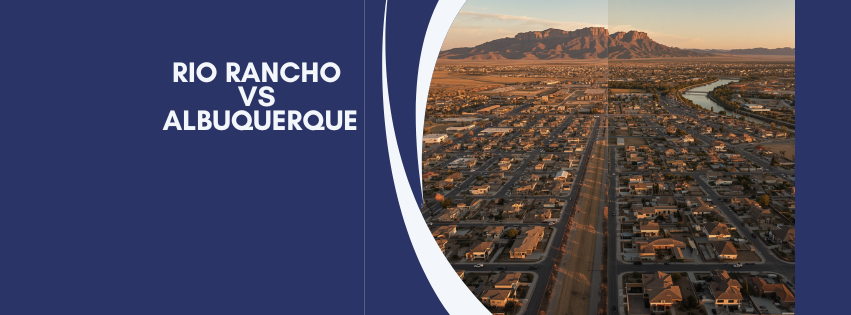
First, Let's Understand What Rio Rancho Actually Is
A lot of buyers arrive in the Albuquerque metro thinking of Rio Rancho as simply a suburb of Albuquerque — a spillover neighborhood across the Rio Grande. That framing undersells it significantly.
Rio Rancho is the third largest city in New Mexico, the fastest-growing community in the state, and one of the fastest-growing in the Southwest. Its population has grown by more than 117% since 2000, and today it is a fully independent city with its own mayor, its own school district, its own hospital system, and its own economic identity. It sits in Sandoval County, not Bernalillo County — which has real implications for property taxes, public services, and local governance.
Rio Rancho has been recognized as one of "America's 50 Best Cities to Live," citing exceptional public schools and well-below national average crime rates. That is not a marketing tagline — it is a legitimately earned reputation built on measurable outcomes.
So when buyers ask "Rio Rancho vs Albuquerque," they are comparing two real cities with two distinct characters — not a city and its bedroom community.
Head-to-Head Comparison — The Numbers That Matter
Home Prices and What Your Money Buys
This is usually where buyers start, and the comparison here is genuinely interesting.
According to Redfin, the median sale price of a home in Rio Rancho was $364,000 last month, up 2.5% since last year, at approximately $206 per square foot. Homes in Rio Rancho are selling in an average of 66 days. Rio Rancho's overall cost of living index sits at 93.9 — approximately 15% below the national average and 7% below the national average overall.
Albuquerque's median home sale price runs in the $345,000–$375,000 range depending on the neighborhood, at approximately $200–$209 per square foot, with homes selling in an average of 44 days in desirable neighborhoods.
On paper, the numbers are close. But what your dollar actually buys differs meaningfully. In Rio Rancho, a $360,000 budget typically gets you a newer construction home — built in the last 10–20 years, with modern floor plans, updated systems, and often a larger lot in a well-maintained planned community. In Albuquerque, that same budget lands you in established neighborhoods with more varied housing stock — some updated, some not, with more architectural character but more due-diligence variability.
The average household income in Rio Rancho is $98,374, one of the higher median incomes in New Mexico, reflecting a resident base of working professionals and dual-income families who chose Rio Rancho deliberately — not because it was the only option they could afford.
The Comparison That Surprises Most Buyers
This is the dimension where the difference between the two cities is most significant and most consistently underreported.
The total crime rate in Rio Rancho is 1.66%, with a violent crime rate of 0.32% and a property crime rate of 1.34%. Rio Rancho crime rates are 52% lower than New Mexico's state average.
Albuquerque, by contrast, carries one of the higher property crime rates among U.S. cities of comparable size — particularly for vehicle theft, which is a well-documented and ongoing challenge. The gap in safety outcomes between the two cities is not subtle, and for families with children, for people coming from safer markets, and for anyone for whom daily peace of mind matters, this comparison consistently pushes the needle toward Rio Rancho.
It is important to be precise here: Albuquerque's crime picture is neighborhood-specific. The Northeast Heights, Tanoan, High Desert, and similar established neighborhoods have strong safety profiles. But the citywide comparison — Rio Rancho vs Albuquerque as a whole — is not close. Rio Rancho is measurably, consistently safer.
Schools — Rio Rancho's Clearest Competitive Advantage
If you have school-age children, this section may be the most important one you read.
Rio Rancho offers highly rated schools within the Rio Rancho Public Schools district. The district operates independently from Albuquerque Public Schools, with its own budget, governance, and outcomes — and those outcomes consistently rank among the strongest in the state.
Rio Rancho High School, Cleveland High School, and the district's network of elementary and middle schools regularly earn A and B grades from Niche and GreatSchools. The district's connection to Intel — which has a major manufacturing facility in Rio Rancho and has been a civic partner for decades — has brought STEM programming, workforce development resources, and technology investment to local schools that go well beyond what most comparable districts can access.
Albuquerque Public Schools is a much larger district, which creates both strengths and weaknesses. The strengths: genuine depth — La Cueva High School, Albuquerque Academy, the district's magnet programs, and several A-rated elementary schools are legitimately excellent. The weakness: size creates inconsistency. School quality in APS varies meaningfully by neighborhood, and parents in Albuquerque need to research their specific address's school zone carefully rather than relying on district-level averages.
The bottom line: Rio Rancho offers more consistent school quality across the city. Albuquerque has higher ceilings in its best schools but more variance overall.
Jobs, Economy, and Getting to Work
Employment Landscape
The largest employers in Rio Rancho include Rio Rancho Public Schools, Presbyterian Rust Medical Center, the City of Rio Rancho, and Intel, which maintains a large manufacturing facility in the area.
Intel's presence in Rio Rancho is not incidental — it has been the economic anchor of the city's identity for decades, bringing high-skill manufacturing and tech-adjacent employment and catalyzing a supporting ecosystem of contractors, suppliers, and service businesses. For engineers, manufacturing professionals, and STEM-sector workers, Rio Rancho has a genuine employment base that is not merely derivative of Albuquerque.
Albuquerque's economy is larger and more diverse: Kirtland Air Force Base, Sandia National Laboratories, the University of New Mexico, Presbyterian Healthcare, Lovelace Health System, and a growing film production sector anchored by Netflix Studios. For healthcare workers, government employees, researchers, military and defense contractors, academics, and creative professionals, Albuquerque's employment depth is considerably broader.
The practical reality for most buyers is that many Rio Rancho residents work in Albuquerque — which brings the commute question into sharp focus.
The Commute Reality
This is the tradeoff that most Rio Rancho buyers feel most acutely after moving there: some people find the commute into Albuquerque long.
The typical Rio Rancho-to-Albuquerque commute runs 20–35 minutes one way under normal conditions, primarily via NM-528 to I-25 or US-550. During peak hours — especially the I-25 interchange — that number stretches. The commute is manageable and many residents do it daily without resentment. But buyers should road-test the specific route between their prospective Rio Rancho address and their Albuquerque workplace before committing, at actual commute time, in actual traffic.
Remote workers, Rio Rancho-based employees, and retirees absorb this consideration seamlessly. For workers who will be making the round trip five days a week for years, it deserves honest weight in the decision.
Lifestyle, Amenities, and What Daily Life Actually Feels Like
Rio Rancho's Lifestyle Strengths
Rio Rancho has built a genuinely livable lifestyle infrastructure that buyers from larger markets often underestimate before they visit.
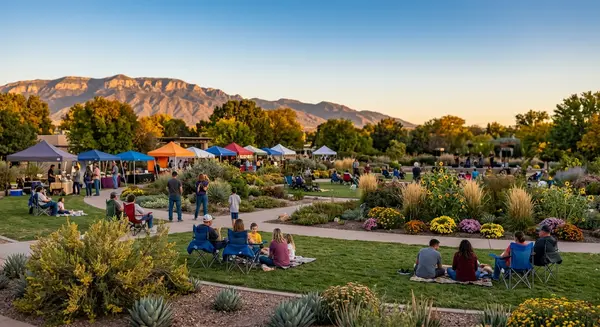
Rio Rancho neighborhoods are near more than 50 parks and trails. The Willow Creek Bosque offers walking trails, dog-friendly areas, and wildlife-viewing areas. The city's trail network, its Rio Grande bosque access, its proximity to the Jemez Mountains, and the overall outdoor-recreation lifestyle are legitimate and well-developed.
The community character is notably family-oriented and neighborly. Niche residents consistently describe Rio Rancho as peaceful and safe, with quiet neighborhoods, friendly people, and a strong community vibe. For buyers exhausted by urban density and anonymity, Rio Rancho's pace is genuinely restorative — not a consolation prize.
Rio Rancho will host the state's newest pro sports team, the New Mexico Goatheads (ECHL), dropping the puck in 2026 — a signal of a city investing in its own entertainment identity rather than depending entirely on Albuquerque for cultural programming.
The honest caveat on lifestyle: there are fewer options when it comes to restaurants and nightlife. Rio Rancho's dining and entertainment scene is growing but is not comparable to Albuquerque in variety, depth, or culinary culture. Buyers for whom restaurant diversity, live music, and walkable urban energy are priorities will find the city's current offerings limited — and will spend more evenings driving to Albuquerque for the experience they are looking for.
Albuquerque's Lifestyle Strengths
Albuquerque's lifestyle argument is built on cultural depth, urban variety, and the energy that comes from a city with genuine history, genuine diversity, and genuine creative identity.
Old Town, the Nob Hill corridor, the Barelas neighborhood, the Rail Yards, the ABQ BioPark, the International Balloon Fiesta, the Albuquerque Museum, the Indian Pueblo Cultural Center, and the robust local dining scene built around New Mexican green and red chile cuisine — these are not amenities Rio Rancho can replicate. They are the texture of a city that has existed since 1706 and carries that in its bones.
Albuquerque also offers the Sandia Mountains as essentially a city amenity — Tramway Boulevard to the Sandia Peak Aerial Tram, the Sandia Crest National Scenic Byway, La Madera Trails, and the Cibola National Forest trail system are all reachable from most Albuquerque neighborhoods within 20–30 minutes. That is a genuinely extraordinary quality-of-life differentiator that residents take for granted until they move somewhere without it.
The New Construction Advantage Rio Rancho Holds
One dimension where Rio Rancho consistently outcompetes Albuquerque across every budget level is new construction availability. Rio Rancho has been one of the most actively built communities in the state for two decades, and in 2026 buyers can still find brand-new homes with modern floor plans, energy-efficient systems, and builder warranties at prices that are genuinely competitive with Albuquerque resale. For buyers who want to skip the renovation risk and inspection anxiety of older housing stock — and who value the predictability of a new home — Rio Rancho's inventory is a significant practical advantage. Browse current listings across both cities here to see the difference firsthand.
Is Rio Rancho Better Than Albuquerque?
For the right buyer, yes. For the wrong buyer, absolutely not.
Rio Rancho is likely the better choice if:
- Safety and school consistency are your primary filters and you are not willing to research neighborhood-by-neighborhood
- You want newer construction without paying a significant premium
- You are working remotely, locally employed in Rio Rancho, or retired
- A quieter, more suburban, family-oriented community is genuinely what you want — not something you are settling for
- Intel or Presbyterian Rust Medical Center is your employer
Albuquerque is likely the better choice if:
- You work in the city and the commute from Rio Rancho would meaningfully affect your daily quality of life
- Cultural depth, dining variety, walkable urban neighborhoods, and city energy are things you will actually use
- You are buying in one of Albuquerque's established, well-performing neighborhoods — Northeast Heights, Tanoan, High Desert, Corrales — where safety and school quality are strong and the city's advantages are fully accessible
- You want the Sandia Mountains as a true backyard, not a day trip
For more on how Albuquerque's best neighborhoods stack up individually, our guide to Albuquerque neighborhoods walks through every major area in depth.
The buyers who are least happy with their choice — in either city — are almost always the ones who chose based on price alone, or on someone else's recommendation, without doing the lifestyle audit first. Know what you actually need day-to-day. Then pick the city that delivers it.
Categories
- All Blogs (362)
- 2026 & Beyond for Real Estate (256)
- Doctors and Nurses looking for homes in NM (4)
- Guide to buying a home in NM (160)
- Health Care Heros (7)
- Home Upgrades (42)
- Jenn & Vinay your Local Real Estate Experts! (124)
- Moving to Albuquerque (139)
- Neighborhoods in Albuquerque NM (94)
- Rent or Own (2)
- Sellers Questions for Selling homes (2)
Recent Posts






GET MORE INFORMATION