
Best Retirement Home Inspectors in Albuquerque NM
Best Retirement Home Inspectors in Albuquerque NM: Reviews, Costs & How to Choose for Retirees Avoiding Costly Pitfalls
The best retirement home inspectors in Albuquerque are licensed, senior-focused pros who explain findings in plain language and price transparently. Expect $300 to $500 for a standard home, plus add-ons for roof, sewer, or radon, and choose based on report quality and service fit.
Why This Matters Right Now
You are shopping in a market where inventory is up, days to pending often sit around 3 to 4 weeks, and prices have nudged higher over the past year. That gives you negotiating room but not unlimited time. As a retiree, your inspection is where hidden costs are either prevented or locked in. A flat roof that needs coating, an evaporative cooler on its last legs, or a sewer line with root intrusion can turn a “good deal” into a monthly drain on savings. Local MLS and board statistics point to steady buyer activity, so your timing could secure concessions if you present a credible, well-documented inspection. A retirement-focused inspector helps you quantify near-term repairs, long-term maintenance, and accessibility upgrades, so you choose a home that supports aging in place without surprise bills.
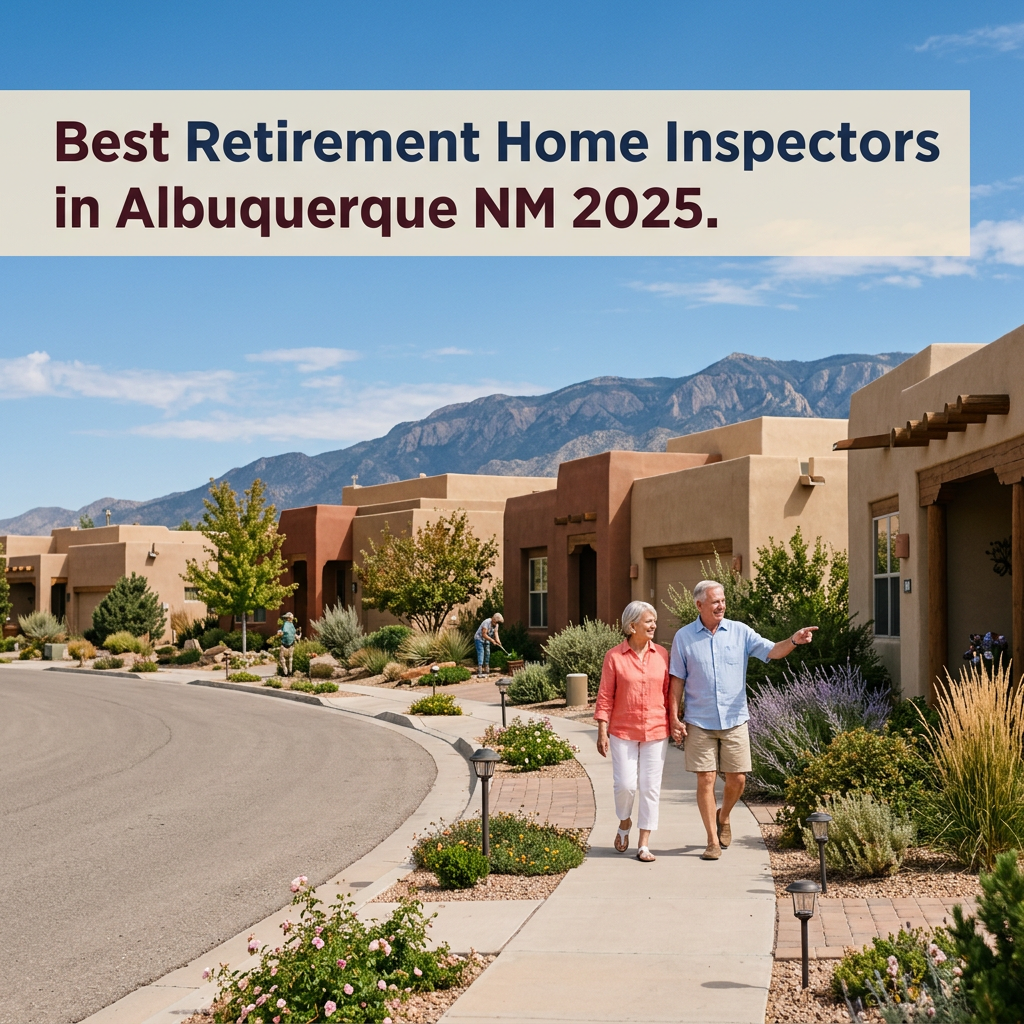
What You Need to Know Before Hiring a Retirement-Focused Home Inspector in Albuquerque
You should look for a New Mexico licensed inspector who understands local construction styles, especially stucco exteriors, flat roofs with parapets, adobe or block walls, and slab-on-grade foundations. You also want someone who communicates clearly, flags safety and fall risks, and prioritizes items by urgency.
- Licensing and insurance: Verify a current New Mexico home inspector license and proof of errors and omissions plus general liability insurance.
- Certifications: Favor inspectors with ASHI or InterNACHI credentials and continuing education that includes desert and Southwest building systems.
- Senior-friendly reporting: You should receive a photo-rich, plain-language report with a summary that separates safety, major defects, and maintenance.
- Typical cost: Budget $300 to $500 for a 1,200 to 2,000 square foot home. Add-ons may include roof evaluations, sewer scoping, radon testing, termite or wood-destroying insect checks, and thermal imaging.
- Local expertise: Albuquerque homes often have flat or low-slope roofs, stucco that needs periodic sealing, older electrical panels in mid-century properties, and evaporative coolers that require seasonal maintenance. Your inspector should be fluent in these systems.
- Senior-focused providers: Inspectors known for retiree-friendly services include All Pro Home Inspections and Xiomara Home Inspections. You can ask for senior discounts, flexible scheduling, and sample reports that show clear recommendations.
What makes a “retirement” inspection different
You benefit when the report calls out mobility barriers, grab bar mounting points, trip hazards at thresholds, steep or uneven exterior surfaces, poor lighting, and bathroom safety risks. You also want estimated time frames for replacement on HVAC, roof coatings, and water heaters to help you forecast costs during retirement.
How to Compare Your Options
You should compare inspectors on qualifications, communication, turnaround time, and depth of evaluation. In a buyer’s market with moderate competition, you can negotiate repairs or credits when your report is detailed and credible.
Start with sample reports. You should request a full anonymized report, not just a summary. Look for clear photos, arrows and labels, everyday language, and a prioritized list that separates safety from routine maintenance. Next, review availability and speed. A great inspection that arrives three days late can cost you leverage on repair negotiations. Also check whether the inspector carries tools that matter in Albuquerque, such as moisture meters for stucco, infrared cameras for insulation and water intrusion, and ladders or drones for flat roof surfaces.
Interview on approach. You will want to know if the inspector walks roofs when safe, opens panels, runs appliances, and tests all accessible outlets and fixtures. Ask how they handle inaccessible attics or locked areas. Finally, confirm pricing transparency and add-on costs. Sewer scoping can be the best $150 to $300 you spend in an older neighborhood with big trees. Roof certification from a licensed roofer or a detailed roof evaluation is often essential with flat roofs.
Key factors to evaluate:
- Licensing, certifications, and insurance: Protects you and adds credibility during negotiations.
- Report quality and speed: Photo-rich, prioritized, and delivered within 24 hours.
- Local system expertise: Flat roofs, stucco, evaporative coolers, older electrical panels, and adobe or block construction.
- Senior-focused services: Clear explanations, in-person or virtual walk-throughs, and attention to safety and accessibility.
- Add-on testing menu: Sewer scope, roof evaluation, radon, termite, thermal imaging, and water quality for private wells.
- References and reputation: Ask for retiree client references and confirm consistent, punctual service.
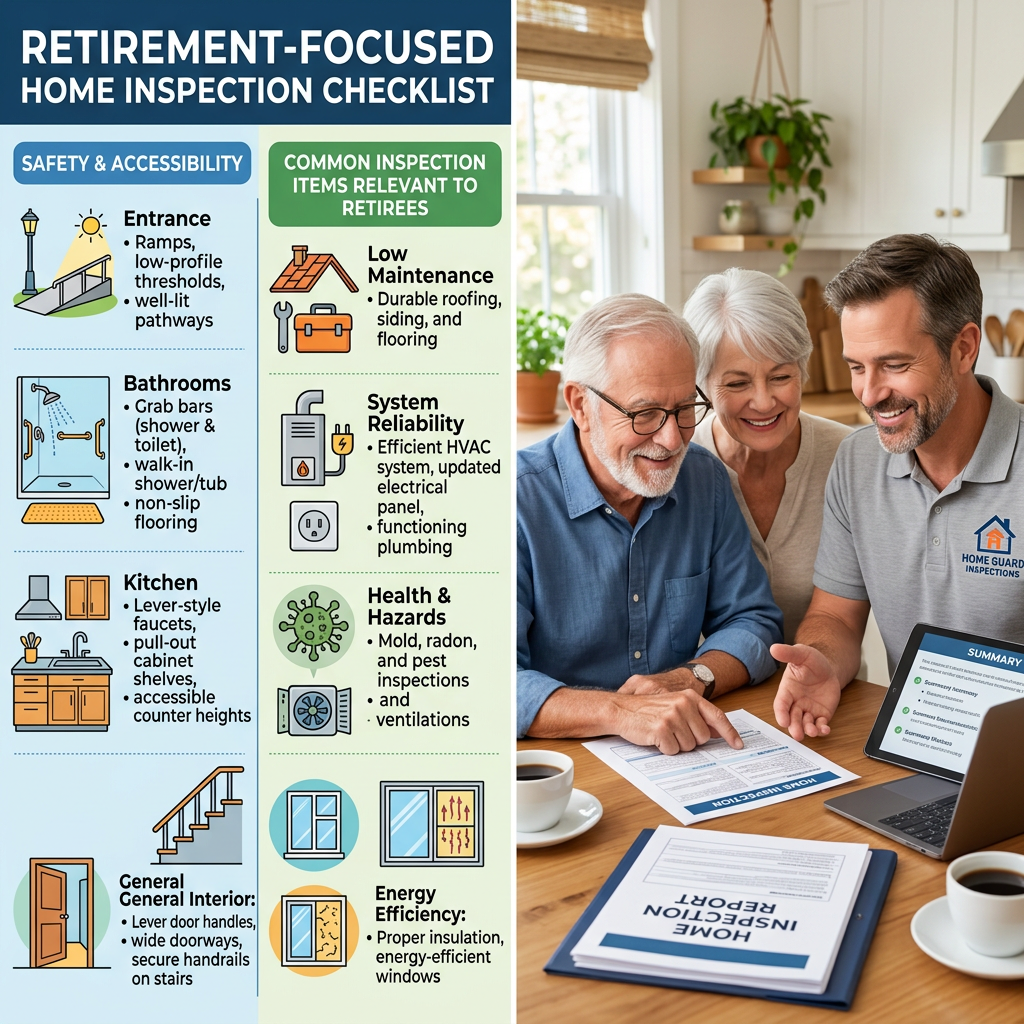
Your Step-by-Step Guide
You will make better decisions when you follow a clear sequence that preserves your negotiation power and avoids rework.
1) Book early. As soon as you are under contract, schedule your inspection within the first option or due diligence window. Ask for a firm delivery time for the report, ideally within 24 hours of the site visit.
2) Pre-inspection briefing. Share your priorities: single-level safety, lighting, bathroom accessibility, low maintenance. Provide known issues disclosed by the seller and any recent upgrades that need verification.
3) Choose add-ons wisely. In Albuquerque, add sewer scoping for older homes or lots with large trees. Order a detailed roof evaluation for flat or low-slope roofs. Consider radon testing if the home has a basement or you want extra assurance. Ask about termite checks and thermal imaging for hidden issues in stucco and framing.
4) Attend the summary walk-through. You should be there, or join by video call. Ask for plain-language explanations, estimated timelines for major replacements, and photos of any safety hazards.
5) Review and prioritize. Use the report’s summary to classify items into safety, major systems nearing end of life, and routine maintenance. Convert the top items into a concise repair request or credit request with photos.
6) Negotiate with precision. Provide the report pages that support your requests and quote typical local costs for big-ticket items like roof coating, HVAC replacement, or sewer line repair. In a market with moderate days to pending, clear documentation strengthens your position for repairs or credits.
7) Plan for aging in place. If you are moving forward, schedule low-cost safety upgrades before move-in, such as grab bars, lever handles, brighter lighting, and threshold adjustments.
What This Looks Like in Northeast Heights, West Side, and North Valley
You will see different inspection priorities depending on the neighborhood. Near 4800 Juan Tabo Blvd NE, the Northeast Heights offers a mix of mid-century and newer subdivisions, many with stucco exteriors, flat or low-slope roofs, and well-kept landscaping. Average values often cluster around the 400 thousand mark. Your inspector should be fluent in parapet details, stucco cracks, and evaporative cooler performance. Expect add-on roof evaluations to be common here.
On the West Side, where many homes are newer and floor plans favor single-story living, inspections often focus on roof condition under strong summer sun, attic insulation, window seals, and HVAC sizing. Median prices tend to sit near the mid 300s. Sewer scopes may be less frequent in newer tracts, but you should still consider them if trees crowd the line or the home predates the 2000s.
In the North Valley, older properties, irrigation ditch banks, and larger trees raise the value of sewer scoping and moisture checks. With prices often around the mid 300s and a rural feel, you should verify irrigation-related drainage, outbuilding electrical safety, and any well or septic components. Adobe or block construction demands moisture monitoring and careful evaluation of finishes. Across all three areas, you should plan for maintenance on flat roofs, periodic stucco sealing, and HVAC that can handle both spring winds and summer heat.
Neighborhoods to consider: Neighborhoods to consider
- Northeast Heights: Strong single-level options, average pricing near 400 thousand, easy access to Sandia foothills and healthcare. Flat roofs and stucco are common, so roof and moisture checks matter.
- West Side: Newer single-story homes around the mid 300s, modern systems, and lower immediate maintenance. Focus on attic insulation, window seals, and roof wear.
- North Valley: Quiet lots around the mid 300s with mature trees and irrigation access. Prioritize sewer scope, drainage, and electrical safety in outbuildings.
What Most People Get Wrong
You might think an inspection is only about finding defects, but for retirement planning it is equally about forecasting. A water heater with eight to ten years on it, a roof coating due within three years, or an evaporative cooler that will need conversion to refrigerated air changes your monthly budget. Another mistake is skipping add-ons. Sewer scoping and roof evaluations pay for themselves in Albuquerque more often than not. Many buyers also underestimate safety and accessibility. Thresholds, lighting, railings, and bathroom modifications are low-cost improvements you should address before move-in. Finally, do not rely on a checklist alone. You should insist on a walk-through that explains what matters, why it matters, and what you can do about it. When you treat the inspection as a planning tool, you preserve cash, protect health, and keep your long-term housing costs predictable.
Frequently Asked Questions
How much does a home inspection cost in Albuquerque for a retiree buyer?
You should budget $300 to $500 for a typical single-family home around 1,200 to 2,000 square feet. Larger homes or unique systems can raise the price. Add-ons such as sewer scoping, roof evaluations, radon testing, and termite checks add to the total but often prevent big surprises.
Do you need a “retirement-focused” inspector or just any licensed pro?
You can hire any licensed pro, but you benefit from someone who tailors the report to aging in place. Look for clear summaries, highlighted safety risks, mobility considerations, and time-based replacement estimates. Ask for a sample report that shows these elements.
Which add-on inspections are worth it in Albuquerque?
You should prioritize a roof evaluation for flat or low-slope roofs and a sewer scope for older lines or lots with mature trees. Consider radon testing if there is a basement or you want extra assurance. Termite checks and thermal imaging help discover hidden issues in stucco and framing.
Should you attend the inspection?
You should attend the summary walk-through even if you skip the full site visit. That is where you get plain-language explanations, photos, and a prioritized plan. Ask about safety items, near-term replacements, and ballpark costs so you can negotiate or budget correctly.
How fast do you need the report to protect your negotiating power?
You should expect delivery within 24 hours of the inspection. Your due diligence window is limited, and fast, photo-rich documentation strengthens your case for repairs or credits. Confirm turnaround before booking and calendar the contingency deadlines with your agent.
The Bottom Line
You secure the best outcome when you hire a New Mexico licensed inspector who understands Albuquerque’s flat roofs, stucco exteriors, and desert systems, and who communicates in plain language. Expect to pay $300 to $500 for the base inspection, then add key tests such as sewer scoping and roof evaluations as your property demands. In a market with modest price growth and inventory that favors buyers, a strong inspection report helps you negotiate credits, choose the right home, and plan upgrades that make aging in place safe and affordable. You avoid costly pitfalls by focusing on safety, major systems nearing end of life, and predictable maintenance.
If you're ready to explore your options for the best retirement home inspectors in Albuquerque NM near 4800 Juan Tabo Blvd NE Ste D, Albuquerque NM 87111, Vinay Rodgers at The Rodgers Neighborhood Real Estate Group can walk you through the specifics for your situation.
 5054172733
Categories
- All Blogs (260)
- 2026 & Beyond for Real Estate (158)
- Doctors and Nurses looking for homes in NM (4)
- Guide to buying a home in NM (122)
- Health Care Heros (6)
- Home Upgrades (25)
- Jenn & Vinay your Local Real Estate Experts! (86)
- Moving to Albuquerque (97)
- Neighborhoods in Albuquerque NM (73)
- Rent or Own (2)
- Sellers Questions for Selling homes (2)
Recent Posts




GET MORE INFORMATION