

How to Evaluate Senior Living Communities in Albuquerque NM
How do you evaluate senior living communities in Albuquerque NM, including what to check, which amenities matter, and red flags to spot before you commit?
The fastest way to evaluate senior living communities in Albuquerque is to use a structured checklist that verifies safety, services, accessibility, and total monthly cost, then compare communities side by side for care levels, amenities, staff stability, and financial health.
Why This Matters Right Now
You are choosing more than an address. You are choosing daily routines, social life, and access to care. Albuquerque’s housing market is moderately tight, with about 3.2 months of single-family inventory and 2.8 months for condos based on local MLS reports for Q1 2026. Prices have edged up, with the median sale price near $330,000, so your timing could affect both your purchase and your future exit strategy. At the same time, Albuquerque’s Cost of Living Index sits below the national average, and New Mexico does not tax Social Security benefits, which helps your monthly budget. Senior-focused projects are expanding citywide, including new memory-care capacity and wellness-oriented retail and clinics, so you have more choices but also more variables to weigh. A clear, step-by-step evaluation will help you avoid overpaying, lock in the right services, and protect your quality of life.
What You Need to Know Before You Tour
You should define your must-haves before you step on a shuttle for a tour. That means clarifying care level, accessibility standards, transportation needs, and real monthly costs. Independent living, assisted living, and memory care offer different staffing levels and fee structures. Many 55+ communities are age-restricted neighborhoods with HOA-managed amenities rather than licensed care, so you should not assume on-site medical support unless it is explicitly offered.
Key takeaways to ground your search:
- You will see strong demand for low-maintenance, single-level homes, particularly in Northeast Heights and Foothills. Condos and townhomes have seen firm price growth, so compare HOA dues and included services carefully.
- Typical HOA fees in local 55+ communities range from about $200 to $350 per month. Budget for utilities, taxes, and any meal or transportation plans that sit outside the HOA.
- According to local MLS reporting for Q1 2026, 22 percent of active listings saw price reductions in recent months, which can create negotiating room if you have your financing ready.
- Albuquerque’s transit options include ABQ RIDE fixed routes and Sun Van paratransit, which can reduce your car dependence. If you prefer walkability, focus on areas near multigenerational centers, health clinics, and shopping.
- New Mexico offers a property tax rebate for qualifying seniors and no state tax on Social Security income. When you compare two communities with similar HOA fees, this state-level relief can tip the scales.
Understanding Care Levels and Services
You should clarify which category a community fits into:
- Independent living: Private residences with optional dining, housekeeping, and activities. Great if you want low maintenance and social life without daily medical oversight.
- Assisted living: Staff support with daily activities, scheduled medication assistance, and dining services. Evaluate staff-to-resident ratios by shift.
- Memory care: Secured environments, higher staffing, specialized programs. Ask about safety protocols, training hours, and family communication practices.
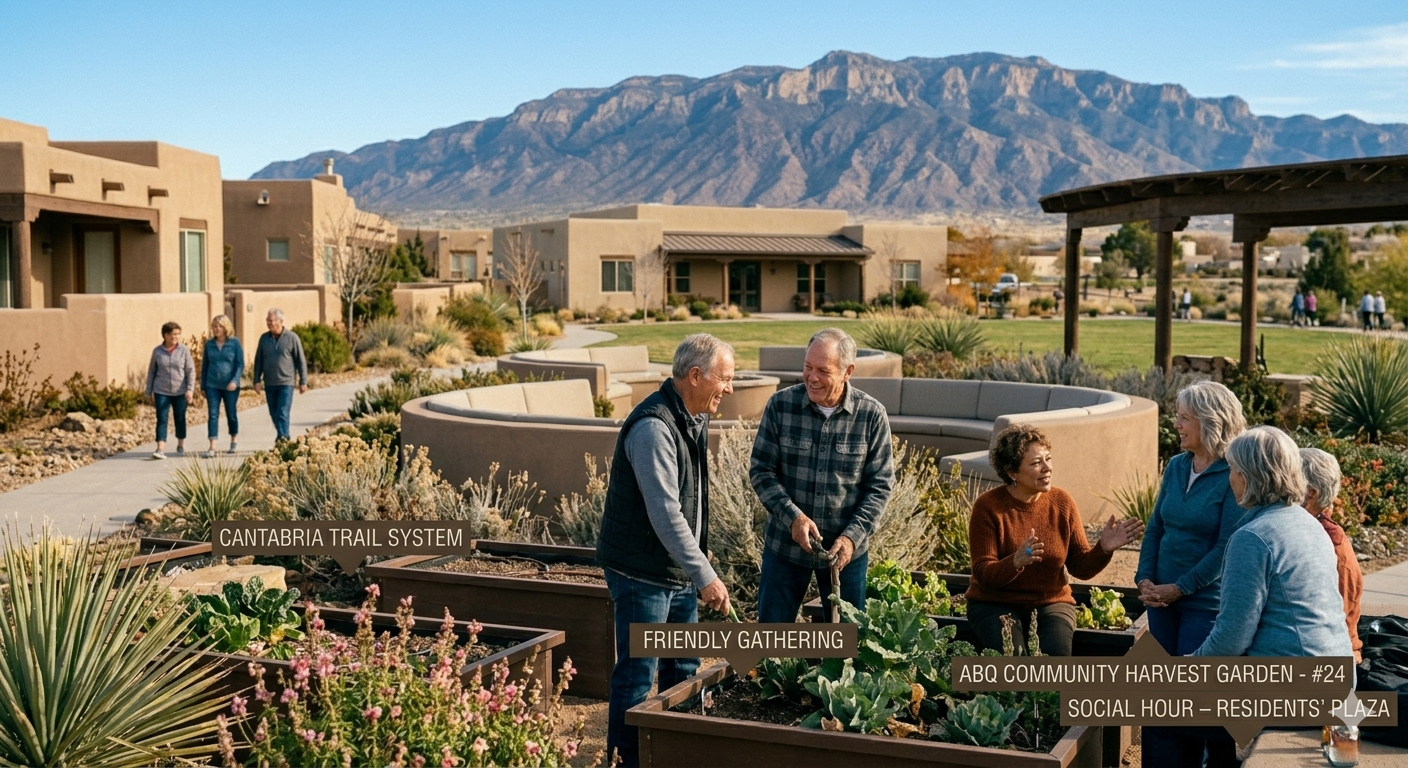
- Age-restricted 55+ neighborhoods: HOA-driven amenities, social clubs, low-maintenance landscaping. Not healthcare-focused. Confirm what the HOA actually covers.
How to Compare Your Options
When you compare communities, you should look beyond the fitness studio and coffee bar. Focus on durability, transparency, and fit. Tour at different times, ask residents how long the current executive director has been in place, and request reserve-fund disclosures for HOA properties. If you need care services, ask for written staffing matrices by day and night.
Key factors to evaluate:
- Total monthly cost: Tally base rent or mortgage, HOA dues, utilities, parking, storage, meal plans, and transportation. Many residents underestimate meals and transportation by 10 to 20 percent.
- Accessibility and safety: Verify zero-step entries, 32-inch doorways, lever handles, curbless showers, and grab-bar backing in bathrooms. Ask to see emergency call locations and response logs.
- Healthcare access: Map distance to primary care, labs, rehabilitation, and hospital systems. Confirm on-site nurse hours if offered and the process for urgent needs after hours.
- Staff stability: Ask for average tenure of caregivers and managers. High turnover often predicts service disruptions.
- Community culture: Sit in on an activity. Ask about age mix and participation levels. A vibrant calendar only matters if residents actually attend.
- Financial health: For HOAs, request the latest budget, reserve study, and special-assessment history. For licensed communities, ask about ownership structure and how capital improvements are funded.
- Resale and exit flexibility: Local MLS data indicates 55+ resales often move faster than traditional neighborhoods. If you are buying, verify rental and resale rules. If you are leasing, understand notice periods and rate increase caps.

Your Step-by-Step Guide
1) Define your needs. Write a two-column list: must-haves and nice-to-haves. Include single-story living, pet policies, covered parking, elevator access, and storage needs.
2) Set a total monthly budget. Start with base housing cost, then add HOA dues, expected utilities, meals, transportation, and a 10 percent cushion. If you receive Social Security and pension income, factor in New Mexico’s Social Security tax exemption and any senior property tax rebate you may qualify for.
3) purchasing a home or condo in a 55+ community. If you are purchasing a home or condo in a 55+ community, consider a smaller conventional loan, a 15-year fixed if you want to pay down principal faster, or a reverse mortgage purchase option. Bridge loans can help you buy before you sell if timing is tight.
4) Build a short list of three to five communities. Include at least one 55+ HOA community and one independent or assisted living option if you are unsure about services. You will learn fastest by comparing different models.
5) Tour twice at different times. Visit during a weekday morning and an evening. Note staff presence, resident engagement, meal quality, noise, and lighting. Ask to see a unit similar to what you would receive.
6) Verify accessibility. Bring a tape measure. Check doorway widths, thresholds, bathroom layout, and placement of switches. Test elevators and ramps. Look at parking proximity.
7) Inspect maintenance and reserves. For HOAs, review the budget, reserve study, and minutes for the last 12 months. Look for peeling paint, aging roofs, patched asphalt, and HVAC age tags. For licensed communities, ask about scheduled capital projects.
8) Evaluate services. Confirm shuttle schedules, medical transport policies, and whether pharmacy deliveries are accepted. Ask for a written activity calendar and actual attendance numbers.
9) Scrutinize the contract. For rentals, review renewal terms and annual increase history. For purchases, review CC&Rs, pet limits, rental caps, and guest policies. Confirm move-in fees and any transfer fees.
10) Make a decision matrix. Rate each community 1 to 5 on cost, accessibility, location, staff stability, services, culture, and exit flexibility. The highest total score should align with your gut check after two visits.
What This Looks Like in Northeast Albuquerque
If you want to live near 4800 Juan Tabo Blvd NE, you are looking at the Northeast Heights, Foothills, and adjacent pockets with convenient access to the Sandia foothills, health clinics, and shopping. This area offers single-level patio homes, townhomes, and age-restricted neighborhoods with well-kept common areas and good transit connections.
You should expect the following patterns:
- Single-family homes in the Northeast Heights often trade around the mid to upper 300s, with mature landscaping and one-story floor plans common. Inventory is balanced to slightly seller leaning, so preparation matters.
- The Foothills offers hillside views and proximity to trailheads. Prices can run higher due to lot premiums and views, so compare HOA dues and included exterior maintenance to ensure you get full value for the premium.
- If you want walkability and social energy, look at communities near multigenerational centers like North Domingo Baca. You will find fitness classes, clubs, and senior programs that augment a 55+ HOA community or independent living setting.
- If you prefer a quieter, rural feel with larger lots and bosque access, the North Valley can suit you, although distances to some clinics may be longer. Build that into your transportation plan.
Neighborhoods to consider:
- Northeast Heights: Single-level homes, established subdivisions, close to shopping and healthcare, mid to upper 300s, frequent patio-home options.
- Foothills: View-oriented homes and townhomes, quick access to hiking, higher price points, verify HOA coverage for exterior maintenance.
- Downtown and West Downtown: Urban vibe with walkable dining and cultural venues, condos and some high-rise options, check elevator redundancy and security protocols.
What Most People Get Wrong
You might focus on the clubhouse and overlook the operating math. The biggest mistakes happen when you undercount recurring costs and overestimate service levels. A beautiful dining room does not guarantee consistent meal quality or flexible plans. You also might assume any 55+ community includes healthcare, which is rarely the case. Another common error is ignoring staff stability. When you see frequent leadership changes or empty reception desks during off-peak hours, service issues often follow. Many buyers also fail to check reserve funding and special-assessment history in HOA communities. Even a modest monthly dues figure can mask underfunded reserves that lead to costly assessments later. Finally, you might rely solely on a mid-day tour. Always visit again in the evening to gauge noise, lighting, parking, and security presence. Your daily experience depends on these details more than any brochure amenity list.
Frequently Asked Questions
What is a realistic monthly carry cost in a 55+ community?
Plan for base housing cost, HOA dues of about $200 to $350, utilities, and optional services like meals or shuttle passes. Add a 10 percent cushion for unexpected expenses. If you qualify for a senior property tax rebate, that can offset part of the total.
How do property taxes and state taxes affect my budget after moving?
New Mexico does not tax Social Security benefits, which helps your monthly cash flow. Seniors who meet income and age thresholds may qualify for a property tax rebate. Verify your eligibility with state guidelines and your tax professional before you finalize a budget.
What amenities matter most for long-term comfort and safety?
Prioritize accessibility first, then transportation and healthcare access. Look for zero-step entries, wide doors, curbless showers, and grab-bar backing. Reliable shuttle service, proximity to clinics, and consistent maintenance often matter more than a theater or game room.
Are pets allowed in senior living communities?
Many 55+ HOA communities allow one small dog or cat with size and breed limits. Licensed independent or assisted living settings may allow pets with additional fees or deposits. Confirm rules in writing, including outdoor space, relief areas, and noise policies.
How does resale or exit timing compare for 55+ homes?
Local MLS data indicates resale homes in 55+ communities can sell faster than similar properties in traditional neighborhoods, often around 45 days versus about 65 days. Rules vary by community, so review rental caps, resale processes, and any transfer fees before you buy.
The Bottom Line
You will make the best decision when you combine a clear checklist with side-by-side comparisons of cost, accessibility, services, and financial health. Albuquerque offers a cost advantage, a growing slate of senior-focused amenities, and steady housing demand, which supports both quality of life and exit options. Use two tours at different times of day, ask for documents that prove maintenance and staffing stability, and verify monthly costs in writing. When you score each community on what truly affects your day-to-day life, the right choice usually becomes obvious.
If you are ready to explore your options for evaluating senior living communities in Albuquerque, Vinay Rodgers at The Rodgers Neighborhood Real Estate Group can walk you through the specifics for your situation.
 5054172733
Categories
- All Blogs (260)
- 2026 & Beyond for Real Estate (158)
- Doctors and Nurses looking for homes in NM (4)
- Guide to buying a home in NM (122)
- Health Care Heros (6)
- Home Upgrades (25)
- Jenn & Vinay your Local Real Estate Experts! (86)
- Moving to Albuquerque (97)
- Neighborhoods in Albuquerque NM (73)
- Rent or Own (2)
- Sellers Questions for Selling homes (2)
Recent Posts









GET MORE INFORMATION