
Best Options for Young Professionals in Albuquerque, New Mexico
What is the best Option 1 for young professionals in Albuquerque, New Mexico?
The best Option 1 is a Top neighborhoods in Albuquerque priced around 250,000 to 325,000, giving you walkable access to work and nightlife, modern finishes in a historic setting, and HOA-covered maintenance with days on market near three weeks.
Why This Matters Right Now
You’re deciding at a time when Albuquerque’s market favors prepared buyers. Local MLS figures show the median sale price hovering near the mid 300s with days on market around 20 to 25. Inventory has improved compared with the tight conditions in 2025, so you can negotiate on price, seller credits, or repairs more effectively. Interest rates near the upper sixes increase your monthly cost, which is why you’ll want a property that offsets carrying expenses with location value. A Downtown loft checks that box. You get walkability to offices, coworking, and entertainment, plus a shorter commute that saves time and fuel. With lofts commonly listed in the 250,000 to 325,000 range and average HOA fees around 300 to 450 per month that cover exterior maintenance and master insurance, you can stabilize your monthly budget while buying into an area with ongoing reinvestment and adaptive reuse projects that support long-term demand.
What You Need to Know Before Choosing a Downtown Loft Conversion
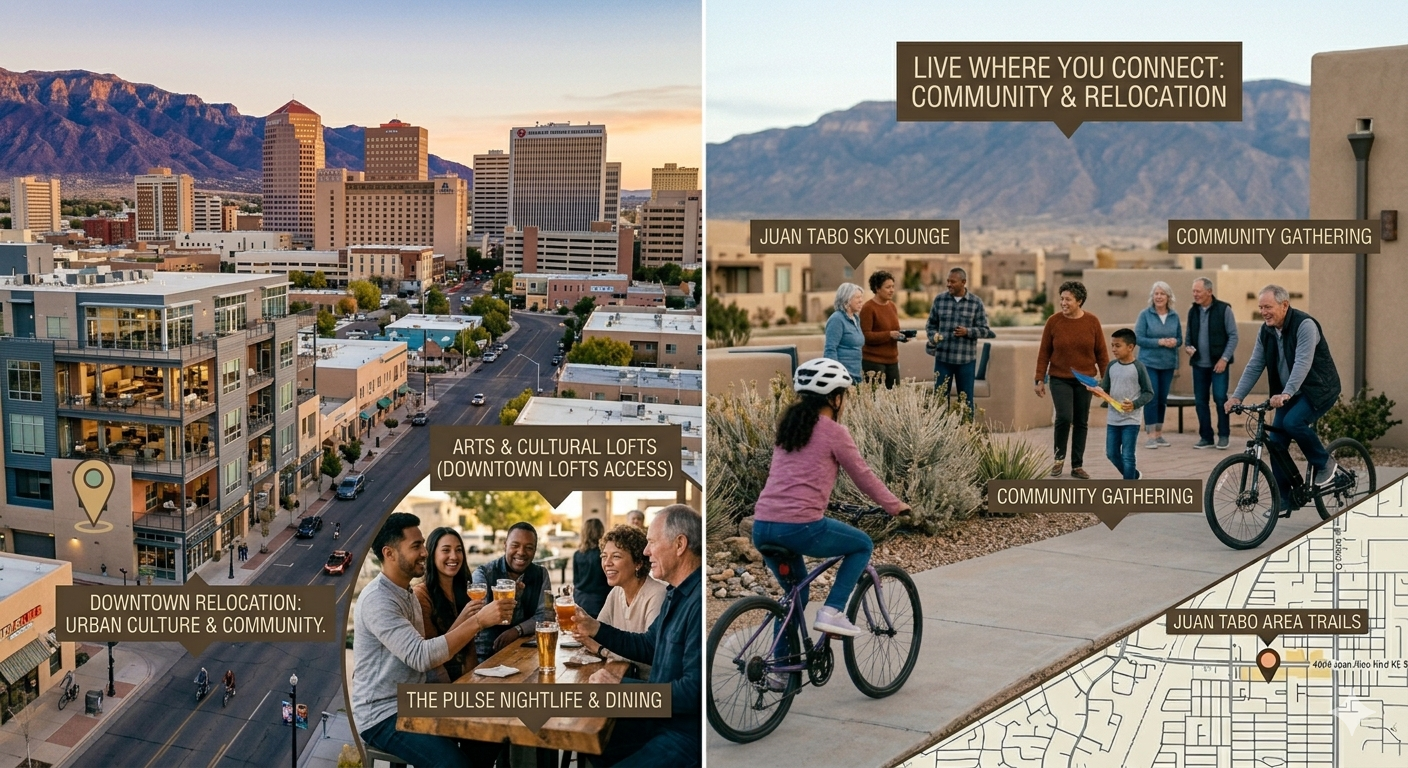
You should go into a Downtown loft search with clear expectations on price, HOA coverage, and building specifics. Most conversions Downtown and in adjacent EDo or Huning Highlands fall in the 800 to 1,100 square foot range, list between 250,000 and 325,000, and trade quickly. Average market time is often under three weeks, so your financing and decision-making need to be tight.
Key points to anchor your plan:
- Pricing: 250,000 to 325,000 for 1 to 2 bedrooms, 800 to 1,100 square feet.
- HOA fees: 300 to 450 per month. Typical inclusions are exterior maintenance, master insurance, and common-area utilities. You still budget for your interior condo insurance, electric, internet, and any parking fees.
- Monthly payment drivers: rate, down payment, HOA, property taxes, and mortgage insurance if you put less than 20 percent down.
- Competition: well-priced lofts move fast due to limited supply. You should be ready to tour quickly and submit clean terms.
- Appraisals: historic conversions can comp differently from newer buildings. You’ll want an agent who understands Downtown-specific comps in the MLS.
- Resale: walkability, secure parking, elevator access, and in-building amenities increase both livability and future buyer interest.
You’ll also want to review building rules early. Short-term rental restrictions, pet policies, and reserved parking can be deal makers or breakers for your lifestyle.
What a Typical Monthly Payment Looks Like
If you purchase at 300,000 with 3.5 percent down using an FHA loan, your base loan is about 289,500. At a 6.75 percent rate, principal and interest land roughly in the high 1,800s per month. Add:
- HOA: 300 to 450
- Property taxes: about 200 to 230
- Condo insurance: 30 to 50
- Mortgage insurance: varies by program and down payment
Your all-in housing cost often ranges from the mid 2,300s to the low 2,600s. Seller credits are common in a balanced market and can reduce your cash to close or help you buy down your rate.
How to Compare Your Options
When you compare Downtown lofts to Uptown townhomes or single-family starters in the Northeast Heights, you’re trading space for location efficiency. For many young professionals, the Downtown option wins because walkability replaces car time, and HOA maintenance reduces surprise expenses.
Consider these pros:
- Walk-to-work and nightlife that improves your weekday and weekend quality of life.
- Lower maintenance thanks to HOA-covered exterior upkeep and a simpler systems footprint.
- Strong renter demand if you later convert to a long-term rental, subject to building rules.
Consider these trade-offs:
- Less private outdoor space than a single-family home.
- HOA fees that increase your monthly outlay but reduce unpredictable repairs.
- Potential noise or street activity in more vibrant blocks.
You should also weigh financing differences. FHA and conventional 3 percent down loans are common on condos that meet lending guidelines. Some buildings may require higher down payments if the HOA fails certain lender criteria. Local programs through the New Mexico Mortgage Finance Authority can layer down-payment assistance on top of your first mortgage if you meet income, purchase price, and education requirements.
Key factors to evaluate:
- Building approval: Does the condo meet FHA or conventional condo requirements and reserve standards?
- HOA health: Are reserves funded, dues stable, and special assessments unlikely in the near term?
- Parking and access: Is parking deeded or assigned, is it secure, and how easy is elevator access for daily living?
Your Step-by-Step Guide
1. Get best mortgage lenders in Albuquerque for first-time home buyers with a local lender. Ask for payment scenarios at 275,000, 300,000, and 325,000, and compare FHA versus conventional at low down payment levels. Request estimated closing costs and potential seller credit strategies. 2. CFPB Ready to Buy Guide Confirm down-payment assistance eligibility. Explore state-backed programs that pair a first mortgage with a second lien or grant. Complete required education early so you can move fast when you find the right unit. 3. Define must-haves. Decide on minimum square footage, bedroom count, parking needs, pet requirements, and monthly HOA comfort level. Rank them in order so you can act decisively. 4. Scan inventory and set alerts. Focus on Downtown, EDo, and Huning Highlands. New loft listings often draw showings immediately, so schedule same-day or next-day tours when possible. 5. Review HOA documents before you write. You should request budgets, reserves, rules and regulations, and any pending or recent special assessments. Healthy reserves reduce your risk. 6. Craft a data-backed offer. In today’s more balanced market, you can request seller credits for rate buydowns, closing costs, or minor repairs while staying competitive on price and timelines. 7. how to choose the best home inspectors in Albuquerque. Order a general inspection, HVAC check, and, if needed, a structural or elevator inspection for the building. Confirm coverage boundaries between the HOA and your unit. 8. Navigate appraisal and underwriting. If an appraisal comes in light, consider reconsideration with stronger comps from similar loft buildings. Keep your documents updated to avoid underwriting delays. 9. Final walk-through and close. Verify repairs, ensure utilities are on, and test all appliances, windows, and doors. Set up auto-pay for HOA dues and review the building’s move-in procedures.
What This Looks Like in 4800 Juan Tabo Blvd NE Ste D, Albuquerque NM 87111
You might work or live in the Northeast Heights near Juan Tabo and still prefer Downtown living for your daily rhythm. From this area, you can reach the Downtown core in roughly 15 to 20 minutes via I-40, with traffic that is moderate by national standards. That makes a Downtown loft viable even if your job is in the NE Heights or near UNM.
You’ll find a guide to home buying in New Mexico that highlights three micro-areas that fit Option 1 well:
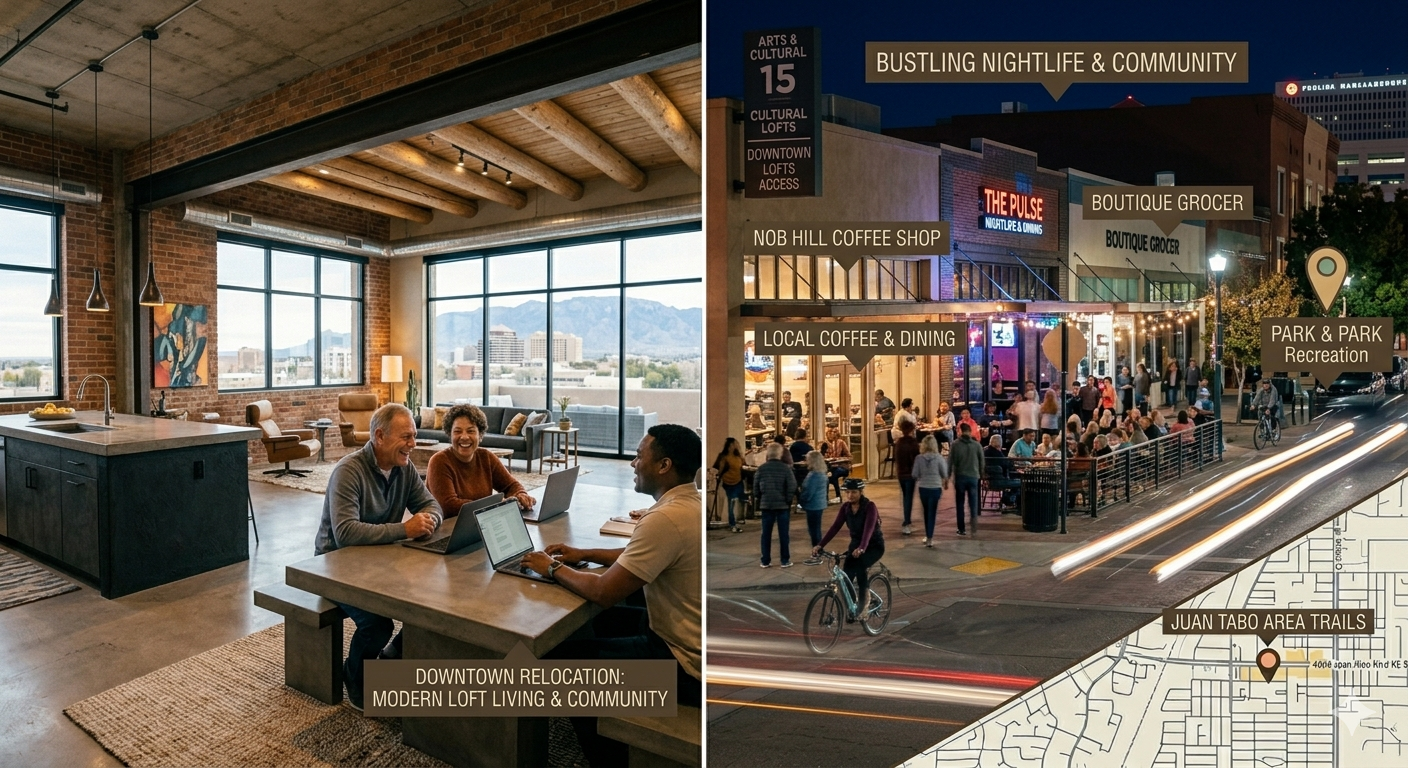
- Downtown Core: Close to Civic Plaza, courthouses, and office hubs. You’ll see 1-bedroom and 2-bedroom lofts in the 250,000 to 325,000 range with HOAs typically 300 to 450. Expect quick access to breweries, coffee shops, and entertainment.
- EDo and Huning Highlands: Historic blocks east of Downtown with brick and timber conversions. Prices are similar to the core, often with slightly more character details and walkability to restaurants along Central.
- Warehouse and Rail Yards adjacency: Emerging blocks with adaptive reuse energy and occasional new construction infill. You’ll get modern finishes and potential for future upside as more projects deliver.
For commute flexibility, ABQ RIDE Rapid Ride corridors and bike-friendly routes link Downtown, UNM/North Campus, and Uptown. If you split time between NE Heights and Downtown, a loft can anchor your social and professional life while keeping your drive times manageable. Local MLS trends show balanced conditions, so you can negotiate credits for rate buydowns or HOA prepaids and still win on price.
What Most People Get Wrong
You might assume HOA fees automatically make a loft more expensive than a townhome or small single-family home. The reality is that Downtown HOAs often replace big one-off costs you’d face elsewhere. Roof, exterior, and master insurance are budgeted at a predictable monthly amount, which reduces risk in your first two to three years of ownership. Another misconception is that all condos are hard to finance. Many Downtown buildings meet conventional or FHA standards, and local lenders know which ones qualify. You may also underestimate inspection needs. Conversions deserve targeted evaluations for HVAC age, window condition in historic frames, and sound attenuation. Finally, you might think resale is limited. Walkable units with secured parking, in-building amenities, and stable HOAs hold value well because they appeal to both owner-occupants and long-term renters subject to building rules.
Frequently Asked Questions
Are Downtown lofts a good investment in Albuquerque?
Yes, if you value walkability and predictable maintenance. You buy into a location with strong renter appeal and ongoing reinvestment. Focus on buildings with healthy reserves, stable dues, secured parking, and elevator access to support long-term demand and resale.
Can you use down-payment assistance on a loft purchase?
Often yes. Programs through the New Mexico Mortgage Finance Authority can pair a first mortgage with assistance for eligible buyers. You’ll need to confirm the building’s condo approval status and complete required education. Ask your lender to layer programs correctly.
How competitive are Downtown loft offers right now?
Competition is manageable. Local MLS data points to days on market around three weeks, which gives you room to negotiate price, seller credits, or repairs. Well-priced units still move quickly, so pre-approval and same-day touring keep you competitive.
What should you budget beyond HOA dues?
Plan for interior condo insurance, electric and internet, potential parking fees, and mortgage insurance if you put less than 20 percent down. Property taxes in Albuquerque are moderate, so a typical all-in budget includes HOA plus taxes and standard utilities.
What inspections should you order for a historic conversion?
Start with a general home inspection. Add an HVAC evaluation, window and envelope review for older frames, and a plumbing check if the building is pre-copper or has known line updates. Confirm what the HOA maintains versus what you must handle.
The Bottom Line
Your best Option 1 as a young professional in Albuquerque is a Downtown loft conversion priced around 250,000 to 325,000. You get a short commute, walkability to work and nightlife, and HOA-covered exterior maintenance that makes monthly costs more predictable. In today’s balanced market, you can often negotiate seller credits to offset closing costs or buy down your rate. If you prioritize a vibrant location, modern finishes in a historic setting, and strong long-term appeal, a Downtown loft positions you well for both lifestyle and resale.
If you’re ready to explore your options for Downtown loft conversions in Albuquerque, Meet Jenn and Vinay -- Your Trusted New Mexico Realtors can walk you through the specifics for your situation.
 5054172733
Categories
- All Blogs (362)
- 2026 & Beyond for Real Estate (256)
- Doctors and Nurses looking for homes in NM (4)
- Guide to buying a home in NM (160)
- Health Care Heros (7)
- Home Upgrades (42)
- Jenn & Vinay your Local Real Estate Experts! (124)
- Moving to Albuquerque (139)
- Neighborhoods in Albuquerque NM (94)
- Rent or Own (2)
- Sellers Questions for Selling homes (2)
Recent Posts








GET MORE INFORMATION