
55+ Communities vs. Traditional Neighborhoods in Albuquerque NM
55+ communities vs. traditional neighborhoods in Albuquerque NM: which retirement setting matches your lifestyle and budget?
The right fit comes down to how much you value on-site amenities, social programming, and low-maintenance living versus flexibility, privacy, and potentially lower monthly costs in a traditional neighborhood.
Why This Matters Right Now
You are choosing a home for your next chapter, so timing and fit both matter. Local MLS data shows about 3.2 months of supply for single-family homes and 2.8 months for condos as of Q1 2026, which gives you decent selection but not unlimited choice. The median sale price sits near $330,000 after steady 3 to 5 percent gains in recent years, so your purchasing power needs to be focused. If you value predictable expenses and built-in community, 55+ neighborhoods can deliver strong day-to-day convenience. If you want yard space, privacy, and the widest variety of locations, a traditional neighborhood can be the better match. Your decision affects your total monthly carry cost, your resale timeline, and how your daily routine feels in a city with excellent outdoor access, strong senior services, and improving transit options.
What You Need to Know Before You Decide
You should start with your non-negotiables, then layer in costs and trade-offs. Focus on how you will live day to day, not just the purchase price.
- Market positioning: As a buyer, you are in a balanced to slightly seller-favorable market. Expect well-priced homes to move quickly, especially single-level floor plans. Local MLS figures show condos and townhomes tracking even tighter on supply.
- Price trends: The metro’s median sale price is approximately $330,000 as of March 2026, with moderate appreciation compounding over the past three years. That supports your equity if you plan to resell in five to ten years.
- Carry cost planning: Typical HOA fees in 55+ communities range from about $200 to $350 per month. Budget utilities near $190 per month, groceries around $450, healthcare about $420, and transportation near $250, based on regional cost-of-living benchmarks. Albuquerque’s cost-of-living index sits below the national average, so your dollars can stretch.
- Taxes and programs: New Mexico does not tax Social Security benefits, and qualifying seniors may access a property tax rebate up to $2,000 plus a valuation freeze based on age and income. That helps stabilize your long-term costs.
- Mobility and access: You can use ABQ RIDE routes, Breeze By express lines, Sun Van paratransit, and Rail Runner commuter rail for regional trips. Albuquerque International Sunport keeps air travel simple. If staying active outdoors is key, you have city parks, bosque trails, and foothill hikes within reach.
What this means for your choice
You should view 55+ communities as a convenience bundle. You pay for amenities and predictable upkeep, and you probably give up some autonomy. Traditional neighborhoods let you customize your maintenance plan and often cut monthly fees, but you carry more of the work or hire it out. Your comfort with HOA rules, your desire for built-in social life, and your tolerance for yard work will likely decide the winner.
How to Compare Your Options
When you compare 55+ communities and traditional neighborhoods in Albuquerque, line up the real numbers and the daily lifestyle differences.
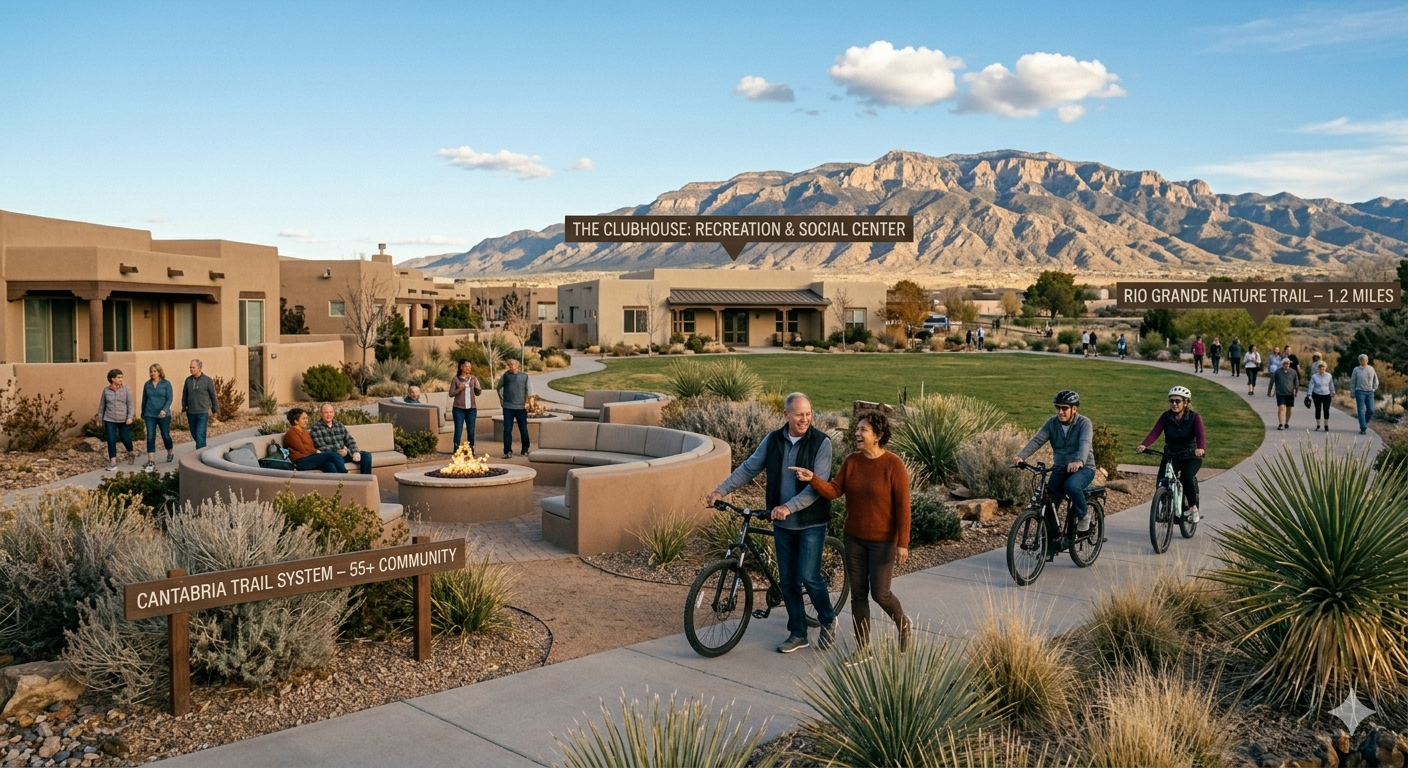
- 55+ communities: You typically get single-story layouts, age-qualified neighbors, social calendars, fitness rooms, clubhouses, and exterior maintenance. Your monthly cost includes HOA dues that often cover landscaping, common areas, and sometimes water or trash. Resale liquidity can be strong since single-level, low-maintenance homes draw steady demand. Local listing data indicates many 55+ resales close faster than typical neighborhoods, often in about 45 days.
- Traditional neighborhoods: You gain maximum choice in style, lot size, and location. Northeast Heights and the North Valley offer mature landscaping and established blocks. East Mountains provide a rural vibe at approachable prices. You control maintenance, which can cost more time or money, but you avoid recurring HOA fees in many areas.
- Healthcare and services: If you want quick access to primary care, specialists, and wellness services, look for proximity to major corridors and medical clusters. Albuquerque’s ongoing investment in senior-focused retail and clinics is expanding options, which can reduce your need for long drives.
Key factors to evaluate:
- Total monthly cost: Purchase price, HOA, taxes, insurance, utilities, routine maintenance, and reserves for roof or HVAC.
- Mobility and access: Transit options, walkability to groceries or pharmacies, and driving time to healthcare or family.
- Safety and upkeep: Community security features, lighting, sidewalks, emergency response times, and visible property maintenance.
Your Step-by-Step Guide
You can make a confident decision in five clear steps.
1) Define your must-haves. List what you need in the first year, then five years out. Many retirees prioritize single-level living, grab-bar-ready bathrooms, minimal stairs, and a two-car garage for storage. If you plan to age in place, note proximity to care, transit, and daily conveniences.
2) Set your budget by monthly carry, not just purchase price. Price the home plus HOA, property taxes, insurance, utilities, and a realistic maintenance allowance. If a 55+ HOA runs $250 per month but saves you $200 in yard and exterior costs, your net difference may be small.
3) Map your financing. If you want to preserve cash, compare a 15-year fixed near prevailing rates with a HECM purchase to reduce or even eliminate monthly principal and interest. If you are moving equity from a long-owned home, consider a short bridge loan or a negotiated rent-back to avoid rushing.
4) Tour strategically. Visit at different times and on different days. In 55+ settings, ask about the activity calendar, pool hours, guest suite rules, pet limits, and reserve funds. In traditional neighborhoods, assess noise, traffic, street lighting, and how homes are maintained. Bring a simple checklist for safety features and mobility ease.
5) Stress test resale and future care. Ask how fast similar homes resell and why. In 55+ communities, average marketing times often run shorter than in traditional areas, which can help if you need to move again. Also note future care options along major corridors where new clinics and wellness centers are opening.
What This Looks Like in Northeast Heights and Nearby Areas
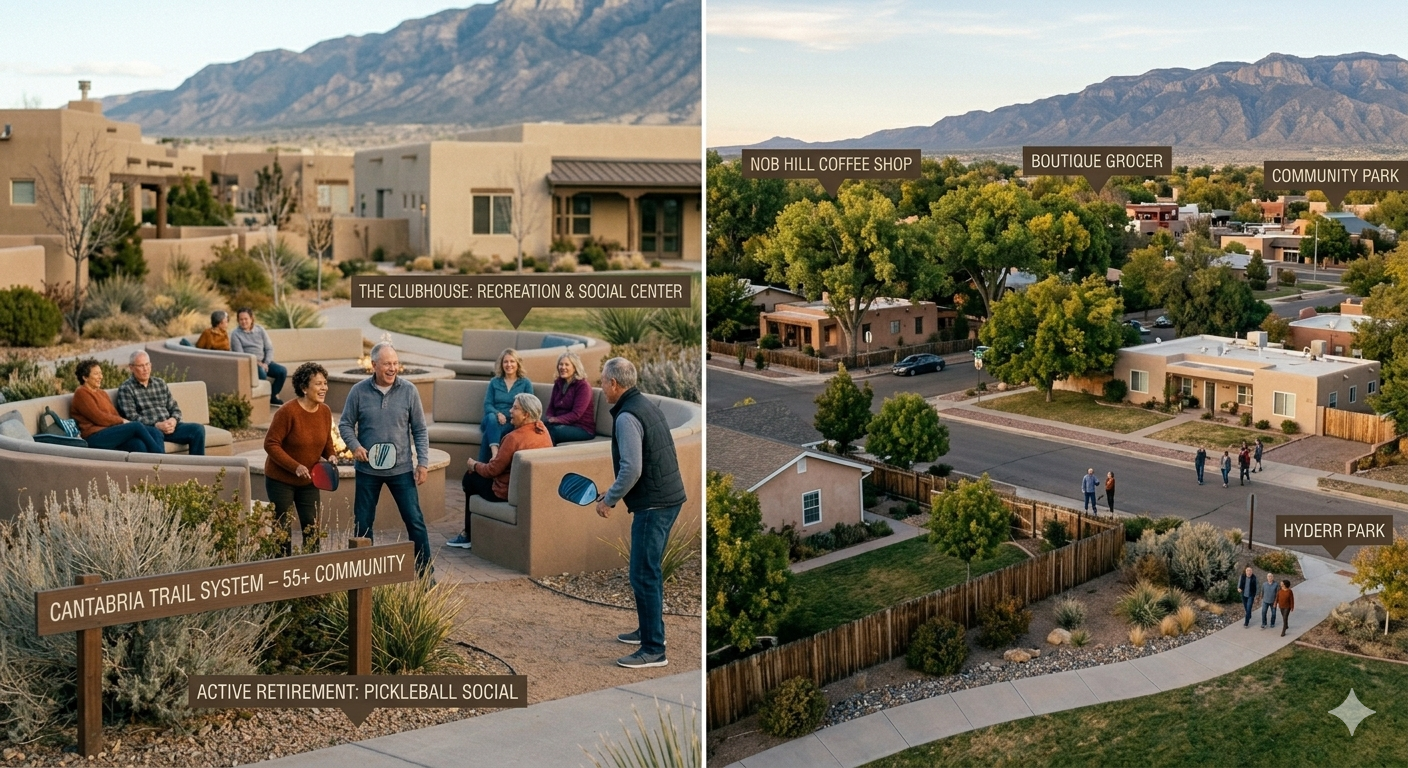
If you focus near 4800 Juan Tabo Blvd NE in the Northeast Heights, you sit close to shopping, medical services, and Sandia foothill trails. Established subdivisions offer single-level homes, mature trees, and easy access to I-40. You can find traditional homes around the mid to upper 300s depending on size and updates, with many single-story plans available.
- Northeast Heights: You get established neighborhoods, sidewalks, and quick access to everyday needs. Prices commonly run in the low to mid 300s for well-kept smaller homes, with newer or view properties trending higher. This area suits you if you want convenience without HOA constraints.
- Foothills: You trade up for views and trail access, especially if you love hiking the Sandia foothills. Many homes lean higher in price, with a sizable portion in the mid 400s and above. If you want a quiet setting near nature, this area checks the box.
- North Valley: You find larger lots and a semi-rural feel near the bosque trails. If you want gardening space or room for a small workshop, this can be a great match. Median prices often sit higher than the city median, but you gain unique character and outdoor access.
- East Mountains: Edgewood and Tijeras give you more house and land for the money, often in the upper 200s to mid 300s. You will carry more maintenance and longer drives, and winters can be a bit cooler. If privacy and elbow room trump amenities, you will like this option.
- 55+ community clusters: You see age-qualified options across the metro, including newer 2005 to 2020 builds with median resales around the low 300s and HOA dues frequently between $200 and $350 per month. If you want on-site fitness, events, and simplified maintenance, these can be ideal.
Local MLS data and regional cost-of-living figures indicate you can often match a target monthly budget by balancing price, HOA, and commute patterns. If you choose a 55+ community, verify what the dues actually cover. If you choose a traditional neighborhood, get quotes for yard service and exterior upkeep so you can compare apples to apples.
What Most People Get Wrong
You might think a lower purchase price always equals lower monthly cost. In reality, HOA coverage can offset lawn care, exterior paint cycles, private road maintenance, and sometimes trash or water. That can shrink the gap between a 55%2B home with dues and a traditional home without dues. Another common misconception is that 55%2B rules always feel restrictive. Many communities have flexible guest policies, pet allowances for a small dog or cat, and vibrant activity calendars that actually expand your social life. Finally, you might overestimate taxes. New Mexico’s treatment of Social Security benefits and senior property tax relief can meaningfully reduce your annual bill. Confirm eligibility for valuation freezes and rebates so you do not leave money on the table.
Frequently Asked Questions
Will a 55+ community cost you more each month than a traditional neighborhood?
Often, but not always. You pay HOA dues that can run $200 to $350 per month, yet you may save on yard work, exterior maintenance, and some utilities. When you add insurance, taxes, and upkeep, the gap can narrow. Build a line-item budget to see your true net.
How fast do homes sell in 55+ communities compared to traditional areas?
You can expect relatively strong liquidity. Recent local data shows many 55+ resales closing faster than traditional homes, often around 45 days versus roughly 60 to 65 days in broader neighborhoods. Single-level layouts and low-maintenance living drive steady buyer demand.
What financing options should you consider as a retiree buyer?
You can compare a conventional 15-year fixed near prevailing rates with a HECM for Purchase to limit or eliminate monthly principal and interest. If you are sequencing a sale and a purchase, a short bridge loan or a negotiated rent-back can help you avoid double moves or rushed decisions.
How do New Mexico taxes affect your retirement housing budget?
You benefit from no state tax on Social Security income. If you meet age and income thresholds, you may qualify for a property tax rebate up to $2,000 and a valuation freeze that stabilizes your assessed value. Confirm details with the New Mexico Taxation and Revenue Department.
Which neighborhoods best fit a low-maintenance lifestyle without HOA restrictions?
You should look at smaller single-level homes in the Northeast Heights for easy access to shopping and healthcare. Parts of the North Valley and Westside also offer manageable lots. If you prefer minimal yard work, price a monthly landscaping service so you can compare against HOA dues.
The Bottom Line
You should choose a 55+ community if you value built-in amenities, social programming, single-level layouts, and predictable upkeep that streamlines your monthly routine. You should choose a traditional neighborhood if you want maximum flexibility, a wider range of locations and prices, and the ability to tailor your maintenance plan. In Albuquerque’s balanced market, both paths can fit a $200,000 to $450,000 budget. Compare total monthly costs, proximity to healthcare and daily conveniences, and your desired pace of life. When the numbers and your lifestyle line up, you will know which setting truly fits.
If you are ready to explore your options for 55+ communities vs. traditional neighborhoods in Albuquerque NM, Vinay Rodgers at The Rodgers Neighborhood Real Estate Group can walk you through the specifics for your situation.
 5054172733
Categories
- All Blogs (362)
- 2026 & Beyond for Real Estate (256)
- Doctors and Nurses looking for homes in NM (4)
- Guide to buying a home in NM (160)
- Health Care Heros (7)
- Home Upgrades (42)
- Jenn & Vinay your Local Real Estate Experts! (124)
- Moving to Albuquerque (139)
- Neighborhoods in Albuquerque NM (94)
- Rent or Own (2)
- Sellers Questions for Selling homes (2)
Recent Posts









GET MORE INFORMATION