
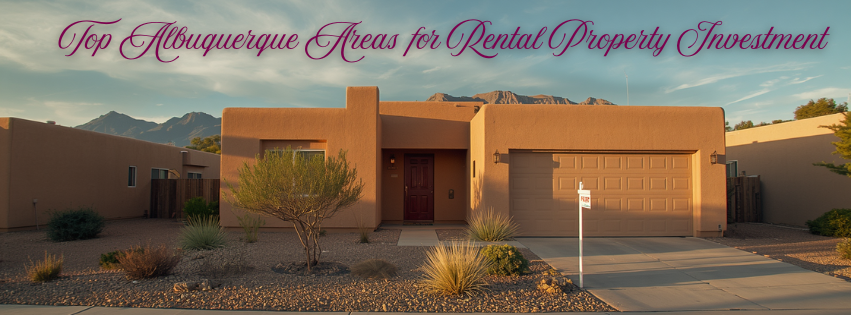
Top Albuquerque Areas for Rental Property Investment — The 2026 Data Guide
The rental property investor's first question — where should I buy? — is answered differently in every market. In Albuquerque, the answer depends on which of three factors you weight most heavily: the best current gross rent multiple (rent-to-price ratio), the best tenant demographics for long-term occupancy stability, or the best combination of current income and appreciation upside. Different Albuquerque neighborhoods lead in each category.
This guide covers the top Albuquerque areas for rental property investment in 2026, organized by the rental income data that is available in New Mexico's non-disclosure environment, the tenant demographic profile of each area, and the specific market conditions that make each neighborhood's rental case compelling.
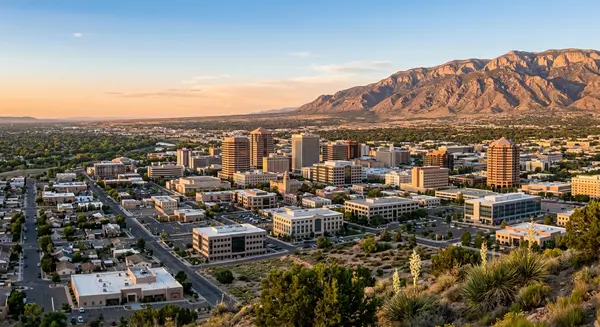
The Market Fundamentals — Why Albuquerque's Rental Market Is Structurally Sound
"The vacancy rate in Albuquerque is currently at 6.0%, which is considered very low. This low vacancy rate indicates that the market is highly occupied and competitive, suggesting strong demand for rental properties. When demand is high, it often means that rental properties are quickly filled, reducing the risk of long vacancy periods for property owners," confirmed What's My Cash Flow's Albuquerque investment analysis (December 2024). The 6.0% vacancy rate is a foundational market health indicator.
The Albuquerque rental market fundamentals in 2026:
- Vacancy rate:0% — below the national apartment vacancy average, indicating healthy demand and reducing void risk for investors
- Rental demand growth: 8% increase in demand in the past year — significantly above the national average
- Rent appreciation: 5% rent price increase in the past year — above the national average, outpacing inflation at the rental income level
- Property tax rate:79% effective (Bernalillo County) — dramatically below Texas (1.7-2.5%), Illinois (2.1%), and New Jersey (2.2%). The operating cost advantage is significant at every price point.
- No rent control: New Mexico has no state-level rent control, Bernalillo County has no rent control, and the City of Albuquerque has no rent control ordinance. Investors can set market-rate rents without regulatory caps.
- No just-cause eviction requirement: Unlike California (AB 1482), Oregon, and several other states, New Mexico does not require landlords to provide cause for non-renewal of month-to-month tenancies. Standard New Mexico landlord-tenant law applies.
- Average monthly rental income: $2,114 citywide average (Mashvisor), with wide variation by neighborhood and property type
The employer base that sustains Albuquerque's rental demand: "The city's economy is more diversified than many people realize. Beyond the federal presence, healthcare, technology, film production, and renewable energy sectors all contribute to employment stability. That diversity translates to rental stability — you're not betting on a single industry's success," confirmed the ark7.com Albuquerque investment analysis (June 2025). The Sandia Labs, Kirtland AFB, UNM, and healthcare systems are the institutional foundation.
Understanding the Rental Math — GRM, Cap Rate, and Cash-on-Cash
The rental investor needs three metrics to evaluate any Albuquerque property:
- Gross Rent Multiplier (GRM): Purchase price divided by annual gross rental income. A GRM of 12-15 is generally considered reasonable in Albuquerque's market; below 12 is excellent; above 16 requires appreciation upside to compensate. GRM = Purchase Price ÷ (Monthly Rent × 12).
- Cap Rate: Net Operating Income (gross rent minus vacancy allowance, property taxes, insurance, maintenance, property management) divided by purchase price. A cap rate above the prevailing mortgage rate indicates positive leverage. In Albuquerque's 2026 market, well-positioned single-family rentals produce cap rates of 4-6.5% depending on price tier.
- Cash-on-Cash Return: Annual pre-tax cash flow divided by total cash invested (down payment + closing costs). The citywide average is 4.0% (Mashvisor). Investors targeting above-market cash-on-cash should focus on areas with GRMs below 14 and strong occupancy rates.
The 2026 challenge: at 6.30% mortgage rates, the spread between cap rate and financing cost is narrow or negative for highly leveraged purchases. The investor who buys with 25-30% down, or who targets above-average rent-to-price areas, achieves more favorable cash-on-cash returns than the investor using maximum leverage at median prices.
Area 1 — The UNM Corridor (87106, 87108) — Best GRM and Perpetual Tenant Demand
Price range: $150,000-$300,000 | Monthly rent: $1,000-$1,500 | Estimated GRM: 12.5-16.7 | Estimated cap rate: 5.0-7.0%
The UNM corridor produces the best gross rent multiples available in Albuquerque's established residential market — entry prices remain below $300,000 for many single-family homes and small multi-family buildings, while rents for well-maintained units are achievable at $1,100-$1,400/month. A $195,000 UNM-adjacent property renting at $1,300/month produces a GRM of 12.5 — among the best available in the Albuquerque metro.
The tenant demand is specifically structural: UNM's 27,000+ students, faculty, and staff create a tenant pool that refills every year regardless of broader economic conditions. The best tenant profile within the UNM market is graduate students and faculty/staff rather than undergraduates — longer leases, better property care, and higher income stability. Properties within 1 mile of the main campus command a meaningful premium over comparable properties at 2+ miles.
- Best property type: 2-3 bedroom single-family or legal 2-4 unit multi-family. The legal multi-family buildings in this corridor — grandfathered non-conforming structures that predate current zoning — are the highest-value rental assets in the neighborhood because they combine a GRM advantage with portfolio-building multi-door efficiency.
- The Nob Hill premium within this zone: Properties on the Central Avenue (Nob Hill) corridor within the UNM market command $1,300-$1,700/month from the young professional and remote worker tenant demographic — higher absolute rent than the core UNM market, with the walkability premium as the specific driver. Nob Hill Walk Score 85 translates to a rental premium of approximately $200-$300/month over comparable non-walkable properties.
- Operating considerations: The UNM market requires active management during tenant turnover — typically each August/September, timed to the academic calendar. Investors who self-manage should budget for active August-September activity; those using property management should select a manager with specific UNM market experience.
Area 2 — Kirtland Air Force Base Adjacent (Southeast Albuquerque, 87117 Corridor) — Government-Backed Tenant Income
Price range: $210,000-$310,000 | Monthly rent: $1,500-$1,900 | Estimated GRM: 11.7-17.2 | Estimated cap rate: 5.0-6.5%
Military rental investment in the Kirtland AFB corridor offers the most income-reliable tenant demographic available in Albuquerque — service members using their Basic Allowance for Housing (BAH), a tax-free government stipend calibrated to local market rents. Kirtland AFB's BAH rates for 2026 support monthly rent of $1,800-$2,000+ for members with dependents, creating a rent-supported demand that is effectively government-backed.
- The BAH math: An E-5 with dependents at Kirtland receives BAH of approximately $1,800-$2,000/month depending on the rate year. The investor who owns a 3-bedroom, 2-bath home in the Kirtland corridor priced at $245,000 and renting for $1,700/month achieves a GRM of 12.0 and a cap rate approximately 5.5-6.0% — the best rent-to-price available from a government-backed tenant demographic anywhere in the Albuquerque metro.
- The infrastructure catalyst — I-25/Gibson Interchange: The I-25 Gibson Interchange improvement project is set for completion by Fall 2026. This infrastructure improvement improves access to the Kirtland AFB area and the Gibson Boulevard employment corridor, potentially increasing property values and rental demand in the adjacent neighborhoods as the project's benefits become apparent. Buyers who enter the Gibson/Kirtland corridor before the interchange completion are ahead of this specific infrastructure catalyst.
- PCS turnover planning: Military tenants receive PCS orders every 2-4 years. Budget for planned vacancy and turnover at that interval. The unit typically refills quickly from the next incoming Kirtland assignment — the PCS cycle creates consistent, predictable turnover rather than unexpected vacancy. The investor who has a good relationship with the Kirtland housing office can fill units before the departing tenant is gone.
Area 3 — The Northeast Heights La Cueva Zone (87111) — Premium Tenants, School Zone Retention
Price range: $300,000-$480,000 | Monthly rent: $1,700-$2,100 | Estimated GRM: 14.7-18.9 | Estimated cap rate: 4.0-5.5%
The Northeast Heights La Cueva zone rental market is where tenant quality, lease renewal rates, and appreciation upside converge at the cost of a less favorable rent-to-price ratio. The investor who enters this market is accepting thinner initial cash-on-cash returns in exchange for:
- The highest lease renewal rates in Albuquerque: Families who rent in the La Cueva zone do so specifically to access the school zone. They will renew leases for as long as their children are in the school system to avoid changing school assignment. This creates multi-year lease stability that no other Albuquerque area replicates.
- The most professional tenant demographic: Dual-income professional households, Sandia Labs and Kirtland employees, and physicians who are renting while considering a future purchase represent the specific tenant profile most likely to maintain properties in excellent condition, pay rent on time, and communicate professionally about maintenance needs.
- Appreciation upside: The La Cueva zone's documented above-market appreciation means the Northeast Heights investor's total return includes meaningful property value gains alongside the rental income stream. The 4-5% appreciation potential in this zone (and the 4-5% rate-relief acceleration case) supplements the thinner initial cash yield.
The La Cueva zone operating reality: at current rates, a $370,000 Northeast Heights investment with 25% down ($92,500) and $277,500 loan at 6.30% produces P&I of $1,717 + taxes ($244) + insurance ($110) = $2,071 PITI. At $1,850/month rent: -$221/month before maintenance. The La Cueva investor needs financial stability during rate headwinds and a medium-to-long holding horizon to realize the appreciation component of the total return.
Area 4 — The Westside Established Communities (Taylor Ranch, Ventana Ranch, Cabezon) — Best Suburban Cash Flow
Price range: $250,000-$370,000 | Monthly rent: $1,500-$1,900 | Estimated GRM: 13.9-16.3 | Estimated cap rate: 4.5-5.5%
The established Westside master-planned communities — Taylor Ranch (87114), Ventana Ranch (87114), and Cabezon (Rio Rancho adjacent) — offer the best suburban cash flow profile in the Albuquerque metro: entry prices $50,000-$100,000 below comparable Northeast Heights properties with comparable rent levels, producing GRMs in the 13-16 range that support more favorable cash-on-cash returns than the La Cueva zone.
The Westside rental value proposition:
- Rent-to-price ratio advantage: A $280,000 Taylor Ranch home renting at $1,650/month produces a GRM of 14.2 — significantly better than comparable Northeast Heights properties. With 25% down ($70,000) and a $210,000 loan at 6.30%, the P&I is $1,300 + taxes ($185) + insurance ($100) = $1,585 PITI. At $1,650 rent: +$65/month before maintenance — near-neutral to slightly positive cash flow.
- Family tenant profile: The Westside established communities attract dual-income families who are choosing Westside over Northeast Heights for the lower rent at comparable suburban infrastructure quality. These tenants are stable, long-term renters who treat properties well and often sign 2-year leases.
- New construction competition: The Westside has active builder presence, which limits rent appreciation by keeping supply available at comparable price points. The Westside investor should model rent appreciation at 3-4% annually rather than the 5% the more supply-constrained areas may achieve.
Area 5 — Rio Rancho (87144, 87124) — Intel-Driven Demand Growth
Price range: $250,000-$380,000 | Monthly rent: $1,400-$1,800 | Estimated GRM: 14.9-17.9 | Estimated cap rate: 4.0-5.0%
Rio Rancho's 8.1% population growth rate (2020-2024) — the fastest in New Mexico — and Intel's $3.5 billion Fab 11X expansion are creating rental demand that is specifically employment-driven rather than speculative. The Intel professional tenant is a high-quality, high-income renter who typically rents for 1-3 years while evaluating the area for a home purchase.
- The Intel tenant profile: Engineers and technical professionals hired for Fab 11X typically earn $90,000-$150,000+. They are accustomed to higher-quality rental housing, pay rent reliably, and represent the specific tenant demographic that commands market or slightly above-market rent in well-maintained properties near the Intel campus.
- Rio Rancho Schools: Rio Rancho Public Schools provides acceptable school quality for most families — not the La Cueva premium, but a viable school district that does not deter family renters the way lower-rated urban districts might.
- Appreciation upside: Rio Rancho's employment growth-driven appreciation is the most documented and most mechanically direct in the metro. Intel expands → jobs are created → professionals arrive → housing demand increases → prices and rents rise. The mechanism is visible, current, and ongoing.
Area 6 — The North Valley (Los Ranchos, North Valley Corridor) — Premium Long-Term Rental Income
Price range: $320,000-$600,000 | Monthly rent: $1,700-$2,200 | Estimated GRM: 15.6-18.2 | Estimated cap rate: 3.5-5.0%
The North Valley and Los Ranchos de Albuquerque rental market serves the highest-end tenant demographic available in the city — established professionals, senior executives, physicians, and retiring households who specifically seek the bosque character, the mature cottonwood trees, and the rural-near-urban quality that no other Albuquerque area provides. These tenants pay the highest rents in the market and maintain properties with exceptional care.
The North Valley landlord advantage: tenants who specifically want the North Valley character will pay for it and will stay to preserve their access to it. A couple who rents a North Valley home with bosque access and acequia irrigation are paying for an experience that does not have a substitute in Albuquerque — they are less likely to leave than a comparable-income tenant in the Northeast Heights who has multiple comparable options.
- Entry price challenge: The $400,000-$600,000 entry point in the North Valley premium tier produces GRMs in the 17-20 range — which at 6.30% financing produces negative or break-even cash flow. The North Valley investor is buying for the combination of appreciation (supply-constrained, bosque-adjacent properties consistently outperform the market) and the specific quality of the tenant and the property that this tier represents.
- The affordable North Valley entry: Properties in the $320,000-$400,000 range in the less-premium North Valley corridors (not bosque-adjacent, but North Valley character) produce GRMs of 15-17 and cap rates in the 4.5-5.0% range — more favorable than the premium bosque tier while still accessing the tenant quality advantage of the North Valley address.
Area 7 — The South Valley and Entry-Level Zones — Highest Gross Yield, Highest Management Intensity
Price range: $140,000-$240,000 | Monthly rent: $900-$1,300 | Estimated GRM: 10.8-15.4 | Estimated cap rate: 5.5-8.0%
The South Valley and the most affordable Albuquerque entry-level zones — portions of 87105 and 87121 — produce the highest gross rent yields available in the metro. A $160,000 entry-level South Valley home renting at $1,100/month achieves a GRM of 12.1 and a cap rate estimate of 6.5-7.5% — significantly better cash flow math than any other Albuquerque area.
The trade-offs at this tier that the gross yield does not capture:
- Higher maintenance intensity: Older construction, older mechanical systems (HVAC, plumbing, roof), and less investment in upgrades mean higher ongoing maintenance costs relative to purchase price. The cap rate estimate must be modeled with higher maintenance reserves — 1.5-2% of purchase price annually rather than the 0.75-1% typical for newer construction.
- Higher tenant turnover: Lower-income tenant demographics at this price tier produce higher turnover rates. Each vacancy and turn costs money — repainting, cleaning, minor repairs. Model 10-15% vacancy and turnover cost rather than the 6% market average.
- Management quality is essential: The entry-level investor who self-manages without experience typically finds the higher gross yield consumed by management failures. The South Valley investment works best with experienced professional management or an investor who has specific hands-on property management experience.
The Rental Operating Cost Framework — What the Cash Flow Math Must Include
The rental investor who models only mortgage, taxes, and insurance is modeling one-third of the cost picture. The complete operating cost framework for Albuquerque rental properties:
- Property taxes:79% effective rate in Bernalillo County. On a $280,000 property: $2,212/year ($184/month).
- Homeowners insurance: Non-owner-occupied rental property insurance (also called landlord insurance or dwelling fire policy) typically costs 15-25% more than standard homeowner's insurance. Budget approximately $1,200-$1,800/year ($100-$150/month) for a single-family rental in the $250,000-$400,000 range.
- Property management: Albuquerque property management fees typically run 8-10% of monthly rent for single-family, 8-12% for multi-family. On $1,700/month rent: approximately $136-$170/month. For out-of-state investors, professional management is not optional — it is the difference between a successful investment and an unmanaged liability.
- Maintenance and CapEx reserve: Budget 0.75-1.5% of purchase price annually for maintenance and capital expenditure reserve. On a $280,000 property: $2,100-$4,200/year ($175-$350/month). The desert climate requires HVAC systems to work hard — plan for replacement every 15-20 years in the Albuquerque market.
- Vacancy allowance: The 6.0% citywide vacancy rate suggests a vacancy allowance of 6-8% of gross rent. On $1,700/month rent: $102-$136/month vacancy reserve. In practice, well-managed properties in strong tenant-demand areas will experience less than 6% vacancy; the reserve should be maintained regardless.
- Water and xeriscape consideration: Water conservation is increasingly important in Albuquerque. Properties with xeriscaping or low-water desert landscaping have lower water costs (whether tenant-paid or owner-paid) and are more attractive to environmentally conscious renters. Consider the irrigation system's cost and water intensity in any rental property evaluation.
The Landlord-Friendly Framework — Why New Mexico Works for Investors
New Mexico's landlord-tenant legal framework is more favorable to rental property owners than the coastal markets that produce many of Albuquerque's out-of-state investors:
- No rent control: The City of Albuquerque, Bernalillo County, and the State of New Mexico have no rent control ordinances. Market-rate rent is the legal and operational standard.
- No just-cause eviction requirement: Unlike California (AB 1482, which requires just cause for non-renewal after 12 months of tenancy) or Oregon, New Mexico does not require landlords to provide a reason for non-renewal of month-to-month tenancies. Standard notice requirements apply.
- Eviction process: New Mexico eviction (unlawful detainer) proceeds through Bernalillo County Metropolitan Court. The process is standard — 3-day pay-or-quit notice for non-payment, followed by court filing if unresolved. Timelines are typically 4-8 weeks from initial notice to possession in uncontested cases.
- No source-of-income discrimination (statewide): New Mexico prohibits discrimination based on source of income — landlords cannot refuse Section 8 vouchers or BAH payments solely because of the payment source. For the Kirtland AFB investor, this is a neutral provision (BAH is the desired payment source); for landlords who prefer to avoid government-administered programs, this requires operational awareness.
The 2026 Infrastructure Catalyst — I-25 Gibson Interchange Completion
The I-25 Gibson Interchange improvement project — scheduled for completion by Fall 2026 — is a specific 2026 infrastructure driver for rental investment in the Gibson Boulevard and Kirtland AFB adjacent area. Infrastructure improvements of this type historically increase nearby property values and rental demand by improving access to employment centers, reducing commute friction, and increasing the desirability of adjacent residential neighborhoods.
For rental investors, the Gibson/Kirtland corridor represents a specific 2026 window: properties purchased before the interchange completion are priced before the improvement's full value is reflected. Properties purchased after the Fall 2026 completion will carry the infrastructure premium in their acquisition price. Investors who enter this corridor in the first half of 2026 are specifically positioned to capture the infrastructure catalyst's value contribution.
The Area-by-Area Rental Quick Reference
- UNM Corridor: $150K-$300K entry | $1,000-$1,500/month | GRM 12-17 | Best cash flow, perpetual tenant pool, management-intensive turnover
- Kirtland AFB Adjacent: $210K-$310K entry | $1,500-$1,900/month | GRM 11-17 | Government-backed BAH tenant income, I-25 Gibson catalyst
- NE Heights La Cueva Zone: $300K-$480K entry | $1,700-$2,100/month | GRM 15-19 | Best tenant stability, school zone retention, appreciation upside
- Westside Established (Taylor Ranch, Ventana Ranch): $250K-$370K entry | $1,500-$1,900/month | GRM 14-16 | Best suburban cash flow, family tenant, lower GRM than La Cueva
- Rio Rancho: $250K-$380K entry | $1,400-$1,800/month | GRM 15-18 | Intel employment demand growth, appreciation trajectory strongest
- North Valley / Los Ranchos: $320K-$600K entry | $1,700-$2,200/month | GRM 16-18 | Premium tenants, supply-constrained, appreciation-heavy return profile
- South Valley / Entry Level: $140K-$240K entry | $900-$1,300/month | GRM 11-15 | Highest gross yield, highest management intensity, modeled conservatively
For the investor decision framework on which strategy — buy-and-hold single-family, multi-family, or short-term rental — best fits different neighborhood profiles, our companion post on where investors are buying homes in Albuquerque right now covers the strategy-by-neighborhood matrix. And for the cost-of-living context that defines what Albuquerque's tenant base can afford to pay, our Albuquerque cost of living guide for 2026 provides the tenant income picture.
The Bottom Line — Albuquerque Rental Investment Rewards Discipline
Albuquerque's rental market in 2026 rewards the disciplined investor — the one who understands the specific GRM range that produces acceptable returns at current rates, who has modeled the full operating cost picture rather than just the mortgage and taxes, who has selected a neighborhood whose tenant demographic profile matches their management capacity, and who has a holding horizon long enough to realize the appreciation component of the total return.
The market is not a get-rich-quick opportunity. The 4-7% cap rate range, the 4% cash-on-cash citywide average, and the 3-5% annual appreciation are the realistic parameters — and they produce real, compound returns over a 10-to-15-year hold that out-perform most comparable-risk investment alternatives without the volatility of public markets.
The investor who buys the right property in the right Albuquerque neighborhood, manages it professionally, and holds through the rate cycle that will eventually provide refinancing opportunities is building wealth at a rate that Albuquerque's fundamentals — the institutional employer base, the vacancy rate, the no-rent-control environment, and the below-national-average property tax — specifically support.
Ready to Find Your Albuquerque Rental Investment?
Jenn & Vinay from The Rodgers Neighborhood Real Estate Group provide rental investment analysis for Albuquerque properties — including GRM calculations, tenant demographic profiles, and the area-specific market knowledge that the NM non-disclosure environment requires to evaluate a rental property correctly. We have helped investors build single-property and multi-property portfolios across the UNM corridor, Kirtland adjacent, Northeast Heights, Westside, Rio Rancho, and North Valley market segments. The conversation about building an Albuquerque rental portfolio starts with a call.
Jenn & Vinay Rodgers are Albuquerque's trusted real estate professionals with The Rodgers Neighborhood Real Estate Group, brokered by Real Broker, LLC, serving buyers and sellers across Albuquerque, Rio Rancho, Corrales, Los Lunas, Tijeras, Cedar Crest, Sandia Park, the East Mountains, Bernalillo County, Sandoval County, and surrounding New Mexico communities.
The Rodgers Neighborhood Real Estate Group
Jenn & Vinay Rodgers
Real Broker, LLC
Albuquerque, NM
📞 505-417-2733
🏠 Browse Albuquerque rental investment properties nowCategories
- All Blogs (362)
- 2026 & Beyond for Real Estate (256)
- Doctors and Nurses looking for homes in NM (4)
- Guide to buying a home in NM (160)
- Health Care Heros (7)
- Home Upgrades (42)
- Jenn & Vinay your Local Real Estate Experts! (124)
- Moving to Albuquerque (139)
- Neighborhoods in Albuquerque NM (94)
- Rent or Own (2)
- Sellers Questions for Selling homes (2)
Recent Posts







GET MORE INFORMATION