
Albuquerque Triple-Digit Temperatures — The Complete 2026 Guide
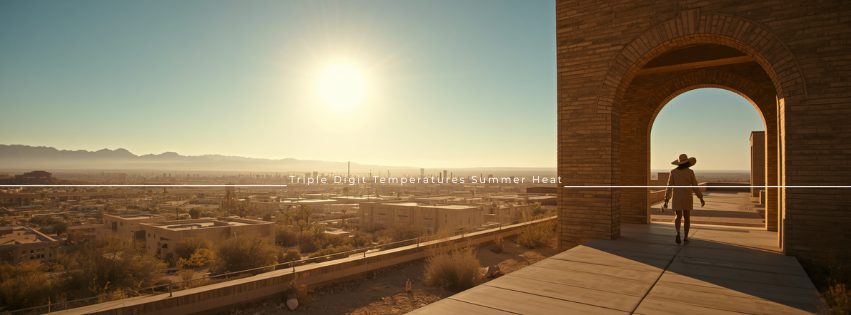
Albuquerque, New Mexico is a city where it occasionally hits 100 degrees. It is not a city where it is always 100 degrees. The distinction matters enormously — and the newcomer from Seattle or Chicago who Googles "Albuquerque summer temperatures" and finds that triple-digit temperatures are real may conclude incorrectly that Albuquerque is Phoenix. It is not Phoenix. The elevation, the humidity, the monsoon, and the temperature swing that drops any 100°F afternoon to a 65°F evening make Albuquerque's heat a specifically different experience from the heat of lower-elevation desert cities. This guide explains the complete picture.
The 2026 Triple-Digit Temperature Record — What Actually Happened
"Albuquerque saw its first triple-digit temperature of the year on June 17, 2026. It comes a bit early, according to Chief Meteorologist Grant Tosterud. 'We usually see 100 degrees between around June 27th and July 10th. It's actually a pretty short window, because once we get into the middle of July, we start to see a lot more monsoon moisture moving into New Mexico. And that higher humidity in the air generally keeps temperatures down a couple degrees and keeps us away from the 100s. So we're getting into that window, through early to mid-July, where we would typically see 100-degree days. And we usually see around three 100-degree days every year here in Albuquerque,'" confirmed KRQE's June 17, 2026 report on Albuquerque's first triple-digit temperature of 2026.
- 2026 first triple-digit day: June 17, 2026 — the 13th earliest 100-degree day on record. Earlier than the typical window of June 27-July 10.
- 2026 heat wave peak: 102°F on Thursday, June 18; 101°F on Friday, June 19; 100°F on Saturday, June 20. Three consecutive days in the 100s.
- August 2026 heat wave: A second heat wave arrived in late July-early August, with temperatures approaching and reaching 100°F in parts of the metro. The Albuquerque Sunport registered 97°F on July 27; parts of the South Valley reached 100°F the same day.
- 2026 context: an unseasonally warm year: "We've had this unusual warmth for so long that we are literally just getting used to an environment or a climate that's not normal for Albuquerque. Our winter was more like something that Las Cruces would have in comparison," said KOAT-TV Chief Meteorologist Byron Morton in May 2026.
- Annual triple-digit day average: Typically, Albuquerque sees approximately 3 triple-digit days per year. In 2024, there were 5. In 2023, there were 17 — the most since 1980 and significantly above the historical average.
- All-time record: 107°F on June 26, 1994 — the highest temperature ever recorded at the Albuquerque Sunport in the NOAA dataset from 1931-2026.
Why Albuquerque's 100°F Is Not Dallas's 100°F — The Dry Heat Difference
The most important context for anyone evaluating Albuquerque's triple-digit temperatures from the perspective of another city's heat experience: the number on the thermometer is only part of the story. The humidity changes everything.
- Albuquerque at 100°F: Humidity typically 8-18% on a dry June or early July day before the monsoon. The human body's cooling mechanism (sweating) functions efficiently in low humidity — sweat evaporates rapidly, cooling the skin. A 100°F day in Albuquerque at 12% humidity produces significantly less thermal stress than the same temperature in a humid climate.
- Dallas at 100°F: Humidity typically 50-70%. Sweat does not evaporate efficiently. The body's cooling system is compromised. Heat index (the "feels like" temperature) frequently reaches 105-115°F even when the thermometer shows 100°F.
- Phoenix at 107°F: Very low humidity (often 10-15%) but at sea level (1,086 feet) — the heat is more intense per degree than at Albuquerque's 5,312 feet because the thinner air at elevation reduces the solar radiation intensity slightly. Phoenix averages 55-60 triple-digit days per year. Albuquerque averages 3.
- The shade factor: In Albuquerque's low humidity, standing in shade on a 102°F day reduces the felt temperature by 15-25 degrees. The radiant heat from direct sunlight is the primary discomfort; shade removes that entirely. A covered portal at 102°F in Albuquerque is comfortable in a way that a covered porch at 95°F in Houston is not.
- The elevation factor: At 5,312 feet above sea level, Albuquerque's air is approximately 18% less dense than at sea level. The solar radiation that heats the city is more intense (more UV per square foot), but the air itself holds less heat energy than lower-altitude air at the same temperature reading.
The Triple-Digit Window — When It Happens and Why It Stops
"Heat warnings have been issued all over New Mexico. Mayor Tim Keller said: 'Extreme heat is a serious public safety issue, and we are treating it that way. Our job is to make sure people know where to go, how to get help, and that no one is left outside without options. Whether someone needs a library, a community center, a pool, shelter, or emergency transportation, the City is ready to help residents cool down and stay safe,'" confirmed the Albuquerque Journal's June 17-18, 2026 coverage of the year's first triple-digit heat.
The Typical Triple-Digit Timeline
- March-May: Spring warmup, often reaching 85-95°F. Spring 2026 was notably warmer than average, with 90°F days arriving in May — earlier than the typical mid-to-late May first occurrence.
- June (peak triple-digit risk): The hottest and driest month. Humidity at its annual low. The triple-digit window (June 27-July 10 in typical years) represents when the combination of peak solar angle, minimal humidity, and pre-monsoon dry air converges. In 2026, the window arrived 10 days early.
- Mid-July (the monsoon begins): The North American Monsoon typically arrives in Albuquerque around July 15, bringing afternoon moisture from the Gulf of Mexico and the Gulf of California. The increased humidity — even as it rises from 10% to 30-40% — pushes daily high temperatures down from the triple-digit range to the 90-95°F range. Afternoon thunderstorms, lightning, and the smell of rain on hot pavement are the monsoon's signature.
- August (monsoon in full effect): Typically the cloudiest and most humid month of the Albuquerque summer. The afternoon thunderstorm pattern is daily. High temperatures are moderated by cloud cover and increased atmospheric moisture. Triple-digit days in August are unusual — which is why the August 2026 heat wave was specifically described as "really abnormal" by NWS meteorologists.
- September (cooling begins): The monsoon's moisture fades, temperatures moderate, and the first cool mornings of fall begin appearing. October is the city's best weather month — the combination of the Balloon Fiesta, the cottonwood colors, and the reliably 65-75°F afternoons.
The Night That Saves the Day — Albuquerque's Overnight Temperature Drop
The single most practically important fact about triple-digit heat in Albuquerque is not the afternoon high — it is the overnight low that follows. A day that reaches 102°F at 3pm routinely drops to 68-72°F by 10pm. By 5am, the temperature is 60-65°F. This overnight temperature relief — which does not occur in humid cities like Houston, Dallas, or Miami — fundamentally changes the daily experience of high heat in Albuquerque.
The practical implications:
- Sleep is possible without air conditioning: On most triple-digit days, the bedroom temperature by 10pm has dropped to the 70s — cool enough for comfortable sleep with open windows and a ceiling fan. Albuquerque residents routinely sleep with open windows in summer; Houston residents cannot.
- Morning activities are feasible: The 6-9am window on a 102°F day is 65-78°F — ideal for outdoor exercise, trail running on the Sandia foothills, cycling the Paseo del Bosque Trail, or any outdoor activity that would be impossible during the afternoon hours.
- Home cooling is manageable: A home that is closed up during the day (shades drawn, doors closed) and ventilated at night (windows open, whole-house fans) can maintain comfortable interior temperatures through most of Albuquerque's summer without continuous air conditioning. This thermal mass approach — native to the adobe building tradition — works specifically because the overnight temperatures cooperate.
How Albuquerque Homes Handle Triple-Digit Temperatures — The Real Estate Dimension
The triple-digit temperature question is not just a lifestyle question for buyers and residents of Albuquerque — it is a real estate question. How a home manages 100°F days determines how comfortable it is to live in, what it costs to cool, and whether it is a good investment for the long term.
Swamp Coolers vs. Refrigerated Air — The Heat Management Decision
Approximately 30-40% of Albuquerque's pre-2000 homes use evaporative cooling (swamp coolers) rather than conventional refrigerated air conditioning. This distinction matters most during triple-digit heat events:
- Swamp coolers in normal summer conditions (80-95°F, humidity under 25%): Work very well. Evaporative cooling produces genuinely cool indoor temperatures and costs significantly less to operate than refrigerated air. The low humidity allows the swamp cooler's water evaporation to deliver substantial cooling.
- Swamp coolers during monsoon (humidity above 30-40%): Work poorly or not at all. The evaporation mechanism that cools the air requires low ambient humidity. When the monsoon brings humidity above 30-40%, the swamp cooler's efficiency drops significantly. This is the specific period when swamp cooler homes can become uncomfortably warm.
- Swamp coolers during triple-digit pre-monsoon heat (humidity 10-20%): Work reasonably well for keeping the home cooler than outside — but the cooling differential (how much cooler the home is vs. the outside) is lower at 102°F than at 90°F. A swamp cooler may keep the home at 80-85°F when it is 102°F outside, versus 70-72°F when it is 90°F outside. For some buyers, this is acceptable. For others — particularly families with young children, elderly residents, or buyers with heat sensitivity — the swamp cooler ceiling is insufficient during the hottest days.
- Refrigerated air during any heat event: Maintains the set temperature regardless of outside conditions, regardless of humidity, and without the swamp cooler's monsoon performance limitation. The cost: higher electricity bills, higher initial equipment cost, and — in the current buyer market — a specific purchase premium of $10,000-$15,000 at the $350,000+ price tier.
The Adobe Advantage — Thermal Mass and the Traditional Desert Cooling Strategy
The specific reason that Pueblo Revival and adobe construction has been the dominant Albuquerque residential architecture for centuries: thermal mass. Adobe walls — 12-18 inches of earth material — absorb heat slowly during the day and release it slowly at night, moderating the interior temperature naturally. An adobe home with proper shade (a covered portal on the south and west sides), small south-facing windows, and cross-ventilation maintains significantly lower interior temperatures on triple-digit days than a similar-sized frame construction home without these features.
- The portal's thermal function: The covered portal that runs along the south or west side of many Albuquerque homes serves a thermal function that is not cosmetic: it shades the exterior wall from the highest-angle summer sun, reducing radiant heat absorption into the wall during the peak heat hours of 11am-4pm.
- The flat roof heat gain consideration: Flat roofs, common in Albuquerque's architectural tradition, absorb significantly more radiant heat from direct sun than pitched roofs. A white elastomeric roof coating — as opposed to dark asphalt or tar — reduces this heat absorption by reflecting a larger percentage of solar radiation. The roof coating color is a meaningful summer comfort variable in Albuquerque.
What Buyers Should Ask About Cooling Before Making an Offer
- What is the cooling system — swamp cooler, refrigerated air, or both? Know what you are buying before the inspection.
- What is the age of the HVAC system or swamp cooler? An HVAC system that is 15+ years old may not have the capacity to maintain comfortable temperatures during 102°F days. Albuquerque HVAC systems work harder than systems in temperate climates.
- What are the summer utility bills? Ask for the prior year's August utility bills from PNM (electricity) and NMGC (gas for some cooling systems). The summer utility cost for a home without refrigerated air and without good insulation can be significantly higher than for a home with modern refrigerated air and proper attic insulation.
- Is the attic properly insulated? Adequate attic insulation is the single most cost-effective upgrade for summer heat management in Albuquerque. The Department of Energy recommends R-38 to R-49 for Albuquerque's climate zone. Many older Albuquerque homes have significantly less.
- Which direction do the primary windows face? West-facing windows with no exterior shade are the primary summer heat gain source in most Albuquerque homes. A home with significant unshaded west-facing windows requires more cooling capacity to maintain comfortable temperatures during the 4-7pm late afternoon heat.
Protecting Yourself During Triple-Digit Days — The Practical Guide
- Hydrate before you are thirsty: The high-desert environment produces invisible dehydration — you lose moisture through breathing and skin at a rate that the absence of heavy sweating conceals. The standard Albuquerque rule: drink water before you feel thirsty. By the time thirst arrives, dehydration is already in progress.
- Time outdoor activities for morning or evening: The 6-10am window is safe for vigorous outdoor activity in most heat conditions. The 4-7pm window, when temperatures peak and the sun is still high enough to deliver significant UV, is the most dangerous outdoor period. Plan outdoor exercise, yard work, and recreational activities for morning.
- Cover windows during peak hours: The National Weather Service specifically recommends covering windows with drapes or shades during triple-digit heat. A window facing west that is uncovered during the 2-6pm period is a significant heat source. Blackout curtains or window films on west-facing windows reduce indoor temperature meaningfully.
- Use the city's cooling resources: Albuquerque's public libraries, community centers, and recreation centers are air-conditioned and open during business hours. The ABQ BioPark offers shaded outdoor spaces. The city operates the Civic Plaza Spray Pad and provides cooling resource information at cabq.gov.
- Know the signs of heat exhaustion and heat stroke: Heat exhaustion: heavy sweating, weakness, dizziness, nausea, headache. Heat stroke (medical emergency): confusion, loss of consciousness, hot dry skin, very high body temperature. Heat stroke requires immediate emergency response (call 911).
- Never leave children or pets in a parked vehicle: On a 102°F day, a car interior can reach 140-180°F within minutes. This is fatal. New Mexico law prohibits leaving a child in an unattended vehicle.
City Resources During Heat Events
- Cooling centers: Albuquerque libraries and community centers open as cooling centers during heat warnings. The City's 311 service provides current cooling center locations and hours.
- Public pools and spray pads: The ABQ CABQ pool system operates during summer with extended hours during heat events. The Civic Plaza Spray Pad at the Civic Plaza (downtown) provides outdoor cooling. Check cabq.gov/parksandrecreation for current pool schedules and spray pad locations.
- Emergency transportation: The City operates emergency transportation for residents without AC or transportation access during extreme heat events. Contact 311 for information.
- Heat-related illness resources: The New Mexico Department of Health (nmhealth.org) provides current heat wave guidance, symptoms of heat illness, and prevention information. During heat events, the City and NMDOH activate coordinated public health response.
Albuquerque Triple-Digit Temperatures vs. Other Southwest Cities — The Comparison
- Phoenix, AZ (elevation 1,086 feet): Average 55-60 days above 100°F per year. Lows rarely below 85°F in summer (no overnight relief). Phoenix's heat is genuinely relentless. Albuquerque's is genuinely manageable.
- Tucson, AZ (elevation 2,389 feet): Average 30-35 days above 100°F per year. More similar to Albuquerque than Phoenix, but still significantly hotter.
- Las Vegas, NV (elevation 2,001 feet): Average 25-30 days above 100°F. Higher than Albuquerque, lower than Phoenix.
- El Paso, TX (elevation 3,740 feet): Average 20-25 days above 100°F. More similar to Albuquerque but at lower elevation.
- Albuquerque, NM (elevation 5,312 feet): Average 3 days above 100°F per year (typical years). 2023 was exceptional at 17 days. The elevation, the monsoon rescue, and the overnight temperature drop make Albuquerque's heat fundamentally different from the cities above.
- Santa Fe, NM (elevation 7,000 feet): Rarely reaches 100°F. Santa Fe's elevation means highs typically 5-10°F cooler than Albuquerque's.
For the complete guide to what to expect when moving to Albuquerque from another state — including the elevation adjustment, the monsoon, the temperature swings, and the full climate picture — our post on what to expect when moving to Albuquerque from another state covers the complete newcomer guide. And for the honest assessment of all the pros and cons of living in Albuquerque — including the summer heat alongside all the other quality of life factors — our post on the pros and cons of living in Albuquerque before you relocate covers the complete living assessment.
The Bottom Line — Triple Digits Are Real, Short, and Manageable
Albuquerque hits 100°F. On average, about three times a year. The window when this is most likely — the two to three weeks between late June and mid-July, before the monsoon arrives — is genuinely hot by any measure. 102°F is not comfortable. It is not pleasant. It requires preparation, hydration, and judgment about outdoor activity timing.
But it is not the 55-day Phoenix marathon. It is not the humid oppression of a Dallas summer where 95°F at 65% humidity produces a heat index of 108°F and the overnight low never drops below 80°F. And it is not the absence of relief — because every 102°F Albuquerque afternoon is followed by a 68°F Albuquerque evening, and by mid-July, the monsoon's arrival reliably pulls the mercury out of the triple digits for the remainder of the summer.
The buyers who move to Albuquerque from Seattle and say the heat surprised them are the buyers who expected something closer to Phoenix. The buyers who move to Albuquerque from Dallas and say the heat was nothing say they did not miss the humidity at all. The truth is somewhere specific: Albuquerque is a hot-summer high-desert city with a specific and manageable heat profile that is neither as relentless as Phoenix nor as mild as Santa Fe — and the monsoon makes the difference every July.
Looking for a Home in Albuquerque Built for the Summer?
Jenn & Vinay from The Rodgers Neighborhood Real Estate Group know which Albuquerque homes are built for the high-desert summer — the homes with refrigerated air in the price tiers that expect it, the adobe homes with covered portals that manage heat naturally, the neighborhoods where large shade trees in the bosque provide afternoon refuge, and the properties with the west-facing shade and attic insulation that make a difference on the hottest days of the year. The conversation about finding a home that handles Albuquerque's summer well starts with a call.
Jenn & Vinay Rodgers are Albuquerque's trusted real estate professionals with The Rodgers Neighborhood Real Estate Group, brokered by Real Broker, LLC, serving buyers and sellers across Albuquerque, Rio Rancho, Corrales, Los Lunas, Tijeras, Cedar Crest, Sandia Park, the East Mountains, Bernalillo County, Sandoval County, and surrounding New Mexico communities.
The Rodgers Neighborhood Real Estate Group
Jenn & Vinay Rodgers
Real Broker, LLC
Albuquerque, NM
📞 505-417-2733
🏠 Find an Albuquerque home built for the high-desert summerCategories
- All Blogs (362)
- 2026 & Beyond for Real Estate (256)
- Doctors and Nurses looking for homes in NM (4)
- Guide to buying a home in NM (160)
- Health Care Heros (7)
- Home Upgrades (42)
- Jenn & Vinay your Local Real Estate Experts! (124)
- Moving to Albuquerque (139)
- Neighborhoods in Albuquerque NM (94)
- Rent or Own (2)
- Sellers Questions for Selling homes (2)
Recent Posts





GET MORE INFORMATION