

The Best Scenic Spots in Albuquerque for Photos, Sunsets, and Views
Albuquerque has a reputation for a specific quality of light that painters and photographers have been documenting for over a century. Georgia O'Keeffe painted the New Mexico sky until she was ninety years old. Ansel Adams photographed the region with the same rigor he brought to Yosemite. The light here is not a coincidence — it is a product of altitude, low humidity, clean dry air, and the specific scattering qualities of the atmosphere at 5,300 feet above sea level that produces colors and shadow depth that lower-elevation, more humid environments cannot replicate.
The result is a city where the golden hour lasts longer, sunsets run redder and deeper than almost anywhere in the continental United States, and the ordinary conditions of a Tuesday evening produce a sky that visitors pull over to photograph from the side of the road.
"New Mexico is one of the places where you are more likely to experience and capture an insane burn than not," confirmed Visit Albuquerque's official photographer's guide to the city. "Burn" is photography slang for a brilliantly colored sky — and in New Mexico, it is simply the default condition on most evenings, particularly in the monsoon season when clouds amplify the sunset colors into something that looks, as the photographer's guide puts it, too good to be real.
This guide covers the best spots in Albuquerque for photography, sunsets, and views — organized by what kind of experience you are looking for, with specific timing guidance and the insider details that separate a mediocre visit from one that produces the image or the experience you came for.
The Summit Experiences — Views That Cannot Be Approached Anywhere Else in the City
1. Sandia Peak at Sunset — The Definitive Albuquerque View
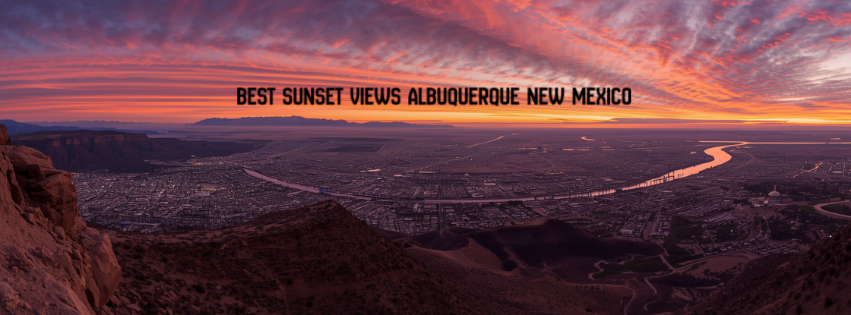
There is no view in Albuquerque that competes with the Sandia Peak at sunset — and the specific experience of being at 10,378 feet as the sun drops behind the extinct volcanoes on the western horizon is one of the most extraordinary things available to anyone standing anywhere in New Mexico.
From the Crest, you are looking down at the city from 5,000 feet above it. The Rio Grande is a silver thread running north to south through the valley. The city grid is visible in full. The volcanic West Mesa stretches to the Jemez Mountains on the horizon. The sky above is a deeper blue than it is from the valley — the thin air at altitude produces the specific deep-sky color that aerial photographs rely on. And as the sun drops, the light changes in ways that move faster than you expect at altitude: the city lights begin to emerge while the sky is still orange, creating a brief window when you can see both simultaneously — the sunset and the city lights, layered across the same view.
"From an elevation of 10,000 feet, you'll get a panoramic view of the lights in the city below and the sun setting behind the ancient volcanoes in the west. The view alone is worth it, but to reach the Peak, you'll also get to travel on the second longest aerial tramway on the planet," confirmed the Visit Albuquerque photographer's guide. The TEN3 restaurant and bar at the summit is where photographer Ian Shaw specifically recommends the Alpine Martini with the sunset — the bar does not require reservations, and the combination of altitude, cocktail, and the most dramatic view in the city is precisely as good as it sounds.
Timing guidance: arrive via tramway approximately 90 minutes before sunset. Walk to the Crest viewpoint. Watch the light change on the mountains first — the Sandias turn pink before the sun actually sets — then watch the full sunset from the summit or from TEN3. Take the tram back down in the dark and watch the city lights rise to meet you from 10,000 feet on the descent. It is a four-hour experience that most people describe as one of the better evenings of their lives.
Practical: Tramway tickets run approximately $35 per adult and should be booked in advance for popular sunset times. The summit runs 25-30 degrees cooler than the city. Bring a warm layer regardless of how warm it was at the base. TEN3 dinner reservations book weeks out — the bar is walk-in.
2. Sandia Crest Via the Byway — The Drive That Builds the View
The eastern approach to Sandia Crest via the Sandia Crest Scenic Byway — Highway 536 from Highway 14 — produces a fundamentally different viewing experience from the tramway ascent: thirteen miles of gradually escalating elevation through five climatic zones, with viewpoints at multiple points along the way that face east over the Estancia Valley and the distant mountains of southern New Mexico.
The view from the Crest's east face is the inverse of the city panorama: instead of Albuquerque and the Rio Grande valley, you are looking down the eastern slope of the Sandia range across the Estancia Basin toward the Manzano Mountains. On the clearest days — typically in autumn and early spring after frontal systems clear the air — the view extends to the Sacramento Mountains near Ruidoso, 150 miles south.
For photographers specifically: the Kiwanis Meadow overlook approximately two-thirds of the way up the Byway is where the limestone and granite formations of the east face are most dramatically lit in morning light. The Crest itself, in afternoon light, is the composition point for the east-face and valley views. Sunrise on the Byway, when the first light catches the granite formations and the aspens are turning in September, is among the most photographically productive experiences in the greater Albuquerque area.
The Sunrise Spots — Where the Light Starts Before Anyone Else Is Watching
3. Oxbow Bluff — The Photographer's Best-Kept Sunrise Secret
Oxbow Bluff is not on most Albuquerque tourist maps, which is precisely why photographers who know about it guard the information with a certain possessiveness.
"For an incredible view overlooking the river with Downtown Albuquerque to the right, set up your photography equipment at Oxbow Bluff. This is my absolute favorite spot for sunrise," confirmed photographer Ian Shaw in the Visit Albuquerque photographer's guide. The specific composition that Oxbow Bluff enables — the Rio Grande and its bosque cottonwood canopy in the foreground, the Albuquerque skyline visible to the right, and the Sandia Mountains catching the first light to the east — is a layered landscape composition that the more accessible viewpoints in the city cannot produce.
The site sits on elevated ground west of the Rio Grande, providing the elevated western vantage point that most Albuquerque viewpoints do not offer. At sunrise, the light comes from behind the Sandias — illuminating the mountains before it reaches the valley floor — creating a sequence of lighting conditions that changes every few minutes and rewards patience and preparation.
Timing: arrive 30 minutes before sunrise. The transition from pre-dawn blue to the first light on the Sandias happens fast, and the Oxbow Bluff composition is at its best in the 10 to 15 minutes immediately after the sun clears the mountain horizon. Bring a tripod. The low light and the desire to capture the moving water of the Rio Grande at a slow shutter speed make stable support essential.
4. Elena Gallegos Open Space at Dawn — The Foothills Before the Crowds
Elena Gallegos Open Space at the base of the Sandia foothills opens at 7am — but the gate to the parking area opens earlier, and photographers and serious hikers arrive before official opening to be on the trails when the first light hits the granite formations.
"Elena Gallegos Open Space is an easy-to-access recreation space located just on the eastern edge of Albuquerque. A highlight here is the glimpse of the Manzano Mountains and the rocky outcrops on the slopes," confirmed the Hotels.com viewpoints guide for Albuquerque. The specific visual at Elena Gallegos that is hardest to communicate before you experience it: the scale of the Sandia Mountains from directly below their western face. You are not looking at the mountains from a distance — you are at their base, looking up at granite formations that rise 4,000 feet above your head within the next mile.
The Elena Gallegos trails connect directly to the Pino Trail, which climbs into the Sandia foothills through piñon and juniper — providing escalating views of the city spreading westward as elevation increases. The city panorama view from the first mile of the Pino Trail is one of the best in Albuquerque at the foothills elevation, before the higher and more dramatic positions of the upper mountain require significantly more effort.
Elena Gallegos is also one of Albuquerque's official wedding venues — the open-air pavilion and the mountain backdrop create a setting that photographers consistently describe as requiring minimal effort to make extraordinary. The site is popular for engagement photographs specifically because the combination of mountain, desert landscape, and golden hour light produces results that couples from more densely developed cities often describe as unlike anything available near their home.
5. Balloon Fiesta Park at Dawn — Five Hundred Balloons Against the Sandias
During October 3 through 11, 2026, the International Balloon Fiesta provides the most extraordinary photographic subject available in any American city during any annual event: hundreds of hot air balloons ascending simultaneously against the Sandia Mountains in the first light of morning.
The Dawn Patrol launches before sunrise — a handful of balloons carrying light rigs ascending in the dark to test the winds, their burners visible as columns of flame against the black sky. The mass ascension follows as the sun rises: balloon after balloon launching in waves, the Sandia Mountains catching pink and orange light behind the ascending field, the specific colors of hundreds of individual balloon designs filling every quadrant of the sky at once.
For photographers, the Balloon Fiesta presents a specific challenge: there is too much to photograph, and the tendency to chase the widest possible shot loses the intimate human detail that makes individual balloon photographs memorable. The most compelling Fiesta photography combines wide environmental shots — hundreds of balloons with the mountains — with close detail work: the inflation process, the burner light on the pilots' faces, the envelope fabric backlit by the balloon's interior flame. Both require being on the ground among the balloons rather than watching from the spectator perimeter.
Outside of Fiesta season, Balloon Fiesta Park provides an elevated north-city viewpoint with clear sightlines to the Sandias that is particularly clean in the morning light of spring and fall.
The Sunset Spots — Where the Day Ends Best in Albuquerque
6. Apothecary Lounge at Hotel Parq Central — The Civilized Sunset
The Apothecary Lounge on the rooftop of Hotel Parq Central in the EDo neighborhood is where photographer Ian Shaw takes the evening off from field work and lets the city's view come to him.
"If you want to take photos over Downtown Albuquerque and also enjoy a very well-made adult beverage, head to the Apothecary Lounge. Situated on top of Hotel Parq Central, this is not only my favorite bar in the city but also my favorite view of Downtown at sunset. Order yourself an old fashioned or a local beer, find a seat with a view — they all have views — and enjoy the most relaxing sunset shoot of your photography career," confirmed the Visit Albuquerque photographer's guide.
The Apothecary Lounge faces west, which means the sunset happens in front of you rather than behind — the most useful orientation for photographing the sky rather than photographing a silhouette. The Sandia Mountains are visible to the east, providing the specific New Mexico bonus of watching the mountains turn pink while the sun sets in front of you. Hotel Parq Central itself — a converted 1920s psychiatric hospital with preserved Art Deco details — is architecturally interesting enough that the rooftop setting adds character to environmental photographs that a purpose-built rooftop bar cannot.
Reservation guidance: the bar is walk-in, no reservations required. The restaurant requires advance booking. Arrive 45 minutes before sunset to secure a seat with a clear western view. The bar staff are accustomed to photography and accommodating about it — but as the guide notes, asking is appropriate courtesy, particularly for tripod use in a busy bar setting.
7. West Bluff Park — The Elevated Rio Grande Sunset Panorama
West Bluff Park sits on an elevated plateau on the west bank of the Rio Grande — providing the view that most Albuquerque viewpoints cannot offer because they are east of the river and facing east toward the mountains. West Bluff faces east as well, but from the opposite bank, which means the city and the mountains are both in the same frame — the Albuquerque skyline in the middle ground, the Sandia Mountains filling the eastern sky behind it.
"West Bluff Park, located on an elevated plateau at the banks of the iconic Rio Grande river, gives you a total overview over the area. This recreational space overlooks the Rio Grande, downtown Albuquerque, and the Manzano Mountains in the distance. At the end of a paved pathway, a gazebo overlooks the city with the mountains towering in the background. Every day is different, thanks to the way clouds shape and paint the sky with the colors of the sun," confirmed the Hotels.com viewpoints guide for Albuquerque.
The gazebo at the end of the paved pathway is the composition point for this view — elevated above the Rio Grande bosque with the full city-and-mountain panorama visible. The Manzano Mountains to the southeast add a second mountain range to the composition that the Sandia-facing views do not include. At sunset, the city and both mountain ranges are lit simultaneously by the same western light source, creating the layered landscape composition that is the most characteristic Albuquerque view for photographers who understand what the city's geography actually provides.
8. Rinconada Canyon at Petroglyph National Monument — Desert and Volcanic Sunset
Rinconada Canyon, in the southern section of Petroglyph National Monument, faces west over the volcanic mesa toward the Jemez Mountains — which means the entire western horizon is open at sunset, and the volcanic cones visible in the northern distance catch the last light of the day in colors that the desert basalt amplifies rather than absorbs.
The specific photograph available in Rinconada Canyon at sunset that no other Albuquerque location produces: a 700-year-old petroglyph in the foreground, the volcanic mesa stretching to the horizon behind it, the Jemez Mountains lit in deep orange and red in the distance. The combination of human history (the petroglyphs), geological time (the lava field), and the daily natural event of the New Mexico sunset creates an image with more layers of meaning than any straight landscape photograph can contain.
The canyon is free to enter, accessible until dark in the warmer months, and consistently quieter than the Boca Negra Canyon unit to the north. Dogs on leash are welcome. The flat trail through the canyon requires no technical skill but rewards the willingness to walk to the far end, where the petroglyph concentration is highest and the western view is most open.
The Everyday Views — The Scenic Spots That Albuquerque Residents Use Without Ceremony
9. Tramway Boulevard NE at Dusk — The View From the Commute
Tramway Boulevard NE runs along the base of the Sandia Mountains through the northeastern edge of the city — and at the specific points where the road rises above the surrounding neighborhood elevation, the view west over Albuquerque is as dramatic as anything accessible from a designated viewpoint.
The combination of the Sandia Mountains immediately behind (east) and the full city panorama ahead (west) from Tramway at dusk — when the city lights are beginning to emerge and the mountains are catching the last of the sunset light — is what Northeast Heights residents experience on evening drives without thinking of it as a scenic event. For visitors and first-time residents, driving north on Tramway toward the Paseo del Norte intersection in the late afternoon produces the mountain-at-full-scale experience that makes them stop and take photographs from the shoulder.
There is no formal pullout or viewpoint on Tramway — the view is simply what the road provides as a function of its elevation and orientation. This is one of the defining characteristics of Albuquerque's scenic landscape: some of the best views are incidental, available to anyone driving the right road at the right time of day.
10. The Bosque Trail — October Morning Light Through the Cottonwoods
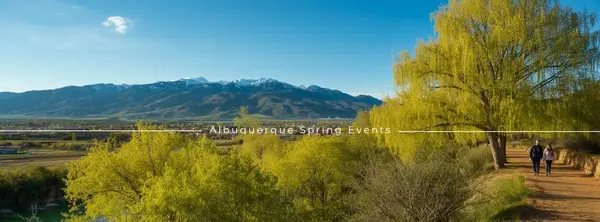
The Paseo del Bosque Trail through the Rio Grande cottonwood forest is, for most of the year, a pleasant urban trail with dappled light and occasional bird sightings. In the last two weeks of October, when the cottonwoods reach peak color, it becomes something genuinely extraordinary.
The specific visual at peak cottonwood color: the trail corridor is surrounded by canopy that has turned from green to gold — not the deep orange of New England maples, but the specific amber-gold of New Mexico's Fremont cottonwoods, which transmit light rather than blocking it, so the entire canopy glows from within when backlit by morning sun. The Rio Grande is visible through the trees, dark against the luminous leaf color. The Sandia Mountains, through gaps in the canopy, provide the eastern backdrop.
This is the photograph that Albuquerque residents who have lived here for years still stop to take in October. The cottonwood peak is brief — typically 10 to 14 days — and the timing varies by year based on temperature and rainfall. Locals follow the color progression obsessively in the weeks before and after. For visitors who can time their trip to coincide with peak cottonwood color, the bosque in late October is the visual experience that most frequently prompts the Albuquerque Reveal — the moment where a visitor's assessment of the city shifts from positive to something more like longing.
11. Foothills Trail at Sunset — The City From Above on the Way Down
Any of the Albuquerque Foothills trails — the Embudo Trail, the La Luz approach, the Pino Trail — provides the specific sunset experience that the northeast city's residents access casually: hiking down from elevation as the city lights come on below, watching the sunset paint the sky ahead (to the west) while the mountain darkens behind (to the east).
The timing makes the experience: begin the descent from any elevated foothills position 45 to 60 minutes before sunset. The city is in afternoon shadow at this point, and the mountains above are in full sun. As the sun drops, the light on the city changes — the golden hour light sweeping across the valley floor, the glass buildings in the Uptown and Downtown corridors catching and reflecting the color. By the time you reach the trailhead, the city lights are fully visible and the mountains have gone to silhouette against a deeply colored western sky.
This is the daily routine of the Northeast Heights outdoor lifestyle — the sunset hike down, the city lights coming on below, the mountain closing behind. Residents describe it as the thing they would miss most if they ever left. For visitors, it is the experience that most directly communicates what it would actually feel like to live here.
The Balloon Fiesta Views — Photographic Conditions Unlike Anything in American Cities
12. The Mass Ascension From Inside the Field — The Shot That Changes Everything
The International Balloon Fiesta is the most photographically productive event available anywhere in the American Southwest, and the specific viewpoint that produces the most memorable photographs is not from the spectator perimeter — it is from within the launch field, among the balloons during the inflation process, looking up at envelopes sixty feet in diameter as they fill with air and light.
Access to the launch field is general admission — not restricted to photographers or press — and the inflation process begins in the hour before the mass ascension. Walking among the balloons during inflation, watching the crew teams work, photographing the envelope fabric backlit by the morning light as the balloon rises, is the immersive experience that the Fiesta provides and that no other event replicates.
The mass ascension itself — when the launch director waves the field open and hundreds of balloons begin lifting simultaneously — is the moment that produces the wide environmental photograph. From within the field, looking up at the ascending balloons against the Sandias, the scale is impossible to communicate until experienced. Looking outward from the field at the full sky filled with balloons in all directions is the image that most photographs fail to convey — because the sky is genuinely filled, 360 degrees, and no lens captures the full experience of standing inside that.
Practical Photography Guidance for Albuquerque — What the Light Requires
Understanding New Mexico's Golden Hour
The golden hour in Albuquerque is longer and more intensely colored than in lower-elevation, more humid environments. The thin, dry air produces less atmospheric scattering during the golden hour transition, which means the warm light is purer and more directional than at sea level. Shadows are harder-edged. Colors are more saturated. The light that looks like it should last 20 minutes lasts 35.
This has specific implications for photography planning. The best light for landscape photographs of the Sandia Mountains is not at sunset — it is in the hour before sunset when the sun is still above the horizon but low enough to illuminate the mountain's western face at the angle that produces maximum depth and texture in the granite formations. By actual sunset, the mountains are often in shadow while the sky behind them is most colorful — the juxtaposition that makes Albuquerque sunset photographs distinctive.
The Monsoon Season — August Light Is Different From Every Other Month
The North American Monsoon arrives in Albuquerque in late June or early July and runs through mid-September, bringing afternoon and evening thunderstorms that transform the photographic conditions in ways that no other season produces. The cumulus clouds that build over the Sandia Mountains during monsoon afternoons are visually extraordinary — towering anvil-topped formations in a deep blue sky, often lit by lightning from within during the evening hours.
The specific photograph available only in monsoon season: a developing thunderstorm over the Sandia Crest, backlit by the afternoon sun, with the desert floor in full sun below the storm shadow — the specific contrast between illuminated desert and storm cloud that New Mexico's landscape makes possible because the terrain changes elevation so dramatically within a short distance.
After-storm light — the 20 to 30 minutes after a monsoon cell passes, when the air is washed clean and the remaining clouds catch the low-angle sun — is the condition that produces the most intensely colored sky photography available in Albuquerque. Photographers who specifically come for the monsoon season find conditions in August and September that are qualitatively different from the rest of the year.
Why the Views Matter for Buyers — The Connection Between Scenery and Real Estate
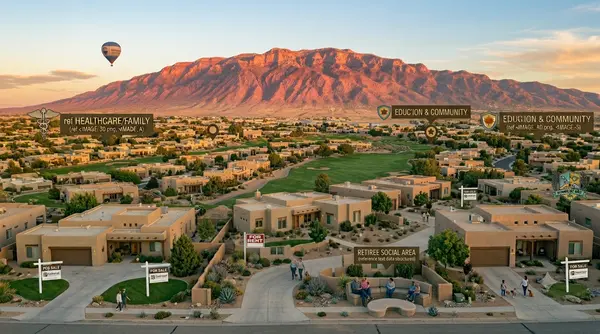
The scenic spots covered in this guide are not randomly distributed across the city. They cluster in the same neighborhoods that Albuquerque's most desirable residential areas occupy — which is not a coincidence. The neighborhoods with the best daily access to these views are the neighborhoods where residents most consistently report the highest satisfaction with their living environment.
The Northeast Heights foothills — home to the Foothills Trail, Elena Gallegos, and daily proximity to the Sandia Crest — are the neighborhoods where residents describe the morning hike as the non-negotiable foundation of their daily routine. The North Valley and bosque trail corridor is where October cottonwood walks are a seasonal ritual. The positions along Tramway Boulevard where the dual mountain-and-city view is most open are the addresses that command premiums specifically because of what they face.
The buyers who understand this connection — who evaluate neighborhoods partly by what the daily view conditions look like from those neighborhoods at different times of day and different seasons — consistently make purchases they remain satisfied with over time. The buyers who treat view as a secondary feature and prioritize other criteria often discover, after a few years in their home, that the view was what they should have prioritized first.
For buyers who want to understand which Albuquerque neighborhoods put the best views closest to daily life, our guide to Albuquerque neighborhoods covers every major area with the lifestyle and location context that makes sense of the scenic differences between them. And our post on the best places to visit in Albuquerque for stunning desert and mountain views extends the visual tour across the full range of Albuquerque's scenic landscape.
The Bottom Line — The Light Is Why People Stay
Every person who lives in Albuquerque long-term has a story about a specific moment when the light did something they had never seen before — a sunset that ran so deep red it looked impossible, a morning when the Sandias turned pink faster than expected, a monsoon storm that produced a double rainbow over the West Mesa while the city below it was still in full sun.
These are not exceptional events. They are the normal behavior of the light in this specific place at this specific elevation in this specific climate. The light here is reliably extraordinary in a way that visitors from more moderate-climate cities find disorienting until it becomes familiar.
The scenic spots in this guide are where to go to encounter that light deliberately. But the honest local truth is that you do not have to go anywhere specific. Park facing west at 6pm on any evening when clouds are present. Pull to the side of Tramway Boulevard for 90 seconds. Walk two blocks east in any Northeast Heights neighborhood and face the mountain. The light will find you. In Albuquerque, it always does.
Thinking About More Than a Visit?
Jenn & Vinay from The Rodgers Neighborhood Real Estate Group help people find homes in Albuquerque every week — many of them visitors who drove Tramway at sunset for the first time, or watched the Sandias turn pink from a rooftop bar, or took the tram to the Crest at dusk and came back calculating what it would cost to live within five minutes of that experience every single day. If that is where you are, we are exactly the right conversation.
Jenn & Vinay Rodgers are Albuquerque's trusted real estate professionals with The Rodgers Neighborhood Real Estate Group, brokered by Real Broker, LLC, serving buyers and sellers across Albuquerque, Rio Rancho, Corrales, Los Lunas, Tijeras, Cedar Crest, Sandia Park, the East Mountains, Bernalillo County, Sandoval County, and surrounding New Mexico communities.
The Rodgers Neighborhood Real Estate Group
Jenn & Vinay Rodgers
Real Broker, LLC
Albuquerque, NM
📞 505-417-2733
🏠 Browse Albuquerque homes with viewsCategories
- All Blogs (263)
- 2026 & Beyond for Real Estate (161)
- Doctors and Nurses looking for homes in NM (4)
- Guide to buying a home in NM (123)
- Health Care Heros (6)
- Home Upgrades (25)
- Jenn & Vinay your Local Real Estate Experts! (86)
- Moving to Albuquerque (100)
- Neighborhoods in Albuquerque NM (73)
- Rent or Own (2)
- Sellers Questions for Selling homes (2)
Recent Posts




GET MORE INFORMATION