
The Best Albuquerque Areas for Future Real Estate Growth
Future real estate growth is not magic. It is the output of specific, identifiable catalysts — employer expansions that create jobs that need housing, infrastructure investments that improve access and thereby raise land value, urban renewal projects that convert underutilized areas into destinations, and demographic shifts that bring new buyer populations to previously overlooked neighborhoods.
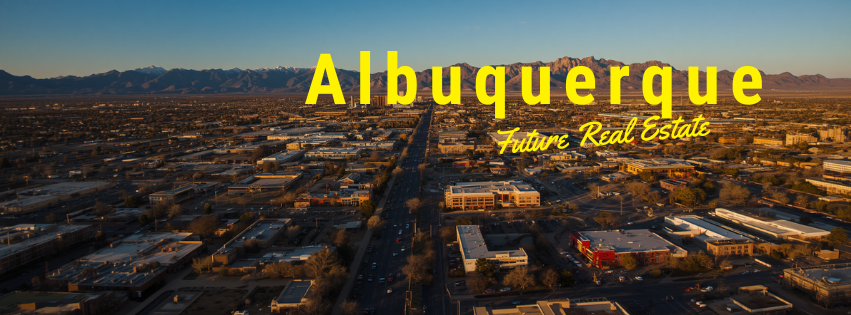
Albuquerque in 2026 has all four types of catalyst operating simultaneously in different parts of the city. This guide covers the specific growth areas, organized by catalyst type, with the documented evidence for each growth case rather than speculative neighborhood enthusiasm.
The Citywide Growth Foundation — Before the Neighborhood Analysis
"New construction is expected to continue at a steady pace, but Albuquerque builders are not overbuilding like some other Sunbelt markets. After several years of unusually high appreciation in 2020-2022, price growth has moderated. For 2026, expect moderate sales activity, modest appreciation, and a market that feels slower than the peak years but healthier and more sustainable," confirmed Norada Real Estate's Albuquerque housing market analysis (November 2025). The citywide forecast: 2-3% appreciation for 2026, with entry-level ($300K and below) showing the most competition.
The long-term growth foundation: WalletInvestor's algorithmic forecast projects the Albuquerque median home price at $395,503 by 2031 — a +16.9% gain from the current $338,329 median listing price — confirmed by WalletInvestor's Albuquerque real estate forecast. NeighborhoodScout's 10-year track record: 94.59% cumulative appreciation, 6.88% annual average. The citywide growth trend is positive and sustained. The neighborhood-level question is which areas will outperform that citywide baseline.
The growth areas in this guide are organized by the type of catalyst driving future appreciation:
- Tier 1 — Infrastructure-led growth: Areas where specific, documented employer expansions or infrastructure investments are creating durable demand.
- Tier 2 — Urban renaissance: Areas where active investment in urban renewal infrastructure is at the visible, demonstrable stage that precedes residential appreciation.
- Tier 3 — Established appreciation compounding: Areas with proven long-term appreciation records where rate-relief will release the largest sidelined buyer pools.
- Tier 4 — Value discovery: Areas that are not yet widely recognized as growth candidates but where the foundational appreciation drivers are present at entry-level pricing.
TIER 1 — Infrastructure-Led Growth
The Growth Areas Where the Employer Expansion Is Already Happening
Rio Rancho / Intel Fab 11X Corridor — The Most Documented Employment Growth in the Metro
Growth driver: Intel's $3.5 billion Fab 11X expansion | Population growth: 8.1% (2020-2024) | Job growth: Thousands of engineering and technical roles
Rio Rancho's growth case is the most straightforwardly employment-driven in the Albuquerque metro, and it is operating right now with confirmed, funded capital investment. The Intel Fab 11X expansion — a $3.5 billion investment in the most advanced semiconductor manufacturing in the country — creates thousands of direct employment positions at $90,000-$150,000+ starting salaries. Each new job creates approximately 2-3 indirect jobs in the supporting economy. The total employment impact compounds through the housing market as each household either rents or buys.
The Rio Rancho housing market's response to this employment pressure: 8.1% population growth over 4 years, consistently above Albuquerque proper's slight population decline (-0.8% since 2020). Population growth is the foundational demand driver of residential real estate. When one city is growing at 8.1% and the adjacent city is slightly declining, the growing city is where employment-driven housing demand is concentrating.
The future growth timeline: Intel's expansion is phased over multiple years. The ramp-up of manufacturing at Fab 11X means the full employment effect will materialize over 3-5 years from the expansion's initiation. The buyers and renters who enter the Rio Rancho residential market now are entering before the full employment demand has materialized — which is the specific timing that produces above-market appreciation as the employment impact accumulates.
- Best sub-markets within Rio Rancho: The Cabezon community (Intel-proximate, family-oriented), Loma Colorado (established quality, Intel commute), and the newer development corridors in northern Rio Rancho that offer new construction at competitive prices.
- Price range for growth-positioned entry: $265,000-$380,000 for single-family; $250,000-$290,000 for the most affordable entry into the growth corridor.
Mesa del Sol — The Long-Anticipated Catalyst Finally Materializing
Growth driver: Netflix 300-acre expansion (1,000 jobs, 10 new sound stages); Fidelity Investments expansion; Kairos Power; $8M University Blvd infrastructure; new fire station | Development stage: Active
Mesa del Sol's growth case has been discussed and anticipated for longer than any other area in this guide — the master-planned community broke ground in 2005, and the full vision has been developing at varying rates ever since. What makes 2026 different from the previous years of Mesa del Sol anticipation: the employer expansion news is specific, current, and funded. Netflix's 300-acre campus expansion is not a developer's projection — it is an announced, funded capital investment by a company that already employs nearly 4,000 people at the existing facility.
The growth mechanism: Netflix expansion → 1,000 new creative and technical jobs → new residents needing housing → increased residential demand in the adjacent Mesa del Sol communities and the broader southern Albuquerque corridor. The mechanism is documented and direct.
The growth risk that must be stated honestly: Mesa del Sol has been 21 years in development and the full vision is still decades from completion. The growth case in 2026 is specifically stronger than it has been in most prior years because of the Netflix announcement — but the buyer entering Mesa del Sol should still understand this as a 10-20 year investment horizon rather than a 3-5 year appreciation play.
- Price range: $300,000-$410,000 for new construction in the Montage subdivision. The most accessible entry into the employer-anchored southeast Albuquerque growth corridor.
The I-25 Gibson Interchange / Kirtland Corridor — Fall 2026 Catalyst
Growth driver: I-25 Gibson Interchange improvement project completing Fall 2026 | Catalyst type: Infrastructure access improvement
The I-25 Gibson Interchange completion — scheduled for Fall 2026 — is the most specifically timed infrastructure catalyst in the Albuquerque metro: a confirmed completion date on a specific improvement that directly improves access to the Kirtland AFB employment corridor and the Gibson Boulevard commercial and employment spine.
The infrastructure-to-value mechanism: improved traffic flow → reduced commute friction → increased desirability of adjacent residential neighborhoods → increased demand → price appreciation. This sequence is well-documented in comparable infrastructure improvement projects. The properties positioned closest to the corridor's improved access points — the Southeast Albuquerque and Gibson Blvd residential areas — benefit most directly.
The timing opportunity: the most favorable entry point for infrastructure-catalyst appreciation is before the improvement completes, when the current congestion is still being priced in and the future access improvement is not yet reflected in residential prices. Buyers entering the Gibson corridor before Fall 2026 are entering before the catalyst delivers.
TIER 2 — Urban Renaissance Growth Areas
Where Active Public and Private Investment Is Visibly Transforming Character
Sawmill Arts District and East Downtown — The Rail Trail Corridor
Growth driver: Rail Trail pedestrian/cycling infrastructure (active); Sawmill Market destination anchor (operating); Rail Yards National Historic Landmark adaptive reuse (in progress) | Stage: Early visible transformation
"Neighborhoods on the cusp of development, such as Sawmill and Wells Park, are catching the attention of investors and first-time homebuyers. They strike a balance between affordability and potential for growth, underlined by improvements in transportation and commercial investments," confirmed Steadily's Albuquerque real estate market overview (January 2026).
The Sawmill Arts District growth case in 2026 is at the most important inflection point in neighborhood transition: the anchor amenities have been established (Sawmill Market is a functioning destination, not a promise), the infrastructure is active (Rail Trail is used daily), and the adaptive reuse of the Rail Yards is advancing. These are the specific observable leading indicators that urban neighborhood transitions run through before the residential price appreciation becomes visible in transaction data.
The appreciation timeline: urban neighborhood transitions from this infrastructure stage to measurable residential appreciation typically run 5-10 years. Buyers entering the Sawmill corridor in 2026 are entering in the early-to-middle stage of a transition that the infrastructure investment has confirmed. The risk is timeline uncertainty; the reward is entry pricing that reflects the current stage rather than the future stage.
- Price range for growth-positioned entry: $180,000-$380,000 depending on property condition and specific block. The widest price range of any neighborhood in this guide reflects the transition-stage variation.
- Best for: Buyers with 7-12 year holding horizons, tolerance for transition-stage neighborhood character, and the financial stability to hold through the timeline uncertainty.
Downtown Albuquerque — The Slow Renaissance With Real Progress
Growth driver: Innovate ABQ technology hub (operational); ART transit corridor (running); Route 66 centennial 2026 programming; Route 66 Remixed installations; new retail development (Cottonwood Corners, Park Square, Lobo Crossing at UNM South Campus); ongoing apartment development
Downtown Albuquerque's renaissance is the oldest ongoing transition narrative in the metro — and in 2026, it is at a stage where the observable progress is substantial even if the full transformation is still decades away. The Innovate ABQ tech hub is operational and producing startup community. The ART transit corridor is running. New retail development is confirmed. The Route 66 centennial's Central Avenue programming is bringing national attention to the corridor.
The downtown buyer profile: the empty nester or young professional who specifically wants urban proximity, ART transit access, and the creative community energy that is building in the Innovate ABQ/Sawmill/EDo corridor. This buyer profile is a growing demographic nationally — the aging baby boomer who is trading the Northeast Heights suburban home for a downtown condominium; the remote worker from a West Coast city who needs the cultural energy that suburban Albuquerque does not provide.
- Price range: $250,000-$500,000 for converted lofts, condos, and single-family within the downtown corridor.
- Best for: Urban lifestyle buyers, ART transit commuters, investors serving the professional renter demographic that the Innovate ABQ ecosystem is drawing.
TIER 3 — Established Appreciation Compounding — The Rate-Relief Acceleration Candidates
Where the Sidelined Buyer Pool Will Produce the Most Concentrated Demand Release
The Northeast Heights La Cueva Zone (87111) — The Deepest Sidelined Pool
Growth driver: Rate relief → conversion of sidelined buyer pool | Rate-relief appreciation projection: 4-5% (Norada) | Sidelined pool depth: Largest of any single Albuquerque neighborhood cluster
The Northeast Heights La Cueva zone is the most rate-sensitive appreciation candidate in the metro. The school zone premium creates a consistently deep buyer demand pool — families who specifically want La Cueva zone access and who are financially qualified but monthly-payment constrained at current rates. When rates decline, this pool enters the market, and the La Cueva zone is the first and most concentrated beneficiary.
The future growth mechanism: rate decline → qualified family buyers re-enter → La Cueva zone inventory is absorbed faster than it lists → price appreciation. The timing is rate-dependent, but the mechanism is the most clearly articulated of any growth case in Albuquerque because the buyer pool is the most specifically identifiable.
- Price range for growth entry: $320,000-$500,000 for single-family in the La Cueva zone (87111 primarily). Entry at the lower end of this range positions the buyer ahead of the sidelined pool's conversion.
- Timeline: Rate-dependent. With 0.5-1.0% rate decline, the acceleration can materialize within 6-18 months. Each 25-basis-point rate decline adds approximately 2,500-3,000 qualifying buyers nationally per 100 basis points (NAHB data) — the La Cueva zone captures a specific and identifiable portion of that release.
The Northeast Heights Foothills (87122) — The Supply-Constrained Premium Compounder
Growth driver: Geographic supply constraint (Sandia Wilderness boundary is permanent); out-of-state cash buyer concentration; La Cueva zone + mountain access premium | Appreciation above market: Documented in 2026 ($731K→$738K ceiling)
The 87122 foothills zone is not growing in the sense that its residential footprint is expanding — it cannot. The Sandia Mountain Wilderness boundary is the eastern limit of development, and that limit is permanent. What grows is the premium on the existing supply as the desirability of the foothills address increases.
The future growth case: as the comparison to California and Colorado prices becomes more widely understood, the specific combination of Sandia foothills trail access, La Cueva school zone, and the mountain views available at $700,000 in Albuquerque vs. $2.5M+ in comparable California mountain communities produces a value gap that will continue narrowing. The California equity buyer who discovers North Albuquerque Acres and pays $850,000 for what their California home would have required $3M to replicate is the specific buyer who sustains and advances the 87122 premium.
Nob Hill — The Route 66 Centennial Visibility Catalyst + Walkability Demographic Shift
Growth driver: Route 66 centennial 2026 national visibility; demographic shift toward walkability premium; remote worker in-migration from walkable origin markets | Current appreciation: At market (2-3%); projected with rate relief: 4-5%
Nob Hill's future growth case operates on two simultaneous catalysts: the Route 66 centennial's 2026 national spotlight on Central Avenue producing the specific public recognition of Nob Hill's unique character that typically precedes real estate interest; and the long-term demographic shift toward walkable neighborhoods as baby boomers downsize and remote workers from walkable coastal cities relocate.
Nob Hill's Walk Score 85 is a genuinely scarce resource in Albuquerque's car-dependent market, and the supply of walkable Nob Hill residential addresses is fixed by the neighborhood's established built environment. As the demand for walkability increases — and it is increasing nationally through both demographic aging and remote worker relocation — the supply of walkable Albuquerque addresses does not. The walkability premium is compounding.
TIER 4 — Value Discovery Growth Areas
Where the Foundational Drivers Are Present at Entry-Level Pricing
Los Lunas / I-25 South Corridor — Pre-Investor Discovery
Growth driver: Albuquerque employment proximity via I-25; local employment base expanding (I-25 Industrial Park); affordable pricing not yet investor-influx-affected | Stage: Pre-discovery
Los Lunas — Valencia County's seat, 30 miles south of Albuquerque on I-25 — is the Albuquerque metro's most under-discovered growth opportunity. The commuter workforce that accepts the 30-minute I-25 drive in exchange for housing that costs $50,000-$100,000 less than comparable Albuquerque properties represents a documented and persistent demand base. The local employment base is growing. And the California and Colorado investor capital that has entered Albuquerque has not yet systematically entered Los Lunas.
The window: investor-influx pricing is the specific event that converts an under-discovered market's pricing to market-recognized pricing. Once investor interest is widely documented in the media and analyzed in investment platforms, the entry-point advantage narrows. The Los Lunas window is open in 2026; its duration is uncertain.
- Price range: $200,000-$285,000 for single-family. The most affordable entry in any growth market within 30 minutes of Albuquerque's employment base.
West Side Volcano Cliffs / Petroglyph-Adjacent — The Monument Adjacency Still Undervalued
Growth driver: Petroglyph National Monument permanent federal protection (western boundary can never develop); 283-unit apartment approval confirming rental demand density; $370K median already above citywide | Stage: Early recognition
The Petroglyph National Monument's permanent protected status creates the most durable single appreciation driver for the adjacent Volcano Cliffs residential communities: a western boundary that will never be developed, a permanent open space adjacency premium that the California and Colorado buyer specifically values, and confirmed rental demand density (the 283-unit apartment approval) at a price tier that still offers below-Northeast-Heights acquisition costs.
The future growth case: as out-of-state buyers from California and Colorado specifically research Albuquerque's permanent open space adjacency opportunities, the Petroglyph monument boundary communities become more widely recognized as the specific Albuquerque equivalent of the coastal California hillside view lots or the Colorado mountain-view neighborhoods that the incoming buyer cannot afford to replicate in their origin market.
- Price range: $280,000-$420,000 for single-family in the Volcano Cliffs and monument-adjacent communities.
The Honest Risk Framework — What Can Prevent Future Growth From Materializing
Any honest future growth guide must include the specific risks that can prevent growth from materializing:
- Intel expansion timeline slippage: The semiconductor industry's capital investment timelines are subject to technology, market, and regulatory factors. If Intel's Fab 11X expansion is delayed, reduced, or restructured, the employment-driven demand in Rio Rancho is directly affected.
- Rates staying high: If mortgage rates stay at 6.30%+ through 2027-2028, the rate-relief catalyst for the La Cueva zone and Nob Hill does not materialize on the projected timeline.
- Urban transition timeline uncertainty: Sawmill District and Downtown transitions have 5-10 year historical precedents. They can be delayed by economic cycles, political changes, or developer execution failures. The buyer entering these areas must be prepared for the full range of timeline scenarios.
- New construction competition in Rio Rancho: Active builder presence in Rio Rancho means resale appreciation is moderated by new supply competition. The Rio Rancho appreciation story is real but is not the unconstrained appreciation that supply-constrained geographies produce.
- Crime concentration risk in transitioning urban areas: The Sawmill District and Downtown transition areas have higher crime rates than the established Northeast Heights. The transitioning neighborhood buyer is accepting a specific crime environment risk that requires specific neighborhood-level research before purchase.
The Growth Area Quick Reference — Catalyst and Timeline Summary
- Rio Rancho Intel corridor: TIER 1 | Catalyst: $3.5B Intel expansion, 8.1% population growth | Timeline: 3-7 years | Risk: Low (employment confirmed)
- Mesa del Sol: TIER 1 | Catalyst: Netflix 300-acre expansion, city infrastructure | Timeline: 10-20 years | Risk: Moderate (21-year development history)
- I-25 Gibson / Kirtland Corridor: TIER 1 | Catalyst: Fall 2026 interchange completion | Timeline: 1-3 years | Risk: Low (infrastructure confirmed)
- Sawmill / East Downtown: TIER 2 | Catalyst: Rail Trail, Sawmill Market, Rail Yards | Timeline: 5-10 years | Risk: Moderate (transition uncertainty)
- Downtown Albuquerque: TIER 2 | Catalyst: Innovate ABQ, ART, Route 66 centennial | Timeline: 7-15 years | Risk: Moderate-high (long-horizon urban)
- NE Heights La Cueva zone: TIER 3 | Catalyst: Rate relief → sidelined buyer release | Timeline: Rate-dependent (6-24 months) | Risk: Low (school zone demand durable)
- NE Heights Foothills 87122: TIER 3 | Catalyst: Supply constraint + out-of-state equity buyers | Timeline: Ongoing | Risk: Low (geographic constraint permanent)
- Nob Hill: TIER 3 | Catalyst: Route 66 centennial + walkability demographic | Timeline: 2-5 years | Risk: Low-moderate (demographic trend reliable)
- Los Lunas: TIER 4 | Catalyst: Under-investor-discovery pricing | Timeline: 3-8 years | Risk: Moderate (commuter dependency, 30 min I-25)
- West Side Petroglyph-Adjacent: TIER 4 | Catalyst: Federal monument permanent adjacency | Timeline: 5-10 years | Risk: Low-moderate (protected land permanent, recognition timeline uncertain)
For the structural appreciation drivers that distinguish the Tier 3 established neighborhoods from the Tier 1 and Tier 2 growth areas, our post on the best Albuquerque neighborhoods for long-term real estate appreciation covers the framework in full. And for the current fastest-appreciating neighborhoods — the areas showing the strongest real-time absorption signals — our post on which Albuquerque neighborhoods are appreciating the fastest in 2026 covers the short-term data picture.
The Bottom Line — Growth in Albuquerque Is Specific, Not General
The WalletInvestor projection of +16.9% for the Albuquerque metro by 2031 is a citywide average. Within that average are neighborhoods that will produce 30-40% gains and neighborhoods that will produce 8-10% gains. The difference between those outcomes is the catalyst strength in each specific area — the Intel expansion, the Netflix campus, the Fall 2026 infrastructure improvement, the school zone premium, the walkability demographic shift, the monument adjacency, the urban renewal momentum.
The buyer who understands which catalyst applies to which neighborhood, and who enters the growth area before the catalyst is fully priced in, is positioning for the above-average portion of the citywide appreciation projection. The buyer who purchases based on broad "Albuquerque is growing" sentiment without specific catalyst analysis will likely track the citywide mean.
Albuquerque's future real estate growth is specific. The areas in this guide are where that specificity is most documentable.
Want to Find Your Position in Albuquerque's Growth Story?
Jenn & Vinay from The Rodgers Neighborhood Real Estate Group provide the neighborhood-specific catalyst analysis and MLS-based market data that connects the growth framework in this guide to actual properties, actual prices, and actual purchase decisions. Whether you are evaluating the Rio Rancho Intel corridor for an investment purchase, the Northeast Heights La Cueva zone for a family home ahead of rate-relief demand release, or the Sawmill District for a long-horizon urban transition play, the conversation about which growth area fits your specific situation starts with a call.
Jenn & Vinay Rodgers are Albuquerque's trusted real estate professionals with The Rodgers Neighborhood Real Estate Group, brokered by Real Broker, LLC, serving buyers and sellers across Albuquerque, Rio Rancho, Corrales, Los Lunas, Tijeras, Cedar Crest, Sandia Park, the East Mountains, Bernalillo County, Sandoval County, and surrounding New Mexico communities.
The Rodgers Neighborhood Real Estate Group
Jenn & Vinay Rodgers
Real Broker, LLC
Albuquerque, NM
📞 505-417-2733
🏠 Browse homes in Albuquerque's growth corridors — find yours nowCategories
- All Blogs (362)
- 2026 & Beyond for Real Estate (256)
- Doctors and Nurses looking for homes in NM (4)
- Guide to buying a home in NM (160)
- Health Care Heros (7)
- Home Upgrades (42)
- Jenn & Vinay your Local Real Estate Experts! (124)
- Moving to Albuquerque (139)
- Neighborhoods in Albuquerque NM (94)
- Rent or Own (2)
- Sellers Questions for Selling homes (2)
Recent Posts

GET MORE INFORMATION