
Professional Home Staging vs Selling As-Is in Albuquerque
Every Albuquerque seller faces some version of the staging decision. It arrives when they are looking at their home with buyer eyes for the first time and realizing that the furniture they chose for comfort, the decor they selected over the years, and the accumulated presence of their life in the home is not the same thing as the presentation that produces the strongest possible buyer response.
The question is not really staging vs. not staging. The question is: what is the gap between this home's current presentation and the standard the buyer pool in this price range and neighborhood expects — and is the cost of closing that gap less than what leaving it open will cost in price, in days on market, or both?
This guide covers the full honest answer: the data on staging returns, the four options available to Albuquerque sellers (not just two), the specific situations where each is the right choice, and the Albuquerque-specific considerations that make this market's staging decision different from the national average.
The Data — What Staging Actually Produces
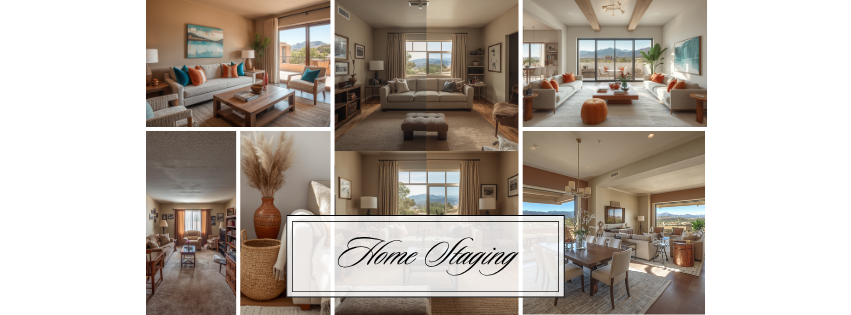
The staging return data is more consistent across sources than almost any other single preparation investment category. According to the Zebra home staging statistics report (2026), staged homes spend 73% less time on the market than unstaged homes. 85% of staged homes sold for 5 to 23% over their listing price. Home staging delivers an 8 to 10% return on investment. 81% of homebuyers say that a staged home makes it easier for them to visualize the property as their future home.
The RubyHome home staging statistics report (February 2026) provides the agent-reported data: 19% of sellers' agents report 1 to 5% higher offers on staged homes, 10% report 6 to 10% higher offers, and staged homes attract 74% more interest from serious buyers while generating 40% more online views.
The financial translation for the Albuquerque market at the current median sale price of approximately $380,000:
- Average staging cost (NAR median, 2025): $1,500. Typical professional staging for a full Albuquerque home: $2,000 to $8,000 depending on the scope and whether furniture rental is required.
- Typical price premium from staging: 5 to 15% of sale price. On a $380,000 home: $19,000 to $57,000 in additional proceeds.
- Days on market reduction: 73% less time. At Albuquerque's current 42-day average market time for all listings: a staged home would average approximately 11 days on market versus the 42-day average.
- Carrying cost savings from faster sale: Every month a home remains unsold costs the seller approximately $2,000 to $3,500 in mortgage, taxes, insurance, and utilities for a median-priced Albuquerque home. A staging investment that shortens the sale by 30 days saves $2,000 to $3,500 in carrying costs independently of any price premium.
The return on investment calculation: a $4,000 staging investment on a $380,000 home that produces a 5% price premium ($19,000) and a 30-day faster sale ($2,500 in carrying costs) generates a $21,500 return on a $4,000 investment. That is a 437% ROI. The Home Staging Institute's 2026 data places typical staging ROI at over 550%, which the math supports.
These are averages. Individual results vary substantially based on the quality of the staging, the home's specific presentation gap, the price range, and the neighborhood. But the direction of the data is consistent across every source: staging returns more than it costs in the vast majority of cases where it is appropriate.
The Four Options — Not Just Two
The staging vs. as-is framing is a binary that obscures the actual range of options available to Albuquerque sellers. There are four distinct approaches, each with different costs, different appropriate use cases, and different expected outcomes:
Option 1 — Full Professional Staging
What it is: a professional stager evaluates the home, brings in rental furniture and decor where needed, and creates a presentation that is specifically designed to maximize buyer response.
Cost range: $2,000 to $12,000 for a full Albuquerque home staging, depending on the size of the home, the number of rooms staged, and whether furniture rental is required. Occupied homes (where the seller's furniture is rearranged and supplemented) cost less than vacant homes (where all furniture must be rented and placed).
Best for:
- Vacant homes: Empty rooms photograph dramatically worse than staged rooms — they look smaller, feel colder, and communicate nothing about how the space functions as a home. The ROI on staging a vacant home is consistently higher than for occupied homes because the baseline (empty) is so much further from the buyer's ideal (furnished and welcoming).
- Luxury listings ($700,000+): At the luxury price point, buyers have specific expectations about presentation quality that directly correlate with the price they are willing to pay. A $900,000 home presented with dated furniture and generic decor produces the impression of a home priced above its presentation tier. A $900,000 home professionally staged to its price point communicates that the seller understands what they are selling.
- Homes with specific layout or furniture challenges: Some homes have floor plans that are genuinely difficult for buyers to understand from the seller's existing furniture arrangement. A professional stager who has experience with Albuquerque's specific floor plan types — the open-plan great room, the traditional separated dining and living rooms, the portal-focused layouts — can arrange furniture to communicate a floor plan's potential rather than its limitations.
Option 2 — DIY Staging With Professional Consultation
What it is: the seller uses their own furniture and decor but hires a professional stager for a one-time consultation (typically 2 to 3 hours) that produces a specific, room-by-room action plan. The seller then executes the plan.
Cost range: $200 to $600 for the consultation; the seller's own time for implementation.
This is the most commonly appropriate staging option for occupied Albuquerque homes at the mid-range price point ($250,000 to $600,000). The seller's existing furniture is usually adequate for the purpose — what it needs is professional direction about arrangement, decluttering priorities, specific accessory additions (a new throw, a plant, fresh towels), and the specific staging decisions that a trained stager can identify in 2 to 3 hours.
Best for: occupied homes in good overall condition where the primary staging need is direction rather than wholesale replacement of the seller's furniture and decor.
Option 3 — Virtual Staging
What it is: professional digital post-production that adds furniture and decor to photographs of empty rooms, creating listing images that show a staged version of a vacant home without the cost of physical furniture rental and placement.
Cost range: $100 to $500 for a full home virtual staging (per photo set).
Virtual staging is the option that has become increasingly relevant in the 2026 market as buyer search behavior is almost entirely online-first. A vacant home that would cost $4,000 to $8,000 to physically stage can be virtually staged for $300 — producing listing photographs that convey the room's potential in a way that empty-room photographs cannot, at a fraction of the cost.
The limitation: virtual staging only affects the listing photographs. Buyers who attend a showing see the vacant home, not the virtually staged version. For buyers who are making their showing decision primarily from online photographs (which is the majority in 2026), virtual staging closes the online-presentation gap. For buyers who then show up to an empty house after being attracted by the virtually staged photographs, the disconnect can be jarring.
The best practice when using virtual staging: clearly label the virtual staging in the listing description — "photos show virtual staging" — so that buyers who visit know what to expect and do not feel misled when they see empty rooms.
Best for: vacant homes in the entry to mid-range price segment where the cost of physical staging is not justified by the expected price premium.
Option 4 — Selling As-Is Without Staging
What it is: listing the home in its current condition without any staging investment.
Selling as-is is genuinely the right answer in specific situations — not the default answer for sellers who do not want to do the work, but the strategically correct answer for specific home and seller profiles.
When as-is is the right choice:
- True fixer-uppers and distressed properties: A home that requires significant structural, systems, or cosmetic remediation is correctly sold as a project property at a price that reflects its condition. Staging a home that needs $40,000 in updates before it is livable does not change the buyer's assessment of what the home requires — it only adds staging cost to a transaction where the buyer is already pricing in the renovation budget.
- Investor-targeted sales: A seller who is specifically marketing to investors — who will evaluate the home based on its post-renovation ARV (after-repair value) rather than its move-in-ready appeal — is not serving a buyer whose decision-making is influenced by staging. Investors visit homes with calculation tools, not with emotional visualization needs.
- Estate and inherited property situations: Properties being sold from estates — particularly those with dated furnishings, accumulated personal items, or the specific visual signature of a home that has been lived in by the same family for decades — can sometimes be better served by transparent as-is presentation than by an overlay of staging that the buyer will immediately see through.
- Compressed timelines: A seller who needs to list in one week does not have time for staging preparation done properly. A correctly priced as-is listing is better than a rushed, poorly executed staging attempt.
The honest caveat for as-is decisions: if the primary motivation is "I do not want to bother with the work," that is a preference that will cost money in the sale outcome. The as-is discount is real and measurable. It should be accepted knowingly, not accidentally.
The Albuquerque-Specific Staging Considerations
The Southwestern Aesthetic Question
The most common mistake Albuquerque sellers make when they attempt DIY staging is applying generic national staging conventions to homes whose architectural character is specifically Southwestern — and creating a visual disconnect between the home's structure and its presentation.
A 1970s adobe ranch with terracotta tile floors, vigas ceiling beams, and kiva fireplaces does not photograph optimally with the sleek modern gray-and-white staging palette that national staging guides recommend. The gray sectional and white marble accessories that look aspirational in a Seattle new construction look jarring against terracotta and warm plaster. The buyer who specifically wants a Southwestern home is looking for the warmth and character that the architecture provides — and a staging that tries to override that character with generic modern minimalism works against the home's most compelling features.
Albuquerque staging that works: warm neutrals (greiges, warm whites, terracotta accents), natural fiber textiles (linen, cotton, wool), wood and ceramic accessories that complement rather than fight the adobe and plaster character, and the specific care taken to stage outdoor portal spaces with furniture that communicates year-round Southwestern living. Professional stagers who know Albuquerque's market are aware of this distinction. Stagers who specialize in generic national staging standards may not be.
The Mountain View Staging Priority
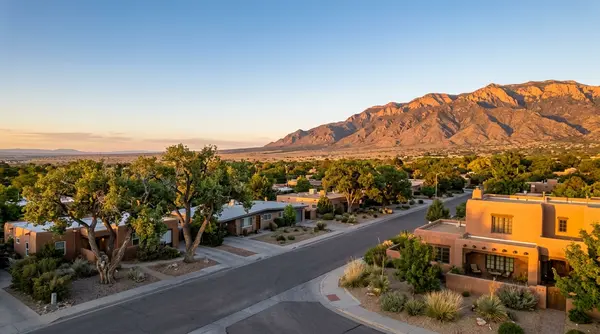
In any Albuquerque home with Sandia Mountain views — which includes most of the Northeast Heights, the foothills neighborhoods, and many North Valley and Westside properties — the mountain view is the single most valuable feature in the listing and the staging priority should be oriented to maximizing it.
The specific staging decisions that communicate mountain view orientation:
- Remove any furniture that blocks the sightline to the view window: A bookshelf, a large chair, or a tall plant placed in front of a view window is the most counterproductive single staging decision in an Albuquerque home with mountain views. Clear the path from the entry point of each room to the mountain view window.
- Orient furniture to face the view: Seating arranged to face the mountain view communicates that the view is the room's focal point. Seating arranged perpendicular to the view communicates that the room's designer did not notice the view's value.
- Clean the windows specifically: The mountain view photograph through dirty windows communicates none of the view's value. Clean windows are the highest-ROI single staging task in any Albuquerque home with mountain views.
- Stage the portal facing the view: If the covered portal faces the Sandia Mountains, stage it with comfortable outdoor furniture that communicates sitting on the portal and watching the mountains at golden hour. This is the specific staging scenario that most directly converts the buyer who is evaluating Albuquerque lifestyle to the buyer who makes an offer.
The Desert Outdoor Space Staging Opportunity
Albuquerque's climate — 310 days of sunshine — makes outdoor living spaces genuinely functional for most of the year and specifically valued by the buyer pool. The outdoor space that is staged as a livable room — with comfortable furniture, a functional shade structure, and care taken in the landscaping visible from the outdoor area — communicates the specific lifestyle quality that distinguishes Albuquerque from less outdoor-friendly markets.
The common staging miss: ignoring the portal or patio entirely and focusing all staging investment on the interior rooms. Buyers who experience a well-staged outdoor space during their showing — who sit in the staged outdoor furniture and look at the mountains and feel the specific quality of a New Mexico afternoon — are buying the outdoor lifestyle as much as the home. That experience is reproducible in the staging investment at modest cost and with outsized impact.
The Vacant Home in Albuquerque's Market — Why Physical Staging Matters More Here
Albuquerque's growing relocation buyer base from California, Seattle, and Denver includes a significant percentage of buyers who are making their initial property evaluations from out of state, entirely online. For these buyers, a vacant home's listing photographs are the entire first impression — there is no drive-by, no neighborhood walk, no visceral sense of the space that supplements the online research.
For a relocation buyer in Los Angeles who is searching Albuquerque listings from their home office, the empty room photograph and the professionally staged room photograph are not equally informative. The empty room communicates potential without demonstrating it. The professionally staged room communicates potential by demonstrating it — showing how the square footage functions as a home, how the natural light reads in the morning, how the portal looks with outdoor furniture in place.
For vacant Albuquerque homes specifically — where the relocation buyer is the single largest and fastest-growing buyer segment — physical staging is the marketing investment that most directly addresses the online-first discovery behavior that drives purchase decisions.
Staging Costs in Albuquerque — What to Budget
Albuquerque's professional staging market is smaller than major coastal markets but has several established staging companies serving the real estate sector. Typical pricing for the Albuquerque market:
- Staging consultation only (no physical staging): $150 to $400 for a 2-to-3-hour walkthrough with written recommendations
- Occupied home staging (rearranging existing furniture, accessory additions): $800 to $2,500 depending on home size and scope
- Vacant home staging (furniture rental and full placement): $2,000 to $8,000 for the first month, with additional monthly rental fees if the home does not sell. The BizQuest listing data for an Albuquerque staging company confirms this range: typical fees of $2,000 minimum to 0.5 to 1% of listing price for full staging.
- Virtual staging (photographs only): $100 to $400 for a complete listing set
The most common Albuquerque seller mistake in the staging budget: spending on furniture rental for an occupied home when a consultation plus targeted accessory purchases would produce the same result at half the cost. The occupied home does not need new furniture — it needs direction about the furniture it has, supplemented by $200 to $600 in specific additions (fresh throw pillows, a plant, new bathroom towels, a table runner) that bring the existing presentation up to the staging standard.
The Math — Staging vs. As-Is at Albuquerque's Median Price
For an occupied Albuquerque home priced at $380,000 in a mid-range neighborhood:
- Professional staging consultation + targeted additions: $500 to $800 total
- Expected price premium (conservative estimate, 3%): $11,400
- Expected days-on-market reduction (30 days faster): $2,500 in carrying cost savings
- Net return on $700 staging investment: $13,200 (ROI: 1,886%)
For a vacant Albuquerque home at the same price point:
- Physical staging for vacant home: $3,500 to $5,000
- Expected price premium (5%): $19,000
- Expected days-on-market reduction (45 days faster): $3,750 in carrying cost savings
- Net return on $4,250 staging investment: $18,500 (ROI: 435%)
For a true as-is fixer-upper at $220,000:
- Professional staging cost: $2,000 to $3,500
- Expected price premium from staging: Minimal — investor buyers are not influenced by staging
- Correct strategy: Price the home as a project at a price that reflects its condition. Do not stage. Invest $300 in a basic clean and yard clearing to make the property accessible and presentable without cosmetic deception.
Staging Room by Room — The Albuquerque Priority Order
If the staging budget is limited, the NAR data provides the priority order for room investment: living room first (most important to 46% of buyers), master bedroom second (43%), and kitchen third (35%). In the Albuquerque-specific context, add the outdoor portal or patio as a near-equal priority to the living room for any home with a functional covered outdoor space.
- Living room / great room: The room most buyers spend the most time evaluating. Furniture arrangement, lighting, neutral accessories, and the specific orientation to the mountain view if present. Clean all surfaces, windows, and flooring.
- Primary bedroom: Quality neutral bedding, cleared nightstands, and artwork or a mirror that communicates the room as a sanctuary rather than a storage space. Nothing on the floor except furniture and rugs.
- Kitchen: Counter restraint (2 to 3 objects maximum), cleaned appliances inside and out, fresh flowers or a plant as the sole decorative element. The kitchen should communicate food preparation and social gathering in a clean, uncluttered environment.
- Primary bathroom: Hotel standard: fresh white towels folded and displayed, cleared countertop, cleaned grout and caulk, a small plant or decorative object as the sole addition. The mirror should be streak-free.
- Covered portal / outdoor living space: Specifically important in Albuquerque for the reasons above. Comfortable outdoor seating oriented to the view, clean cushions, cleared surfaces, and plants or potted desert vegetation that communicates an outdoor room rather than a storage space.
For sellers who want to understand how staging fits into the complete pre-listing preparation sequence, our guide to how to prepare your Albuquerque home before listing covers the full preparation timeline. And for sellers who want to understand what Albuquerque's current buyers are specifically evaluating in their showings, our post on what Albuquerque buyers want most in 2026 provides the buyer perspective that staging is designed to satisfy.
The Bottom Line — Staging Is Almost Always Worth It at the Right Scope
The staging vs. as-is question is almost always answered by staging — with the scope of the staging calibrated to the home's specific situation, price range, and the gap between its current presentation and the buyer expectation it needs to meet.
The occupied home at the mid-range price point typically needs $500 to $1,500 in consultation and targeted additions — not a full furniture rental. The vacant home needs physical furniture rental if it is priced in the range where buyer visualization is critical to the offer decision. The luxury home needs professional staging that communicates the price point's quality expectations. The true fixer-upper needs honest as-is pricing, not staging that obscures the condition buyers will discover.
In the current Albuquerque market — where 38% of active listings have taken price reductions and correctly prepared, correctly priced homes are going under contract in 14 days — the preparation investment that includes thoughtful staging at the appropriate scope is one of the most reliably positive actions a seller can take before listing. The math consistently supports it. The buyer behavior data consistently supports it. The Albuquerque-specific factors — the mountain view orientation, the Southwestern aesthetic compatibility, the outdoor portal opportunity — make the staging case here even stronger than the national averages suggest.
Ready to Figure Out the Right Staging Approach for Your Home?
Jenn & Vinay from The Rodgers Neighborhood Real Estate Group walk every Albuquerque seller through the specific staging decision for their specific home — identifying whether a consultation, DIY additions, virtual staging, or full professional staging is the right scope for the price range, the buyer pool, and the home's current presentation gap. The assessment is part of the pre-listing walkthrough, which starts with a free valuation call.
Jenn & Vinay Rodgers are Albuquerque's trusted real estate professionals with The Rodgers Neighborhood Real Estate Group, brokered by Real Broker, LLC, serving buyers and sellers across Albuquerque, Rio Rancho, Corrales, Los Lunas, Tijeras, Cedar Crest, Sandia Park, the East Mountains, Bernalillo County, Sandoval County, and surrounding New Mexico communities.
The Rodgers Neighborhood Real Estate Group
Jenn & Vinay Rodgers
Real Broker, LLC
Albuquerque, NM
📞 505-417-2733
🏠 Get your free Albuquerque home valuationCategories
- All Blogs (332)
- 2026 & Beyond for Real Estate (228)
- Doctors and Nurses looking for homes in NM (4)
- Guide to buying a home in NM (146)
- Health Care Heros (7)
- Home Upgrades (40)
- Jenn & Vinay your Local Real Estate Experts! (113)
- Moving to Albuquerque (131)
- Neighborhoods in Albuquerque NM (89)
- Rent or Own (2)
- Sellers Questions for Selling homes (2)
Recent Posts


GET MORE INFORMATION