
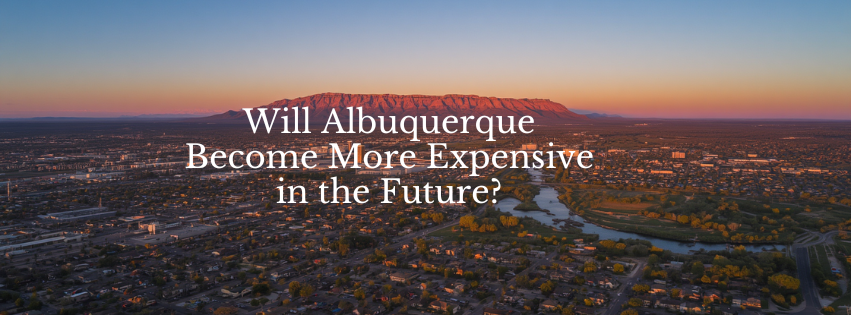
Will Albuquerque Become More Expensive in the Future?
The short answer is yes. Albuquerque will become more expensive. The longer answer — which is what makes the question worth answering fully — is about the pace, the specific structural forces that make higher future prices the most likely outcome, the risk factors that could slow or moderate that trajectory, and what all of this means for the buyer or seller deciding whether to act in 2026 or wait.
This guide covers the quantified forecasts, the structural drivers, the honest risk factors, and the three rate-scenario analysis that determines whether Albuquerque's future price appreciation is slow and steady, moderate and manageable, or fast and transformative.
The Starting Point — Where Albuquerque Prices Are Now
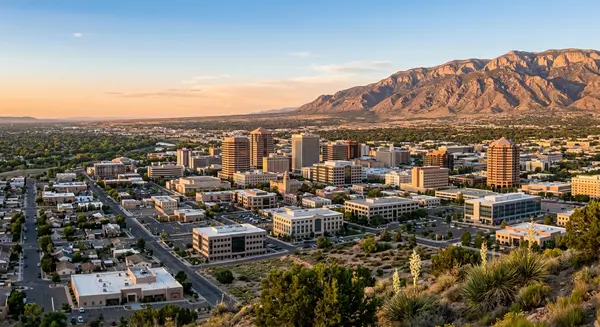
The current market baseline from the most current data: "Over the three months ending May 2026, Albuquerque home prices were up 2.8% compared to the same period last year, selling for a median price of $355K. Albuquerque's median sale price is 21% lower than the national average," confirmed Redfin's Albuquerque housing market data (June 2026). The 21% below national average is simultaneously the starting advantage that makes future appreciation likely and the evidence that Albuquerque has not yet converged toward peer market pricing.
The historical context that frames the future: Albuquerque home prices have risen 94.59% over the past decade (NeighborhoodScout 10-year cumulative). The home that sold for approximately $182,000 in 2016 sells for $355,000 in 2026. That pace — 6.88% annually — is the historical reference point against which all future forecasts should be measured.
The current price level relative to that history: Albuquerque in 2026 is 21% below the national average, growing at 2.8% — below the 6.88% historical average. The current below-average appreciation rate is the rate-constrained environment's effect, not a fundamental change in the city's attractiveness.
The Quantified Forecasts — What the Models Show
"Based on our Albuquerque real estate market research and report, the predicted sales prices will increase by 62.118% in the next 10 years. The predicted home sales price of an Albuquerque home in 2030 is $386,871. The predicted home sales price of an Albuquerque home in 2035 is $445,875," confirmed WalletInvestor's Albuquerque real estate market forecast. Their 5-year forecast from May 2026 projects the median at $395,503 by May 2031 — a +16.9% gain from the current $338,329 baseline.
The forecast model comparison:
- WalletInvestor (algorithmic, current): $386,871 by 2030, $445,875 by 2035, $395,503 by 2031. Implies approximately 3.8-4.5% annual appreciation — conservative relative to the 10-year historical average.
- Steadily (January 2026):5% average appreciation projected for 2026 specifically. Consistent with the current rate-constrained environment.
- NeighborhoodScout 10-year historical baseline:88% annual average. If this rate continues for the next decade, the $355,000 median becomes approximately $693,000 by 2036. This would require either significant rate relief or income growth — neither impossible, but requiring specific conditions to materialize.
- NeighborhoodScout most recent quarter (annualized):04% — suggesting the market may be re-accelerating from the rate-suppressed recent period.
The honest forecast range: the models collectively suggest Albuquerque prices will be $370,000-$450,000 by 2030 — a range that acknowledges the rate uncertainty while confirming the directional consensus. Every credible forecast model points toward higher prices; the range reflects timing and rate path uncertainty, not directional uncertainty.
The Three-Scenario Rate Analysis — The Variable That Determines the Pace
Mortgage rates are the single most powerful determinant of the pace of Albuquerque's future price appreciation. The structural drivers (covered below) guarantee directional increase regardless of rates; the rate environment determines whether that increase is 2% per year or 5% per year.
Scenario 1 — Rates Stay Elevated (6.5%-7.5%)
Projected appreciation: 1-2% annually | Median by 2028: $362K-$376K | Median by 2030: $369K-$398K
In the elevated-rate scenario, the sidelined buyer pool remains on the sidelines. Sellers who are rate-locked in low-rate mortgages continue to restrict supply by not listing. Transaction volume stays compressed — fewer buyers, fewer sellers, lower turnover rate. Prices hold rather than rise significantly because the demand that would drive prices is constrained by monthly payment affordability.
The market experience in this scenario: the 2026 buyer-favorable environment extends into 2027-2028. Concessions, price reductions on overpriced listings, and negotiating leverage continue to favor buyers. The correctly priced entry-level home still competes for buyers, but the middle and upper tiers slow further.
The opportunity in this scenario: buyers who purchase in the elevated-rate environment can potentially refinance when rates eventually decline — the "marry the house, date the rate" strategy that many 2023-2025 buyers have already applied. The buyer who waits for rates to fall before buying risks purchasing at a higher price once rates decline and the sidelined buyer pool activates.
Scenario 2 — Rates Moderate (5.5%-6.5%)
Projected appreciation: 2.5-4% annually | Median by 2028: $372K-$397K | Median by 2030: $391K-$443K
The moderate-rate scenario — where the Federal Reserve achieves the gradual rate reduction path that most 2026 market analysts consider most likely — produces the Steadily 2.5% and the WalletInvestor 3-4% annual appreciation forecasts. This is the most probable scenario by consensus.
The market experience: the sidelined buyer pool begins to convert as the monthly payment calculation becomes more manageable. Transaction volume increases. Entry-level competition intensifies first (the most rate-sensitive buyer pool). The mid-tier follows. Sellers gradually return to the market as the lock-in effect weakens with rate normalization. Prices move steadily upward at 2.5-4% annually.
The specific Albuquerque dynamics in this scenario: Intel's workforce expansion and Netflix's employment growth are adding demand simultaneously as rates moderate. The combination of employment-driven in-migration and rate-relief-driven buyer pool expansion produces above-baseline appreciation in the neighborhoods most proximate to these employment anchors — Rio Rancho/Intel corridor, Mesa del Sol, and the Northeast Heights premium tier.
Scenario 3 — Significant Rate Relief (<5.5%)
Projected appreciation: 4-6%+ annually | Median by 2028: $390K-$425K | Median by 2030: $424K-$503K
In the rate-relief scenario, the 93,057 Albuquerque renter households who represent potential buyers — held back by the 6.30% payment math — begin converting to owners at an accelerated rate. The sidelined buyer pool, built up over 2022-2026, enters the market in sequence: first-time buyers leading, then move-up buyers (who are now also seller-buyers, unlocking more supply), then the premium tier.
Local market analysts who have tracked the sidelined pool specifically named Nob Hill and the Northeast Heights as the primary acceleration candidates in the rate-relief scenario — 4-5% annual appreciation specifically in these neighborhoods when rates drop to the 5.0-6.0% range. The national 2026-2030 housing forecast research confirms this mechanism is not unique to Albuquerque: lower rates historically pull demand up faster than supply increases, producing price acceleration rather than stability.
The supply constraint that amplifies rate relief: Albuquerque is not overbuilt. There is no flood of new construction waiting to absorb released demand. When 93,057 potential buyer households begin moving toward the market, they compete for the same supply-constrained inventory that is already tight at the entry level. Price acceleration in this scenario is the specific outcome of high latent demand meeting constrained supply.
The Structural Drivers — Why Higher Prices Are the Most Probable Long-Term Outcome
The national 5-year housing forecast published by real estate researchers confirms the structural drivers that apply across markets, including Albuquerque: "Most buyers focus on the home price, but the true cost of owning a home in 2026–2030 will be shaped by forces happening behind the scenes: labor shortages, rising material costs, regulatory friction, and insurance volatility. These are the quiet drivers that keep homes from becoming 'cheap again,' even in years when price growth slows," confirmed Realpha.com's US Real Estate Forecast 2026-2030 (April 2026). "Construction trades continue operating with fewer workers than demand requires, and materials remain tied to global supply cycles. The result: consistent upward pressure on cost to build a house, which limits how far prices can fall — even in cooling markets."
Supply Driver 1 — Construction Costs Prevent New Entry-Level Supply
Builders in Albuquerque cannot profitably construct new homes below approximately $280,000-$300,000 given current land, materials, and labor costs. The entry-level buyer's demand cannot be satisfied by new construction — it can only be satisfied by resale homes that are not being added to at the bottom of the price range. This structural supply deficit is not going away: the labor shortages and material cost pressures that produce it are multi-year trends, not quarter-to-quarter fluctuations.
The implication for future prices: the entry-level supply constraint is permanent until either construction costs fall dramatically (unlikely) or income growth makes higher new-construction prices affordable to first-time buyers. In the meantime, every resale home at or below $300,000 sells into a buyer pool that cannot be served by new supply — producing the 12-20 day absorption rate that is the strongest current price signal in the market.
Supply Driver 2 — Geographic Constraints Are Permanent
The Sandia Mountain Wilderness boundary, Petroglyph National Monument, the Isleta Reservation, and the Rio Grande bosque collectively form permanent, legally protected development boundaries that constrain Albuquerque's most desirable neighborhoods from any supply expansion. The Northeast Heights foothills cannot build east. The Westside's most desirable tier cannot build into the monument. The North Valley cannot expand across the river.
These constraints ensure that demand increases in these neighborhoods produce price increases rather than supply increases. When Intel professionals want to live in the Northeast Heights and there is no new inventory being produced there, existing inventory prices upward.
Demand Driver 1 — The Intel and Netflix Employment Expansion
Intel's $3.5 billion Fab 11X expansion is adding thousands of professional jobs with above-average salaries to the Rio Rancho metro that is functionally part of the Albuquerque market. Netflix's confirmed 300-acre expansion at Mesa del Sol adds 1,000 professional jobs. These employment additions are funded, announced, and in progress — not speculative.
Each new professional household entering the metro is a household that adds to the demand side of the housing equation without adding to the supply side. The employment expansion is not producing new homes; it is producing new households looking for existing homes. Demand grows; supply grows more slowly. Prices rise.
Demand Driver 2 — The In-Migration Surge
moveBuddha's 2026 data confirms New Mexico's +27 percentage point surge in inbound relocation interest — one of the top five Mountain West states for acceleration in inbound move demand. The buyers arriving from California, Colorado, Arizona, and Texas bring equity and income that supports price levels above what local incomes alone would sustain. The $355,000 Albuquerque median is affordable for the California buyer arriving with $400,000+ in equity; the same price is stretched for the local buyer earning the $68,866 city median income.
As long as Albuquerque remains meaningfully cheaper than its origin markets and the migration continues, out-of-state buyers provide a price floor that sustains and increases values in the neighborhoods they specifically target.
Demand Driver 3 — The 93,057 Renter Households Are Coiled Demand
38% of Albuquerque's households are renters — 93,057 households. Many of these are households with the income and financial readiness to purchase but have been kept from buying by the 6.30% rate environment's monthly payment burden. When rates decline — even 50-75 basis points — a meaningful portion of these 93,057 households recalculate the rent-vs-buy equation and enter the buyer pool.
The coiled demand dynamic: this renter pool has been building for 3+ years. It represents compressed, pent-up buyer demand that has not been able to release. When the release valve opens (rate declines), the flow of renter-to-buyer conversion does not happen gradually — it accelerates quickly as buyers who have been waiting move simultaneously. This is the mechanism that produces price acceleration rather than gradual price increase when rates decline.
The Honest Risk Factors — What Could Slow or Moderate the Trajectory
A complete price forecast must include the risk factors that could slow or moderate the otherwise bullish structural case:
- Climate risk and heat escalation: Redfin's climate data projects a 157% increase in Albuquerque's days over 95°F over the next 30 years. Extended periods of extreme heat affect quality of life and, over time, affect housing desirability. The investor or buyer with a 20-30 year horizon should factor climate trajectory into the long-horizon Albuquerque case.
- Water scarcity: The Rio Grande's water supply is under documented long-term pressure from drought, upstream demand, and climate change. Albuquerque's Drinking Water Project (aquifer-based water supply) provides significant current protection, but long-term water supply constraints are a genuine consideration in the 20-30 year horizon for any high-desert southwestern city.
- Rate staying elevated longer than projected: If the Federal Reserve does not deliver meaningful rate reductions within 2-3 years, the sidelined buyer pool begins to decay — households that do not purchase during the rate-constrained period eventually lose financial readiness or choose to rent indefinitely. Prolonged high rates would extend the 1-2% slow appreciation scenario further than most forecasters currently project.
- New Mexico state budget risk: Albuquerque's economy is significantly dependent on state and federal government funding — Sandia Labs, Kirtland AFB, UNM, healthcare systems, state agencies. Any significant reduction in federal research or military spending would have an outsize effect on Albuquerque employment relative to more diversified private-sector cities.
- Overbuilding risk in Rio Rancho: The most active new construction market in the metro — Rio Rancho — is producing supply to meet Intel-driven demand. If Intel's expansion timeline slows, new construction supply could temporarily outrun demand in Rio Rancho, moderating appreciation in the most supply-responsive segment of the metro.
- Insurance cost escalation: National homeowner's insurance costs have been rising significantly in climate-exposed markets. While New Mexico's risk profile is lower than Florida or Texas, rising insurance costs nationally affect affordability calculations everywhere, and Albuquerque is not entirely insulated.
What This Means for Buyers
The combination of the structural price drivers and the quantified forecasts produces a specific implication for buyers who are deciding whether to act in 2026 or wait:
- Waiting for rates to fall may cost more in purchase price than it saves in rate: The 93,057-household renter pool will release into the buyer market when rates decline. The buyer who waits for that release to happen is purchasing at the post-release price in competition with a larger buyer pool — against a supply that has not grown proportionally. The rate savings from a 6.30% vs. 5.5% mortgage are real; the price increase from the demand surge they produce may outweigh them.
- The 2026 buyer-favorable conditions are a limited-time environment: Concessions from sellers, 34-47 day market times, price reductions on overpriced listings — these conditions characterize the current rate-suppressed market. As rates decline and demand releases, these buyer-favorable conditions recede. The negotiating leverage that exists in 2026 will not exist in the rate-relief scenario.
- The entry-level tier is the most time-sensitive: WalletInvestor's forecast implies gradual appreciation across the full market. But the entry-level tier — where no new supply is being produced — is specifically positioned for above-average appreciation when demand releases. The buyer who specifically wants under-$300K housing faces increasing competition from a supply pool that is shrinking as every year produces more sales without producing replacement inventory.
What This Means for Sellers
- 2026 is not the peak — it is below average appreciation: Sellers who wait for the "peak" are misreading the 2026 environment. The current 2-3% appreciation rate is below the historical average, not above it. Selling at below-historical-average appreciation is not selling at the top.
- Rate-relief acceleration will produce better prices for sellers: The seller who holds through the rate-constraint period and lists when the demand releases will sell into a more competitive buyer pool at higher prices — provided the property is well-maintained and in a neighborhood with structural demand drivers.
- The timing caveat: The seller who needs to sell in 2026 should not wait for rate relief that may be 12-24 months away. The 2026 market, properly priced, produces sales — slower than the 2021-2023 frenzy but functional. Realistic pricing in 2026 produces results; aspirational pricing produces the 38% price reduction statistics and extended market times.
For the complete investment case for Albuquerque real estate — which neighborhoods have the strongest structural appreciation drivers and why — our post on the best Albuquerque areas for future real estate growth covers the specific geographic opportunity map. And for the current investment landscape and whether Albuquerque real estate is a good investment in 2026, our post on whether Albuquerque real estate is still a good investment in 2026 covers the complete investment analysis.
The Bottom Line — Yes, More Expensive. The Pace Is Determined by Rates and Employment.
Will Albuquerque become more expensive in the future? Yes. The quantified forecasts agree, the structural drivers are all pointing the same direction, and the historical 94.59% decade of appreciation is the track record that informs the projection. WalletInvestor's $386,871 by 2030 and $445,875 by 2035 are the most specific near-term quantified estimates; the NeighborhoodScout 6.88% historical annual rate applied forward produces an even higher trajectory.
The pace is determined by two variables: mortgage rates (which control when the 93,057-household renter demand pool releases into the buyer market) and employment growth (which controls whether the Intel, Netflix, and other announced expansions produce the housing demand that the forecasters are modeling).
The honest nuance: the risk factors — climate trajectory, water scarcity, federal budget dependency, potential new construction oversupply in Rio Rancho — are real and merit attention in any 20-30 year horizon analysis. For the 5-10 year buyer or investor horizon that this guide primarily addresses, these risks are background conditions rather than immediate threats to the appreciation thesis.
Albuquerque in 2026 sits at a historically modest appreciation pace (2-3%), 21% below the national average, with the structural drivers for future price increases specifically and identifiably in place. The buyer who understands this landscape — and acts on it with the 5+ year commitment that makes real estate appreciation realized rather than theoretical — is making a well-informed decision with the consensus of every credible forecast model available.
Ready to Buy Before Albuquerque Gets More Expensive?
Jenn & Vinay from The Rodgers Neighborhood Real Estate Group track the employment announcements, infrastructure investments, and rate environment signals that this forecast covers in real time. Whether you are a buyer trying to time your entry, a seller deciding whether to hold or list, or an investor evaluating the Albuquerque price trajectory for your portfolio, the conversation about what the forecasts mean for your specific situation starts with a call.
Jenn & Vinay Rodgers are Albuquerque's trusted real estate professionals with The Rodgers Neighborhood Real Estate Group, brokered by Real Broker, LLC, serving buyers and sellers across Albuquerque, Rio Rancho, Corrales, Los Lunas, Tijeras, Cedar Crest, Sandia Park, the East Mountains, Bernalillo County, Sandoval County, and surrounding New Mexico communities.
The Rodgers Neighborhood Real Estate Group
Jenn & Vinay Rodgers
Real Broker, LLC
Albuquerque, NM
📞 505-417-2733
🏠 Browse Albuquerque homes before prices move furtherCategories
- All Blogs (362)
- 2026 & Beyond for Real Estate (256)
- Doctors and Nurses looking for homes in NM (4)
- Guide to buying a home in NM (160)
- Health Care Heros (7)
- Home Upgrades (42)
- Jenn & Vinay your Local Real Estate Experts! (124)
- Moving to Albuquerque (139)
- Neighborhoods in Albuquerque NM (94)
- Rent or Own (2)
- Sellers Questions for Selling homes (2)
Recent Posts





GET MORE INFORMATION