
What Type of Homes Are Albuquerque Buyers Looking for in 2026?
Understanding what Albuquerque buyers want in 2026 requires two layers of analysis: the universal preferences that apply across all buyer types in the current market environment, and the specific feature priorities that vary dramatically by buyer demographic. A military family buying near Kirtland has a different priority list from a California transplant buying their first desert home. A first-time buyer stretching to the entry-level tier has a different list from an empty-nester downsizing from a large Northeast Heights home. This guide covers both layers.
The Market Context — Who Is Buying in 2026
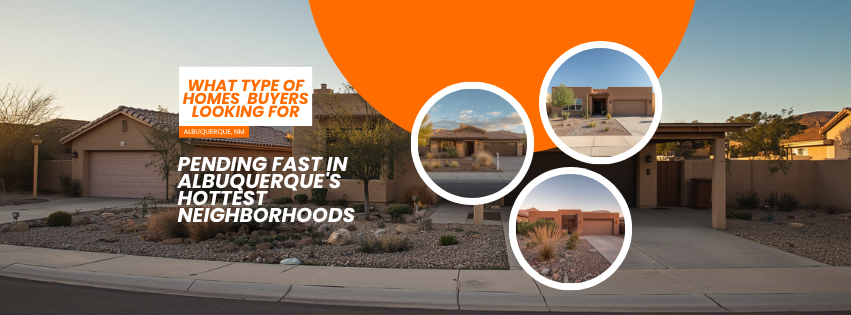
Redfin's migration data provides the clearest picture of who the 2026 Albuquerque buyer actually is: "In Oct 2025 - Dec 2025, 55% of Albuquerque homebuyers searched to move out of Albuquerque, while 45% looked to stay within the metropolitan area. Los Angeles homebuyers searched to move into Albuquerque more than any other metro followed by Dallas and Seattle," confirmed Redfin's Albuquerque housing market data (June 2026). The inbound buyer from LA, Dallas, and Seattle has a specific set of expectations that differs meaningfully from the local buyer.
The buyer pool in 2026 is more balanced and more deliberate than the 2021-2023 frenzy produced. The current Albuquerque buyer:
- Has more time: Homes average 34-60 days on market depending on price tier. The buyer who needed to decide in 24 hours in 2022 now has weeks for due diligence, comparison, and negotiation.
- Is payment-focused: At 6.30% rates, monthly payment math dominates every buying decision. Local market analysis confirms that a rate buydown concession is often more valuable to the buyer than an equivalent price reduction, because the payment impact is more visible and more immediate than the price impact.
- Demands condition: Buyers in 2026 are specifically requesting repairs, walking away from homes with deferred maintenance, and negotiating harder on condition issues than buyers did during the inventory-constrained frenzy years.
- Is more likely to ask for concessions: Closing cost contributions, rate buydowns, repair credits, and home warranties are increasingly standard buyer requests rather than exceptional negotiations.
The Universal 2026 Standard — What Every Albuquerque Buyer Wants Regardless of Type
"Buyers today want homes that feel well maintained and 'buttoned up.' They're more likely to ask for repairs and concessions," confirmed Norada Real Estate's Albuquerque market analysis (November 2025). This is the most important single seller insight in the 2026 market: the condition standard has tightened significantly from the anything-sells frenzy of 2021-2023.
The universal buyer requirements in 2026:
Condition — The Non-Negotiable Entry Requirement
- HVAC serviced and functional: In Albuquerque's climate — 100°F+ summer days, cold winters — a failing or aging HVAC system is an immediate negotiating point or a deal killer. Service records visible at showing. Refrigerated air specifically preferred over swamp coolers in virtually all buyer segments (see below).
- Roof without deferred maintenance: Roof condition is the single most-flagged inspection item in Albuquerque real estate. Buyers see roof age and condition as a direct proxy for overall maintenance discipline. A well-maintained roof communicates that the seller took care of the property; a deteriorating roof raises questions about everything else.
- No visible deferred maintenance: Cracked caulking, peeling paint, dripping faucets, sticking doors, damaged flooring — any of these signals to the 2026 buyer that there is more beneath the surface. The "buttoned up" standard means the seller has addressed the visible to-do list before showing, not left it for the buyer to discover during the walkthrough.
- Clean and move-in ready: Deep cleaning is the minimum threshold for showing a home in 2026. Professional cleaning, carpet shampooing or replacement, and fresh paint where needed are the preparation investments that consistently produce better offers faster.
Payment Flexibility — Rate Buydowns Over Price Reductions
The 2026 Albuquerque buyer is calculating monthly payment, not just purchase price. A seller who offers $10,000 toward a 2-1 rate buydown (temporarily reducing the buyer's rate in years one and two) produces a more compelling financial picture for the buyer than a $10,000 price reduction at the same rate — because the payment reduction in the buydown scenario is immediate and visible, while the payment reduction from a price cut at 6.30% is approximately $63/month (modest).
Sellers who understand the payment-focused buyer will price correctly from day one, avoid the price-chasing problem, and offer closing cost assistance or rate buydown contributions as the negotiating tool rather than sequential price reductions that erode both value and buyer confidence.
The Five Albuquerque Buyer Demographics — What Each Wants Specifically
1. The Local First-Time Buyer (Household Income $65K-$100K)
Price range: $180,000-$320,000 | Top priority: monthly payment, school zone, condition
The local first-time buyer in 2026 has been waiting — often for years — for the right combination of financial readiness and market conditions. They are deeply payment-sensitive (at 6.30%, every $10,000 in purchase price adds approximately $63/month). Their feature priority list is disciplined and pragmatic:
- Monthly payment that works: The home must be affordable at the specific income qualifying level. This buyer will not stretch DTI ratios dangerously; they have been pre-approved for a specific number and they are buying at or below it.
- School zone assignment: For family first-time buyers, the school zone is often the first filter applied before price. La Cueva, Eldorado, Corrales Middle, and the established elementary zones command a specific premium that this buyer has factored into their search.
- Move-in ready condition: The first-time buyer typically does not have renovation budget after using most of their savings for down payment and closing costs. A home that requires $20,000 in immediate repairs is effectively $20,000 more expensive than its list price — which may push it beyond qualifying ratios.
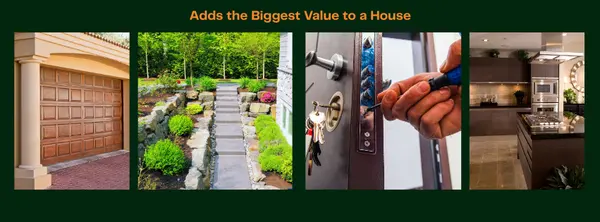
- Attached garage: Vehicle security is a specific Albuquerque concern (1-in-99 annual vehicle theft risk citywide). First-time buyers consistently prefer attached garages over detached or carport parking. A home without enclosed garage parking is specifically disadvantaged with this buyer demographic.
- Refrigerated air, not swamp cooler: The first-time buyer moving from a rental has typically lived with refrigerated air. Swamp coolers' limitations in Albuquerque's July-August monsoon humidity are not always understood until experienced — but the feature request is consistent. Homes with swamp coolers in the first-time buyer segment routinely generate requests for seller-paid swamp-to-refrigerated conversion credits.
2. The Relocating Out-of-State Buyer (From California, Colorado, Seattle, Dallas)
Price range: $300,000-$650,000 | Top priority: value vs. origin market, space, lifestyle features, mountain views
Redfin's confirmed data: Los Angeles, Dallas, and Seattle are the top three origin metros for Albuquerque home searches. These buyers are arriving with specific expectations formed by their origin market experience — and those expectations are different from the local buyer's in every meaningful way.
- More space than they left: The California buyer trading a 1,200 sq ft LA condo for a 2,200 sq ft Albuquerque single-family home is making a size upgrade that dominates their feature priority list. Square footage is a primary filter — they want the space they could not afford at home.
- Mountain views as a premium feature: The Sandia Mountain view is specifically valued by out-of-state buyers in a way that long-term Albuquerque residents sometimes take for granted. East-facing homes with mountain views receive a consistent premium — 5-15% above comparable non-view homes — from the buyer demographic that chose Albuquerque specifically for the geographic setting.
- Outdoor living space: The covered portal, the xeriscaped backyard, the outdoor kitchen, the fire pit — the outdoor living features that Albuquerque's 310-days-of-sunshine climate makes possible year-round are specifically valued by buyers from Seattle (cloudy) and the Midwest (harsh winters). This buyer will pay a premium for outdoor living that a local buyer might take as a nice-to-have.
- Value comparison to origin market: This buyer is doing the math: their $750,000 Seattle home equity buys an $500,000 Northeast Heights home with cash remaining. The specific features they could not afford in Seattle — the square footage, the lot, the mountain views, the garage — are specifically available in Albuquerque at prices that feel almost disorienting to them. Feature richness at perceived bargain pricing is the primary driver of this buyer's purchase enthusiasm.
- Quality finishes, not fixer-uppers: The out-of-state buyer arriving with equity is not looking for their first renovation project in a city they do not yet know. They want move-in-ready quality with updated kitchen, bathrooms, and systems so they can focus on learning the city rather than managing contractors.
3. The Remote Worker Buyer
Price range: $280,000-$500,000 | Top priority: dedicated home office, internet infrastructure, lifestyle proximity, home as headquarters
Albuquerque's remote worker buyer is the demographic most responsible for the city's inbound migration surge (moveBuddha +27 percentage points in 2026). This buyer is typically carrying a coastal or tech-hub salary while purchasing at Albuquerque prices — the income-to-price ratio that makes the move financially compelling. Their home preference is shaped by the specific reality that they work where they live:
- Dedicated home office — not a flex space: A bedroom that "could be used as an office" does not satisfy this buyer. They need a room with a door, ideally with natural light, where they can close out the rest of the house for video calls and focused work. Homes that have a true fourth bedroom or a converted formal dining room as a dedicated office space consistently perform better with this demographic than 3BR/2BA homes without a quiet workspace.
- High-speed internet infrastructure: Fiber availability is a filter, not a preference. Buyers who work remotely have been burned by insufficient internet connectivity. Many will specifically ask about which providers serve the property before scheduling a second showing. Albuquerque's fiber availability varies by neighborhood; sellers whose homes have fiber connectivity should specifically communicate this in the listing.
- Lifestyle proximity: The remote worker buyer came to Albuquerque for the Sandia trails, the coffee shop culture, the food scene, and the 310 days of sunshine that make living-where-you-work genuinely pleasurable. Homes near the Paseo de las Montañas trail, near Nob Hill's walkable corridor, or within 15 minutes of the Tramway base specifically appeal to this buyer's concept of what a good workday looks like.
- Quality kitchen (lunch at home every day): The remote worker eats most meals at home. Kitchen quality — storage, counter space, appliance condition, layout — is significantly more important to this buyer than to the commuter buyer who primarily eats at the office.
4. The Military and Federal Employee Buyer (Kirtland AFB, Sandia Labs)
Price range: $240,000-$420,000 | Top priority: commute to base, school stability, safety, no HOA or low HOA, attached garage
Albuquerque's military and federal employee buyer demographic is one of the most consistently active and most specifically defined in the market — driven by BAH allowances, PCS orders, and the specific institutional employment base that Kirtland AFB and Sandia Labs represent.
- Commute to base/lab: Proximity to Kirtland's gates and the Eubank/Gibson corridor is the primary geographic filter. Southeast Albuquerque, the Heritage East area, and the Kirtland-adjacent neighborhoods specifically appeal because of the short commute. Military buyers understand that a 10-minute commute vs. a 35-minute commute is a daily quality-of-life calculation that compounds over a 2-4 year assignment.
- School stability for PCS families: Military families who PCS every 2-4 years are specifically conscious of placing children in schools that provide educational continuity during the assignment period. La Cueva zone is the premium preference; APS schools serving the southeast quadrant are the practical alternative.
- No HOA or minimal HOA: Military buyers on BAH have tightly constrained housing budgets. HOA fees add directly to monthly housing cost and are not covered by BAH. The military buyer specifically filters out high-HOA properties because the total monthly cost exceeds the BAH allocation.
- Attached, enclosed garage: Vehicle security for military families is a consistent concern, and the home's ability to accommodate a military family's vehicles and storage needs makes the attached garage a near-universal priority.
5. The Empty-Nester and Retiree Buyer
Price range: $300,000-$700,000 | Top priority: single-level living, low maintenance, proximity to amenities, no yard intensive work, quality over square footage
Empty-nesters and retirees downsizing from large Northeast Heights homes or relocating to Albuquerque for the climate represent a growing buyer demographic whose priorities are almost the opposite of the young family buyer:
- Single-level living: Stairs are a filter-out, not a preference. The empty-nester buyer has often lived in a two-story home for 20 years and is specifically choosing single-level as a long-term accessibility and lifestyle decision. Single-level homes in the $350,000-$600,000 range in the Northeast Heights and North Valley are in the shortest supply for this demographic.
- Low maintenance exterior: The buyer who is done with large yards, irrigation systems, and exterior maintenance projects specifically seeks xeriscaped, low-water desert landscaping, HOA-maintained common areas, or properties without large grass lawn commitments. The Albuquerque water conservation ethos aligns naturally with this lifestyle preference.
- Quality over square footage: This buyer is typically trading a 3,000 sq ft family home for a 1,600-2,000 sq ft home and wants the square footage they are keeping to be of higher quality — updated kitchen and bathrooms, quality flooring, good natural light, thoughtful layout — rather than more rooms they will not use.
- Proximity to healthcare and amenities: Presbyterian Hospital, UNM Health Sciences, and the Albuquerque healthcare corridor are specific location considerations for retiree buyers. Proximity to Presbyterian, to Trader Joe's, to the East Mountain trails, and to Santa Fe for cultural events represent the lifestyle radius that the retiree buyer is specifically constructing.
- Solar panels: Retirees on fixed incomes are specifically sensitive to ongoing utility costs. Homes with owned (not leased) solar panels and the corresponding PNM net metering credits are a specific premium feature for this demographic — reducing the recurring cost burden of a fixed income housing situation.
The Albuquerque-Specific Feature Premiums — What Adds Value Here That Would Not Elsewhere
Several home features command a premium in Albuquerque that would not produce the same effect in other markets:
- Refrigerated air vs. swamp cooler: Buyers in virtually every demographic specifically prefer refrigerated air conditioning. Swamp coolers (evaporative cooling) are common in older Albuquerque homes and are effective in the dry months — but they fail during the July-August monsoon season when humidity rises. Homes with refrigerated air sell faster and for more money than comparable homes with swamp coolers. The cost to convert is $5,000-$12,000 installed; the return in buyer preference and speed-to-offer consistently justifies the investment for sellers whose homes still have swamp cooling.
- Mountain view — east-facing Sandias: The Sandia Mountain view premium is a documented, consistent, and specifically Albuquerque feature premium. Buyers from out of state consistently name the mountain view as the single most visually compelling feature of their Albuquerque home. East-facing windows with clear mountain sightlines add measurable value.
- Covered portal / patio: The traditional New Mexican covered porch — the portal — is the outdoor living feature that 310 days of sunshine makes specifically valuable. A covered portal usable 10 months of the year is more valuable in Albuquerque than a covered porch in Seattle where outdoor use is weather-limited.
- Attached two-car garage: Vehicle theft rates (1-in-99 annually citywide) make the attached, enclosed, lockable garage a specific Albuquerque security premium. The single-car or carport home consistently underperforms the attached two-car garage home in buyer preference at every price tier.
- Xeriscape / low-water landscaping: As water conservation becomes a legal and financial priority in New Mexico, homes with water-wise desert landscaping — river rock, native plants, drip irrigation — are specifically preferred over homes with grass lawns that require significant water and maintenance.
- Owned solar panels: New Mexico's PNM net metering program and the state's solar tax incentives make owned solar panels a genuine utility cost offset. Homes with owned (not leased) solar panels offer the buyer a specific ongoing utility savings that increasingly justifies a premium over comparable non-solar homes. Leased panels are more complicated — the buyer must assume the lease, which some are unwilling to do.
- Kiva fireplace: The traditional corner adobe kiva fireplace is the most specifically New Mexican interior feature — aesthetically distinctive, culturally resonant, and functionally appropriate for Albuquerque's cool evenings. Homes with authentic kiva fireplaces appeal strongly to the out-of-state buyer who moved to Albuquerque specifically for the New Mexico character.
What the 2026 Buyer Is Specifically NOT Interested In
- Swamp coolers without conversion credit: Homes that list with swamp coolers and no seller concession toward conversion are consistently negotiated down or passed over. The buyer's awareness of the monsoon humidity problem has increased significantly.
- Deferred maintenance presented as 'priced accordingly': The market has moved past the point where buyers are universally willing to buy problems. The buyers who specifically want renovation projects are a niche demographic, not the mainstream buyer pool. Most 2026 buyers want move-in ready.
- Dated kitchens and bathrooms at median-and-above prices: At $300K+, buyers expect kitchens and bathrooms to have been updated at some point in the past 10-15 years. Original 1985 kitchens and 1990 bathroom tile at $350,000 consistently generate negotiation challenges.
- No home office in a 3BR home listed at $350K+: The remote worker demographic's growth means that 3BR homes with no clear home office space are missing a feature that an increasing share of buyers specifically need. Three equal-sized bedrooms with no dedicated workspace is a more limiting floor plan than three bedrooms where one is slightly smaller but clearly suited to an office.
For buyers who want to understand what today's market conditions mean for their specific purchase strategy — how much time they have, when to act fast, and when they can negotiate — our post on what Albuquerque buyers are getting right (and wrong) in the 2026 market covers the decision-making traps to avoid. And for sellers who want to understand how their home's specific features stack up against 2026 buyer preferences, our post on how to prepare your Albuquerque home before listing in 2026 covers the preparation checklist.
The Bottom Line — Know Your Buyer, Then Price and Prepare for That Buyer
The most useful single insight from this guide for sellers: the 2026 Albuquerque buyer is not one person. They are five different demographics with five different priority lists, and the home that performs best in the current market is the one that clearly speaks to at least one of those demographics at a price that is honest and a condition that is genuinely buttoned up.
The most useful single insight for buyers: knowing which demographic you are — and therefore which feature priorities should drive your search — is the clarity that makes the search more efficient and the decision more confident. The remote worker who spends months searching for a home that has a formal dining room but no dedicated office is searching for the wrong feature. The retiree who keeps looking at two-story homes because the price is right but then rejecting them for the stairs would find the process faster by filtering single-level from the start.
The 2026 Albuquerque market gives buyers the time to be specific. Use that time to be specific about the right things.
Know What You Want — Let Us Help You Find It
Jenn & Vinay from The Rodgers Neighborhood Real Estate Group help buyers and sellers understand exactly where buyer preferences and market reality intersect in 2026 Albuquerque — which features produce faster offers at higher prices, which demographics are most active in which price tiers, and how to position a home or a search to match where the energy in this market actually is. Whether you are a seller preparing to list or a buyer clarifying your priorities, the conversation starts with a call.
Jenn & Vinay Rodgers are Albuquerque's trusted real estate professionals with The Rodgers Neighborhood Real Estate Group, brokered by Real Broker, LLC, serving buyers and sellers across Albuquerque, Rio Rancho, Corrales, Los Lunas, Tijeras, Cedar Crest, Sandia Park, the East Mountains, Bernalillo County, Sandoval County, and surrounding New Mexico communities.
The Rodgers Neighborhood Real Estate Group
Jenn & Vinay Rodgers
Real Broker, LLC
Albuquerque, NM
📞 505-417-2733
🏠 Browse homes that match what Albuquerque buyers are looking forCategories
- All Blogs (362)
- 2026 & Beyond for Real Estate (256)
- Doctors and Nurses looking for homes in NM (4)
- Guide to buying a home in NM (160)
- Health Care Heros (7)
- Home Upgrades (42)
- Jenn & Vinay your Local Real Estate Experts! (124)
- Moving to Albuquerque (139)
- Neighborhoods in Albuquerque NM (94)
- Rent or Own (2)
- Sellers Questions for Selling homes (2)
Recent Posts



GET MORE INFORMATION