
What It Is Really Like to Live in Albuquerque, New Mexico
What is it like to live in Albuquerque, New Mexico?
Living in Albuquerque means enjoying a cost of living 4% below the national average, over 300 days of sunshine, and deep cultural roots, while navigating real urban challenges that every resident should understand before committing.
Why This Matters Right Now for Albuquerque Homeowners
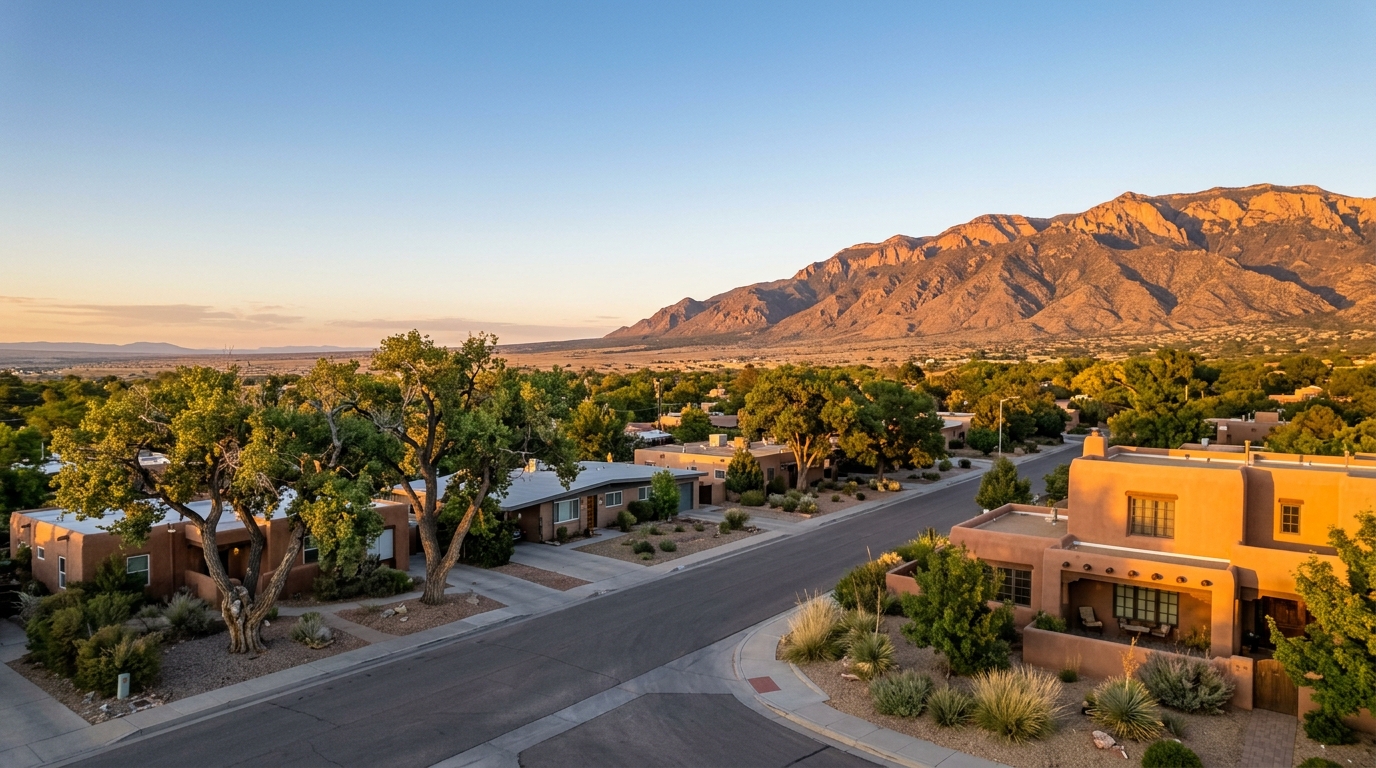
If you are weighing your housing options in Albuquerque right now, whether you are staying put, selling, or trying to stabilize after a financial setback, you need to understand what this city actually delivers day to day. The Albuquerque metro's median home price reached $385,000 in August 2026, a 3.5% year-over-year gain. With 3,850 active listings and just 3.9 months of inventory, conditions still favor sellers, but 47.2% of active listings are showing price reductions. That tells you something important: Albuquerque rewards realistic pricing and punishes wishful thinking.
We see this play out every week. With 12 years of experience and over 250 transactions closed across Albuquerque, Rio Rancho, and surrounding communities, we can tell you that the city's livability is one of the strongest selling points for any homeowner here. But you have to understand both sides of the coin.
Albuquerque's Cost of Living Advantage Changes the Math
This is probably the single biggest reason people move to Albuquerque, and it is also the reason many homeowners facing financial difficulty still have options here that they would not have in other Sun Belt cities.
Albuquerque's median sale price is 12% lower than the national average. To put that in perspective, the metro-wide median of $385,000 puts you well below what you would pay in Denver, Phoenix, or Austin for comparable space. And housing is just one piece. The overall cost of living sits 4% below the national average, which means your dollar stretches further on groceries, utilities, and everyday expenses.
What does that actually mean if you are struggling with mortgage payments? It means you likely have options. Most homeowners who purchased before 2022 have built meaningful equity because of sustained price appreciation. Even if you need to sell, you are probably walking away with money in your pocket rather than owing money at the closing table. And if you need to transition to renting while you regroup, median rents in Albuquerque run approximately $1,310 per month, significantly less than a mortgage payment on the median-priced home.
The affordability gap between neighborhoods is also dramatic. Downtown Albuquerque (ZIP 87102) has a median home value of $241,332, while the Four Hills and Tramway corridor (ZIP 87122) reaches $738,030. That range gives you real flexibility when deciding where to land next.
The Culture and Lifestyle You Actually Experience in Albuquerque
So what does daily life feel like here? Albuquerque is a city where traditional Native American and Hispanic influences blend with a contemporary arts scene and an outdoor culture that rivals anywhere in the West. The annual International Balloon Fiesta is just the headline act. The quieter reality is a city of neighborhood festivals, farm-to-table dining along Central Avenue in Nob Hill, and weekend hikes up the Embudo Trail into the Sandia Mountains.
Take Nob Hill as an example. This neighborhood along the Central Avenue and Carlisle Boulevard corridor has over 300 businesses in its historic district, from M'tucci's Bar Roma to Tractor Brewing Company to the one-of-a-kind Empire Board Game Library. Walk down Central near the Girard intersection on a Friday evening and you will feel exactly what makes this city distinct: vintage neon signs lining old Route 66 beside fashionable shops and restaurants, classic bungalows on narrow tree-lined streets next to updated modern homes.
Or consider the North Valley along Rio Grande Boulevard and Montaño Road. Custom-built homes on large lots sit alongside working acequias and towering cottonwood groves. Homes here average approximately $425,000, and the neighborhood feels like a rural escape while being minutes from downtown. This is where Albuquerque's agricultural heritage lives on, and it attracts people who want space, quiet, and deep roots.
Are there tradeoffs? Absolutely. We always tell our clients that living in Albuquerque combines a lower cost of living, rich cultural traditions, and abundant outdoor recreation with unique socioeconomic and urban challenges. Property crime rates are higher than the national average in certain corridors. Some public schools require careful research block by block. Infrastructure in older neighborhoods can lag behind newer developments on the Westside. These are not dealbreakers, but they are realities you should factor into your neighborhood selection.
Albuquerque Neighborhoods at Two Different Speeds
The housing market here is operating at two distinct speeds, and this directly affects your experience as a resident. Well-priced, well-presented homes in desirable areas like Nob Hill, North Valley, and the Tramway corridor can sell in under two weeks with multiple offers. Overpriced or dated properties can sit for 60 to 90 days or longer.
Here is why that matters for your quality of life: the neighborhood you choose shapes everything. In Nob Hill, you are five minutes from downtown, the ART bus rapid transit line runs along Central Avenue connecting you to UNM and Uptown without a car, and Uptown puts you 10 minutes from Sandia National Laboratories and Kirtland Air Force Base. Schools in Nob Hill include Bandelier and Monte Vista Elementary, Jefferson Middle School, and Highland High School, though ratings vary by specific school assignment, so you need to verify for your exact block.
On the Westside, past Unser along Paseo del Norte, tract housing from national builders is expanding rapidly. The Intel Fab 9 opening in Rio Rancho is bringing hundreds of new jobs. Prices trend in the mid-$300,000s to mid-$400,000s with newer construction, but commute times are longer and established infrastructure is still catching up. The I-25 corridor is really the dividing line: east of it gives you established neighborhoods and shorter commutes, west of it gives you newer homes and lower entry prices but higher transportation costs.
What Distressed Homeowners Need to Know About Living in Albuquerque
If you are behind on payments, facing potential foreclosure, or simply feeling overwhelmed by your housing costs, Albuquerque's current market actually gives you more options than you might think.
The city's median sale price hit an all-time high of $393,000 in June 2026 according to GAAR data. That means equity is on your side. Foreclosure activity remains below 1% of all properties with a mortgage in New Mexico, even as national filings have increased. The increase looks alarming in percentages but is rising from historic lows.
Your practical options include:
- Selling while equity exists. A traditional sale almost always beats a foreclosure or short sale on your financial record and your bottom line.
- Loan modification or forbearance. Contact your loan servicer directly. FHA, VA, and USDA programs may still have options available.
- HUD-approved housing counseling. Free counseling is available through HUD-approved agencies right here in Albuquerque.
- New Mexico Mortgage Finance Authority (MFA). The NM Homeowner Assistance Fund may be available for those behind on payments due to hardship.
We have helped homeowners navigate every one of these situations across our 250 closed transactions, and the one thing we always tell people is this: the sooner you understand your equity position, the more options you have. Waiting rarely makes the math better.
Outdoor Recreation and Climate in Albuquerque
You get hundreds of days of sunshine per year in Albuquerque. That is not a tourism brochure talking point; it is the daily reality that shapes how people live here. The Sandia Mountains rise over 10,000 feet on the city's eastern edge. The Embudo Trail trailhead is a 10-minute drive from Nob Hill. The Bosque along the Rio Grande offers miles of walking and cycling trails through cottonwood forests.
If you are dealing with financial stress, the fact that Albuquerque's best amenities are largely free matters. You do not need a country club membership to access world-class hiking, mountain biking, or open space. The high desert landscape delivers a quality of life that is genuinely hard to match at this price point.
Frequently Asked Questions About Living in Albuquerque
Is Albuquerque affordable compared to other cities in the Southwest?
Yes. Albuquerque's median sale price is 12% lower than the national average, and the overall cost of living is 4% below the national average. Compared to Denver, Phoenix, and Austin, you get significantly more home for your money here, with neighborhoods ranging from $241,332 in downtown to $738,030 in the Four Hills and Tramway area.
What are the best neighborhoods in Albuquerque for families?
Nob Hill offers walkability, cultural amenities, and proximity to UNM with schools like Monte Vista Elementary and Jefferson Middle School. The North Valley provides large lots and custom homes around $425,000. School quality varies block by block, so we always recommend checking specific school assignments for any address you are considering.
How is the job market in Albuquerque in 2026?
Healthcare, technology, and tourism are the primary economic drivers. Sandia National Laboratories and Kirtland Air Force Base are major employers on the east side. The Intel Fab 9 opening in Rio Rancho is bringing hundreds of new jobs and additional housing demand to the metro area.
What is the weather like in Albuquerque year round?
You get hundreds of days of sunshine annually with a high desert climate. Summers are hot and dry, winters are mild with occasional snow, and the low humidity makes even warm days comfortable. The Sandia Mountains create a dramatic backdrop and provide cooler temperatures at higher elevations just minutes from the city.
Is Albuquerque safe to live in?
Property crime rates in certain corridors are higher than the national average, which is one of the socioeconomic challenges we discuss honestly with our clients. Neighborhood selection matters significantly. Areas like Nob Hill, the North Valley, and the Tramway corridor tend to have lower crime rates than some parts of the Southeast or downtown.
How long does it take to sell a home in Albuquerque right now?
Days on market average about 34 in August 2026, but the market is running at two speeds. Well-priced homes in desirable neighborhoods can go pending in under two weeks. Overpriced or dated properties can sit 60 to 90 days or longer. Pricing strategy is everything.
What should I do if I am behind on my mortgage payments in Albuquerque?
Contact your loan servicer immediately to discuss modification or forbearance options. You can also reach out to HUD-approved housing counseling agencies in Albuquerque for free guidance. The New Mexico Mortgage Finance Authority offers homeowner assistance programs. With home values at record highs, selling may also be a viable option that protects your equity.
Is it better to rent or buy in Albuquerque in 2026?
Renting is currently cheaper on a monthly basis. A mortgage on the median-priced home with 20% down at a 7% rate costs approximately $1,913 in principal and interest alone, while median rent is approximately $1,310 per month. If you are regrouping financially, renting may provide temporary relief while you stabilize.
What is the commute like in Albuquerque?
From Nob Hill, downtown is about 5 minutes. The ART bus rapid transit runs along Central Avenue connecting key corridors. Westside commuters crossing I-25 face longer drive times, especially during peak hours. Most Albuquerque commutes are significantly shorter than what you would face in comparably sized metros.
How much inventory is available in the Albuquerque housing market?
As of August 2026, there are 3,850 active listings and 3.9 months of supply. The city remains 13,000 to 28,000 units short of meeting housing demand according to Root Policy Research estimates. This shortage supports home values but means buyers face competition, especially below $350,000.
The Bottom Line on Living in Albuquerque, New Mexico
Living in Albuquerque gives you a rare combination: genuine affordability, deep cultural identity, and access to outdoor recreation that most cities cannot touch, all in a metro where your home equity has been steadily growing. The challenges are real, from property crime to uneven school quality to a market that punishes overpriced listings. But for homeowners who understand the landscape and price their decisions accordingly, Albuquerque remains one of the best values in the Southwest.
If you are navigating a tough housing situation, or if you simply want to understand what your Albuquerque home is worth in today's market, we are here to help. With 20 five-star reviews, a 5/5 average rating, and recognition as top 5% producers in 2023 and 2024, we, Jenn and Vinay Rodgers with The Rodgers Neighborhood Real Estate Group, work with homeowners at every stage. Call us at 505-417-2733 or visit our office at 4800 Juan Tabo Blvd NE, Suite D, Albuquerque, NM 87111. We will give you straight answers and a clear path forward.
Categories
- All Blogs (332)
- 2026 & Beyond for Real Estate (228)
- Doctors and Nurses looking for homes in NM (4)
- Guide to buying a home in NM (146)
- Health Care Heros (7)
- Home Upgrades (40)
- Jenn & Vinay your Local Real Estate Experts! (113)
- Moving to Albuquerque (131)
- Neighborhoods in Albuquerque NM (89)
- Rent or Own (2)
- Sellers Questions for Selling homes (2)
Recent Posts

GET MORE INFORMATION