
What is Albuquerque Best Known For
Albuquerque is best known for different things depending on who is being asked. Balloon Fiesta. Breaking Bad. Green chile. The Sandia Mountains. Petroglyphs. Route 66. The Tramway. The light. Old Town. The 19 Pueblos. Any of these answers is correct, and each one is the complete answer for the person who holds it.
In 2026, the city's reputation is at a particular high point: Albuquerque was named a top destination for 2026 by Frommer's, AFAR, Condé Nast Traveler, and AARP. "Being named to multiple 'Best Places to Travel' lists for 2026 is an extraordinary honor for our city," Mayor Tim Keller noted when the City of Albuquerque announced the recognitions. "Albuquerque stands apart because it offers authentic, meaningful experiences rooted in thousands of years of culture and history." The city attracts more than 6 million overnight visitors annually, generating over $2 billion in spending and supporting more than 45,000 jobs, confirmed the City of Albuquerque official recognition announcement (December 2025).
This guide covers all the significant things Albuquerque is best known for — with the depth that each deserves and the 2026-specific context that makes some of them particularly resonant this year.
1. The Albuquerque International Balloon Fiesta — The World's Largest
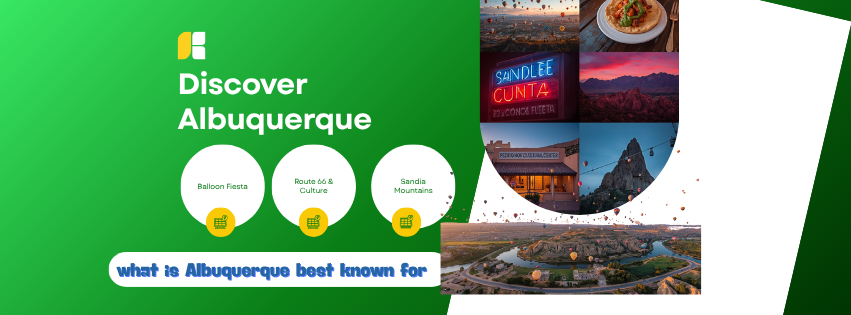
The Albuquerque International Balloon Fiesta is the single most internationally recognized thing about the city — the event that appears in travel photography, in national media, in every "best of the American Southwest" list, and in the specific visual vocabulary that most people outside New Mexico associate with the state.
The numbers are what they are: the world's largest hot air balloon festival. Over 700 balloons. Nine days in early October. The specific Albuquerque Box atmospheric phenomenon — a layered wind pattern in the Rio Grande valley that allows pilots to navigate multiple altitude corridors simultaneously, enabling mass ascensions of 700+ balloons and the return-to-field navigation that makes the event logistically possible. The Albuquerque Box is the reason the Fiesta is here and not anywhere else.
The festival started in 1972 with 13 balloons. It now fills a 365-acre park with 78 acres of launch field — approximately 54 football fields of launch space. The Mass Ascension, when hundreds of balloons lift simultaneously in the pre-dawn light, is one of the most photographed events on Earth annually. The Special Shape Rodeo, the Dawn Patrol, the Balloon Glow — each individual event within the nine-day festival is independently worth the trip.
The insider Balloon Fiesta knowledge that every Albuquerque resident knows: the balloons are visible for free from the neighborhoods surrounding Balloon Fiesta Park, from the Paseo del Bosque Trail, and from any north-facing high point in the North Valley. The in-park experience is extraordinary. The free neighborhood experience of watching hundreds of balloons rise over the tree line from a residential street is also extraordinary, in a different and more intimate way.
2. Breaking Bad and Better Call Saul — Albuquerque as Television's Most Iconic Setting
Breaking Bad and Better Call Saul did not put Albuquerque on the map — it was already there — but they gave the city a specific global visual identity that has outlasted both series and now permanently frames how millions of people worldwide first encounter the name.
The shows are set in Albuquerque because Breaking Bad creator Vince Gilligan moved the story from its original Riverside, California setting to New Mexico after discovering what New Mexico's light and landscape did to the visual quality of production. The specific quality of Albuquerque's high-altitude desert light — the clarity, the color rendering, the dramatic sky — that has attracted 800+ film and television productions to New Mexico is the reason both series look the way they look.
The Breaking Bad tourism that the shows produced is now an established industry: the Walter White house (3828 Piermont Dr NE) regularly has fans making pilgrimages; the Dog House Drive-In hot dog stand where Jesse met clients is a functioning restaurant; the Hotel Andaluz where Saul had his office is a working hotel; RV tours of filming locations are a consistent Albuquerque tourism product. TripAdvisor lists "Walter White's House" as a nearby landmark for hotels throughout the city.
The broader film context: Albuquerque's film industry is one of the top five in the United States. ABQ Studios and Netflix's major Albuquerque production facility anchor an industry that employs thousands locally and has produced everything from No Country for Old Men to The Avengers to Young Guns. The specific combination of New Mexico's competitive film incentive program and the state's unique landscape and light make it one of the most productive film environments in the country.
3. New Mexican Cuisine — A Food Culture That Belongs Only Here
New Mexican cuisine is the most specifically local of all the things Albuquerque is known for — because it is not a variant of anything else. It is not Mexican food. It is not Tex-Mex. It is not Southwestern-inspired fusion. It is a culinary tradition that developed over 500 years in the Rio Grande valley from the convergence of Pueblo indigenous food culture, Spanish colonial ingredients and techniques, and the specific agricultural conditions of New Mexico's high desert.
The defining elements:
- Hatch green chile: Grown in the Hatch Valley 90 miles south of Albuquerque, a specific chile variety with a flavor, heat, and roasted character that cannot be replicated with any other ingredient. The September green chile roasting season — when the smell of roasting Hatch chile drifts from grocery store parking lots across the city — is an annual sensory event that long-term residents miss most intensely when they leave.
- "Red or green?": New Mexico's official state question, encoded in the legislature. Nowhere else in America is a food preference a political act. "Christmas" (both) is the correct answer for those unwilling to choose. The question, the seriousness with which it is asked, and the distinct flavor profiles of the two responses collectively define a food culture in a single conversational exchange.
- Blue corn: A variety specific to the Pueblo agricultural tradition — nuttier, slightly denser, different in color and in the specific way it absorbs and holds sauce. Blue corn tortillas, blue corn pancakes, blue corn tamales are New Mexican and are not available in their authentic form anywhere outside the region.
- The breakfast burrito: Albuquerque has a legitimate claim to the breakfast burrito as a specific New Mexican form — the Frontier Restaurant's version (scrambled eggs, potato, bacon or sausage, cheese, and green chile, wrapped in a flour tortilla) has been served continuously since 1971 and is the specific model against which all other breakfast burritos are measured by New Mexicans.
- The carne adovada: Pork slow-cooked in red chile sauce until it falls apart — one of the signature New Mexican dishes that does not have a meaningful equivalent in Mexican or Southwestern cuisine.
The restaurant culture that carries this cuisine: Sadie's of New Mexico, Mary & Tito's (James Beard America's Classic award winner), El Pinto, the Frontier Restaurant, Garcia's Kitchen, Cervantes — these are not tourist restaurants. They are the institutions that families have been eating at for generations, the places where the cuisine is executed at its most authentic, and the specific addresses that New Mexicans miss when they live elsewhere.
4. The Sandia Mountains and the World's Longest Tramway
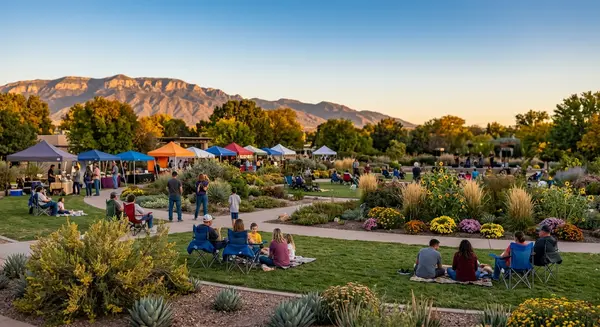
The Sandia Mountains rise 5,000 feet above the valley floor from within Albuquerque's residential boundaries — not from the outskirts of the city, not from a nearby corridor, but from the Northeast Heights neighborhoods where the mountain begins at the end of residential streets. No other major American city has a mountain of this scale integrated into its urban geography at this proximity.
The Sandia Peak Aerial Tramway is the feature that turns the mountain's proximity into a daily attraction: at 2.7 miles in length, it is the longest aerial tramway in North America. The 15-minute ascent from the base station at the foot of the Sandia Mountains to the 10,678-foot summit delivers passengers from the city (5,312 feet) to the alpine crest of the Sandia range in a single ride — a 5,366-foot elevation gain in 15 minutes. The view from the summit encompasses 11,000 square miles of New Mexico.
The Sandia Mountains are not a single-season attraction. The foothills trail network — 200+ miles of hiking, mountain biking, and trail running accessible from Northeast Heights residential streets — is active year-round. The Sandia Peak Ski Area provides skiing and snowboarding from approximately December through March. Summer brings mountain bikers and rock climbers to the granite face. Fall produces the specific Sandia alpenglow — the watermelon pink color that gives the range its name and that appears for 20-30 minutes at every sunset when the atmospheric conditions are right.
5. Route 66 — 18 Miles Through the Heart of the City (Centennial Year 2026)
Albuquerque in 2026 is the Route 66 centennial city. Route 66 was commissioned November 11, 1926, making 2026 its 100th anniversary. Albuquerque has the longest continuous urban stretch of the original Mother Road in the country — 18 miles of Central Avenue that is simultaneously the city's main street, the Route 66 alignment, the Nob Hill commercial corridor, and the cultural spine of the city. "Route 66 will celebrate its centennial in 2026, with Albuquerque anchoring nationwide celebrations along Central Avenue," confirmed Visit Albuquerque's 10 reasons to visit guide (December 2025).
The 2026 centennial programming produced Route 66 Remixed — 18 large-scale art installations and augmented reality activations along the 18-mile Central Avenue corridor, created in partnership with New Mexico-based Meow Wolf and Refract Studio alongside local artists. The installations transform the centennial celebration from a historical commemoration into an active, contemporary art experience that uses the physical infrastructure of Route 66 as a canvas.
What Route 66 in Albuquerque actually means: the 66 Diner (in operation since 1987 on the original alignment), the surviving motor courts whose neon signs still operate, the Dog House Drive-In where hot dogs have been served since the 1950s, the architectural continuity of a commercial street that was built for the road's peak era and that has been preserved and adapted rather than demolished. Walking Central Avenue in Albuquerque is walking the most complete surviving urban expression of Route 66 in the country.
6. Petroglyph National Monument — 20,000+ Ancient Images
Petroglyph National Monument contains more than 20,000 ancient images pecked into the black volcanic basalt along the West Mesa escarpment — one of the largest collections of prehistoric rock art in the United States and the most accessible urban-scale ancient art site in the country. The monument's trails are accessible from residential streets on the northwest side of Albuquerque, free in most sections, and put 700-year-old imagery at eye level within 15 minutes of the city center.
The petroglyphs were created by the Pueblo peoples and their ancestors between approximately 1300 and 1700 CE, with a smaller number of images created by Spanish settlers in the 17th and 18th centuries. The images include animals (bighorn sheep, birds, reptiles), human figures, clan symbols, hand prints, spirals, and geometric designs whose specific meanings are known to the Pueblo communities whose ancestors created them.
The geological context: the black basalt the petroglyphs are carved into erupted from the five extinct cinder cones visible on the monument's northern section between 150,000 and 190,000 years ago. The ancient people who carved the images were using a rock that was itself geologically ancient, in a landscape shaped by volcanic activity, to create images that are now 700 years old. Standing in Rinconada Canyon with the cinder cones to the north and the petroglyphs at arm's reach is standing in multiple geological and human time scales simultaneously.
7. Old Town Albuquerque — The 1706 Heart of the Southwest
Old Town Albuquerque was founded as a Spanish colonial settlement in 1706 — making it one of the oldest continuously occupied urban centers in the United States. The historic plaza, the San Felipe de Neri Church (rebuilt 1793 on the original 1706 foundation), and the surrounding adobe buildings that have been continuously used for commerce, worship, and community life for more than 300 years constitute the most intact colonial-era urban fabric in New Mexico and one of the most significant in the American Southwest.
The official Old Town guide describes it as "the Heart of the Southwest" — founded in 1706, more than 150 independent restaurants, boutiques, and galleries, and 40+ annual signature events. The architecture is the most honest summary: buildings constructed of adobe — earthen brick made from the same soil the city sits on — are not a reconstruction or a theme park. They are the actual buildings that have stood on these streets for centuries, adapted and maintained but fundamentally continuous with their original construction.
The San Felipe de Neri Church is the anchor: a functioning Catholic parish that holds regular mass services on the same plaza where mass has been held since 1706. The church's adobe walls, the hand-carved wooden furniture, and the specific quality of a sacred space that has been in continuous use for 320 years produce an experience of historical depth that no replica can replicate.
8. Native American Cultural Heritage — Living Culture, Not Historical Exhibit
Albuquerque is not adjacent to Native American culture. It is built on it, embedded within it, and surrounded by its active contemporary expression. The 19 Pueblos of New Mexico — sovereign nations whose ancestors built the civilization whose traces are visible at Coronado Historic Site, at the petroglyph escarpment, and at thousands of sites across the region — are active, contemporary participants in Albuquerque's cultural life, not historical footnotes.
The Indian Pueblo Cultural Center celebrates its 50th anniversary in 2026 — founded in 1976 and jointly owned and operated by all 19 Pueblos, making it the only major American cultural institution that is owned and governed by the culture it represents. The 50th anniversary programming includes the new "Grounded in Clay" exhibition (100+ historic and contemporary works in clay, opening March 2026), events, performances, and the Pueblo Harvest Café's traditional feast day foods available year-round.
The Gathering of Nations Pow Wow — North America's largest annual gathering of Native American peoples, held in Albuquerque for 43 years — held its final celebration in 2026. The closing of the Gathering after four decades is the end of one of the most significant annual cultural events in North American indigenous culture, and Albuquerque was its home throughout.
The Acoma Pueblo connection: Sky City (Acoma Pueblo), founded around 1250 CE, is recognized as the oldest continuously inhabited community in North America. Located approximately 60 miles west of Albuquerque, it is the most profound day trip from the city and one of the most significant historical sites in the country. Albuquerque's relationship to Acoma, to the 19 Pueblos, and to the living Pueblo, Navajo, and Apache cultures of New Mexico is not ornamental. It is the cultural foundation on which the city exists.
9. The Film Industry — New Mexico Is Hollywood's Desert Campus
Albuquerque has hosted more than 800 film and television productions — a number that includes some of the most significant cultural artifacts of American television and cinema. The list includes Breaking Bad, Better Call Saul, No Country for Old Men, Young Guns, The Avengers, Transformers, The Lone Ranger, and hundreds of others. The city is not a coincidental film location; it is a deliberate, frequently returned-to production environment chosen specifically for its light, its landscape, and its economic incentives.
New Mexico's film incentive program — offering a 25-40% tax credit on qualified production expenditures — is one of the most competitive in the country. The incentive, combined with the specific visual qualities of the high-desert landscape and the established production infrastructure that decades of filming have built, makes Albuquerque one of the five most active film production markets in the United States.
ABQ Studios and Netflix's dedicated Albuquerque production facility anchor the permanent infrastructure — stage space, production offices, equipment, and the local crew base that large productions specifically require. The film economy's multiplier effect on Albuquerque's creative community has produced a permanent population of working creative professionals whose income and energy contribute to the restaurant scene, the arts community, and the specific creative character that distinguishes Nob Hill and the city's arts corridors.
10. The Sunport — Where the City's Identity Begins at Arrival
The Albuquerque International Sunport is the only major American airport where the arriving passenger's first sensory experience is already distinctively local — because the airport's renovation and food hall expansion have made it a specific expression of New Mexican identity rather than a generic transit facility.
The new Sunport food hall — completed in 2026 — brings Indian Pueblo Kitchen, Sadie's of New Mexico, Laguna Burger, Frank's Famous Chicken and Waffles, Burque Brews, Steel Bender Brewyard, and Cheese & Coffee into the terminal. The arriving visitor's first meal in Albuquerque can be New Mexican food at the gate before their luggage arrives. The terminal's architecture — Pueblo Revival design that echoes the adobe and vigas of Old Town — and the commissioned art from New Mexico artists make the Sunport the city's most visited introduction.
The 2026 ABQ FlySide Pass — a free digital option that allows non-travelers to explore the terminal beyond security — opens the Sunport experience to the broader community, making the airport a public cultural destination rather than a restricted travel facility.
11. The Flamenco and Mariachi Heritage — The Music Identity That Most Visitors Overlook
Albuquerque's formal designation as the Flamenco Capital of North America reflects a cultural depth that few cities its size can claim in a specific performing art form. The Festival Flamenco Alburquerque — running June 19-27, 2026 — brings dozens of internationally recognized flamenco dancers and musicians to the city for performances and classes. The connection between the city's Spanish colonial heritage and the contemporary flamenco tradition is genuine rather than performed.
The Mariachi Spectacular de Albuquerque is the largest and most comprehensive mariachi concert and conference event in the United States (July 8-11, 2026) — a gathering that reflects the city's deep Mexican cultural connection and the specific musical tradition that has been part of New Mexican community life for generations. A city that is simultaneously the Flamenco Capital of North America and home to the country's largest mariachi event has a musical identity that reflects the cultural synthesis that defines the place.
12. The Light — What Artists and Filmmakers Come For and Cannot Leave
The light in New Mexico is the thing that is hardest to explain and easiest to experience. Georgia O'Keeffe came to paint it and never returned to New York. Ansel Adams photographed it. 800+ film and television productions have been made here specifically because of what the camera does with it. Painters from every tradition have made New Mexico their home because the specific atmospheric quality of the high-altitude, low-humidity desert light produces visual conditions unavailable anywhere else.
The mechanics: the high altitude (5,312 feet in Albuquerque) and low relative humidity reduce the atmospheric filtration that lower, wetter environments produce. The specific angle of the high-desert sun, combined with the red and ochre geology that reflects and modulates it, and the clarity of the air that transmits it without softening, create a light quality that photographers describe as having a specific color temperature and a specific dimensionality that appears in no other environment at the same latitude.
The result for residents: the sunsets. Every evening, the Sandia Mountains turn colors — rose, then pink, then deep watermelon, then magenta, then dark purple — in a sequence that lasts 20-30 minutes and that produces the same involuntary attention in long-term residents that it produces in first-time visitors. The light is not a tourist amenity. It is an environmental condition that is simply present, every day, at no charge.
2026 — A Particularly Significant Year to Know Albuquerque
Several 2026-specific factors make this year particularly resonant for the city's identity:
- Route 66 centennial: The 100th anniversary of the Mother Road's commissioning, with Albuquerque's 18-mile Central Avenue corridor as the centerpiece of national celebrations. Route 66 Remixed's 18 large-scale Meow Wolf installations transform the centennial into a contemporary art event.
- Final Gathering of Nations Pow Wow: After 43 years, North America's largest annual gathering of Native American peoples held its final celebration in Albuquerque. The cultural significance of this closing is deep and specifically Albuquerque's to hold.
- Indian Pueblo Cultural Center 50th anniversary: The IPCC, jointly owned by the 19 Pueblos, celebrates 50 years of operation with the Grounded in Clay exhibition and a full year of cultural programming.
- National recognition wave: Frommer's, AFAR, Condé Nast Traveler, and AARP all named Albuquerque a top 2026 destination — a simultaneous multi-publication recognition that reflects the city's growing national and international profile.
- New Sunport food hall and FlySide Pass: The completed airport transformation brings New Mexican culinary identity to the first and last impression of every visitor.
For residents who want to experience everything Albuquerque is known for throughout the year, our post on the biggest annual events in Albuquerque you should never miss covers the full calendar with insider logistics. And for the deeper argument about what makes Albuquerque genuinely different from other Southwest cities — the case for its specific irreplaceability — our post on what makes Albuquerque different from other Southwest cities makes the complete case.
The Honest Summary — Albuquerque Is Best Known For Being Specifically Itself
Every item on this list has something in common: it is specifically, irreplaceably Albuquerque. The Balloon Fiesta requires the Albuquerque Box. The New Mexican cuisine requires 500 years of cooking in this specific valley. The Sandia Mountains are in the city limits and nowhere else. Route 66 is a continuous 18-mile urban street in Albuquerque and a bypassed historic route everywhere else. The petroglyphs are on a specific volcanic escarpment created by a specific ancient eruption. Old Town is the specific 1706 Spanish colonial settlement that became this specific city.
Albuquerque is not famous for being a version of something else. It is famous for being something that cannot be substituted. That is the precise quality that most genuinely memorable places share, and it is the quality that the 6 million+ annual visitors, the national publications, and the people who have moved here from everywhere and chosen to stay are specifically responding to.
The city is best known for being the only one like it.
Ready to Discover Albuquerque for Yourself?
Jenn & Vinay from The Rodgers Neighborhood Real Estate Group have deep roots in Albuquerque and know every layer of the city that this guide describes — from the best foothills trails to the best chile to the neighborhoods that put the Balloon Fiesta in your backyard or the petroglyph escarpment within cycling distance. If what Albuquerque is known for sounds like what you have been looking for, the conversation about finding your home here starts with a call.
Jenn & Vinay Rodgers are Albuquerque's trusted real estate professionals with The Rodgers Neighborhood Real Estate Group, brokered by Real Broker, LLC, serving buyers and sellers across Albuquerque, Rio Rancho, Corrales, Los Lunas, Tijeras, Cedar Crest, Sandia Park, the East Mountains, Bernalillo County, Sandoval County, and surrounding New Mexico communities.
The Rodgers Neighborhood Real Estate Group
Jenn & Vinay Rodgers
Real Broker, LLC
Albuquerque, NM
📞 505-417-2733
🏠 Browse Albuquerque homes — discover the city for yourselfCategories
- All Blogs (359)
- 2026 & Beyond for Real Estate (253)
- Doctors and Nurses looking for homes in NM (4)
- Guide to buying a home in NM (159)
- Health Care Heros (7)
- Home Upgrades (41)
- Jenn & Vinay your Local Real Estate Experts! (124)
- Moving to Albuquerque (137)
- Neighborhoods in Albuquerque NM (94)
- Rent or Own (2)
- Sellers Questions for Selling homes (2)
Recent Posts


GET MORE INFORMATION