
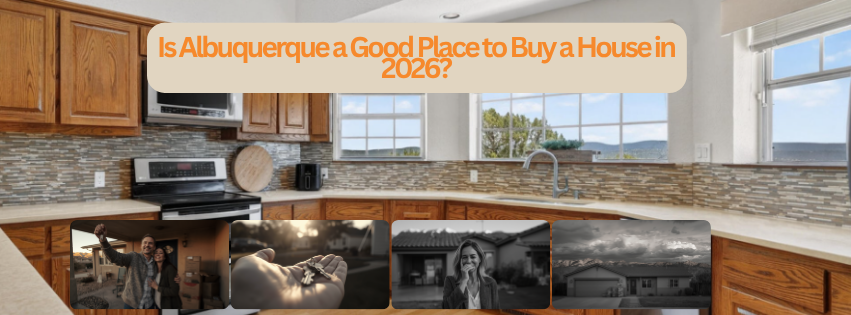
Is Albuquerque a Good Place to Buy a House in 2026?
This question is different from "is Albuquerque real estate a good investment" — and it deserves a different answer. The investment question is about returns, cap rates, and appreciation curves. This question is about whether buying a house in Albuquerque, to live in, is a good decision for your actual life in 2026. The two questions overlap, but they are not the same, and the homebuyer deserves an answer calibrated to what actually matters when you are choosing where to raise children, build a routine, and spend your evenings.
This guide gives the honest answer — organized around the specific factors that matter to homebuyers rather than investors, with the current market conditions, the lifestyle case, the financial reality, and the honest counterpoints that a responsible answer requires.
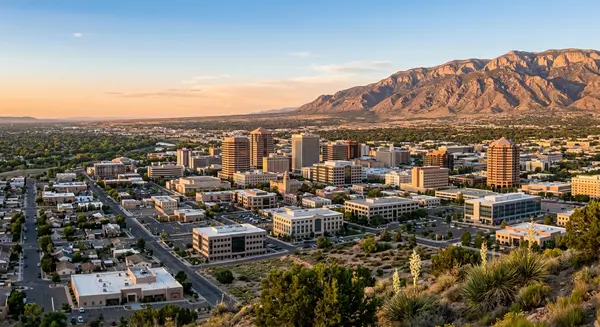
The Market Conditions in 2026 — More Favorable to Buyers Than in Years
"Low inventory, elevated rates, rising costs and older ages for first-time homebuyers are some trends that shaped last year's housing market, but local experts say they are optimistic about how 2026 is looking so far," reported the Albuquerque Journal's housing market analysis (March 2026). "It's always a cycle, but we're coming out of such a crazy period of time to something that's a little bit more stable," said Teri Hatcher, 2026 Southwest MLS president.
The buyer-favorable shift in 2026 is real and specific:
- Inventory is up 18.5% year-over-year: More homes to choose from than in 2024-2025. The frantic, multiple-offer-on-everything environment of 2021-2023 has eased meaningfully.
- Days on market average 46-60 days: Compared to the frantic multiple-offer weekends of recent years, this gives buyers genuine time for due diligence — to think, to compare, to negotiate, to inspect thoroughly without the pressure of a 24-hour decision window.
- Sellers increasingly offering concessions: Closing cost coverage, repair credits, and rate buydowns are becoming standard negotiating points rather than rare wins — a meaningful shift from the seller's-market conditions of 2021-2023 when asking for concessions could lose you the house.
- Price stability, not price spikes: Median prices in the $350,000-$386,000 range are described by market analysts as "stabilizing" rather than rapidly climbing — meaning the buyer who purchases today is not chasing a market moving away from them month to month.
The Real Story — Brenda Tryon's First Home
The Albuquerque Journal's March 2026 housing market coverage included the story of Brenda Tryon, an Albuquerque resident originally from El Paso, and her husband — both in their 40s, both finally in stable career positions, finally ready to buy their first home after years of life circumstances getting in the way.
"It feels really nice," Tryon said. "I'm just excited to have something that's mine — that if I want to paint the walls, I can. If I want to change something, I don't have to ask anybody. Or if something breaks, I don't have to have somebody come fix it for me. I'm just excited to get started. It's been a long time coming," she told the Albuquerque Journal. The couple found their dream home after just two in-person showings in March 2026, following months of online research that began the previous August.
Tryon's story is specifically relevant to the "is this a good time to buy" question because it represents the demographic reality of 2026 Albuquerque homebuying: rising ages for first-time homebuyers, a longer research-and-decision timeline than the frantic 2021-2023 environment required, and the specific satisfaction of finally being able to act on years of deferred plans. Her experience — finding the home after just two showings once she was ready to look seriously — also reflects the current market's reduced competitive pressure relative to the bidding-war years.
The Affordability Case — What Albuquerque Specifically Offers
"Albuquerque is a good place to live for low cost of living & outdoor rec... With an average home price of $428,432 and monthly rent around $1,600, it's cheaper than similar cities," confirmed Extra Space Storage's 2026 pros and cons guide to Albuquerque. "The cost of living in Albuquerque is affordable compared to Arizona cities of a similar size, such as Mesa and Tucson."
The affordability case for buying in Albuquerque specifically:
- Below comparable western cities: The median Albuquerque home ($355,000-$386,000 depending on source and timing) is meaningfully below Denver ($580,000+), Phoenix ($420,000+), and dramatically below the California and coastal markets that many relocating buyers are leaving.
- Property taxes are low: Bernalillo County's 0.79% effective rate is below the national 1.07% average — a real, recurring savings that compounds over a long homeownership tenure.
- The U.S. News median home value confirmation:S. News's data lists Albuquerque's median home value at $303,577 — among the more conservative estimates, reinforcing that even the lower-bound estimates place Albuquerque homeownership within reach for moderate-income households.
- The mortgage-vs-rent math works at moderate income levels: A household earning $68,866 (Albuquerque's median household income per U.S. News) qualifies for meaningful home purchasing power in the entry-level Albuquerque market — a financial reality that does not exist in most comparable-quality-of-life western cities.
The Lifestyle Case — Why People Who Buy Here Tend to Stay
The decision to buy a house is not purely financial — it is a decision about where you want your daily life to happen for the years you plan to live there. Albuquerque's specific lifestyle case for homebuyers includes elements that no spreadsheet captures:
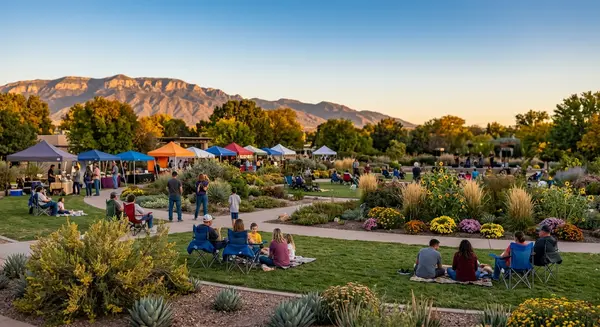
- The Sandia Mountains within city limits: No comparable-sized American city has a mountain range rising 5,000 feet from the valley floor inside its residential boundaries. The buyer who chooses a Northeast Heights or foothills-adjacent home is choosing daily access to an outdoor environment that most American homebuyers cannot access without a substantial drive.
- 310 days of sunshine: The specific quality of Albuquerque's high-desert light and the consistency of clear days affects daily mood, outdoor activity frequency, and the simple pleasure of a sunset that most residents describe as a daily, not occasional, experience.
- A startup and creative economy that is genuinely growing: Innovate ABQ in Downtown, ActivateNM's mentorship and the annual Startup Fiesta, and funding support from New Mexico Angels, Verge Fund, and WESST are building an entrepreneurial ecosystem that gives homebuyers career optionality beyond the traditional institutional employers.
- One of the top US film industry cities: Albuquerque frequently ranks ahead of larger markets like Dallas, Austin, and Chicago for film industry work — a specific career anchor for the creative professional buyer that few comparable-cost cities offer.
- The community-centric culture: The specific social character of Albuquerque — described consistently by residents and by national guides as family-friendly and community-centric — is the intangible factor that homebuyers describe years after purchase as the reason they never seriously considered leaving.
Renting vs. Buying — The Honest 2026 Calculation
"If you are ready to commit for at least five to seven years and have the savings and stability to support ownership, buying a home can be a powerful way to build equity and put down roots in a city with a comparatively moderate cost of living," confirmed Faith Moving Company's 2026 renting vs. buying guide for Albuquerque. "If you are unsure about the city, your job, or your long-term plans, renting gives you room to breathe while you explore the best neighborhoods."
This is the most honest framing available for the rent-vs-buy decision: the 5-7 year minimum holding period as the threshold for buying to make financial sense. Below that threshold, the transaction costs of buying and selling (typically 5-8% of the home's value combined) outweigh the equity-building advantage. Above that threshold, the math shifts decisively toward ownership.
The specific 2026 calculation: at $355,000 median with 5% down ($17,750) and 6.30% rates, the monthly PITI is approximately $2,260-$2,460 depending on insurance and tax specifics. Compared to the $1,387 average Albuquerque rent, the monthly premium for ownership is significant — but that premium is building equity, not disappearing as a landlord's profit. Over a 7-year hold, the combination of principal paydown and historical Albuquerque appreciation (2.8-6.88% depending on the timeframe measured) typically produces a meaningfully positive net worth outcome relative to continuing to rent.
Who Should Buy in Albuquerque in 2026
- The household planning to stay 5+ years: The transaction costs of buying and selling require time to amortize. Households with reasonable certainty about their 5-7 year future in Albuquerque are the clearest "yes" for 2026 buying.
- The first-time buyer who has been waiting for less competitive conditions: The 2026 market's reduced bidding-war intensity, increased inventory, and growing seller concessions specifically favor the buyer who could not compete in the frantic 2021-2023 market. This is the most buyer-favorable Albuquerque market in several years.
- The remote worker or relocating buyer from a higher-cost market: Buyers arriving with income calibrated to California, Colorado, Seattle, or comparable markets find Albuquerque's price point produces dramatically better housing-to-income ratios than their origin market.
- Families prioritizing outdoor access and community character over big-city amenities: The buyer whose priority list includes mountain access, sunshine, community character, and affordability over nightlife density, public transit, or coastal proximity finds Albuquerque a strong lifestyle match.
- The buyer who has done the rent-vs-buy math and the numbers work: Households whose specific income, down payment, and target price point produce a PITI they can comfortably absorb without compromising other financial goals.
Who Should Wait or Consider Renting Instead
- Anyone uncertain about staying 5+ years: The transaction cost math does not favor short-term ownership. If your Albuquerque tenure is genuinely uncertain — a 1-2 year work assignment, an unresolved relationship or family situation, an unclear career trajectory — renting preserves flexibility that buying forecloses.
- Buyers stretching beyond comfortable affordability: The household that can only qualify for their target home by stretching debt-to-income ratios to the maximum, eliminating their emergency fund, or assuming aggressive rate-relief scenarios that may not materialize should wait and build a stronger financial position first.
- Buyers who haven't yet experienced Albuquerque firsthand: The dry climate, the altitude adjustment, the car-dependent infrastructure outside specific walkable corridors, and the specific cultural character of the city are experiential factors that a visit communicates more reliably than any online research. Renting for 6-12 months before buying is a reasonable strategy for relocating buyers with the flexibility to do so.
- Buyers specifically requiring 24/7 walkability and robust public transit: Outside Nob Hill's Walk Score 85 corridor and a handful of similar pockets, Albuquerque is car-dependent. Buyers for whom this is a non-negotiable should specifically evaluate whether the available walkable inventory matches their needs before committing.
The Honest Counterpoints — What a Responsible Answer Must Include
A complete answer to "is Albuquerque a good place to buy a house" requires acknowledging the genuine drawbacks alongside the genuine advantages:
- Crime concerns are real, concentrated, and addressable through neighborhood selection: Albuquerque's crime statistics are higher than the national average in specific categories (particularly motor vehicle theft) and in specific neighborhoods. The buyer who does the neighborhood-level research — rather than reacting to citywide headline statistics — finds genuinely safe areas to buy in, but the research step is necessary and not optional.
- The job market is more limited than larger metros: Albuquerque's employment base is institutionally anchored (government, military, healthcare, education) rather than offering the dynamic, high-growth private sector job market of Denver, Austin, or the Bay Area. Buyers whose career trajectory specifically requires that dynamic private sector ecosystem should factor this limitation into their decision.
- Car dependence is the default, not the exception:8% of Albuquerque commuters drive to work; only 1.4% use public transit. The buyer who wants car-optional living needs to specifically target the limited walkable inventory rather than assuming any Albuquerque address provides it.
- The dry climate and altitude require physical adjustment: New buyers, particularly those relocating from sea-level or humid climates, should expect a genuine adjustment period — dehydration risk, dry skin, and the altitude's effect on exercise performance are real and not exaggerated.
- Foundation issues are a specific Southwest inspection concern: The dry climate can contribute to foundation movement over time. A thorough professional inspection — not a cursory one — is specifically important for Albuquerque purchases, and buyers should budget for the possibility of foundation-related negotiation or future maintenance.
The Practical First-Time Buyer Path
For the Albuquerque first-time buyer in 2026, the practical sequence that experienced local guidance consistently recommends:
- Get pre-approved before searching:Establishes a realistic price range and signals seriousness to sellers, particularly important in the entry-level segment where correctly priced homes still move in 14-20 days.
- Identify your must-haves vs. nice-to-haves:No home satisfies every preference. Clarity about non-negotiables (school zone, commute, bedroom count) versus flexible preferences (specific finishes, exact square footage) accelerates the search and reduces decision paralysis.
- Never skip the inspection:Given the Southwest's specific foundation and dry-climate considerations, a thorough professional inspection is the single most important risk-management step in an Albuquerque purchase.
- Think about your holding horizon honestly:A starter home you'll outgrow in 3 years has different feature priorities than a long-term home you'll live in for 15. Being honest about this upfront focuses the search productively.
- Use the current buyer-favorable conditions: Ask for concessions. Take the time the current 46-60 day market gives you to do real due diligence rather than rushing as the 2021-2023 market once forced.
For the complete neighborhood-by-neighborhood breakdown of where to buy based on your specific lifestyle priorities, our post on the best family-friendly neighborhoods in Albuquerque with school information covers the school-safety-lifestyle intersection. And for the complete financial picture of what salary supports comfortable Albuquerque homeownership, our guide to what salary you need to live comfortably in Albuquerque provides the detailed income and budget framework.
The Bottom Line — Yes, for the Buyer Who Fits the Profile
Is Albuquerque a good place to buy a house in 2026? Yes — specifically for the buyer who plans to stay 5+ years, who has done honest math on their affordability, who values the Sandia Mountains and the sunshine and the community character as much as the price point, and who is buying in 2026's specifically more buyer-favorable market conditions than Albuquerque has offered in several years.
It is not the right answer for the buyer with genuine uncertainty about their Albuquerque tenure, the buyer stretching beyond comfortable affordability, or the buyer who specifically requires the dynamic private-sector job market and dense public transit infrastructure that larger coastal metros provide.
Brenda Tryon's story — the years of waiting, the careful research, the two showings that led to the right home, the simple joy of being able to paint the walls without asking anyone's permission — is the story that the buyer-favorable 2026 market is making possible for more Albuquerque households than it has in years. For the household that fits the profile, 2026 is specifically a good year to make that story yours.
Ready to Find Out If Albuquerque Is Right for You?
Jenn & Vinay from The Rodgers Neighborhood Real Estate Group help buyers work through exactly this question — honestly, with the local market knowledge and the neighborhood-level data that turns a citywide answer into a decision that fits your specific life, your specific budget, and your specific timeline. Whether you are a first-time buyer like Brenda Tryon finally ready to act, or a relocating family evaluating Albuquerque against your origin market, the conversation about whether this is the right place and the right year for you starts with a call.
Jenn & Vinay Rodgers are Albuquerque's trusted real estate professionals with The Rodgers Neighborhood Real Estate Group, brokered by Real Broker, LLC, serving buyers and sellers across Albuquerque, Rio Rancho, Corrales, Los Lunas, Tijeras, Cedar Crest, Sandia Park, the East Mountains, Bernalillo County, Sandoval County, and surrounding New Mexico communities.
The Rodgers Neighborhood Real Estate Group
Jenn & Vinay Rodgers
Real Broker, LLC
Albuquerque, NM
📞 505-417-2733
🏠 Browse Albuquerque homes — start your search todayCategories
- All Blogs (362)
- 2026 & Beyond for Real Estate (256)
- Doctors and Nurses looking for homes in NM (4)
- Guide to buying a home in NM (160)
- Health Care Heros (7)
- Home Upgrades (42)
- Jenn & Vinay your Local Real Estate Experts! (124)
- Moving to Albuquerque (139)
- Neighborhoods in Albuquerque NM (94)
- Rent or Own (2)
- Sellers Questions for Selling homes (2)
Recent Posts




GET MORE INFORMATION