
Albuquerque Wildfire Smoke and Air Quality — The Complete 2026 Guide
DISCLAIMER: Air quality data and wildfire conditions change rapidly. This guide provides educational context but is not a substitute for real-time monitoring. Always check airnow.gov, the NMDOH, or the NWS Albuquerque for current conditions and official health guidance during smoke events. Individuals with existing health conditions should consult their physicians for personalized guidance.
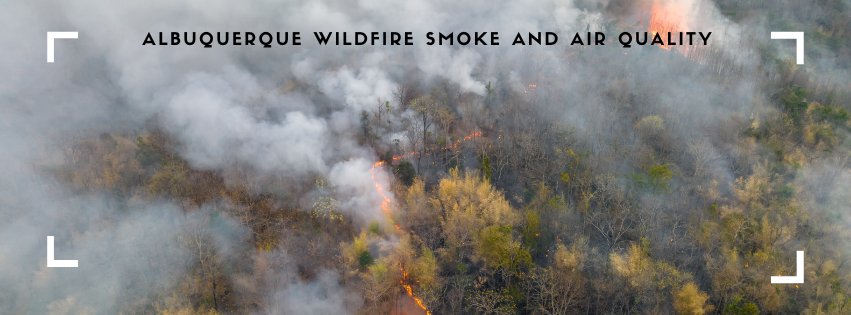
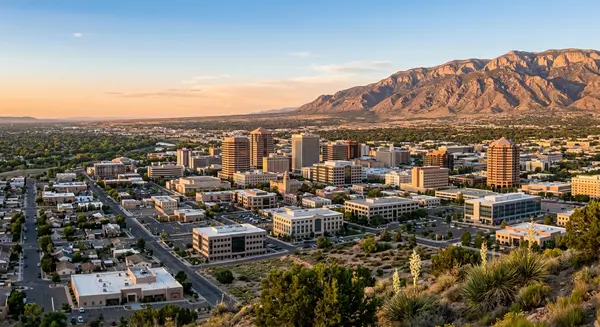
Albuquerque's air quality is generally among the better stories of any major city in the American West. The city has no major industrial zone adjacent to the urban core, the prevailing winds carry pollutants through rather than concentrating them, and the 5,312-foot elevation contributes to atmospheric clarity on most days. But wildfire smoke — from fires within New Mexico and from fires in neighboring Arizona, Colorado, and Utah — is a specific and seasonal challenge that every Albuquerque resident should understand and every potential relocator should factor into their quality-of-life assessment.
Albuquerque's Air Quality Baseline — Better Than Most Major Cities
"Smoke in Albuquerque contributes to increased carbon monoxide, PM2.5, and PM10 pollution, along with numerous other air toxins. Most often, smoke is attributed to biomass burning, such as wood burning in the winter and wildfires in the late summer and early fall months. Wildfires in Phoenix and Tucson, Arizona have contributed to some of the most significant pollution events in recent years. While temperature inversions and increased emissions result in elevated PM2.5 and overall AQI levels in Albuquerque winter months, the city's challenges with ozone predominantly occur in the summer months from April to August," confirmed IQAir's air quality analysis for Albuquerque, New Mexico.
Albuquerque's air quality profile has four distinct seasonal components:
- Spring (March-May) — Windblown dust events: The high winds of late winter and early spring generate dust events from the West Mesa desert, the Rio Grande floodplain, and New Mexico's extensive agricultural areas. PM10 (coarse particulate matter) spikes on windy days, reducing visibility and causing irritation for people with dust allergies or asthma. These events are typically short-lived (hours to a day) and forecast-dependent.
- Summer (April-August) — Ozone season: Ozone formation requires sunlight and heat — both abundant in Albuquerque's summer. Vehicle emissions combine with solar radiation to produce ozone during the afternoon hours, particularly in late spring and early summer before monsoon clouds reduce afternoon temperatures. Most Albuquerque summer days do not exceed the ozone threshold, but ozone is a background consideration during heat and drought periods.
- Late summer/fall (June-October) — Wildfire smoke season: The most episodic and most severe air quality threat. Wildfires in New Mexico's Jemez Mountains, Sandia Mountains, and Gila region produce direct smoke impacts on Albuquerque when wind patterns carry smoke into the Rio Grande Valley. Arizona wildfires near Flagstaff, Tucson, and the White Mountains produce smoke that drifts northeast into New Mexico. Colorado and Utah fires can also produce Albuquerque smoke events when upper-level winds carry smoke south.
- Winter (November-February) — Wood smoke inversions: During cold, still winter days, temperature inversions trap chimney and wood fireplace smoke at low altitudes over the city. Albuquerque's wood-burning culture — the piñon fire that is both cultural tradition and source of air quality concern — produces localized PM2.5 spikes. The Albuquerque Area Air Quality Program issues Burn Alerts on inversion days when wood burning is prohibited.
The AQI Scale — How to Read the Air Quality Index
"Air turns unhealthy for sensitive groups at an AQI of 101 and unhealthy for everyone at 151. At those levels, limit outdoor exertion and keep indoor air filtered. Kids, older adults, pregnant people, and anyone with heart or lung conditions should act sooner. Wildfire smoke is mostly fine PM2.5, so you need a high-efficiency filter. The EPA points to MERV 13 for capturing these tiny particles in a central HVAC system. The New Mexico Department of Health has developed the 5-3-1 Visibility Method — a guide that uses how far you can see to judge whether the air is safe for outdoor activity," confirmed FilterBuy's July 2026 Albuquerque wildfire smoke and air quality guide.
- AQI 0-50 (Green — Good): Normal Albuquerque baseline on most days. No restrictions. Outdoor activity unrestricted.
- AQI 51-100 (Yellow — Moderate): Unusually sensitive people may experience symptoms from prolonged outdoor exertion. Most residents: no restrictions.
- AQI 101-150 (Orange — Unhealthy for Sensitive Groups): Children, older adults, pregnant people, and those with heart or lung conditions should reduce or eliminate prolonged outdoor exertion. Healthy adults: consider reducing extended outdoor activity. Smoke may be visible; the Sandia Mountains may appear hazy.
- AQI 151-200 (Red — Unhealthy): Everyone should reduce outdoor exertion. Sensitive groups should avoid all outdoor exertion. Run indoor air filtration. The Sandia Mountains may be partially obscured.
- AQI 201-300 (Purple — Very Unhealthy): Everyone should avoid outdoor exertion. Close windows and doors. Run air purifiers at maximum. The Sandia Mountains will be significantly obscured or invisible.
- AQI 301-500 (Maroon — Hazardous): Emergency conditions. Remain indoors. Seal gaps around doors and windows. Use N95 respirators if outdoors is unavoidable. Major fire events like the 2022 Calf Canyon/Hermits Peak Fire produced Hazardous readings in parts of New Mexico.
The 5-3-1 Visibility Method — The NMDOH's Practical Smoke Assessment
The New Mexico Department of Health developed a practical smoke assessment method based on how far you can see from a fixed outdoor location in Albuquerque:
- 5 miles visibility: Air quality is acceptable. Normal outdoor activities are fine for most people. (When you can clearly see the Sandia Mountains from central Albuquerque, visibility is typically 5+ miles.)
- 3 miles visibility: Air quality is reducing. Sensitive groups should begin to limit prolonged outdoor exertion. Healthy adults can continue normal activities with awareness.
- 1 mile visibility: Air quality is poor. Everyone should reduce outdoor activity. Sensitive groups should stay indoors. At 1-mile visibility from central Albuquerque, the Sandia Mountains are completely hidden by smoke or haze.
Wildfire Smoke — The Seasonal Threat That Defines Smoke Season
Wildfire smoke is Albuquerque's most significant air quality threat in terms of severity and unpredictability. Unlike the forecast-dependent ozone and dust events, wildfire smoke can arrive in Albuquerque within hours from fires hundreds of miles away when upper-level wind patterns shift.
The Sources of Albuquerque Wildfire Smoke
- New Mexico fires (most direct impact): Fires in the Jemez Mountains to the west and northwest of Albuquerque (including the Santa Fe National Forest and the Valles Caldera) produce the most immediate smoke impacts on the city. The Sandia Mountains to the east and the Manzano Mountains to the southeast also burn periodically. When fires burn in New Mexico's northern and central mountain ranges, smoke settles into the Rio Grande Valley.
- Arizona fires (frequent contributor): The White Mountains of Arizona, the Mogollon Rim, and the forests near Flagstaff and Tucson frequently produce smoke that travels northeast into New Mexico. Arizona fires specifically contributed to some of Albuquerque's most significant recent smoke events.
- Colorado and Utah fires (upper-atmosphere transport): Large fires in Colorado's San Juan Mountains, the Four Corners region, and southern Utah can produce smoke plumes that travel at 10,000-30,000 feet altitude, settling into the lower atmosphere and reducing air quality across New Mexico days after the fire ignition.
The Major New Mexico Fire Events That Have Affected Albuquerque
- 2022 — Calf Canyon/Hermits Peak Fire: The largest wildfire in New Mexico history burned 904,422 acres in the Sangre de Cristo Mountains northeast of Santa Fe, significantly above the state's 1995-2015 annual average of approximately 270,000 acres. The fire destroyed more than 900 structures and produced weeks of smoke across New Mexico. Albuquerque experienced multiple days of AQI in the Unhealthy and Very Unhealthy ranges during the fire's most active period.
- Gila Wilderness fires (multiple years): Large fires in the Gila National Forest in southwestern New Mexico periodically produce smoke plumes that reach Albuquerque. During a significant Gila fire, haze has blocked views of the Sandia Mountains from central Albuquerque and a smell of smoke has permeated the air throughout the city and northern New Mexico, prompting health advisories to limit outdoor activity and keep windows closed.
- 2024 season: Multiple fires burned across New Mexico in 2024, with climate-driven drought conditions contributing to elevated fire risk and 2 deaths, $1.8 billion in damages across the season. The 2024 season confirmed the pattern of climate-driven fire risk increase that is producing larger, more frequent, and more severe wildfire events in the region.
The Climate Trajectory — Is Wildfire Smoke Getting Worse?
The honest answer is yes, on a trend basis. The combination of climate-driven drought, reduced snowpack, higher temperatures, decades of fire suppression that increased fuel loads in NM forests, and stronger winds from jet stream disruption are producing more severe fire seasons in New Mexico than the historical average. The 2022 season's 904,422 acres burned was well above the 270,000-acre long-term average. The trend is not linear — some years are mild (a handful of smoke days) and some are severe — but the probability of significant smoke events in any given summer is trending upward.
The practical implication for Albuquerque residents and buyers: smoke events will be part of the Albuquerque climate experience going forward, and preparing the home for smoke events — indoor filtration, a supply of N95 respirators, sealed windows — is increasingly a standard element of high-desert homeownership preparation.
The Real Estate Dimension — How Smoke Events Affect Albuquerque Homes
The Swamp Cooler's Smoke Season Limitation
The specific way that wildfire smoke intersects with Albuquerque's housing stock: homes with evaporative (swamp) coolers bring outside air directly into the home. The swamp cooler's mechanism — drawing ambient air through a wet pad, cooling it, and pushing it through the house — inherently draws in ambient air, including ambient smoke. On a high-AQI smoke day, a running swamp cooler is actively introducing smoke into the interior of the home.
This is the specific technical reason that refrigerated air systems are specifically advantaged during smoke events: a refrigerated air system can recirculate the existing indoor air through the cooling system without introducing outdoor air. The home with refrigerated air and a good MERV 13 air filter maintains clean indoor air during a smoke event; the home with a swamp cooler does not. On smoke days, swamp cooler homes must choose between heat and smoke — turn off the cooler and keep the smoke out, or run the cooler and allow smoke in.
- The smoke-day protocol for swamp cooler homes: Turn off the swamp cooler and close windows when AQI exceeds 101 (Orange level). Run portable HEPA air purifiers indoors. If the home becomes uncomfortably hot without the swamp cooler, the specific health calculus (heat vs. smoke) should be made based on individual health status.
- The buyer implication: For buyers with respiratory conditions, asthma, or specific smoke sensitivity, the refrigerated air vs. swamp cooler distinction is specifically more important than it is for healthy buyers. For buyers who are generally healthy and willing to manage smoke day protocols, a swamp cooler home is manageable.
HVAC Filtration — The MERV 13 Standard for Smoke
- The problem with standard filters: Most home HVAC systems ship with MERV 8 or lower filters. These filters capture large particles but allow PM2.5 (the fine particulate matter that constitutes wildfire smoke and penetrates deepest into the lungs) to pass through. During smoke events, a MERV 8 filter does not adequately protect indoor air quality.
- MERV 13 — the smoke-specific standard: MERV 13 filters capture 90% or more of PM2.5 particles. The EPA specifically recommends MERV 13 as the minimum for smoke filtration in central HVAC systems. Before the next smoke season, verify that your HVAC system is compatible with MERV 13 filters (most systems built in the last 15 years can accommodate them without reducing airflow significantly) and install MERV 13 or higher for the smoke season.
- Portable HEPA air purifiers: For rooms without central HVAC filtration, or for homes with swamp coolers, portable air purifiers with HEPA filters provide a room-level smoke filtration solution. A HEPA-certified portable unit sized for the room (check CADR — Clean Air Delivery Rate — rating versus room square footage) maintains lower PM2.5 in the primary living spaces during smoke events.
- Cost: MERV 13 filters: $20-$50 per filter versus $5-$15 for standard MERV 8. Portable HEPA purifiers: $100-$400 for a quality unit adequate for a typical Albuquerque bedroom or living room.
N95 Respirators — For Necessary Outdoor Exposure
- Why cloth and surgical masks are inadequate: Cloth masks and surgical masks do not filter PM2.5 particles effectively. During smoke events when outdoor exposure is unavoidable, an N95 respirator (certified by NIOSH) provides meaningful protection. The N95 designation means the mask filters at least 95% of airborne particles, including PM2.5.
- When N95s are needed: During AQI Red (151-200) and above when outdoor exposure is unavoidable: emergency evacuation, necessary outdoor work, driving with car windows open. At Green/Yellow/Orange levels for healthy adults, N95s are generally not required for brief outdoor activity.
- Stock recommendation: The Albuquerque household that maintains a supply of 10-20 N95 respirators (properly stored in sealed bags) is prepared for smoke season without requiring a shopping trip during an active smoke event.
The Air Quality Resources Every Albuquerque Resident Should Bookmark
- gov: The EPA's Air Quality Index website provides real-time AQI monitoring for Albuquerque from official monitoring stations. The AirNow Fire and Smoke Map shows active fire locations, smoke plume tracking, and AQI readings across the state. Free and accessible on any device. This is the primary real-time resource.
- NMDOH Smoke Resources:org — the New Mexico Department of Health wildfire smoke health guidance, including the 5-3-1 Visibility Method, recommendations for sensitive groups, and actionable health protection measures during smoke events.
- NWS Albuquerque:gov/abq — the National Weather Service Albuquerque office provides air quality and smoke forecast information alongside weather forecasts. Their Fire Weather Outlooks and Air Quality Advisories are the official government forecasting source for New Mexico smoke events.
- NMED Air Quality Bureau:nm.gov/air-quality — the New Mexico Environment Department's Air Quality Bureau provides monitoring data, Burn Alert announcements, and air quality program information.
- Burn Alert Notification System:gov — the City of Albuquerque / Bernalillo County Burn Alert program issues notifications when wood burning is prohibited during inversion conditions. Sign up for email or text alerts at the City website.
- com: iqair.com/usa/new-mexico/albuquerque — real-time AQI display and historical data for Albuquerque from multiple monitoring locations, with visual maps of current conditions.
Protecting Yourself During Smoke Events — The Action Guide
- Check AQI before planning outdoor activities: Consult airnow.gov or IQAir before any outdoor exercise, especially vigorous or prolonged activity. AQI under 100: proceed normally. AQI 101-150: sensitive groups stay in; healthy adults reduce prolonged exertion. AQI 151+: everyone reduces outdoor time.
- Close windows and set HVAC to recirculate: When AQI exceeds 101, close all windows and doors. Set your HVAC system to recirculate (not fresh air intake) and run at the highest filtration setting. For homes with MERV 13 or HEPA filters installed, this provides meaningful indoor air protection.
- Run portable HEPA purifiers in primary living spaces: Bedroom and main living area purifiers provide the greatest benefit since these are the spaces where the most time is spent.
- Time outdoor activity for morning hours: Wildfire smoke concentrations in Albuquerque tend to be lower in the early morning before heat-driven mixing brings aloft smoke down to ground level. Early morning walks or runs on smoke days are less harmful than afternoon exposure — though at high AQI levels, even morning outdoor activity should be limited for sensitive groups.
- Wear an N95 for unavoidable outdoor exposure: Brief outdoor exposure at Red AQI or above — walking to your car, doing brief yard tasks — is managed with an N95 respirator. Extended outdoor activity at these levels is not recommended.
- Create a clean room: During prolonged smoke events, designating one well-sealed room with a portable HEPA purifier as the family's primary living space allows high-quality air management in one location while the rest of the home is managed at a lower level.
The Honest Assessment — Smoke Is Part of the Albuquerque Seasonal Calendar
Wildfire smoke is a real and recurring seasonal condition in Albuquerque. In most years, it produces a handful of days when the outdoor exercise gets postponed, the Sandia Mountain view disappears behind an orange haze, and the HEPA purifier runs on high. In exceptional years — like 2022 — it can be a sustained multi-week disruption that affects the entire city's quality of life.
The buyers who evaluate Albuquerque's smoke context honestly and prepare their homes appropriately — MERV 13 filters in the HVAC, portable HEPA purifiers in the bedrooms, an N95 supply in the medicine cabinet, and the airnow.gov bookmark on their phone — are prepared for the days when smoke makes the city look like a painting with the mountain removed. The buyers who know they have severe respiratory conditions or who work outdoors should factor smoke season into their Albuquerque quality-of-life calculation more carefully than the general population.
The smoke is real. So is the 310-day sunshine baseline, the overnight 70°F summer relief, the monsoon that arrives in July and typically pushes smoke conditions away, and the October air that is as clear and blue as anywhere on Earth. The honest Albuquerque climate story includes all of these. Smoke season is one chapter in it.
For the complete guide to Albuquerque's triple-digit temperatures and summer heat — the other major climate consideration for newcomers — our post on Albuquerque triple-digit temperatures and the complete heat guide covers the summer heat picture. And for the honest overview of all the pros and cons of living in Albuquerque before you relocate — including climate, lifestyle, employment, and quality of life — our post on the pros and cons of living in Albuquerque before you relocate covers the complete living assessment.
Want Help Finding an Albuquerque Home That Is Prepared for Smoke Season?
Jenn & Vinay from The Rodgers Neighborhood Real Estate Group factor smoke season preparedness into every buyer conversation — noting which homes have refrigerated air systems (specifically advantaged during smoke events over swamp coolers), which HVAC systems can accommodate MERV 13 filtration, and which neighborhoods have the specific characteristics (altitude, bosque proximity, building orientation) that affect indoor air quality management during smoke season. The conversation about finding a home that is prepared for all four of Albuquerque's seasons starts with a call.
Jenn & Vinay Rodgers are Albuquerque's trusted real estate professionals with The Rodgers Neighborhood Real Estate Group, brokered by Real Broker, LLC, serving buyers and sellers across Albuquerque, Rio Rancho, Corrales, Los Lunas, Tijeras, Cedar Crest, Sandia Park, the East Mountains, Bernalillo County, Sandoval County, and surrounding New Mexico communities.
The Rodgers Neighborhood Real Estate Group
Jenn & Vinay Rodgers
Real Broker, LLC
Albuquerque, NM
📞 505-417-2733
🏠 Find an Albuquerque home ready for all four seasonsCategories
- All Blogs (362)
- 2026 & Beyond for Real Estate (256)
- Doctors and Nurses looking for homes in NM (4)
- Guide to buying a home in NM (160)
- Health Care Heros (7)
- Home Upgrades (42)
- Jenn & Vinay your Local Real Estate Experts! (124)
- Moving to Albuquerque (139)
- Neighborhoods in Albuquerque NM (94)
- Rent or Own (2)
- Sellers Questions for Selling homes (2)
Recent Posts





GET MORE INFORMATION